Tajikistan Mesolithic Ancestry: Central Asia and India
Some South Asian DNA reports show a small line called “Tajikistan Mesolithic”. It points to hunters and early herders who lived in the mountain valleys of Central Asia thousands of years ago. This is their story: how they lived, what the evidence shows, and how a trace of their ancestry reached India.
The valley under the lake
It is autumn on the Vakhsh river, about eight thousand years ago, or at least we can imagine it that way. The river is fast and grey with glacier silt. A few families have camped on a terrace above the bank, and one of them is fitting slivers of stone into a groove along a piece of bone.
That terrace is now under water. When the great dam at Nurek in southern Tajikistan was built in the twentieth century, the valley behind it slowly flooded, and the old campsite disappeared under the Nurek reservoir [1]. Anyone who has driven past the lake behind the Tehri dam in Uttarakhand knows the look of such places, with bare hillsides dropping straight into still water.
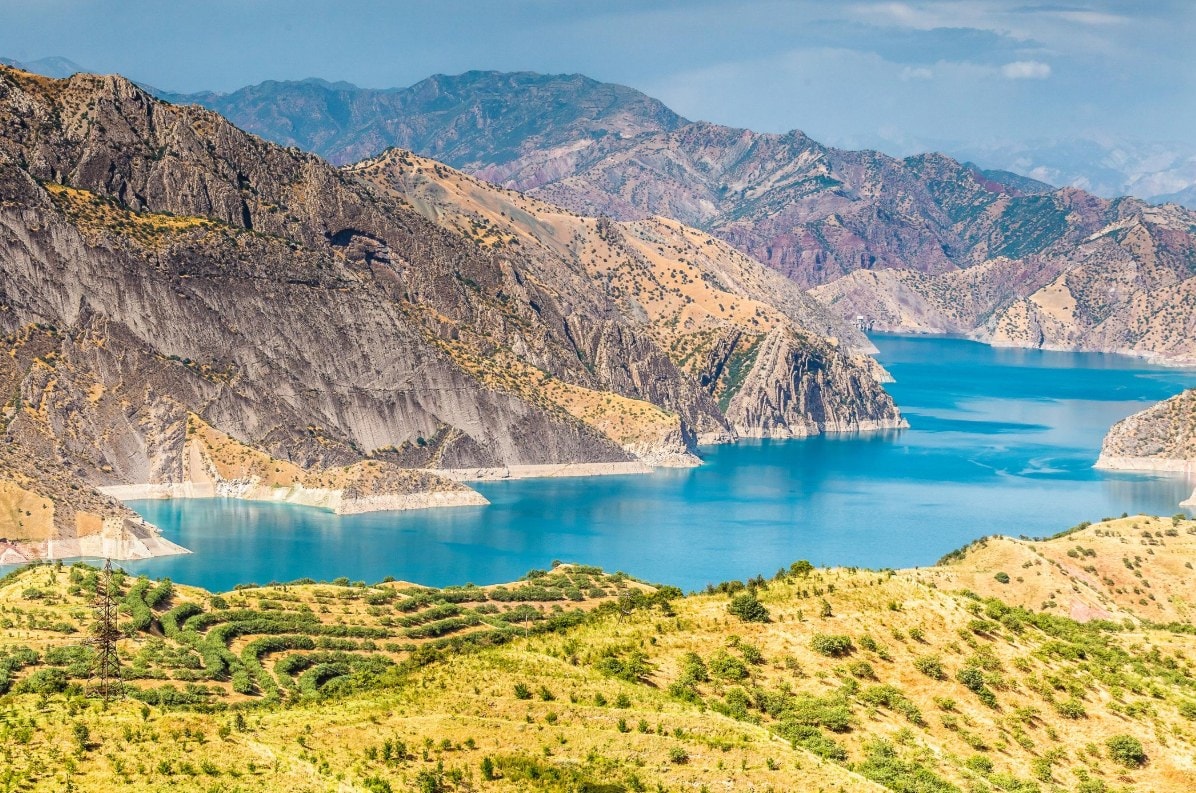
Luckily an archaeologist reached the site first. Vadim Ranov, who worked on the Stone Age of Tajikistan for most of his life, excavated it in the 1960s [1]. The site is called Tutkaul. Ranov found many layers of stone tools there, left by people who returned to the same spot over thousands of years, and in one of the upper layers he found three graves. These belonged to what archaeologists call the Hissar culture, the Neolithic ("new Stone Age") people of these mountains [1].
The lake means nobody can dig at Tutkaul again, but Ranov's finds were kept. In recent years Svetlana Shnaider and her team went back through the collection [1]. Part of the skeletons had gone missing over the decades. On the other hand, they turned up human bone that had been stored with the animal bones, and some fragments carried the tooth marks of a carnivore roughly the size of a fox or a dog [1].
They also had material from one grave dated by radiocarbon. The method relies on a natural, slightly radioactive form of carbon that every living body takes in. After death it decays at a known rate, so the amount left in a bone works like a clock. The grave dated to between about 8,400 and 8,000 years ago [1].
Who, then, were the people buried at Tutkaul, and why does ancestry related to them show up in some Indians today, under the name "Tajikistan Mesolithic" in a GenoConnect report? Answering that means starting earlier, at the end of the Ice Age.
When the ice let go
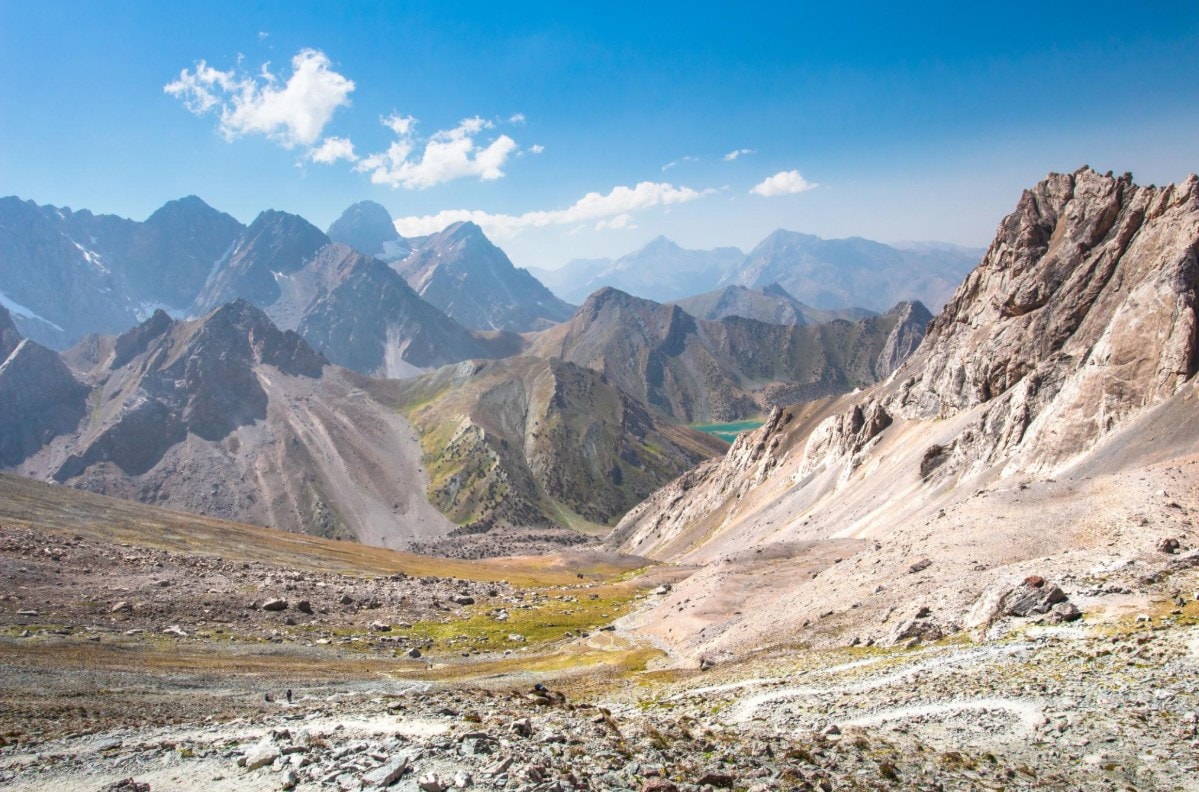
The last Ice Age was ending by about 15,000 years ago. Glaciers in the Pamir and Alay ranges pulled back up their valleys, and their meltwater fed the Vakhsh, the Zeravshan and other rivers. Grass and shrubs spread over slopes that had been frozen. Wild goats and sheep moved onto the new grazing, and hunters came after them.
In many ways these mountains resemble Ladakh and Spiti. They are high and dry, winters are harsh, and several Pamir peaks pass 7,000 metres. The foothills of southern Tajikistan and the Fergana valley are milder, with green strips along the rivers running through brown hills, so people could winter low down and go up to the high pastures in summer.
Archaeologists call the time between the Ice Age and farming the Mesolithic, or "middle Stone Age". The people of that time were hunter-gatherers. They lived entirely on wild food, on animals they hunted and on plants, nuts and seeds they collected, and they moved camp as the seasons changed. In Central Asia the same period is often called the Epipaleolithic, the tail end of the old Stone Age.
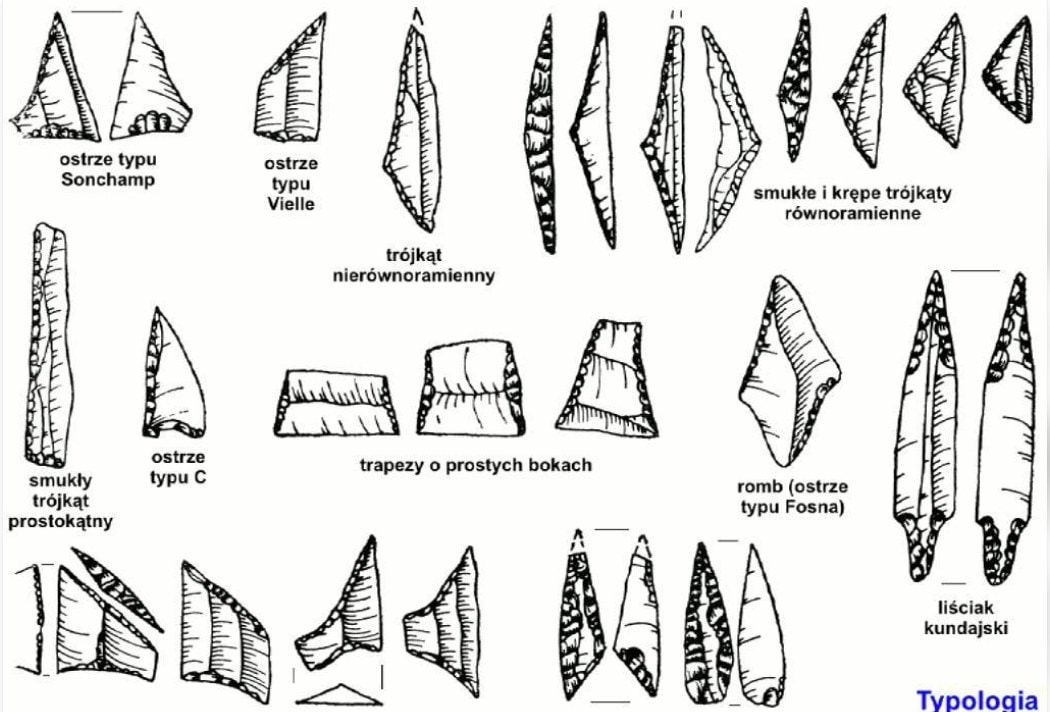
The tool most typical of them is the microlith, a tiny stone blade often smaller than a fingernail. Several were set in a line along a wooden or bone handle, much like the teeth of a saw, and a broken one could be replaced the way you change a razor blade. Some were trimmed into small rectangles, trapezes and half-moons, which archaeologists call geometric microliths.
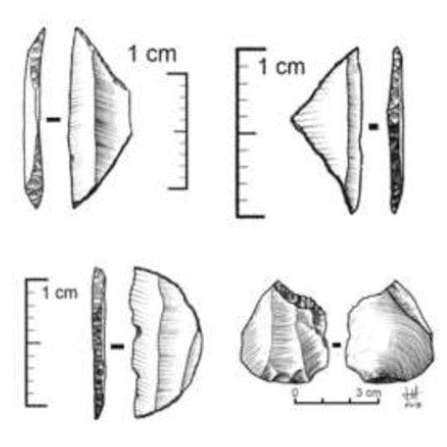
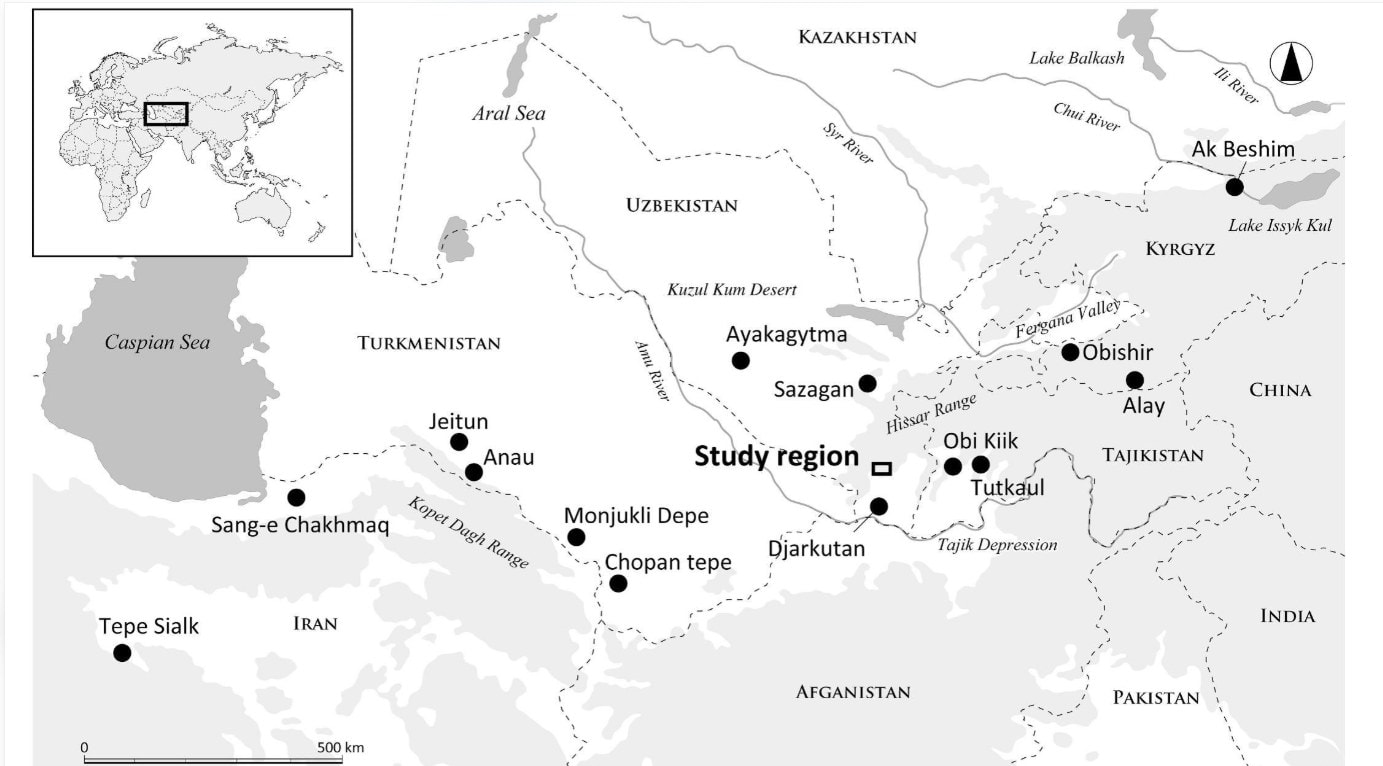
In 2020 Shnaider and her colleagues compared the stone tools of Tutkaul with those of another Tajik site, Obi-Kiik [2]. They concluded that both belonged to one tradition, which they named the Tutkaulian. Its toolmakers struck thin bladelets off stone cores and made many of them into geometric microliths. Over time they moved from trapezes and rectangles towards half-moon shapes [2].
According to Shnaider's team, the Tutkaulian grew out of an older local tradition of the Upper Paleolithic, the late Ice Age, called the Kulbulakian. New ideas also arrived now and then from toolmakers in the Levant and the Zagros mountains of Iran [2]. If they are right, these were local families who had lived in the same valleys since the Ice Age and still picked up techniques from people far to the west.
The evidence is thin, though. Nearly everything we know of the Tutkaulian people comes from their stone tools, the waste left from making them, and the bones of animals they ate. The one Tutkaul individual whose DNA has been read lived later, in the Hissar period.
Life in the high valleys
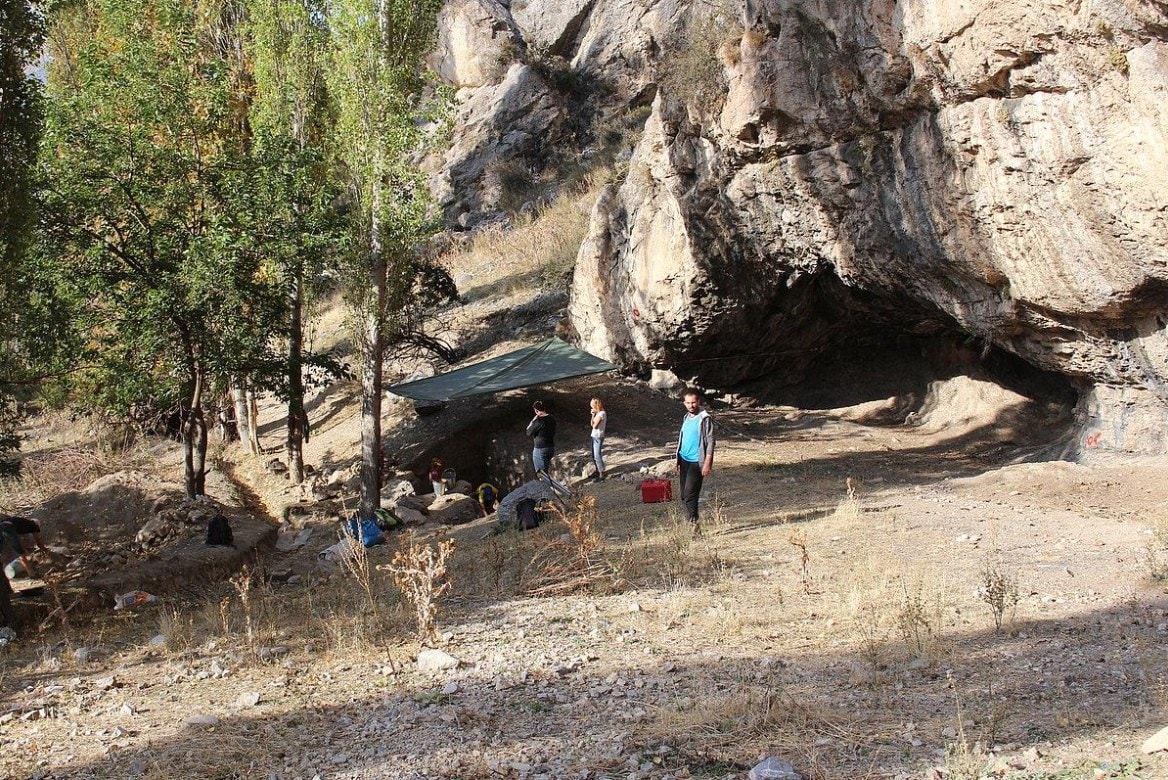
Imagine a rock shelter in the foothills on a cold spring morning, its floor covered in ash, stone flakes and animal bones after a winter of use. The family living there will soon move uphill behind the wild herds. This is guesswork, of course, but it is the kind of life such sites suggest.
From around 6000 BCE, archaeologists group the tools made in the mountains of Tajikistan as the Hissar culture, named after the Hissar valley near Dushanbe. The tradition lasted an extraordinarily long time, roughly from the sixth to the second millennium BCE [4], which is about five thousand years. Those dates are still being revised as new sites are studied, and many of the older excavations happened before modern dating was available.
Elsewhere, the Neolithic is the period when people started farming and keeping animals. In the Pamir-Alay the term is used more loosely. It covers people who lived mostly by hunting and gathering, but who were contemporaries of the first farmers to the west and may have kept some animals.
Hissar toolmakers worked at two scales. They broke big river pebbles into heavy choppers and scrapers for jobs like cutting wood and cracking bones, and they pressed off tiny microblades and geometric microliths in the old Tutkaulian manner [4]. Both kinds of tools turn up in the same layers. Ranov's main account of the culture appeared in 1985 [3].
Argali, the big wild sheep of the region, and the Siberian ibex, a wild goat with long curved horns, live in these mountains [4]. Sheep and goat bones are common at Hissar sites, and some scholars have read that as proof that the Hissar people were herders. William Taylor and his colleagues point out that the case rests largely on how many such bones were found [4]. A bone count cannot separate wild animals from tame ones.
We know very little about the graves at Tutkaul. All three were dug into the layer where people lived [1], but parts of the skeletons were lost after the excavation, and there is no full record of how the bodies lay or whether anything was buried with them. Much of what is written about Hissar burials is pieced together from a few bones and old field notes.
The sheep arrive
Around 6000 BCE, in a rock shelter on a cliff in southern Kyrgyzstan, a few people killed some of their sheep as autumn turned towards winter. That, at least, is how we can picture it. The bones ended up in the fire and the rubbish, and stayed there for eight thousand years.
The shelter is Obishir V, about 1,700 metres up near the town of Aidarkyen, on the southern rim of the Fergana valley [4]. A team led by William Taylor, including the Kyrgyz archaeologist Aida Abdykanova and Svetlana Shnaider, published its animal bones in 2021 [4]. Two sheep bones were radiocarbon dated to about 5990 to 5750 BCE, and ancient DNA showed they came from domestic sheep [4]. That made herding in the Central Asian mountains about 3,000 years older than anyone had shown before [4].
Domestication is the long process by which wild plants and animals become tame and come to depend on people, the way wolves became dogs. Sheep and goats were domesticated far to the west, in the hills between eastern Turkey and the Zagros mountains of Iran and Iraq [4], and herding spread out from there over many centuries. Taylor's team thinks the Obishir flock was one distant branch of that spread [4].
The sheep's teeth gave one more clue. Growth layers in the roots, read a little like tree rings, point to death in autumn [4]. Herders in these mountains still bring their flocks down from the summer grazing and slaughter some before winter. Anyone who has seen Gaddi shepherds in Himachal or Bakarwal herders in Jammu and Kashmir moving their animals between high and low pastures will recognise the rhythm.
At Obishir, people kept their old skills alongside the new flocks. They went on making fine microblades, trapezes and scrapers and used grinding stones [4], and wild argali and ibex still grazed nearby. In mountains where crops grow badly but summer grass is plentiful, adding a flock to hunting and gathering made good sense.
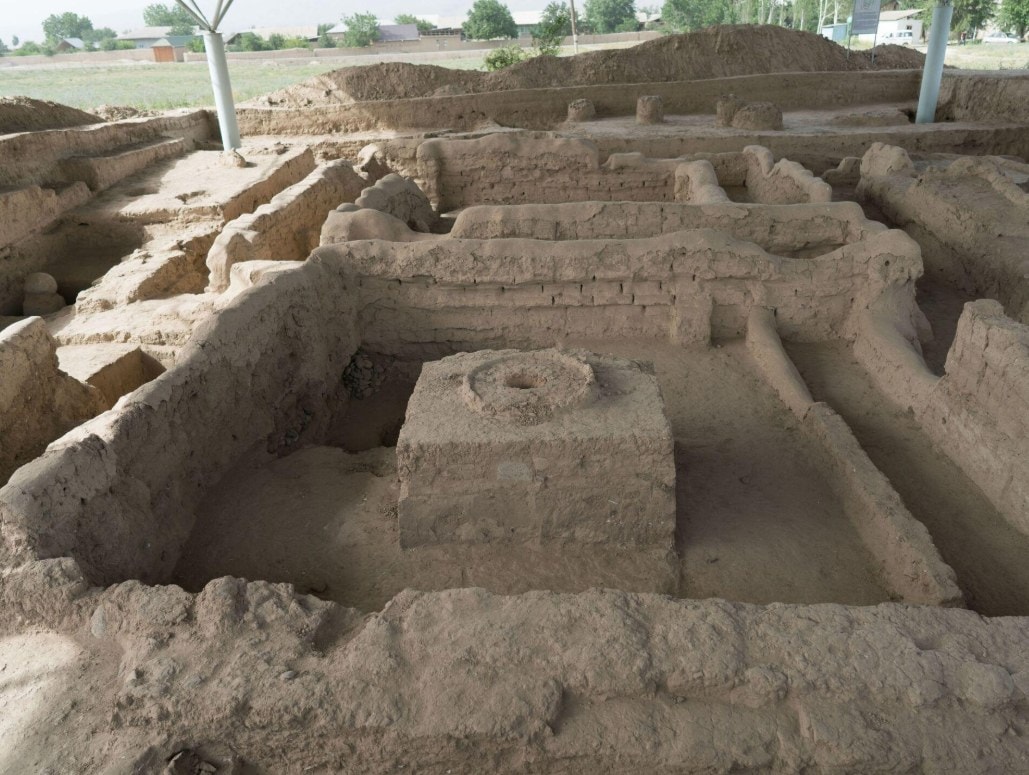
Further south-west, farming villages were taking shape. At Jeitun, in present-day Turkmenistan, people grew crops and kept sheep and goats by about 6500 BCE [4]. Much later, from the fourth millennium BCE, a large settlement grew up at Sarazm in the Zeravshan valley of western Tajikistan. Its people grew wheat and barley and still collected wild pistachio and sea buckthorn [5]. UNESCO, which made Sarazm a World Heritage Site in 2010, describes it as a place where mountain herders and lowland farmers traded [6].
What one tooth can tell us
DNA can be thought of as an instruction book carried in every cell of your body. Half of yours came from your mother and half from your father, and each of them got theirs the same way, so the book holds traces of thousands of ancestors. Ancient DNA is that book recovered from old bones and teeth. It breaks up after death and most of it disappears, though in cool, dry conditions some fragments survive for thousands of years. Scientists powder a little bone, extract what is left and piece it together.
Two published studies have read DNA from the Tutkaul graves. In 2023 a team led by the geneticist Cosimo Posth published genomes from hundreds of ancient hunter-gatherers in western and central Eurasia [7]. One of them was a person from Tajikistan, labelled Tutkaul 1, who lived about 8,000 years ago [7]. The paper calls this individual Neolithic because the grave is in the Hissar layer, while GenoConnect's report uses "Tajikistan Mesolithic". In Central Asia the boundary between the middle and new Stone Age is fuzzy, and both labels refer to people who still lived mainly by hunting and gathering.
Posth's team found that Tutkaul 1 was closely related to the Ice Age hunters of Siberia known from Mal'ta near Lake Baikal and Afontova Gora on the Yenisei river [7]. Geneticists call that group the Ancient North Eurasians. Tutkaul 1 also resembled western Siberian hunter-gatherers of the same period [7], with one difference. The Siberians carried extra ancestry from eastern Asia, and Tutkaul 1 had none of it. What Tutkaul 1 did show was a connection to the early farmers of Iran and to some later populations of Iran and southern Central Asia [7].
The authors suggest that people like Tutkaul 1 may be a good proxy for the Ancient North Eurasian-related ancestry that later turns up in Iran and southern Central Asia [7]. In plainer words, this person's ancestry seems to sit between the Ice Age hunters of the north and the early peoples of the Iranian plateau.
The other study, by Shnaider's team in 2023, looked at a tooth from the second Tutkaul grave [1]. Its mitochondrial DNA, the small part of our DNA inherited only from the mother, was closest to that of the Ancient North Eurasians and the earliest Siberians, and it also resembled Neolithic Iranians [1]. The Y chromosome, inherited from father to son, belonged to a branch called Q1b2a [1]. Tests on the third grave found DNA of the hepatitis B virus, and that sample became part of a 2021 study led by Arthur Kocher, which traced the virus over ten thousand years [1, 8]. So this liver infection was already present in these mountains eight thousand years ago.
All of this comes from one or two people. A single genome tells us what one person carried, and it says nothing about how much their neighbours or descendants differed. For the moment, Tutkaul is the only place where we can look at the DNA of these mountain hunters.
A crossroads of Asia
On a map, the Pamirs sit close to the centre of Asia. South-west of them are the Iranian plateau and the oases of Turkmenistan and northern Afghanistan. To the north the steppe grasslands stretch as far as Ukraine, and to the north-east lie Siberia and the Altai. South, beyond the Hindu Kush, are the valleys of Pakistan and the plains of India.
People have moved along the edges of these mountains for thousands of years, usually slowly, a family or a valley at a time, much as people have long moved between Kashmir, Punjab and the north-western hills. Some stayed and had children with their new neighbours. Geneticists call this admixture, which simply means two groups having children together, so that their DNA mixes in the next generation.
In 2019 the geneticist Vagheesh Narasimhan and a large team at Harvard published DNA from 523 ancient people, most of them from Central Asia and the northern edge of South Asia [9]. In their data, ancestry shifted gradually across the region, a bit like colours shading into each other on a wall. Western groups had more ancestry related to the early farmers of Anatolia, in present-day Turkey, and eastern groups had more related to the early farmers of Iran. This gradient extended into the desert oases of southern Central Asia [9].
During the Bronze Age, walled towns grew in those oases, in present-day Turkmenistan, Uzbekistan and Afghanistan. Archaeologists call this the Bactria Margiana Archaeological Complex, or BMAC. According to Narasimhan's team, most BMAC people had mainly Iranian farmer-related ancestry and passed on little of their DNA to later South Asians [9].
People with ancestry from the steppe herders of the north start appearing at BMAC sites around 2000 BCE, and during the first half of the second millennium BCE steppe ancestry moved further south into South Asia [9]. These movements took many generations of families and their herds.
The Tutkaul families lived beside all of these routes. Already 8,000 years ago, Tutkaul 1 carried a mixture that looks like a link between the Ice Age Siberians and the early Iranians [7]. Over the following millennia, newcomers passed through the mountain valleys, and some mountain families moved out into the lowlands.
The road to South Asia
Think of a herder in the north-western hills some thousands of years ago, driving a flock through a pass towards warmer country. The Khyber and the Bolan are the best known of these passes, though plenty of smaller tracks crossed the Hindu Kush and the ranges south of it. Over thousands of years people from Central Asia and Iran came this way, and many of them stayed and married locally. No one walked from Tutkaul to India within a lifetime. Ancestry travelled slowly, generation by generation.
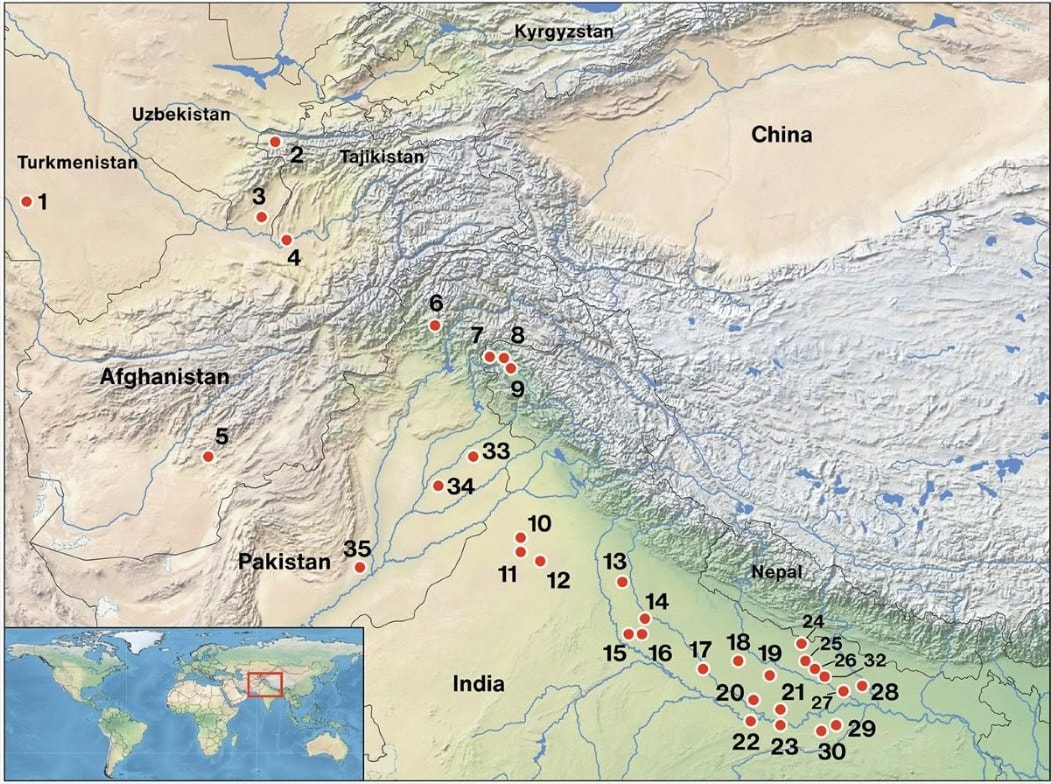
How ancestry related to the Tutkaul people reached India is not known in detail. Two things are clear enough. Ancestry like that of Tutkaul 1 was part of the population of Iran and southern Central Asia [7], and people from those regions are among the ancestors of South Asians.
Narasimhan's 2019 study found that the main ancestral population of South Asians was a mixture of people related to early Iranians and the AASI, the Ancient Ancestral South Indians, who were India's first hunter-gatherers [9]. In the second millennium BCE, people with steppe ancestry arrived from the north-west as well [9]. The steppe herders themselves carried some ancestry of the same old Ancient North Eurasian kind, inherited from earlier hunters in Russia and Siberia.
When a model gives a South Asian a few percent of "Tajikistan Mesolithic", then, it may be detecting that old northern strand. The strand could have arrived with any of these later groups, and by more than one route. It is a minor part of the story, and nobody has yet worked out which route carried most of it.
What your own DNA can show
Say the Neolithic section of your GenoConnect report lists "Tajikistan Mesolithic: 4%". What does the figure mean?
Ancestry percentages are estimates produced by a model, which makes them quite different from a measurement such as your height. The software tries to rebuild your DNA from a fixed set of ancient populations and works out what share of each gives the closest fit. In this model, about 4 percent of your DNA fits best with ancestry related to these Central Asian hunter-gatherers. The rest is assigned to the other ancient groups in the model.
People often ask whether this means they have Tajik ancestors. This does not mean you have a Tajik grandparent, or any ancestor from present-day Tajikistan. The name only records where the ancient bones were found. The Tutkaul individual lived about 8,000 years ago, long before Tajiks, Indians or any modern nation existed, and that person's relatives moved and mixed over an enormous area. Your 4 percent has come down to you through hundreds of generations and many later peoples.
Small percentages are also less certain than large ones. If the model used a different set of ancient samples, some of this 4 percent might shift into the Iranian-related or steppe lines, or the reverse. Because the line is based on very few ancient individuals, expect it to change as new Central Asian genomes are published.
Note too that the Paleolithic, Neolithic and Bronze Age sections of your report each slice the same DNA in a different way, using different ancient groups. Their percentages should not be added together. Figures from two sections are two views of the same DNA.
To see where your own DNA falls in each of these models, you can take a GenoConnect test.
What we still do not know
Was Tutkaul 1 typical of the mountain people? Only more genomes will tell. DNA from the earlier Tutkaulian layers, from Obi-Kiik and from shelters like Obishir would show whether the earlier hunters carried the same mix as the person buried at Tutkaul.
The Hissar people themselves are barely studied genetically, and the dates for their culture keep being revised. New radiocarbon dates and DNA from the surviving Tutkaul bones, and from Hissar graves at other sites, could show how long this way of life lasted and whether new people joined it.
It is also unclear how the mountain hunters and the lowland farmers came together. Herders from the Iranian side may have married into mountain families, or the mountain people may simply have got sheep from their neighbours. Comparing genomes from early villages such as Jeitun and Sarazm with mountain genomes of the same age would help settle it.
Then there is the question that matters most to Indian readers. By what route, and with which later peoples, did this ancestry reach South Asia? Ancient DNA from northern Afghanistan and the hills of Pakistan, covering roughly 6000 to 2000 BCE, would help answer it.
Meanwhile most of Tutkaul stays under the Nurek reservoir, where no one can dig again. What is left fits into a few museum boxes, among them stone blades no bigger than a fingernail and one tooth. That tooth is the reason a line called "Tajikistan Mesolithic" appears in DNA reports in India today.
Frequently asked questions
Who were the Mesolithic people of Tajikistan?
They were hunter-gatherers who lived in the valleys and foothills of the Pamir and Alay mountains after the Ice Age. They hunted wild goats and sheep, gathered plants and made tiny stone blades called microliths. Archaeologists call their early tool tradition the Tutkaulian [2].
What was the Hissar culture?
The Hissar culture is the name given to the Neolithic mountain people of Tajikistan, dated to between about the sixth and second millennia BCE. They made heavy pebble tools as well as fine microblades and geometric microliths [4]. Tutkaul, on the Vakhsh river, held three Hissar graves [1].
Does Tajikistan Mesolithic ancestry mean I have Tajik ancestors?
No. The name comes from where the ancient bones were found. The Tutkaul individual lived about 8,000 years ago [7], thousands of years before any present-day nation, and related ancestry reached South Asia slowly through many later groups.
When did herding reach Central Asia?
Domestic sheep were at Obishir V in southern Kyrgyzstan by about 6000 BCE, the earliest known evidence of herding in the mountains of Central Asia [4]. Sheep had first been domesticated in the hills between eastern Turkey and the Zagros mountains [4].
How is Central Asia linked to India's ancient DNA?
People related to early Iranians, whose ancestry extended into southern Central Asia, are among the main ancestors of South Asians [9]. Later, in the second millennium BCE, people with steppe ancestry came south through Central Asia [9]. The Tutkaul strand may have travelled with either group, or with both.
Why is this percentage so small in my report?
This ancestry is a small, old part of the South Asian story, and the model can only estimate it. Small percentages are less certain than large ones, and they can go up or down when the model uses different ancient samples.
Further reading on GenoConnect: "The Zagros farmers: the Indus people's distant cousins" and "From Lake Baikal to India: the long journey of Eastern hunter-gatherer ancestry".
References
- [1]Shnaider, S. V., N. Ya. Berezina, T. G. Filimonova, S. Alisher kyzy, and A. P. Buzhilova. 2023. "The Results of New Study of Neolithic Human Remains in Central Asia (Based on Tutkaul and Kaylu Materials)." Rossiiskaya Arkheologiya [Russian Archaeology], no. 4: 7–19.
- [2]Shnaider, Svetlana V., Kseniya A. Kolobova, Tatiana G. Filimonova, William Taylor, and Andrei I. Krivoshapkin. 2020. "New Insights into the Epipaleolithic of Western Central Asia: The Tutkaulian Complex." Quaternary International 535: 139–54. https://doi.org/10.1016/j.quaint.2018.10.001.
- [3]Ranov, V. A. 1985. "Hissar Culture: Neolithic Mountain Regions of Central Asia." In Stone Age of Northern, Middle and Eastern Asia. Novosibirsk: Nauka.
- [4]Taylor, William T. T., Mélanie Pruvost, Cosimo Posth, William Rendu, Maciej T. Krajcarz, Aida Abdykanova, Greta Brancaleoni, et al. 2021. "Evidence for Early Dispersal of Domestic Sheep into Central Asia." Nature Human Behaviour 5 (9): 1169–79. https://doi.org/10.1038/s41562-021-01083-y.
- [5]Spengler, Robert N., and George Willcox. 2013. "Archaeobotanical Results from Sarazm, Tajikistan, an Early Bronze Age Settlement on the Edge: Agriculture and Exchange." Environmental Archaeology 18 (3): 211–21. https://doi.org/10.1179/1749631413Y.0000000008.
- [6]UNESCO World Heritage Committee. 2010. "Decision 34 COM 8B.25: Proto-urban Site of Sarazm (Tajikistan)." Paris: UNESCO World Heritage Centre. https://whc.unesco.org/en/decisions/4004.
- [7]Posth, Cosimo, He Yu, Ayshin Ghalichi, Hélène Rougier, Isabelle Crevecoeur, Yilei Huang, Harald Ringbauer, et al. 2023. "Palaeogenomics of Upper Palaeolithic to Neolithic European Hunter-Gatherers." Nature 615: 117–26. https://doi.org/10.1038/s41586-023-05726-0.
- [8]Kocher, Arthur, Luka Papac, Rodrigo Barquera, Felix M. Key, Maria A. Spyrou, Ron Hübler, Adam B. Rohrlach, et al. 2021. "Ten Millennia of Hepatitis B Virus Evolution." Science 374 (6564): 182–88. https://doi.org/10.1126/science.abi5658.
- [9]Narasimhan, Vagheesh M., Nick Patterson, Priya Moorjani, Nadin Rohland, Rebecca Bernardos, Swapan Mallick, Iosif Lazaridis, et al. 2019. "The Formation of Human Populations in South and Central Asia." Science 365 (6457): eaat7487. https://doi.org/10.1126/science.aat7487.