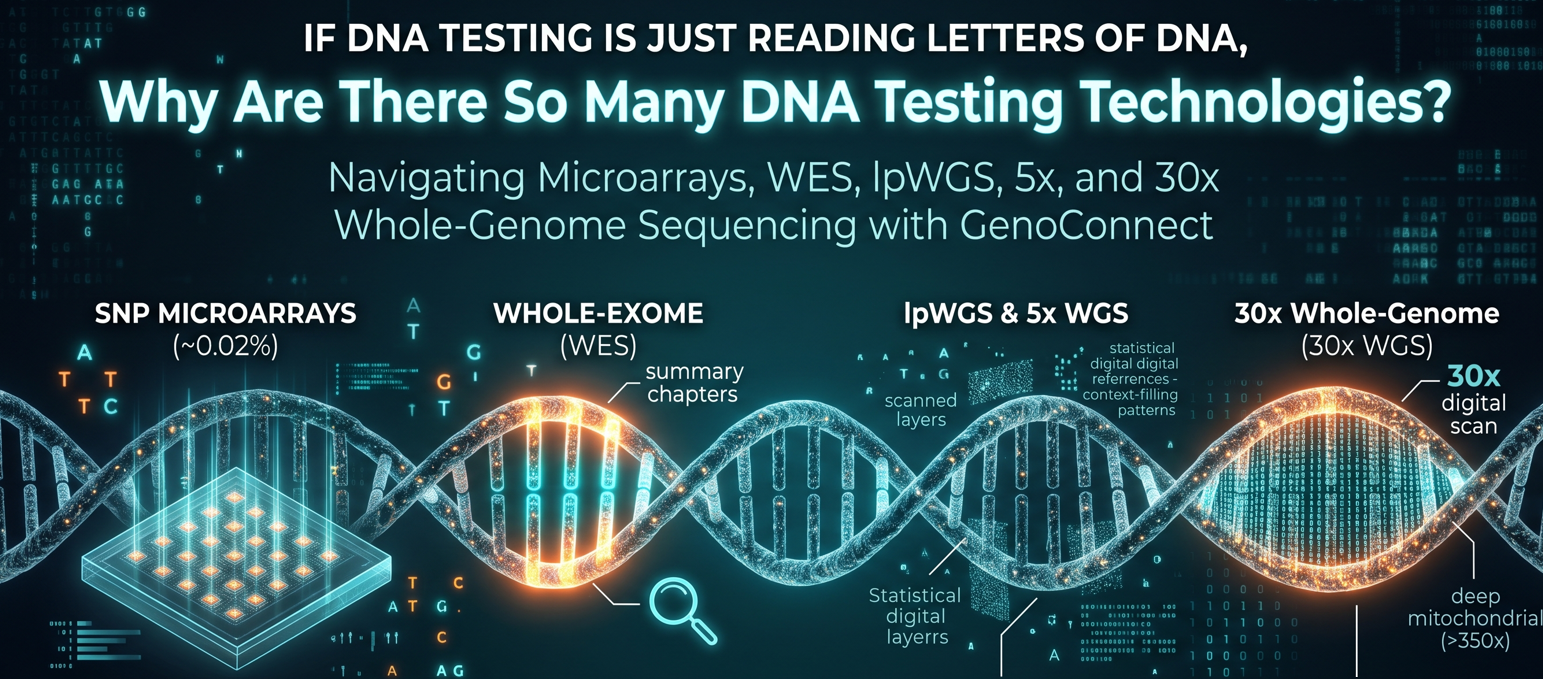
If DNA Testing Is Just Reading Letters of DNA, Why Are There So Many DNA Testing Technologies?
· By Sarita Maurya, PhD
Why Are There So Many DNA Testing Technologies? Microarray, WES, WGS & More Explained
At its core, every DNA test does the same basic job: it reads the chemical letters of your genetic code—A, T, G, and C—to understand your ancestry, health traits, nutrition, fitness, or inherited medical risks.
If the goal is simply to read those four letters, a common question arises: Why do we need so many different DNA testing methods, machines, sample types, and analysis pipelines?
Think of your genome as a massive, 3-billion-letter encyclopedia spread across 23 pairs of books (chromosomes). Depending on why you are opening that encyclopedia, you do not always read it the same way:
Sometimes you only check the index for specific keywords (SNP Microarrays).
Sometimes you read only the main summary chapters (Whole-Exome Sequencing).
Sometimes you skim every page lightly (0.5x–4x Low-Pass WGS + Imputation) or read each page several times over (5x WGS) and fill in any remaining gaps using reference context.
Sometimes you read every single word 30 times over to be 100% sure there are zero typos (30x Whole-Genome Sequencing).
In this guide, we break down every major DNA testing technology, sequencing machine, sample collection method, and analysis goal in plain language—so you know exactly how each tool works and which one fits your needs.
Table of Contents
1. The Core Idea: How Much of the Genome Do You Need to Read?
The human genome contains roughly 3.2 billion base pairs of DNA. Reading all 3.2 billion letters at extreme accuracy for every single person used to cost millions of dollars and take years. Today, technology has given scientists multiple ways to balance cost, speed, coverage, and accuracy.
The reason so many DNA technologies exist comes down to four practical questions:
1. Breadth: Are we checking a few hundred thousand known spots, or all 3.2 billion letters?
2. Depth (Coverage): How many times is each DNA letter read to confirm it is not a laboratory error?
3. Read Length: Are we reading DNA in short fragments (150–300 letters at a time) or ultra-long continuous stretches (tens of thousands of letters at a time)?
4. Purpose: Is the report for personal wellness and ancestry exploration, or for a doctor making a medical diagnosis?
2. Comparing the Major Testing Approaches: Microarray, WES, lpWGS, 5x WGS, and 30x WGS
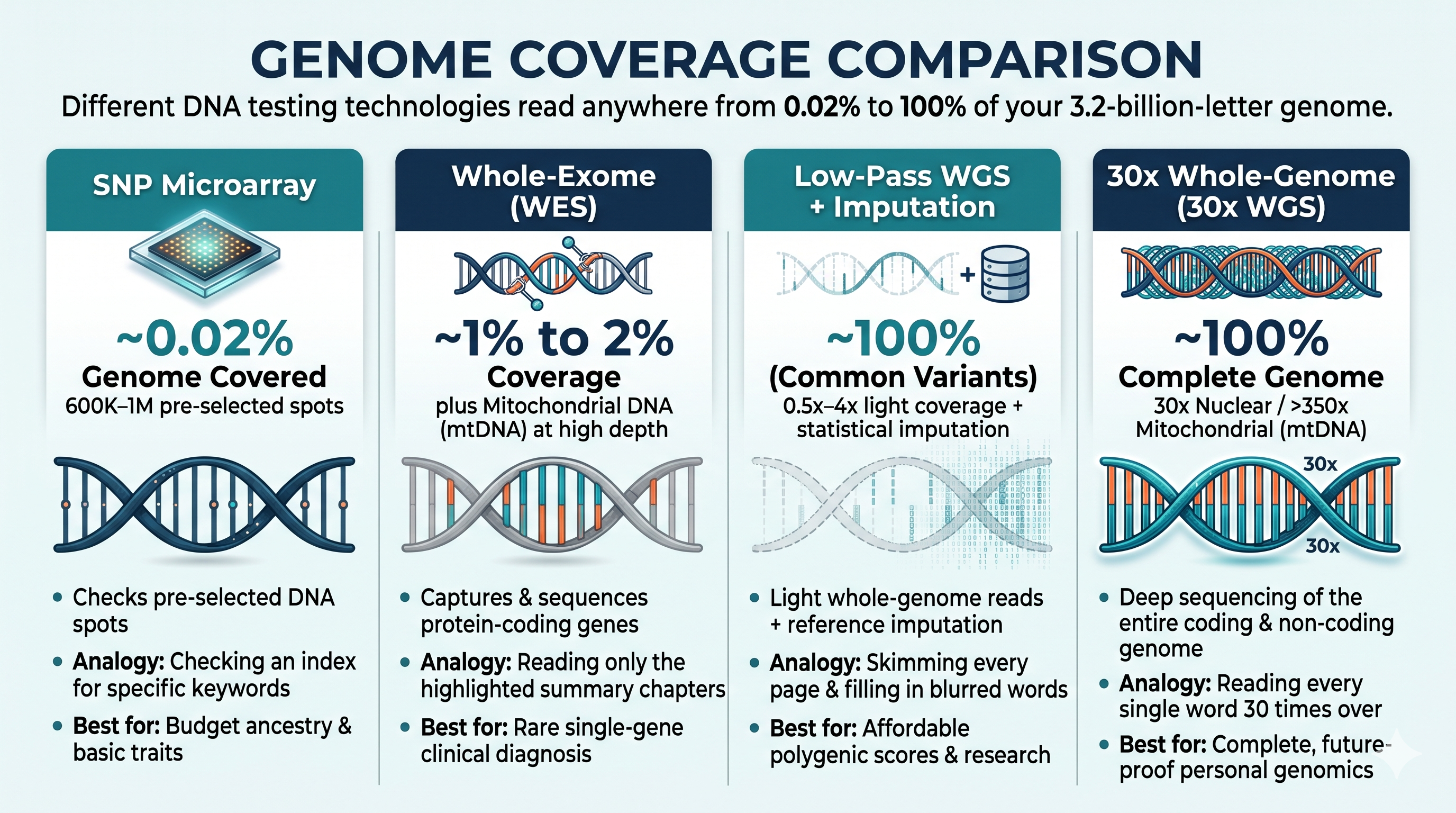
Comparing the scope and depth of today's DNA testing methods: different technology platforms read anywhere from 0.02% to 100% of your 3.2-billion-letter genome.
When you look at modern DNA tests, most fall into five main categories based on how much of your genome they read and how deeply they read it.
1. SNP Microarrays (Genotyping Chips)
How it works: Instead of reading your DNA sequence letter by letter, a microarray uses a glass chip covered with microscopic probes designed to check 600,000 to 1 million pre-selected positions (Single Nucleotide Polymorphisms, or SNPs) known to vary among humans.
Analogy: Checking a multiple-choice answer sheet where the questions are already printed.
Best for: Affordable ancestry estimates, basic wellness traits, and large-scale population research.
Limitation: It cannot discover new or rare mutations outside the specific spots printed on the chip. If a rare disease variant is not on the chip, the test will miss it completely.
2. Whole-Exome Sequencing (WES)
How it works: Only about 1% to 2% of your DNA actually codes for proteins—this protein-coding portion is called the exome. WES uses molecular 'capture probes' to fish out just those coding regions (exons) and sequences them deeply (often 100x or more).
Analogy: Reading only the bolded, highlighted action paragraphs of a 1,000-page manual.
Best for: Diagnosing rare inherited disorders, because roughly 85% of known single-gene disease mutations occur inside protein-coding exons.
Limitation: It misses almost all of the remaining 98% non-coding genome—which controls when, where, and how strongly genes are turned on or off—as well as many large structural rearrangements. (Note: While older exome kits skipped mitochondrial DNA, modern WES pipelines—including GenoConnect—capture mitochondrial DNA at high depth alongside the coding exome.)
How it works: Instead of reading every letter 30 times, lpWGS sequences the entire genome lightly—typically at 0.5x to 4x coverage (meaning each spot is read only once or a few times on average). Then, bioinformatics software compares your light readouts against massive global reference panels (like the 1000 Genomes Project) to statistically predict (impute) the missing letters in between.
Analogy: Reading every third word of a familiar book and using grammar and context to accurately reconstruct the full sentences.
Best for: Cost-effective genome-wide coverage, polygenic risk scores, and broad trait discovery across millions of common variants.
Limitation: Because missing positions are statistically inferred rather than directly read at high depth, lpWGS + imputation is not reliable for detecting ultra-rare or brand-new (de novo) clinical mutations in a single patient.
4. 5x Whole-Genome Sequencing (5x WGS)
How it works: The gold standard of comprehensive DNA testing. Every single letter across your entire 3.2-billion-letter nuclear genome—both coding genes and non-coding regulatory regions—is read an average of 30 times over, while mitochondrial DNA is read at more than 350x depth with every WGS test at GenoConnect.
Analogy: Reading every page of an encyclopedia five times over—giving you clear, direct coverage across the entire book while using context to double-check faint letters.
Best for: Cost-effective whole-genome discovery, accurate ancestry and haplogroup mapping, polygenic risk scores, and broad wellness, nutrition, and fitness insights across both coding and non-coding regions.
Limitation: While far more informative than SNP microarrays or 0.5x–1x low-pass sequencing, 5x average depth is still lower than 30x WGS for confirming ultra-rare or novel (de novo) clinical single-gene mutations without orthogonal clinical testing.
5. 30x Whole-Genome Sequencing (30x WGS)
How it works: The gold standard of comprehensive DNA testing. Every single letter across your entire 3.2-billion-letter genome—both coding genes and non-coding regulatory regions, plus mitochondrial DNA—is read an average of 30 times over.
Analogy: Reading every single word of every single page from cover to cover 30 times to eliminate any chance of a misread letter.
Best for: Complete lifetime genetic discovery—covering rare variants, complex structural changes, non-coding regulatory markers, ancestry, pharmacogenomics, nutrition, fitness, and future scientific updates without ever needing to re-test your DNA.
Limitation: Higher sequencing cost and much larger data files (often 50–100+ GB per person) requiring specialized bioinformatics pipelines.
Testing Method
Genome Covered
Typical Depth
How Data Is Obtained
Best Use Case
SNP Microarray
~0.02% (600K–1M known SNPs)
Chip probe signal
Checks pre-selected DNA spots
Budget ancestry & basic traits
Whole-Exome (WES)
~1%–2% (Protein-coding exons + mtDNA)
100x+
Captures & sequences coding genes
Rare single-gene clinical diagnosis
lpWGS + Imputation
~100% (Common variants)
0.5x–4x + statistical inference
Light whole-genome reads + reference imputation
Affordable polygenic scores & research
5x WGS
~100% (Nuclear + high-depth mtDNA)
5x nuclear + imputation
Balanced whole-genome sequencing + imputation
Comprehensive ancestry, traits & polygenic insights
30x WGS
~100% (Coding + Non-coding + mtDNA)
30x nuclear / >350x mtDNA
Deep sequencing of the entire genome
Complete, future-proof personal genomics
3. Short-Read vs. Long-Read Sequencing: Sanger, NGS, and Third-Generation Tech
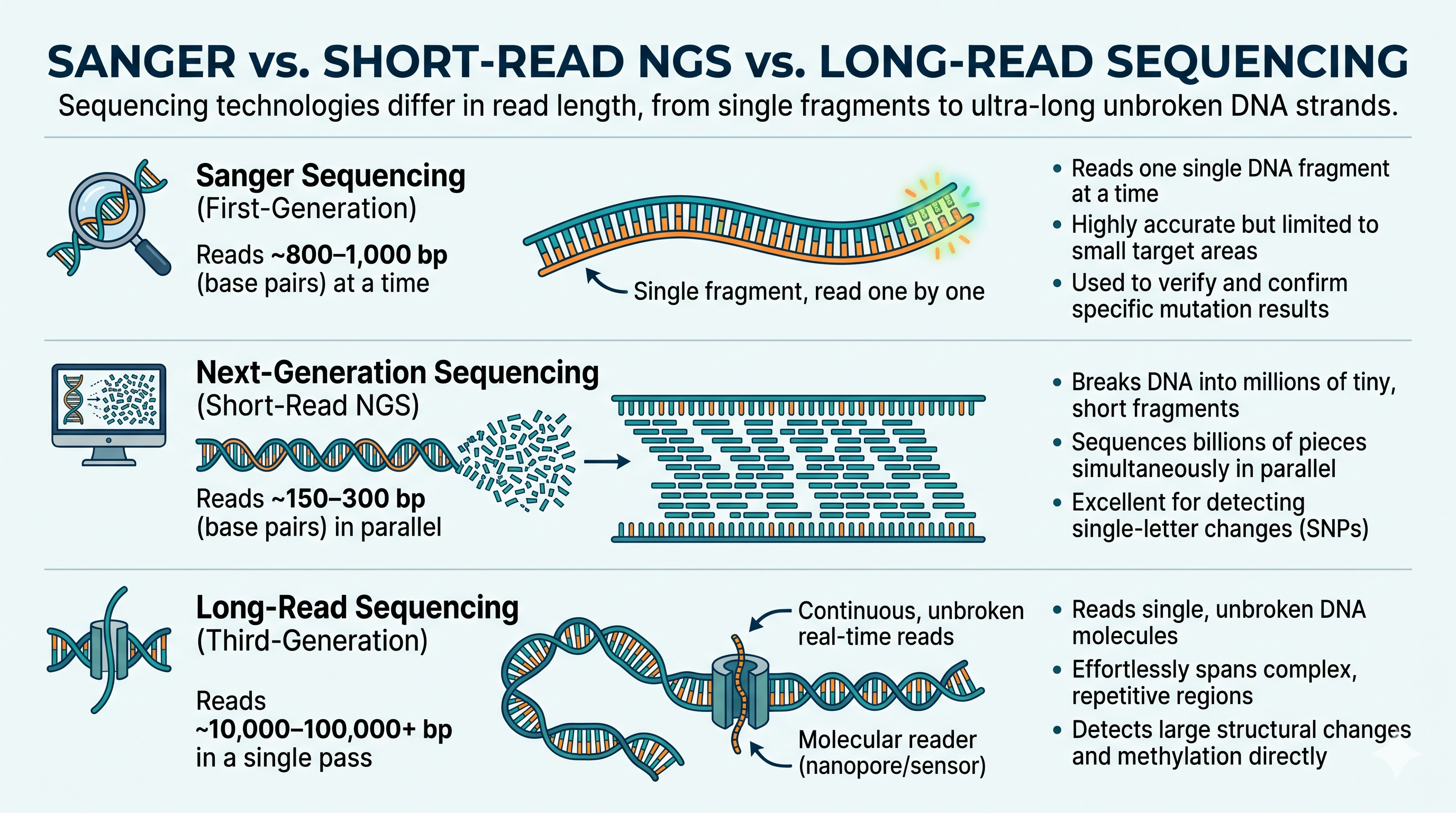
Sanger, Short-Read, and Long-Read sequencing systems are designed differently depending on the length of DNA being analyzed—ranging from isolated individual fragment reads to massive, uninterrupted sequences.
Beyond how much DNA is read, technologies also differ in how they read DNA strands.
Sanger Sequencing (First-Generation)
How it works: Developed in 1977, Sanger sequencing reads one single DNA fragment at a time (up to ~800–1,000 letters long) using fluorescently labeled DNA bases.
Real-world example: Think of Sanger sequencing as a magnifying glass inspecting one single sentence. Today, laboratories still use it to double-check and confirm a specific mutation found by larger sequencing tests.
How it works: Instead of reading one DNA piece at a time, NGS breaks DNA into millions of short fragments (150 to 300 letters each) and sequences billions of fragments simultaneously in parallel. Powerful computers then align these short puzzle pieces back against a human reference genome.
Real-world example: Imagine shredding 100 copies of a book into confetti, photographing every strip at once, and using a supercomputer to reassemble the text. Short-read NGS made 30x WGS affordable and fast.
Limitation: Because reads are short, repetitive regions of the genome (where the same DNA sequence repeats dozens of times) are hard to piece together accurately—much like assembling a jigsaw puzzle of a clear blue sky.
Long-Read Sequencing (Third-Generation)
How it works: Long-read technologies read single, unbroken DNA molecules stretching 10,000 to 100,000+ letters in one continuous pass—without chopping DNA into tiny pieces first.
Real-world example: Instead of confetti, you are reading entire chapters intact. Long reads effortlessly span repetitive regions, detect large structural rearrangements (deletions, inversions, duplications), and even read chemical epigenetic tags (methylation) directly on the DNA strand.
4. The Machines Behind the Science: Illumina, MGI, Thermo Fisher, PacBio, and Oxford Nanopore
Just as different smartphone brands serve different users, specialized biotech companies build the instruments that power DNA laboratories worldwide:
Illumina (Short-Read NGS Leader): Uses Sequencing by Synthesis (SBS), where fluorescently tagged DNA bases light up one by one as a new DNA strand is built. Illumina platforms (such as NovaSeq X) power the vast majority of global 30x WGS and WES studies due to their ultra-high accuracy (>99.9%).
MGI / Complete Genomics (Short-Read DNBSEQ): Uses DNA Nanoball (DNBSEQ) technology, rolling circular DNA copies into tight nanoballs to reduce copying errors and deliver high-throughput 30x WGS at competitive costs.
Thermo Fisher Scientific (Microarrays & Targeted Ion Torrent NGS): Builds both high-density Axiom SNP microarray platforms and Ion Torrent semiconductor sequencers (which detect tiny pH changes—hydrogen ions released—when a DNA base is incorporated rather than using cameras/light). Widely used for fast, targeted clinical gene panels.
PacBio / Pacific Biosciences (HiFi Long-Read Sequencing): Uses Single-Molecule Real-Time (SMRT) sequencing. By reading a circularized DNA strand multiple times around, PacBio generates HiFi (High-Fidelity) long reads (15,000–25,000 letters long) that combine long-read reach with 99.9%+ accuracy.
Oxford Nanopore Technologies (Ultra-Long Real-Time Sequencing): Threads single DNA strands through microscopic protein pores (nanopores) embedded in a membrane. As each A, T, G, or C passes through the pore, it disrupts an electrical current in a unique way. Devices range from pocket-sized portable sequencers (MinION) to factory-scale instruments (PromethION) capable of reading stretches over 100,000 letters long in real time.
5. Sample Types Explained: Blood, Saliva, and Cheek Swabs
A common misconception is that blood contains 'better' or 'different' DNA than saliva or a cheek swab. In reality, your inherited germline DNA is identical in every cell of your body—whether it comes from a white blood cell in your arm or an epithelial cell inside your cheek.
Why, then, do labs collect different sample types?
Sample Type
Where the DNA Comes From
Key Advantages
Common Use & Considerations
Blood Sample
White blood cells (leukocytes)
Very high DNA yield; virtually zero bacterial DNA contamination; ideal for liquid biopsies or RNA/biochemical blood tests.
Requires a trained phlebotomist/needle draw and cold-chain logistics; standard in hospital clinical diagnostics.
Saliva Sample
Shed cheek cells + white blood cells in spit
Non-invasive; yields generous DNA volume suitable for 30x WGS; stable at room temperature in preservative buffer.
Requires spitting 1–2 mL into a tube (can be tricky for young children or elderly individuals with dry mouth).
Cheek Swab (Buccal Swab)
Surface cells gently brushed from the inner cheek
Painless, quick (30 seconds), easy at-home collection for all ages; stable for shipping across long distances.
Needs proper brushing technique (30–60 seconds) to collect enough human cells and minimize oral bacteria DNA.
At GenoConnect, a simple, painless self-collected cheek swab—paired with doorstep sample pickup across India—provides high-quality human DNA for comprehensive Whole-Genome Sequencing without requiring a blood draw.
6. Clinical-Grade vs. Research-Grade Analysis: What Is the Difference?
Even when two laboratories use the exact same sequencing machine, how the data is validated and interpreted determines whether it is clinical-grade or research-grade:
Clinical-Grade Analysis
Performed in accredited diagnostic laboratories (such as CAP/CLIA or NABL-accredited clinical labs) under strict regulatory oversight.
Every reported variant undergoes rigorous quality verification, orthogonal confirmation (such as Sanger sequencing if needed), and review by certified clinical geneticists or molecular pathologists.
Example: Testing a patient with a family history of breast cancer for specific BRCA1 or BRCA2 mutations to guide medical surgery or preventive medication.
Research-Grade & Wellness Analysis
Designed to explore genetic associations, polygenic traits, ancestry, nutrition, fitness, and population genetics using peer-reviewed scientific literature.
Focuses on statistical probabilities and biological insights rather than medical diagnoses.
Example: Discovering that you carry variants linked to slower caffeine metabolism (CYP1A2), lactose intolerance (LCT), or endurance muscle fiber composition (ACTN3), and using that insight to tailor your daily diet and workout routine.
Important DistinctionResearch-grade and direct-to-consumer genomic insights empower proactive wellness and scientific discovery, whereas any clinical medical decision or diagnosis must always be confirmed through a certified clinical diagnostic test in consultation with a physician or genetic counselor.
7. What DNA Tests Actually Look For: Polygenic Scores, Pathogenicity, and Carrier Screening
Different DNA technologies are paired with specific analytical frameworks depending on the biological question being asked:
1. Polygenic Scores (PGS / PRS)
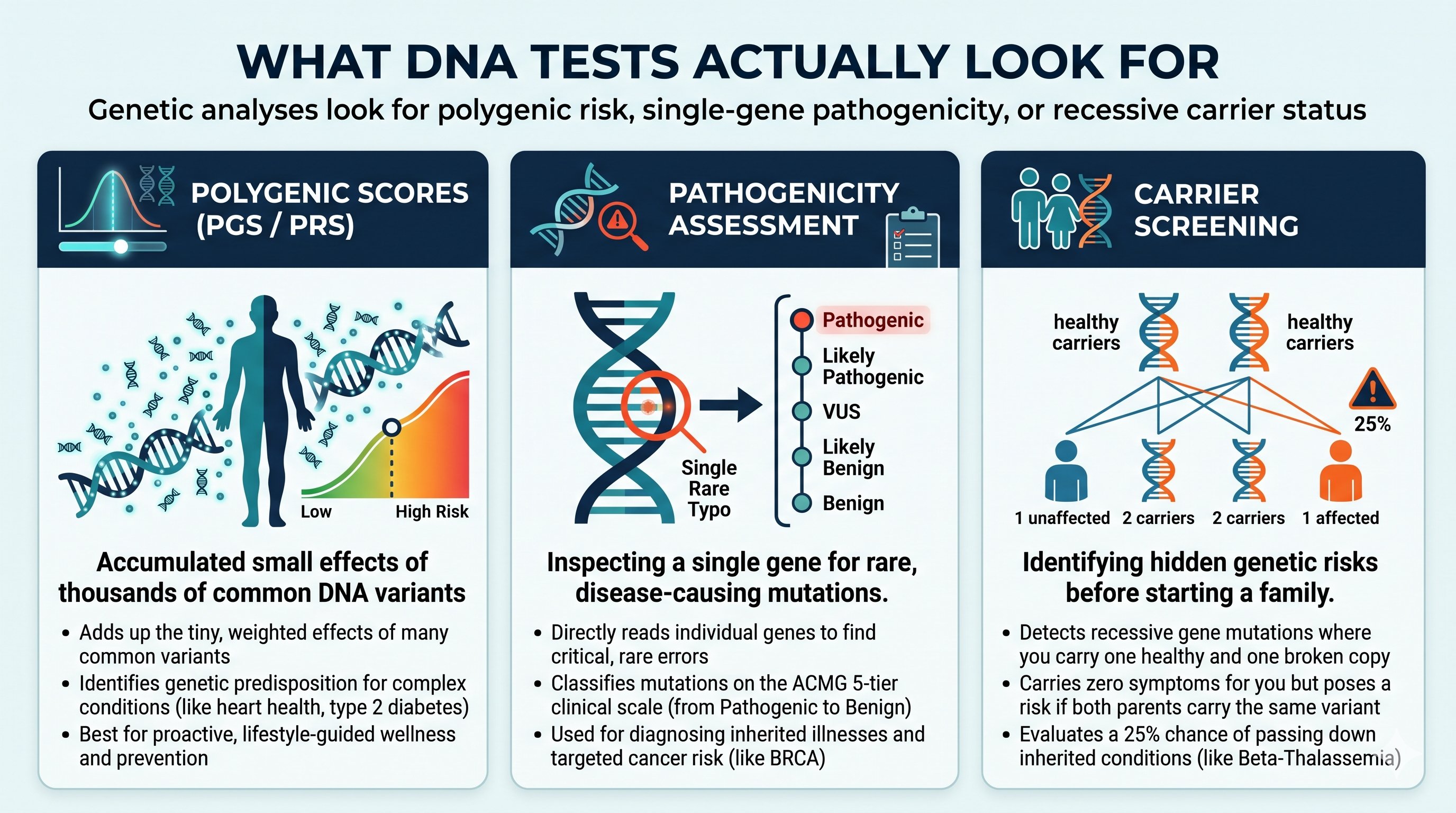
DNA test interpretation goes beyond raw data, analyzing your genetic code through three primary lenses: polygenic predisposition, single-gene pathogenicity, or hidden recessive carrier status.
What it is: Complex traits—like height, heart health, type 2 diabetes risk, or vitamin D levels—are not controlled by one single gene. Instead, they are influenced by thousands or millions of common SNPs, each adding a tiny nudge up or down. A Polygenic Score adds up the weighted effects of all those variants into a single personalized score.
Example: Two people might both have normal blood sugar today, but Person A's polygenic score shows a higher inherited predisposition to insulin resistance—motivating earlier preventive nutrition and exercise habits.
Best technology: 30x WGS or lpWGS + Imputation (because they capture millions of variants across the whole genome).
What it is: When looking for rare single-gene disorders, bioinformaticians classify individual DNA variants on a 5-tier scale established by the American College of Medical Genetics (ACMG): (1) Pathogenic (proven to cause disease), (2) Likely Pathogenic, (3) Variant of Uncertain Significance (VUS), (4) Likely Benign, and (5) Benign (harmless natural variation).
Example: Finding a known pathogenic mutation in the LDLR gene that causes Familial Hypercholesterolemia (severely elevated cholesterol from a young age).
Best technology: 30x WGS or Clinical WES (requires deep, direct reading of every base to catch rare mutations).
3. Carrier Screening
What it is: Humans carry two copies of almost every gene—one inherited from each parent. A carrier has one working copy and one non-working (recessive) copy of a gene. Carriers are usually completely healthy themselves, but if both parents carry a mutation in the same gene, there is a 25% chance with each pregnancy of passing on two non-working copies, resulting in an inherited condition.
Example: Carrier screening for Beta-Thalassemia (HBB gene) or Spinal Muscular Atrophy (SMN1 gene), which is particularly relevant for family planning in South Asian populations.
Best technology: 30x WGS, Clinical WES, or specialized Carrier Screening NGS Panels.
8. Quick Comparison Guide: Which Technology Fits Which Purpose?
If Your Goal Is...
Recommended Technology
Why It Works Best
<strong>Quick, low-cost ancestry & basic traits</strong>
SNP Microarray
Checks ~700K common markers economically.
<strong>Investigating an unexplained rare genetic illness</strong>
Clinical WES or 30x WGS
Deeply reads protein-coding genes (and non-coding regions in WGS) to catch rare pathogenic mutations.
<strong>Family planning / Carrier status</strong>
30x WGS or Targeted NGS Panel
Accurately detects recessive gene variants before or during pregnancy.
<strong>Complex structural DNA changes or repetitive genes</strong>
Long-Read Sequencing (PacBio / Nanopore)
Reads ultra-long unbroken DNA strands across complex genomic regions.
<strong>Affordable genome-wide polygenic risk scores & population research</strong>
Low-Pass WGS (lpWGS) + Imputation
Sequences the full genome lightly (0.5x–4x) and imputes millions of common variants economically.
<strong>Balanced whole-genome wellness, traits & ancestry without 30x cost</strong>
5x Whole-Genome Sequencing (5x WGS)
Directly reads coding, non-coding, and high-depth mtDNA at 5x coverage for broad personal genomics.
Sequences 100% of your coding and non-coding DNA once, giving you a permanent digital genome.
9. Frequently Asked Questions
1. If I take a 30x Whole-Genome Sequencing test, do I ever need to take another DNA test later?
For your inherited DNA sequence, no. Your core genetic code does not change over your lifetime. Because 30x WGS reads virtually all 3.2 billion letters of your genome, your raw data can be re-analyzed in the future as new scientific discoveries and polygenic scores emerge—without needing another sample.
2. Is blood DNA more accurate than cheek swab DNA?
No. Once extracted and purified in the lab, DNA from a properly collected cheek swab is chemically identical to DNA from blood. Blood simply yields more total DNA per sample and is required when doctors need to test blood-specific biomarkers (like RNA expression or circulating tumor fragments).
3. Why can't a SNP microarray detect rare genetic mutations?
A microarray only looks at pre-selected positions printed on the chip. If a rare or family-specific mutation occurs at a position not included on that chip, the microarray has no probe there to see it. Sequencing (WES or WGS) actually reads the sequence of letters directly.
4. What does '30x coverage' mean in Whole-Genome Sequencing?
'30x coverage' means that, on average, every single letter of your 3.2-billion-letter genome is read 30 separate times by overlapping sequencing fragments. Reading each position 30 times ensures high confidence in distinguishing a true genetic variant from a random sequencing error.
5. Why do scientists use both short-read (Illumina/MGI) and long-read (PacBio/Nanopore) machines?
Short-read machines (Illumina, MGI) offer unmatched cost efficiency and high accuracy for reading single-letter changes (SNPs and small indels) across large populations. Long-read machines (PacBio, Oxford Nanopore) excel at resolving large structural rearrangements, repetitive DNA regions, and phasing (determining which variants sit on the maternal vs. paternal chromosome).
Why Your GenoConnect Genome Gets Smarter Over Time Whether your DNA is sequenced at 1x, 2x, 5x, or 30x Whole-Genome Sequencing (with >350x mitochondrial coverage), your raw genetic data covers the entire genome rather than being locked into a few fixed coordinates like a SNP microarray. That means even 1x WGS is built for future re-analysis as imputation models and reference panels evolve. When GenoConnect releases platform updates, early adopters receive new reports and sharper insights at no extra cost—and by participating in optional research studies with us, you directly help improve genetic algorithms for South Asian populations.
10. Explore Your Complete Genome with GenoConnect
Why settle for reading a fraction of a percent of your DNA when you can explore your complete genetic story?
At GenoConnect, we use Whole-Genome Sequencing from a simple, painless self-collected cheek swab—with convenient doorstep sample pickup across India—to help you uncover insights across ancestry, nutrition, fitness, wellness traits, and polygenic predispositions. Plus, by participating in GenoConnect's trait-linked research questionnaires, you can contribute to building better genetic representation for South Asian populations while unlocking exclusive discounts on your DNA reports.
Get Started: Explore DNA Reports at GenoConnect (https://www.genoconnect.co/)
References
[1]
1. National Human Genome Research Institute (NHGRI): DNA Sequencing Fact Sheet (https://www.genome.gov/about-genomics/fact-sheets/DNA-Sequencing-Fact-Sheet)
[2]
2. MedlinePlus Genetics: What are whole exome sequencing and whole genome sequencing? (https://medlineplus.gov/genetics/understanding/testing/sequencing/)
[3]
3. American College of Medical Genetics and Genomics (ACMG): Variant Classification Guidelines (https://www.acmg.net/)
[4]
4. 1000 Genomes Project: A Global Reference for Human Genetic Variation (https://www.internationalgenome.org/)