Why Do You Want to Do a DNA Test? Ancestry, Health & Ancient Origins
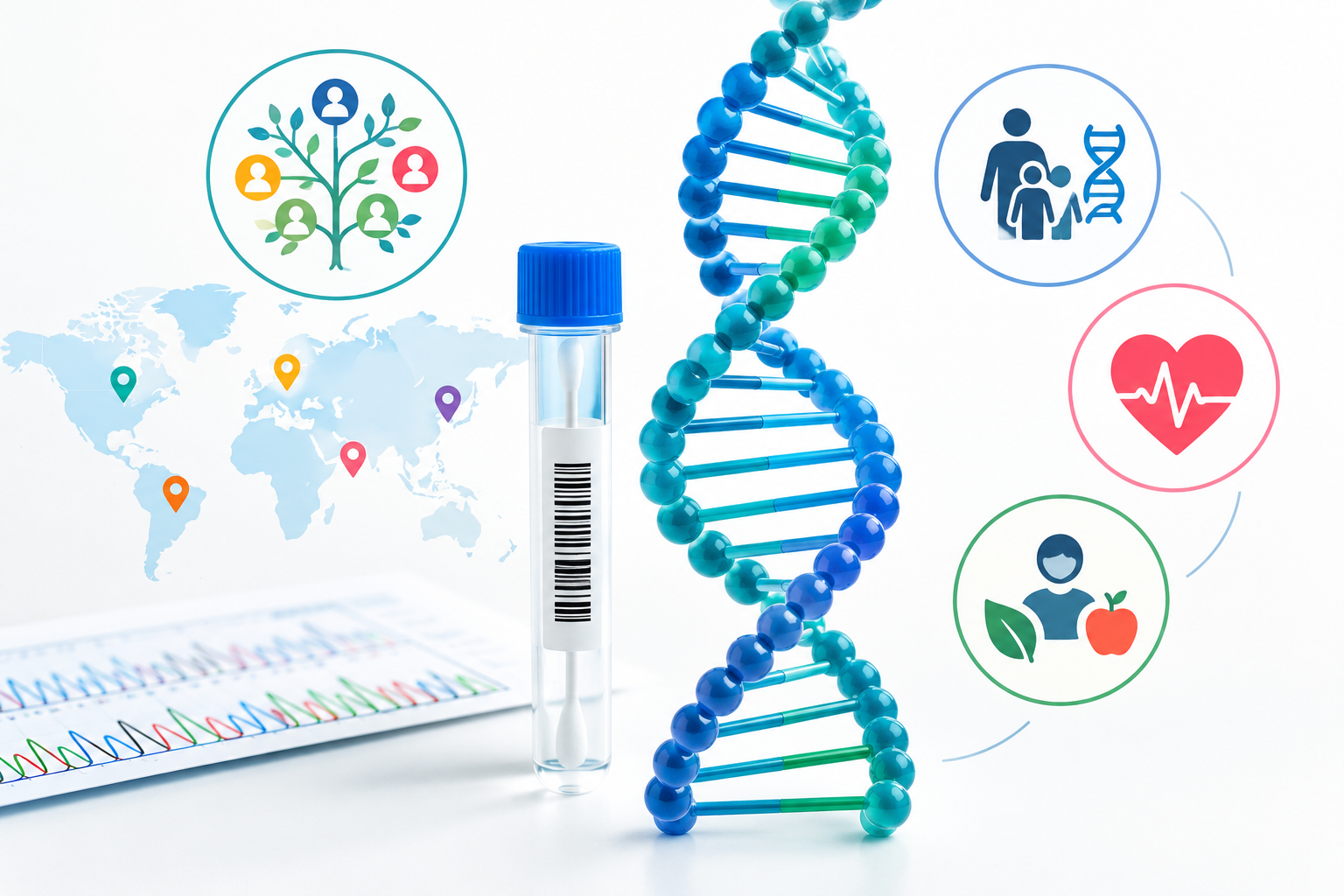
Have you ever wondered where your ancestors came from, whether you have genetic relatives, or what your DNA can reveal about your health and traits? Learn why people take DNA tests, what genetic testing can tell you, and what to consider before testing.
Why Do People Choose to Take a DNA Test?
Have you ever wondered where your ancestors came from, whether you have genetic relatives, or whether your DNA can provide information about certain health-related characteristics? 🧬 DNA testing has become increasingly accessible, giving people new ways to explore ancestry, family connections, genetics, and selected aspects of health.
However, different tests are designed to answer different questions. Understanding what you want to learn before taking a DNA test can help you choose an appropriate test and interpret the results more meaningfully.
Before taking a DNA test, start with a simple question: What do you want to learn from your DNA?
🧬 Your DNA Carries a Multigenerational Story
DNA (deoxyribonucleic acid) is the biological software that directs the development, function, and structure of every cell in your body. We inherit approximately 50% of our nuclear autosomal DNA from our biological mother and 50% from our biological father.
Across generations, tiny variations—such as Single Nucleotide Polymorphisms (SNPs)—accumulate in the genome. By reading hundreds of thousands of these genetic markers and benchmarking them against both contemporary populations and archaeological genomes, genetic testing uncovers your biological story across three distinct horizons:
Deep Archaic & Ancient Lineages: Millennia of prehistoric migrations and civilizations.
Modern Continental & Regional Origins: Recent centuries of regional heritage.
Personal Health & Traits: Actionable biological insights for daily life.
🌍 DNA Testing for Ancestry and Family History
One common reason people take a DNA test is to explore their ancestry. 🧬 An ancestry test may analyze genetic markers and compare them with reference populations to provide an estimate of ancestral origins.
These results can help people investigate family history and understand possible connections with populations from different geographic regions. 🌎
Ancestry results should be viewed as estimates rather than exact descriptions of a person's identity. Results can vary between testing companies because they may use different databases, reference populations, algorithms, and methods of analysis.
Can DNA Testing Help You Find Genetic Relatives?
Some DNA testing services also provide genetic matching. 🔎 When two people share enough DNA segments, a testing platform may identify them as potential genetic relatives.
These matches can sometimes provide useful clues for people researching their family history.
However, a genetic match does not automatically establish a specific family relationship. The amount and pattern of shared DNA, together with family records and other evidence, may be needed to understand the relationship more accurately.
DNA Testing and Health Information
Some genetic tests are designed to examine DNA variants associated with particular health conditions or inherited characteristics. 🧬 These tests are different from ancestry-focused testing and may require a more specific interpretation.
A genetic test should not automatically be viewed as a complete prediction of a person's health. Many health conditions involve multiple genetic and environmental factors. 🌱 For medically important findings, interpretation by an appropriately qualified healthcare or genetics professional may be necessary.
🧬 What Can DNA Reveal About Traits and Lifestyle?
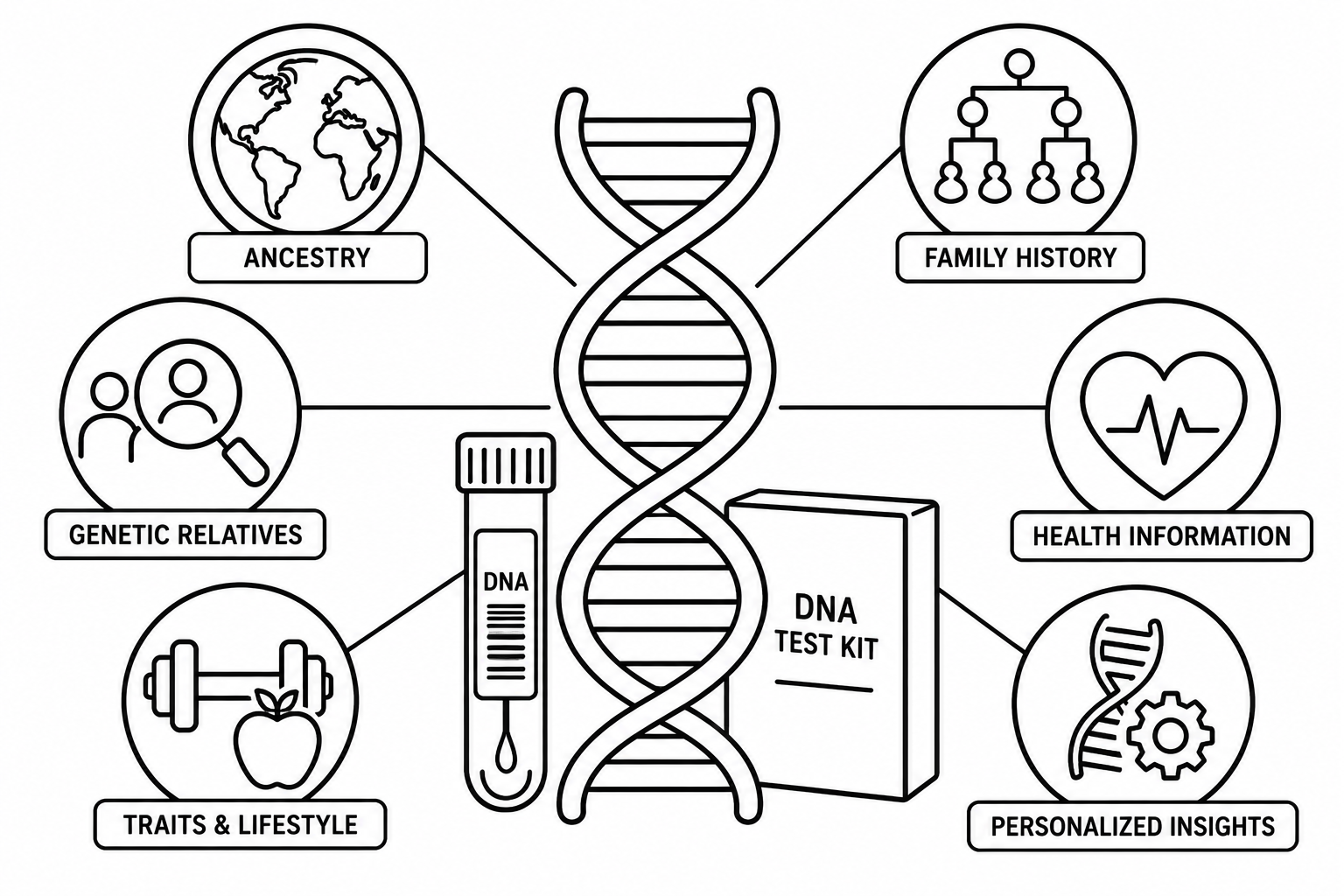
Some consumer genetic tests report information about selected traits or characteristics. These may include genetic associations related to particular biological or lifestyle-related features. 🔬
It is important to remember that genes are only one part of the picture. Environment, nutrition, behavior, age, and other biological factors can also influence many traits. 🌿 Therefore, genetic information should generally be considered as one source of information rather than a complete explanation of an individual's characteristics.
How to Choose the Right DNA Test
The right DNA test depends largely on the question you want to answer. If your primary interest is family history, an ancestry-focused test may be relevant. If you are investigating a specific inherited condition, a clinical or health-focused genetic test may be more appropriate.
Before purchasing a test, check what type of information it provides, how the results are reported, and whether professional interpretation is available when needed.
Choosing a DNA Test Based on Your Goal
| What do you want to know? | Type of information to consider |
|---|---|
| Where might my ancestors have come from? | Ancestry information |
| Do I have genetic relatives? | Genetic matching |
| Do I carry a particular genetic variant? | Genetic testing |
| Could a specific inherited condition run in my family? | Clinical genetic testing |
| Can genetics provide information about a particular trait? | Trait-related genetic testing |
Questions to Ask Before Taking a DNA Test
What Do I Want to Learn?
Start by identifying the specific question you want the test to answer. This can help you distinguish between ancestry, relationship, trait, and health-related testing.
How Will My Genetic Data Be Used?
Read the testing company's privacy policy before submitting a DNA sample. Pay attention to how genetic data and biological samples may be stored, shared, used for research, or included in genetic matching services.
How Should I Interpret My Results?
Genetic results can sometimes be complex. Consider the limitations of the test and the evidence behind reported findings, particularly when the results relate to health. A healthcare professional or genetics specialist may be appropriate for interpreting clinically important findings.
Understanding the Limitations of DNA Testing
DNA testing can provide valuable information, but it does not provide a complete picture of a person's ancestry, identity, health, or lifestyle. 🧬 Results depend on the type of test, the genetic markers analyzed, the reference databases used, and the methods used to interpret the data.
Unexpected findings can also raise questions about family relationships or health. For this reason, it is useful to approach genetic testing with realistic expectations and consider the context in which the results were generated. 💭
What Should You Do With Your DNA Test Results?
Once you receive your results, take time to understand what the test actually measured. Separate ancestry estimates and trait reports from findings that may have clinical significance.
If a result concerns a potential health condition or inherited risk, discuss it with an appropriately qualified healthcare or genetics professional before making health-related decisions. 🧬
Why Understanding Your Purpose Matters Before a DNA Test
Haplogroups: Tracing Unbroken Paternal and Maternal Lineages
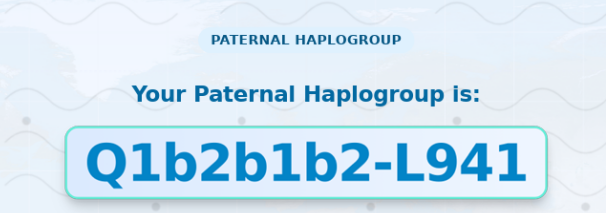
While most autosomal DNA recombines with each generation, your haplogroups pass down virtually unchanged. Paternal haplogroups trace direct father-to-son lines via the Y chromosome across millennia—identifying specific ancient branch markers like Q1b2b1b2-L941. In parallel, maternal haplogroups track unbroken mother-to-child lineages through mitochondrial DNA (mtDNA), revealing deep ancestral migration routes out of Africa.
A DNA test can answer different questions depending on the type of analysis performed. Whether you are interested in ancestry 🌍, family connections , genetic traits 🧬, or health-related information , knowing your purpose before testing can help you select a suitable test and approach the results with realistic expectations.
Before taking a DNA test, start with one simple question: What do I want to learn from my DNA? 🧬
🧬 What Makes a GenoConnect DNA Test Different?
GenoConnect offers DNA testing through a convenient cheek-swab collection method, with doorstep delivery and sample pickup. Depending on the selected kit, customers can access different levels of genomic coverage, including 1×, 5×, hybrid 5× WGS + 100× WES, and 30× WGS. For many customers, access to raw DNA data is an important part of choosing a DNA test, allowing them to retain their genomic data for further analysis. GenoConnect also offers deeper genomic insights through Y-chromosome and mitochondrial DNA (mtDNA) haplogroups and subclades, as well as ancient-DNA analysis using qpAdm. Together, these options allow customers to explore their genetic ancestry and genomic information at different levels of depth.
Key Features at a Glance
Cheek-swab DNA collection
Doorstep kit delivery and sample pickup
Multiple sequencing coverage options: 1×, 5×, hybrid 5× WGS + 100× WES, and 30× WGS
Raw DNA data availability
Y-DNA haplogroups and deeper subclades
mtDNA haplogroups and deeper subclades
Ancient-DNA ancestry analysis using qpAdm
Ready to Explore Your DNA?
Curious about your ancestry, family history, haplogroups, or genomic data? Explore GenoConnect DNA testing kits and choose the option that matches your goals. With cheek-swab collection, doorstep delivery and pickup, multiple sequencing options, and raw DNA data availability, you can explore your genetic information at your preferred level of depth.
Explore DNA Testing Kits & Get Started with GenoConnect
Button text: Explore DNA Kits
Button link: https://www.genoconnect.co/