

Chettiar Community
A prominent Tamil business community known for trade, banking, and entrepreneurship.
The Chettiars of South India
History, Culture, and Legacy of a South Indian Mercantile Community
Table of Contents
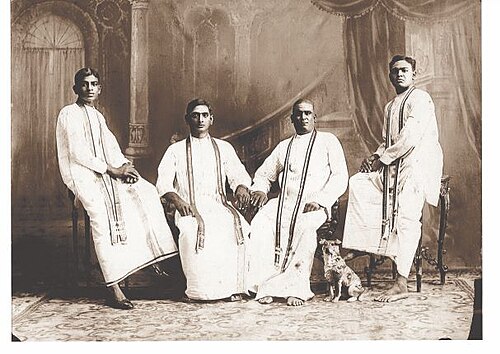
1. Introduction: Who Are the Chettiars?
Chettiar (also spelt Chetti or Chetty) is a title borne by a number of trading, weaving, agricultural, and land-owning communities across South India, most prominently in the states of Tamil Nadu, Kerala, and Karnataka. Rather than naming a single, uniform caste, "Chettiar" functions as an umbrella title historically bestowed on merchants, and it is used today by several distinct communities with different regional origins, occupations, and customs.
The best-documented and most widely recognised of these groups is the Nattukottai Chettiar, more properly known by their own name, the Nagarathar, a Tamil mercantile community native to a cluster of villages in the Sivaganga, Pudukkottai, and Ramanathapuram (Ramnad) districts of Tamil Nadu, an area collectively known today as Chettinad. Renowned across South and Southeast Asia as bankers, moneylenders, and long-distance traders during the eighteenth to twentieth centuries, the Nagarathars built an extensive and highly organised commercial network that stretched from South India to Ceylon, Burma, Malaya, Singapore, and beyond, earning a lasting reputation as some of the most capable financiers of colonial-era Asia.
Because the Nagarathar Chettiars are the sub-group most extensively documented in historical scholarship, and the community most closely associated with Chettinad's architecture, cuisine, and philanthropic legacy, this profile focuses primarily on their history and customs, while also noting the wider and more varied use of the Chettiar title among other South Indian communities such as the Vellalar Chettiars and the weaving Devanga Chettiars.
2. Etymology and the Meaning of the Title
The word Chettiar is generally traced to the Sanskrit term shreshthin (श्रेष्ठिन्), meaning "eminent one" or "chief," a title historically applied to the head of a guild or a leading merchant. Over time, as the word passed through Prakrit and regional Indian languages, it evolved into forms such as sethi and eventually the modern shet or sethi, cognates of which appear across Indian mercantile titles. In the Tamil country specifically, community historians also trace the title Chettiar to the ancient Tamil word etti, a title said to have been conferred on merchants by early Tamil kings in recognition of their trade and wealth.
In early Indian literature, the term denoted a prosperous merchant class loosely associated with the Vaishya varna, the traditional Indian social category linked to trade and commerce. In practice, however, the historical picture is more complex: the title has been adopted by communities with varied origins, including trading lineages, landowning agriculturalists, and skilled artisans, and its social standing has generally rested less on inherited ritual rank than on commercial success, wealth, and philanthropy.
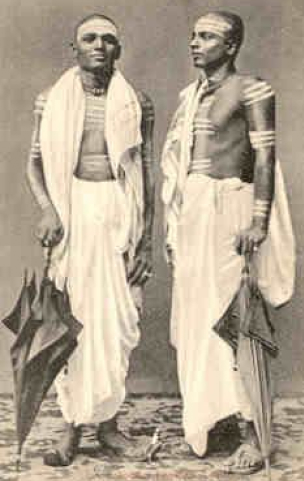
3. Origins and Early History
3.1 Legendary and Traditional Origins
Nagarathar community tradition traces its ancestral homeland to a region called Naganadu, said to have lain to the north or northwest of Kanchipuram, from which the community is believed to have migrated after a natural calamity. According to this oral tradition, the community subsequently settled for many centuries at Kanchipuram itself, before moving to Kaveripoompattinam (also called Poompuhar), the great port city of the early Chola kingdom on the Coromandel coast.
Tradition holds that the Nagarathars prospered at Kaveripoompattinam as maritime traders for many centuries, until a catastrophic flood, sometimes described as a tsunami, destroyed the port and forced the community to relocate inland. Various community legends recount different circumstances surrounding this departure, including accounts of royal displeasure and the port city's vulnerability to the sea; historians note that the details of this migration cannot be independently verified and survive chiefly as oral and devotional tradition rather than documented history. What is generally accepted is that, by around the eighth century CE, the community had resettled in the dry interior tract that today forms Chettinad, in the territory once shared by the princely states of Pudukkottai, Ramnad, and Sivaganga.
A well-known piece of community folklore connects this resettlement to the origin of an annual observance, Pillaiyar Nonbu, a twenty-one-day fast and prayer to Lord Ganesha (Vinayagar), still observed by Nagarathar families today. According to this tradition, ancestors of the community, lost at sea after the destruction of their port city, prayed to Ganesha for twenty-one days before safely reaching shore, a story commemorated annually as one of the community's most distinctive religious observances.
3.2 Settlement in Chettinad
However the community's arrival in the region came about, historical and legendary accounts converge on the tradition that a Pandyan king granted the incoming merchants the use of nine temple sites, each of which came to represent one of the community's exogamous divisions. These nine temples, at Ilayathangudi, Iluppaikudi, Iraniyur, Mathur, Nemam, Pillaiyarpatti, Soorakudi, Vairavanpatti, and Velangudi, remain the ritual and genealogical anchors of Nagarathar identity to this day; every Nagarathar family traditionally belongs to one of them, and each temple maintains its own historical family register.
The community settled across a cluster of villages and small towns in this arid tract, eventually numbering around ninety-six settlements at their historical peak (a number reduced today to roughly seventy-five inhabited Nagarathar villages and towns). Their traditional trading activity in this early period centred on salt, produced along the Tamil coast and carried inland for sale, along with grain, cotton, and other commodities, a trade that laid the foundation for the community's later expansion into moneylending and banking.
4. Social Structure and Community Organisation
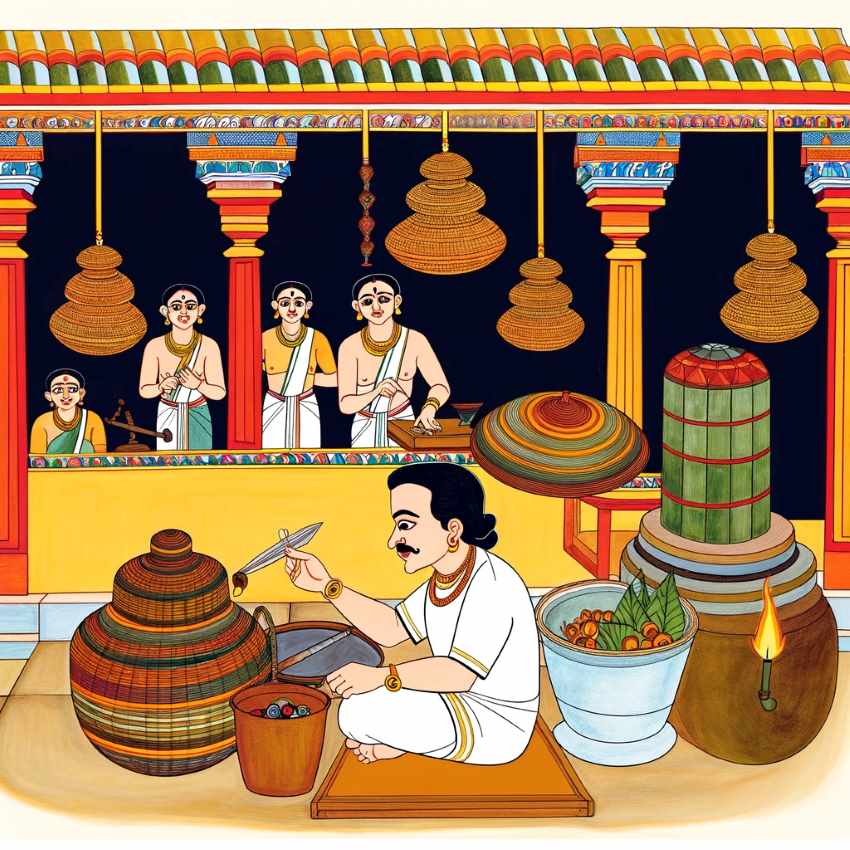
The Nagarathar community is organised around the nine ancestral temples described above, each of which functions as an exogamous unit: marriage between members affiliated with the same temple (referred to as pangali, or kin) is traditionally prohibited, while marriage between members of different temples is permitted and, historically, actively encouraged as a way of strengthening ties across the community. Two of the nine temples, Ilayathangudi and Mathur, are further subdivided into internal divisions (pirivu), which allow marriage between members of different divisions within the same temple.
Each temple maintains a formal count of the families historically associated with it, known as pulli, a system of genealogical record-keeping that has allowed the community to preserve a remarkably detailed sense of lineage and kinship across many generations. Notably, the families associated with the Iraniyur and Pillaiyarpatti temples are considered to be one extended family, owing to a shared ancestry traced to a pair of brothers said to have been divided between the two temples in the thirteenth century, and marriage between their descendants remains prohibited.
Because South India historically lacked a rigidly enforced four-fold varna system of the kind found in parts of North India, the Nattukottai Nagarathars have generally been classified in scholarly literature as a high-ranking mercantile (Vaishya) community, a status that rested primarily on their commercial success, wealth, temple patronage, and civic philanthropy rather than on inherited ritual privilege. Extended families historically lived and worked together under a joint-family structure, with wealth, business partnerships, and philanthropic projects typically organised at the level of the family firm.
Chettiar Sub-Communities at a Glance
| Sub-community / Branch | Traditional Occupation | Traditional Base | Present-day Character |
|---|---|---|---|
| Nattukottai Nagarathar (Nattukottai Chettiar) | Salt trade, moneylending, banking | Chettinad (Sivaganga, Pudukkottai, Ramnad) | Largest and best-documented Chettiar sub-group; associated with Chettinad cuisine and mansions |
| Aruviyur Nagarathar | Trade and commerce | Aruviyur and surrounding villages | Smaller Nagarathar branch with its own temple and family records |
| Vellalar Chettiar (Vellan Chetti) | Agriculture, landholding, trade | Various Tamil Nadu districts | Agrarian landlord lineage distinct from the mercantile Nagarathars |
| Devanga Chettiar | Handloom weaving | Weaving centres across Tamil Nadu and Karnataka | Artisan community known for fine textile production |
Table: Selected communities that use the Chettiar title, with the Nattukottai Nagarathar as the largest and most extensively documented branch.
5. Language
The Nagarathar Chettiars, like the great majority of the population of Tamil Nadu, speak Tamil as their mother tongue, and Tamil remains the primary language of family life, business record-keeping, religious observance, and community publications. Nagarathar speech retains a number of distinctive vocabulary items and turns of phrase associated with the community's traditional banking and trading vocabulary, including specialised commercial terms for concepts such as credit, debit, profit, and loss, developed as part of the community's own indigenous system of account-keeping.
Members of the community settled abroad, particularly in Malaysia, Singapore, and Sri Lanka, have historically maintained Tamil-medium associations, temples, and cultural bodies to preserve the language and religious practice among younger diaspora generations, alongside fluency in the languages of their adopted countries.
6. Religious Life and Temple Patronage
The Nagarathar community is predominantly Hindu and strongly Shaivite in its religious orientation, with particular devotion to Lord Shiva, Lord Murugan (Karthikeya), and Ganesha. Religious life centres on the nine ancestral temples described earlier, together with numerous other temples that the community has funded, built, or restored across Tamil Nadu and, historically, across Southeast Asia.
Temple philanthropy is one of the most consistently documented features of Nagarathar community life. Wealthy Nagarathar families and business houses financed the construction, renovation, and endowment of a very large number of temples devoted chiefly to Shiva and Vishnu, along with choultries (rest houses for pilgrims), schools, and colleges, particularly during the height of the community's banking prosperity in the nineteenth and early twentieth centuries. Well-known examples of temples associated with Nagarathar patronage include the Karpaka Vinayakar Temple at Pillaiyarpatti and the Shanmughanathar Temple at Kundrakudi in Tamil Nadu, alongside the renovation of major Saivite shrines such as the Nataraja Temple at Chidambaram.
The community observes the annual Pillaiyar Nonbu fast described above, along with the wider cycle of Tamil Hindu festivals, including Deepavali, Pongal, and temple festival days (thiruvizha) associated with each of the nine ancestral temples, which draw dispersed family members back to their ancestral villages for worship and reunion.
7. Marriage and Family Traditions
Marriage within the Nagarathar community has traditionally been arranged within the framework of the nine-temple system described above, with matches typically negotiated between families of different temple affiliations, historically through community networks and family intermediaries. Weddings are elaborate, multi-day family occasions, generally held at the ancestral village or a family hall associated with one of the nine temples, and combine Hindu Vedic and Tamil ritual elements with customs distinctive to the community.
Traditional Nagarathar weddings, historically spanning several days, typically include a formal betrothal and matching of horoscopes, a milk-boiling and purification ceremony (paal choru or similar rites practised in South Indian Hindu weddings more broadly), the tying of the sacred thali (wedding pendant) by the groom, and an elaborate communal feast served on banana leaves to the extended family and village community. Community and family gatherings and clan reunions remain an important feature of Nagarathar social life, particularly among diaspora families seeking to maintain ties to their ancestral villages and temples.
Nagarathar women have traditionally held a distinctive and, in several respects, comparatively strong position within family and property matters, reflected in customary practices such as women's rights to jewellery and, in some cases, property received at marriage, a subject examined in detail in academic studies of Nagarathar kinship and gender.
8. Cuisine
Chettinad cuisine, the culinary tradition of the Nagarathar community, is one of the most celebrated regional cuisines of South India, renowned for its bold use of freshly ground spice blends (masalas), its distinctive sun-drying and preservation techniques, and its combination of vegetarian and non-vegetarian dishes.
Traditionally a largely vegetarian cuisine in its earliest form, Chettinad food incorporated meat, seafood, and new ingredients over the eighteenth and nineteenth centuries as Nagarathar merchants travelled and settled across Ceylon, Burma, Malaya, and beyond, bringing home new culinary influences alongside their trading profits. The cuisine remains, however, notably restrained in its use of beef and pork, with chicken, mutton, and a wide range of seafood, particularly crab, prawn, and country chicken, forming the centrepieces of its best-known non-vegetarian dishes.
- Kulambu and poriyal — thick, spiced lentil or tamarind-based sauces (kulambu) paired with dry-fried vegetable or meat stir-fries (poriyal), forming the core of a typical Chettinad meal.
- Chettinad chicken and crab curry — signature dishes built on a masala dominated by black pepper, dried red chillies, fennel, and freshly ground coconut, widely regarded as the cuisine's most famous exports.
- Kandarappam, athirasam, and paniyaram — a wide family of traditional rice-based sweets and savoury snacks (collectively called palakaram) prepared for festivals and special occasions.
- Vathal — sun-dried and salted vegetables, fruits, and, in some households, meats, prepared during the growing season and preserved for use through the year, a practical adaptation to Chettinad's dry climate.
- Kavuni arisi — a dessert made from a variety of black glutinous rice, a dish the community is widely credited with adopting from its trading contacts in Burma.
Meals are traditionally served on banana leaves, and hospitality, particularly the generous feeding of guests, remains a strongly emphasised community value, reflected in the well-known South Indian saying that one is fortunate to eat as a Chettiar does.
9. Traditional Dress and Ornaments
Traditional Nagarathar dress, like much of Tamil Hindu dress more broadly, historically featured the veshti (dhoti) and angavastram (upper cloth) for men, and the sari for women, generally in rich colours and, for special occasions, in the classic Chettinad-style cotton and silk weaves associated with the region, including the well-known Kandangi sari, a sturdy, broad-bordered handloom cotton sari traditionally worn by Chettinad women and still closely identified with the community and region today.
Nagarathar women traditionally wore, and on ceremonial occasions continue to wear, substantial gold jewellery, reflecting both the community's mercantile prosperity and the cultural importance placed on gold as a store of family wealth and as part of a woman's personal property. Men of wealthy Nagarathar families historically wore fine white veshtis with gold-bordered angavastrams for formal and religious occasions, a style of dress still seen at community weddings and temple festivals today.
10. Traditional Architecture: The Mansions of Chettinad
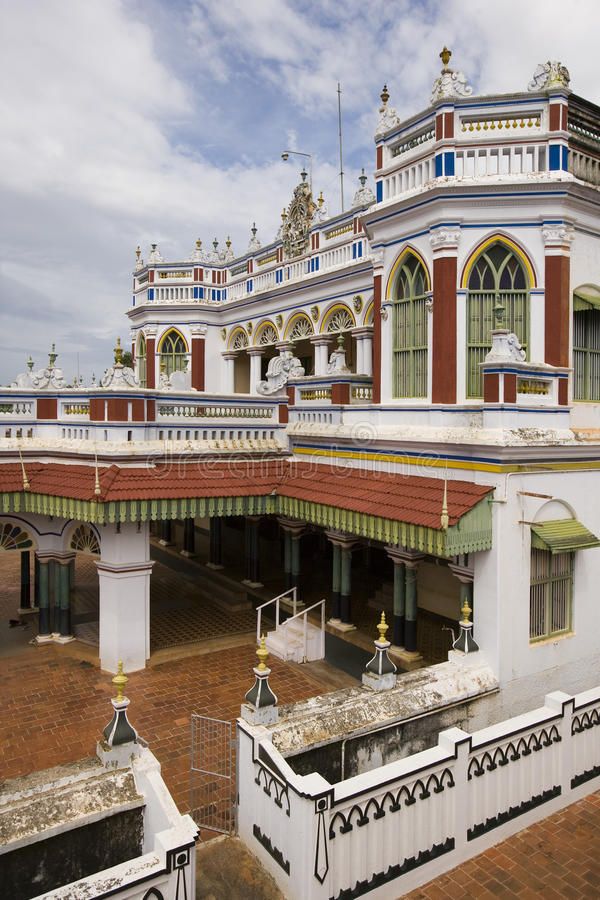
Perhaps the most visually striking legacy of Nagarathar prosperity is the architecture of Chettinad itself. During the height of their banking success in the late nineteenth and early twentieth centuries, Nagarathar families built an extraordinary number of large mansions, popularly called Nattukottai ("country fort") houses, across the villages of Chettinad; historical estimates suggest that more than ten thousand such houses were constructed across the region during this period.
These mansions were built around one or more large internal courtyards, with thick walls, high ceilings, and a construction technique that traditionally combined lime, egg white, and myrobalan (kadukkai) to produce durable, polished surfaces without the use of modern cement. Interiors were furnished with materials imported from across the trading world that had made the community's fortune: Burma teak for pillars, doors, and ceilings; Italian marble flooring; Belgian stained glass; Moroccan and European chandeliers; and ceramic tiles and ornaments sourced from as far afield as Japan and China.
A defining feature of Chettinad interiors is the Athangudi tile, a handmade, brightly coloured cement tile produced in the village of Athangudi using local sand and hand-poured pigment, prized for its glossy finish and geometric and floral patterns; the craft remains an active local industry and a signature element of Chettinad's built heritage today. Exteriors were typically finished in white lime plaster, with painted borders in red and blue, and facades were often decorated with stucco figures of Hindu deities, including images of Gajalakshmi, the goddess of wealth and prosperity, reflecting the mercantile values of the families who built them.
Many of these grand houses fell into disuse in the decades following Indian independence, as the community's overseas banking networks contracted; however, a heritage revival beginning in the 1990s, driven in part by conversion of several mansions into boutique heritage hotels and by growing domestic and international tourism, has renewed interest in Chettinad's architectural legacy and supported the restoration of a number of the region's finest houses.
11. Folklore and Oral Tradition
Nagarathar community identity is sustained by a rich body of oral tradition, including origin legends of the migration from Kaveripoompattinam, the story of the ancestors' twenty-one-day prayer at sea commemorated in Pillaiyar Nonbu, and family and village histories preserved through the temple-based pulli record system. These traditions, transmitted for generations before being more systematically documented by community historians and scholars in the twentieth century, function as both religious memory and informal community history.
Community folklore also honours several important devotional and literary figures associated, by tradition, with the Nagarathar community's Tamil merchant milieu, including Kannagi, the heroine of the classical Tamil epic Silappatikaram, revered as a symbol of chastity and moral justice, and the medieval poet-ascetic Pattinathar, a wealthy merchant said to have renounced his fortune for a life of devotion, whose poetry remains widely read.
12. Education, Livelihoods, and the Banking Legacy
The Nattukottai Nagarathars are best known historically for developing one of colonial India's most sophisticated indigenous banking systems. Beginning as itinerant salt traders, the community moved progressively into moneylending, trade financing, and eventually formal banking, developing their own distinctive system of double-entry bookkeeping and financial terminology, including indigenous Tamil terms for credit, debit, profit, and loss, and their own promissory note instrument, the hundi.
From the nineteenth century onward, Nagarathar banking houses extended credit to farmers, traders, and, at times, landowning elites across South India and, increasingly, across the Bay of Bengal region, providing capital that mainstream British and other banks were often unwilling to extend to small cultivators. This activity earned the community a reputation, still cited today, as important financiers of colonial-era agricultural expansion in South and Southeast Asia.
Historically, the community placed less emphasis on formal Western schooling and more on practical, on-the-job training within the family firm, a young man typically beginning his career as an apprentice within a relative's business. Following the contraction of the community's overseas banking networks around the mid-twentieth century, subsequent generations of Nagarathars invested heavily in formal education, and the community today is well represented in business, engineering, medicine, and other professions, alongside continuing involvement in trade, industry, and finance through established family business houses.
13. Diaspora
The Nattukottai Nagarathars were among the earliest Tamil communities to build a substantial and organised overseas trading and banking presence, with historical roots in this expansion going back to at least the eighteenth century. From bases in Chettinad, Nagarathar banking houses extended across the Bay of Bengal region to Ceylon (Sri Lanka), Burma (Myanmar), Malaya (present-day Malaysia and Singapore), and, to a lesser extent, the Dutch East Indies (Java and Sumatra) and French Indochina (Vietnam).
The community's presence in colonial Burma was especially significant: Nagarathar financiers extended credit widely to Burmese rice cultivators, and by the early twentieth century Nagarathar-owned or mortgaged landholdings made up a substantial share of cultivated land in parts of Lower Burma. This position of prominence was significantly curtailed in the years following Burmese independence, as changing economic and land-tenure policies led many Nagarathar families to leave the country, often at considerable financial loss, a historical episode that community members and historians alike recognise as a major turning point that ended the community's Southeast Asian banking era.
Wherever they settled in significant numbers, Nagarathar traders built temples devoted chiefly to Lord Murugan, alongside community halls and choultries; well-known examples include Murugan (Thendayuthapani) temples established by the community in Burma, and temples supported by Chettiar philanthropy in Penang, Kuala Lumpur, and Singapore, including support for institutions such as Singapore's historic Sri Mariamman Temple. Community associations in these countries, and in more recent diaspora centres such as the United Kingdom, the United States, and Australia, continue to organise cultural, religious, and heritage-education programmes aimed at connecting younger diaspora generations with their ancestral villages and temples in Chettinad.
14. Prominent Figures
14.1 Religious and Literary Figures
- Kannagi (legendary) — Central figure of the Tamil epic Silappatikaram, revered by the community as a symbol of chastity and justice
- Karaikkal Ammaiyar — A celebrated Saivite woman saint, counted among the sixty-three Nayanmar saints of the Tamil Saiva tradition
- Pattinathar — A medieval merchant-turned-ascetic poet-philosopher whose renunciate verses remain widely read in Tamil devotional literature
14.2 Business and Philanthropy
- S. Rm. M. Annamalai Chettiar (Raja of Chettinad) — Banker, philanthropist, and founder of Annamalai University; conferred the title "Raja" by the British
- Alagappa Chettiar — Banker and philanthropist; founder of institutions including Alagappa University
- A. M. M. Murugappa Chettiar — Founder of the Murugappa Group, one of India's oldest diversified business conglomerates
- A. Nagappa Chettiar — Industrialist and early pioneer of the Indian leather industry
- A. C. Muthiah — Industrialist and former president of the Board of Control for Cricket in India
- Karumuttu Thiagarajan Chettiar — Textile industrialist and founder of institutions in Madurai
14.3 Culture and Public Life
- A. V. Meiyappan — Founder of AVM Productions and one of the pioneering figures of early Tamil cinema
- Kannadasan — Renowned Tamil poet and film lyricist
- A. K. Chettiar — Early Tamil travel writer and documentary filmmaker
- R. M. Pitchappan — Biologist recognised for research in immunogenetics and infectious disease
This list is illustrative rather than exhaustive; the community has produced a substantial number of industrialists, scholars, and public figures across Tamil Nadu, India, and the diaspora over the past two centuries.
15. Contemporary Reflections
Two themes recur in contemporary discussion of Nagarathar identity. The first is heritage preservation: as younger generations increasingly pursue careers and education away from Chettinad, and as many of the region's grand mansions have fallen into disrepair, community organisations, heritage trusts, and individual families have taken up efforts to restore historic houses, document family and temple genealogies, and record oral histories before they are lost, alongside a broader tourism-driven revival of interest in Chettinad's architecture and cuisine.
The second is the balance between tradition and change: the nine-temple marriage system, the pulli family registers, and other customary institutions remain culturally significant markers of identity, even as intermarriage patterns, migration, and modern professional life have altered the day-to-day practice of community customs, particularly among diaspora Nagarathar families in Southeast Asia, the Gulf, and the West.
16. Conclusion
The Chettiars, and the Nattukottai Nagarathars in particular, represent one of South India's most distinctive mercantile communities: a group whose oral tradition of migration from an ancient port city, whose meticulously preserved temple-based genealogies, and whose extraordinary record as bankers and philanthropists across South and Southeast Asia together tell a coherent story of enterprise, resilience, and cultural continuity. From the sun-dried spice larders and courtyard mansions of Chettinad to the Murugan temples of Penang and Yangon, the Nagarathar story is at once a business history, a religious tradition, and a living regional culture that continues to be celebrated and preserved today.
References
- [1]1. Wikipedia. "Chettiar." https://en.wikipedia.org/wiki/Chettiar
- [2]2. Wikipedia. "Nagarathar." https://en.wikipedia.org/wiki/Nagarathar
- [3]3. Wikipedia. "Chettinad cuisine." https://en.wikipedia.org/wiki/Chettinad_cuisine
- [4]4. Wikipedia. "Attangudi Palace." https://en.wikipedia.org/wiki/Attangudi_Palace
- [5]5. Wikipedia. "S. Rm. Muthiah Chettiar." https://en.wikipedia.org/wiki/S._Rm._Muthiah_Chettiar
- [6]6. Wikipedia. "B. Govindasamy Chettiar." https://en.wikipedia.org/wiki/B._Govindasamy_Chettiar
- [7]7. Live History India. "Chettinad – A Land of Mansions, Temples and Fine Cuisine." https://www.livehistoryindia.com/story/places/chettinad-a-land-of-mansions-temples-and-fine-cuisine
- [8]8. The Federal. "How the Centuries-old Tradition of Tamil Nadu's Athangudi Tiles Is Finding a Place in Modern Homes." https://thefederal.com/category/the-eighth-column/tamil-nadu-chettinad-athangudi-tiles-heritage-mansions-art-handmade-sustainable-222033
- [9]9. Homegrown India. "The Palatial Mansions of Chettinad Are Windows into the Halcyon Days of Chettiar Grandeur." https://homegrown.co.in/homegrown-explore/what-remains-of-the-day-inside-the-palatial-chettiar-mansions-of-chettinad
- [10]10. Outlook Traveller. "Who Are the Chettiars? Tracing the Roots of Chettinad Culture and Cuisine." https://www.oteats.outlooktraveller.com/features/who-are-the-chettiars-tracing-the-roots-of-chettinad-culture-and-cuisine
- [11]11. elanka.com.au. "The Chettiars of Tamil Nadu, Pioneers of Modern Banking" by W. S. Weerasooria. https://www.elanka.com.au/the-chettiars-of-tamil-nadu-pioneers-of-modern-banking-by-w-s-weerasooria/
- [12]12. London Nagarathar Sangam. "History." https://www.londonnagarathar.org/history/
- [13]13. Deccan Chronicle. "In Search of Chettiar Roots." https://www.deccanchronicle.com/nation/in-other-news/200816/in-search-chettiar-roots.html
- [14]14. International Journal of Research and Innovation in Social Science. "Origins and Historical Background of the Nagarathar Community." https://rsisinternational.org/journals/ijriss/articles/origins-and-historical-background-of-the-nagarathar-community/
- [15]15. Northern California Nagarathar Association. "Chettinad Cuisine." https://www.encna.org/chettinad-cuisine.html