

Kurmi Community
Explore the Kurmi community, a large agrarian group across India and Nepal. Learn about their history, agricultural skills, regional names (Kanbi).
The Kurmi Community of India
1. Introduction
The Kurmi are one of the largest and most widely distributed agrarian communities of India, historically associated with settled cultivation, market gardening, and land management across the Indo-Gangetic plain and central India. The Kurmi are found in significant numbers in Uttar Pradesh, Bihar, Madhya Pradesh, Chhattisgarh, Jharkhand, West Bengal, Odisha, Maharashtra, and parts of Gujarat, as well as in the Terai and Madhesh regions of southern Nepal.
2. Etymology and Origins
The origin of the word "Kurmi" is debated among linguists and community historians, and no single derivation is universally accepted. Community tradition additionally links the name, by folk etymology, to kūrma, the tortoise incarnation of Vishnu, though historians generally treat this as a later devotional association rather than an established linguistic derivation.
3. Historical Background
3.1 Early and Precolonial Period
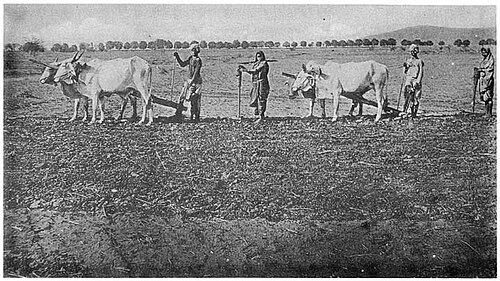
Documentary references to the Kurmi as a distinct cultivating community become clearer from the medieval and early modern periods onward, when peasant communities such as the Kurmi formed part of a broad social spectrum of non-elite tillers and pastoralists in northern and central India.
3.2 The Eighteenth and Nineteenth Centuries
During the eighteenth century, the Kurmi gained a strong regional reputation as market gardeners and skilled agriculturists.
According to the historian Christopher Bayly, Kurmi cultivators distinguished themselves through careful land management, growing valuable market produce such as potatoes and melons near the village while reserving further land for fine grains, a system that could transform the productivity of a local rural economy within a short span of years.
Such claims were frequently contested by already-established landed groups such as the Rajputs. The nineteenth century, particularly following the Chalisa famine of 1783 and the increased revenue demands of the British East India Company, also saw periods of economic hardship for many Kurmi cultivators, alongside broader shifts in how social identity and status were defined across colonial northern India.
3.3 Colonial Ethnography and description
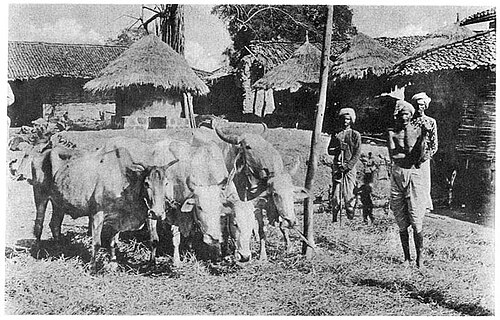
The late nineteenth century saw the Kurmi, along with other Indian communities, described and described within the colonial ethnographic and census apparatus. Officials associated with the "occupational" school of community theory, including William Crooke, Denzil Ibbetson, and E. A. H. Blunt, wrote favourably of the Kurmi's industriousness and agricultural skill, in contrast to officials associated with racial theories of community, such as H. H. Risley, whose 1901 Census description placed Kurmis of the United Provinces and the Central Provinces into different, and now discredited, racial categories. In the 1901 Census the only census to record social description directly the Kurmi were described in Uttar Pradesh described differently across colonial administrative records.
In the early twentieth century, Kurmi cultivators, together with Ahir/Yadav and Koeri communities, were closely associated with the Kisan Sabha peasant movements of the Bihar–eastern Uttar Pradesh Gangetic plain, and with popular Vaishnava devotional traditions centred on Rama and Krishna. In 1934, Kurmi, Yadav, and Koeri leaders formed the Triveni Sangh, an early attempt at a joint cultivator-community political organisation in Bihar, though it struggled against better-resourced rivals and internal disagreements and had limited lasting electoral success.
5. Regional Names and Related Groups
The Kurmi are known by different names in different linguistic regions of India, reflecting the community's wide geographic spread rather than a single centralised origin:
- Kurmi Uttar Pradesh, Bihar, Madhya Pradesh, and much of the Hindi belt
- Kanbi Gujarat, historically associated with the ancestry of the present-day Patidar community
Within the wider Kurmi population, numerous local and clan-based sub-divisions exist, such as the Chandnahu, Chandrakar, Singrore, Usrete/Havelia, Gaharwar, Awadhiya, and other named groups, many of which are traditionally endogamous that is, marriage is generally arranged within the sub-group, and clan exogamy (avoidance of marriage within one's own patrilineal clan) is widely observed. Common surnames associated with the community include Patel, Verma, Singh, Katiyar, Gangwar, Sachan, Mahato, Chaudhary, Kanaujia, and Patil, among others, though surname usage varies considerably by region and does not by itself indicate community membership.
6. Geographic Distribution and Population
The Kurmi are among the more numerically substantial communities of northern and central India, with especially large populations recorded historically in Uttar Pradesh and Bihar, and significant presence in Madhya Pradesh, Chhattisgarh, Jharkhand, West Bengal, Odisha, Maharashtra, Gujarat, and Karnataka. Exact contemporary population figures are difficult to state with precision, since community-wise population data has not been comprehensively published in the decennial Census of India since 1931, and community and state-level estimates vary.
7. Language
8. Religion and Beliefs
The great majority of Kurmis are Hindu, with a smaller Muslim Kurmi population found in parts of Uttar Pradesh and Bihar, reflecting a shared regional agrarian identity that in some areas crossed religious lines under Mughal-era and later administration; in the Chunar and Jaunpur areas, for instance, some Hindu Kurmi communities historically adopted certain local Muslim customs, such as cousin marriage and burial of the dead, through long-standing social contact with Muslim landholders.
Devotionally, the Kurmi have historically been closely associated with popular Vaishnava Bhakti traditions centred on Rama and Krishna, including the Ramcharitmanas tradition of Tulsidas, which shaped much community religious life from the sixteenth century onward.
9. Culture and Social Customs
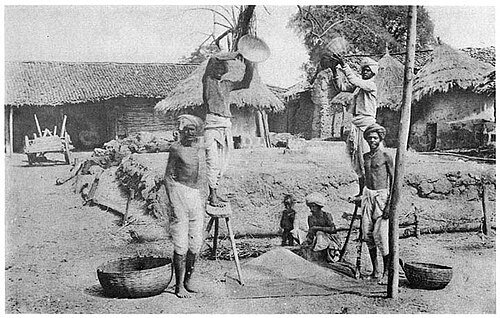
As an overwhelmingly agrarian community historically rooted in village life, Kurmi social and cultural practice has traditionally centred on the agricultural calendar, extended family and clan structures, and regional Hindu festival observance shared with neighbouring communities including Holi, Diwali, and, in many regions, harvest festivals tied to the sowing and reaping seasons. Family and clan gatherings, oral genealogies, and lineage-based identity (often invoking descent from named clans or gotras) remain socially significant, particularly in matters of marriage arrangement.
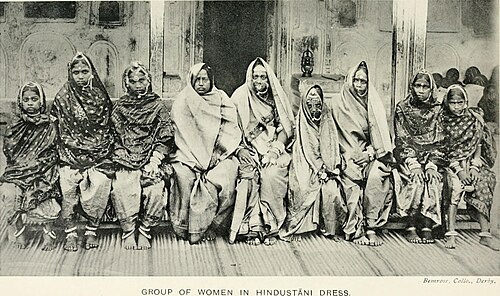
A long-noted feature of traditional Kurmi social life, remarked upon by both nineteenth-century colonial observers and later historians, was the relatively active role of Kurmi women in agricultural labour, working alongside men in the fields a practice historians have contrasted with the greater seclusion of women (purdah) traditionally observed among some higher-status landed groups in the same regions during the same period.
10. Marriage and Family Life
Marriage among the Kurmi has traditionally followed the wider North Indian Hindu pattern of clan exogamy (marrying outside one's own patrilineal clan or gotra) combined with sub-community endogamy (marrying within one's broader regional Kurmi sub-group, such as Chandnahu, Singrore, or Awadhiya). Marriages are traditionally arranged by families, with rites generally following regional Hindu wedding customs shared with neighbouring agrarian communities, including a formal wedding ceremony (vivah), the exchange of gifts between families, and community feasting. As with much of rural North Indian society, joint or extended family living arrangements, in which married sons and their families reside with parents, have historically been common, alongside strong emphasis on family reputation and land inheritance along patrilineal lines.
11. Livelihood and Economic Life
Agriculture remains the traditional and, in many rural areas, continuing occupation of the Kurmi community, historically encompassing both subsistence food-grain cultivation and market gardening of higher-value crops. Following the abolition of the zamindari (landlord) system through land reform legislation enacted across India from the 1950s, many Kurmi tenant cultivators became landowners in their own right, contributing to the community's continued strong association with agriculture and rural landholding.
Since the mid-twentieth century, growing access to education has diversified Kurmi livelihoods considerably, with increasing representation in government service, teaching, engineering, medicine, business, and politics, alongside continued strong ties to agriculture in many rural areas, particularly in Uttar Pradesh, Bihar, Chhattisgarh, and Madhya Pradesh.
12. Political Organisation and Contemporary Politics
In the post-independence period, the Kurmi have been an influential voting bloc in Uttar Pradesh and Bihar in particular, associated at various times with the Congress party, the Bharatiya Janata Party, the Samajwadi Party, the Bahujan Samaj Party, and, in Bihar, the Janata Dal (United), among other parties, with prominent Kurmi leaders active across this political spectrum rather than concentrated in any single party.
Notably, Bihar's Nitish Kumar, one of India's most prominent contemporary political figures, is widely identified as belonging to the Kurmi community, and the community has been a significant part of his political coalition in Bihar over several decades.
14. Notable People
The following is an illustrative, non-exhaustive list of individuals from the Kurmi community, drawn from public sources, spanning historical and contemporary politics and public life:
- Nitish Kumar long-serving Chief Minister of Bihar and national president of the Janata Dal (United).
- Karpoori Thakur former Chief Minister of Bihar and a leading figure in the state's social justice politics (note: some sources classify Thakur under the separate Nai/barber community rather than Kurmi; such attribution for historical leaders should be treated with appropriate caution).
- Sonelal Patel founder of the Apna Dal political party in Uttar Pradesh.
- Beni Prasad Verma former Union Steel Minister of India and Member of Parliament from Gonda.
- Santosh Gangwar Union Minister and long-serving Member of Parliament from Bareilly, Uttar Pradesh.
- Vinay Katiyar founding figure of the Bajrang Dal and prominent Bharatiya Janata Party leader.
- Bhupesh Baghel former Chief Minister of Chhattisgarh.
- Anupriya Patel Union Minister and leader of the Apna Dal (Sonelal) party.
16. Conclusion
The Kurmi represent one of India's most numerically significant and historically consequential agrarian communities a group whose reputation for skilled cultivation shaped regional economies from the eighteenth century onward, and whose political mobilisation from the 1890s onward became an influential model for cultivator-community organisation in North India.