

Mallick or Malik Baya Community
Mallick is a prominent surname found mainly in eastern India and Bangladesh. Derived from Malik (“leader” or “chief”), it is associated with diverse communities and a rich cultural heritage..
The Mallick Community of India
History, Etymology, Regional Identity, and Culture of a Surname Shared Across Bengal, Odisha, Bihar, and the Bengali Diaspora
1. Introduction: Who Are the Mallicks?
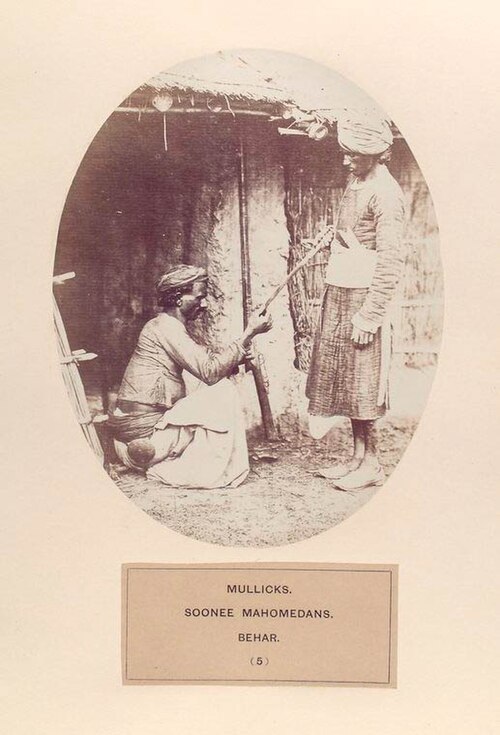
“Mallick” (also spelled Mallik, Malik, or Mullick; Bengali: মল্লিক) is one of the most widely held surnames and community titles in eastern India. It is carried today by an estimated 400,000-plus people in India alone, concentrated overwhelmingly in West Bengal and Odisha, with smaller numbers in Jharkhand, Bihar, and Bangladesh, and a global diaspora spread across dozens of countries.
Unlike a community such as the Syrian Catholics of Kerala, whose members share one continuous religious and genealogical history, “Mallick” is best understood as a title-turned-surname that was adopted independently by many different castes and religious communities across several centuries. It is borne by Bengali Hindu families of the Kayastha, Suvarna Banik, Namasudra, Bagdi, Tili, Baidya, and Dom communities; by Odia Hindu families, chiefly of the Khandayat and Chasa communities; by Bengali Muslim families in both India and Bangladesh; and by a distinct, historically self-contained Sunni Muslim community in Bihar known as the Mallick or Malik Baya. This profile brings together the documented history, etymology, regional variations, notable families, and culture associated with the name, while being careful to distinguish these separate groups rather than treating “Mallick” as a single, uniform community.
2. Etymology and Origins of the Title
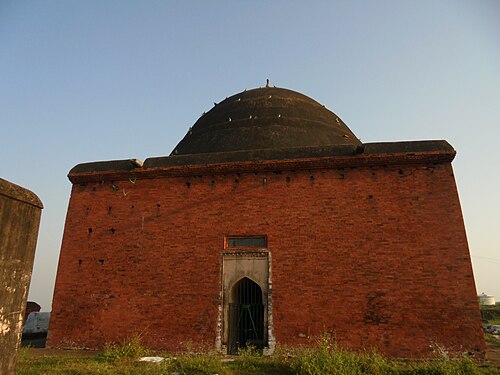
The word Mallick derives from the Arabic malik (مَلِك), meaning “king,” “sovereign,” or “master,” a term with deep roots in the older Semitic languages of West Asia (compare Hebrew melekh and Aramaic malka). The title entered the Indian subcontinent with the spread of Persian-influenced administration under the Delhi Sultanate from the 13th century onward, and was used extensively during the Bengal Sultanate and later the Mughal Empire as an honorific bestowed on chieftains, revenue officials, senior courtiers, and large landholders (zamindars).
In Bengal and Odisha, where Persian remained the language of administration and land revenue for several centuries, “Malik” or “Mallick” came to be adopted as a hereditary family title by prominent local families — both Muslim and Hindu — who held land, revenue, or administrative office, or who simply wished to signal elevated social standing. Because the title was granted or adopted independently in many different places and periods, it was absorbed into numerous unrelated caste and community lines rather than spreading outward from a single ancestral family, which is the main reason the surname today spans such a wide range of religious and caste backgrounds.
3. A Surname Across Communities, Not a Single Caste
A defining feature of the Mallick name — and the point most important to understand correctly — is that it does not denote one homogeneous ethnic or caste community, in the way “Nasrani” or “Knanaya” does in Kerala. Genealogical and surname-distribution records instead show it distributed across several distinct, unrelated communities:
3.1 Bengali Hindu Mallicks
In West Bengal, the Mallick surname is documented among the Bengali Kayastha community (a traditionally literate, administrative caste), the Suvarna Banik community (traditionally goldsmiths and bullion merchants), and among the Namasudra, Bagdi, Tili, Baidya, and Dom communities as well. Because these are separate castes with their own distinct histories, a shared surname does not imply a shared lineage between them; families are best identified by their specific community alongside the Mallick title.
3.2 Odia Mallicks
In Odisha, the surname is used chiefly by families of the Khandayat community (a traditional landholding and martial caste) and the Chasa community (a traditional agricultural caste), with smaller numbers reported among a few other local communities. As with Bengal, Odia families bearing the name belong to distinct castes and should not be assumed to share a common ancestry.
3.3 Bengali and Bihari Muslim Mallicks
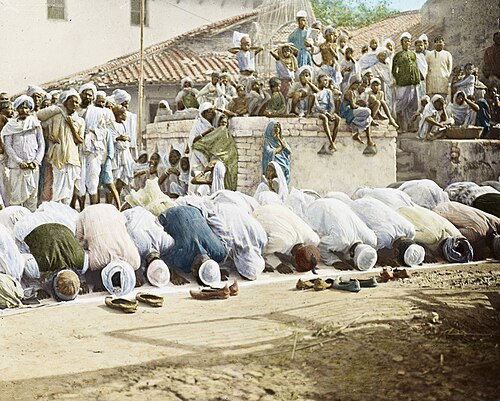
Among Bengali Muslims in both West Bengal and Bangladesh, Mallick is a common family surname, often traceable to ancestors who held land or local administrative titles under earlier Muslim or zamindari administrations. Separately, and unrelated to the Bengali usage, a specific Sunni Muslim community in the Jamui, Nawada, Sheikhpura, Nalanda, and Patna districts of Bihar bears the name “Mallick” or “Malik Baya,” tracing its descent, according to community tradition, to the medieval figure Malik Ibrahim Baya. This Bihari community has historically been recognised as part of the Ashraf (higher-status) grouping among Bihari Muslims; its formal social-category classification has been discussed and revised by state authorities over the past two decades, reflecting the broader, still-evolving process by which social categories are periodically reviewed in Indian public administration.
4. Geographic Distribution
Surname-frequency data place the great majority of Indian Mallicks in West Bengal (roughly two-thirds of the recorded population) and Odisha (close to a third), with smaller communities in Jharkhand and Bihar. Outside India, the name is well represented in Bangladesh, and smaller numbers are recorded across the Bengali and South Asian diaspora, including the Gulf states, the United Kingdom, and North America. The table below summarises the pattern documented in surname and community records.
| Region | Religious Groups | Principal Castes / Communities Using the Title |
|---|---|---|
| West Bengal | Hindu, Muslim | Kayastha, Suvarna Banik, Namasudra, Bagdi, Tili, Baidya, Dom, and Bengali Muslims |
| Odisha | Hindu | Chiefly Khandayat and Chasa; also found among a few other Odia communities |
| Bihar | Muslim | Mallick / Malik Baya, a distinct Sunni community tracing descent from Malik Ibrahim Baya |
| Bangladesh | Hindu, Muslim | Mirrors the Bengali pattern above; the surname is common on both sides of the border |
| Jharkhand and elsewhere | Hindu, Muslim | Smaller populations, largely reflecting migration out of Bengal and Bihar |
Table: Regional and religious distribution of the Mallick / Malik surname, based on published surname-frequency data and community sources.
5. A Notable Historical Family: The Mullicks of Kolkata
Among the best-documented Mallick families is the Suvarna Banik Mullick family of Chorbagan, Kolkata, founded by the merchant Ramakrishna Mullick. Its most celebrated descendant, Raja Rajendra Mullick Bahadur (1819–1887), was a wealthy art collector, gold merchant, and philanthropist who, at the age of sixteen, began building the Marble Palace, a neoclassical mansion at Muktaram Babu Street that remains one of the best-preserved 19th-century houses in North Kolkata. The mansion housed an extensive private art collection alongside one of Kolkata's earliest private menageries; Rajendra Mullick was honoured with the titles Rai Bahadur (1867) and Raja Bahadur (1878) for his philanthropic work, including famine relief for displaced people from Odisha in 1866. His descendants continue to reside in and maintain the property, which is today open to visitors by permit.
A separate branch of the same broad Bengali Mullick lineage produced Rasik Krishna Mallick (1810–1858), a journalist, educationist, and prominent member of the reformist “Young Bengal” movement associated with Henry Louis Vivian Derozio at Hindu College, Calcutta, in the 1820s and 1830s.
6. Social Structure and Position
Because the Mallick title is spread across such a range of castes — from traditionally land-owning and mercantile communities such as the Kayastha, Suvarna Banik, and Khandayat, to Scheduled Caste communities such as the Namasudra, Bagdi, and Dom in West Bengal — there is no single traditional social ranking that applies to “Mallicks” as a whole. A family's social position has historically depended on its specific caste or community, its regional history, and its individual economic and educational circumstances, rather than on the surname itself. This diversity is itself a notable and well-documented feature of the name, distinguishing it from single-lineage community titles.
Where families did rise to prominence — such as the Suvarna Banik Mullicks of Kolkata described above — this was generally the result of success in trade, land revenue administration, or the professions during the 18th and 19th centuries, a pattern common to several such Bengali mercantile and administrative families of the period.
7. Language
Mallick families are predominantly Bengali-speaking (in West Bengal, Bangladesh, and among the wider Bengali diaspora) or Odia-speaking (in Odisha), reflecting their regional origins rather than any distinct community language. The Bihari Muslim Mallick or Malik Baya community is primarily Hindi- and Urdu-speaking, consistent with the wider Bihari Muslim population of the districts in which it is concentrated. There is no separate liturgical or ceremonial language specific to the Mallick name, unlike, for example, the Syriac heritage of Kerala's Nasrani Christians.
8. Culture and Customs
Because Mallick families belong to many different castes and both major religious traditions of eastern India, their customs, rites of passage, and religious observances follow those of their specific community and religion rather than a shared “Mallick” tradition. Hindu Mallick families generally observe the festivals, life-cycle rituals, and temple traditions associated with their caste and region — for example, Durga Puja, Kali Puja, and Poila Boishakh (Bengali New Year) in West Bengal, or Rath Yatra and other Jagannath-related observances in Odisha. Muslim Mallick families observe the standard Islamic festivals and life-cycle rites common to Bengali and Bihari Muslims, including Eid al-Fitr, Eid al-Adha, and local milad and urs traditions.
One recurring social institution among prominent landed and mercantile Mallick families of Bengal, as with other bonedi (old, established) Kolkata families, was the family thakur-dalan or private place of worship attached to the ancestral house, and periodic large family or community gatherings — a pattern visible today in the surviving Marble Palace household.
9. Cuisine
There is no cuisine unique to the Mallick surname as such; families follow the cuisine of their region and religion. Hindu Bengali Mallick households typically share in the broader Bengali culinary tradition — rice and fish curries (machher jhol), mustard-based preparations (shorshe), lentils (dal), and festive sweets such as sandesh and rasgulla — while Odia Mallick households share in Odia cuisine, including dishes built around rice, dalma (a lentil-and-vegetable preparation), and the offerings tradition associated with the Jagannath Temple, Puri. Muslim Mallick households, whether Bengali or Bihari, generally follow the respective regional Muslim culinary traditions, which include distinctive meat preparations, biryanis, and festive dishes prepared for Eid.
10. Notable Individuals
10.1 Arts, Cinema, and Media
- Ranjit Mallick (born 1944) — veteran Bengali film actor and producer, grandson of the scientist Indumadhab Mallick, with a career in Bengali cinema spanning over five decades.
- Koel Mallick — Bengali film actress, daughter of Ranjit Mallick.
- Amaal Mallik — Indian Bollywood music composer and playback singer.
- Rasik Krishna Mallick (1810–1858) — journalist, educationist, and reformer of the Young Bengal movement.
10.2 Public Life and Philanthropy
- Raja Rajendra Mullick Bahadur (1819–1887) — art collector, gold merchant, and philanthropist; builder of the Marble Palace, Kolkata.
- Indumadhab Mallick — Bengali scientist and engineer associated with the Mullick family of Kolkata.
10.3 Sports
- Abhilash Mallick (born 1991) — Indian cricketer.
- Azharuddin Mallick (born 1997) — Indian footballer of Bengali origin.
This list is illustrative rather than exhaustive; individuals bearing the Mallick or Mallik surname are found across many further fields, including medicine, academia, and public administration, in India, Bangladesh, and the diaspora.
11. Contemporary Reflections
Two points are worth keeping in mind when researching the Mallick name today. First, because the surname was adopted independently by many unrelated castes and communities, family history research is most productive when it focuses on a specific family's documented regional and community background rather than assuming a single shared origin. Second, the name illustrates a broader and well-studied pattern in South Asian surname history — the adoption of a prestigious Persian- or Arabic-derived administrative title by land-holding and mercantile families of very different religious and caste backgrounds during the Sultanate and Mughal periods, a pattern also seen in related titles such as Munshi, Khan, and Chowdhury.
12. Conclusion
The Mallick name tells a story less of a single people and more of a title: an honorific meaning “king” or “master,” carried into Bengal and Odisha through centuries of Persian-influenced administration, and subsequently adopted by land-owning, mercantile, and administrative families across a wide range of Hindu castes and by both Bengali and Bihari Muslim communities. From the Suvarna Banik philanthropist Raja Rajendra Mullick and his Marble Palace in Kolkata, to Khandayat and Chasa families in Odisha, to the historically distinct Malik Baya community of Bihar, the name today unites millions of people who share a surname and, in many cases, a regional heritage, while belonging to genuinely different communities, castes, and religious traditions. Anyone researching a specific Mallick family history is best served by identifying that family's particular caste, region, and religious community, which together — far more than the surname alone — define its distinct heritage.
References
- [1]1. Wikipedia. “Malik clan (Bihar).” https://en.wikipedia.org/wiki/Malik_clan_(Bihar)
- [2]2. Wikipedia. “Mallik (surname).” https://en.wikipedia.org/wiki/Mallik_(surname)
- [3]3. Wikipedia. “Malik (surname).” https://en.wikipedia.org/wiki/Malik_(surname)
- [4]4. Wikipedia. “Malik (clan).” https://en.wikipedia.org/wiki/Malik_(clan)
- [5]5. Wikipedia. “Zamindar.” https://en.wikipedia.org/wiki/Zamindar
- [6]6. Wikipedia. “Karan (caste).” https://en.wikipedia.org/wiki/Karan_(caste)
- [7]7. Wikipedia. “Marble Palace (Kolkata).” https://en.wikipedia.org/wiki/Marble_Palace_(Kolkata)
- [8]8. Wikipedia. “Rajendra Mullick.” https://en.wikipedia.org/wiki/Rajendra_Mullick
- [9]9. Wikipedia. “Rasik Krishna Mallick.” https://en.wikipedia.org/wiki/Rasik_Krishna_Mallick
- [10]10. Wikipedia. “Ranjit Mallick.” https://en.wikipedia.org/wiki/Ranjit_Mallick
- [11]11. Forebears. “Mallick Surname Origin, Meaning & Last Name History.” https://forebears.io/surnames/mallick
- [12]12. Astounding Bengal. “The Marble Palace.” http://astoundingbengal.blogspot.com/2013/10/the-marble-palace.html
- [13]13. GetBengal. “The Marble Palace in Kolkata Speaks of the Grandeur of the Mullicks.” https://www.getbengal.com/details/the-marble-palace-in-kolkata-speaks-of--the-grandeur-of-the-mullicks-getbengal-story
- [14]14. Quora. “What caste is Mallick in Odia?” https://www.quora.com/What-caste-is-Mallick-in-Odia
- [15]15. TwoCircles.net. “The curious case of the inclusion of Mallicks in Bihar Backward Classes list.” https://twocircles.net/2011jun05/curious_case_inclusion_mallicks_bihar_backward_classes_list.html