

Mukkulathor Community
A prominent Tamil social grouping comprising the Maravar, Kallar, and Agamudaiyar, known for its rich cultural heritage.
The Mukkulathor Community of Tamil Nadu
History, Culture, and Heritage of the Thevar People
1. Introduction: Who Are the Mukkulathor?
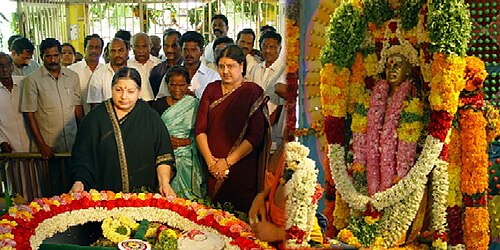
Mukkulathor, also called Thevar, is the name given to three closely linked communities of central and southern Tamil Nadu: the Agamudayar, the Kallar, and the Maravar. They are not one caste with three names but three separate lineages that, over many centuries, came to see themselves as branches of a single family — bound by a shared founding myth, a common warrior ethos, and a habit of intermarriage between allied clans that has held for generations.
R. Muthulakshmi of Madurai Kamaraj University explains that Thevar literally means "celestial being" or "one of divine nature," while Mukkulathor is best translated as "the people of the three clans, united." It is a fitting name. Today the community numbers in the millions and is one of the most recognisable social groups in the Tamil country, concentrated across Madurai, Theni, Dindigul, Sivagangai, Pudukkottai, Ramanathapuram, Thanjavur, Thiruvarur, Nagapattinam, Tiruchirapalli, and Tirunelveli, with a presence that extends into Sri Lanka and the wider Tamil diaspora.
What follows is an attempt to lay out that story properly: where the community says it comes from, what the historical record adds to that account, how the three clans differ from one another, what population genetics has found in their villages, and the customs, food, dress, martial arts, and living memory that still shape Mukkulathor life today.
2. Origins and Early History
2.1 The Shared Myth of Origin
Ask an elder in a Mukkulathor village where the community comes from, and the answer usually begins the same way: the Agamudayar, Kallar, and Maravar all descend from a single union between the god Indra and a celestial woman. It's a myth all three groups hold in common, even though each also likes to think of itself as first among equals — a friendly rivalry that has never really disappeared. Layered onto this shared ancestry is a second, more specific claim: each of the three communities traces its own line to one of the great Tamil dynasties of the Sangam age, together remembered as the Moovendar, the "Three Crowned Kings." The Agamudayar claim descent from the Chera line, the Kallar from the Chola, and the Maravar from the Pandya.
2.2 The Sangam Era and Ancient Roots
Of the three, the Maravar have the longest paper trail. They appear repeatedly in Sangam poetry, praised for their fighting spirit and their role guarding the Pandya country, and their name still carries an old meaning of "valour" in Tamil. Community memory reaches back even further, to the Ramayana, where Lord Rama is said to have used the word maraven — "I will never forget" — in gratitude to the Maravar warriors who helped him. Whether or not that particular episode survives outside oral tradition, it says something about how the community understands itself: as a people whose loyalty and courage were remembered by kings. The Kallar and Agamudayar carry similar, if less literarily documented, claims to antiquity, with inscriptions and family genealogies linking all three groups to the martial and administrative life of the classical and post-classical Tamil kingdoms.
2.3 The Poligar Era and Local Chieftaincies
The clearer historical picture starts later, in the era of the poligars, or palaiyakkarars — the local chieftains who governed fortified territories across the Tamil country from roughly the sixteenth century onward, first under the Vijayanagar empire and then its Nayak successors. Mukkulathor families rose through this system as commanders and landholders, and it was during this period that they took on a role central to their identity even now: guardians of the land and, in particular, of temple property. In Madurai, for instance, Kallar chieftains were entrusted with protecting the estates of the great Meenakshi Amman Temple. Titles that are still carried by community members today — Thevar, Servai, Ambalakarar, Vandayar, Nattar — all trace back to these guardianship roles.
Historians such as Susan Bayly have pointed out that the Kallar and Maravar caste identities, as they exist now, were consolidated largely during this poligar period of the seventeenth and eighteenth centuries, as previously scattered warrior lineages were pulled together by shared military service and shared control of land. That's a useful piece of context, and it doesn't take anything away from the community's own account of its origins — the two simply describe different things. One is a question of when a modern social category took its present shape; the other is a question of ancestry and identity, which the community has always understood through the older lens of the Moovendar dynasties.
2.4 Resistance to Colonial Rule
When the East India Company began pushing into the poligar country of southern Tamil Nadu in the mid-eighteenth century, it ran straight into Mukkulathor resistance. Puli Thevar, the poligar of Nerkattumseval, took up arms against the Company as early as 1755 and is remembered in local history as the first Indian ruler to defeat British forces on the battlefield — an achievement that predates the more widely known resistance of the Polygar Wars by several decades.
The most striking figure from this period, though, is Rani Velu Nachiyar. Born in 1730 into the Sethupathi royal family of Ramnad, she was raised — in the absence of a male heir — as heir to the throne herself, and trained from childhood in archery, horse riding, and the martial arts of silambam and valari. She married into the Sivaganga royal house, and when her husband was killed by East India Company forces in 1772, she fled with her infant daughter and spent nearly eight years in exile rebuilding an army, with the backing of Hyder Ali. In 1780 she retook Sivaganga and ruled it for a decade, becoming one of the very first Indian monarchs — male or female — to wage organised war against British colonial power. Tamils still know her as Veeramangai, "the brave woman," and her memory has only grown since a commemorative postage stamp was issued in her honour in 2008.
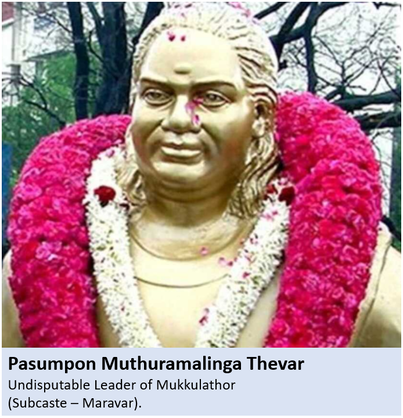
Her two most trusted commanders, the brothers Periya Marudhu and Chinna Marudhu, went on to govern Sivaganga themselves after her death and kept up the resistance into the early nineteenth century, culminating in their 1801 proclamation calling on Tamils of every caste and religion to join the fight against the Company — a document still cited as an early expression of Tamil unity against colonial rule. Roughly a century and a half later, Pasumpon Muthuramalinga Thevar (1908–1963) carried a different kind of leadership into the twentieth century: a farmer's son from Ramanathapuram district who became a freedom fighter, a close associate of Subhas Chandra Bose within the All India Forward Bloc, and — perhaps his most lasting legacy — the figure most credited with drawing the Agamudayar, Kallar, and Maravar communities together under the shared Mukkulathor banner.
3. The Three Constituent Communities
The Agamudayar, Kallar, and Maravar share a founding myth and a broadly similar history as landholders and warriors, but anyone from the community will tell you they are not interchangeable. Each has its own heartland, its own internal lineages, and its own local flavour of custom. The table below is a starting point — a rough map of dynasty, geography, and traditional role — before the sections that follow go into each community individually.
| Community | Dynasty Claimed | Traditional Heartland | Traditional Role |
|---|---|---|---|
| Agamudayar | Chera dynasty | South Arcot, Tiruchirapalli, Pudukkottai, and parts of central Tamil Nadu | Temple attendants, warriors, and agriculturists |
| Kallar | Chola dynasty | Madurai, Theni, Pudukkottai, Tiruchirapalli, and Thanjavur | Village guardians and landholding agriculturists |
| Maravar | Pandya dynasty | Ramanathapuram, Sivagangai, Tirunelveli, and Thoothukudi | Warriors, chieftains, and rulers of local principalities |
3.1 Kallar
The Kallar are concentrated around Madurai, Theni, Dindigul, Pudukkottai, Tiruchirapalli, and Thanjavur, and European travellers writing in the eighteenth century already described them as a fiercely independent people, unwilling to submit easily to outside authority. Within the broader Kallar community, the Piramalai Kallar of the Madurai region are especially well documented, organised historically into a network of nadus, or territorial confederations — Sirugudi Nadu, Mallakkotai Nadu, Pattamangala Nadu, and dozens of others — each traditionally headed by an Ambalakarar, a village chief who presided over local disputes, oversaw land transfers, and effectively governed as first among equals within his nadu. One Kallar lineage even carried a kingdom into the modern era: the Thondaiman rulers of Pudukkottai governed their princely state right up to 1948, a year after Indian independence, making it the last Tamil kingdom to formally merge with the Indian Union.
3.2 Maravar
The Maravar heartland lies further south, in Ramanathapuram, Sivagangai, Tirunelveli, and Thoothukudi. This is Setupati country — the royal house of Ramnad, and its offshoot at Sivagangai, both drew their authority from Maravar lineages, and it was this royal tradition that produced Rani Velu Nachiyar and, later, the Marudhu brothers. Maravar communities have long identified closely with martial service and territorial defence, and their historical association with the Setupati kings remains a source of considerable community pride.
3.3 Agamudayar
Spread across South Arcot, Tiruchirapalli, Pudukkottai, and parts of central Tamil Nadu, the Agamudayar occupied a somewhat different social niche than their Kallar and Maravar kin, with a stronger historical association with temple service alongside their roles as cultivators and warriors. Like the other two communities, they maintain their own network of local titles and lineage groups, and their claimed descent from the Chera dynasty is a point of particular pride in community memory, distinguishing them from the Chola and Pandya lines claimed by the Kallar and Maravar respectively.
3.4 Royal Houses of the Mukkulathor
It's worth pausing on just how many ruling houses of the Tamil country trace back to these three communities. Beyond the Sethupathis of Ramnad and Sivagangai and the Thondaimans of Pudukkottai, Mukkulathor lineages supplied chieftains and local rulers across the poligar country for generations — a fact the community points to as evidence that its claim to royal descent is not simply myth, but something borne out repeatedly in the historical record.
4. Genetics and DNA Ancestry
Some of the most interesting population-genetics work done anywhere in South India has taken place in Mukkulathor villages, particularly among the Piramalai Kallar near Madurai. As part of the National Geographic Genographic Project, geneticist Ramasamy Pitchappan of Madurai Kamaraj University led a team that identified the ancient Y-chromosome marker M130 in a Piramalai Kallar family living in a village outside Madurai. M130 is one of the oldest markers geneticists use to trace the very first wave of modern humans who left Africa and moved along the southern coastline of Asia, tens of thousands of years ago — the same marker found today among some Australian Aboriginal populations. When researchers traced it to a nine-generation Piramalai Kallar family, it became one of the clearest pieces of evidence that Tamil Nadu has been continuously inhabited since some of the very earliest human migrations into the subcontinent.
More recent immunogenetic research has added further detail. A 2003 study in the journal Tissue Antigens examined HLA-DRB1 and HLA-DQB1 allele frequencies among Piramalai Kallar individuals, and a 2022 study in the Egyptian Journal of Medical Human Genetics compared these same markers across the Kallar of Thanjavur, the Piramalai Kallar of Madurai, and the neighbouring Vanniyar community — work that has helped map the genetic relationships between historically endogamous Tamil communities in fine detail.
Taken together, this research places Mukkulathor populations firmly within the deep Ancestral South Indian genetic lineage shared across Dravidian-speaking Tamil Nadu — a lineage with roots going back tens of thousands of years, long before the Sangam kingdoms the community traces its royal descent to. As with most historically endogamous communities in South India, generations of marriage largely within the Kallar, Maravar, or Agamudayar fold have left distinct regional genetic signatures that continue to draw the interest of population geneticists studying how peninsular India was settled.
This section summarises findings from published population-genetics literature; ancestry estimates vary by study, sample size, and reference panel, and individual results from DNA testing may differ from community-level averages.
5. Social Structure and Historical Role
At its core, Mukkulathor identity has always been tied to land — owning it, farming it, and guarding it. Across central and southern Tamil Nadu, community members have long served as cultivators and landholders, and the traditional titles still carried today — Thevar, Servai, Ambalakarar, Vandayar, Nattar — are really job titles that outlived the jobs: markers of a time when Mukkulathor families were responsible for protecting village and temple land, adjudicating local disputes, and approving any transfer of property within their territory.
Socially, the community is organised into extended patrilineal clans, each usually tied to a kuladeivam, or family deity, whose worship anchors a sense of shared identity that can stretch across dozens of villages. Clan gatherings, temple festivals, and the veneration of hero stones — stone memorials, still found across the region, honouring ancestors who died defending their land — all continue to hold this lineage-based structure together generations after the poligar system itself disappeared.
6. Language and Religion
Mukkulathor families are Tamil-speaking and predominantly Hindu, and their religious life blends the wider Hindu tradition with a very local, village-rooted devotional world. Amman, the mother goddess, is worshipped with particular intensity across Mukkulathor villages, and Murugan — the Tamil god of war, youth, and wisdom — holds a special place as well, not least because community and martial-arts tradition credits him with passing the science of varma kalai, the knowledge of the body's vital points, down to the sage Agastya. Guardian deities like Aiyanar and Karuppasami, typically installed at the edge of a village to watch over it, round out a religious landscape that has always placed protection — of land, of people, of boundaries — at its centre.
7. The Alagar Koil Connection
One of the clearest illustrations of how deeply the Kallar community is woven into Tamil religious life plays out every year at Madurai's Chithirai Festival, among the largest temple festivals anywhere in Tamil Nadu, drawing well over a million pilgrims. Partway through the month-long celebration, the deity Kallazhagar — a form of Vishnu worshipped at the hilltop Alagar Koil temple outside the city — sets out for Madurai to attend the celestial wedding of his sister, the goddess Meenakshi. Before he crosses Kallar Nadu, the historic Kallar country, to reach the city, tradition holds that he changes his appearance, taking on the form of a Kallar man — the Kallar vedam — to travel among the people whose ancestral land he is passing through. He arrives late for the wedding, and steps into the Vaigai river instead, a moment so anticipated that upwards of a million devotees gather along the riverbanks to watch it happen. It's a small ritual detail, but a telling one: even the region's most important deity is remembered, once a year, as one of the Kallar.
8. Culture, Customs, and Social Practices
Clan and land sit at the centre of Mukkulathor social life, and a handful of customs show up again and again across the community's traditional heartland:
- Kudumba, or clan, gatherings that bring together dispersed branches of a lineage to reaffirm their shared descent and settle family matters together.
- Kuladeivam worship — annual festivals at the ancestral family temple, often the one fixed point that scattered relatives return to year after year.
- Hero-stone veneration, honouring ancestors who died defending village or temple land, a practice that keeps the community's warrior history within living memory rather than confined to books.
- Village temple festivals and chariot processions, which follow the agrarian calendar and remain some of the largest communal events in Mukkulathor villages.
- An oral culture of clan pride, carried forward through elders and village bards who still recount genealogies and stories of ancestral heroes at family and festival gatherings.
9. Marriage and Wedding Traditions
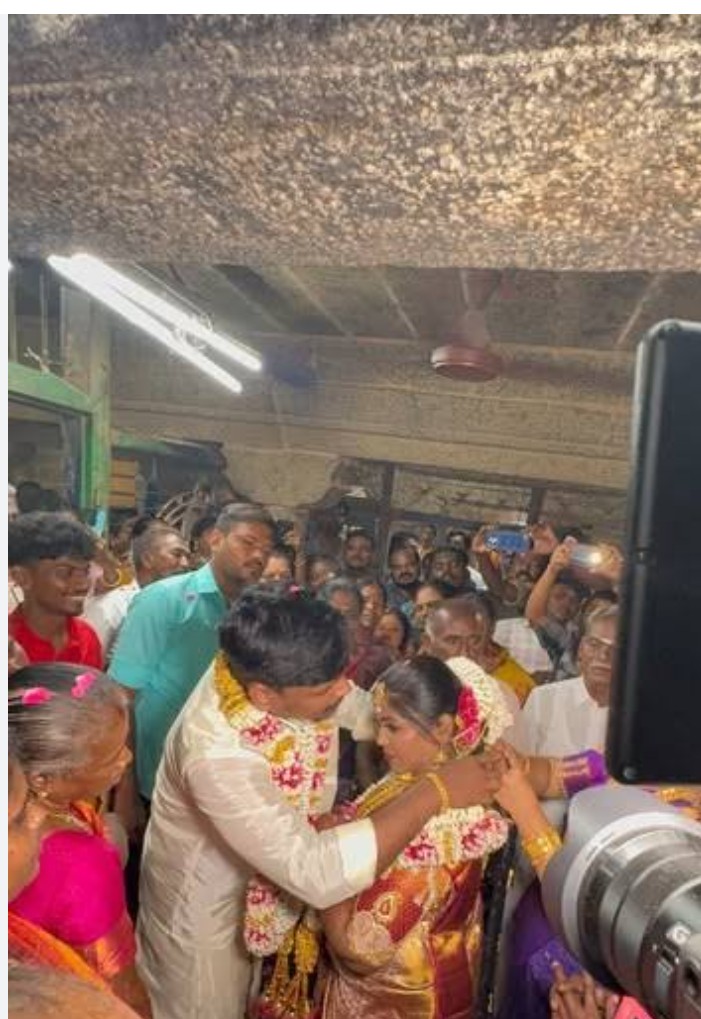
A Mukkulathor wedding follows the broad pattern of a traditional Tamil Hindu marriage, with the tying of the thali — the mangalya dharanam — as its central and most solemn moment, timed to an astrologically fixed auspicious hour. Before the wedding itself comes the nichayathartham, a formal engagement gathering at which both families confirm the match in front of the wider clan.
What tends to stand out about Mukkulathor weddings is scale. Because clan ties matter so much, weddings routinely draw extended family from well beyond the immediate village, and they double as informal reunions as much as marriage ceremonies. As elsewhere in rural Tamil Nadu, a young woman's coming-of-age is also marked with its own family ceremony, and the wedding feast itself — for the whole gathered clan — is traditionally served on banana leaves.
10. Cuisine
Mukkulathor food is hearty, agrarian cooking, shaped by generations of dryland farming across central and southern Tamil Nadu rather than by courtly or coastal influence. A few dishes and habits stand out:
- Millet-based staples — ragi and kambu in particular — that were, long before they became fashionable elsewhere, simply the practical answer to farming dry, hard soil.
- Mutton and chicken curries built on country spice blends, cooked in a style that owes something to the community's long association with herding, hunting, and physical, outdoor labour.
- Kola urundai, spiced minced-meat balls, and kari dosai, a rice crepe topped with meat — festive dishes closely tied to the Madurai–Theni food belt and often reserved for special occasions.
- Large communal feasts on banana leaves at weddings, temple festivals, and clan gatherings, mixing vegetarian and non-vegetarian dishes to feed everyone from small children to visiting elders.
11. Traditional Dress and Ornaments
The traditional men's outfit is the veshti, worn with an angavastram draped over the shoulder — still the standard dress at temple festivals and formal community events, even where everyday clothing has moved on. Women traditionally wear sarees in the draping styles common to the region, and gold jewellery carries real social weight here, functioning historically as a visible, portable marker of a family's landholding and standing within the clan.
Older accessories tell a story of their own. Waist sashes and belts once designed to carry a short stick or blade were a practical extension of the community's role as armed guardians, and versions of them survive today mainly as performance gear for the martial arts described in the next section — a reminder, worn rather than just remembered, of what the role of "guardian" used to actually involve.
12. Traditional Martial Arts and Warrior Heritage
It's hard to separate Mukkulathor history from the martial arts of southern Tamil Nadu, since the two grew up together — village guardians needed to actually be able to fight, and these are the systems they trained in:
- Adimurai, also known as chinna adi or varna ati — a traditional Tamil combat system long practised by Kallar and Maravar families, covering both unarmed technique and work with a stick or staff.
- Silambam — Tamil Nadu's staff-fighting art, with a history stretching back to Sangam-era literature, where the bamboo staff itself was as central to the practice as it is to the name.
- Varma kalai — a system built around the varmam, or vital points, of the body, folded into Siddha medicine as much as into combat. Tradition holds that Shiva taught it to Murugan, who passed it on to the sage Agastya, giving the art as much of a healing lineage as a fighting one.
None of this is museum history. Local academies across Madurai, Theni, and the surrounding districts still train students in adimurai and silambam, and the traditions have found a second life among the diaspora, where community associations run classes partly to keep young people connected to a heritage that would otherwise live only in stories.
13. Folklore and Oral Tradition
Long before any of this was written down, it was sung. Village bards carried naatuppura padalgal — folk ballads — about Rani Velu Nachiyar, the Marudhu brothers, and countless lesser-known local heroes from house to house and festival to festival, and many of these songs are still performed today. Hero stones scattered across the Mukkulathor heartland serve as a kind of physical footnote to this oral record, each one marking a specific act of courage that might otherwise have been lost to time.
Family genealogies tracing descent back to the Chera, Chola, and Pandya lines are passed down the same way — not through documents, for the most part, but through what an elder remembers and chooses to tell the next generation. It's an oral tradition that does real work: it's the thread connecting a Sangam-era myth to a family sitting down for dinner in Madurai or Sivagangai today.
14. Education, Livelihoods, and Socioeconomic Profile
Agriculture has been the backbone of Mukkulathor life for as long as anyone can trace, and community families remain prominent landholders and cultivators across the dryland and irrigated farming belts of central and southern Tamil Nadu, growing paddy, cotton, and millets. That said, the last few generations have seen real diversification — into education, government service, business, and the professions — even as land and farming continue to hold a cultural weight in the community that goes well beyond their economic role.
15. Diaspora
Mukkulathor and wider Thevar families are part of the older layer of the overseas Tamil world, with roots among Tamil communities in Sri Lanka, Malaysia, and Singapore that go back generations, alongside newer waves of migration to the Gulf states, North America, the United Kingdom, and Australia. What's notable is how much of the community's specific identity has travelled with it — diaspora associations don't just maintain generic Tamil-language ties, they run clan networks, organise martial-arts classes, and hold gatherings that deliberately connect members scattered across continents back to their ancestral districts in Tamil Nadu.
16. Prominent Figures
16.1 Historical and Freedom Movement Figures
- Rani Velu Nachiyar (1730–1796) — Queen of Sivaganga and one of the first Indian rulers, of either gender, to wage organised war against the British East India Company; still remembered as Veeramangai, "the brave woman."
- Puli Thevar (18th century) — Poligar of Nerkattumseval, remembered as the first Indian ruler to defeat British forces in open battle, resisting East India Company expansion from 1755 onward.
- Periya Marudhu and Chinna Marudhu, the Marudhu brothers (18th–19th century) — Commanders under Rani Velu Nachiyar who later governed Sivaganga themselves and carried the resistance to British expansion into the early nineteenth century.
- Pasumpon Muthuramalinga Thevar (1908–1963) — Freedom fighter, social reformer, and prominent leader of the All India Forward Bloc, remembered above all as the figure who helped unite the Agamudayar, Kallar, and Maravar communities under a shared Mukkulathor identity.
- The Thondaiman dynasty of Pudukkottai — the last Tamil royal house to remain in power after independence, ruling until the state's formal merger with India in 1948.
17. Contemporary Reflections
The Mukkulathor identity still does the job it was built for: it holds the Agamudayar, Kallar, and Maravar together as one extended family, bound by a shared origin story and a shared history of guarding land and temple. What's changed is the setting. Clan pride now shows up as much in a WhatsApp group coordinating a diaspora gathering as it does at a village kudumba meeting, and martial arts once taught for survival are now taught, just as seriously, for heritage. Across its heartland in central and southern Tamil Nadu, though, the underlying thread — agrarian life, temple culture, and a long memory — hasn't really loosened.
18. Conclusion
Few communities in Tamil Nadu can point to a story quite this layered: three lineages, each with its own royal dynasty and heartland, drawn together by a shared myth and a shared history of guarding the land they farmed. It runs from the Sangam-era poetry that first celebrated Maravar valour, through the poligar chieftains who protected temple estates and later took up arms against the East India Company, to a Piramalai Kallar family near Madurai whose DNA helped trace the very first human migration into South Asia. It shows up in a festival where Vishnu himself is remembered, once a year, as one of the Kallar, and in martial arts still taught today by people whose grandparents learned them for entirely different reasons. Through clan gatherings, hero stones, wedding feasts, and a diaspora that keeps carrying these customs further from home, the Mukkulathor story is very much still being written — not just remembered.
19. References
1. Wikipedia. "Mukkulathor." https://en.wikipedia.org/wiki/Mukkulathor
2. Wikipedia. "Kallar (caste)." https://en.wikipedia.org/wiki/Kallar_(caste)
3. Wikipedia. "Maravar." https://en.wikipedia.org/wiki/Maravar
4. Wikipedia. "Agamudayar." https://en.wikipedia.org/wiki/Agamudayar
5. Wikipedia. "Pasumpon Muthuramalinga Thevar." https://en.wikipedia.org/wiki/Pasumpon_Muthuramalinga_Thevar
6. Wikipedia. "Velu Nachiyar." https://en.wikipedia.org/wiki/Velu_Nachiyar
7. Wikipedia. "Sivaganga estate." https://en.wikipedia.org/wiki/Sivaganga_estate
8. Wikipedia. "Varma kalai." https://en.wikipedia.org/wiki/Varma_kalai
9. Bayly, Susan (2001). Caste, Society and Politics in India from the Eighteenth Century to the Modern Age. Cambridge University Press.
10. Mines, Diane P. (2005). Fierce Gods: Inequality, Ritual, and the Politics of Dignity in a South Indian Village. Indiana University Press.
11. Shanmugalakshmi, S. et al. (2003). "HLA-DRB1*, -DQB1* in Piramalai Kallars and Yadhavas, two Dravidian-speaking castes of Tamil Nadu, South India." Tissue Antigens.
12. Egyptian Journal of Medical Human Genetics (2022). "The HLA profile and genetic affinities of three primitive Tamil-speaking endogamous groups: Kallars of Thanjavur, Piramalai Kallar and Vanniyar."
13. Hinduism Today. "Tamil Nadu's Ancient Gene Pool Discovered." https://www.hinduismtoday.com/hpi/2003/01/05/2003-01-05-tamil-nadu-s-ancient-gene-pool-discovered/
14. Ground Report. "Tamil Nadu Family Traces Roots to 70,000 Years Back." https://groundreport.com/tamil-nadu-family-traces-roots-to-70000-years-back/
15. Wikipedia. "Meenakshi Tirukalyanam." https://en.wikipedia.org/wiki/Meenakshi_Tirukalyanam
16. Wikipedia. "Sivaganga estate." https://en.wikipedia.org/wiki/Sivaganga_estate
17. Wikipedia. "Piramalai Kallar." https://en.wikipedia.org/wiki/Piramalai_Kallar