

Vanniyar Community
A prominent Tamil community traditionally associated with agriculture and regional leadership.
The Vanniyar Community of Tamil Nadu
History, Society, Culture, and Legacy of the Vanniyakula Kshatriyas
A comprehensive community profile — origins, social history, customs, cuisine, dress, architecture, diaspora, and notable figures
1. Introduction: Who Are the Vanniyars?
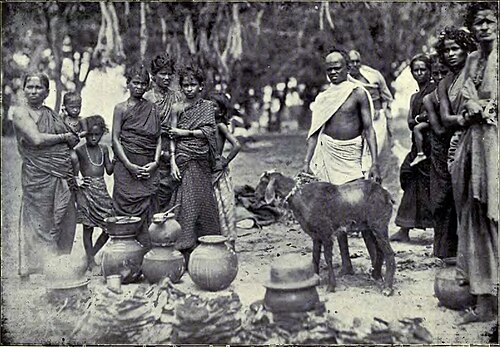
The Vanniyar, also known as Vanniyakula Kshatriya and historically referred to as Palli, are one of the largest and most politically significant communities of northern Tamil Nadu. Concentrated in the districts that once formed the old Chingleput, North Arcot, South Arcot, and Salem regions of the Madras Presidency, and today spread across districts such as Villupuram, Kallakurichi, Kanchipuram, Tiruvannamalai, Cuddalore, Vellore, and Dharmapuri, the community forms one of the largest single caste groupings in the state, with estimates of its population share in Tamil Nadu ranging from roughly a tenth to just over a tenth of the state total depending on the source and time period cited.
Traditionally an agrarian community of cultivators, smallholders, and agricultural labourers, the Vanniyars have, since the nineteenth century, pursued a sustained and largely successful process of social and political mobilisation aimed at securing a higher ritual status and greater representation in education, employment, and public life. This profile traces the community's traditional origin narratives, its documented history, its social organisation and internal subdivisions, its religious life and deity worship, and the customs, cuisine, dress, architecture, and diaspora that shape Vanniyar identity today.
2. Etymology and Names
Several explanations have been offered for the name Vanniyar. One widely cited derivation traces it to the Sanskrit word vahni, meaning fire, connected to the Tamil word vanni, which denotes both fire and the Vanni tree (Prosopis cineraria), a tree considered sacred in South Indian tradition and closely tied to the community's own account of its origin from a fire sacrifice. A second proposed root is the Dravidian word val, meaning strength or valour, which would align with the community's self-description as a martial or warrior people. A third suggested origin lies in the Sanskrit or Pali word vana, meaning forest, possibly reflecting an earlier association with forest or frontier tracts.
The older term Palli was in common administrative and everyday use through the colonial period but came to be regarded as a demeaning label, and the community has largely moved away from it since the early twentieth century. In its place, the community favours Vanniyar, Vanniya Kula Kshatriya, or simply Vanniya Kshatriya, names that assert descent from the Kshatriya or warrior class of classical Hindu social theory. Within the community, numerous sub-titles are also used, including Padayachi (literally, commander or head of an army), Gounder, Naicker or Nayakar, Kandar, and several others discussed further below.
3. Origins and Historical Traditions
3.1 The Agnikula (Fire-Born) Tradition
Community tradition holds that the Vanniyars descend from a warrior born of fire, summoned through a sacrificial ritual performed by the sage Jambumuni to defend the earth and the gods from a group of oppressive demon kings. This fire-born ancestor is regarded as the founder of the Vanniya lineage, and the tradition situates the community among the wider Agnikula or fire-lineage warrior clans of Indian tradition, a category that in North Indian usage is more commonly associated with Rajput clans such as the Chauhans, Pratiharas, Paramaras, and Solankis. The Vanniyar version of this fire-origin narrative is distinct to South India and forms the central pillar of the community's claim to Kshatriya, or warrior-caste, status.
This origin account is best understood as a sacred foundational narrative cherished and transmitted within the community, rather than as a claim subject to independent historical verification; scholars studying South Indian social history note that narratives of descent from a once-higher rank, often tied to fire, solar, or lunar lineages, are a recurring feature of caste self-histories across the region, and are one way in which communities have articulated dignity, martial heritage, and social aspiration over many generations.
3.2 Vanniyars in Medieval and Early Modern South India
Independent of the mythological tradition, historians including Burton Stein have documented Vanniyars occupying positions of local prominence as warriors and chieftains in the fourteenth century, most notably through the Sambuvaraya chiefs, who held authority in parts of the Tondaimandalam region of northern Tamil Nadu during the Vijayanagara period. Community historians have also long associated Vanniyars with military service under the Pallava dynasty of the early medieval period, and some traditional accounts connect the community to figures and events from Pallava history, including the reign of Narasimhavarman I.
From the medieval period onward, many Vanniyars settled into agrarian life across the dry and semi-arid tracts of the northern Tamil country, working as cultivators, tenant farmers, and, for a section of the community, as agricultural labourers on lands owned by other groups. Regional titles such as Padayachi, Gounder, and Naicker, discussed in the next section, reflect the diverse local histories and status claims that different Vanniyar lineages accumulated across these centuries.
3.3 The Nineteenth and Twentieth-Century Status Movement
From the mid-nineteenth century, sections of the community began to organise formally to seek recognition of a higher social and ritual standing. In Pondicherry, community leaders petitioned French colonial authorities to be recorded as a martial rather than an agricultural caste. Ahead of the 1871 census of British India, community representatives petitioned to be classified within the Kshatriya varna. These efforts intensified over the following decades: the Vanniyakula Kshatriya Maha Sangam was established in Madras in 1888, and by the early twentieth century the community was actively promoting the Agnikula tradition, along with new self-designations such as Agnikula Kshatriya and Vannikula Kshatriya, as part of a broader campaign for recognition.
This campaign achieved a significant milestone in 1931, when the term Palli was dropped from the Madras census in favour of Vanniya Kula Kshatriya. Alongside the status campaign, the period also saw shifts in social custom within parts of the community, including a greater adoption of vegetarianism among some families and discouragement of widow remarriage, practices associated at the time with higher ritual status in the region. The Vanniyakula Kshatriya Sangam was reconstituted on a state-wide basis in 1952 and remains an active caste association to this day, continuing to represent community interests in public life.
4. Subcastes, Clans, and Titles
The Vanniyar community is not a single undifferentiated group but an assembly of numerous lineages, sub-groups, and locally rooted titles, traditionally said to number around ninety-two, that reflect centuries of regional settlement and status differentiation. Among the most widely used titles and sub-identities are the following:
- Padayachi — meaning commander or head of an army, one of the most common Vanniyar titles, especially in the northern and central districts of Tamil Nadu.
- Gounder — a title also used by several other agrarian communities of Tamil Nadu, adopted by some Vanniyar lineages, particularly in the western districts.
- Naicker or Nayakar — a title denoting leadership or chieftainship, historically associated with military and administrative roles.
- Kandar, Sambuvarayar, Kadavarayar, Kalingarayar, Mazhavarayar, and Udaiyar — titles associated with specific medieval chiefly lineages and localities.
- Varma, Konar-adjacent, and other honorific or occupational titles adopted by particular family lines in different regions.
These titles function partly as surnames and partly as markers of lineage and regional identity, and members of the community may identify with one or more of them depending on family history and locality. The existence of such a wide network of sub-groups is itself taken by community historians as evidence of a long and geographically dispersed settlement history across the Tamil country and neighbouring parts of Andhra Pradesh and Karnataka.
5. Social Structure and Community Organisation
Historically, the Vanniyars occupied a position within the traditional Tamil agrarian order broadly associated with the Shudra varna in the classical four-fold Hindu social scheme, a category that in South India encompassed the great majority of cultivating and labouring communities, since the Kshatriya and Vaishya varnas had little independent presence in the region's traditional social order. Within this framework, many Vanniyar families were smallholders, tenant cultivators, or agricultural labourers, while others, particularly descendants of the historic chiefly and military lineages, held land and local authority.
The twentieth-century status movement, along with broader agrarian and political change in independent India, considerably reshaped the community's social position. Today the Vanniyars are officially classified as a Most Backward Class for the purposes of India's reservation system, a status the community secured through sustained organisation and advocacy during the 1980s, aimed at improving access to education and government employment. The community continues to maintain strong caste associations, most prominently the Vanniyakula Kshatriya Sangam, which plays an active role in community welfare, education initiatives, and political representation, and family and lineage ties remain an important axis of social organisation, particularly in rural areas.
6. Religion, Deities, and Worship
6.1 Draupadi Amman and the Theemithi Festival
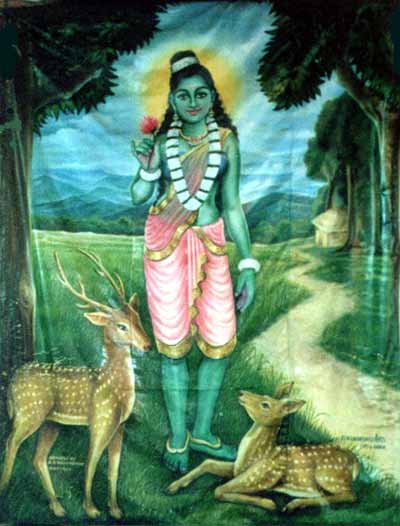
The Vanniyar community holds a particularly close and long-documented association with the worship of Draupadi Amman, a South Indian village-goddess tradition that reveres Draupadi, the shared wife of the five Pandava brothers in the Mahabharata, as a form of the great goddess and as a fierce protector deity. Alongside the Vanniyars, the Mudaliar, Konar (Yadava), and Gounder communities of Tamil Nadu, and the related Tigala community of Karnataka, also worship Draupadi Amman, but Vanniyar priests and devotees have traditionally played a leading ritual role at many of her shrines, and some scholars suggest the community may have been foundational to the cult's early development in the region.
The most striking public expression of this devotion is the Theemithi or firewalking festival, generally held in the Tamil month of Aippasi, shortly before Deepavali, though some temples observe it around the month of Chithirai instead. The festival re-enacts episodes from the Mahabharata over several nights through Therukoothu, a traditional form of village street theatre, and culminates in devotees walking barefoot across a pit of burning embers as an act of devotion, in fulfilment of a vow, or in gratitude for blessings received. Several hundred Draupadi Amman shrines are found across villages in Tamil Nadu, Andhra Pradesh, and Karnataka, and the tradition has also travelled with the Tamil diaspora to Southeast Asia, Mauritius, the Caribbean, and beyond, where Theemithi continues to be observed as a major annual event.
6.2 Other Deities, Temples, and Practices
Beyond Draupadi Amman, Vanniyar religious life follows the broader pattern of Tamil village Hinduism, with strong devotion to local Amman (mother goddess) forms, guardian deities such as Aiyanar and Karuppasamy, and, in many families, the worship of the wider Hindu pantheon including Shiva, Vishnu, and Murugan at regional temples. Ancestral and lineage deities (kula deivam) are venerated by many families, and village festivals, temple car processions, and seasonal harvest observances remain important occasions for collective worship and community gathering, particularly in the rural heartlands of northern Tamil Nadu.
7. Language
The Vanniyars are a Tamil-speaking community, and Tamil serves as the primary language of home, worship, and public life across the community's traditional heartland in northern Tamil Nadu and the Union Territory of Puducherry. Regional dialects of Tamil spoken in districts such as Villupuram, Tiruvannamalai, and Salem carry distinctive local vocabulary and idiom, and community folk songs and oral traditions, discussed further below, are composed and transmitted in Tamil. Vanniyar communities settled outside Tamil Nadu, including in parts of Karnataka and Andhra Pradesh, and diaspora communities overseas, have in some cases adopted the locally dominant language for everyday use while continuing to maintain Tamil for religious and cultural purposes.
8. Culture, Customs, and Social Practices
Vanniyar cultural life reflects the broader agrarian Tamil social world, shaped over the twentieth century by the community's sustained emphasis on status, discipline, and self-improvement. Several customs are widely noted as characteristic of the community:
- A strong emphasis on family loyalty and lineage identity, with extended kin networks playing an active role in major life events, land matters, and community organisation.
- Respect for maternal uncles, who traditionally occupy a position of honour at weddings and other family ceremonies, a pattern shared with many Tamil communities.
- Adoption of vegetarianism by some families during the community's nineteenth and twentieth-century status movement, alongside continued non-vegetarian practice among many others, particularly around festival and ceremonial meals.
- Active participation in and patronage of village temple festivals, particularly those associated with Draupadi Amman, Mariamman, and other local guardian goddesses.
- A continuing tradition of caste-association-led welfare activity, including scholarships, hostels, and community events organised through the Vanniyakula Kshatriya Sangam and affiliated bodies.
Community identity is also expressed through active caste-association life, regular community gatherings, and, in recent decades, growing engagement with genealogical and historical research into the community's regional lineages and titles.
9. Marriage and Wedding Traditions
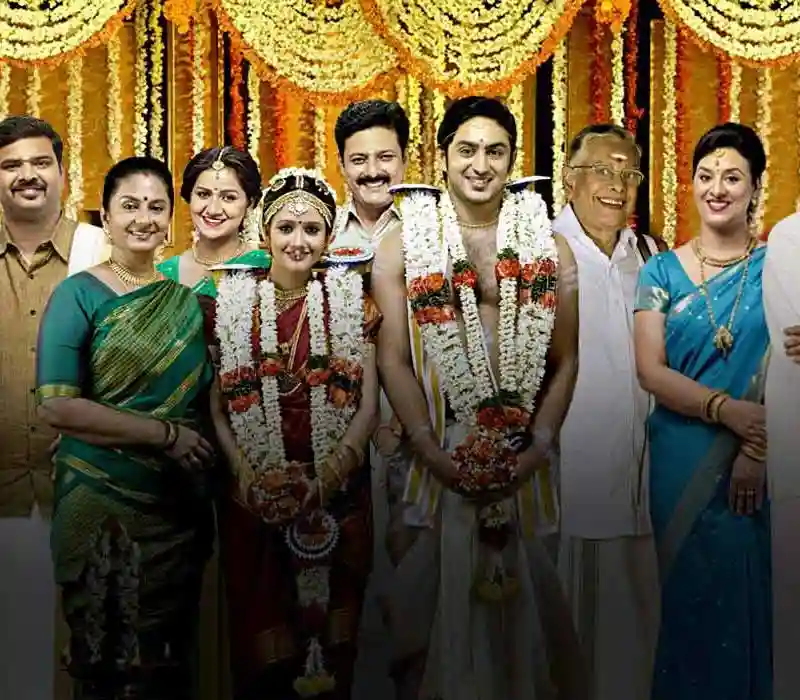
Traditional Vanniyar weddings historically extended over several days, though contemporary ceremonies are more commonly completed within a day or two to accommodate modern schedules. Core elements of the wedding follow broader Tamil Hindu custom, conducted with Brahmin or community priests officiating around the sacred fire (agni), while several features carry particular significance within the community:
- The Pattam Kattuthal (crown or headband tying) ceremony, in which the maternal uncle plays a central and honoured role, reflecting the wider Tamil custom of maternal-uncle involvement in major family rites.
- The exchange of vows and the tying of the thali (sacred wedding thread) before the sacred fire, considered the ritual heart of the marriage.
- Elaborate stage decoration, formal invitations, and multi-family feasting, which serve to reinforce kinship bonds and community standing.
- A strong customary emphasis on marriage within the community, consistent with the endogamous marriage norms generally observed across Tamil Nadu's traditional caste communities.
As with many South Indian communities, weddings serve not only as religious sacraments but as significant social occasions that reaffirm extended family ties and community solidarity.
10. Cuisine
Vanniyar cuisine reflects the community's agrarian roots in the dry and semi-arid tracts of northern Tamil Nadu, drawing heavily on millets, rice, and locally grown pulses and vegetables, alongside the broader repertoire of Tamil home cooking. Characteristic elements include:
- Millet-based staples such as ragi (finger millet) and kambu (pearl millet), traditionally significant in the drier agricultural tracts where many Vanniyar families farmed.
- Rice dishes including variety rices such as tamarind rice (puliyodharai), curd rice, and lemon rice, commonly prepared for festivals and temple offerings.
- Traditional Tamil non-vegetarian preparations, including country chicken and mutton curries cooked with locally ground spice blends, for households that maintain non-vegetarian practice.
- Vegetarian preparations such as sambar, rasam, and a range of poriyal (stir-fried vegetable) dishes, reflecting the vegetarian customs adopted by some families during the community's status movement.
- Seasonal and festival sweets such as payasam and traditional Tamil snacks prepared for temple festivals, weddings, and family celebrations.
As with much of rural Tamil Nadu, everyday meals remain centred on rice or millet, a vegetable or lentil preparation, and, where practiced, a meat or egg dish, with more elaborate cooking reserved for festivals, temple feast days, and family functions.
11. Traditional Dress and Ornaments
Traditional Vanniyar attire follows the broader dress customs of rural Tamil Nadu rather than a markedly distinct communal costume. Men traditionally wore a white or cream veshti (dhoti) paired with a plain shirt or angavastram (upper cloth) for everyday and ceremonial wear, with a formal jubba or kurta favoured for weddings and temple visits. Women traditionally wore the sari, styled in the regional Tamil manner, with gold jewellery, including the thali on marriage, worn as a marker of married status. Community leaders and titled individuals, particularly those bearing titles such as Padayachi or Naicker, have historically been associated with a turban or headdress at formal and ceremonial occasions, echoing the community's self-image as a lineage of chiefs and warriors.
Contemporary dress among Vanniyars, as across most of Tamil Nadu, has largely converged with mainstream Indian fashion in daily life, with traditional veshti-and-shirt or sari attire retained principally for weddings, temple festivals, and formal community gatherings.
12. Traditional Housing and Architecture
Historic Vanniyar homes in rural Tamil Nadu generally followed the vernacular agrarian house forms common across the region: single-storey structures built of mud brick, laterite, or country brick, with tiled or thatched roofs, arranged around a central courtyard (nadumuttam) or an open thinnai (raised veranda) used for daily household activity and the reception of guests. Cattle sheds, grain stores, and a small household shrine were typically integral to the homestead, reflecting the community's agrarian and pastoral livelihood.
Village Draupadi Amman and other Amman temples associated with the community are generally modest, locally built structures rather than grand monumental complexes, often maintained collectively by village families and expanded gradually over generations through community contribution. In recent decades, growing prosperity in parts of the community has led to more elaborate temple renovation and reconstruction, alongside the construction of larger community halls (mandapams) used for weddings, caste-association meetings, and festival functions.
13. Folklore and Oral Tradition
Vanniyar oral tradition is closely bound up with the Draupadi cult described above. Village priests and ritual specialists (pucaris) transmit songs and ballads describing Draupadi's mythic history, her exile, and her role as protector of the Pandavas, sung during the annual festival cycle leading up to Theemithi. These songs, along with Therukoothu street-theatre performances re-enacting scenes from the Mahabharata, function as a living form of religious memory, teaching successive generations the community's foundational myths through performance rather than text.
Separately, the community's own account of descent from a fire-born warrior ancestor, discussed in Section 3.1, is itself a form of oral and genealogical tradition, transmitted through caste-association literature, family memory, and community publications, and continues to shape how many Vanniyars understand their place in the wider Tamil social order.
14. Education, Livelihoods, and Socioeconomic Profile
Historically, the great majority of Vanniyars were engaged in agriculture, either as smallholding cultivators or as agricultural labourers, particularly across the dry-farming tracts of the former Chingleput, North and South Arcot, and Salem districts. Weaving and other allied rural occupations were also practiced by sections of the community. Land ownership and agricultural income for much of the community remained modest through the colonial period and the early decades of independence.
From the later twentieth century, the community placed growing emphasis on education, aided in part by its Most Backward Class reservation status, which improved access to schools, colleges, and government employment. This period saw a marked expansion of Vanniyar representation in teaching, government service, small business, and increasingly in engineering, medicine, and other professional fields, alongside continued agricultural livelihoods for a substantial section of the community, especially in rural areas. Economic pressures affecting Tamil Nadu's agrarian sector in recent decades, including periods of rural indebtedness, have also led growing numbers of community members to seek day-labour and other employment in cities such as Chennai and Bengaluru.
15. Political Representation
Owing to their considerable population and geographic concentration in northern Tamil Nadu, the Vanniyars have played a prominent role in the state's political life since the late twentieth century. The Pattali Makkal Katchi (PMK), founded in 1989 by S. Ramadoss, grew out of the community's caste-association network and draws much of its electoral support from Vanniyar voters, while also positioning itself as a broader backward-class political party. Community organisation and advocacy during the 1980s led to the Vanniyars being re-designated from the general Backward Class category to Most Backward Caste status, improving access to reserved seats in education and government employment. In more recent years, the community and its political representatives have continued to advocate for enhanced reservation entitlements, including a push in 2020 that led the Tamil Nadu government to undertake a caste-based enumeration exercise.
16. Diaspora
While the Vanniyar heartland remains concentrated in northern Tamil Nadu and Puducherry, migration has carried Vanniyar families to other parts of India, including Karnataka, where migrant Tamil communities historically associated with Draupadi Amman worship are known locally as Tigala, and Andhra Pradesh. Vanniyar and related Tamil migrant communities also settled in significant numbers during the nineteenth and early twentieth centuries in Southeast Asia (notably Malaysia and Singapore), Mauritius, Sri Lanka, and the Caribbean and Indian Ocean plantation colonies, including South Africa, Fiji, Guyana, and Trinidad, largely through the indentured labour migrations of the colonial period. In several of these diaspora settings, the Draupadi Amman cult and its associated Theemithi firewalking festival have been preserved and continue to be celebrated as major annual events, notably in Singapore, Mauritius, and the French Caribbean, where it is known locally by names such as Pandiale.
17. Notable Figures
The following individuals, drawn from politics, public service, and community life, are widely identified with the Vanniyar community. This list is illustrative rather than exhaustive.
- S. S. Ramasami Padayatchiyar — politician and founder of the Tamil Nadu Toilers' Party, an early twentieth-century advocate for agrarian and backward-class interests.
- M. A. Manickavelu Naicker — Indian National Congress politician and founder of the Commonweal Party.
- Chengalvaraya Naicker — noted philanthropist remembered for contributions to education in the Kanchipuram region.
- Vazhapadi K. Ramamurthy — senior Tamil Nadu politician, former Union minister, and founder of the Tamizhaga Rajiv Congress.
- S. Ramadoss — physician and founder of the Pattali Makkal Katchi (PMK), a major political party in Tamil Nadu.
- Anbumani Ramadoss — physician, politician, and former Union Minister of Health and Family Welfare.
- N. Rangaswamy — veteran politician and Chief Minister of the Union Territory of Puducherry.
- Nagappan Padayatchi — an Indian South African remembered as a Satyagraha-era activist in the struggle against discriminatory laws in South Africa.
- Radhakrishna Padayachi — South African politician who served as a cabinet minister and was active in civic and community affairs.
18. Contemporary Reflections
Two broad themes recur in discussions of Vanniyar identity today. The first is the community's long and largely successful history of collective mobilisation: from the petitions of the 1870s to the caste-association campaigns of the twentieth century and the reservation advocacy of the 1980s and beyond, the Vanniyars offer one of South India's clearer examples of a community translating demographic weight and sustained organisation into improved social and political standing over roughly a century and a half.
The second is the ongoing balance between tradition and change. While the community's founding narratives, its close association with Draupadi Amman worship, and its network of titles and lineages remain a source of collective identity, younger generations, increasingly urban and professionally mobile, are engaging with this heritage alongside broader participation in Tamil Nadu's modern economy and civic life, a pattern common to many historically agrarian communities navigating rapid social change.
19. Conclusion
The Vanniyar community's story combines a cherished sacred origin narrative, a documented history as cultivators and, at times, regional chieftains and warriors, and one of modern India's most sustained community campaigns for social recognition. From the fire-born ancestor of the Agnikula tradition to the blazing embers of the Theemithi festival honouring Draupadi Amman, from the millet fields of the northern Tamil dry tracts to the political prominence the community has achieved in contemporary Tamil Nadu, the Vanniyars represent a living example of how history, faith, and organised community effort together shape identity across generations.
References
- [1]1. Wikipedia. "Vanniyar." https://en.wikipedia.org/wiki/Vanniyar
- [2]2. Rudolph, Lloyd I., and Susanne Hoeber Rudolph. The Modernity of Tradition: Political Development in India. University of Chicago Press, 1967/1984.
- [3]3. Hiltebeitel, Alf. The Cult of Draupadī: Mythologies, From Gingee to Kurukṣetra. Vol. 1. Motilal Banarsidass, 1991.
- [4]4. Stein, Burton. Vijayanagara. The New Cambridge History of India. Cambridge University Press, 1990.
- [5]5. Grokipedia. "Vanniyar." https://grokipedia.com/page/Vanniyar
- [6]6. Vanniyar Sangam Community Portal. https://vanniyarsangam.in/
- [7]7. AstroVed. "Draupadi Amman Temple — Timings, History, Legend, Architecture & Festivals." https://www.astroved.com/astropedia/en/temples/south-india/draupadi-amman-temple
- [8]8. Indica Today. "Flames of Faith: The Ritual of Theemithi and the Legend of Draupadi Amman." https://www.indica.today/long-reads/flames-of-faith-the-ritual-of-theemithi-and-the-legend-of-draupadi-amman/
- [9]9. BiblioAsia (National Library Board, Singapore). "Theemithi: A Look at the Full Cycle of Rituals Behind the Festival of Firewalking." https://biblioasia.nlb.gov.sg/vol-18/issue-3/oct-dec-2022/theemithi-firewalking-festival/
- [10]10. Kathiravan, V. "The Festival of Draupadi in Vanniyar Community." International Journal of Business and Educational Research, Vol. 2, No. 1, 2016, pp. 92–97.
- [11]11. Kalyan Shastra. "Vanniyar Kula Kshatriyar — Tamil Wedding Traditions." https://drupal.kalyanshastra.com/tamil-vanniyar-kula-kshatriyar
- [12]12. KM Matrimony. "Vanniar Community Marriage Rituals." https://kmmatrimony.wordpress.com/2013/04/30/vanniar-community-marriage-rituals/
- [13]13. Bharatpedia. "Vanniyar." https://en.bharatpedia.org/wiki/Vanniyar
- [14]This profile draws on published historical scholarship, encyclopedic sources, and community and cultural references. Traditional origin narratives are presented as community tradition and belief rather than as verified historical fact. Readers seeking authoritative genealogical or legal detail (for example, regarding reservation classification) are encouraged to consult primary government and academic sources.