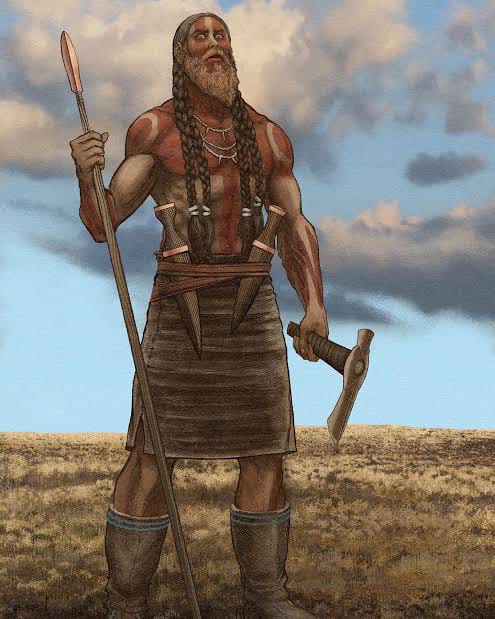
Who were the Aryans? A genetics perspective
Who were the Aryans? A genetics perspective
Two men and one word
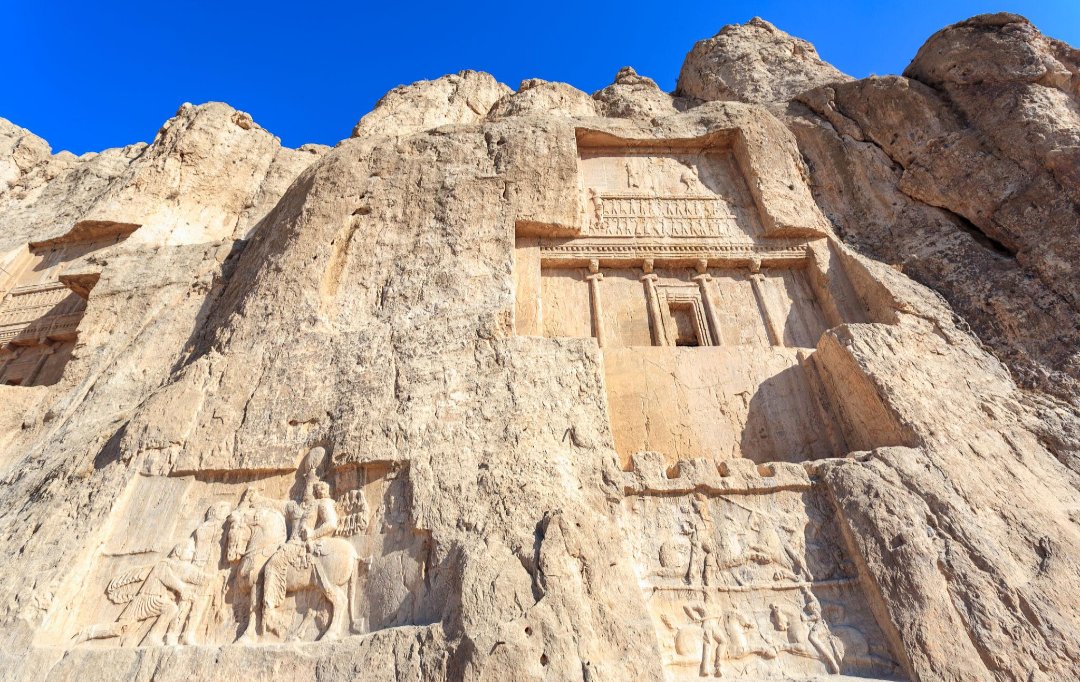
Late in the reign of Darius I, who ruled Persia until his death in 486 BCE, stonecutters carved a long inscription into the cliff above his tomb at Naqsh-e Rostam, near Persepolis in southern Iran. Darius ruled an empire that ran from Egypt to the Indus. When he chose the words that would describe him after death, he called himself "a Persian, son of a Persian, an Aryan, having Aryan lineage" [1].
Some centuries earlier, and about two thousand kilometres to the east, a poet in the Punjab composed a hymn to the god Indra. In one verse he asks the god to "distinguish between the Āryas and the Dasyus" (Rigveda 1.51.8) [2].
The king and the poet never met. They spoke different languages and prayed in different ways. Yet both reached for the same word to say who they were.
That word later took on a meaning its first owners would not have recognised. In the nineteenth century European scholars used "Aryan" as a name for a family of languages, and then for an imagined race. By the 1930s it was a slogan of Nazi Germany. Many people now hear the word only through that history, and in India it still turns up in arguments about who belongs to the land and who came from somewhere else.
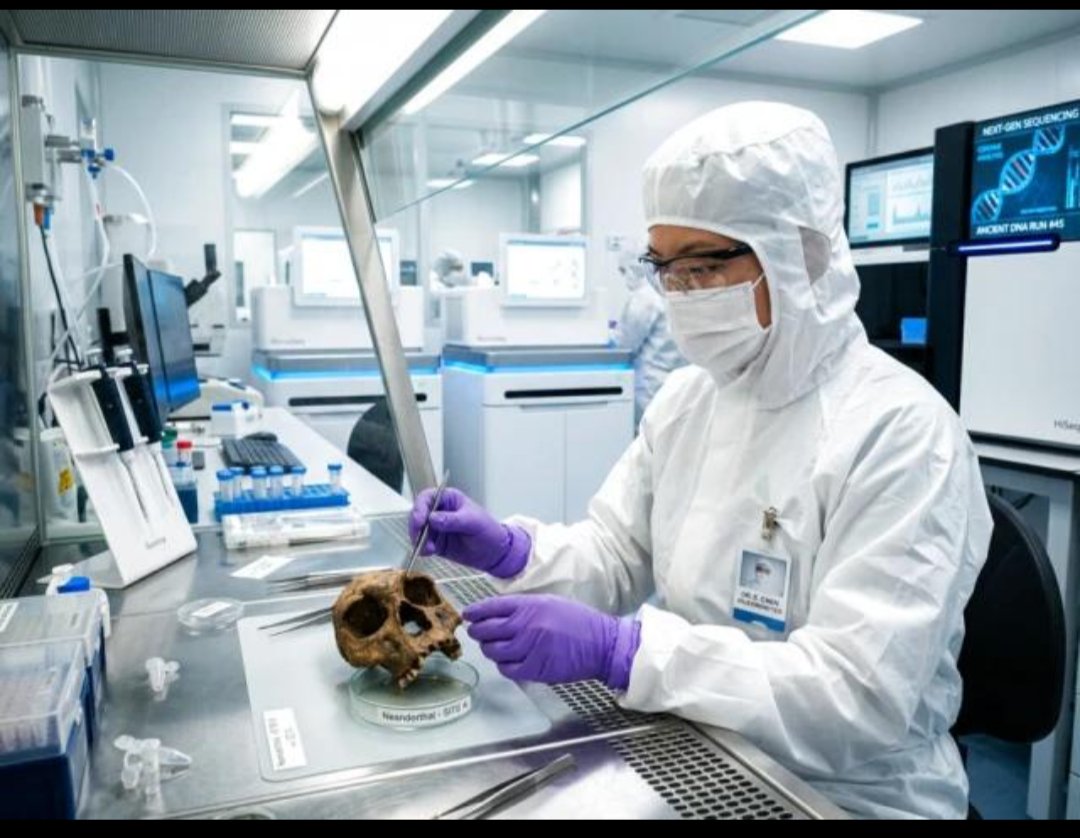
This article goes back to the people who first used the word. Where did they come from, and what became of them in India? Ancient DNA can now help answer both questions. It is genetic material recovered from old skeletons, some of them thousands of years old. By comparing it with the DNA of living people, researchers can see when populations moved and when they mixed.
One rule holds for the rest of this article. "Aryan" means only what it meant to the people who used it: their name for themselves. They were the early speakers of the Indo-Iranian languages, the branch of the Indo-European language family that includes Vedic Sanskrit, Avestan and Old Persian.
A people you could join
Picture a camp in the Punjab about 3,400 years ago. A fire burns at the centre. A priest pours melted butter into it and sings in an old form of Sanskrit, and the juice of the soma plant is pressed and offered to the gods. The people gathered around that fire, who share its gods and its language, call themselves ārya. Outsiders who do not are dāsa or dasyu.
That is the picture the Rigveda gives. In its hymns, ārya marks the people who belong. They worship the gods of the hymns, press soma, keep the sacred fire and speak the language of the hymns. The dāsa and dasyu do none of this. The hymns call them avrata, "without vows", and mṛdhravāc, "of hostile speech" [2, 3].
Nineteenth-century European readers saw race in these lines. They pointed to a hymn in which Indra drives off the "black skin" (kṛṣṇā tvac), and to the word anās, which they translated as "noseless". From these they built a picture of fair-skinned newcomers at war with flat-nosed natives. In 1999 the linguist Hans Henrich Hock went back to the Sanskrit and found little to support it. The talk of dark and light in the Rigveda belongs mostly to myth: gods against demons, dawn against night. Anās can just as well mean "mouthless", that is, without proper speech. What divided ārya from dāsa was religion and language [3].
Scholars still argue about where the word itself came from. Paul Thieme, writing in 1938, linked ārya to the Vedic word arí, which he read as "stranger" or "guest" [4]. Others prefer a meaning closer to "one of us". Either way, the word named a group, and a person belonged to it through what they did and said.
The same word was used in Iran. The Avesta, the scripture of the Zoroastrians, calls its people airiia and names their first homeland Airiianəm Vaējah, "the Aryan expanse" [5, 6]. Darius used the Old Persian form ariya on his tomb [1]. About 700 years later, the Sasanian kings of the third century CE called their realm Ērān, a name that grew out of the plural of the same word. The modern name Iran comes from it [6].
In India the word went another way. The law code of Manu, compiled in the early centuries CE, defines Āryāvarta, the land of the āryas, as the country between the Himalaya and the Vindhya, from the eastern sea to the western sea (Manu 2.22) [7]. Buddhist texts use the Pali form ariya to mean "noble". The four noble truths of the Buddha are the cattāri ariyasaccāni, and a person became ariya by following the Buddha's path. In none of these traditions, Vedic, Avestan, Persian or Buddhist, does the word describe skin colour or the shape of a skull.
A trail of words
Long before the Punjab hymns, the ancestors of the Vedic poets and the ancestors of Darius were one people with one language. Linguists call that language Proto-Indo-Iranian. Its speakers lived far to the north, on the grasslands and forest edges of what is now southern Russia and Kazakhstan, roughly around 2000 BCE. They herded cattle and prized horses. Their neighbours in the northern forests spoke the ancestors of Finnish and Hungarian. Later some of them came to know the walled oasis towns of Central Asia. Then they broke apart. One group went west and ended up ruling a kingdom in Syria. Others went south into Iran, and others reached the Punjab.
None of these people left writing from that time. So how can anyone know where they lived? The answer is that words travel with people, and they leave trails.
The first trail is the close likeness between Sanskrit and Avestan. Whole lines of one can be turned into the other by regular sound changes. Where Sanskrit has s, Avestan often has h: Sanskrit soma is Avestan haoma, sapta "seven" is hapta, and asura is ahura. Both traditions honour a god Mitra, called Mithra in Iran, and both press a sacred drink from a plant. Both use the word deva, with opposite values. In the Veda the devas are gods. In the Avesta the daēvas are demons. Two languages this close must come from a single parent [8].
The second trail runs north. The Uralic languages, the family that includes Finnish and Hungarian, took a number of words from early Indo-Iranian. Finnish sata, "hundred", is one. Finnish orja, "slave", is another, and many linguists derive it from the same word *arya, borrowed perhaps as a name for captives taken from the south [9]. Borrowing on this scale needs long and close contact. It puts early Indo-Iranian speakers next to Uralic speakers, in the forest-steppe of what is now Russia.
The third trail runs through Central Asia. Alexander Lubotsky collected a set of Indo-Iranian words that have no Indo-European roots, among them words for brick and camel. He argued that both Indian and Iranian languages took them from a language spoken in the oasis towns of the Bactria-Margiana Archaeological Complex, or BMAC, in what is now Turkmenistan, Uzbekistan and Afghanistan [10]. The townspeople built in brick and kept camels, and the newcomers seem to have learned the words from them.
The last trail is the most surprising, because it ends in Syria. In the fifteenth and fourteenth centuries BCE, northern Syria was ruled by the kingdom of Mitanni. Its people spoke Hurrian, a language unrelated to Sanskrit, yet several of its kings had Indo-Aryan names. In the fourteenth century BCE a treaty between the Hittite king Šuppiluliuma I and the Mitanni prince Šattiwaza called a long list of gods to witness. Among them are Mitra, Varuṇa, Indra and the Nāsatyas, the twin gods better known in India as the Aśvins [11, 9]. A horse-training manual written for the Hittites by Kikkuli, a trainer from Mitanni, counts laps with the words aika, tera, panza, satta and na. These match Sanskrit eka, tri, pañca, sapta and nava, the numbers one, three, five, seven and nine [9]. The usual explanation is that Mitanni's ruling families descended from a group that once spoke an early Indo-Aryan language. They had moved west, given up the language, and kept the gods, the names and the horse-training words.
Chariots on the steppe
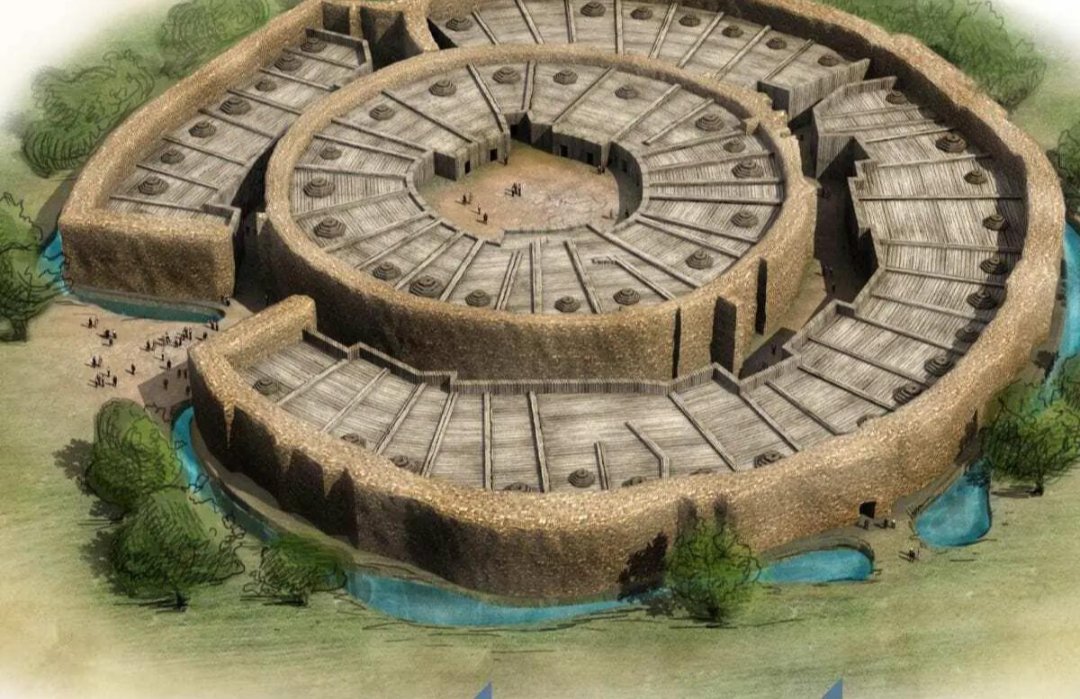
Around 2100 BCE, in the southern Ural Mountains, people began to build small settlements ringed by walls and ditches. When their leaders died, they were buried with horses, weapons and two-wheeled vehicles with spoked wheels. These are the oldest chariots found anywhere in the world.
Archaeologists call this the Sintashta culture, dated to about 2100 to 1800 BCE. Its best-known site is Arkaim [9, 12]. David Anthony has compared some of its funeral rites, with horses and other animals sacrificed at the grave, to rites described in the Rigveda [9]. After Sintashta came the Petrovka culture and then the wide Andronovo horizon, which spread across Kazakhstan towards Central Asia during the second millennium BCE. Elena Kuz'mina treated Andronovo as the material trace of the Indo-Iranians, and noted steppe pottery turning up at the edges of the BMAC oasis towns, which flourished from about 2250 to 1700 BCE [13].
On the Indian side the trail is patchier. In the Swat Valley of northern Pakistan, cemeteries of the late second and early first millennium BCE, once grouped together as the "Gandhara Grave Culture", show new burial customs. Many of the ancient genomes discussed below come from these graves [14]. At Sinauli, in Baghpat district of Uttar Pradesh, excavators in 2018 found elite burials of the early second millennium BCE with wooden vehicles fitted with copper. They called them chariots. Asko Parpola reads them as carts drawn by bulls, and links the antenna-hilted swords found with them to Central Asian and, further back, Sintashta designs [15]. Further east, the Painted Grey Ware pottery of about 1200 to 600 BCE in the Ganga-Yamuna doab is often linked with the Kuru realm of the later Vedic texts [16].
For a long time this was as far as the evidence went, and it left room for doubt. C.C. Lamberg-Karlovsky warned in 2002 that pots and graves do not tell us what language their makers spoke, and that no Central Asian culture could be tied neatly to Indo-Iranian [17]. Michael Frachetti described the Bronze Age steppe as a web of local herding communities who could share goods and customs without anyone travelling far [18]. Both were fair points. A new style of pot can spread by trade. A chariot design can be copied. What archaeology could not show was whether people themselves had moved. DNA can.
What the bones remember
The ancestry carried by the chariot-builders has its own long story. It begins between the Caucasus Mountains and the lower Volga river, in about 4400 to 4000 BCE. From a population living there came the Yamnaya herders, who appear on the steppe north of the Black and Caspian Seas around 3300 BCE [19]. Their descendants moved west into Europe and married local farmers. The Corded Ware people of central and northern Europe, from about 2900 BCE, carried this mix. Some of their descendants then turned back east. Morten Allentoft and colleagues found in 2015 that the Sintashta people were genetically close to the Corded Ware people, which means the first chariot-builders of the Urals had ancestors who had lived in Europe [20].
The trail then runs east and south. Vagheesh Narasimhan's team, working with 523 ancient genomes, gave the Sintashta-like population the label Western_Steppe_MLBA, for Middle to Late Bronze Age. Further east they found a related group, Central_Steppe_MLBA, with about 9 percent more ancestry from the hunter-gatherers of western Siberia. This eastern group is the one that matches the Steppe ancestry found in South Asia. Its DNA shows up in some people buried in and around the BMAC towns by about 2000 BCE. In the Swat Valley, its mixing with local people dates to between about 1900 and 1500 BCE [14].
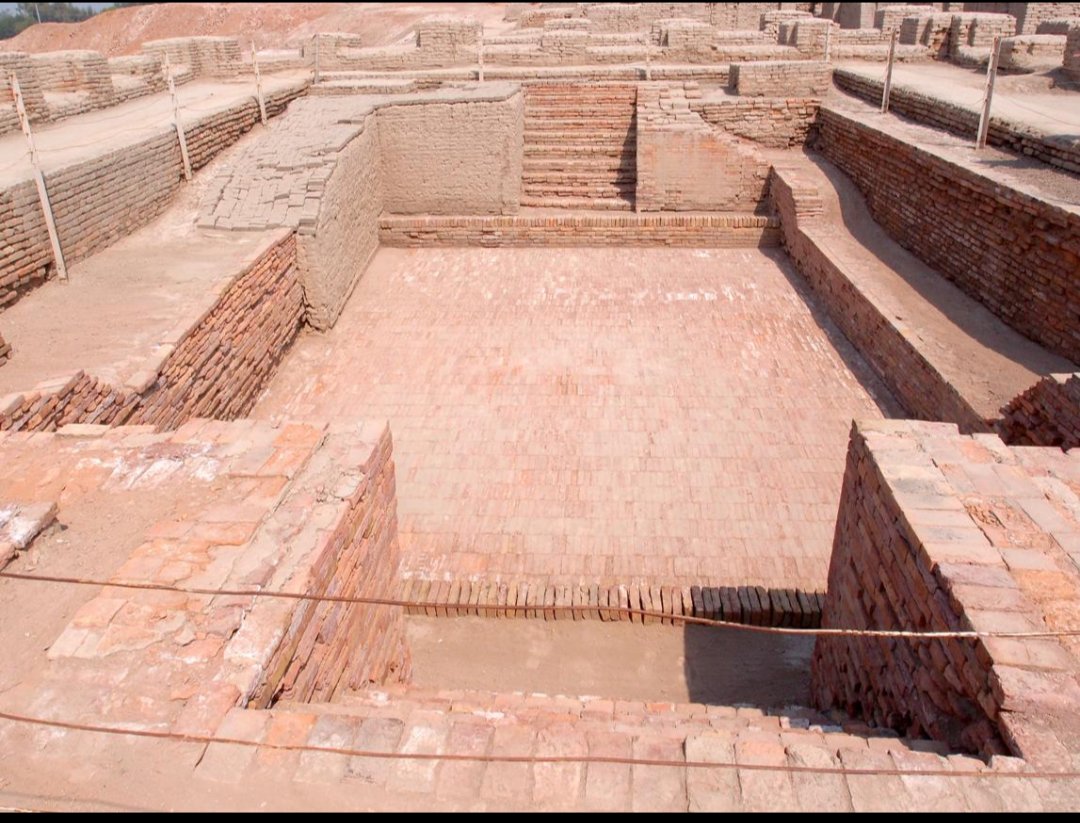
These newcomers arrived in a land with a long human past. People had lived in South Asia for some 50,000 years, since the first modern humans arrived there from Africa [21]. From about 2600 to 1900 BCE the Indus valley held one of the world's first urban civilisations, with planned cities such as Harappa, Mohenjo-daro and Rakhigarhi. A woman buried at Rakhigarhi in Haryana gave the first genome from an Indus city. Her ancestry was a mix of two old strands. One came from the first South Asian hunter-gatherers. The other came from a lineage related to ancient people of the Iranian plateau, which had split from the ancestors of the early Iranian farmers before farming began. She carried no Steppe ancestry at all [22]. Neither did eleven people with similar ancestry buried in eastern Iran and Turkmenistan, who seem to have been migrants from the Indus world [14].
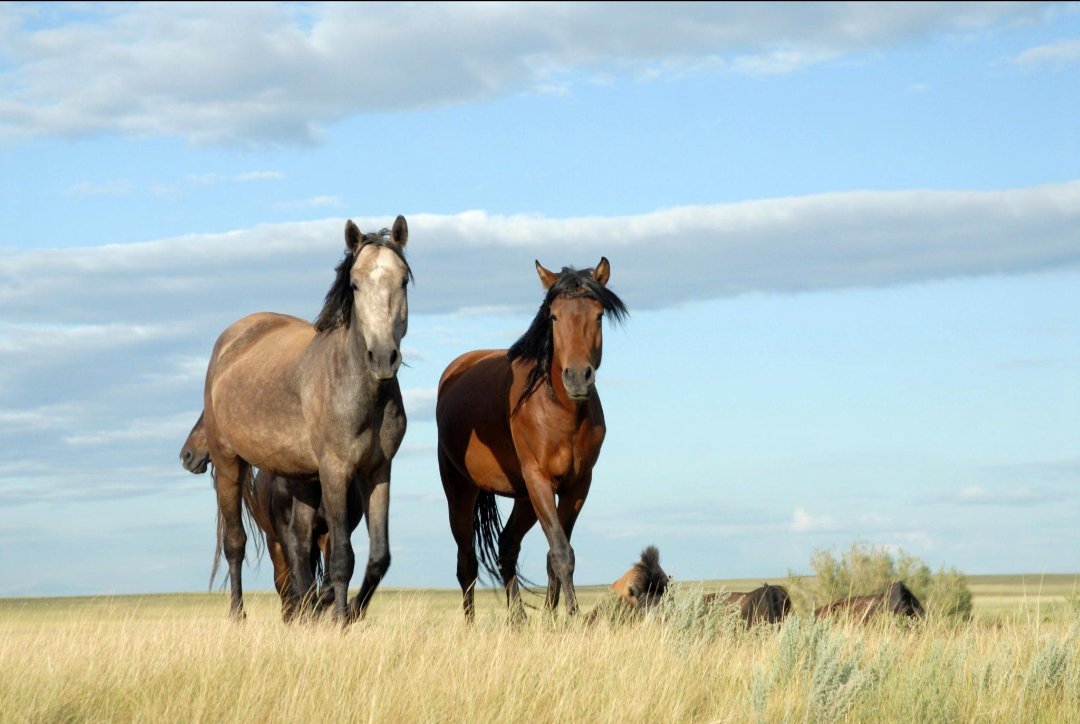
The horses tell the same story. Pablo Librado and colleagues showed in 2021 that modern domestic horses descend from a lineage raised in the lower Volga-Don region, which they called DOM2. It spread across Eurasia from about 2000 BCE, together with spoke-wheeled chariots of the Sintashta type [23]. The horses and chariots that race through the Rigvedic hymns belong to this world.
So does the male line. In 2015 Peter Underhill and colleagues mapped the Y-chromosome group R1a, which passes from father to son, in more than 16,000 men. It splits into a mainly European branch, Z282, and a mainly Asian branch, Z93, and the split happened somewhere near present-day Iran. Nearly all R1a in South Asia belongs to Z93, which shows signs of fast, recent growth from a few ancestors [24].
DNA cannot tell us what language anyone spoke. The case that these people brought Indo-Aryan speech to South Asia rests on several separate lines of evidence agreeing. Steppe ancestry arrived in the first half of the second millennium BCE, when linguists expect the language to have arrived. It came from the northern steppe, where the Uralic loanwords place early Indo-Iranian. It came with the horses and chariots that fill the Rigveda. No single line proves the link. Together they make it the best explanation we have.
Life in the land of seven rivers
By about 1500 BCE the people who called themselves ārya were living in the land of the "seven rivers", Sapta Sindhu: the Indus and its tributaries in the Punjab, with the Sarasvatī to the east. Their hymns also name rivers of eastern Afghanistan, such as the Kubhā, the Kabul river of today [2]. Michael Witzel dates the composition of the Rigveda to roughly 1500 to 1200 BCE [11]. It is a book of hymns, with no dates or lists of reigns, but it lets us see how its poets lived.
They counted wealth in cattle. A common word for battle, gaviṣṭi, means "seeking cows". They prized horses and loved chariot races. Barley (yava) was their main grain. They lived in clans (viś) grouped into peoples (jana), such as the Bharatas and the Pūrus, led by chiefs called rājan.
They fought a great deal, and much of that fighting was among themselves. A well-known hymn (Rigveda 7.18) celebrates the victory of the Bharata king Sudās over a coalition of ten kings on the Paruṣṇī, the river now called the Ravi [2]. Several of the defeated peoples were ārya too.
The hymns were composed by poet-priests, the ṛṣis and kavis, for patrons who paid them in cattle, horses and gold. Some hymns, the dānastutis, praise these gifts by name. At the centre of the ritual stood the fire god Agni and the pressed drink soma.
The poets' language was Indo-European in its grammar. But Witzel and others have found words in the Rigveda that come from other language families, including Dravidian and Munda [11]. Even in the oldest hymns, the ārya were already living among, and borrowing from, people whose families had been in South Asia far longer.
Over the next centuries the centre of Vedic culture moved east. Witzel traces the rise of the Kuru realm in Haryana and western Uttar Pradesh, where the hymns were collected, the great rituals were standardised and the order of the four varṇas took firmer shape [16]. By the time of the later Vedic texts, people across the Ganga plain called themselves ārya. Most of their ancestors had never seen the steppe.
How two peoples became one
Think about what happened over those centuries. Small groups of newcomers settled among people whose families had farmed the Indus region for thousands of years. They traded with them, made alliances, fought and married. Children grew up with grandparents from both sides. After a few dozen generations, nobody could have said which of their ancestors had come from where.
The genetic record shows exactly this kind of mixing. After the Indus cities declined, two large populations formed in South Asia. Researchers call them the Ancestral North Indians and the Ancestral South Indians. Both grew out of Indus-related people. In the north, these people mixed with the Steppe newcomers. In the south, they mixed with people carrying more of the old hunter-gatherer ancestry [14]. Then these two populations mixed with each other, across the subcontinent. Priya Moorjani and colleagues dated this mixing to between about 4,200 and 1,900 years ago [25].
DNA records who had children with whom. It cannot tell us whether a first meeting was peaceful or violent. But the earliest evidence does not fit the old picture of armed horsemen seizing wives. In the Late Bronze and Iron Age graves of Swat, Steppe ancestry entered largely through women, and it was rarer on the male line than in the rest of the genome [14]. Studies of living South Asians show the opposite pattern, with the Bronze Age input from Central Asia coming mainly through men, while most maternal lines in India are deep and local [26]. The balance may have changed over time, or different groups may have moved in different ways. Nobody has yet explained it.
After about 1,900 years ago, the mixing slowed. Communities turned more and more to marrying within their own group [25]. This froze the proportions each community happened to carry at the time. It also left a medical mark: Elise Kerdoncuff and colleagues, studying 2,762 modern Indian genomes, found strong founder effects in many groups, which make some rare disease variants common inside particular communities [21].
What does this mean for people in India today? Nearly every community carries ancestry from the newcomers and from the people who were already there. A few communities carry almost no Steppe ancestry. In Kerdoncuff's study, Steppe ancestry in individuals ranged from zero to about 45 percent [21], and average values for some groups reach about 30 percent [14]. Even at the top of that range, most of a person's ancestry comes from the older South Asian sources. People with different figures share the same ancestors in different proportions. The differences between communities come from which families married into which, over many centuries.
One finding gets a lot of attention in India, so it is worth stating carefully. Narasimhan's team noticed that groups who see themselves as traditionally priestly tend, with exceptions, to carry somewhat more Steppe ancestry than their overall mix would predict. Five of the six groups with the strongest signal were Brahmin or Bhumihar communities. The authors stressed that this was not a formal test [14]. These are averages for groups, and they say nothing certain about any one person. Steppe ancestry is found across castes, regions and religions, and every group studied, priestly groups included, has most of its ancestry from older South Asian sources.
What colour were they? The wrong question
Colonial-era books pictured the Aryans as tall, fair horsemen riding down on dark-skinned locals. That image still circulates. Genetics answers it in an unexpected way.
One gene, SLC24A5, has a large effect on skin tone in South Asia. Chandana Basu Mallick and colleagues found in 2013 that the version of this gene which lightens skin descends from the same ancestral copy in South Asians and in Europeans. They dated its origin to about 22,000 to 28,000 years ago, far earlier than any steppe migration. In 1,228 people from Andhra Pradesh, this one variant explained about 27 percent of the variation in skin colour [27].
The same variant was common across many ancient West Eurasian populations. Dan Ju and Iain Mathieson found that it had become nearly universal both in early European farmers and in steppe herders [28]. People of more than one ancestry could have brought it to South Asia, so having it is no sign of Aryan descent in particular. Skin colour also depends on more than one gene. A genome-wide study of South Asians led by Renee Stokowski found that variants in SLC24A5, TYR and SLC45A2 together account for a large part of the natural variation in skin colour in the population it studied [29].
The texts give the racial picture no help either. The Rigveda does not describe the ārya as fair-skinned, and its imagery of dark and light belongs mostly to myth, as Hock showed [3]. The later word varṇa did once mean "colour", but it came to mean a social class. Ancient DNA cannot paint the faces of the Rigvedic poets, and the poets themselves never said that skin made a person ārya.
Why nobody alive today is an Aryan
Go back to the fire in the Punjab camp. The people around it were ārya because they shared its gods and its language. Outsiders could join through ritual, marriage and speech, and over time many did. The descendants of the newcomers married into every part of the subcontinent's population.
That is why no living person is an Aryan in any genetic sense. A Steppe ancestry figure of 20 percent means that about a fifth of a person's ancestry traces back to Bronze Age herders of the central steppe, and the other four-fifths to older sources: the Indus-related population and the first South Asian hunter-gatherers. A Y-chromosome result such as R1a-Z93 follows one male line, one ancestor in each generation out of thousands. Neither figure measures language, religion, caste or worth.
Max Müller, who did much to spread the word "Aryan" in English, saw the danger early. "To me an ethnologist who speaks of Aryan race, Aryan blood, Aryan eyes and hair, is as great a sinner as a linguist who speaks of a dolichocephalic dictionary or a brachycephalic grammar," he wrote in 1888 [30]. His warning was ignored. The racial "Aryan" went on to serve European racism and, in the end, Nazi policy.
The old misuse has found new forms. Aaron Panofsky and Joan Donovan studied how American white nationalists discussed their DNA test results online. When the results showed ancestry they did not want, many rejected the tests or found ways to explain the results away [31]. Indian readers can fall into the same trap from two directions: treating a Steppe percentage as a badge of status, or as proof that their ancestors were outsiders. The history above supports neither.
The graves nobody has found yet
Some large gaps remain. No genome has yet come from a burial that can be tied to the Rigveda, and none from the Ganga plain in the second millennium BCE. The link between Steppe ancestry and Indo-Aryan speech rests on timing and place, without DNA from Vedic people themselves.
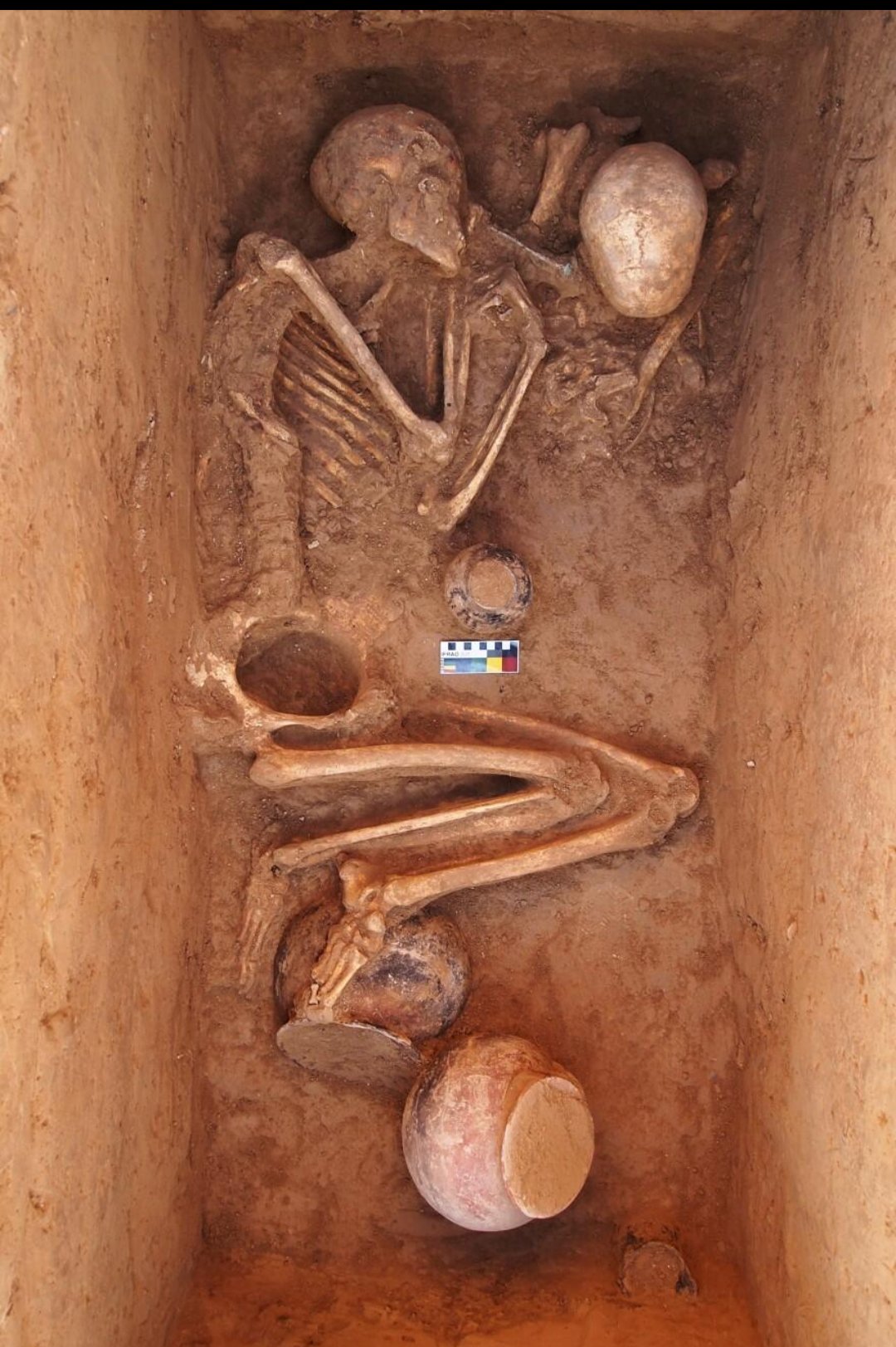
The sex pattern in Swat is still unexplained, and so is the part played by the BMAC towns. They gave Indo-Iranian words for brick and camel, and some Steppe ancestry appears there, but it is not clear whether the people who brought Indo-Aryan to India passed through these towns or went around them.
The language family trees are disputed too. In 2023 Paul Heggarty and colleagues argued, from a dated tree of Indo-European languages, for a first homeland south of the Caucasus and an earlier split of the main branches, with the steppe as a later secondary centre [32]. Their dates sit uneasily with the genetic evidence, and the debate is open. The Sinauli burials show that an elite with fast vehicles and Central Asian-style swords lived near Delhi early in the second millennium BCE. Who they were, and what language they spoke, nobody yet knows [15].
Your own share of the story
Everything in this article, from the fire in the Punjab to the chariot graves of the Urals and the woman buried at Rakhigarhi, is also a story about you. If your family comes from South Asia, your genome carries its own mix of these strands, and no two families carry quite the same one.
Somewhere in your DNA are the first people who reached South Asia some 50,000 years ago. Somewhere are the farmers and city-builders of the Indus world. For most people in India, there are also the herders who brought their horses south from the steppe about 4,000 years ago. How much of each you carry depends on which families married into yours, generation after generation. Brothers and sisters carry almost the same mix. Two neighbours from different communities can carry very different ones.
A GenoConnect whole-genome test reads that record. Your report shows how your ancestry divides among these ancient sources, Steppe ancestry among them, so you can see where your own family sits in the story this article has told. You can set your figure beside the numbers from the research: averages for some South Asian groups reach about 30 percent [14], and individuals in a 2025 study of 2,762 Indian genomes ranged from zero to about 45 percent [21]. Where do you fall?
Your report also follows two single lines far back in time. Your mitochondrial DNA passes from mother to child, so it traces your mother's mother's line. In India that line usually leads to lineages that have been in South Asia for tens of thousands of years [26]. If you are a man, your Y chromosome traces your father's father's line. It may belong to R1a-Z93, the branch that spread with the Bronze Age newcomers [24], or to one of the much older lineages that were here long before them.
The Vedic poets remembered their forefathers. One hymn of the Rigveda (10.15) calls on the Fathers, the pitaraḥ, to come and sit at the sacrifice [2]. Most families today can name their ancestors back only a few generations. The rest of the story, going back 50,000 years, is written in your DNA, and a test lets you read your part of it.
References
- [1]Kent, Roland G. Old Persian: Grammar, Texts, Lexicon. 2nd ed. New Haven: American Oriental Society, 1953. English translation of DNa also at Livius.org, "Achaemenid Royal Inscriptions: DNa".
- [2]Jamison, Stephanie W., and Joel P. Brereton, trans. The Rigveda: The Earliest Religious Poetry of India. 3 vols. New York: Oxford University Press, 2014.
- [3]Hock, Hans Henrich. "Through a Glass Darkly: Modern 'Racial' Interpretations vs. Textual and General Prehistoric Evidence on Ārya and Dāsa/Dasyu in Vedic Society." In Aryan and Non-Aryan in South Asia: Evidence, Interpretation and Ideology, edited by Johannes Bronkhorst and Madhav M. Deshpande. Harvard Oriental Series, Opera Minora 3. Cambridge, MA: Harvard University, 1999.
- [4]Thieme, Paul. Der Fremdling im Ṛgveda: Eine Studie über die Bedeutung der Worte ari, arya, aryaman und ārya. Leipzig: Deutsche Morgenländische Gesellschaft, 1938.
- [5]Schmitt, Rüdiger. "Aryans." Encyclopædia Iranica II, fasc. 7 (1986): 684–687.
- [6]Gnoli, Gherardo. The Idea of Iran: An Essay on Its Origin. Serie Orientale Roma 62. Rome: Istituto Italiano per il Medio ed Estremo Oriente, 1989.
- [7]Olivelle, Patrick. Manu's Code of Law: A Critical Edition and Translation of the Mānava-Dharmaśāstra. New York: Oxford University Press, 2005.
- [8]Mallory, J.P., and D.Q. Adams. The Oxford Introduction to Proto-Indo-European and the Proto-Indo-European World. Oxford: Oxford University Press, 2006.
- [9]Anthony, David W. The Horse, the Wheel, and Language: How Bronze-Age Riders from the Eurasian Steppes Shaped the Modern World. Princeton: Princeton University Press, 2007.
- [10]Lubotsky, Alexander. "The Indo-Iranian Substratum." In Early Contacts between Uralic and Indo-European, edited by C. Carpelan, A. Parpola and P. Koskikallio, 301–317. Helsinki: Suomalais-Ugrilainen Seura, 2001.
- [11]Witzel, Michael. "Autochthonous Aryans? The Evidence from Old Indian and Iranian Texts." Electronic Journal of Vedic Studies 7, no. 3 (2001): 1–115.
- [12]Koryakova, Ludmila, and Andrej Epimakhov. The Urals and Western Siberia in the Bronze and Iron Ages. Cambridge: Cambridge University Press, 2007.
- [13]Kuz'mina, Elena E. The Origin of the Indo-Iranians. Edited by J.P. Mallory. Leiden: Brill, 2007.
- [14]Narasimhan, Vagheesh M., et al. "The Formation of Human Populations in South and Central Asia." Science 365, no. 6457 (2019): eaat7487. doi:10.1126/science.aat7487.
- [15]Parpola, Asko. "Royal 'Chariot' Burials of Sanauli near Delhi and Archaeological Correlates of Prehistoric Indo-Iranian Languages." Studia Orientalia Electronica 8, no. 1 (2020): 175–198. doi:10.23993/store.98032.
- [16]Witzel, Michael. "Early Sanskritization: Origins and Development of the Kuru State." Electronic Journal of Vedic Studies 1, no. 4 (1995): 1–26.
- [17]Lamberg-Karlovsky, C.C. "Archaeology and Language: The Indo-Iranians." Current Anthropology 43, no. 1 (2002): 63–88.
- [18]Frachetti, Michael D. Pastoralist Landscapes and Social Interaction in Bronze Age Eurasia. Berkeley: University of California Press, 2008.
- [19]Lazaridis, Iosif, et al. "The Genetic Origin of the Indo-Europeans." Nature 639 (2025): 132–142. doi:10.1038/s41586-024-08531-5.
- [20]Allentoft, Morten E., et al. "Population Genomics of Bronze Age Eurasia." Nature 522 (2015): 167–172. doi:10.1038/nature14507.
- [21]Kerdoncuff, Elise, et al. "50,000 Years of Evolutionary History of India: Impact on Health and Disease Variation." Cell 188, no. 13 (2025): 3389–3404. doi:10.1016/j.cell.2025.04.027.
- [22]Shinde, Vasant, et al. "An Ancient Harappan Genome Lacks Ancestry from Steppe Pastoralists or Iranian Farmers." Cell 179, no. 3 (2019): 729–735. doi:10.1016/j.cell.2019.08.048.
- [23]Librado, Pablo, et al. "The Origins and Spread of Domestic Horses from the Western Eurasian Steppes." Nature 598 (2021): 634–640. doi:10.1038/s41586-021-04018-9.
- [24]Underhill, Peter A., et al. "The Phylogenetic and Geographic Structure of Y-Chromosome Haplogroup R1a." European Journal of Human Genetics 23, no. 1 (2015): 124–131. doi:10.1038/ejhg.2014.50.
- [25]Moorjani, Priya, et al. "Genetic Evidence for Recent Population Mixture in India." American Journal of Human Genetics 93, no. 3 (2013): 422–438. doi:10.1016/j.ajhg.2013.07.006.
- [26]Silva, Marina, et al. "A Genetic Chronology for the Indian Subcontinent Points to Heavily Sex-Biased Dispersals." BMC Evolutionary Biology 17 (2017): 88. doi:10.1186/s12862-017-0936-9.
- [27]Basu Mallick, Chandana, et al. "The Light Skin Allele of SLC24A5 in South Asians and Europeans Shares Identity by Descent." PLoS Genetics 9, no. 11 (2013): e1003912. doi:10.1371/journal.pgen.1003912.
- [28]Ju, Dan, and Iain Mathieson. "The Evolution of Skin Pigmentation-Associated Variation in West Eurasia." Proceedings of the National Academy of Sciences 118, no. 1 (2021): e2009227118. doi:10.1073/pnas.2009227118.
- [29]Stokowski, Renee P., et al. "A Genomewide Association Study of Skin Pigmentation in a South Asian Population." American Journal of Human Genetics 81, no. 6 (2007): 1119–1132.
- [30]Müller, F. Max. Biographies of Words and the Home of the Aryas. London: Longmans, Green, and Co., 1888.
- [31]Panofsky, Aaron, and Joan Donovan. "Genetic Ancestry Testing among White Nationalists: From Identity Repair to Citizen Science." Social Studies of Science 49, no. 5 (2019): 653–681. doi:10.1177/0306312719861434.
- [32]Heggarty, Paul, et al. "Language Trees with Sampled Ancestors Support a Hybrid Model for the Origin of Indo-European Languages." Science 381, no. 6656 (2023): eabg0818. doi:10.1126/science.abg0818.