

Ahir Community
A community for people of the Ahir community — connect, explore ancestry, and share identity.
Title: Ahir Community | GenoConnect
The Ahirs of India
History, Culture, and Genetics of a Pastoral Community
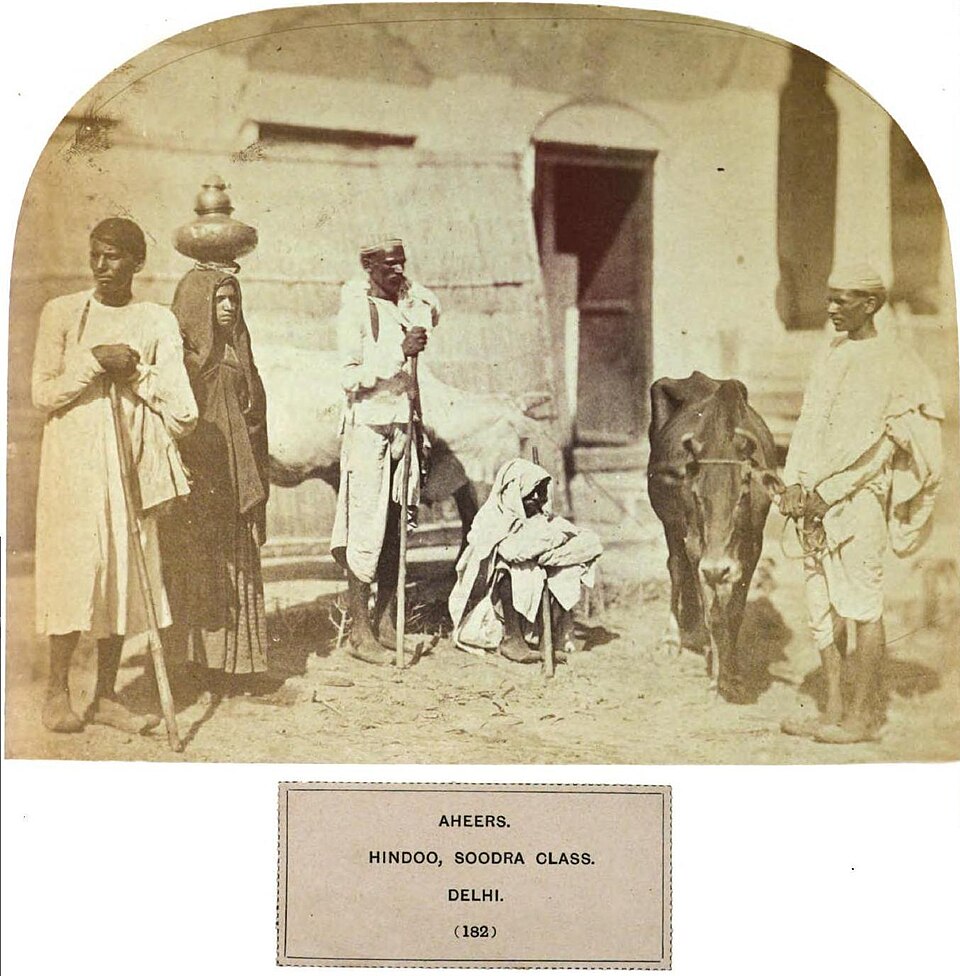
1. Introduction: Who Are the Ahirs?
Few communities in India are as numerous, or as widely scattered, as the Ahirs. Traditionally cattle-herders, dairy farmers, and cultivators, they are found in real numbers in almost every state of the country, though their historical heartland lies across the northern and central Indo-Gangetic belt — Uttar Pradesh, Bihar, Haryana, Rajasthan, Madhya Pradesh, and Gujarat in particular. Older, established Ahir populations are also found in Maharashtra, Punjab, and pockets of the south, and the community has carried its identity well beyond India's borders, into Nepal's Terai plains and into diaspora communities founded generations ago in Mauritius, Fiji, and the Caribbean.
The name itself comes from the Sanskrit abhira, an old word for a pastoral people who appear again and again in classical Indian texts and inscriptions. Sometime around the turn of the twentieth century, the community began adopting the surname Yadav on a large scale, tracing its lineage back to the legendary King Yadu and, through him, to Krishna, who tradition remembers as having grown up among cowherding families in Braj. The two names, Ahir and Yadav, are not really separate identities today — most people in the community use them interchangeably, and increasingly it is Yadav that appears on official documents while Ahir survives as the older, more traditional name.
What follows is an attempt to bring together what is known about the community's origins, its traditional pastoral economy, the genetic evidence relating to its ancestry, and the customs, cuisine, dress, architecture, folklore, and notable figures that have shaped Ahir identity over time.
2. Origins and Early History
2.1 Etymology and the Abhira People
Ahir descends from the Sanskrit abhira, a term that turns up in the Mahabharata, in the Puranas, and in a scatter of early inscriptions describing a cattle-keeping people. It also appears outside India altogether: the first-century-CE Greek merchant's handbook known as the Periplus of the Erythraean Sea mentions the Abhira as a people of western India, which tells us that a community by that name, or something very close to it, was already recognisable on the subcontinent two thousand years ago. Where exactly the ancient Abhira came from is genuinely disputed among historians — some have argued for an origin in Central Asian pastoral migrations, others for a population indigenous to India — and the sources are old and patchy enough that no single account has won the field. What is not in dispute is that an abhira identity, in one form or another, runs continuously through Indian history from antiquity to the present.
The word has cousins across India's regional languages. Bengali and Marathi preserve abhir as a related form, and a family of other names — Gauli, Ghosi, Gop, Gopa, Golla — describe cattle-keeping communities elsewhere in the country. In Gujarat and across much of South India, related pastoral groups go by names such as Ayar, Golla, and Konar. None of these communities is identical to the Ahirs of North India, but the overlap in name, occupation, and devotional culture points to a much older, shared pastoral world that stretches across the subcontinent.
2.2 Ahirs in Classical and Medieval History
Ahir religious and cultural life has always been bound up with pastoralism, and above all with Krishna, whom Puranic tradition places in the care of the cowherd chief Nanda and describes as growing up among the gopas and gopis — the cowherds and milkmaids — of Vrindavan and Braj. That story gives the community something unusual: a founding devotional figure who is also, by tradition, one of their own, a cowherd raised among cowherds before he became a god.
Regional histories of medieval North India record Ahir chieftains and landholding families in a number of areas, most notably the Ahirwal tract of what is now southern Haryana and northeastern Rajasthan, centred on Rewari and Narnaul. There, Ahir Rao families held local power across several generations, maintaining fortified towns and their own administration, and later operating as recognised allies within the Mughal revenue and military order. The community's long military tradition, which runs from these medieval chieftaincies through to twentieth-century regiments of the Indian Army, is discussed further in Section 14.
2.3 The Yadav Identity and Social Reform Movement
The shift toward the Yadav name did not happen all at once. It gathered pace from the late nineteenth century and, in particular, through the 1920s, when Ahir community associations across North India organised themselves under the Yadav Mahasabha and began actively promoting the Yadav surname along with a shared descent narrative reaching back to King Yadu of the Mahabharata's Yadava lineage. This was also a period of genuine institution-building — the same associations published community histories, opened schools, and pushed literacy and social reform within the community, often with an emphasis on temperance and self-discipline as marks of respectability.
Sociologists usually describe this kind of shift as sanskritisation — the adoption of practices, names, and origin stories associated with higher ritual standing. In the Ahir case, the movement had an obvious foundation to build on: the community's long-standing devotional bond with Krishna made the Yadava descent claim feel less like an invention than a natural extension of belief already held. Over the course of the twentieth century, a wide scatter of regionally named pastoral communities — Ahir, Goala, Gopa, Gwala, and others — increasingly folded into the shared Yadav identity, and today the great majority of Ahirs across India think of Ahir and Yadav as two names for the same people.
3. Regional Presence and Sub-Groups
There is barely a state in India without some Ahir population, but the weight of numbers sits firmly in the Hindi-speaking belt. The Ahirwal tract — running through Rewari, Mahendragarh, Narnaul, Gurgaon, and Jhajjar in southern Haryana, and spilling into Alwar and Behror in northeastern Rajasthan — takes its name directly from its historic Ahir population and remains, in a real sense, the community's cultural home ground. Large populations are also found in the Braj country of western Uttar Pradesh around Mathura, across eastern Uttar Pradesh and Bihar, and in the Khandesh region of Maharashtra, where the community's own dialect, Ahirani, is still spoken.
Community tradition organises Ahirs into three broad lineage divisions, each tracing descent from a different figure connected to Krishna's life:
- Yaduvanshi — descended, by tradition, from King Yadu himself, the legendary founder of the Yadava line.
- Nandavanshi — tracing lineage to Nanda, Krishna's foster father, and tied to the pastoral traditions of Vrindavan.
- Gwalvanshi (Goallavanshi) — descended from the gopas and gopis among whom Krishna grew up.
Below these three broad divisions sits a long list of regional clans and sub-names — Dhandhor, Gwal, Krishnaut, Gauli, Ghosi, Gop, Dauwa, and more than twenty others recognised locally — a reflection of just how widely the community has settled and how independently its regional branches developed before the modern Yadav identity drew them back together under one name.
4. Genetics and DNA Ancestry
Because the Ahir/Yadav population is one of the largest traditional communities in India, it offers a genuinely useful window into the wider genetic story of North and Central India — a story built from deep indigenous ancestry layered with the migrations that have moved through the subcontinent over thousands of years.
4.1 Paternal (Y-DNA) Lineages
Studies of North Indian agrarian and pastoral communities, including Yadav populations sampled in Haryana and neighbouring states, tend to turn up a mixed paternal picture rather than any single dominant lineage. Most such studies find a meaningful presence of haplogroup R1a-Z93, the marker most closely tied to the Bronze Age steppe-pastoralist migrations that reached South Asia around 2000–1500 BCE, sitting alongside deep indigenous South Asian haplogroups such as H-M69 and L-M20, with smaller contributions from lineages like J2 that likely arrived through Neolithic-era contact with West Asia. This mix is broadly typical of agrarian and pastoral castes across the Indo-Gangetic plain, and it fits a community that has been rooted in North and Central India for a very long time rather than pointing to any single, more recent outside origin.
4.2 Maternal (mtDNA) Lineages
A 2018 study published in the journal Data in Brief sequenced the hypervariable regions of mitochondrial DNA in the Yadav population of Haryana, adding to the still-thin body of published research on North Indian maternal lineages. In line with the wider pattern seen across North India, the maternal lines recorded in this study sit predominantly within indigenous South Asian mitochondrial haplogroups — a signal of deep continuity with the region's ancient female population, and a reminder that, as with most Indian communities, the maternal side of the family tree is overwhelmingly local, with little trace of any recent migration from outside the subcontinent.
4.3 Autosomal Ancestry and Population Structure
Looked at across the whole genome, Ahir/Yadav populations share the same basic Ancestral North Indian (ANI) and Ancestral South Indian (ASI) admixture pattern found across most agrarian communities of the Hindi belt, with the exact balance shifting somewhat from region to region and tracking that of neighbouring castes with a similar social and economic position. As an Other Backward Class pastoral-agrarian community rather than a priestly or ruling lineage, Ahir populations generally sit somewhere in the middle of the ANI–ASI spectrum — carrying a real share of steppe-related ancestry alongside a substantial indigenous South Asian base, which is exactly what one would expect of a large cultivator and herder community with deep North Indian roots.
4.4 Endogamy, Gotra, and Genetic Health Considerations
Marriage within the Ahir community follows the same basic rule found across most of Hindu North India: caste endogamy paired with gotra exogamy, meaning marriage stays within the broader community but never within one's own patrilineal clan lineage, a custom said to reach back to ancient Vedic kinship rules and still widely observed today. Sustained over many generations, this pattern produces the genetic signature typical of large endogamous South Asian groups — a degree of distinctiveness relative to neighbouring communities, and community-specific carrier frequencies for certain inherited conditions. As with any large, historically endogamous Indian community, it is worth discussing family genetic history and carrier screening with a qualified genetic counsellor or physician, particularly around the time of marriage or family planning.
This section summarises findings from published population-genetics literature and consumer genomics research; ancestry estimates vary by study, sample size, and reference panel, and individual results from DNA testing may differ from community-level averages.
5. Social Structure and Traditional Occupation
Cattle sat at the centre of the traditional Ahir household — rearing cows and buffaloes, producing and trading milk, ghee, and other dairy products, and in most regions combining that pastoral work with settled farming. This dual economy, part herding and part agriculture, shaped much of the community's traditional social life, which was organised around the village, with a local panchayat handling disputes and coordinating decisions that affected the whole community.
Within the family, the work was divided along fairly clear lines: men generally took responsibility for herding, ploughing, and field labour, while women ran the dairying side of things almost entirely — milking, turning milk into curd, buttermilk, and ghee, and managing much of the household's day-to-day economy on top of domestic duties. That central economic role gave Ahir women a position of real practical authority within family life, even where broader social norms remained conservative.
The cow's religious weight in the community follows naturally from its identification with Krishna as Gopal, protector of cows, and Ahirs share fully in the wider Hindu reverence for cattle, treating cattle-keeping as both a livelihood and, in a quieter way, an act of devotion.
6. Language and Dialects
Most Ahirs simply speak whatever language dominates the region they live in — Hindi, Bhojpuri, Braj Bhasha, Marathi, Gujarati, and so on — but a few dialects are specifically tied to the community's history. Ahirani, also called Khandeshi, is spoken across the Khandesh region of Maharashtra (Jalgaon, Dhule, and Nashik) and carries a distinctive blend of Marathi, Gujarati, Hindi, and older Prakrit-derived elements. Ahirwati belongs to the Ahirwal region of Haryana and northeastern Rajasthan. And in and around Benaras, the community's own speech carries recognisable features within the wider Bhojpuri and Hindi dialect continuum, distinct enough that outsiders have long noted it.
7. Religion, Deities, and Festivals
Ahir religious life is Vaishnava at its core, centred on Krishna in his pastoral aspect as Gopal and Govind, with Shiva also widely worshipped within the community. Every major Hindu festival is observed, but a handful carry particular weight because of their direct connection to Krishna and to cattle:
- Janmashtami — Krishna's birthday, marked with fasting, devotional singing, and worship carried through to midnight.
- Gopashtami — falling on the eighth day of the bright fortnight of Kartik (October–November), this festival marks the day young Krishna first led the family cattle out to graze. Cattle are bathed and decorated with garlands and colour, walked in procession through the village, and formally worshipped in a go-puja ceremony.
- Govardhan Puja — commemorating the story of Krishna lifting Mount Govardhan to shelter the cowherds of Braj from days of relentless rain; in some rural areas the day is marked by driving the village cattle herds back toward home in a ceremonial run.
- Holi and Diwali — celebrated with the same energy found across wider Hindu society, usually with community folk singing and dance woven into the celebrations.
In rural areas, some of these festivals have historically come with displays of strength involving cattle, alongside the communal feasting, music, and family gatherings that mark every major Hindu occasion.
8. Culture, Customs, and Social Practices
Ahir cultural life is unmistakably rural and agrarian, built around the rhythm of the farming and grazing calendar, large joint-family households, and tight village bonds. Respect for elders, hospitality toward guests, and a strong pull toward collective participation — everyone turning up for a wedding, a festival, or a harvest — remain central to how the community thinks of itself.
Folk performance runs through nearly every part of community life. Both men and women take part in seasonal and festive singing, and the community has a particular association with kajri, the lyrical songs sung during the monsoon, and with biraha, a North Indian folk-singing form especially strong in eastern Uttar Pradesh and Bihar, traditionally performed as call-and-response verses over simple percussion.
In parts of Gujarat and Rajasthan, village fairs bring out the Ahir folk dance, sometimes called Abhira Nritya, danced to the dholak and manjira. It is not a formal, staged performance so much as a shared expression of belonging — a way of marking devotion to Krishna and the pleasures of rural life together, as a community.
9. Marriage and Wedding Traditions
Ahir weddings follow the broader North Indian Hindu pattern, shaped by regional and community custom, and typically stretch across several days of ritual, feasting, and folk celebration that draws in the wider village or extended family. The details shift somewhat from region to region, but a few elements are close to universal:
- Sagai / Roka — the formal engagement, when both families exchange gifts and sweets to seal their agreement to the match.
- Haldi — a paste of turmeric, ghee, and gram flour applied to the bride and groom in their own homes in the days before the wedding, meant to bless and brighten them ahead of the ceremony.
- Mehndi and Ratijaga — a henna ceremony for the bride, paired with an all-night gathering where family and friends sing the traditional wedding songs that have been passed down through generations of women.
- Baraat and Phere — the groom's procession to the bride's home, followed by the couple taking seven vows while circling the sacred fire — the phere, which forms the ritual heart of any Hindu wedding.
- Vidaai — the bride's emotional farewell as she leaves for her marital home, followed in the days after by customs such as her brief return visit to her parents' house.
Marriage customs follow the rule of gotra exogamy — never marrying within one's own patrilineal clan — layered on top of caste endogamy, and in several regions village exogamy is observed as well. Almost every stage of the ceremony is carried by women's folk singing: songs of blessing, songs about family, and songs that gently tease the in-laws. It remains one of the most alive and least formal parts of the community's wedding tradition, resisting standardisation even as other elements of the ceremony have become more uniform.
10. Cuisine
Given the community's pastoral background, it is no surprise that dairy sits at the centre of traditional Ahir cooking, alongside the hardy millets and pulses long grown across the drier tracts of North and Central India. Food, on the whole, stays simple, filling, and tied closely to the agricultural seasons rather than to elaborate spicing.
- Bajra and jowar rotis — flatbreads made from pearl millet and sorghum, everyday staples across Haryana, Rajasthan, and Gujarat, usually eaten with ghee, jaggery, or curd.
- Khichdi — rice or millet cooked together with lentils into a one-pot meal, most often as bajra khichdi, a warming winter dish served with ghee, curd, or buttermilk.
- Dairy preparations — milk, curd, buttermilk (chaas or lassi), and ghee form the backbone of the everyday diet, a direct legacy of the community's cattle-keeping history; sweets made from milk solids take pride of place at festivals.
- Seasonal vegetables and pulses — cooked plainly, with modest spicing, in keeping with the largely vegetarian leanings historically recorded among many Ahir households, particularly in Uttar Pradesh.
Food customs are not identical across the community, though, and non-vegetarian dishes, including those built around fish or poultry, do appear in some households and regions, particularly outside the Hindi heartland, where local food culture shapes community practice as much as tradition does.
11. Traditional Dress, Embroidery, and Ornaments
Traditional Ahir dress changes a great deal from one region to the next, but one strand of it has become genuinely famous well beyond the community: the embroidery of the Ahirs of Kutch and Saurashtra in Gujarat.
- Ahir embroidery (Kutch) — a densely decorative needlework style built around small round or almond-shaped mirrors (shisha), worked in bright silk or cotton thread onto skirts, blouses, head-veils, and household textiles such as torans and cushion covers. The motifs run to peacocks, parrots, elephants, and scenes of Krishna among the milkmaids, all outlined in a distinctive open chain stitch. Traditionally, this embroidery was done entirely by hand, by women, often as part of preparing a daughter's dowry — a slow, exacting craft passed down rather than taught formally.
- Ghagra and kanjari — the traditional women's ensemble in Kutch, made up of an embroidered skirt (ghagra), a fitted embroidered blouse (kanjari), and a head-veil, historically stitched by the women who would go on to wear it.
- Kediyu — a flared, embroidered tunic worn by men in Gujarat on festive occasions, paired with a dhoti and a turban (paghdi).
- Haryana and Rajasthan dress — in the Ahirwal region, men traditionally wear a turban, dhoti, and shirt, while women wear a ghagra skirt, kurti, and odhni, along with heavy silver or gold jewellery — anklets such as kari and pati are shared with neighbouring agrarian communities of the region.
Jewellery has always carried a double purpose here — ornament, certainly, but also a form of portable family wealth that could be sold or pawned if hard times demanded it. Heavy silver ornaments remain a fixture of festive and bridal dress in rural areas even now, long after everyday clothing largely gave way to mainstream Indian fashion.
12. Traditional Housing and Architecture
Ahir housing traditions vary by region and climate, but the most distinctive is found among the Ahirs of the Kutch desert in Gujarat, where communities including the Ahirs, Rabaris, and Meghwals developed the bhunga — a round mud house built specifically to survive the region's earthquakes and extreme heat. The circular plan, with no corners to fail under stress, made the bhunga far more resilient in a seismically active region than a conventional rectangular house, a fact demonstrated when many older bhungas survived the devastating 2001 Bhuj earthquake close to its epicentre while more modern structures nearby did not.
A bhunga's thick walls are built from a mix of mud and clay, finished with a protective coat of lipan (a fine mud plaster, often mixed with cow dung), and topped with a conical thatched roof supported on a timber frame. Small, low-set windows allow a cross breeze through the interior while keeping out the worst of the daytime heat, and the deep roof overhang shields the walls from direct sun. Inside and out, the walls are often decorated with mud-relief work inset with small mirrors — a rural cousin, in a sense, of the mirror-work embroidery the same communities are known for — along with painted patterns that give each cluster of houses its own character. Several bhungas are typically grouped around a shared open space that functions as the heart of the settlement, used for everyday community life rather than as private space.
Outside Kutch, Ahir households have generally followed the wider building traditions of their region — mud and brick village houses across the Hindi belt, often built around a small courtyard and, where means allowed, incorporating separate space for cattle, since livestock has always needed to be close at hand rather than kept at a distance from the family home.
13. Folklore, Music, and Dance
The community's richest piece of folklore is the story of Lorik, a legendary Ahir hero whose exploits are sung across a huge stretch of North and Central India — Uttar Pradesh, Bihar, Rajasthan, Chhattisgarh, and beyond — under names that shift by region: Lorikayan, Chanaini, or Lorik-Chanda. At its centre is Lorik's love for Chanda (also called Manjari in some tellings), a romance that survives family opposition and social disapproval before the couple's story resolves. The tale was significant enough to cross religious lines: the fourteenth-century Sufi poet Mulla Daud drew on the older Chanaini ballads to compose the Chandayan, an Awadhi masnavi that folded the Ahir love story into a work of Sufi allegory.
Within the community, Lorik is remembered as something closer to a folk saint than a mere hero — worshipped in a ceremony known as Chank Puja, which notably requires no Brahmin priest. Three particular clans, the Dhandhor, Gwal, and Krishnaut, have traditionally carried the responsibility of performing the epic, in forms that differ by region: as baans geet, a recitative sung to a long bamboo pipe in Chhattisgarh, or as nacha, a dramatized folk-theatre performance. The ballad's reach extends well beyond India itself, remaining part of community memory among Ahir diaspora populations in Mauritius, Fiji, Guyana, and Nepal.
Alongside the Lorik tradition sit kajri, the Bhojpuri-region monsoon songs, and biraha, the call-and-response singing style closely associated with Ahir performers in eastern Uttar Pradesh and Bihar. In Gujarat, the community's folk dance — performed to dholak and manjira at fairs and festivals — carries the same spirit into a different regional idiom, less about narrative and more about the simple pleasure of moving together as a community.
14. Ahirwal and Historic Ahir Ruling Houses
The Ahirwal tract of southern Haryana and northeastern Rajasthan — centred on Rewari, Narnaul, and Mahendragarh — carries the community's name directly, and remains its most closely identified regional homeland. For several generations, Ahir Rao chieftains held local authority here, maintaining fortified towns, water tanks, and their own administration under successive regimes, including recognition as allies within the later Mughal order.
The best-known figure to come out of this tradition is Rao Tula Ram (1825–1863), who became ruler of Rewari at just thirteen years old after his father's death and went on, in 1857, to lead a determined regional uprising against East India Company rule. He raised a substantial local force, fought in engagements across the Delhi–Haryana theatre of the rebellion, and, after the uprising's defeat, travelled through Persia and Afghanistan in search of further support, dying in Kabul in 1863 still trying to keep the resistance alive. He is remembered today, across Haryana and Rajasthan, as one of the most significant regional heroes of 1857, and Rewari still honours him through memorials and public institutions that carry his name.
That martial and landholding tradition left a lasting mark on the region: Ahirwal has historically sent a disproportionate number of its young men into the Indian armed forces, a pattern that carried on well into the twentieth century and is discussed further in Section 16.
15. Education, Livelihoods, and Socioeconomic Profile
The Yadav Mahasabha and similar community associations pushed hard on education from the early twentieth century onward, and that emphasis left the community with an extensive network of local schools and colleges, particularly across Haryana, Uttar Pradesh, and Bihar. Cattle-rearing, dairying, and agriculture remain genuinely important livelihoods, especially in rural areas, but the community today is broadly represented across government service, the armed forces, agriculture-linked business, and education, with a growing presence in private-sector and urban professional work over the past few decades.
Dairying in particular never really faded as a community strength. When India's cooperative dairy movement took shape after independence, culminating in the White Revolution of the 1970s and 1980s, Yadav families were among those who supplied both the milk and, in some cases, the technical expertise behind it — Harichand Megha Dalaya, who came from a Yadav dairying family and helped develop the world's first commercially viable process for spray-drying buffalo milk, was one of the key figures alongside Verghese Kurien in building what became Amul and, later, the National Dairy Development Board's Operation Flood. That combination of old pastoral knowledge and new dairy science has kept the community closely tied to India's milk economy right through to the present day.
16. Diaspora
Outside India, the oldest and largest Ahir/Yadav population is found in Nepal, particularly across the Terai plains that border Uttar Pradesh and Bihar, where the community is both numerous and culturally prominent — especially around Janakpur and the eastern Terai districts, where Yadav identity is woven closely into local political and cultural life.
Further afield, the story runs through the colonial indenture system. During the nineteenth and early twentieth centuries, a considerable number of Ahirs from Uttar Pradesh and Bihar were among the labourers recruited under British indenture and shipped out to work on colonial plantations — the girmitiyas, as the system's Hindi-derived name remembers them. Their descendants today form part of the wider Indian-origin communities of Mauritius, Fiji, South Africa, and the Caribbean nations of Guyana, Trinidad and Tobago, and Suriname, where fragments of ancestral language, devotional music, and Hindu religious practice have been carried forward across many generations even as these communities built entirely new national identities for themselves far from where their journey began.
17. Notable Figures
17.1 Historical and Royal Figures
- Rao Tula Ram (1825–1863) — ruler of Rewari and the leading figure of the 1857 uprising against British rule in the Haryana–Rajasthan region, discussed at length in Section 14.
- Rao Tej Singh — an earlier Ahir ruler of Rewari, remembered today chiefly for public works such as the Bada Talab water tank, still in use in the town.
17.2 Military Figures
The community's martial tradition found its most celebrated modern expression in the 1962 Sino-Indian War, when Charlie Company of 13 Kumaon Regiment — made up largely of Ahir soldiers from the Rewari and Mahendragarh region — made a legendary last stand at Rezang La in Ladakh, an action still remembered as one of the most courageous engagements in Indian military history. Ahir units and individual soldiers from the Ahirwal region also served with distinction in the 1965 India–Pakistan War, continuing a tradition of recruitment from the region that stretched back to the raising of the first Ahir companies under British India in 1898.
17.3 Public Life, Science, and Culture
- Harichand Megha Dalaya — a dairy technologist from a Yadav family in Uttar Pradesh, best known for developing the first commercially workable process for spray-drying buffalo milk, a breakthrough that helped make India's cooperative dairy movement possible.
- Swami Ramdev (born Ramkishen Yadav) — a yoga teacher and Ayurveda advocate born in Mahendragarh district, Haryana, widely credited with bringing yoga practice to a mass audience in India and internationally.
This is a small sample rather than any kind of complete list. Given how large the community is, it has produced a great many soldiers, farmers, dairy entrepreneurs, educators, and public figures across India and its diaspora over the last two centuries, most of whose names never make it into any written record at all.
18. Conclusion
There is a certain consistency running through the Ahir story, even across such a wide geographic and historical spread: a people whose identity was built, quite literally, around cattle, and around a devotional bond with Krishna that has never really loosened its grip. From the ancient Abhira recorded in classical texts to the modern Yadav identity that now links the community across two dozen Indian states and a genuinely global diaspora, the through-line is continuity managed alongside real change — a community that has kept its dairying and agricultural roots, its festivals and folk epics, and its strong martial tradition intact, while adapting, often on its own terms, to modern schooling, urban work, and life lived thousands of miles from its North Indian heartland. The embroidered ghagras of Kutch, the sung verses of Lorik still carried by Ahir communities from Chhattisgarh to the Caribbean, the ramparts of old Ahirwal, and the dairy cooperatives that now anchor rural India's economy are all, in their different ways, the same story: a community that has never really let go of the bond between people, cattle, and land.
References
- [1]1. Wikipedia. "Ahir." https://en.wikipedia.org/wiki/Ahir
- [2]2. Wikipedia. "Rao Tula Ram." https://en.wikipedia.org/wiki/Rao_Tula_Ram
- [3]3. Wikipedia. "Ahirwal." https://simple.wikipedia.org/wiki/Ahirwal
- [4]4. Wikipedia. "Ahirani." https://en.wikipedia.org/wiki/Ahirani
- [5]5. Wikipedia. "Lorikayan." https://en.wikipedia.org/wiki/Lorikayan
- [6]6. Encyclopedia.com. "Ahirs." https://www.encyclopedia.com/humanities/encyclopedias-almanacs-transcripts-and-maps/ahirs
- [7]7. Verma, K., Sharma, S., Sharma, A., Dalal, J., Bhardwaj, T. (2018). "Sequence polymorphism data of the hypervariable regions of mitochondrial DNA in the Yadav population of Haryana." Data in Brief. https://doi.org/10.1016/j.dib.2018.03.004
- [8]8. Xing, J. et al. "Genetic diversity in India and the inference of Eurasian population expansion." Genome Biology. https://www.ncbi.nlm.nih.gov/pmc/articles/PMC3156952/
- [9]10. Asia InCH — Encyclopedia of Intangible Cultural Heritage. "Ahir Embroidery of Gujarat." https://www.asiainch.org/craft/ahir-bharat-embroidery/
- [10]11. D'Source. "Ahir Embroidery – Kutch, Gujarat." https://dsource.in/resource/ahir-embroidery-kutch-gujarat/introduction
- [11]12. D'Source. "Habitats of Kutch – Bhunga." https://www.dsource.in/gallery/habitats-kutch-bhunga
- [12]13. Qasab. "Embroideries." http://qasab.org/cultural-heritage/embroideries/
- [13]14. Sahapedia. "The Tale of Lorik-Chanda/Chandaini in Chhattisgarh." https://www.sahapedia.org/the-tale-of-lorik-chandachandaini-chhattisgarh
- [14]15. Jaffrelot, Christophe (2003). India's Silent Revolution: The Rise of the Lower Castes in North India. C. Hurst & Co.
- [15]16. Michelutti, Lucia (2008). The Vernacularisation of Democracy: Politics, Caste, and Religion in India. Routledge.
- [16]17. The Plate. "A Brief History of India's White Revolution." https://theplate.in/a-brief-history-of-indias-white-revolution-the-story-of-remarkable-individuals-and-collective-spirit/
- [17]18. Grokipedia. "Rao Tula Ram." https://grokipedia.com/page/Rao_Tula_Ram