

Araya Community
community of Kerala's Western Ghats. Discover their rich history, unique culture, traditional governance, and genetic insights.
Araya (Malayarayan) Community
The Araya of Kerala: History, Culture, and Ancestry of a Western Ghats Hill Community
1. Introduction: Who Are the Araya (Malayarayan)?
2. Origins and Early History
2.1 Settlement in the Western Ghats
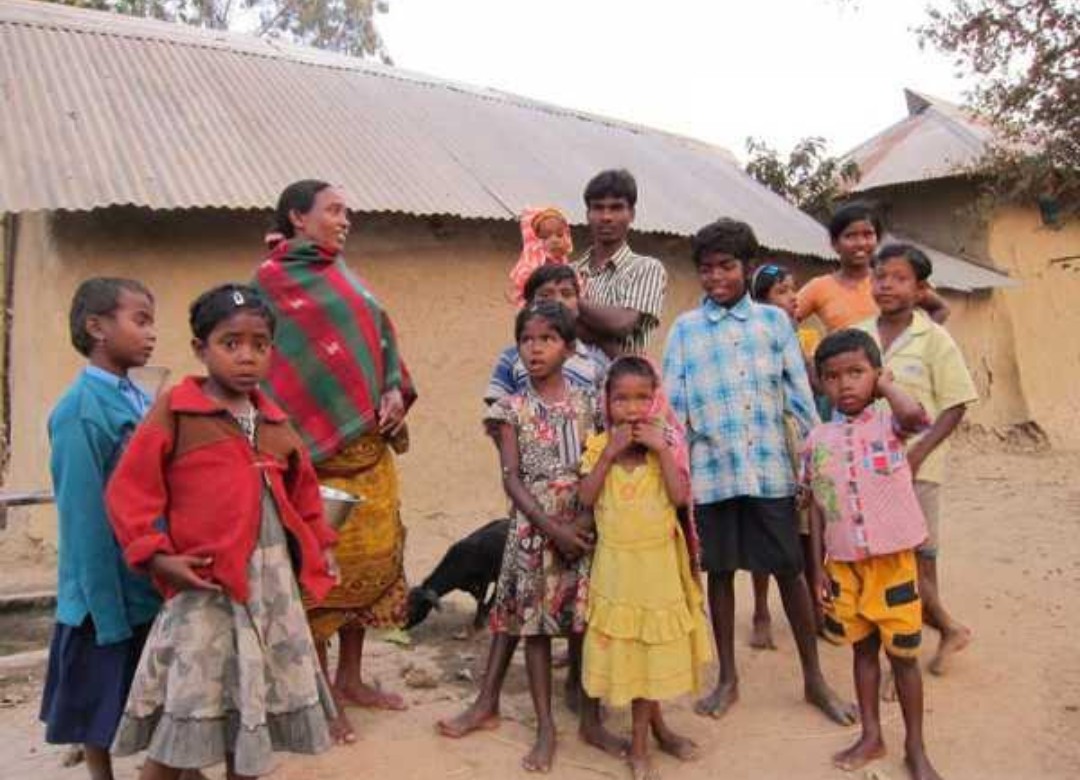
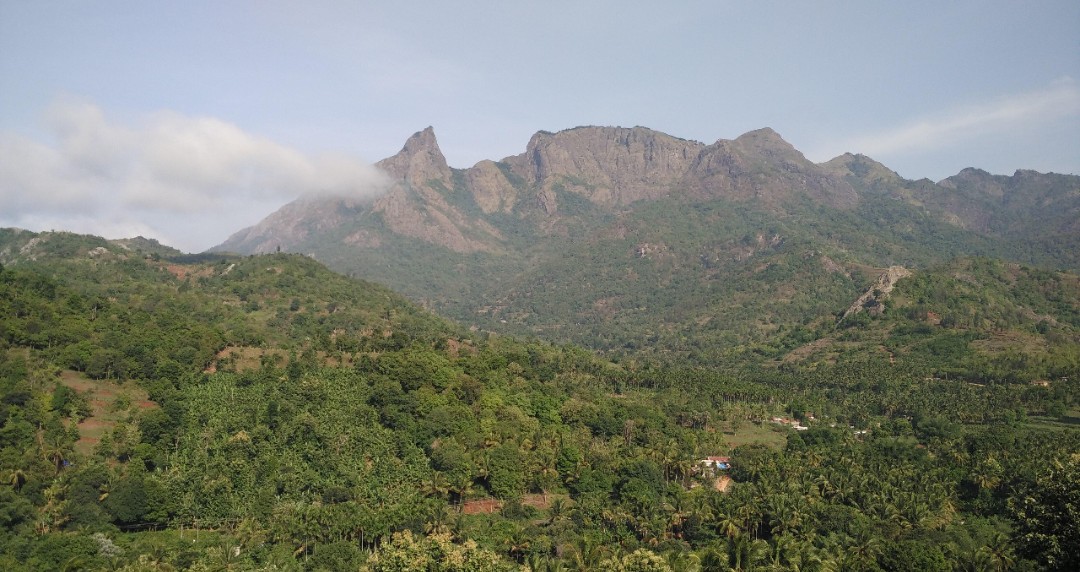
Community tradition and early ethnographic accounts trace the Araya to long-standing settlement in the interior hill tracts of the Western Ghats, the mountain range that forms Kerala's eastern boundary. Unlike many neighbouring hill communities who practised shifting cultivation and temporary settlement, the Araya were noted by 19th- and early 20th-century observers for maintaining fixed villages, often "fine-looking, with trees and palms all around," and for cultivating substantial plots of paddy, rice, and fruit trees rather than depending primarily on forest foraging or wage labour.
This agricultural self-sufficiency was supplemented by the collection of forest produce such as honey, wax, and game, together with limited trade in these goods through intermediaries, historically including Muslim merchants from the plains. Housing reflected a similar settled orientation: while some families lived in temporary bamboo-and-mud huts, others built more substantial wood and stone dwellings, a level of permanence that colonial census officers frequently contrasted with the more mobile lifestyles of other Travancore hill tribes.
2.2 Life under the Poonjar Rajas and Travancore
Historically, Araya territory fell within the domain of the Poonjar (Puniyat) royal family, traditionally traced to the Kulasekhara dynasty, who in turn became vassals of the Travancore kingdom following the campaigns of Marthanda Varma in the mid-18th century (about 1749–1750). Under this arrangement, Araya villages retained a degree of internal self-governance, typically organised around clan headmen who managed land allocation and settled community disputes, while owing tribute and services to the ruling family. Recorded obligations included supplying honey for royal ceremonies and assisting in the capture and taming of elephants for the court.
3. Geographic Distribution and Demographics
The Araya are concentrated today in the hilly taluks of Kottayam (notably around Poonjar and the surrounding highlands), the Peermade and Idukki hill tracts of Idukki district, and parts of Pathanamthitta district, particularly the areas bordering the Western Ghats forest belt. Their villages are generally located at moderate to high elevations amid tea, rubber, and spice plantations that have expanded across the region since the colonial period.
4. Genetics and DNA Ancestry
Dedicated, large-scale population-genetic studies focused specifically on the Araya/Malayarayan community are limited compared with better-studied Kerala populations such as the Nair, Ezhava, or Syrian Christian communities. What can be said with reasonable confidence draws on the broader body of research on Kerala's tribal populations as a whole, within which the Araya are generally grouped.
Long-term endogamy, including a documented historical preference for cross-cousin marriage in many South Indian hill-tribe populations, is also a recurring feature noted in the ethnographic literature on the Araya and comparable groups. As with other small, historically endogamous populations, this pattern is generally associated in the broader genetics literature with reduced genetic diversity relative to larger, more admixed populations, and can elevate the population frequency of certain recessive conditions in founder groups worldwide, making family health history a useful reference point for community members.
This section reflects the current, comparatively limited state of published genetic research specific to this community; readers with a strong interest in personal ancestry should treat community-level genetic patterns as a general backdrop rather than a substitute for individual DNA testing and results, which may vary.
5. Social Structure and Traditional Governance
Araya society was traditionally organised around patrilineal clans, each historically overseen by an elected or hereditary headman, referred to in earlier ethnographic sources as a kanikkaran, who was responsible for allocating agricultural land, mediating disputes, and representing the clan in dealings with the Poonjar and Travancore authorities. Inheritance generally followed the male line in most Araya sub-groups, in contrast to the matrilineal systems for which some other Kerala communities, such as the Nair, are well known.
Family structure has traditionally centred on the joint or extended household, with strong obligations of mutual support among kin. In the 20th century, growing integration with the wider Kerala economy, the spread of formal education, and government-led tribal development programmes gradually reshaped these traditional governance structures, though clan identity and kinship ties remain culturally significant, particularly around marriage and major life-cycle events.
6. Religion and Spiritual Life
6.1 Indigenous Beliefs and Ancestor Worship
The Araya's indigenous religious worldview centred on the veneration of ancestral spirits and local guardian deities associated with particular hills, rocks, and forest groves. Ancestor spirits were commemorated through small stone shrines or images, sometimes kept in dedicated family chambers, and honoured with periodic offerings of milk, ghee, and lamps. Village priests or oracles, drawn from within the community, served as intermediaries with these spirits, particularly in cases of illness or misfortune, entering a trance-like state to divine the cause of trouble and prescribe the appropriate remedy or offering.
Certain hills and forest patches were, and in some areas still are, treated as sacred groves, protected by strict taboos against logging, hunting, or loud disturbance out of respect for the spirits believed to reside there. These groves have drawn the interest of ecologists in recent decades, since long-standing community taboos have in many cases helped preserve pockets of old-growth forest and biodiversity that surrounding, more intensively used land has lost.
6.2 Integration with Hinduism
Over time, and particularly through sustained contact with neighbouring Hindu agrarian society, many Araya families incorporated elements of Hindu worship into their religious practice alongside indigenous ancestor and nature veneration. Community members traditionally observe major Kerala festivals such as Onam and Vishu, and Hindu deities including forms of Sastha (Ayyappan) are venerated by many Araya households alongside local guardian spirits, reflecting a gradual and largely voluntary process of religious blending rather than a single sharp conversion event. A majority of the community today identifies as Hindu.
6.3 Christianity among the Araya
Beginning in the mid-19th century, a significant portion of the Araya community converted to Christianity, most notably through the missionary work of the Church Missionary Society (CMS), which began organised outreach among the hill tribes of central Travancore from 1848 under missionaries including Henry Baker Jr. Some Araya clan leaders themselves petitioned missionaries for religious instruction and schooling during this period.
7. Language and Oral Tradition
8. Customs and Festivals
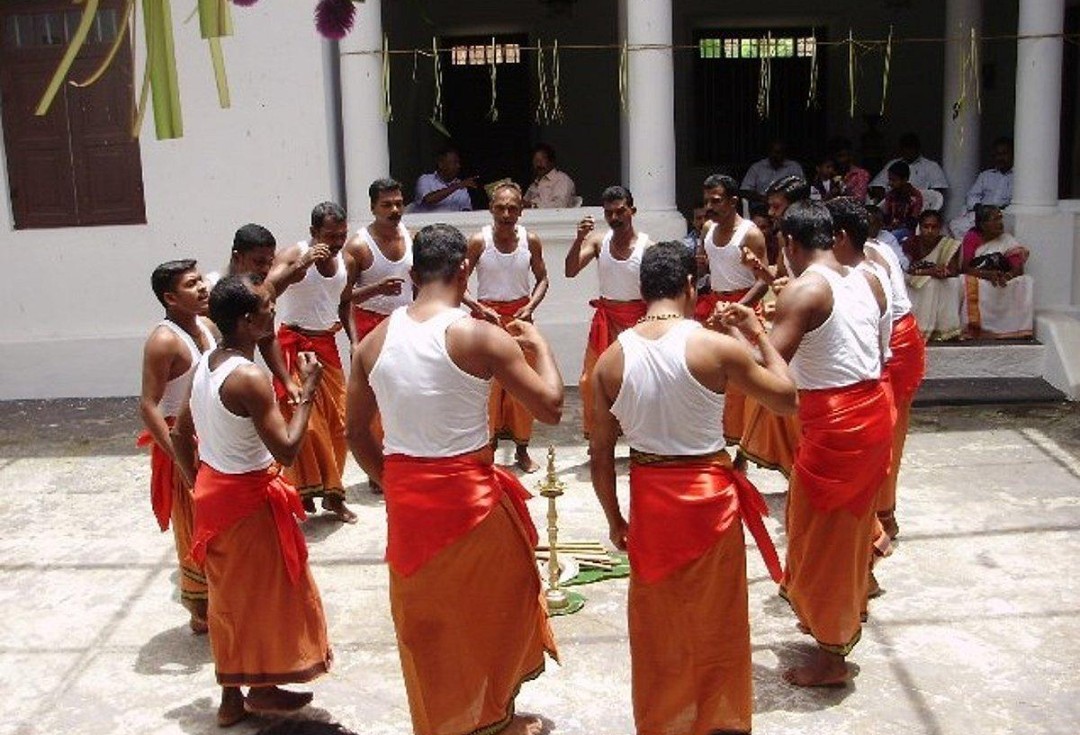
Araya cultural life traditionally revolved around the agricultural calendar, with seasonal festivals marking planting and harvest and combining thanksgiving to local guardian spirits with, for Hindu households, elements shared with wider Kerala festivals such as Onam and Vishu. Community gatherings often featured group singing and rhythmic group dances performed without elaborate instrumentation, reflecting a performance style adapted to the community's hill and forest settings rather than the temple-centred classical arts of the Kerala plains.
- Ancestor and grove rituals — periodic community offerings at family shrines and sacred groves, particularly around agricultural milestones and in response to illness within the family.
- Vanjippattu (boat-song) tradition — a body of ballad-style songs, discussed further below, performed at community gatherings and associated with the wider Aranmula cultural region of Pathanamthitta district.
9. Marriage Traditions
Traditional Araya marriage customs were comparatively simple in structure, typically consisting of a shared community meal and the ceremonial tying of a tali (a small pendant on a thread) around the bride's neck by the groom, echoing a practice widespread across Kerala communities of many different religious backgrounds. Marriage within the community's own clans and, in many recorded cases, a preference for marriage between cross-cousins were long-standing features of Araya marital practice, consistent with patterns documented among several South Indian hill-tribe populations.
As with most aspects of community life, marriage customs have modernised considerably over the past century, particularly among Christian Araya families, whose weddings today generally follow a church ceremony in keeping with CSI or Catholic practice, while retaining family and community gathering customs distinctive to the Araya. Among Hindu Araya families, ceremonies increasingly blend traditional elements with wider Kerala Hindu wedding conventions.
10. Cuisine
Traditional Araya cuisine reflects the community's agricultural and forest-based subsistence economy, historically built around home-grown rice, millets, tubers, and locally available vegetables, supplemented by forest produce such as honey, wild fruit, and mushrooms, and by fish and game where available. Meals were, and largely remain, prepared with minimal spicing relative to some other Kerala culinary traditions, favouring coconut, curry leaves, and locally grown pepper.
- Rice and millet staples — boiled rice, ragi (finger millet), and tapioca form the everyday base of the Araya diet, in keeping with hill-agriculture patterns across highland Kerala.
- Forest and garden produce — seasonal vegetables, wild greens, tubers, jackfruit, and banana are widely used, alongside honey gathered from the surrounding forest.
- Community feast meals — festive and wedding meals typically include a fuller spread of rice, vegetable curries, and, where dietary custom allows, meat or fish dishes, generally served on banana leaves in the wider Kerala style.
As with housing and dress, everyday Araya food habits have converged considerably with general Kerala Malayali cuisine over the past several decades, with distinctly traditional dishes now most visible at community festivals and family gatherings rather than daily meals.
11. Traditional Dress and Ornaments
Older ethnographic accounts describe traditional Araya attire as simple and drawn from locally available materials, with men wearing a plain waist-cloth and women wearing wrapped cloths, sometimes supplemented in earlier periods by garments fashioned from bark or woven forest fibres. Ornaments historically consisted of relatively simple items such as beads, bangles, and shell or bead necklaces, worn to denote marital or elder status rather than for elaborate display.
Over the 20th century, and particularly following broader integration with the Kerala economy and education system, everyday Araya dress converged with the mundu-and-shirt or sari conventions common across the state. Distinctively traditional dress and ornamentation today survive mainly in the context of cultural performances, community festivals, and heritage events, where they are consciously preserved and displayed as markers of Araya identity.
12. Traditional Housing
Historic Araya settlements combined more substantial wood-and-stone houses, generally belonging to comparatively prosperous landholding families, with simpler bamboo-and-mud huts used by others, particularly in more remote or higher-elevation hamlets. Villages were typically laid out amid stands of trees and palm groves, a pattern noted approvingly in colonial-era census reports as evidence of a settled and well-organised community, in contrast to more transient tribal settlements elsewhere in the Travancore highlands.
Contemporary Araya housing today generally follows the standard construction patterns found across rural highland Kerala, including concrete and tiled-roof houses, supported in part by state tribal housing and land-development schemes introduced from the 1970s onward.
13. Folklore, Dance, and Oral Performance
The Araya possess a distinctive body of oral literature centred on the Vanjippattu ("boat song") tradition, a genre of narrative ballads historically performed at community gatherings and closely associated with the wider cultural landscape of the Aranmula region in Pathanamthitta district, home to Kerala's famous Aranmula boat race and the Parthasarathy temple. These songs, including compositions such as Bana Yudham, preserve motifs of ancient battles, heroism, and community genealogy, and are performed as part of two related community art forms, Kolakali and Ivarkali, group performance traditions combining rhythmic song with stylised movement.
Scholars of Malayalam literature have noted intriguing parallels between elements of the Araya's Vanjippattu repertoire and Thirunizhalmala, one of the oldest surviving long poems in the Malayalam language, composed by Ayiroor Govindan and closely tied to the ritual life of the Aranmula temple tradition. Some researchers have suggested that this overlap may reflect a historical role for Araya performers or ritual specialists within the wider, non-Brahmanical ritual culture surrounding Aranmula, though the community's own oral memory of any such direct historical connection has itself faded over time, and this remains a subject of ongoing scholarly study rather than settled history.
Community folklore also preserves an association with Kadamattathu Kathanar, a semi-legendary priest-sorcerer figure of Kerala folklore, whom local tradition credits with having learned esoteric knowledge from Araya teachers before parting ways with the community, a story still recounted as part of regional Kerala folklore.
14. Sacred Groves and Ecological Heritage
A distinctive feature of Araya cultural heritage is the community's traditional role as custodian of forest groves considered sacred to resident guardian spirits. These groves, protected by long-standing taboos against logging, hunting, and disturbance, have in many documented cases preserved notably higher levels of native tree cover and biodiversity than surrounding, more intensively used forest land, making them of continuing interest to ecologists studying the Western Ghats, one of the world's recognised biodiversity hotspots. In recent decades, some Araya communities have worked alongside state forest authorities and researchers to document and support the continued protection of these sites amid pressures from land conversion and settlement expansion.
15. Education, Livelihoods, and Socioeconomic Profile
16. Contemporary Status and Recognition
Today's Araya community balances continuity and change: many families maintain strong ties to ancestral land, clan identity, and traditional festival and folklore practices, while also participating fully in Kerala's modern education system, professional workforce, and civic life. This dual identity, rooted in a distinct highland heritage while integrated into the wider currents of Malayali society, is central to how the community understands and presents itself today.
17. Conclusion
References
- [1]1. Wikipedia. "Malayarayan." https://en.wikipedia.org/wiki/Malayarayan
- [2]4. Grokipedia. "Malayarayan." https://grokipedia.com/page/malayarayan
- [3]5. Vajiram & Ravi. "Tribes of Kerala, List, Distribution, Culture, Govt. Schemes." https://vajiramandravi.com/current-affairs/tribes-of-kerala/
- [4]6. IndianNetzone. "Malayarayan Tribe." https://www.indianetzone.com/malayarayan_tribe
- [5]7. Kerala Forest Department. "Indigenous Communities of Kerala." https://forest.kerala.gov.in/en/indigenous-communities-of-kerala/
- [6]8. Joshua Project. "Malai Arayan in India." https://joshuaproject.net/people_groups/19044/IN