

Bene Israel Community
Explore the Bene Israel community of India, their history, Jewish traditions, culture, ancestry, migration and genetics.
The Bene Israel of India
1. Introduction: Who Are the Bene Israel?
The Bene Israel Hebrew for “Children of Israel” are the largest of India's several distinct Jewish communities and, by community memory if not by hard documentary proof, one of the oldest. For centuries they were spread across dozens of villages on the Konkan coast south of Mumbai, in what is now Maharashtra, before moving in growing numbers into Bombay from the eighteenth century onward. After 1948 most of the community resettled in Israel, and today only a small population remains in India, while a much larger Bene Israel diaspora commonly put somewhere between 60,000 and 80,000 people lives in Israel.
What follows is a survey of the community's own account of its origins, the genetic research now available on its ancestry, its historical social organisation, and the customs, cuisine, dress, architecture, and diaspora life that shape Bene Israel identity today. Where the record is uncertain or disputed and for a community whose history before the eighteenth century rests almost entirely on oral tradition, a great deal of it is that uncertainty is flagged rather than smoothed over.
2. Origins and Early History
2.1 The Shipwreck Tradition
Nobody, including the community itself, claims to know exactly when this happened. Proposed dates run from as early as the eighth century BCE, tied to the Assyrian conquest of the northern Kingdom of Israel and the scattering of the so-called Ten Lost Tribes, to the second century BCE some accounts place the wreck around 175 BCE, during the persecutions of Antiochus IV Epiphanes in Judea, a theory sometimes used to explain why the Bene Israel historically had no Hanukkah observance, since that festival commemorates events that took place after this proposed departure. This connection is a plausible hypothesis rather than established fact, and other versions of the tradition place the migration considerably later, or suggest an intermediate stay in Persia or Yemen before the community's arrival in India. No single account is treated as settled, even within the community's own historiography.
2.2 Life in the Konkan Villages
For a long stretch of their history, the Bene Israel lived scattered across the Konkan countryside traditional accounts speak of well over a hundred villages, though the precise figure is hard to verify from primary sources and is best treated as an approximation passed down within the community. There were no synagogues, no Torah scrolls, and no ordained clergy; community memory holds that the formal institutions of Judaism had largely fallen away during this period, sustained by whatever had survived orally from one generation to the next. Village religious life was overseen by lay leaders called kajis (or qazis), a hereditary role responsible for presiding at rites of passage and settling disputes within the community.
2.3 David Rahabi and the Revival of Formal Judaism
Formal recognition of the Bene Israel's Jewish status was not automatic. In the years after 1948, doubts raised by some Israeli rabbinical authorities about the community's marriageability under Jewish law led to real friction and protest within the community. That dispute was resolved in 1964, when Israel's Chief Rabbinate formally declared the Bene Israel “full Jews in every respect” though even after that ruling, questions around individual cases took some further years to fully settle in practice.
3. The Jewish Communities of India
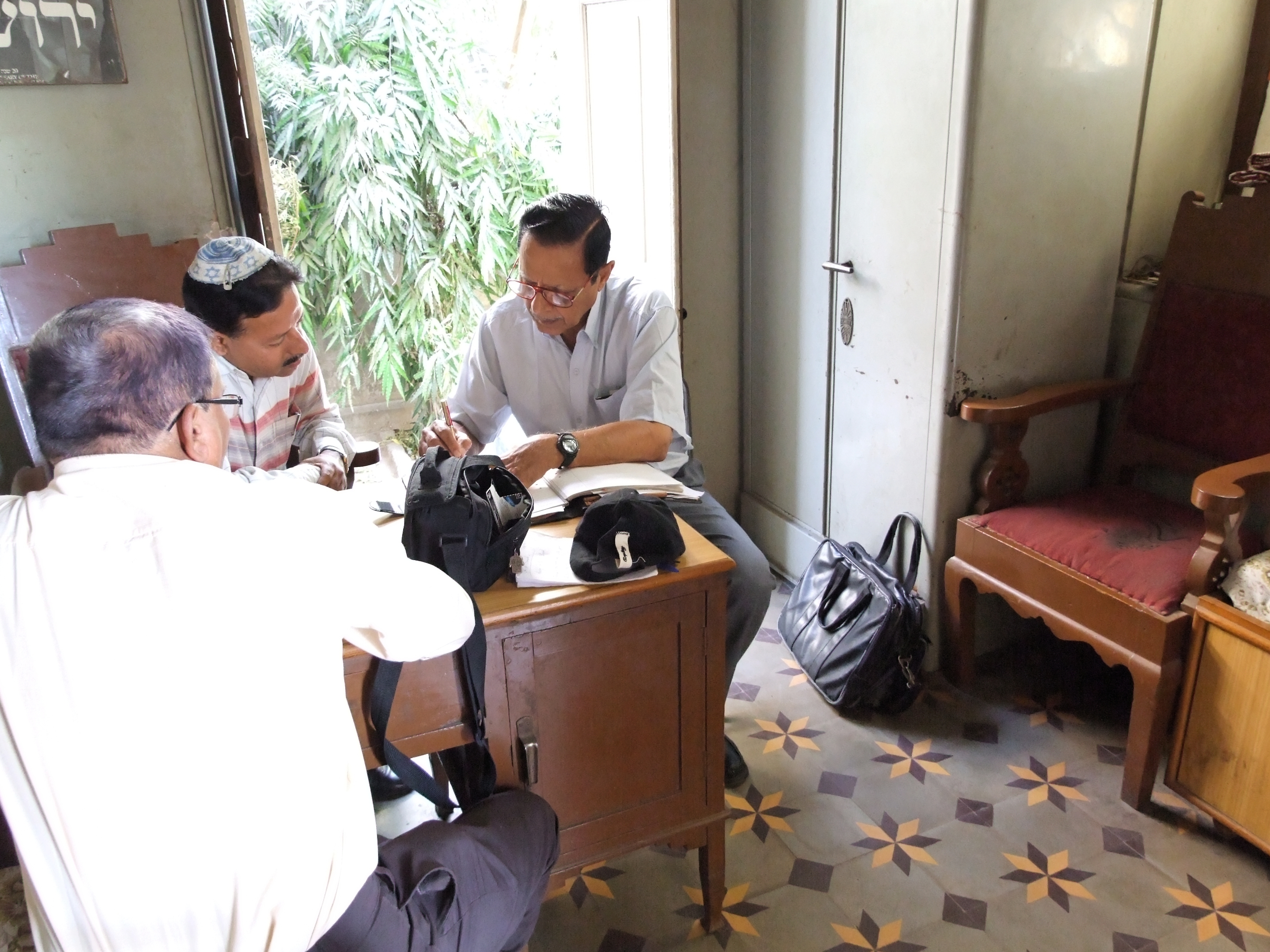
The Bene Israel are one of several distinct Jewish communities associated with the Indian subcontinent. Scholars don't always agree on exactly how to count them the Cochin Jewish community, for instance, is sometimes split into Malabari and Paradesi branches, and the Bnei Menashe of the northeast are better described as a modern revival movement than a historically continuous Jewish community but the five groups below are the ones most commonly discussed in contemporary literature.
| Community | Primary Region | Approx. Arrival / Formation | Notes |
|---|---|---|---|
| Bene Israel | Konkan coast, Maharashtra (later Bombay) | Uncertain; oral tradition ranges from the 8th c. BCE to the early centuries CE | Largest Indian Jewish community; the subject of this profile |
| Cochin Jews | Kerala (Cochin/Kochi region) | Ancient; possibly from 1st-millennium trade contact | Includes “Malabari” and later “Paradesi” (Sephardi-descended) subgroups |
| Baghdadi Jews | Calcutta, Bombay, and other port cities | 18th–19th century | Arabic-speaking merchants originally from Iraq, Syria, and neighbouring regions |
| Bene Ephraim | Andhra Pradesh | 20th century (modern revival movement) | A smaller, more recently organised group practising Judaism |
| Bnei Menashe | Mizoram and Manipur, northeast India | 20th century (modern revival movement) | Claim descent from the tribe of Menasseh; recognised by Israel's Chief Rabbinate for immigration purposes in 2005 |
4. Genetics and DNA Ancestry
4.1 The 2016 Genome-Wide Study
The main study on this question, published in 2016 in PLOS ONE by researchers from Tel Aviv University, Cornell University, and the Albert Einstein College of Medicine (Waldman, Biddanda, Davidson, and colleagues), genotyped 18 Bene Israel individuals and compared them against samples from 41 other Jewish, Indian, and Pakistani populations a modest sample size worth keeping in mind when weighing the strength of the conclusions. The study found the Bene Israel to be a genetically admixed population with substantial contributions from both Middle Eastern Jewish and local Indian ancestors, forming a cluster clearly distinguishable from neighbouring Indian populations even while broadly resembling them.
The researchers dated the admixture event to roughly 19 to 33 generations ago, or about 650 to 1,050 years before the present later than the earliest oral traditions of an ancient shipwreck, though still within the range some versions of that tradition allow. The admixture also appears to have been sex-biased: paternal (Y-chromosome-linked) ancestry carries a stronger Middle Eastern Jewish signal, while maternal lineages resemble the local Indian population more closely, consistent with a historically male-dominated migration whose descendants intermarried with local women.
4.2 Population Bottleneck and Endogamy
The same research pointed to an early population bottleneck followed by many centuries of strict endogamy marriage largely confined within the community and, historically, within its internal subgroups. As with many long-isolated founder populations elsewhere in the world, this is associated with reduced genetic diversity and a higher carrier frequency for certain recessive conditions, which is why family genetic history and carrier screening can be particularly useful for members of the community.
4.3 What the Evidence Does and Doesn't Show
It's important to be clear-eyed about the limits here. A single study of 18 individuals supports the broad outline of the Bene Israel's own tradition that the community descends from a limited number of Jewish ancestors, likely Middle Eastern, who settled among and intermarried with the local Konkan population but it cannot confirm the shipwreck story itself, nor pin down an exact date of arrival. What genetics can do is confirm mixed Jewish and Indian ancestry in broad strokes; it cannot verify the specific historical narrative passed down through the generations. Later, larger studies may well refine or revise these estimates.
5. Social Structure: The Gora and Kala Distinction
Historically, the Bene Israel maintained an internal distinction between two endogamous groups known as Gora (“white” or fair) and Kala (“black” or dark) Bene Israel. Community tradition held that Gora Bene Israel descended without interruption from the original founding families, while Kala Bene Israel were understood to descend from unions between Bene Israel men and local non-Jewish women. Through much of the eighteenth, nineteenth, and early twentieth centuries, the two groups worshipped in the same synagogues but did not intermarry and, in some places, did not dine together a pattern scholars generally connect to the wider influence of caste consciousness in Indian society, even though Jews stood formally outside the Hindu caste system.
6. Religious Life and Language
Marathi has been the everyday language of the Bene Israel for many generations, and it remains the medium of numerous community songs and prayers-in-translation, alongside Hindi and English in the diaspora. Hebrew, largely lost during the community's long isolation, was gradually reintroduced from the eighteenth century onward through contact with Cochin Jews and, later, through Jewish day schools, missionary-era Marathi translations of the Hebrew Bible, and eventually direct study of Hebrew liturgy and, for many, modern Hebrew, following emigration to Israel.
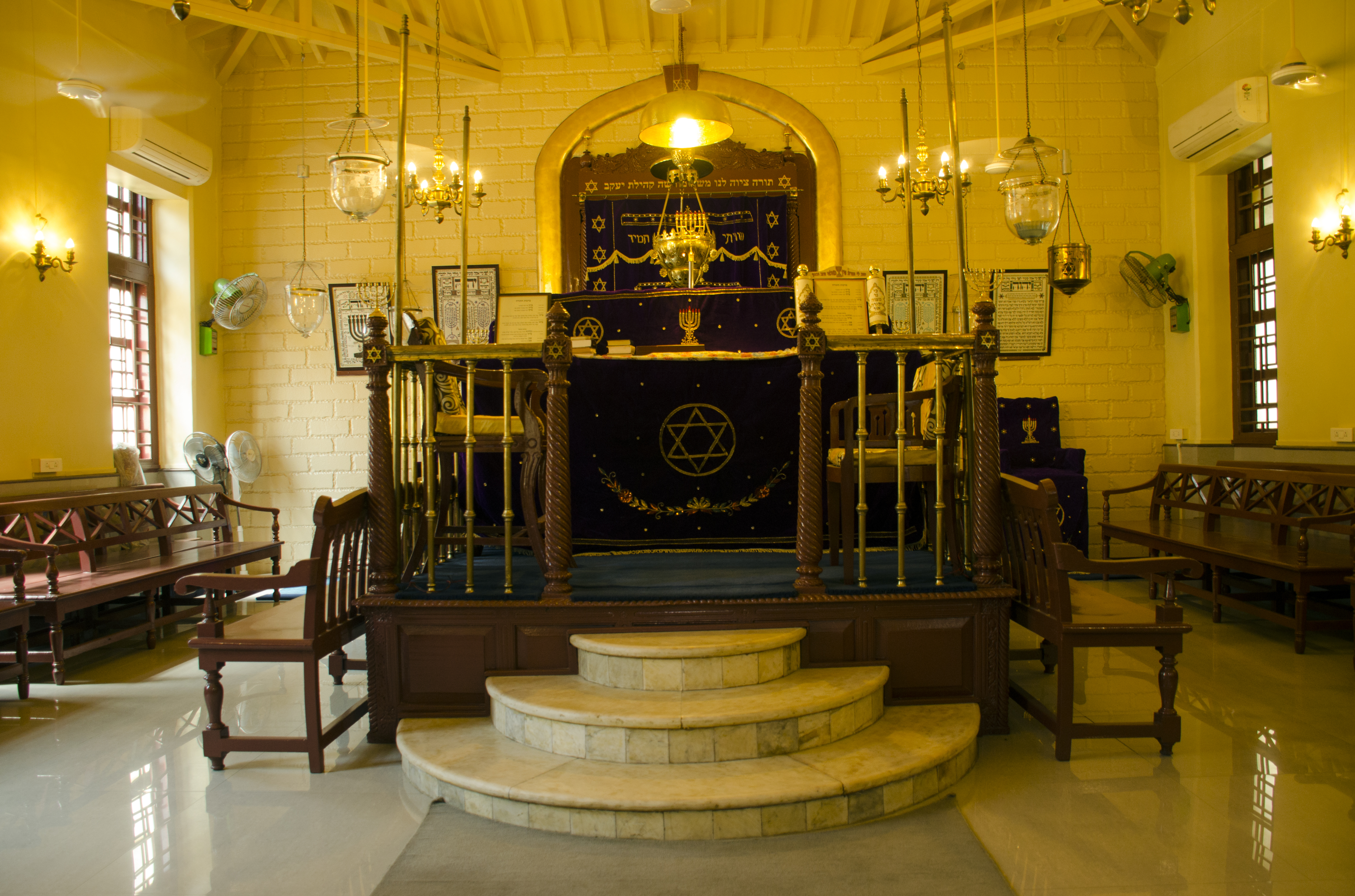
Bene Israel synagogues follow the Sephardic liturgical tradition, inherited via their historical contact with the Cochin Jewish community. A distinctive feature of Bene Israel worship, alongside Hebrew recitation, is the singing of psalms (tehillim) in Marathi translation during morning and Sabbath services a small but telling sign of how deeply the community's religious life is bound up with its Konkan and Maharashtrian roots.
One thread runs through nearly every corner of Bene Israel religious life: a particular devotion to the Prophet Elijah (Eliyahu Hanavi). Community memory holds that Elijah appeared to comfort the shipwreck survivors, and that he later ascended to heaven from a site near a rock formation at Khandala, close to Alibaug on the Konkan coast a site community members still visit. Elijah's blessing is invoked at joyful occasions throughout the Bene Israel life cycle, and nowhere more so than in the community's best-known ritual, discussed next.
7. Culture, Customs, and the Malida Ceremony
The single most distinctive Bene Israel practice is the Malida ceremony, a thanksgiving ritual not found in quite this form anywhere else in the Jewish world. At its centre is a ceremonial offering typically a mound of poha (flattened rice) mixed with grated coconut, sugar or jaggery, and cardamom, and decorated with fresh fruit, dates, almonds, and flowers presented on a plate along with the recitation of psalms, prayers, and scripture, and songs of thanksgiving addressed to the Prophet Elijah.
Malida is held on a wide range of occasions: after a birth, before a wedding, on taking or completing a vow, on recovery from illness, at a housewarming or engagement, or simply in thanksgiving for good news such as a new job. Once the prayers and songs are finished, the offering itself is shared among those present. Folklorists and community historians tend to see the ceremony as a distinctly Indian expression of Jewish thanksgiving practice, likely shaped over generations by the Konkan environment even as its core purpose giving thanks in Elijah's name remains rooted firmly in Jewish tradition.
Outside of Malida, Bene Israel communal life has historically centred on close village and, later, neighbourhood ties, a strong attachment to the synagogue as both a house of worship and a community hub, and a calendar of fasts and feasts combining standard Jewish observances such as the fasts marking the siege and destruction of Jerusalem with locally specific additions, including festive village fairs historically associated with Elijah at Khandala.
8. Marriage and Wedding Traditions
A Bene Israel wedding traditionally combines a Jewish religious ceremony held in the synagogue under a chuppah, with a ketubah signed and blessings recited or sung in Hebrew with an extended run of pre-wedding social customs drawn from the surrounding Marathi and wider Indian wedding tradition. Among the recurring elements:
A henna (mehndi) ceremony at the bride's home, usually a day or two before the wedding, where intricate designs are applied to her hands and feet, with the groom's name traditionally hidden somewhere in the pattern; in Bene Israel practice the groom's finger or thumb is also touched with henna.
Turmeric and other pre-wedding purification rituals that closely parallel those of neighbouring Marathi Hindu weddings, a reflection of how deeply embedded the community has long been in Maharashtrian culture.
Marathi wedding songs sung by the women of the family in the run-up to the wedding, alongside Hebrew wedding hymns — the melody “Yonati Ziv” (“My Beloved Is a Dove”) is a traditional example sung by the men during the synagogue ceremony.
The main religious ceremony itself: the couple beneath the chuppah, the ketubah read and signed, traditional Jewish nuptial blessings recited, and a community feast to close out the day.
Marriages were historically arranged within the community, with some families favouring cross-cousin matches, and matchmaking today still happens informally through family and community networks in India, Israel, and beyond even as intermarriage with other Jewish and non-Jewish communities has become more common among younger generations, particularly outside India.
9. Cuisine
Bene Israel cooking is best described as Konkani Maharashtrian food adapted to Jewish dietary law, shaped by centuries of daily life alongside Hindu and Muslim neighbours on the Konkan coast. It has little in common with the cuisine of India's Baghdadi Jewish community, which leans on a Middle Eastern culinary base; Bene Israel food sits much closer to the food of the surrounding Konkani population generous coconut, coconut milk, and coastal spicing reworked to stay within the bounds of kashrut.
- Kadi and kanji — in Bene Israel usage, a coconut- or yogurt-based curry is called kadi, and a similar gravy made with kosher meat (chicken or mutton) is called kanji; both sit close to Konkani Hindu cooking while staying within Jewish dietary law.
- Malida — the sweet ceremonial dish described above: flattened rice, jaggery, coconut, and dried fruit, central to the thanksgiving ceremony of the same name and, by the community's own reckoning, one of its most recognisable foods.
- Chik halwa — a sweet made from cracked wheat or lapshe cooked down with jaggery, traditionally prepared for festive occasions.
- Saandhan and homemade masalas — spice blends and preserves passed down through generations of Bene Israel women, historically made at home rather than bought, and still prepared today by community members who sell them to Bene Israel families in India, Israel, and further afield.
- Coconut in place of dairy — to keep meat dishes properly kosher, Bene Israel cooks traditionally use coconut milk where a recipe would otherwise call for dairy, a practical solution well suited to a coast where coconuts are everywhere.
10. Traditional Dress and Ornaments
For weddings, henna ceremonies, and other formal community occasions, Bene Israel women including those long settled in Israel or elsewhere in the diaspora, where Western dress is now standard day to day still often wear saris or other Indian-style garments as a deliberate link back to their Konkan heritage. Beyond everyday clothing, it is the religious items that mark Bene Israel identity most clearly: the tallit and kippah worn in synagogue, and, in some families, jewellery inscribed with Hebrew text or Jewish symbols worn at life-cycle events.
11. Traditional Housing and Synagogue Architecture
In their original Konkan villages, Bene Israel families lived in the vernacular style common to the region modest homes of wood, mud, or laterite construction with tiled or thatched roofs, built around small courtyards, often indistinguishable from neighbouring Hindu and Muslim homes except for small ritual markers such as a mezuzah at the doorway or a Star of David worked into a decorative element.
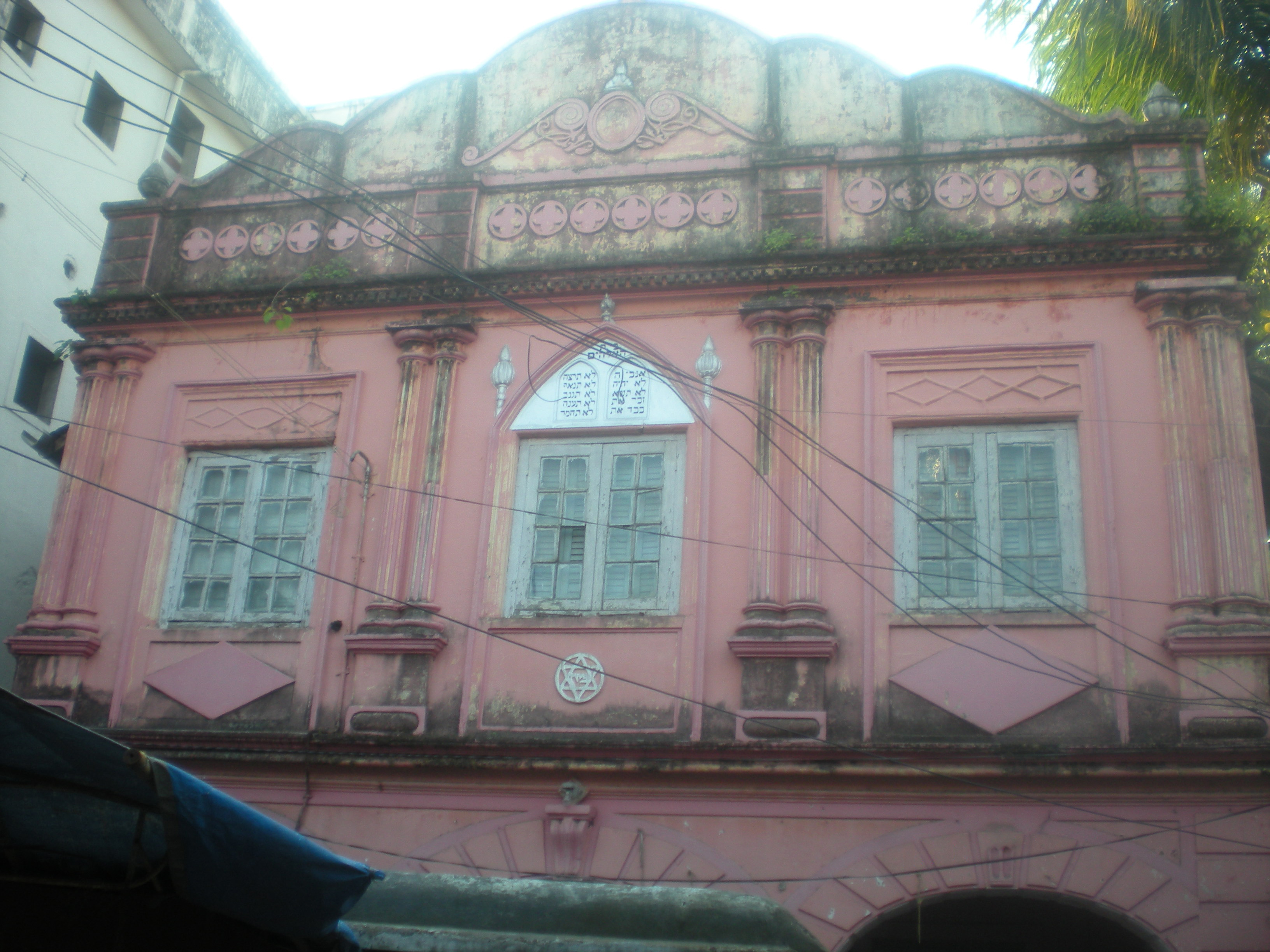
As the community concentrated in Bombay and other cities from the eighteenth century onward, synagogue-building became the main architectural expression of Bene Israel communal life. Shaar Harahamim, founded in 1796 and periodically rebuilt and expanded since, is the oldest and most historically significant Bene Israel synagogue in India and marked its bicentenary in 1996. Other notable synagogues include Shaar Razon (1839), Etz Haim (1888), and Magen Hasidim (1931) in Mumbai; the Shaar Hashamaim synagogue in Thane; and the Magen Aboth synagogue in Alibaug, built in 1910 on a street still known locally as Israel Alley, a reminder of how concentrated the Bene Israel presence in that Konkan town once was. The architecture is generally restrained whitewashed or painted colonial-era exteriors, tall shuttered windows, and an interior bimah and ark arranged along Sephardic lines with little of the elaborate carved or painted decoration found in some other Indian religious buildings, reflecting the community's traditionally modest means.
12. Folklore and Oral Tradition
Bene Israel folklore centres, above all, on the community's own origin story the shipwreck, the survival of the founding couples, and their eventual settlement in the Konkan villages a narrative passed down purely by word of mouth for many generations before community historians began setting it down in writing from the nineteenth century onward, most notably in Haeem Samuel Kehimkar's history of the community, completed in manuscript in 1897 and eventually published in 1937.
A second strand of oral tradition concerns the Prophet Elijah, including the local legend that his fiery chariot touched down at a rock formation near Khandala in Alibaug taluka on his way to heaven a site still tied to community pilgrimage, and, in older accounts, to an annual fair. Wedding songs sung by women during the henna ceremony and the days before a wedding form a further living body of oral tradition, blending Marathi poetic forms with themes specific to Bene Israel family and religious life. These songs, together with the prayers and narratives recited during Malida, remain of active interest to folklorists and ethnomusicologists studying Indian Jewish life.
13. Education, Livelihoods, and Socioeconomic Profile
14. Diaspora
In Israel, the Bene Israel community is now several generations deep, with population estimates generally ranging from roughly 60,000 to 80,000 depending on how descendants and mixed families are counted. Bene Israel Israelis are concentrated in towns and cities including Dimona, Ashdod, Yeruham, Kiryat Gat, Lod, Ashkelon, Beersheba, Ramla, and Kiryat Ata, where community life continues to revolve substantially around local synagogues functioning as both houses of worship and community centres. Smaller Bene Israel communities and individuals are also found in the United Kingdom, the United States, Canada, and elsewhere, sustained by community associations, periodic reunions, and continued interest including among younger, Israeli-born members in documenting and preserving Bene Israel history, Marathi-language heritage, and customs such as Malida, which has in recent years gained traction as a recognised communal observance within Israel's broader calendar of ethnic Jewish traditions.
15. Prominent Figures
15.1 Public Life and the Military
- Lieutenant General Jack Farj Rafael (“JFR”) Jacob (1923–2016) — the most senior military officer of Jewish origin in Indian history, remembered for his command role in the 1971 India-Pakistan War and, later, service as Governor of Goa and of Punjab.
- Vice Admiral Benjamin Abraham “Chippy” Samson (1916–2008) — the first naval officer to serve as Commandant of the National Defence Academy; as Flag Officer Commanding the Indian Fleet from 1964 to 1966, he led the fleet during the April 1965 naval operations against Pakistan in the Rann of Kutch, and later oversaw the construction of India's first indigenously built frigate, INS Nilgiri, as CEO of Mazagon Dock Shipbuilders.
- Major General Jonathan Reuben Samson — senior officer of the Indian Corps of Engineers.
- Samaji Hassaji (Samuel Ezekiel) Divekar — East India Company army commandant remembered for founding Bombay's first Bene Israel synagogue in 1796.
15.2 Literature, Scholarship, and the Arts
- Nissim Ezekiel (1924–2004) — widely regarded as one of the foremost Indian poets writing in English in the twentieth century, and also an art critic, playwright, and long-time literature scholar at the University of Mumbai.
- Haeem Samuel Kehimkar (1830–1909) — the community's pioneering historian, whose manuscript history of the Bene Israel, completed in 1897, remains a foundational source for later scholarship.
- Joseph Ezekiel Rajpurkar — nineteenth-century writer and translator of Hebrew liturgical texts into Marathi.
- Meera Jacob Mahadevan — author and social worker who founded a network of Mobile Creches providing education and care for the children of itinerant labourers.
15.3 Medicine
- Dr. Jerusha Jhirad (1891–1984) — pioneering obstetrician-gynaecologist, among the first Indian women to earn a medical degree from the University of Bombay, later superintendent of Cama Hospital and a recipient of the Padma Shri.
16. Contemporary Reflections
Two themes tend to dominate discussion of Bene Israel identity today. The first is straightforward demographic decline in India: with most of the community now settled in Israel, what remains in Mumbai, Thane, Pune, and elsewhere is a small and ageing population, which has prompted real efforts by community members, heritage organisations, and scholars to record synagogues, recipes, songs, and oral histories before they disappear. The second is the longer process of settling into Israeli life while holding onto what is distinctly Indian about the community the Malida ceremony above all across several generations now removed from the Konkan coast itself. Younger, Israeli-born Bene Israel, including groups organised specifically around this goal, have taken an increasingly active role in that preservation work in recent years.
17. Conclusion
References
- [1]
- [2]
- [3]
- [4]
- [5]
- [6]
- [7]
- [8]
- [9]
- [10]
- [11]
- [12]
- [13]
- [14]
- [15]
- [16]
- [17]
- [18]
- [19]
- [20]
- [21]
- [22]
- [23]
- [24]
- [25]
- [26]
- [27]
- [28]Further academic reading:
- [29]28. Kehimkar, Haeem Samuel. The History of the Bene Israel of India. Tel Aviv: Dayag Press, 1937 (manuscript completed 1897).
- [30]29. Katz, Nathan, and Ellen S. Goldberg. The Last Jews of Cochin: Jewish Identity in Hindu India. Columbia, SC: University of South Carolina Press, 1993.
- [31]30. Roland, Joan G. Jews in British India: Identity in a Colonial Era. Hanover, NH: University Press of New England, 1989.
- [32]31. Weil, Shalva (ed.). India's Jewish Heritage: Ritual, Art and Life-Cycle. Mumbai: Marg Publications, 2002.
- [33]32. Isenberg, Shirley B. India's Bene Israel: A Comprehensive Survey and Sourcebook. Bombay/Berkeley: Popular Prakashan, 1988.
- [34]This document draws on publicly available historical, genetic, and cultural sources and is intended for general informational and educational use. No political content is included. Dates and details that remain genuinely disputed in the scholarly and community record are noted as such rather than stated as settled fact; readers are encouraged to consult the sources above directly for further detail.