

Christian Genome Project Community
Uncover your Christian heritage DNA and explore the rich tapestry of global Christian ancestry, cultural roots, and historical traditions.
Christianity
A Global Religious, Historical, Cultural, and Community Profile
1. Introduction: What Is Christianity?
Christianity is a monotheistic Abrahamic religion centered on the life, teachings, death, and resurrection of Jesus of Nazareth, whom Christians recognize as the Christ (Messiah) and Son of God. It emerged in the first century CE in the Jewish world of Roman Judea and spread through the eastern Mediterranean before becoming a worldwide religious tradition. Today it includes a very large family of churches, denominations, movements, and communities, including Catholic, Eastern Orthodox, Oriental Orthodox, Anglican, Lutheran, Reformed, Baptist, Methodist, Pentecostal, Evangelical, independent and many other traditions. [1][2]
Christians share a family resemblance in their faith: the Bible is the foundational collection of Christian Scriptures; Jesus Christ is central to Christian belief; baptism is a defining rite of initiation; prayer and communal worship are central practices; and Christians generally confess one God while expressing that faith through the doctrine of the Trinity—Father, Son, and Holy Spirit. The exact wording, emphasis, and interpretation of these teachings vary across churches. [1][3]
Christianity is also a cultural and historical tradition as well as a system of belief. Over nearly two millennia, Christian communities have developed distinctive forms of worship, music, architecture, visual art, literature, education, charitable work, family practice, festivals, pilgrimage, and oral tradition. These expressions differ substantially by region. Christianity in Kerala, Armenia, Ethiopia, Europe, the Philippines, Latin America, Africa, the Middle East, and North America cannot be reduced to a single cultural model. The World Council of Churches similarly emphasizes that Christianity has become internally diverse as it has interacted with many cultures. [4]
2. Origins and Early History
2.1 First-century beginnings
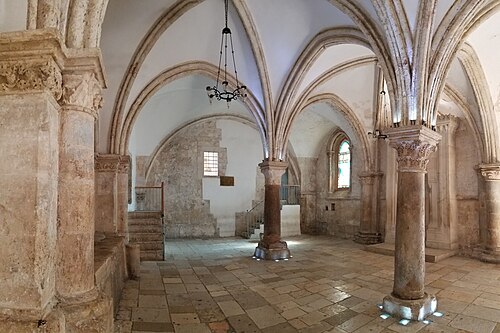
Christianity arose within Second Temple Judaism. Jesus preached in Galilee and Judea, taught about the Kingdom of God, gathered disciples, healed and performed acts understood by his followers as signs, and used Jewish Scriptures in his teaching. He was crucified in Jerusalem during the period of Roman rule. His followers subsequently proclaimed that God had raised him from the dead, and the resurrection became the central proclamation of the Christian gospel. [1][5]
The earliest Christian communities were Jewish and were concentrated initially in Jerusalem and the surrounding region. The movement soon spread to other parts of the eastern Mediterranean. The apostle Paul played a major role in the expansion of Christian communities among Gentiles, while other apostles and missionaries contributed to the growth of the movement in different places. The New Testament contains letters and other writings associated with this formative period.
2.2 From a small movement to a Mediterranean religion
During the first several centuries, Christianity developed networks of congregations, bishops, presbyters, deacons, teachers, monastic communities, and charitable institutions. Christians sometimes experienced local or imperial persecution, although the intensity and geographical extent varied greatly across time and place. By the third century, Christianity was established in many cities of the Roman world and beyond it. [5]
A major turning point came in the early fourth century. Emperor Constantine's policies ended the systematic imperial persecution of Christianity, and the Council of Nicaea in 325 addressed major theological disputes and produced the Nicene Creed in its developing form. By the end of the fourth century, Christianity had become closely connected with imperial institutions. [1][5]
2.3 The formation of major traditions
Christian history subsequently included theological disagreements, regional differences, political changes, and institutional separations. The fifth-century controversies surrounding the Council of Ephesus and Council of Chalcedon contributed to enduring divisions involving the Church of the East and the Oriental Orthodox churches. The long-term separation between the Latin West and Greek East culminated in the East–West Schism conventionally associated with 1054, although the process was gradual. In the sixteenth century, the Protestant Reformation led to new Western Christian traditions, including Lutheran, Reformed, Anglican, and later many other churches. [1][2]
3. Jesus of Nazareth and the Christian Story
Jesus is the central figure of Christianity. Christians generally understand him as the Messiah and the incarnate Son of God. The four canonical Gospels—Matthew, Mark, Luke, and John—are the principal New Testament narratives about his ministry. They describe his teaching, parables, healings, relationships with disciples and other people, final journey to Jerusalem, crucifixion, and resurrection as proclaimed by his followers. [1]
Important themes in Jesus' teaching include love of God and neighbour, forgiveness, mercy, concern for the poor and vulnerable, reconciliation, humility, prayer, faithfulness, and the coming Kingdom of God. The Sermon on the Mount and other Gospel passages have had an especially large influence on Christian moral teaching and devotional life.
The crucifixion and resurrection are interpreted differently in theological detail among Christian traditions, but they are foundational to Christianity. Christians commonly understand the cross as inseparable from God's saving work and the resurrection as God's victory over death and a promise of new life. Easter therefore occupies the central place in the Christian liturgical year.
4. Sacred Scriptures and Christian Tradition
4.1 The Bible
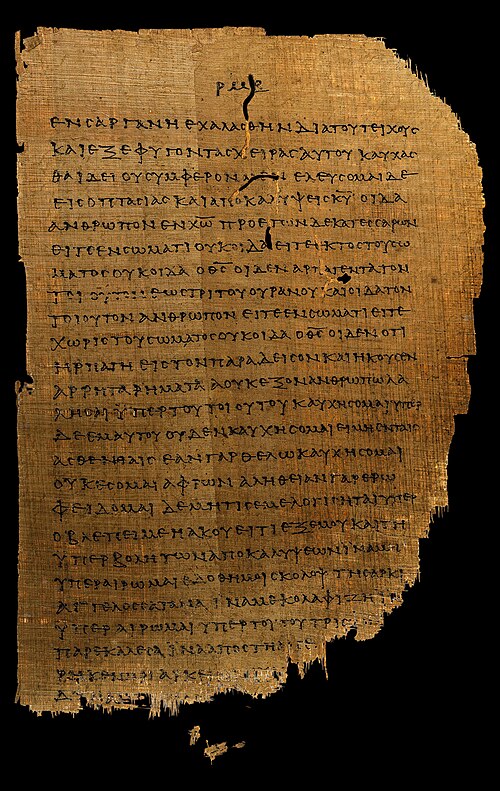
The Christian Bible consists of the Old Testament and New Testament. The Old Testament overlaps substantially with the Hebrew Bible but differs in arrangement and, in some traditions, in the number and status of books. The New Testament contains 27 books: the four Gospels, Acts of the Apostles, letters attributed to Paul and other authors, and the Book of Revelation. [1]
Different Christian traditions have somewhat different biblical canons, especially concerning certain Old Testament books. Catholic and Orthodox traditions include books commonly called deuterocanonical by Catholics and often described as part of the broader Septuagintal tradition in Orthodoxy. Most Protestant traditions use a shorter Old Testament canon. These differences are important but should not obscure the shared centrality of Scripture across Christianity.
4.2 Tradition, interpretation, and teaching
Christianity has never depended on a single method of reading the Bible. Catholic and Orthodox traditions place strong emphasis on Scripture as interpreted within the Church's received tradition and liturgical life. Protestant traditions vary widely but generally give Scripture a particularly prominent role in doctrine and preaching. The World Council of Churches describes Christian unity as grounded in a common confession of Jesus Christ while recognizing continuing theological differences. [4]
5. Core Beliefs
5.1 One God and the Trinity
Christianity is monotheistic. Most mainstream Christian traditions confess the Trinity: one God in three persons—Father, Son, and Holy Spirit. The Trinity is not normally understood by Christians as three gods, but as one God whose life is described through these three persons. The Catholic Catechism calls the Trinity a central mystery of Christian faith; Orthodox teaching likewise places Trinitarian belief at the heart of Christian worship and theology. [3][6]
5.2 Jesus Christ
Christians generally confess that Jesus is both truly human and truly divine, although the precise theological vocabulary used to explain this mystery developed through centuries of debate and ecumenical councils. The doctrine of the Incarnation states that the Son/Word of God became human in Jesus Christ.
5.3 Salvation
Christian traditions teach that human beings need reconciliation with God and that salvation is accomplished through God's grace in Christ. Catholic, Orthodox, Protestant, and other traditions differ in how they explain justification, grace, faith, works, sanctification, and the role of the sacraments, but salvation through Christ is a foundational theme across Christianity.
5.4 Resurrection and eternal life
Christians believe that Jesus rose from the dead and that resurrection is a promise of the ultimate defeat of death. Christian teaching about the final resurrection, judgment, heaven, hell, and the renewal of creation varies in detail, but hope in life with God is a major feature of Christian faith.
6. Major Christian Traditions and Denominations
Christianity is best understood as a family of traditions rather than a single centralized institution. The following broad categories are useful for orientation, although each contains substantial internal diversity.
| Tradition | General description | Examples / features |
|---|---|---|
| Catholic Christianity | A worldwide communion centered institutionally on the Bishop of Rome (the Pope). | Latin Church and Eastern Catholic Churches; sacramental life; episcopal structure. |
| Eastern Orthodoxy | A communion of autocephalous Orthodox churches with bishops, patriarchates, and a strong liturgical and conciliar tradition. | Greek, Antiochian, Russian, Serbian, Romanian and other Orthodox churches. |
| Oriental Orthodoxy | Ancient Eastern churches whose historical separation is associated with fifth-century Christological controversies. | Coptic, Armenian Apostolic, Syriac, Ethiopian, Eritrean and Malankara Orthodox traditions. |
| Church of the East traditions | Ancient East-Syriac Christian traditions historically rooted in Mesopotamia and Persia. | Assyrian Church of the East and related communities. |
| Protestant traditions | A broad family emerging principally from sixteenth-century Western reform movements. | Lutheran, Reformed, Anglican, Baptist, Methodist, Presbyterian, Pentecostal and many others. |
| Independent / non-denominational churches | Congregations or networks that do not identify closely with older denominational structures. | Especially common in parts of Africa, Asia and the Americas. |
The categories above are broad and should not be treated as interchangeable. Catholic, Orthodox, Oriental Orthodox, Protestant, Anglican, Pentecostal and independent churches can differ in liturgy, church governance, sacraments, theology, clergy, devotional practices, and interpretation of Scripture.
7. Church Organization and Ministry
The word 'church' can refer both to a local congregation and to the wider Christian community. Many churches use bishops, priests or presbyters, and deacons; others organize ministry through pastors, elders, ministers, or congregational structures. Some traditions ordain women to some or all forms of ministry, while others do not. Clerical marriage rules also vary.
Catholic and Orthodox traditions generally have a strongly sacramental and episcopal structure. Many Anglican churches retain bishops, priests, and deacons. Protestant churches range from episcopal systems to presbyterian, congregational, and independent structures. The diversity of church governance is one of the most visible differences among Christian communities.
8. Worship, Prayer, and Sacramental Life
8.1 Sunday worship
Sunday is the principal day of Christian communal worship because it is associated with the resurrection of Jesus. Worship may include Scripture readings, hymns or contemporary music, preaching, prayers, confession, thanksgiving, and—depending on the tradition—the Eucharist or Holy Communion.
8.2 Baptism
Baptism is the defining rite of entry into Christianity. It normally involves water and invocation of the Father, Son, and Holy Spirit. Catholic, Orthodox, Anglican, and many Protestant churches baptize infants as well as adults, while Baptist and some other churches practice believer's baptism. Orthodox teaching describes baptism as participation in Christ's death and resurrection, while Catholic teaching describes it as the beginning of new life in Christ. [6][7]
8.3 Eucharist / Holy Communion
The Eucharist, also called Holy Communion, the Lord's Supper, or Divine Liturgy depending on tradition, commemorates and sacramentally participates in the Last Supper and Christ's saving work. Catholic and Orthodox churches understand the Eucharist as a sacrament and the real presence of Christ in distinctive theological ways. Protestant traditions vary from sacramental understandings to memorial and symbolic interpretations. [7][8]
8.4 Other sacraments and sacred rites
Catholic Christianity recognizes seven sacraments: Baptism, Confirmation, Eucharist, Penance/Reconciliation, Anointing of the Sick, Holy Orders, and Matrimony. Orthodox Christians commonly speak of the 'Holy Mysteries' and often count seven for practical purposes, while emphasizing that the whole life of the Church is sacramental. Protestant churches differ substantially in how they classify rites, commonly emphasizing Baptism and Communion as ordinances or sacraments. [7][9]
9. The Christian Liturgical Year and Major Festivals
Christian calendars vary, but several seasons and festivals are widespread.
- Advent — a season of preparation for Christmas in many Western churches.
- Christmas — celebrates the birth/incarnation of Jesus.
- Epiphany — commemorates the manifestation of Christ; its meaning and date vary by tradition.
- Lent — a penitential season of preparation for Easter, especially prominent in Catholic, Orthodox, Anglican and some Protestant traditions.
- Holy Week — includes Palm Sunday, Maundy/Holy Thursday, Good Friday, Holy Saturday and the Easter Vigil or equivalent observances.
- Easter / Pascha — celebrates the resurrection of Jesus and is the central Christian feast.
- Ascension — commemorates Christ's ascension, observed especially in liturgical churches.
- Pentecost — commemorates the coming of the Holy Spirit upon the disciples.
- Feasts of saints and the Virgin Mary — particularly prominent in Catholic and Orthodox traditions, with calendars varying by church.
Christmas and Easter are widely recognized beyond church settings and have generated extensive traditions involving music, food, decorations, family gatherings, charity, public celebrations, and local customs. The exact date of Christmas is commonly December 25 in Western churches and some Eastern churches; some Eastern churches use calendars that place Christmas on January 7 in the Gregorian calendar. Orthodox Easter/Pascha can also fall on a different date from Western Easter because of different calendar calculations.
10. Christian Ethics and Everyday Life
Christian moral teaching is rooted in love of God and neighbour, the teachings of Jesus, the Hebrew Scriptures, and the New Testament writings. Common ethical themes include honesty, compassion, forgiveness, care for the poor, fidelity, humility, generosity, service, peacemaking, and concern for human dignity.
Christian communities differ on a number of ethical questions, including marriage, sexuality, gender roles, economic justice, war and peace, medical ethics, and political participation. A neutral profile should recognize these differences rather than presenting one denomination's position as the universal Christian view.
Prayer and charitable service are important forms of Christian practice. Many Christians understand service to neighbours as an expression of faith rather than merely an optional social activity.
11. Family, Marriage, Baptism, and Life-Cycle Traditions
Family life is significant in Christian communities, although patterns differ by region and denomination. Marriage is sacramental in Catholic and Orthodox traditions and is treated as a covenantal or sacred institution in many Protestant traditions. Wedding ceremonies often include Scripture readings, vows, prayers, blessings, rings, music, and a communal celebration.
Christian families commonly mark birth or childhood through baptism, christening, dedication, or thanksgiving services. Practices differ: infant baptism is common in Catholic, Orthodox, Anglican, Lutheran, Methodist and several other traditions, while some Protestant groups emphasize adult or believer's baptism.
Death and burial practices often include prayer, Scripture readings, hymns, a funeral or memorial service, and remembrance of the deceased. Burial remains common in many communities, while cremation is accepted by numerous Christian traditions, with specific rules or customs differing among churches.
12. Language, Music, Art, and Architecture
12.1 Languages
Christianity has been expressed in a remarkable range of languages. Biblical Hebrew, Aramaic/Syriac, and Koine Greek are central to early Christian textual history. Latin became highly influential in Western Christianity, while Greek remained foundational in Byzantine and Eastern Christian traditions. Coptic, Armenian, Ge'ez, Church Slavonic, Arabic, Malayalam, Tamil, English, Spanish, Portuguese, Swahili and thousands of other languages have become vehicles of Christian worship and literature.
12.2 Music
Christian music ranges from ancient chant to polyphony, hymns, gospel, spirituals, choral music, contemporary worship, devotional songs, and locally adapted musical forms. Gregorian chant is associated with the Latin tradition; Byzantine chant with Eastern Orthodox worship; Syriac traditions preserve distinctive hymnody; African, Latin American, Asian and Indigenous Christian communities have developed their own musical forms.
12.3 Art
Christian visual art includes icons, mosaics, frescoes, stained glass, sculpture, illuminated manuscripts, paintings, crosses, nativity scenes, and contemporary forms. Catholic and Orthodox traditions place particular importance on sacred imagery, while many Protestant communities have historically emphasized preaching and Scripture and have varied in their use of images.
12.4 Architecture
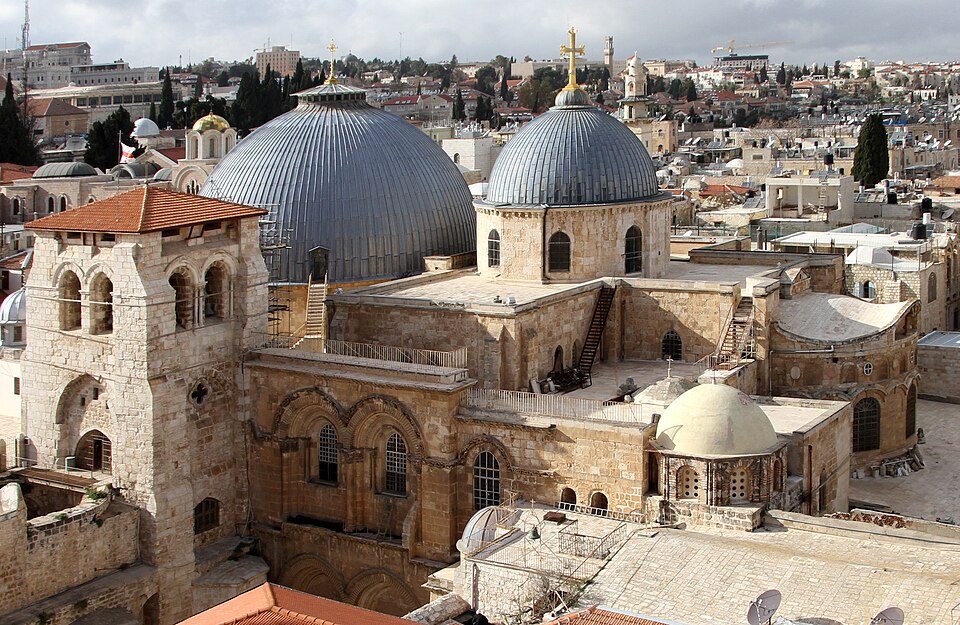
Christian architecture includes house churches, basilicas, cathedrals, monasteries, parish churches, chapels, shrines, and modern worship spaces. Architectural styles have included Roman, Byzantine, Romanesque, Gothic, Renaissance, Baroque, Armenian, Ethiopian, Syriac, Indian, African, Latin American and numerous modern regional forms.
13. Food, Fasting, and Everyday Customs
Christianity does not prescribe a single universal cuisine. Christian food traditions are shaped strongly by local cultures. Rice, bread, vegetables, meat, seafood, dairy products, fruits, sweets, and locally available foods all appear in Christian communities around the world.
Fasting is more formally structured in Catholic, Orthodox, Oriental Orthodox and some Anglican traditions, while other Protestant communities may practice voluntary fasting. Rules differ considerably. Eastern Christian fasting traditions can involve periods of abstention from meat and certain animal products; Catholic fasting and abstinence have their own rules; some Protestant and Pentecostal Christians practice personal or congregational fasts without a uniform calendar.
Festive foods often accompany Christmas, Easter, saints' days, weddings and baptisms. In India, Christian food traditions frequently combine local cuisines with community-specific dishes—for example, Kerala Christian households may serve appam, stew, meat dishes and festive sweets, while Goan Christian cuisine includes distinctive rice, seafood, meat and baked traditions. These are regional cultural practices rather than universal Christian rules.
14. Folklore, Oral Tradition, and Popular Devotion
Christianity has an extensive oral and folkloric dimension. Biblical stories are retold in sermons, children's stories, family teaching, songs, drama, theatre, processions, pilgrimage narratives, miracle stories, saint biographies, local legends, and seasonal customs.
Catholic and Orthodox communities often preserve traditions surrounding saints, relics, feast days, pilgrimage sites, icons, and local patronal celebrations. Protestant communities may place greater emphasis on preaching, testimony, hymnody, conversion narratives, revival stories, and family Bible traditions, although practices vary widely.
Oral traditions can preserve community memory even when they are not intended as modern historical accounts. For this reason, stories about saints, founders, missionaries, miracles, or ancient origins should be distinguished from claims that can be independently established through historical sources.
In India, Christian oral traditions include stories associated with the Apostle Thomas, regional saints, missionaries, village churches, Marian devotion, local pilgrimage centers, and family histories. Some traditions are ancient, while others developed in the early modern or modern periods.
15. Christianity in India
15.1 Early Christian presence
Christianity has a long history in India. The most prominent ancient tradition is that of the Saint Thomas Christians of Kerala, who preserve a tradition connecting their origins with the Apostle Thomas. The apostolic tradition is deeply important to these communities, although historians distinguish between the community's religious tradition and what can be independently demonstrated from surviving historical evidence. Christianity was certainly established on the Malabar Coast many centuries ago, and the region maintained long connections with West Asian Christian churches. [10]
The Portuguese arrival on the western coast in the late fifteenth century created a new phase in Indian Christian history. Catholic missionary activity expanded, while existing Saint Thomas Christian communities encountered Latin ecclesiastical structures. The Synod of Diamper in 1599 and the Coonan Cross Oath of 1653 were important events in the subsequent history of Kerala's Christian communities. [10]
15.2 Major Indian Christian communities
Indian Christianity includes many distinct traditions. These include the Latin Catholic Church; the Syro-Malabar Catholic Church; the Syro-Malankara Catholic Church; the Malankara Orthodox Syrian Church; the Jacobite Syrian Christian Church; the Mar Thoma Syrian Church; the Church of South India; the Church of North India; Baptist, Lutheran, Methodist, Presbyterian, Pentecostal, Evangelical and many other communities.
Christian populations are especially significant in Kerala, Goa, parts of the Northeast, Tamil Nadu, coastal Karnataka, Andhra Pradesh/Telangana, Maharashtra, Jharkhand, Odisha, West Bengal and other parts of India. The 2011 Indian Census records religion by state and district; the official C-01 table is the appropriate primary demographic reference for population figures. [11]
15.3 Christianity and Indian culture
Indian Christianity has developed through interaction with local languages, cuisines, family structures, music, art, architecture, educational institutions, and regional customs. Churches may use Malayalam, Tamil, Konkani, Kannada, Telugu, Hindi, Bengali, English and numerous other languages. Christian festivals in India often include processions, parish feasts, community meals, decorations, music, and local cultural forms.
Christian architecture in India ranges from ancient and medieval church traditions in Kerala and Goa to Gothic Revival churches, Indo-European forms, modern concrete churches, indigenous village churches, and contemporary urban worship centers. The diversity reflects the long history of Christianity in different parts of the country.
16. Education, Healthcare, Charity, and Social Service
Christian institutions have played a major role in education, healthcare, orphan care, social service, printing, publishing, and charitable activity in many regions. Missionary organizations, churches, religious orders, and indigenous Christian organizations have established schools, colleges, hospitals, clinics, nursing institutions, seminaries, hostels, orphanages, homes for older people, and programs for vulnerable communities.
In India, Christian educational institutions include schools and colleges established by Catholic religious orders, Protestant missions, Anglican traditions, Orthodox churches, and independent organizations. Their historical impact is particularly visible in the development of modern education in several regions. At the same time, Christian social service is not confined to missionary institutions; many churches operate community programs through local congregations and dioceses.
Christian teaching has also inspired extensive traditions of philanthropy and social action. Different churches frame this work in terms such as charity, diakonia, social justice, integral human development, community service, or the Christian vocation to care for one's neighbour.
17. Diaspora and Global Christian Communities
Christianity is now a global religion with communities on every inhabited continent. According to Pew Research Center's 2025 analysis of religious change between 2010 and 2020, the global Christian population rose from about 2.15 billion in 2010 to about 2.27 billion in 2020, but Christians' share of the global population declined from 30.6% to 28.8%. [12]
The geographic center of global Christianity has shifted significantly. By 2020, sub-Saharan Africa contained the largest number of Christians, surpassing Europe. Latin America and the Caribbean also contain a very large Christian population. Christianity is therefore not accurately described as simply a European religion; its contemporary demographic center is increasingly located in Africa and other regions of the Global South. [12]
Christian migration has also produced diaspora churches. Indian Christian communities, for example, have established parishes and congregations in the Gulf states, Europe, North America, Australia, New Zealand, Southeast Asia, and elsewhere. Diaspora churches often preserve home languages, foods, music, feast days, and family traditions while adapting to their new environments.
18. Christianity and Cultural Diversity
One of Christianity's defining historical features is its ability to exist in many cultural environments. The Christian message has been translated into local languages and expressed through local artistic, musical, architectural, and social forms. This has created a wide spectrum of Christian cultures.
Examples include Ethiopian Christian art and architecture; Armenian church traditions; Syriac Christian liturgy; Byzantine Orthodox spirituality; Latin Catholic traditions; African independent and Pentecostal churches; Latin American Catholic popular devotion; Korean and Chinese Protestant communities; Filipino Catholic culture; and the diverse Christian traditions of India.
The World Council of Churches describes Christianity as having become internally diversified through its encounter with different cultures. This diversity is both a historical fact and a central feature of Christianity today. [4]
19. Contemporary Christianity
Contemporary Christianity includes traditional liturgical churches, evangelical and Pentecostal movements, charismatic renewal, independent churches, monastic communities, social-justice movements, academic theology, digital ministries, youth movements, and many forms of local congregational life.
Some parts of Christianity are experiencing growth, especially in parts of Africa and Asia, while other regions—particularly parts of Europe and North America—have experienced declining affiliation. Pew Research Center's 2025 study found that religious switching away from Christianity was a major factor in the decline of Christianity's share of the global population between 2010 and 2020. [12]
At the same time, Christian communities continue to participate in education, healthcare, humanitarian work, interfaith dialogue, peacebuilding, refugee support, poverty alleviation, environmental initiatives, and community development. The modern ecumenical movement has sought greater cooperation among churches. The World Council of Churches describes itself as a worldwide fellowship of churches seeking Christian unity, common witness, and service. [4]
20. Prominent Figures and Intellectual Traditions
Christian history includes a very large number of influential religious, philosophical, artistic, scientific, literary, and social figures. Early figures include Paul, Augustine of Hippo, Athanasius, Basil of Caesarea, Gregory of Nazianzus, Gregory of Nyssa, John Chrysostom, Jerome, and many other theologians and church leaders.
The medieval period saw figures such as Thomas Aquinas, Anselm of Canterbury, Hildegard of Bingen, Francis of Assisi, and numerous Eastern Christian theologians and monastic writers. The Reformation era included Martin Luther, John Calvin, Huldrych Zwingli, and many other reformers. Later centuries produced Wesleyan, evangelical, Pentecostal, Catholic, Orthodox, Anglican and ecumenical thinkers and movements.
Christian intellectual traditions have contributed to philosophy, ethics, theology, political thought, literature, music, art, education, natural science, social reform, and humanitarian activity. The relationship between Christianity and particular historical developments is complex, and scholarly assessments often distinguish between institutions, individual believers, theological ideas, and broader social conditions.
21. Conclusion
Christianity is a worldwide religious tradition rooted in the life, teaching, death, and resurrection of Jesus Christ. It is unified by a recognizable core of beliefs and practices but expressed through an exceptionally diverse family of churches and cultures. Its history stretches from the Jewish and Roman world of the first century to contemporary communities across Africa, Asia, Europe, the Americas, Oceania, and the Middle East.
Its cultural legacy includes Scripture, theology, liturgy, music, art, architecture, education, healthcare, charitable service, literature, family traditions, festivals, pilgrimage, and oral storytelling. In India, Christianity has developed multiple ancient, early modern, colonial-era, and modern traditions, including the Saint Thomas Christian communities of Kerala and numerous Catholic, Orthodox, Protestant, Anglican, Baptist, Pentecostal and independent churches.
Because Christianity is so diverse, no single denomination or regional community can represent all Christians. A balanced understanding therefore requires attention to both shared foundations and differences in doctrine, worship, history, social practice, and culture. This profile has deliberately used that approach and has avoided treating disputed historical traditions or denominational teachings as universally established facts.
References
- [1][1] Encyclopaedia Britannica. “Christianity.” Encyclopaedia Britannica. General overview of Christian origins, history, beliefs, and major traditions. https://www.britannica.com/topic/Christianity
- [2][2] Wikipedia contributors. “Christianity.” Wikipedia. Used as a broad secondary overview and cross-check; specific claims were checked against institutional or scholarly sources where possible. https://en.wikipedia.org/wiki/Christianity
- [3][3] Catholic Church. Catechism of the Catholic Church, sections on the Holy Trinity and Christian faith. Vatican.va. https://www.vatican.va/content/catechism/en.html
- [4][4] World Council of Churches. “Frequently Asked Questions” and resources on Christian unity and religious plurality. https://www.oikoumene.org/
- [5][5] Wikipedia contributors. “History of Christianity.” Wikipedia. Used for chronological cross-checking of major historical developments. https://en.wikipedia.org/wiki/History_of_Christianity
- [6][6] Catholic Church. Catechism of the Catholic Church, sections on Baptism and Christian initiation. Vatican.va. https://www.vatican.va/content/catechism/en/part_two/section_two/chapter_one/article_1.html
- [7][7] Orthodox Church in America. “The Sacraments,” “Baptism,” “Chrismation,” and “Holy Eucharist.” https://www.oca.org/orthodoxy/the-orthodox-faith
- [8][8] Orthodox Church in America. “Holy Eucharist.” The Orthodox Faith. https://www.oca.org/orthodoxy/the-orthodox-faith/worship/the-sacraments/holy-eucharist
- [9][9] Catholic Church. Catechism of the Catholic Church, “The Sacraments of the Church.” https://www.vatican.va/content/catechism/en/part_two/section_one/chapter_one/article_2/ii_the_sacraments_of_the_church.html
- [10][11] Office of the Registrar General & Census Commissioner, India. Census of India 2011, Table C-01: Population by Religious Community, India. https://censusindia.gov.in/nada/index.php/catalog/11361
- [11][12] Hackett, Conrad, Marcin Stonawski, Yunping Tong, Stephanie Kramer, Anne Fengyan Shi & Dalia Fahmy. (2025). “How the Global Religious Landscape Changed From 2010 to 2020.” Pew Research Center. https://www.pewresearch.org/religion/2025/06/09/how-the-global-religious-landscape-changed-from-2010-to-2020/
- [12][13] Pew Research Center. (2025). “Christian population change.” https://www.pewresearch.org/2025/06/09/christian-population-change/
- [13][14] Pew Research Center. (2025). “Religious Composition by Country, 2010–2020.” https://www.pewresearch.org/religion/feature/religious-composition-by-country-2010-2020/