

Hindu Genome Project Community
its rich history, diverse traditions, beliefs, and cultural profile. Explore spiritual roots and philosophical schools.
HINDUISM IN INDIA
A Community and Cultural Profile
History • Traditions • Texts • Beliefs • Practices • Festivals • Art • Society • Folklore • Contemporary Life
1. Introduction: What Is Hinduism?
Hinduism is a diverse family of religious, philosophical, ritual, and cultural traditions that developed over a very long period in South Asia. India is its principal historical centre and remains home to the world's largest Hindu population. Unlike religions organised around a single founder, a single creed, or one universally binding institutional authority, Hindu traditions developed through many texts, teachers, temples, devotional movements, philosophical schools, regional cultures, and inherited practices.
The word “Hindu” has a long and complex history. It is connected to the ancient name Sindhu for the Indus River and came to be used in Persian and other languages for people and lands associated with the Indus region. The modern English category “Hinduism” became increasingly common in the colonial period, when scholars, administrators, and Indian intellectuals sought ways to describe the many traditions of people who identified as Hindu. This historical development should not be misunderstood to mean that the religious traditions themselves began in the colonial period. The traditions that are now grouped under Hinduism have much deeper histories.
Hinduism is therefore best understood as a plural religious civilisation rather than a single uniform system. It includes devotional traditions centred on Vishnu, Shiva, Devi and other forms of the divine; philosophical traditions such as Vedanta, Samkhya, Yoga, Nyaya, Vaisheshika and Mimamsa; temple-based practices; household worship; ascetic and monastic traditions; village and regional traditions; and numerous movements expressed through India's many languages.
For many Hindus, religious identity is expressed not only through belief but through practice: puja, prayer, pilgrimage, festival observance, family rituals, ethical conduct, storytelling, singing, meditation, yoga, food customs, and participation in community life. Some Hindus are highly devotional, some are philosophically oriented, some primarily practise family or festival traditions, and some identify culturally with Hinduism while being less observant.
2. Historical Roots and Development
Hinduism has no single founding date. Its historical development is better described as a long process of interaction and transformation. Important layers include the religious traditions represented in the Vedic corpus; later Upanishadic and philosophical reflection; epic and Puranic traditions; devotional movements; temple institutions; regional and local traditions; and later reform and modern movements.
The Vedic corpus is among the oldest surviving bodies of religious literature from South Asia. The Rigveda contains hymns in Vedic Sanskrit and is generally dated by scholars to the second millennium BCE, although precise dating remains debated. The other Vedas are the Samaveda, Yajurveda and Atharvaveda. Vedic traditions included ritual, recitation, sacrifice, prayer and reflection on cosmic order. Some Vedic practices continue in modified forms today, especially among particular ritual and priestly traditions.
Over time, religious thought developed beyond the earlier sacrificial framework. The Upanishads explored questions about the self, ultimate reality, knowledge, death, rebirth, and liberation. Their concepts of atman, brahman, karma, samsara and moksha became highly influential in later Hindu philosophy, although different schools interpreted these concepts in different ways.
The great Sanskrit epics, the Ramayana and Mahabharata, became enormously influential in shaping religious imagination and ethical storytelling. The Bhagavad Gita, a section of the Mahabharata, presents a dialogue between Arjuna and Krishna and discusses action, duty, knowledge, devotion and liberation.
From the early centuries of the Common Era onward, Puranic traditions, temple worship and the devotional traditions associated with Vishnu, Shiva and Devi became increasingly important. Regional Hindu traditions also grew in distinctive ways. Over many centuries, devotional movements expressed themselves in Sanskrit and in regional languages such as Tamil, Kannada, Telugu, Marathi, Bengali, Assamese, Odia, Hindi, Braj, Awadhi, Gujarati, Malayalam and others.
Medieval bhakti movements were especially important in making intense personal devotion a major form of religious expression. Alvars and Nayanars in South India, the Vaishnava traditions associated with figures such as Ramanuja and Chaitanya, the Varkari tradition associated with Maharashtra, and the devotional poetry of figures such as Mirabai, Surdas, Tulsidas, Kabir and others illustrate the extraordinary range of Indian devotional culture. These movements did not all teach the same theology, and some are interpreted differently by scholars, but together they contributed greatly to the religious and literary cultures of India.
The early modern and colonial periods brought further changes. Printing, new forms of education, colonial scholarship, Christian missionary encounters, social reform, and political movements encouraged Hindu intellectuals to articulate their traditions in new ways. Reformers such as Raja Rammohan Roy, Swami Dayananda Saraswati, Swami Vivekananda and others played important roles in different reform and revival movements. Modern Hinduism therefore contains both very old practices and modern interpretations.
3. Major Traditions and Denominations
Hinduism has many sampradayas (lineages or traditions), sects, schools and regional forms. Three broad devotional traditions are often highlighted: Vaishnavism, Shaivism and Shaktism. These categories are useful but not exhaustive, and many Hindu communities combine elements from more than one tradition.
Vaishnavism centres devotion on Vishnu and his manifestations or avatars, especially Rama and Krishna. Important Vaishnava traditions include Sri Vaishnavism, Gaudiya Vaishnavism, the Varkari tradition, Pushtimarg and others. Vaishnava worship can emphasise devotion, surrender, chanting of divine names, temple service and the recitation of texts such as the Bhagavad Gita and Bhagavata Purana.
Shaivism centres on Shiva and includes diverse philosophical and devotional traditions. Major historical forms include Shaiva Siddhanta, Kashmir Shaivism and various ascetic and yogic traditions. Shiva may be worshipped as a personal deity, as the linga, or through philosophical understandings of consciousness and ultimate reality.
Shaktism focuses on Devi, the Goddess, understood in many traditions as the supreme divine reality or as the dynamic power of the divine. Important forms include Durga, Kali, Lakshmi, Saraswati, Parvati and regional goddesses. Shakta traditions range from household devotion and major public festivals to sophisticated Tantric philosophical and ritual systems.
Smarta traditions, especially those influenced by Advaita Vedanta, commonly practise worship of multiple major deities while treating them as different manifestations of one ultimate reality. The traditional panchayatana puja arrangement may include Shiva, Vishnu, Devi, Surya and Ganesha.
There are also numerous regional, family and village traditions that do not fit neatly into these categories. A Hindu household may honour a chosen deity (ishta-devata), a family deity (kula-devata), a village deity, ancestors, and several pan-Indian deities without seeing these practices as contradictory.
4. Sacred Texts and Knowledge Traditions
Hinduism does not have one universally accepted scripture. Hindu textual traditions are extensive and multilingual. Sanskrit texts are especially important, but regional languages have produced enormous bodies of devotional, philosophical and ritual literature.
4.1 Shruti and the Vedic Corpus
The Vedas are traditionally classified as shruti, “that which is heard.” The four Vedas are Rigveda, Samaveda, Yajurveda and Atharvaveda. Each has associated layers of literature, including Samhitas, Brahmanas, Aranyakas and Upanishads. Vedic recitation was preserved through highly sophisticated oral techniques for generations.
4.2 The Upanishads
The Upanishads contain philosophical and spiritual discussions about the self, ultimate reality, knowledge, consciousness, death, rebirth and liberation. The principal Upanishads are foundational to Vedanta, but they do not form a single simple philosophical system; different later thinkers interpreted them in different ways.
4.3 Epics and the Bhagavad Gita
The Ramayana and Mahabharata are among India's most influential literary and religious works. Their stories have been retold in almost every major Indian language and in countless oral, theatrical, musical, artistic and devotional forms. The Bhagavad Gita, contained within the Mahabharata, explores how action, knowledge and devotion can be integrated into a spiritual life.
4.4 Puranas and Agamas
The Puranas contain narratives concerning gods, goddesses, cosmology, sacred places, genealogies, rituals and moral teachings. Different Puranas are associated with different devotional orientations. Agamic and Tantric texts are especially important for temple ritual, iconography and theological traditions in Shaiva, Vaishnava and Shakta settings.
4.5 Regional and Vernacular Literature
Hindu religious life cannot be understood only through Sanskrit. Tamil devotional poetry, Kannada vachanas and Haridasa literature, Marathi abhangas, Bengali Vaishnava poetry, Assamese devotional works, Hindi bhakti poetry, Telugu and Malayalam religious literature, Odia traditions and many other regional bodies of literature have shaped lived Hinduism.
5. Core Concepts and Philosophical Ideas
There is no single creed shared in exactly the same form by all Hindus. Nevertheless, several concepts are highly influential across many Hindu traditions.
Dharma is a broad and context-sensitive term associated with duty, ethical conduct, righteousness, order and the sustaining principles of life and society. Its meaning varies by text and philosophical tradition. It should not be reduced simply to “religion” or to one fixed list of rules.
Karma literally means action or deed. In many Hindu philosophical traditions it refers to the causal consequences of actions, especially morally significant actions. Karma is connected with samsara, the cycle of birth and rebirth, in many Hindu systems. Importantly, Hindu philosophers have debated the precise nature of karma, and karma should not be treated as a simplistic explanation that everything happening to a person is deserved.
Samsara refers to conditioned existence and the cycle of birth and rebirth. Moksha or mukti refers broadly to liberation. The meaning of liberation differs among schools. Advaita Vedanta associates liberation with knowledge of the non-dual identity of atman and brahman; qualified non-dualist and dualist Vaishnava traditions articulate liberation differently, often emphasising an eternal relationship with the divine.
The four purusharthas are commonly described as dharma, artha, kama and moksha. Dharma concerns ethical and religious life; artha concerns material well-being and legitimate means of livelihood; kama concerns pleasure, love and aesthetic enjoyment; and moksha concerns liberation. Classical Hindu thought often treats these as dimensions of a well-lived human life, though different schools place different emphasis on them.
Ahimsa, or non-harming, became a major ethical ideal in Hindu traditions and also has important parallels in Jainism and Buddhism. Many Hindu texts and traditions praise compassion, self-control, generosity, truthfulness and respect for living beings. Practices relating to food and vegetarianism vary greatly by region, sect, family and individual.
6. Deities, Divine Forms, and Sacred Presence
Hindu traditions contain a rich theology of divine forms. The divine may be understood as one ultimate reality, many deities, a supreme personal God, a goddess, an impersonal absolute, or in other ways depending on the school.
Brahman is a philosophical term for ultimate reality in many Hindu traditions, especially Vedanta. Brahma, the creator deity in the traditional Hindu trinity, is a different word and concept. Vishnu, Shiva and Devi are each treated as supreme in different traditions. Ganesha is widely worshipped as a remover of obstacles and associated with beginnings and learning. Lakshmi is associated with prosperity and auspiciousness; Saraswati with learning, music and the arts; Hanuman with devotion, courage and service; Kartikeya or Murugan is especially important in South India; and Surya is honoured as the Sun deity.
The concept of avatar is particularly important in Vaishnavism. Vishnu is traditionally said to manifest in various forms, with Rama and Krishna among the most widely revered. Lists of avatars differ across texts and traditions.
Images of deities are not merely decorative objects in Hindu worship. In many traditions, a consecrated image (murti) is treated as a focus of divine presence and is honoured through ritual. This theology of sacred presence helps explain why temple rituals involve bathing, clothing, adorning, feeding and ceremonially awakening or putting the deity to rest.
7. Worship, Rituals, and Everyday Religious Life
Puja is one of the most common forms of Hindu worship. It may take place at home, in a temple, at a small shrine, during a festival, or in a community setting. Offerings may include flowers, water, lamps, incense, fruit, sweets and other appropriate items. Practices vary substantially by region and tradition.
A home shrine may contain images or symbols of chosen deities. Family worship can be as simple as lighting a lamp and offering flowers, or may involve elaborate recitation and ritual procedures. Many families maintain special practices on particular weekdays, lunar days, anniversaries or festival occasions.
Yajna or homa refers to forms of ritual offering, often involving fire. Vedic fire rituals continue in certain religious and family contexts, while fire offerings are also incorporated into weddings, house blessings and temple ceremonies.
Mantra recitation is widespread. Mantras may be Vedic, Puranic, Tantric, devotional or associated with particular deities and lineages. Japa means repeated recitation, often using a mala. Bhajan and kirtan involve devotional singing and are central to many bhakti traditions.
Prasada is food or another offering that has been ritually presented to a deity and then distributed or consumed as blessed food. The practice expresses reciprocity between devotee and deity and is an important part of temple and household worship.
Fasting (vrata or upavasa) is practised in many Hindu communities. The form can range from abstaining from particular foods to more rigorous fasts. Fasting is often connected with a deity, festival, lunar day, vow, health practice or spiritual discipline. There is no single fasting rule for all Hindus.
8. Yoga, Meditation, Devotion, and Spiritual Disciplines
Yoga in Hindu traditions is much broader than modern exercise classes. Classical and later Hindu traditions use the word for spiritual disciplines involving ethics, concentration, meditation, knowledge, devotion, breath regulation, bodily practices and disciplined action.
The Yoga Sutras associated with Patanjali are an important classical source for one influential school of yoga philosophy. Its eight-limbed framework includes ethical restraints, observances, posture, breath regulation, withdrawal of the senses, concentration, meditation and samadhi. Other Hindu traditions have different understandings and methods.
Bhakti yoga emphasises loving devotion to a chosen form of the divine. Jnana yoga emphasises spiritual knowledge and discrimination. Karma yoga emphasises disciplined action without attachment to the fruits of action. The Bhagavad Gita presents these approaches in an interconnected way.
Meditation traditions vary widely. Some involve mantra repetition, concentration on an image or divine form, breath awareness, inquiry into the nature of the self, or contemplative absorption. Many contemporary practices have been adapted for modern settings, so it is useful to distinguish historical religious disciplines from modern secular uses of yoga and meditation.
9. Life-Cycle Rites and Family Traditions
Hindu traditions contain samskaras, or rites of passage, marking important stages of life. The exact number and form vary by community. Traditional lists include rites associated with pregnancy, birth, naming, first feeding, initiation, marriage and death.
Naming ceremonies are widely practised, though the form varies. In some communities the child is named according to family tradition, a deity, a lunar constellation or astrological considerations. First-feeding ceremonies are also common in many regions.
The sacred-thread initiation (upanayana) has historically been associated with particular communities and is not a universal Hindu ceremony. Contemporary practice varies significantly, and many Hindu families do not perform it.
Marriage is one of the most socially significant Hindu ceremonies. Regional forms differ, but commonly include a sacred fire, vows or ritual promises, exchange of garlands, symbolic ornaments, blessings, and circumambulation around the fire or another sacred centre. The mangalsutra, sindoor and other marriage symbols vary by region and community and should not be treated as universal Hindu requirements.
Funeral customs commonly involve cremation, though burial is also practised by some Hindu communities, particularly for certain categories of people or in particular traditions. Rituals may include prayers, offerings, remembrance and ceremonies for the deceased. Beliefs about death, the journey of the self, rebirth and liberation differ among Hindu traditions.
10. Festivals and the Hindu Calendar
Hindu festivals are among the most visible expressions of religious and cultural life in India. The festival calendar varies by region, sect, lunar calculation and local custom. A festival that is central in one region may be less prominent in another.
Diwali / Deepavali: A major festival associated with light, renewal, prosperity and the victory of good over evil. Traditions differ: Lakshmi worship, Rama's return to Ayodhya, Krishna-related narratives and regional traditions are all important in different places.
Holi: A spring festival widely associated with colours, social celebration and stories involving Krishna and Prahlada/Holika traditions. Regional observances vary considerably.
Navaratri and Durga Puja: Nine-night or regional festival cycles honouring Devi. Durga Puja is especially prominent in Bengal and eastern India; Navaratri has distinctive forms across North, West and South India.
Dussehra / Vijayadashami: Celebrates victory and auspicious renewal, with regional narratives connected to Rama, Durga and other traditions.
Janmashtami: Celebrates the birth of Krishna, with fasting, devotional singing, temple observances and dramatic retellings.
Rama Navami: Marks the birth of Rama and is observed through worship, recitation and public or household celebrations.
Ganesh Chaturthi: Celebrates Ganesha and is especially prominent in Maharashtra, while also being observed elsewhere. Public installations and processions are important in many places.
Maha Shivaratri: A major festival dedicated to Shiva, commonly marked by fasting, night vigils and worship.
Raksha Bandhan: A festival involving the tying of a rakhi and expressions of affection and responsibility among siblings and families; contemporary practice is diverse.
Onam: A major Kerala festival with Hindu roots and a strong regional cultural character, including floral decorations, feasts and the Mahabali tradition.
Pongal / Makar Sankranti: Harvest and solar-calendar celebrations across different parts of India, with distinct regional names and practices.
Jagannath Rath Yatra: A major pilgrimage and chariot festival centred on Jagannath in Odisha, with related observances elsewhere.
11. Pilgrimage and Sacred Geography
Pilgrimage (tirtha-yatra) is an important practice in many Hindu traditions. Sacred geography includes rivers, mountains, temples, forests, cities and places associated with gods, goddesses, saints and sacred narratives.
The Ganges is among the most sacred rivers in Hindu traditions. Varanasi is one of the best-known pilgrimage cities and is associated especially with Shiva. Haridwar, Prayagraj, Mathura-Vrindavan, Ayodhya, Ujjain, Puri, Dwarka, Tirupati, Rameswaram, Kanchipuram, Madurai, Nashik, Gaya and numerous other sites are important to different communities.
The Char Dham tradition associates four major pilgrimage centres with Badrinath, Dwarka, Puri and Rameswaram. There are also regional Char Dham traditions and other pilgrimage circuits. The Jyotirlinga and Shakti Peetha traditions create additional sacred networks.
The Kumbh Mela is one of the world's largest religious gatherings. Major gatherings are held at Prayagraj, Haridwar, Nashik and Ujjain according to a traditional cycle. Pilgrimage can be devotional, communal, educational, charitable and deeply personal.
12. Temples, Architecture, Art, Music, and Dance
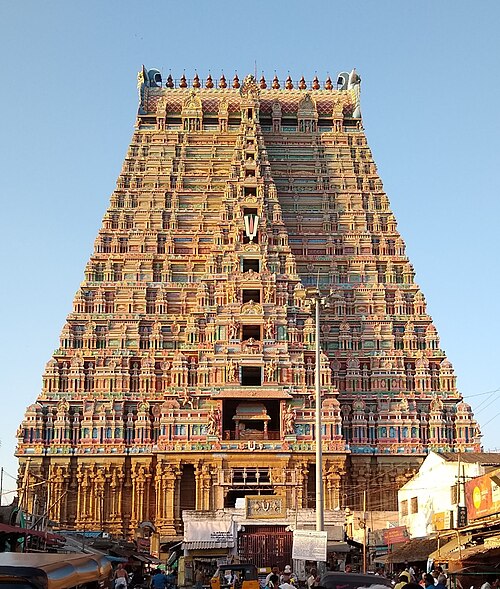
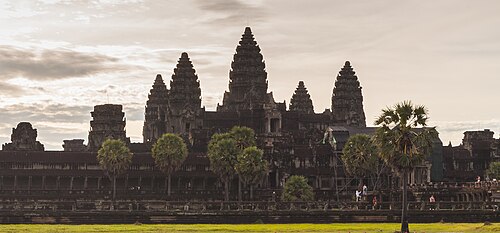
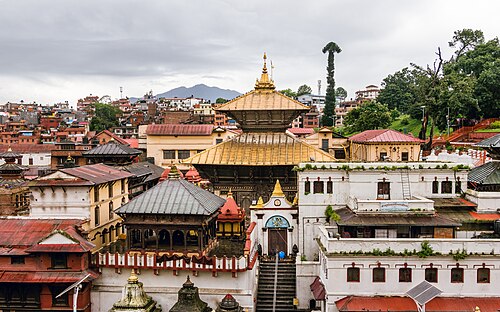
The Hindu temple is both a place of worship and an important cultural institution. Temple traditions vary enormously across India. North Indian Nagara architecture, South Indian Dravida architecture and Deccan or mixed traditions contain many regional forms.
A typical temple may include an inner sanctum (garbhagriha), spaces for worshippers, halls, gateways, circumambulatory paths and other ritual areas. Large temple complexes may contain kitchens, tanks, processional streets, markets, schools, monasteries and administrative spaces.
Temple sculpture and painting depict deities, mythological narratives, guardians, celestial beings, animals, plants and symbolic forms. The linga, murti, yantra and other sacred forms have specific meanings within their respective traditions.
Hindu religious culture has deeply influenced Indian music and dance. Carnatic and Hindustani music both include devotional repertoires, while classical dance traditions such as Bharatanatyam, Odissi, Kuchipudi, Kathak, Mohiniyattam and others have long interacted with temple, court and devotional cultures. Folk and regional performance traditions are equally important.
Ramleela, Yakshagana, Kathakali, Kutiyattam, Harikatha, Kirtan, Bhajan, Garba and numerous other forms demonstrate how Hindu narratives and devotional ideas are carried through performance. These traditions are not uniform; each has its own regional history and community context.
13. Language, Literature, and Oral Tradition
Hinduism is expressed in Sanskrit as well as India's many regional languages. Sanskrit remains central to many ritual and philosophical traditions, but most Hindu religious life is multilingual.
Oral transmission has been fundamental. Vedic recitation is an extraordinary example of preservation through memorisation. Beyond Vedic learning, stories from the Ramayana, Mahabharata, Puranas and local sacred narratives have circulated through grandparents, priests, storytellers, singers, performers and village communities.
Every region has developed its own retellings of major narratives. Kamban's Tamil Ramayana, Tulsidas's Ramcharitmanas in Awadhi, Krittibas's Bengali Ramayana, Eknath and Tukaram's Marathi devotional literature, Pampa and other Kannada traditions, Telugu devotional literature, Assamese Vaishnava works and countless other compositions show how Hindu traditions are continuously recreated in local languages.
Folklore includes stories of local gods and goddesses, village guardians, sacred groves, saints, ancestors, miraculous events, pilgrimage places and seasonal rituals. Folk traditions can preserve ideas and practices that are not found in canonical Sanskrit texts and should therefore be treated as important sources for understanding lived religion.
Oral traditions also include songs, proverbs, lullabies, wedding songs, festival songs, devotional chants, ritual narratives and performance genres. These traditions often connect religious memory with family history and local identity.
14. Food, Dress, Symbols, and Material Culture
There is no single Hindu diet. Vegetarianism is important in many Hindu communities, especially among some Vaishnava, Shaiva, Smarta and other groups, but dietary practices vary by region, family, sect and individual. Some Hindus eat meat and some avoid particular meats. Food customs are often connected with ritual purity, fasting, festival practice and local cuisine.
Common religious foods include fruits, milk products, sweets, grains and other offerings appropriate to particular deities and festivals. Prasada is widely distributed in temples and homes.
Traditional dress varies enormously across India. Sarees, salwar suits, dhotis, veshtis, mundus, kurtas, turbans and numerous regional garments are worn by Hindus as part of everyday life and special occasions. Religious occasions may involve particular colours or garments, but there is no universal Hindu dress code.
Tilaka and bindi practices vary. A tilaka may be worn on the forehead for religious or sectarian reasons; a bindi may be worn for cultural, aesthetic or religious reasons. Different sects use different marks.
The Om symbol is one of the most widely recognised sacred symbols in Hindu traditions and is associated with sacred sound and ultimate reality in several philosophical and devotional contexts. The swastika is also an ancient auspicious symbol in Hindu and other South Asian traditions. Its use in India predates and is conceptually distinct from its appropriation by Nazi Germany.
Other important symbols include the lotus, trishula, conch, chakra, diya, kalasha, rudraksha beads and sacred thread. Their meanings vary by context and tradition.
15. Social Organisation, Communities, and Caste: A Careful Overview
Hindu social history includes a complex relationship between religious ideas, kinship, occupation, region, community and systems of social hierarchy. The classical varna model describes four broad categories—Brahmin, Kshatriya, Vaishya and Shudra—with people outside or differently positioned in the model historically described in various ways. Actual social organisation in India has always been much more complex than this four-part scheme.
Jati refers to numerous birth-based, locally organised social groups. Jatis historically developed their own marriage networks, occupations, customs, status claims and regional identities. The relationship between varna and jati has varied by region and historical period.
It is important not to say that every Hindu follows the same caste system or that caste is simply a religious requirement. Caste has been a major social institution in South Asian history, and Hindu texts contain diverse and sometimes conflicting discussions of social order. Caste practices have also changed significantly over time.
Discrimination based on caste has been challenged by religious movements, social reformers, anti-caste thinkers, constitutional law and democratic politics. India's Constitution prohibits untouchability and provides legal protections against caste discrimination. Contemporary Hindu communities include people from every social background, and Hindu religious life is expressed by communities that have interpreted tradition in very different ways.
This topic requires particular care because historical description is not the same as religious endorsement. A responsible profile should describe the historical record without presenting inherited social inequalities as timeless or universally accepted religious rules.
16. Hinduism and Indian Society
Hindu traditions have shaped Indian society in many areas, including philosophy, literature, architecture, music, visual art, dance, education, law, political thought, festivals, agriculture-related customs, family rituals and concepts of time and place. At the same time, Indian society has never been exclusively Hindu. Hindu traditions developed alongside Buddhism, Jainism, Sikhism, Islam, Christianity, Judaism, Zoroastrianism and numerous indigenous and regional religious traditions.
India's cultural landscape is therefore better understood as an interconnected civilisation in which communities have influenced one another. Shared languages, artistic forms, musical traditions, foodways, pilgrimage economies and local customs often cross religious boundaries.
Hindu temples have historically served not only religious functions but also social, economic and cultural roles. In different periods they supported festivals, feeding, education, artistic production, land administration, charity and local markets. These functions varied greatly by place and historical period.
Hindu festivals also have a public cultural dimension. They bring together families, neighbourhoods, artisans, musicians, performers, traders and local institutions. Contemporary celebrations may combine religious ritual with public cultural programmes, community service and environmental initiatives.
17. Reform, Modernity, and the Indian Independence Era
From the eighteenth and nineteenth centuries, Hindu thinkers responded to colonial rule, Christian missionary criticism, new education systems and changing social conditions in diverse ways. Some sought to reform social practices; others emphasised ancient philosophical traditions; still others revitalised devotional and temple traditions.
Raja Rammohan Roy and the Brahmo Samaj promoted monotheistic and reformist interpretations. Swami Dayananda Saraswati founded the Arya Samaj and called for a return to Vedic authority as he understood it. Ramakrishna and Swami Vivekananda became major figures in modern Vedanta and global presentations of Hindu thought. Other movements, including the Swaminarayan tradition and various Vaishnava and Shaiva organisations, developed distinctive modern institutions.
Mahatma Gandhi drew on Hindu ethical and devotional traditions while also engaging deeply with Jain, Buddhist, Christian and other ideas. Ahimsa and satyagraha became central to his political philosophy. Gandhi's interpretation was one influential modern Hindu voice, not a universally binding definition of Hinduism.
The twentieth century also saw the growth of organisations, temples, educational institutions, publications and diaspora networks that helped transmit Hindu traditions in new forms. Modern Hindu life therefore combines inherited practices with contemporary education, technology, urbanisation and global communication.
18. Hinduism Beyond India
Hindu traditions have been present outside India for many centuries. Historical Hindu communities developed in Nepal, Bangladesh, Sri Lanka, Indonesia, Mauritius, Fiji, the Caribbean and East and Southern Africa, while later migration created substantial communities in the United Kingdom, United States, Canada, Australia, the Gulf states and elsewhere.
Hindu diaspora communities often maintain temples, language schools, cultural associations, youth groups, festival organisations and religious education programmes. At the same time, diaspora Hinduism adapts to local legal systems, languages and social environments.
Yoga, meditation, Vedanta, Ayurveda and Indian devotional music have also acquired global audiences. These global forms can be connected to Hindu traditions, but they should not automatically be assumed to represent the full range of Hindu religious life.
19. Demography in India
The 2011 Census of India recorded 966,257,353 people in the Hindu category, approximately 79.8% of India's population at that time. The official Census tables provide religion data at national, state, district, subdistrict and town levels. The Census is the appropriate primary source for these figures.
Hindu populations are found throughout India, with especially large populations in Uttar Pradesh, Maharashtra, Bihar, West Bengal, Madhya Pradesh, Rajasthan, Tamil Nadu, Gujarat, Karnataka, Andhra Pradesh, Telangana, Odisha, Kerala and other states. The geographic distribution is not uniform: Hindu communities also form substantial populations in regions where they are not the majority.
The Census category “Hindu” is a demographic classification and does not capture the full internal diversity of Hindu practice. A census table cannot show whether a person is Vaishnava, Shaiva, Shakta, Smarta, a follower of a particular sampradaya, primarily cultural in identification, highly observant, or non-practising.
20. Contemporary Hindu Life
Contemporary Hinduism is lived in homes, temples, workplaces, universities, villages, cities and online communities. Urbanisation has not eliminated traditional practice; instead, many traditions have adapted to new circumstances. Families may combine daily prayer with modern education and professional life, while temples may use digital booking, livestreaming and social media.
Young Hindus increasingly encounter tradition through multiple channels: family practice, temples, schools, religious teachers, books, television, cinema, music, social media, online lectures and travel. This has created new forms of religious learning as well as new debates about interpretation and identity.
Environmental concerns have also encouraged new interpretations of traditional ideas about sacred rivers, forests, animals and the Earth. Many Hindu organisations and communities participate in environmental campaigns, river-cleaning initiatives, tree planting, vegetarian or sustainable-food movements, and other forms of ecological action. These contemporary initiatives should be understood as modern engagements with religious ideas rather than assumed to be identical to ancient practice.
Hinduism in India remains a living and changing tradition. Its continuity is visible in ancient recitations, temples and pilgrimage routes, but also in new devotional music, modern interpretations of scripture, contemporary festivals, digital communities and global networks.
21. Conclusion
Hinduism in India is best understood as a vast, historically layered and internally diverse family of traditions. Its foundations include ancient Vedic literature and ritual, Upanishadic philosophy, epic and Puranic narratives, temple traditions, devotional movements, philosophical schools, regional cultures and countless household and local practices.
Its diversity is not a minor feature; it is one of its defining characteristics. Hindus may worship different deities, follow different philosophical schools, use different languages, observe different festivals, eat different foods, belong to different communities and practise religion at very different levels of intensity while still identifying with Hinduism.
The most accurate way to study Hinduism is therefore not to search for one practice that every Hindu must follow, but to examine the many traditions through which Hindu people understand the divine, the self, ethical life, society, family, nature, time and liberation.
In India, Hinduism is simultaneously a religious tradition, a collection of philosophical and devotional schools, a body of literature, a network of temples and pilgrimage places, a source of artistic and musical expression, and a lived set of family and community practices. Its history is ancient, but it continues to evolve in response to changing social, intellectual and global circumstances.
References and Further Reading
[2] Internet Encyclopedia of Philosophy. “Hindu Philosophy.” https://iep.utm.edu/hindu-ph/
[3] Flood, Gavin. An Introduction to Hinduism. Cambridge University Press, 1996.
[4] Internet Encyclopedia of Philosophy. “The Upanishads.” https://iep.utm.edu/upanisad/
[5] Flood, Gavin D. The Blackwell Companion to Hinduism. Blackwell, 2003.
[6] Thapar, Romila. Early India: From the Origins to AD 1300. University of California Press, 2002.
[8] The Metropolitan Museum of Art. The Arts of South and Southeast Asia. https://resources.metmuseum.org/resources/metpublications/pdf/The_Arts_of_South_and_Southeast_Asia_The_Metropolitan_Museum_of_Art_Bulletin_v_51_no_4_Spring_1994.pdf
[9] Wikipedia contributors. “Vedas.” Wikipedia. https://en.wikipedia.org/wiki/Vedas
[10] Wikipedia contributors. “List of Hindu texts.” Wikipedia. https://en.wikipedia.org/wiki/List_of_Hindu_texts
[11] Sharma, Arvind. The Hindu Way. Oxford University Press, 2002.
[12] Kinsley, David. Hindu Goddesses: Visions of the Divine Feminine in the Hindu Religious Tradition. University of California Press, 1986.
[14] Bryant, Edwin. The Yoga Sutras of Patanjali: A New Edition, Translation, and Commentary. North Point Press, 2009.
[15] Pandey, Rajbali. Hindu Samskaras: Socio-Religious Study of the Hindu Sacraments. Motilal Banarsidass.
[16] Ministry of Culture, Government of India. “Festivals of India – Archive.”
https://www.indiaculture.gov.in/festivals-india-archive
[17] Eck, Diana L. India: A Sacred Geography. Harmony Books, 2012.
[18] Michell, George. The Hindu Temple: An Introduction to Its Meanings and Forms. University of Chicago Press, 1988.
[19] Kramrisch, Stella. The Hindu Temple. Motilal Banarsidass.
[20] Narayan, Kirin. Storytellers, Saints, and Scoundrels: Folk Narrative in Hindu Religious Teaching. University of Pennsylvania Press, 1989.
[21] Doniger, Wendy. The Hindus: An Alternative History. Penguin Press, 2009. Used here for broad historical and cultural context; interpretations of particular issues remain debated.
[22] Srinivas, M. N. Social Change in Modern India. University of California Press, 1966.
[23] Government of India. Constitution of India, especially Article 17 concerning untouchability.
[24] Michell, George. Hindu Art and Architecture. Thames & Hudson, 2000.
[25] McMahan, David L. Rethinking Modern Hinduism: A Critical History of Hindu Modernism. Oxford University Press, 2008.
[26] Vertovec, Steven. The Hindu Diaspora: Comparative Patterns. Routledge, 2000.
[27] Office of the Registrar General & Census Commissioner, India. Census of India 2011, C-01: Population by Religious Community, India.
https://www.censusindia.gov.in/nada/index.php/catalog/11361