

Kayastha Community
Explore your Kayastha DNA ancestry with GenoConnect. Delve into the rich history, diverse culture, and unique genetic profile of India's ancient community..
Kayastha Community
History, Culture, and Genetics of India's Traditional Scribal and Administrative Community
1. Introduction: Who Are the Kayasthas?
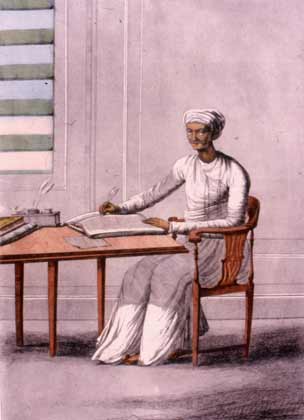
The Kayastha community is one of India's oldest identifiable literate and administrative communities, historically renowned for centuries of service as scribes, record-keepers, revenue officials, and secretaries to royal courts across the Indian subcontinent. The name "Kayastha" is not confined to a single region; rather, it denotes a cluster of related but historically distinct communities found across northern, central, and eastern India, unified by a shared occupational heritage of literacy, administration, and record-keeping rather than by a single common geography.
The principal regional branches include the Chitraguptavanshi Kayasthas of northern India (spanning Uttar Pradesh, Bihar, Madhya Pradesh, Delhi, and Rajasthan), the Bengali Kayasthas of Bengal, the Chandraseniya Kayastha Prabhus (CKPs) of Maharashtra, and the Karanas of Odisha and parts of Andhra Pradesh. Each of these branches developed its own distinct sub-groups, customs, and regional identity while sharing the community's broad self-understanding as descendants of literate administrative families.
This profile traces the community's origins in classical and early-medieval Indian administration, its transformation through the Mughal and British periods, the emerging genetic evidence on its ancestry, and the customs, cuisine, architecture, and diaspora that shape Kayastha identity today.
2. Origins and Early History
2.1 The Chitragupta Tradition
Kayastha communities widely trace their spiritual and genealogical origin to Chitragupta, a deity described in the Puranas as the divine scribe created by Brahma to record the deeds of every human being and assist Yama, the god of death, in judging souls after their passing. According to this tradition, the twelve sons of Chitragupta — born of his two consorts, Devi Shobhavati and Devi Nandini — became the progenitors of the twelve traditional Kayastha sub-groups, including lineages remembered today as Srivastava, Saxena, Mathur, Bhatnagar, Ambashtha, Nigam, Kulshreshtha, Asthana, Gaur, Suryadhwaj, Karna, and Valmik. This origin narrative remains central to community identity and is commemorated annually through Chitragupta Puja.
2.2 Kayasthas in Classical and Early Medieval Administration
The term Kayastha appears in Sanskrit inscriptions and literature from at least the Kushan period, and by the Gupta era (4th–6th centuries CE) it denoted a recognised administrative office rather than a hereditary community. An inscription of the Gupta emperor Kumaragupta I, dated 442 CE, refers to a prathama-kayastha, or chief officer, while the near-contemporary Yajnavalkya Smriti and Vishnu Smriti describe kayasthas as record-keepers and accountants. Classical Sanskrit literature, including the works of Kalhana, Kshemendra, and Bilhana, as well as the plays Mrichchhakatika and Mudrarakshasa, portray kayastha officials serving as scribes, treasury officers, and trusted secretaries to kings and ministers.
Scholars generally agree that between roughly the 7th and 12th centuries, the growth of state administration, the complexity of land-grant documentation, and the expanding need for professional record-keeping led these officeholders — originally drawn from varied backgrounds — to consolidate gradually into distinct, endogamous regional communities. In Bengal, this process is associated with the Sena dynasty; in Kashmir, Kayastha officers managed revenue and taxation under rulers such as Ananta; and across the Gangetic plains, Kayastha families served the Rajput, Gahadavala, and other regional courts as scribes, accountants, and administrators.
2.3 The Persian and Mughal Era
Following the establishment of Muslim rule in northern India, Kayasthas adapted quickly to the new administrative order by mastering Persian, which had become the official language of revenue and court administration. This linguistic versatility allowed Kayastha families to retain and expand their traditional role as scribes, accountants, and administrators under the Delhi Sultanate and later the Mughal Empire, serving as diwans, treasury officials, and record-keepers. In Bengal, Kayastha families continued as major landholders, and Mughal-era chronicler Abu al-Fazl noted that most Hindu zamindars of the region belonged to the community. A number of Kayastha families also embraced Islam during this period, giving rise to the distinct Muslim Kayasth community of northern India.
2.4 The Colonial Period
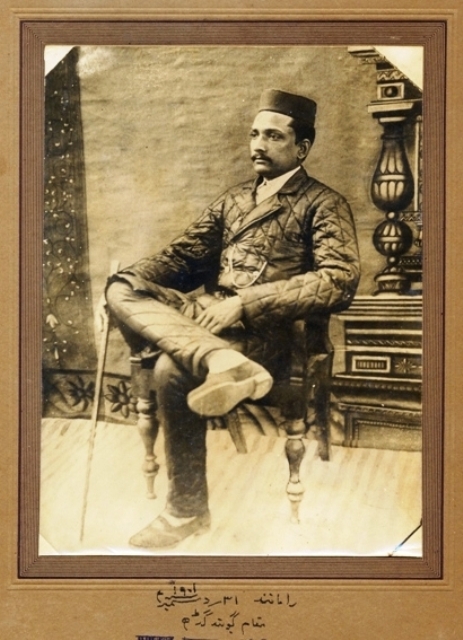
Under British rule, the community's long tradition of literacy, record-keeping, and familiarity with administrative language positioned Kayasthas to excel in colonial government service, law, and the newly expanding professions of medicine, engineering, and teaching. Kayastha families were counted among the small number of Indian communities that qualified for the highest executive and judicial offices open to Indians during the Raj, and by the early twentieth century Kayasthas formed part of the urban, English-educated professional elite that emerged across colonial India.
3. Regional Branches and Sub-Groups
Kayastha identity today is expressed through several distinct regional branches, each shaped by its own centuries-long local history:
- Chitraguptavanshi Kayasthas — the largest and most widespread branch, concentrated in Uttar Pradesh, Bihar, Madhya Pradesh, Delhi, and parts of Rajasthan, organised into twelve traditional sub-groups including Srivastava, Saxena, Mathur, Bhatnagar, Nigam, and Ambashtha.
- Bengali Kayasthas — historically one of Bengal's leading landholding and administrative communities, closely associated with the region's bhadralok (educated gentry) culture.
- Chandraseniya Kayastha Prabhus (CKPs) — a Marathi-speaking community concentrated in Maharashtra and the Konkan coast, historically prominent as soldiers, Deshpandes (record-keepers), and Gadkaris (fort-keepers) under the Maratha Empire.
- Karanas — found predominantly in Odisha and parts of Andhra Pradesh, historically serving as ministers, administrators, and record-keepers to the rulers of the region.
Within the northern Kayastha branch, marriage has traditionally been organised around the al (clan) system, with many families continuing to observe clan-exogamy as a matter of custom.
4. Genetics and DNA Ancestry
Modern population-genetic research on Kayasthas presents the community as genetically distinct, with its own admixture profile shaped by roughly 1,500 to 2,000 years of endogamy.
4.1 Autosomal Ancestry: ANI and ASI
On the whole-genome level, Kayasthas across India show elevated Ancestral North Indian (ANI) ancestry, typically in the range of 50–60%, placing them among India's higher-ANI communities alongside other traditionally literate and administrative groups. This proportion varies meaningfully by region: Uttar Pradesh Kayasthas tend to show the highest ANI levels (roughly 55–62%), Bihar Kayasthas an intermediate profile (roughly 52–58%), and Bengal and central Indian Kayasthas somewhat higher Ancestral South Indian (ASI) contributions. Bengali Kayasthas additionally carry a modest East Asian-related ancestry component (around 5–10%), a signature shared broadly across Bengali communities and reflecting the region's ancient Austroasiatic and Tibeto-Burman population history.
4.2 Y-DNA Paternal Lineages
Paternal-line (Y-chromosome) studies show Kayasthas carrying a mixed haplogroup profile. Haplogroup R1a-Z93 — linked to the Bronze Age steppe migrations associated with the spread of Indo-Aryan languages into South Asia — is the most frequent lineage, found at roughly 35–50% depending on region. Alongside this, Kayasthas show a notable presence of haplogroups R2 and H, both associated with deep indigenous South Asian ancestry, along with smaller contributions from J2, associated with Neolithic West Asian and Indus Valley populations.
Taken together, researchers interpret this combination — substantial steppe-related R1a alongside notable indigenous R2 and H lineages — as evidence that the founding Kayastha population drew from multiple existing regional groups before consolidating into a distinct endogamous community over time.
4.3 Regional Genetic Variation
Consistent with their separate regional histories, the major Kayastha branches show measurable genetic differentiation from one another. Bengal Kayasthas are distinguished by their East Asian-related admixture; Uttar Pradesh Kayasthas by the strongest steppe-related (R1a) signal within the community; and Bihar Kayasthas by a genetic profile intermediate between the two. Within Uttar Pradesh, the traditional sub-groups — such as Srivastava, Saxena, and Mathur — show subtle but detectable differences in ancestry proportions, a fine-grained pattern attributed to generations of sub-group endogamy.
4.4 Endogamy and Genetic Health Considerations
Genetic analyses of runs of homozygosity indicate that Kayastha communities established a strict endogamous boundary approximately 1,500–2,000 years ago, consistent with the historical period in which occupational scribal families are believed to have crystallised into a distinct endogamous community. This long history of in-group and, in many families, sub-group marriage is reflected in the population-genetic hallmarks common to other long-endogamous Indian communities, including reduced genetic diversity relative to more outbred populations and a somewhat elevated likelihood of shared recessive carrier states within family lines. As with other endogamous communities, this makes family genetic history and carrier screening a useful consideration for individuals of Kayastha descent.
This section summarises findings from published population-genetics literature and consumer genomics research; ancestry estimates vary by study, sample size, and reference panel, and individual results from DNA testing may differ from community-level averages.
5. Social Structure and Position in Indian Society
Historically, Kayasthas were recognised as one of India's principal literate, urban-oriented professional communities. Education has long been a defining community value: Kayasthas maintained their own traditional systems for teaching administration, accountancy, and legal literacy well before the spread of mass education, and the community produced a disproportionate share of India's early lawyers, civil servants, doctors, engineers, and writers through the nineteenth and twentieth centuries.
Family and clan structure has traditionally centred on the al (a patrilineal clan identifier, especially among northern Kayasthas) and on extended joint families. Today, Kayasthas are heavily represented in professional, administrative, literary, and civil-service occupations across the country, continuing a pattern of urban, education-oriented social organisation that dates back many centuries.
6. Language
Kayasthas do not have a single distinct mother tongue; rather, the community speaks the dominant regional language of wherever it settled — chiefly Hindi and Urdu in the Gangetic heartland, Bengali in Bengal, Marathi among the Chandraseniya Kayastha Prabhus, and Odia among the Karanas of Odisha. What historically distinguished the community linguistically was not a separate vernacular but professional multilingualism: fluency in Sanskrit for classical learning, and, from the Delhi Sultanate period onward, mastery of Persian, the administrative language of the medieval and Mughal courts. This tradition of administrative bilingualism later evolved into strong facility in English during the colonial period, a linguistic versatility that remains closely associated with the community's professional and literary reputation.
7. Religion and Beliefs
The great majority of Kayasthas are Hindu, worshipping within the mainstream Sanatana tradition while maintaining a distinctive devotion to Chitragupta as their progenitor deity. Chitragupta Puja, observed on Bhai Dooj (the day following Diwali), is the community's most distinctive religious observance: families gather to worship pen, ink, and ledger books in a ceremony sometimes called Kalam-Dawat Puja, symbolically honouring the tools of the scribal profession alongside the deity himself.
Kayasthas also observe the wider Hindu festival calendar, including Diwali, Holi, Durga Puja and Navratri (with particular prominence in Bengal), and Rama Navami. Some Kayastha families historically adopted the Upanayana (sacred thread) ceremony for boys, reflecting the community's long-standing emphasis on formal learning. A smaller number of Kayastha families, particularly in northern India following the Delhi Sultanate and Mughal periods, converted to Islam and form the distinct Muslim Kayasth community.
8. Culture, Customs, and Social Practices
Kayastha culture is often described as a synthesis of Sanskritic Hindu tradition with the refined, literate, administrative ethos the community cultivated over centuries of court service. Several customs reflect this dual heritage:
- Chitragupta Puja and Kalam-Dawat Puja — the ceremonial worship of pen, inkpot, and account books, performed on Bhai Dooj in honour of the community's patron deity and its scribal heritage.
- Strong emphasis on formal education, literary accomplishment, and civil or professional service, values that have remained central to Kayastha family life for many generations.
- Observance of clan (al) identity, historically used to determine exogamy in marriage arrangements among northern Kayastha families.
- A tradition of Hindi, Urdu, and Bengali literary output — the community has produced numerous celebrated poets, novelists, and essayists, reflecting its historic association with the written word.
Hospitality, respect for learning, and the maintenance of extended family and clan ties through gatherings and family associations remain prominent features of community life, particularly among Kayastha associations that continue to organise cultural and networking events in India and abroad.
9. Marriage and Wedding Traditions
Kayastha weddings are elaborate, multi-day Hindu ceremonies that combine widely shared North Indian ritual elements with a few customs distinctive to the community. Traditional matchmaking has historically placed considerable emphasis on Lagna Patrika, the astrological matching of horoscopes, alongside a strong cultural preference for partners with comparable education and professional standing.
Typical elements of a Kayastha wedding include:
- Haldi — a joyful pre-wedding ceremony in which the bride and groom are separately anointed with a turmeric paste, believed to bless and purify them ahead of the wedding.
- Mehendi — the application of intricate henna designs to the bride's hands and feet, usually held alongside music and celebration among family and friends.
- Mandapagaman — a distinctive Kayastha ritual honouring Chitragupta, in which the groom, standing in for the deity, ceremonially writes the bride's name or initials in ink, symbolising a truthful and lasting union — a direct echo of the community's scribal heritage.
- Jaimala and Kanyadaan — the exchange of garlands between bride and groom, followed by the formal giving away of the bride by her father.
- Sindoor Daan and Kangan Bandhan — the groom's application of vermilion to the bride's hair-parting, and the tying of ceremonial wristbands, marking her new status as a married woman.
The wedding concludes with a feast for family and guests, and the customs surrounding the ceremony continue to be adapted flexibly by younger generations while retaining their essential ritual structure.
10. Cuisine
Kayastha cuisine, particularly the well-documented culinary tradition of Lucknow and the broader Awadh region, is regarded as one of North India's most refined culinary styles, shaped by the community's long historical association with royal and administrative courts and, in Awadh, considerable cross-pollination with Mughal and Nawabi kitchens.
- A tradition of slow-cooked, subtly spiced meat preparations — including korma, qorma-style curries, and kebabs — prepared with a careful balance of whole and ground spices rather than overwhelming heat, reflecting the community's association with courtly dining.
- Yakhni and dum-style cooking techniques, in which meat or rice is slow-cooked in a sealed pot, a method associated with Kayastha and Awadhi kitchens alike.
- A wide repertoire of vegetarian dishes for religious and festival occasions, including elaborately prepared dals, seasonal vegetable preparations, and festive rice dishes.
- Festive sweets and snacks prepared for Diwali, Chitragupta Puja, and family celebrations, alongside a strong tradition of home-style pickles and preserves passed down through generations of women in the family.
Regional Kayastha communities outside the Gangetic heartland — in Bengal, Maharashtra, and Odisha — naturally follow the broader culinary traditions of their respective regions, adapted with individual family recipes passed down within Kayastha households.
11. Traditional Dress
Historic Kayastha attire generally followed the broader dress conventions of North Indian elite and courtly society, reflecting the community's long association with royal and administrative service. Men traditionally wore the dhoti-kurta or, in later Mughal-influenced courtly contexts, the achkan and churidar, often paired with a formal cap or turban appropriate to rank and occasion. Women traditionally wore the sari, styled according to regional custom, with Banarasi and other fine silk weaves favoured for weddings and festive occasions among families of means.
As with most North Indian communities, everyday dress has today largely converged with mainstream Indian and Western fashion, while traditional dhoti-kurta, sari, and sherwani-style attire remain prominent at weddings, Chitragupta Puja, and other formal community occasions.
12. Traditional Architecture and Homes
Kayastha families of means, particularly those serving in royal or colonial administration, historically built substantial havelis — courtyard houses with carved wooden balconies, verandas, and multiple internal courtyards — especially in the towns and cities of Uttar Pradesh and Bihar where the community was concentrated. These homes often included a dedicated space for a small family shrine or puja room, reflecting the household's religious life, and were built to accommodate the large joint families characteristic of the community. In Bengal, Kayastha zamindar and landholding families similarly built substantial rajbari-style residences, combining Bengali courtyard architecture with elements of colonial-era design reflecting their administrative and landholding status.
13. Folklore and Oral Tradition
The community's central origin narrative survives as a widely told Puranic legend: the story of Chitragupta's creation by Brahma from his own body, tasked with the eternal duty of recording every human being's deeds for judgment by Yama. This story, elaborated with the accounts of Chitragupta's two wives and twelve sons, functions as both religious mythology and informal community genealogy, explaining the origin of the twelve traditional Kayastha sub-groups and reinforcing the community's enduring self-identification with the written word, justice, and record-keeping.
Alongside this central myth, Kayastha families across regions maintain their own local family histories and genealogical traditions (often recorded in family panjikas or genealogical registers, particularly in Bengal), documenting lineage and clan descent across many generations — a practice itself reflective of the community's historic scribal expertise.
14. Diaspora
From the twentieth century onward, and particularly after Indian independence, Kayasthas have participated actively in patterns of both internal and international migration, moving from traditional centres such as Lucknow, Allahabad, Patna, and Kolkata to major Indian metropolitan cities and, increasingly, abroad. Reflecting the community's long-standing emphasis on higher education and professional service, the Kayastha diaspora is particularly well represented in medicine, engineering, information technology, academia, and public administration in the United States, the United Kingdom, Canada, and the Gulf countries.
Kayastha cultural and welfare associations — active in India and among diaspora communities alike — continue to organise Chitragupta Puja celebrations, cultural events, and networking gatherings that help preserve community identity and connect families across geographic distance.
15. Prominent Figures
The Kayastha community has produced a wide range of scientists, freedom fighters, writers, and public figures across its regional branches. This list is illustrative rather than exhaustive:
- Jagadish Chandra Bose — pioneering physicist and biologist, among the fathers of radio science.
- Satyendra Nath Bose — physicist known for foundational work in quantum statistics; the class of particles called bosons is named in his honour.
- Subhas Chandra Bose — prominent leader of the Indian independence movement.
- Sri Aurobindo — philosopher, yogi, and early Indian nationalist leader.
- Swami Vivekananda — philosopher and spiritual leader who introduced Vedanta and Yoga to the Western world.
- Paramahansa Yogananda — spiritual teacher and author of Autobiography of a Yogi.
- Munshi Premchand — celebrated Hindi and Urdu novelist and short-story writer.
- Mahadevi Varma — noted Hindi poet of the Chhayavad literary movement.
- Jayaprakash Narayan — freedom fighter and prominent social and political reformer.
- C. D. Deshmukh — first Indian Governor of the Reserve Bank of India and independent India's first finance minister.
- Baji Prabhu Deshpande and Murarbaji Deshpande — celebrated Maratha military commanders of the Chandraseniya Kayastha Prabhu community who served under Chhatrapati Shivaji Maharaj.
16. Conclusion
The Kayasthas represent a distinctive case of an Indian community defined less by a single geographic origin than by a shared occupational and cultural heritage: literacy, administration, and service to the state, sustained across roughly two millennia of Indian history. From Gupta-era inscriptions naming individual kayastha officers to modern population-genetic studies revealing a genuinely distinct ancestry profile, and from the Puranic legend of Chitragupta to the community's continuing strength in law, medicine, literature, and public service, the Kayastha story is at once a religious tradition, an administrative history, and a living regional culture that continues to evolve across India and its global diaspora.
References
- [1]1. Wikipedia. "Kayastha." https://en.wikipedia.org/wiki/Kayastha
- [2]2. Wikipedia. "Chitraguptavanshi Kayastha." https://en.wikipedia.org/wiki/Chitraguptavanshi_Kayastha
- [3]3. Wikipedia. "Bengali Kayastha." https://en.wikipedia.org/wiki/Bengali_Kayastha
- [4]4. Wikipedia. "Chandraseniya Kayastha Prabhu." https://en.wikipedia.org/wiki/Chandraseniya_Kayastha_Prabhu
- [5]5. Wikipedia. "Karan (caste)." https://en.wikipedia.org/wiki/Karan_(caste)
- [6]6. Sikdar, M. et al. (2023). "Complete mitochondrial DNA sequence tries to settle hitherto putative history of Kayastha population of India." American Journal of Human Biology. https://onlinelibrary.wiley.com/doi/abs/10.1002/ajhb.23851
- [7]7. Pagani, L., Bose, S., Ayub, Q. (2017). "Kayasthas of Bengal: Legends, Genealogies, and Genetics." Economic and Political Weekly, 52(47). https://www.epw.in/journal/2017/47/special-articles/kayasthas-bengal.html
- [8]9. Varma, Pavan K. (2007). The Great Indian Middle Class. Penguin Books.
- [9]10. Bellenoit, Hayden J. (2017). The Formation of the Colonial State in India: Scribes, Paper and Taxes, 1760–1860. Routledge.
- [10]11. Gupta, Chitrarekha (1983). "The writers' class of ancient India — a case study in social mobility." The Indian Economic & Social History Review, 20(2).
- [11]12. Poojn.in. "Kayastha Matrimony and Marriage Customs: A 2025 Guide to Traditions & Rituals." https://www.poojn.in/post/34863/kayastha-matrimony-and-marriage-customs-a-2025-guide-to-traditions-rituals
- [12]13. Poojn.in. "Kayastha Community Explained: History, Traditions, and Significance." https://www.poojn.in/post/34819/kayastha-community-explained-history-traditions-and-significance
- [13]14. Poojn.in. "Kayastha Culture and Traditions: A 2025 Exploration." https://www.poojn.in/post/34828/kayastha-culture-and-traditions-a-2025-exploration
- [14]15. Mangliks. "The Kayastha Community: History and Rituals." https://www.mangliks.com/matrimonial-blog/the-kayastha-community-caste-sub-caste-and-rituals/