

Khatri Community
Explore the Khatri community: their rich history in India & South Asia, origins as influential traders & administrators, ancestral ties, and significant role.
The Khatri Community of India
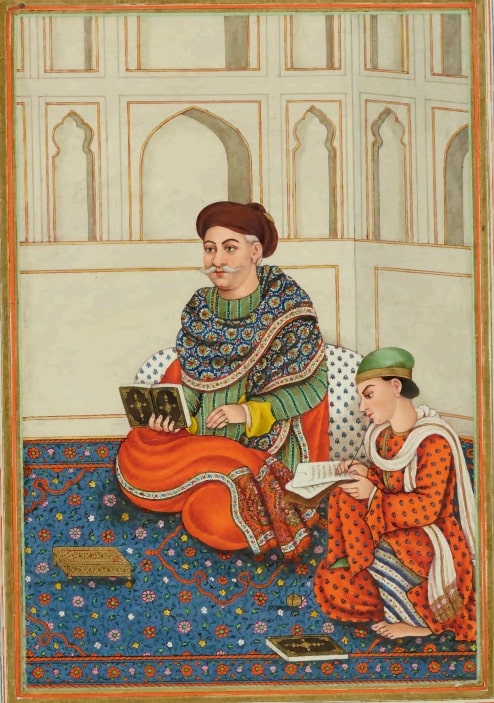
1. Introduction: Who Are the Khatris?
The Khatris are a caste found across northern India, and in smaller numbers in Pakistan and Afghanistan, whose historical home lies in the Malwa and Majha tracts of the Punjab region. For centuries they were known chiefly as merchants, bankers, and scribes, and by the late medieval period they had become the leading commercial and administrative class of much of northern India. Community tradition describes them as “warriors who took to trade”, a phrase that captures both their claimed Kshatriya ancestry and their lived reality as a trading and clerical people.
Today Khatris are found well beyond their Punjabi homeland, in Delhi, Haryana, Himachal Pradesh, Jammu, Rajasthan, Uttar Pradesh, Gujarat, Maharashtra, and further afield, a spread that owes a great deal to centuries of trade migration and, more recently, to the displacement caused by the Partition of India in 1947. The community is Punjabi-speaking in origin, though members today are equally at home in Hindi and, depending on region, Gujarati, Dogri, Sindhi or other regional languages. Most Khatris are Hindu, and a significant number are Sikh; a small number in Punjab are Muslim.
This profile draws on published historical scholarship and reference works to set out what is reliably known about the community's origins, its historic occupations, its internal social organisation, its religious life, and its place in the modern professional and business landscape of India.
2. Etymology and the Question of Origins
Most linguists and historians who have examined the word trace “Khatri” to the Sanskrit “kshatriya”, the traditional warrior and ruling class of the Hindu varna system, arriving at its present form through the historical evolution of Punjabi from Sanskrit by way of Prakrit and Apabhramsha. Historians including W. H. McLeod, Louis Fenech, Peter Hardy and A. R. Desai have supported this derivation, as have Indian lexical authorities such as the Shabda-Sagara, which records the feminine form as “Khatrani”, corresponding to Sanskrit “kshatrani”.
The philologist Ralph Lilley Turner likewise derived the Punjabi “khattri”, meaning “warrior”, from “kshatriya”, while noting that an unrelated Gujarati word of similar sound, applied to a caste of weavers, has a separate Sanskrit root. Scholars such as John Stratton Hawley and Gurinder Singh Mann describe Khatri in its Punjabi usage as denoting a cluster of related merchant castes, among them the Bedi, Bhalla and Sodhi lineages; historian Purnima Dhavan similarly treats “Khatri” as the name of a trading caste closely tied to the Sikh Gurus, while noting that the popular equation with “kshatriya” may partly reflect the two words' phonetic closeness.
The Mughal emperor Jahangir, writing in his memoirs, described the “Chhatri” or “Khattri” as the second caste after the Brahmins, whose stated purpose was to protect the weak from oppression — an early outside observation that took the community's Kshatriya claim at face value. As discussed further below, historians remain divided on how far that claim should be accepted given the community's long-standing mercantile and scribal occupations.
3. Historical Role: Traders, Scribes, and Administrators
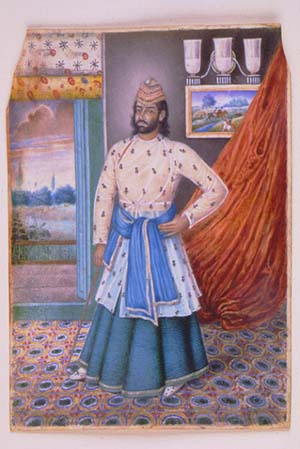
Across the medieval and early modern periods, Khatris built a reputation as literate, numerate professionals suited to commerce and administration. Historian Muzaffar Alam describes the Khatris of Punjab as a “scribe and trading caste” who staffed the departments of revenue and accountancy under successive Indo-Persian and Mughal administrations. As Persian became the language of imperial government from around the time of Sikandar Lodi onward, Khatris — alongside Kashmiri Brahmins and Kayasthas — took readily to learning it, and found steady employment as clerks, accountants (siyaq) and drafters (insha), often working in the offices of the revenue minister, or diwan.
The historian Rosalind O'Hanlon notes that Khatris and Kayasthas had, from early in the second millennium, developed as a specialised scribal class serving Hindu kings and, later, Muslim courts, gaining influence as royal scribes even as this sometimes drew hostility from rival Brahmin scribal families. By the eighteenth century, and quite possibly earlier, Khatris dominated trade across Punjab and Afghanistan and had established themselves in many other parts of India, leading some historians to suggest a Khatri presence in Bengal even before the Mughal conquest of that region in 1576.
Their commercial reach extended well beyond India's borders. Historian Scott C. Levi has documented Khatri merchant communities operating along Central Asian trade routes, describing them among the most important merchant communities of early modern India; other scholars have traced Khatri traders to Astrakhan in southern Russia in the late seventeenth century, and to the bazaars of Isfahan in Persia, where by one contemporary estimate several thousand Indian merchants, most of them Khatris from Punjab, were active around 1670, engaged in the cloth trade and in money-lending.
Weaving and Artisanal Trades
Alongside banking and trade, some Khatri lineages were historically engaged in artisanal work, particularly silk and cotton weaving, dyeing, and related crafts. Khatri weavers are recorded as a leading force in the textile trade of Varanasi (Banaras), where, according to several historians, they helped establish incoming Muslim weavers in the craft before gradually shifting from weaving into marketing and trade themselves. Khatri weaving communities are also recorded historically in Gujarat, where community genealogists trace their ancestry to Champaner in the Panch Mahals or to Hinglaj in Sindh, and in Hyderabad, where Khatris and Padmasalis together owned a large share of the region's looms in the mid-twentieth century, the Khatris specialising in silk.
4. The Khatri Community and Sikhism
The Khatri community holds a distinctive place in the history of Sikhism. Guru Nanak, who founded the faith in the fifteenth century, was a Bedi Khatri; his successor Guru Angad was a Trehan Khatri, and the third Guru, Amar Das, was a Bhalla Khatri. The fourth through tenth Gurus were all members of the Sodhi Khatri lineage. According to the historian W. H. McLeod, Khatris were dominant among the early followers of Sikhism, a position later broadened by the large-scale participation of Jat communities in the faith.
The Gurmukhi script, in which the Punjabi language is written, is traditionally ascribed to the second Guru, Angad, and is understood to derive from a standardised form of the Landa script that had long been used by Khatri traders for keeping accounts — a direct link between the community's commercial literacy and one of Sikhism's most enduring cultural contributions.
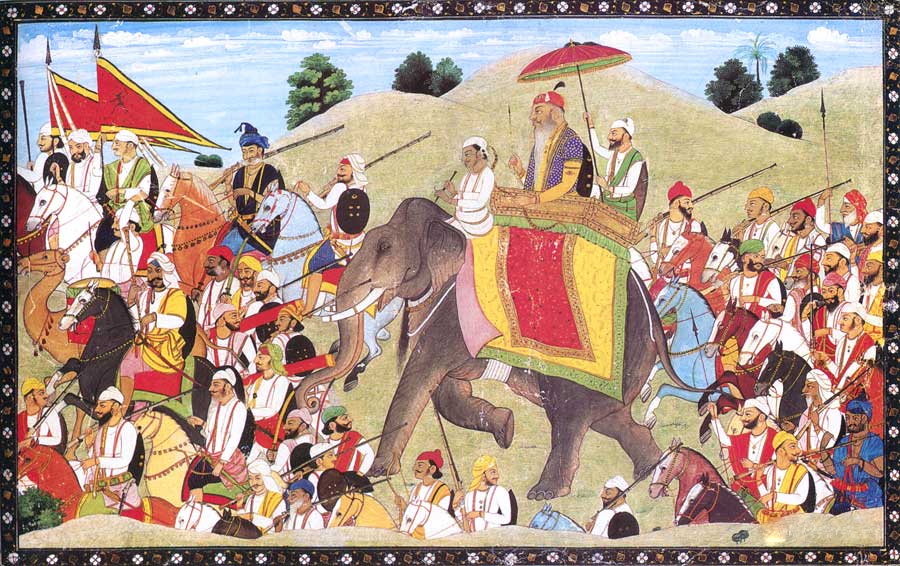
During the eighteenth-century Sikh Empire, Khatris took on prominent military and administrative roles. Hari Singh Nalwa, an Uppal Khatri from Gujranwala, served as commander-in-chief of the Sikh Khalsa Army and led the Sikh conquests that extended the empire's frontier beyond the Indus, up to the Khyber Pass. Dewan Mokham Chand commanded Khalsa forces against the Durrani Empire at the Battle of Attock, and Diwan Sawan Mal Chopra governed Multan after its conquest, a role later inherited by his son, Diwan Mulraj Chopra.
5. The Colonial Period and the Partition of 1947
Under British rule, Khatris continued in commerce and administration and increasingly entered professions such as law, alongside government service; some also served in the British Indian Army after being raised as Sikhs. Historian Kenneth W. Jones records that nineteenth-century Punjabi Khatris, distinct from more rural trading communities such as the Aroras or Banias, were predominantly urban, prosperous, and literate, and occupied prominent military and civil positions.
The Partition of British India in 1947 was a turning point for the community. Large numbers of Khatris, together with the closely related Arora community, were forced to migrate from West Punjab and the North-West Frontier Province into independent India, settling in large numbers in Delhi, Haryana, and elsewhere in northern India. Delhi's population grew by over a million people between 1941 and 1951, an increase substantially attributable to the arrival of Partition refugees, a large proportion of them Hindu and Sikh Khatris and Aroras from West Punjab. Many who resettled in Haryana initially faced considerable hardship, and community organisations there have, in more recent years, sought greater public recognition of that history.
6. Post-Independence: Education, Enterprise, and Public Life
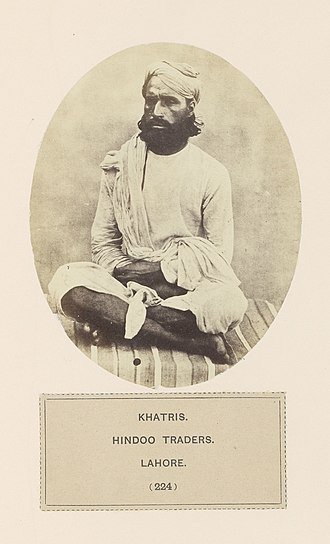
Business historian Harish Damodaran attributes the rise of Khatri industrialists after 1947 in large part to the displacement caused by Partition itself, which pushed many Khatri families toward Delhi just as the capital was emerging as a major economic hub. Damodaran notes that, unlike established mercantile communities such as the Banias, Khatris had operated mainly as regional traders before independence, since their home region had little industrial or rail infrastructure; their post-independence business success was therefore a comparatively recent development, built through enterprise and proximity to the growing capital.
Since independence, Khatri entrepreneurs and executives have founded or led companies across a wide range of sectors, including pharmaceuticals, two-wheelers, tractors, paper, tyres, and hospitality, and have co-founded or led firms in banking, aviation, technology and media. Alongside business, the community produced a large professional and administrative class: Punjabi Khatris, together with groups such as Kashmiri Pandits and South Indian Brahmins, are frequently identified by scholars of Indian social history as prominent among the country's English-educated, professionally employed post-independence elite, with strong representation among doctors, engineers, lawyers, civil servants, and military officers. Khatris have served at the highest levels of the Indian Armed Forces, and members of the community, including Vikram Batra and Arun Khetarpal, have received India's highest wartime gallantry award, the Param Vir Chakra.
7. Social Organisation: Clans and Sub-Groups
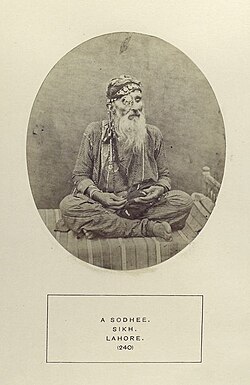
Historically, Khatris organised themselves into a graded set of largely endogamous clan clusters, reflecting relative social standing within the community. These groupings were known, in descending order of the number of constituent clans, as the urhai or dhai ghar (“house of two-and-a-half”), the char ghar (“house of four”), the barah ghar or bahri (“house of twelve”), and the bunjayee or bavanjah ghar (“house of fifty-two”). Members of these four groupings together formed the majority of the community and were traditionally regarded as its highest-ranking sections. A further, numerically smaller group, the Sareen Khatris, stood apart from this fourfold hierarchy, and the Khukhrain, a separate cluster of clans, is understood to have split off from the bunjayee grouping.
| Grouping | Representative clan (surname) names |
|---|---|
| House of 2.5 | Kapoor, Khanna, Mehra / Malhotra |
| House of 4 | The above three, plus Seth (also called Kakar) |
| House of 12 | The above four, plus Chopra, Dhawan, Mahindru / Mohindra, Mehrotra, Sehgal, Talwar, and others |
| House of 52 (Bunjahi) | A large cluster including names such as Bagga, Bahl, Bakshi, Bassi, Beri, Bhandari, Chandok, Chadha (in some listings) and many others |
| Khukhrain | Anand, Bhasin, Chadha, Kohli, Ghai, Sabharwal, Sahni (Sawhney), Sethi, Suri |
| Sareen and other groups | Abrol, Arya, Badhwar, Baijal, Bawa, Bedi, Bhalla, Bindra, and others |
Lists of this kind, compiled from colonial ethnographic surveys and later scholarship, should be read as broad historical groupings rather than fixed or exhaustive registers; clan affiliations, spellings and the precise composition of each group vary somewhat between sources. The closely related Arora community, found originally in Punjab and Sindh and named for the town of Aror, has traditionally been regarded by some scholars as a Khatri sub-caste, and by others as a distinct but closely allied trading community; McLeod notes that Aroras were traditionally seen as ranking just below Khatris, though the distinction has narrowed over time and intermarriage between the two communities is not uncommon today.
Historians also record connections between Khatris and several other North Indian and Gujarati trading communities. Historian Claude Markovits notes that castes such as the Bhatias and Lohanas were socially close to the Khatris and intermarried with them, while Jurgen Schaflechner records that some Khatri and Bhatia families were absorbed into the Lohana community after settling in Sindh in the eighteenth century. The Saraswat Brahmins have traditionally served as the priestly community, or purohits, for Khatris, a relationship also shared with the Lohanas, Aroras, and Bhanushalis.
8. Varna Status: A Long-Running Historical Debate
The question of where Khatris belong within the traditional Hindu varna framework has been debated by Indian officials, community leaders, and historians for well over a century, without ever being conclusively settled. Anthropologist M. N. Srinivas observed that the community's own stated claims varied across colonial censuses: no formal varna claim was recorded in 1911, a Kshatriya claim was made in 1921, and a Vaishya claim followed in 1931.
Colonial administrators were themselves divided. According to historian Kenneth W. Jones, ethnographers John Nesfield and George Campbell were inclined to accept the community's Kshatriya claim, while Herbert Hope Risley and Denzil Ibbetson were more sceptical, noting that the great majority of Khatris were engaged in mercantile rather than military occupations. Historian John R. McLane likewise describes the Khatris as “a Punjabi mercantile caste who claimed to be Kshatriyas”, and observes that nineteenth-century opinion was never fully unanimous on the question.
Modern historians generally treat Khatris, alongside the Kayastha community, as occupying an distinctive intermediate position that does not map cleanly onto the classical fourfold varna scheme. The historian Satish Chandra concluded that Khatris are best described as neither strictly Vaishya nor Kshatriya, but as traders “par excellence”; other scholars, including Jacob Copeman, group Khatris together with Agarwal and Bania communities as being broadly of middling, clean-caste, often Vaishya-associated status. At the same time, a number of historians have noted grounds for taking the community's own Kshatriya self-understanding seriously, including its origin traditions, its historic social standing relative to other trading castes in Punjab, and the willingness of Saraswat Brahmin priests to accept cooked food from Khatri households, a practice traditionally reserved for higher-status groups. The topic remains a subject of ongoing academic discussion rather than one with a single settled answer.
9. Geographic Distribution
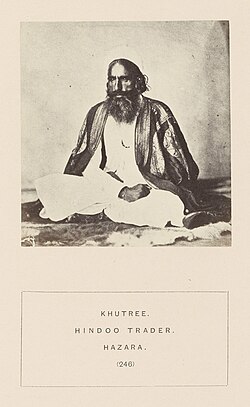
Historically, the highest concentrations of Khatris were recorded in the Potohar region of West Punjab, particularly the Jhelum and Rawalpindi districts, and in the Peshawar and Hazara areas of what was then the North-West Frontier Province. Following Partition, the community's centre of gravity shifted decisively into independent India. Today Khatris form a notable share of the population in Delhi and Haryana, and are also found in significant numbers in Punjab, Jammu and Kashmir, Himachal Pradesh (especially around Mandi, Kangra and Chamba), Rajasthan, Uttar Pradesh, Gujarat, and Maharashtra. Smaller communities, some tracing their descent to Peshawar or the Potohar region, are recorded historically in Kashmir, where local Khatris were sometimes referred to as “Bohras”, and in Afghanistan, where nineteenth-century colonial sources describe a large trading population of Khatri Hindus present across the country's towns and cities.
10. Religion and Belief
The great majority of Khatris today are Hindu, with a substantial Sikh minority and a small Muslim minority, chiefly in Punjab, where Muslim Khatris are traditionally known in some records as Khojas. Historically, Khatri religious life drew on the wider North Indian Hindu tradition, with worship recorded of Hinglaj Mata, Chandi Mata, Shiva, Hanuman, and the avatars of Vishnu; older ethnographic accounts also note forms of ancestor veneration and, in earlier periods, reverence for totemic symbols such as snakes and trees. Both vegetarian and non-vegetarian practice is found within the community, generally reflecting individual households' association with Vaishnavite or Shakta traditions. In the nineteenth and twentieth centuries, some Khatri families were also drawn to reform movements such as the Arya Samaj, and to the Nirankari and Radhasoami traditions.
Because of the community's close historical ties to Sikhism, it was for a long period not uncommon for Hindu Khatri families to raise a first son as a Sikh, with marriage alliances continuing to be made across both Hindu and Sikh Khatri households according to the community's internal clan hierarchy. Intermarriage between Hindu and Sikh members of the Khatri and Arora communities was historically especially common in cities such as Peshawar and Rawalpindi.
11. Language
The community's ancestral language is Punjabi, historically in its western, Lahnda-influenced forms such as Potohari and Hindko, and, among Khatris of Multan and neighbouring areas, Multani or Saraiki. Following migration and dispersal across India, most Khatri families today are equally comfortable in Hindi, and, depending on region, in Gujarati, Dogri, Kangri, Sindhi, or Urdu. As noted above, the Gurmukhi script used to write Punjabi is traditionally connected to the Landa accounting script long used by Khatri traders, linking the community's commercial record-keeping directly to the historical development of the Punjabi writing system.
12. Culture and Customary Practices
A number of customary practices are recorded among Khatri and closely related Arora families, particularly in pre-Partition Punjab. Prakash Tandon, in his memoir of Punjabi Khatri life, describes a traditional test of strength once performed during Khatri weddings, in which the groom was expected to cut a thick branch of the jandi tree (Prosopis cineraria) with a single stroke of a sword. During pregnancy, families traditionally held a baby-shower style ceremony known as reetan or godh bharai, at which the expectant mother received gifts from relatives and friends, a custom shared with the Arora community and still observed by many families today in some form.
Because of their long involvement in scribal and clerical professions, education has traditionally been highly valued within Khatri households, and literacy rates within the community have historically been recorded as comparatively high. This emphasis on schooling, carried into the twentieth century, is widely credited by historians with the community's strong post-independence representation in medicine, engineering, law, teaching, and government service.
The community appears in classical Punjabi literature: Waris Shah's celebrated eighteenth-century romance Heer Ranjha includes a reference to Khatris among the merchants of the bazaar struck by the beauty of its heroine, Heer, an incidental but long-remembered mark of the community's association with trade and town life in the Punjabi popular imagination.
13. Notable Khatris
Sikh Gurus
- Guru Nanak (1469–1539) — founder of Sikhism, of the Bedi Khatri lineage.
- Guru Angad (1504–1552) — second Sikh Guru, of the Trehan Khatri lineage; the development of the Gurmukhi script is traditionally credited to him.
- Guru Amar Das (1479–1574) — third Sikh Guru, of the Bhalla Khatri lineage.
- The fourth through tenth Sikh Gurus, including Guru Gobind Singh, all belonged to the Sodhi Khatri lineage.
Military and Administrative Figures
- Hari Singh Nalwa (1791–1837) — Uppal Khatri, commander-in-chief of the Sikh Khalsa Army.
- Dewan Mokham Chand (1750–1814) — senior commander of the Khalsa Army.
- Diwan Sawan Mal Chopra and his son Diwan Mulraj Chopra — governors of Multan under Sikh rule.
- Maharaja Kishen Pershad, GCIE — of a Peshawari Khatri family that rose to prominence in Hyderabad State, and who twice served as Prime Minister of Hyderabad.
- Vikram Batra and Arun Khetarpal — recipients of India's highest wartime gallantry award, the Param Vir Chakra.
Business and Public Life
- Founders and leaders of major Indian business groups including Ranbaxy Laboratories, Hero MotoCorp, Mahindra & Mahindra, Ballarpur Industries, Apollo Tyres, and the Oberoi Group have come from the Khatri community, according to research by business historian Harish Damodaran.
- Members of the community have also co-founded or led enterprises such as Snapdeal, Yes Bank, India Today, and IndiGo Airlines.
This list reflects individuals and families discussed in published historical and business scholarship; it is illustrative rather than exhaustive, and many more Khatris have contributed to Indian public, professional, and cultural life.
14. Historical and Modern Diaspora
Long before the modern Indian diaspora took shape, Khatri traders had already established a presence well beyond South Asia. Scott C. Levi's research documents Khatri merchant networks operating across Central Asia, with communities recorded as far away as Astrakhan in southern Russia by the late seventeenth century; intermarriage with local Tatar women in Astrakhan gave rise to a mixed community remembered in some historical sources as Agrijan. Stephen Dale's work similarly places a large Khatri trading and money-lending population in Isfahan, Persia, in the second half of the seventeenth century, engaged chiefly in the cloth trade.
In the twentieth century, the community's geographic spread was reshaped first by the displacement of Partition and later by the broader patterns of professional and skilled emigration that carried many Indian families abroad. Khatri families are today found among Indian communities in the United Kingdom, North America, and the Gulf states, generally integrated within the wider Punjabi and North Indian diaspora rather than organised as a separate community body, and typically maintaining ties to their ancestral clan and regional identity alongside their broader Indian and, where relevant, Sikh or Hindu religious affiliation.
15. Conclusion
The Khatri story is, at its core, a history of literacy and commerce rewarded across several very different political orders — Hindu kingdoms, the Delhi Sultanate, the Mughal Empire, the Sikh Empire, and British colonial administration — in each of which the community's scribal and mercantile skills found steady demand. That continuity carried the Khatris from the accounting houses of Multan and the bazaars of Isfahan to the founding generation of Sikhism, the officer corps of the Khalsa Army, and, after the upheaval of Partition, into the professional and entrepreneurial middle class of independent India. Questions about the community's precise place in the traditional varna order remain, by the honest admission of the historians who have studied them, unresolved — a fitting reflection, perhaps, of a community whose identity was built less on ritual status than on the practical business of ledgers, letters, and trade routes stretching from Punjab to Central Asia and beyond.
References
- [1]1. Wikipedia contributors, “Khatri,” Wikipedia, The Free Encyclopedia, https://en.wikipedia.org/wiki/Khatri (accessed August 2026).
- [2]2. McLeod, W. H. The A to Z of Sikhism. Scarecrow Press, 2009.
- [3]3. Fenech, Louis E., and W. H. McLeod. Historical Dictionary of Sikhism. Rowman & Littlefield, 2014.
- [4]4. Dhavan, Purnima. When Sparrows Became Hawks: The Making of the Sikh Warrior Tradition, 1699–1799. Oxford University Press, 2011.
- [5]5. Alam, Muzaffar. “The Culture and Politics of Persian in Pre-Colonial Hindustan,” in Literary Cultures in History, ed. Sheldon Pollock. University of California Press, 2003.
- [6]6. O'Hanlon, Rosalind. “Scribal Migrations in Early Modern India,” in Routledge Handbook of the South Asian Diaspora, eds. Joya Chatterji and David Washbrook. Routledge, 2014.
- [7]7. Levi, Scott Cameron. The Indian Diaspora in Central Asia and Its Trade, 1550–1900. Brill, 2002.
- [8]8. Dale, Stephen Frederic. Indian Merchants and Eurasian Trade, 1600–1750. Cambridge University Press, 2002.
- [9]9. McLane, John R. Land and Local Kingship in Eighteenth-Century Bengal. Cambridge University Press, 2002.
- [10]10. Damodaran, Harish. India's New Capitalists: Caste, Business, and Industry in a Modern Nation. Hachette India, 2018.
- [11]11. Jones, Kenneth W. Arya Dharm: Hindu Consciousness in 19th-Century Punjab. University of California Press, 1976.
- [12]12. Oldenburg, Veena Talwar. Dowry Murder: The Imperial Origins of a Cultural Crime. Oxford University Press, 2002.
- [13]13. Singh, Kumar Suresh, ed. India's Communities (People of India series). Oxford University Press, 1998.
- [14]14. Roy, Tirthankar. Traditional Industry in the Economy of Colonial India. Cambridge University Press, 1999.
- [15]15. Syan, Hardip Singh. Sikh Militancy in the Seventeenth Century: Religious Violence in Mughal and Early Modern India. I. B. Tauris, 2013.
- [16]16. Tandon, Prakash. Punjabi Century, 1857–1947. University of California Press, 1968 (reprint).