

Knanaya Christian Community
Explore the Knanaya Christian community of Kerala, its history, ancestry, traditions, endogamy, culture, and global diaspora.
The Knanaya Community of Kerala
1. Introduction: Who Are the Knanaya?
The Knanaya, also known as the Southists or Tekkumbhagar, are an endogamous ethnic group found within the Saint Thomas Christian (Nasrani) community of Kerala, India. They are distinguished from the other, larger part of the Saint Thomas Christian community, known in this context as the Northists or Vadakkumbhagar. Worldwide, the Knanaya number approximately 300,000 people, concentrated principally in central Kerala especially around Kottayam, Kaduthuruthy, Chingavanam, and Thodupuzha with significant diaspora communities abroad.
2. Origins and Traditional History
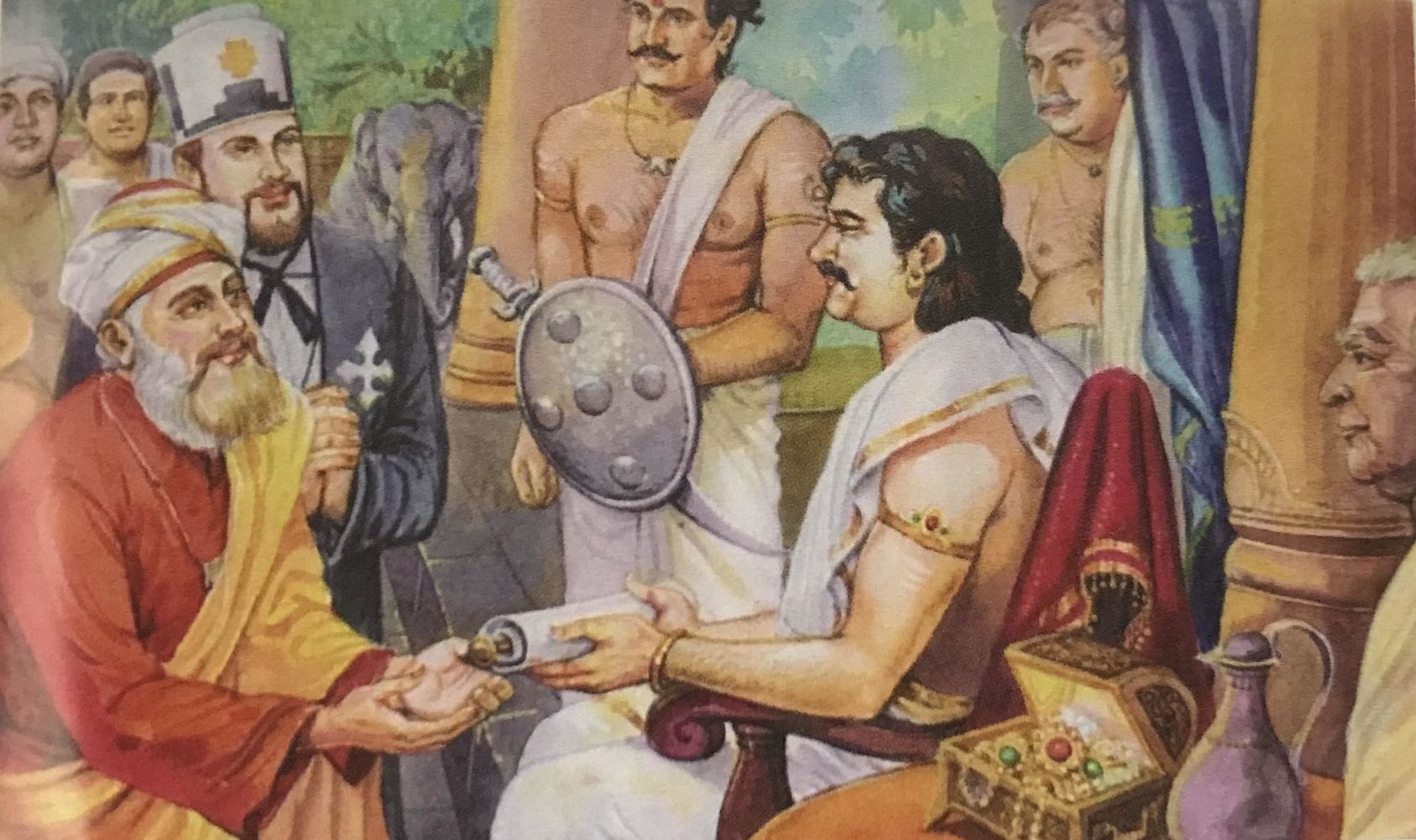
According to Saint Thomas Christian tradition, the origins of the Knanaya community are traced to the arrival of Thomas of Cana, a Syriac Christian merchant from Mesopotamia, who led a migration of Jewish-Christian families early Syriac Christians from the Sassanian Persian province of Mesopotamia to Kodungallur in 345 CE. He was accompanied by a bishop named Uraha Mar Yausef, along with clergymen, and a group traditionally recorded as seventy-two families.
In the traditional accounts, the migrants who arrived with Thomas of Cana were considered Jewish-Christians. Community scholars, including Dr. Jacob Kollaparambil, have noted that Jewish-Christian tribes formed a significant component of the early Church of the East in Mesopotamia and were known for maintaining an endogamous social structure even after their conversion to Syriac Christianity a practice the Knanaya are understood to have continued in Kerala. This tradition is further reflected in the community's folk songs, some of which refer to the migrants praying at the tomb of the Jewish prophet Ezra before their departure for India.
3. Etymology and Names of the Community
The precise linguistic origin of the epithet remains debated among scholars. Some connect it to the town of Cana or the wider region of Canaan, while others suggest it may derive from a Syriac term related to "merchant" (Knāyil in Malayalam). Scholar Dr. Jacob Kollaparambil has argued that the "Cana" rendering may be a later formalisation by eighteenth-century European scholars based on the Malayalam form Knāi, and has suggested a possible connection to the historical Christian community of Kynai in Bét Aramayé, Persia a noted centre of Syriac Christianity.
4. The Northist–Southist Division
The ethnic and social division between the Knanaya (Southists) and the wider Saint Thomas Christian community (Northists) is one of the most distinctive features of Knanaya identity. Saint Thomas Christian tradition holds that the native Christians, converted centuries earlier by the Apostle Thomas, originally resided on the northern side of Cranganore, while the migrant Knanaya, arriving with Thomas of Cana, settled on the southern side giving rise to the designations "Northist" and "Southist."
5. Historical Privileges and Titles
The Knanaya were also historically known as Ancharapallikar, or "Owners of Five and a Half Churches," a title referring to the five churches solely owned by the community prior to the Synod of Diamper in 1599 located at Udayamperoor, Kaduthuruthy, Kottayam, Chunkom (Thodupuzha), and Kallissery along with a partial share held in other churches co-owned with Northist Saint Thomas Christians in areas where the Knanaya population was smaller. Writing in 1658, the missionary Fr. Hyacinth Magistris recorded that by his time the Knanaya had also built a sixth church, at Uzhavoor.
6. The Persian Crosses and Early Written Records
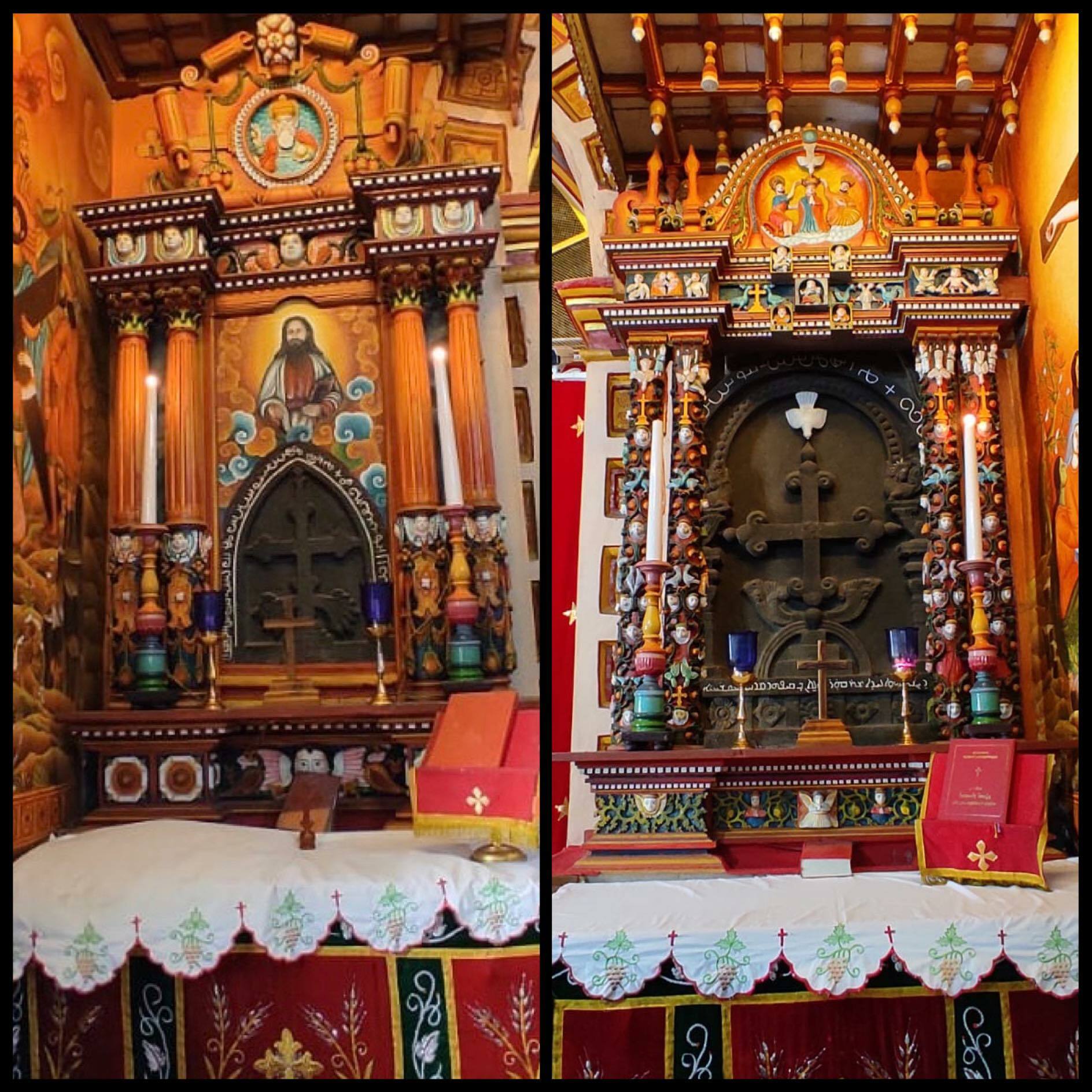
According to sixteenth- and seventeenth-century Portuguese missionary records, the Knanaya historically maintained a township with three churches dedicated to St. Thomas the Apostle, St. Kuriakose, and St. Mary on the southern portion of Cranganore, said to have been built by Thomas of Cana at the time of the community's arrival. Fr. Francisco Dionisio recorded in 1578 that the St. Thomas church built by Thomas of Cana was still standing and by then in Portuguese possession, while Archbishop Francisco Ros noted in 1604 that he had read of these three churches in an old Syriac text preserved at Cranganore.
7. The Portuguese Era, the Coonan Cross Oath, and Church Divisions
The community's internal divisions were resolved differently over the following decade. In 1663, the Knanaya tax official Pachikara Punnoose Tharakan pledged the community's support to Parambil Chandy a Northist Saint Thomas Christian who was consecrated as the new Catholic bishop of the community that same year at Kaduthuruthy Knanaya Church. This consecration marked the point from which the Saint Thomas Christian community became internally divided between a Catholic faction, which formed the basis of today's Syro-Malabar Catholic Church, and an Orthodox faction that remained aligned with Archdeacon Thomas and later developed into the Malankara Church.
8. Denominational Landscape Today
9. Cultural Ties with the Cochin Jews
Dr. Jussay observed that despite being two small and distinct communities, the Cochin Jews and the Knanaya display similarities that become especially significant given the Knanaya's own claims of Jewish origin. Following the destruction of Cranganore in 1524, both communities are recorded as having commemorated the loss of their ancestral settlement by preserving a keepsake of earth from the site among the Knanaya, this practice is remembered in the custom of including a pinch of ash within a knot in the bride's dress, from which the community sometimes received the affectionate nickname "Charam kettikal," or "knot-makers of ash."
10. Folklore, Folk Songs, and Oral Tradition
Historically, a class of travelling bards known as Panans would visit Knanaya households to sing of the community's heritage, including the story of Thomas of Cana's mission to Sri Lanka to recall four skilled artisan castes carpenters, blacksmiths, goldsmiths, and molders back to Cranganore, and of the seventy-two privileges subsequently granted to him by Cheraman Perumal.
11. Marriage and Wedding Traditions
Betrothal (Othukalyanam)
Groom's and Bride's Ceremonies
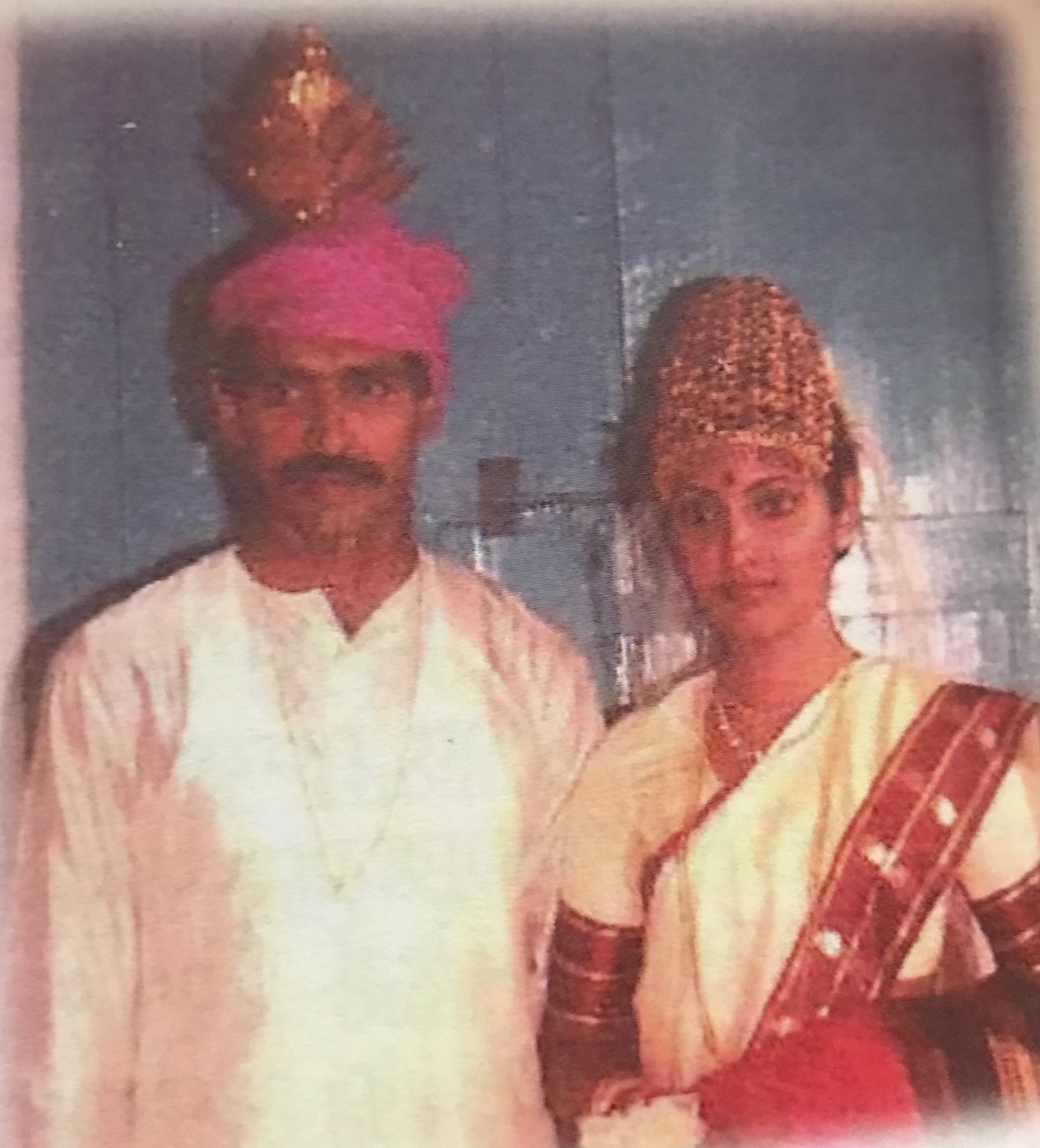
On the eve of the wedding, the groom undergoes Chandam Charthal (also called Antham Charthal), in which the village barber ceremonially requests permission three times before shaving and beautifying the groom, accompanied by traditional songs. The bride undergoes Mylanchi Ideel, a henna ceremony in which her palms, feet, and nails are adorned with green henna by her paternal aunts a practice the Knanaya interpret with reference to the biblical account of Eve, symbolically cleansing the bride of original sin. Both ceremonies are followed by Ichappad, in which the couple is fed sweet rice pudding by relatives.
The Church Ceremony
The Reception
12. The Pesaha (Passover) Tradition
In the ritual observance, the eldest male of the household the father or grandfather blesses the bread and milk, often reading a passage from the Bible, before distributing portions to family members, traditionally beginning with the males of the household. Any waste materials used in the ceremony are traditionally disposed of according to the purity principles found in the Book of Leviticus, and the utensils used are either new or ceremonially cleaned beforehand. If a household is in mourning, Pesaha bread is not prepared there but is instead brought by Christian neighbours as a gesture of community support. Pesaha is also observed among the wider Saint Thomas Christian community, with variations in practice by region and denomination.
13. The Margamkali Dance
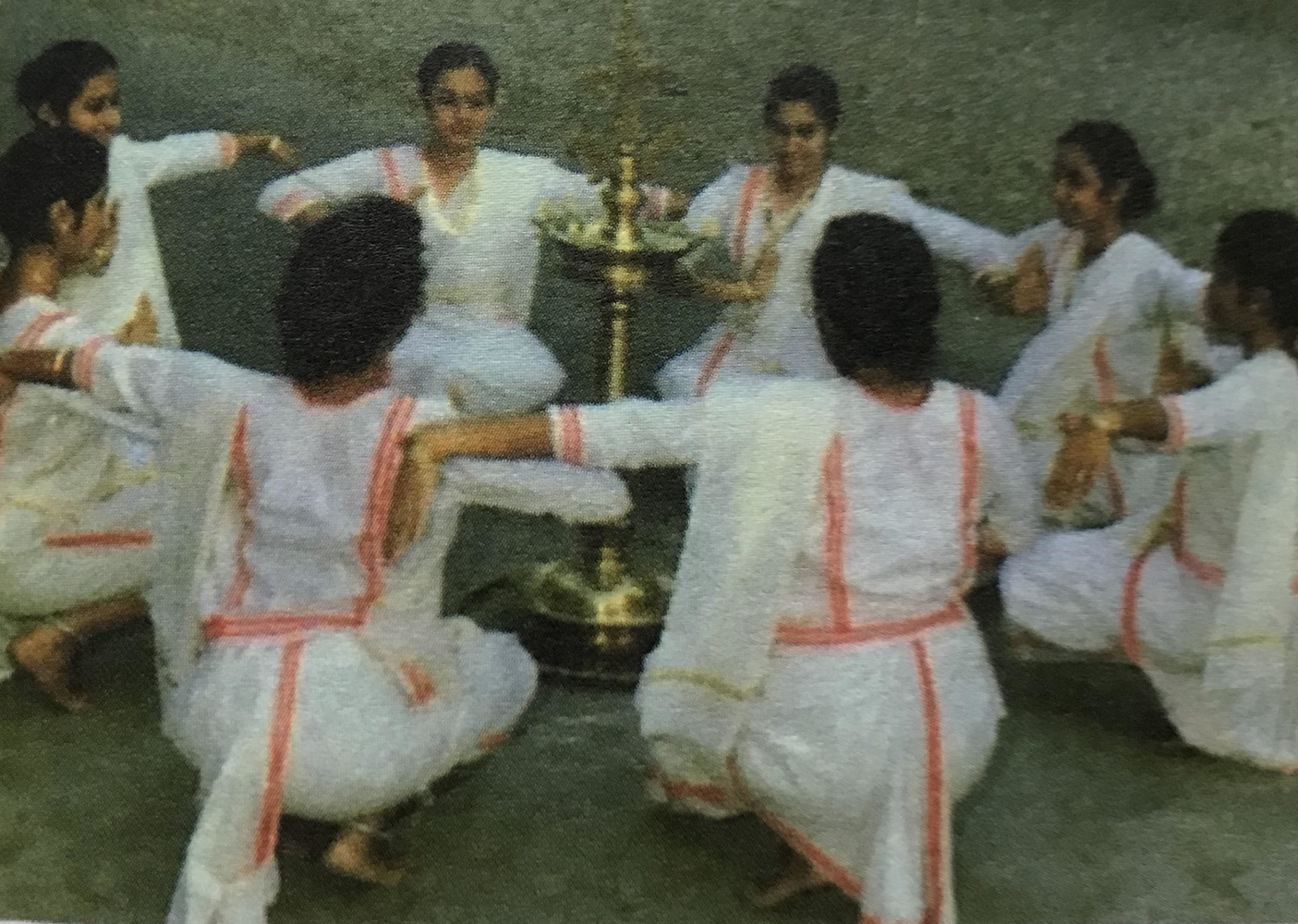
The Margamkali ("the Way," referring to the path of Thomas the Apostle) is a traditional circular dance especially associated with the Knanaya community today. Traditionally performed by twelve male dancers representing the Twelve Apostles moving in a circle around a lighted brass lamp symbolising Christ, the dance is accompanied by ancient songs totalling 450 lines across fourteen sections recounting the mission of Thomas the Apostle to India, drawing on the apocryphal third-century Acts of Thomas.
14. Traditional Dress and Ornaments
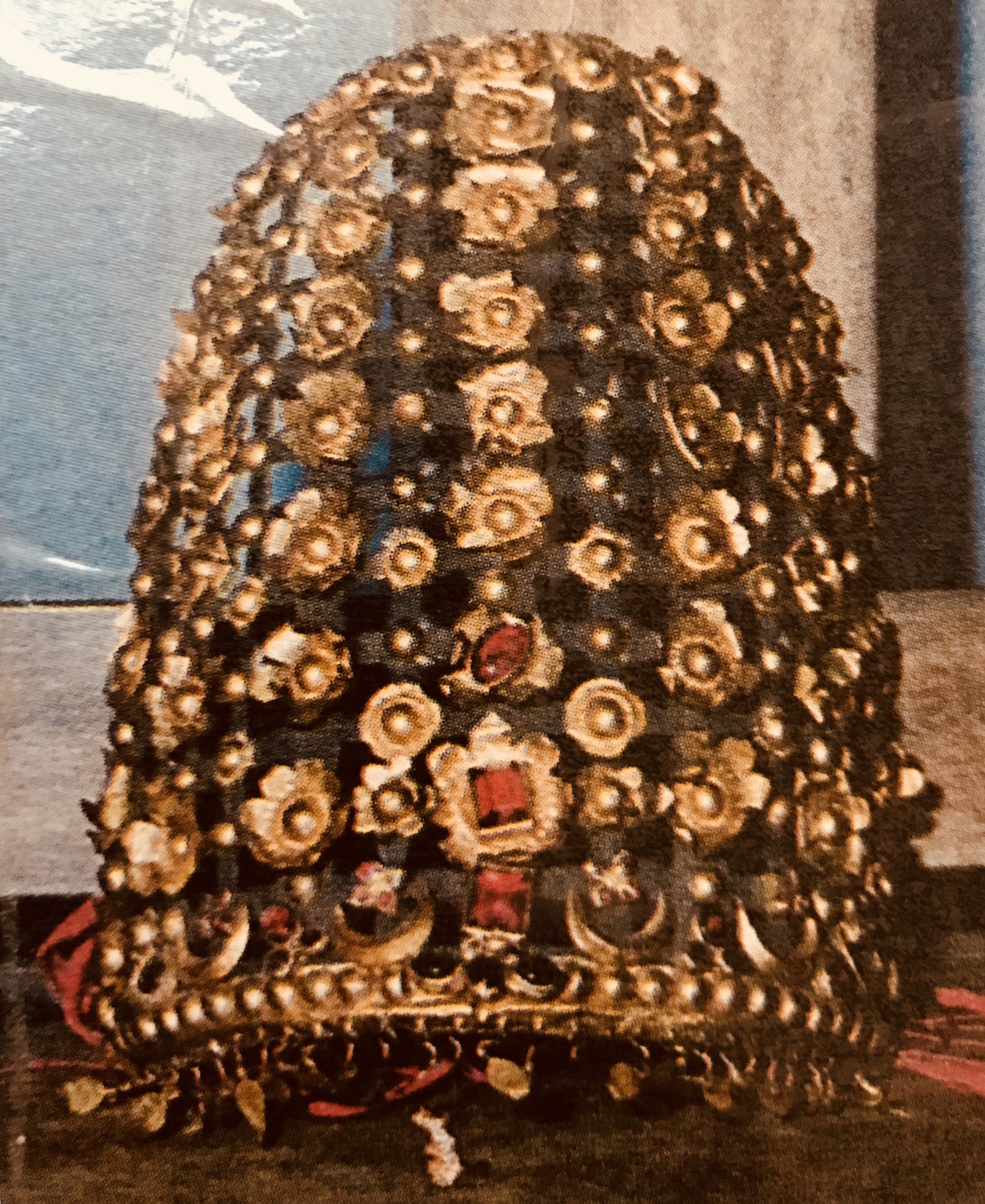
Knanaya women historically wore a distinct type of gold earring known as Mekkamothiram or Kunukku, featuring small raised balls approximately one inch in diameter an ornament also shared with Northist Saint Thomas Christian women. Both communities traditionally wear the Chatta Mundu, comprising the chatta, an embroidered white blouse, and the mundu, a long white lower garment arranged in fifteen to twenty-one pleats at the back, fashioned to resemble a palm leaf.
15. Cuisine
16. Funeral Traditions
17. Institutions: Education and Healthcare
- 4 colleges and 1 college of pharmacy
- 10 higher secondary schools, 20 high schools, 18 upper primary schools, 55 lower primary schools, and 80 nursery schools
- 2 schools of nursing and 1 multi-health workers' school
- Technical, industrial, and polytechnic training institutions
- 6 hospitals, 6 homes for the aged, 7 homes for persons with intellectual disabilities, 4 homes for persons with disabilities
- 18 hostels, 6 orphanages, and 2 publishing houses
18. Diaspora
19. Conclusion
The Knanaya represent one of the most distinctive endogamous communities within India's ancient Saint Thomas Christian tradition. From the traditional account of Thomas of Cana's fourth-century migration and the historic Persian Crosses of Kottayam, to the community's dedicated dioceses within both the Syro-Malabar Catholic and Malankara Jacobite Syrian Orthodox churches, and its rich living traditions of folk song, wedding ceremony, and dance, the Knanaya story reflects nearly two thousand years of continuous cultural and religious identity within Kerala. Their carefully preserved customs many of which show notable parallels with the traditions of Kerala's Cochin Jewish community continue to be actively studied by historians and folklorists, and remain a vibrant part of community life both within Kerala and among its diaspora abroad.
References
- [1]This article draws primarily on the Wikipedia article "Knanaya" (en.wikipedia.org/wiki/Knanaya), which is itself based on the academic and historical sources listed below.
- [2]1. Fahlbusch, Ernst (2008). The Encyclopedia of Christianity: Volume 5. Eerdmans.
- [3]2. Frykenberg, Robert E. (2008). Christianity in India: From Beginnings to the Present. Oxford University Press.
- [4]3. Swiderski, Richard Michael (1988). "Northists and Southists: A Folklore of Kerala Christians." Asian Folklore Studies, 47(1), Nanzan University.
- [5]4. Swiderski, Richard Michael (1988). Blood Weddings: The Knanaya Christians of Kerala. Madras: New Era.
- [6]5. Weil, Shalva (1982). "Symmetry between Christians and Jews in India: The Cananite Christians and Cochin Jews in Kerala." Contributions to Indian Sociology, 16(2), 175–196.
- [7]6. Jussay, P. M. (2005). The Jews of Kerala. Calicut: Publication Division, University of Calicut.
- [8]7. Gamliel, Ophira (2009). Jewish Malayalam Women's Songs (PhD dissertation). Hebrew University.
- [9]8. Kollaparambil, Jacob (1992). The Babylonian Origin of the Southists among the St. Thomas Christians. Pontifical Oriental Institute.
- [10]9. Kollaparambil, Jacob (2015). Sources of the Syro-Malabar Law. Oriental Institute of Religious Studies India.
- [11]10. King, Daniel (2018). The Syriac World. Routledge Press.
- [12]11. Narayanan, M. G. S. (2018). Perumals of Kerala. Cosmo Books.
- [13]12. Neill, Stephen (2004). A History of Christianity in India: The Beginnings to AD 1707. Cambridge University Press.
- [14]13. Karukaparambil, George (2005). Marganitha Kynanaitha: Knanaya Pearl. Deepika Book House.
- [15]14. Vellian, Jacob (1986). Symposium on Knanites. Syrian Church Series, Vol. 12. Jyothi Book House.
- [16]15. Vellian, Jacob (1990). Crown, Veil, Cross: Marriage Rites. Syrian Church Series, Vol. 15. Anita Printers.
- [17]16. Vellian, Jacob (2001). Knanite Community: History and Culture, Vol. 17. Jyothi Book House.
- [18]17. Podipara, Placid (1971). The Varthamanappusthakam. Pontifical Oriental Institute.
- [19]18. Kochadampallil, Mathew (2019). Southist Vicariate of Kottayam. Media House Delhi.
- [20]19. Alumkalnal, Sunish (2013). "Pesaha Celebration of Nasranis: A Sociocultural Analysis." Journal of Indo-Judaic Studies, Vol. 13.
- [21]20. Thodathil, James (2001). Antiquity and Identity of the Knanaya Community. Knanaya Clergy Association.
- [22]21. Winkworth, C. P. T. (1929). "A New Interpretation of the Pahlavi Cross Inscriptions of Southern India." The Journal of Theological Studies, 30(119), Oxford University Press.
- [23]22. Wikipedia contributors. "Knanaya." Wikipedia, The Free Encyclopedia. https://en.wikipedia.org/wiki/Knanaya