

Kunbi Community
Explore the rich history & diverse culture of India's Kunbi community. A prominent agrarian group, understand their origins, regional identities across India.
THE KUNBI COMMUNITY OF INDIA
History, Culture, and Regional Identity of India's Foremost Agrarian Community
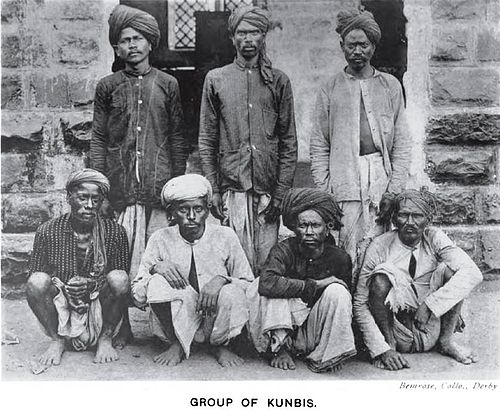
1. Introduction: Who Are the Kunbi?
Kunbi (also spelled Kanbi, and locally Kunabi or Kurumbi) is a broad, generic name applied across Western India to a large number of related communities whose traditional occupation was farming. Rather than one uniform community, “Kunbi” functions more like an umbrella label historically taken up by cultivating groups across Maharashtra, Gujarat, Goa, Karnataka, Madhya Pradesh, and pockets of Kerala. The word itself is closely tied to the idea of the tiller of the soil, and for many centuries it described the ordinary agricultural householder of the Deccan and the Konkan coast.
Numbering in the millions, Kunbi communities today form one of the largest agrarian population groups in India. Their story is really several regional stories woven together: in Maharashtra, the Kunbi are closely linked to the rise of the Maratha polity; in Gujarat, one branch prospered into the influential Patidar community; and in Goa, the Kunbi (together with the Gawda and Velip) are recognised as among the state's oldest indigenous inhabitants, with a living tribal culture of dance, weaving, and oral song that survives to this day. This profile brings together these regional threads into a single, balanced picture of Kunbi history, social organisation, and living culture.
2. Etymology
The origin of the word “Kunbi” has been discussed by several scholars, and more than one plausible explanation exists side by side rather than a single settled answer.
- According to the Anthropological Survey of India, the term is a compound of kun and bi, meaning “people” and “seeds” respectively — together suggesting “those who grow many seeds from one,” a fitting description of a cultivating community.
- A widely cited alternative derives Kunbi from the Marathi kunbawa or the Sanskrit root kur, both connected to the idea of tilling or agricultural labour.
- A third view connects the word to kutumba, the Sanskrit term for “family” or “household,” implying a settled householder-cultivator.
- Some scholars, including the sociologist G. S. Ghurye, have suggested that the word may also carry an older tribal or regional origin rather than being purely occupational in meaning.
In Goa, local historians and folklorists have additionally proposed that “Kunbi” is a corrupted form of Kulmi, referring to the earliest agricultural settlers of the hilly Western Ghats interior of the region. Because cultivation was, for most of Indian history, the most common rural occupation, the term came to be applied broadly: essentially, anyone who took up settled farming as a livelihood could, over time, be described as Kunbi in the local dialect of their region.
3. Origins and Early History
3.1 An Agrarian Backbone of the Deccan
Very little was formally recorded about the Kunbi before the nineteenth century, when British colonial administrators began compiling community gazetteers and census reports. What is clear from these records and from later historical scholarship is that Kunbi cultivators formed the backbone of settled agriculture across the Deccan plateau and the Konkan coastal strip for many centuries, growing millets, rice, pulses, and cash crops depending on region and rainfall.
Historians such as Richard Eaton and Stewart Gordon have traced how, from roughly the fourteenth century onward, the Marathi-speaking agricultural population of the Deccan came to be described by two related but gradually diverging labels. Those who took up military service — first under regional Deccan sultanates and later under the Maratha Empire founded by Shivaji in the seventeenth century — increasingly identified as Maratha, while those who continued in settled cultivation retained the Kunbi name. Most of the Mavala soldiers who formed the backbone of Shivaji's early army, recruited from the hill country of the Sahyadri ranges, are traditionally understood to have come from Kunbi cultivating families of that region.
3.2 The Maratha-Kunbi Relationship
Over the following centuries, the boundary between Maratha and Kunbi identity became increasingly fluid, a process anthropologists describe using the term Sanskritisation — the gradual adoption, by an upwardly mobile group, of higher-status customs, genealogical claims, and social practices. Prosperous or militarily successful Kunbi families frequently came to identify as Maratha, while the broader Marathi-speaking cultivating population that did not make this transition retained the Kunbi name. By the early twentieth century, colonial census records increasingly grouped the two together under the combined heading “Maratha-Kunbi,” reflecting how closely intertwined the two identities had become in everyday social life. Two of the most prominent Maratha ruling houses of the eighteenth and nineteenth centuries, the Scindia (Shinde) and Gaekwad dynasties, are traditionally recorded as having risen from Kunbi cultivator backgrounds before their military and political success elevated them to princely status.
Because of this shared history, Maharashtra's Kunbi community is also considered closely related to the Kurmi agricultural communities of North and Eastern India, with both groups traditionally rooted in settled cultivation.
4. Regional Branches and Subgroups
Because “Kunbi” is a broad occupational and regional label rather than a single tightly bounded community, its meaning and social position vary considerably from state to state.
4.1 Maharashtra
In Maharashtra, the Kunbi are organised into several regional and endogamous subgroups, including the Dhonoje, Ghatole, Khedule, Tirole, Lewa (Leva), Hindre, Jadav, and Jhare Kunbi, among others, many of them historically concentrated in the Vidarbha region of eastern Maharashtra. Each subgroup traditionally married within itself, and scholars such as Irawati Karve have noted that these regional divisions, along with the closely related Maratha community, together form a very substantial share of the population of rural Maharashtra.
4.2 Gujarat: From Kunbi to Patidar
In Gujarat, Kunbi cultivating communities are historically found in the Dangs, Surat, and Valsad districts. By the eighteenth century, a division had emerged within the Gujarati Kunbi community between those who remained agriculturists and those who moved into revenue collection and land management. The latter group came to be known as Patidar, a name derived from pati, referring to a share or parcel of land. Favourable colonial-era land tenure policies allowed many Gujarati Kunbi-Patidar families to prosper considerably by the early twentieth century, and the community — today generally known simply as Patidar or Patel — has since become one of the most economically influential agricultural communities in Gujarat and among its overseas diaspora.
4.3 The Kunbi-Gawda Communities of Goa
Goa is home to one of the most culturally distinct and best-documented Kunbi populations in India. Here, the Kunbi (locally also called Kurumbi) are regarded, alongside the Gawda and Velip communities, as among the earliest known inhabitants of the region, with roots that predate the arrival of the Portuguese in the sixteenth century. Goa's Kunbi community, together with the Gawda and Velip, has long been recognised for its indigenous roots and distinct cultural identity. Traditionally an agrarian, forest-dwelling population practising settled and shifting cultivation in the hilly interior taluks such as Salcete, Goa's Kunbi community retains a living tradition of folk dance, weaving, and oral song described in detail later in this profile.
4.4 Karnataka and Kerala
Kunbi (locally Kunabi) communities are also found in the Uttara Kannada district of coastal Karnataka and in parts of Kerala, generally linked historically to Konkani-speaking migration along the western coast. In Karnataka, community organisations such as the Kunabi Samaj Seva Sangh have estimated the local Kunabi population in the tens of thousands.
5. Customs and Social Practices
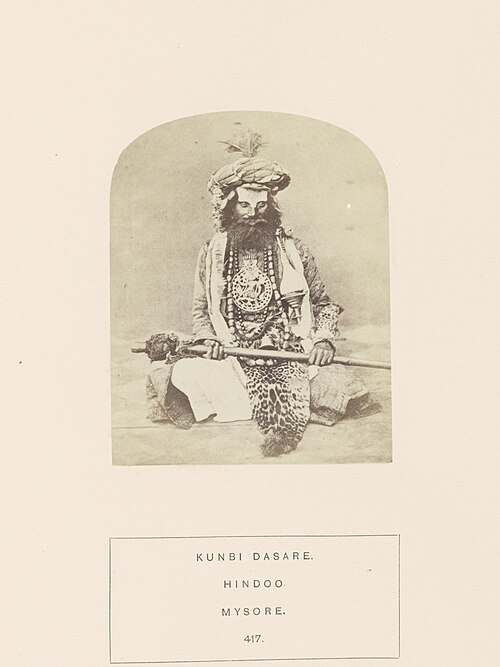
Kunbi social life across regions centres on the agricultural calendar, extended family ties, and, in Maharashtra and the Konkan, close association with popular Hindu devotional traditions.
- Devotion to Vitthal of Pandharpur, and participation in the annual Wari pilgrimage tradition, is widespread among Kunbi and Maratha-Kunbi families of Maharashtra, reflecting the broader Varkari devotional movement of the region.
- Cross-cousin marriage — particularly the marriage of a man to his maternal uncle's daughter — has historically been an accepted practice among Maharashtrian Kunbi families, a custom shared with several other Maharashtrian farming communities.
- In Goa, the Kunbi community traditionally practised a mix of animist nature worship and Hindu devotional practice, with reverence for local gramadevata (village deities) and sacred groves; following Portuguese colonial rule, a section of the Goan Kunbi and Gawda population converted to Roman Catholicism, though many pre-Christian folk customs, including the Kunbi dance described below, have been preserved within both religious communities.
- Community and clan gatherings, harvest celebrations, and local village fairs (jatra) remain important occasions for reaffirming kinship and neighbourhood ties across most Kunbi regions.
6. Marriage Traditions
Kunbi marriage customs largely follow the wider patterns of rural Maharashtrian, Konkani, and Goan Hindu society, typically arranged within the community and often within the same regional subgroup. Ceremonies traditionally involve a formal engagement, an auspicious wedding date fixed with reference to the lunar calendar, and a Hindu wedding ceremony (vivaha) involving the tying of the mangalsutra by the groom, exchange of garlands, and a communal wedding feast. Among several Kunbi subgroups, including the Lewa community, dowry has historically not been a customary practice, in contrast to some neighbouring agricultural communities. Post-marital residence is traditionally patrilocal, with the bride joining her husband's extended household.
7. Festivals and Folk Traditions
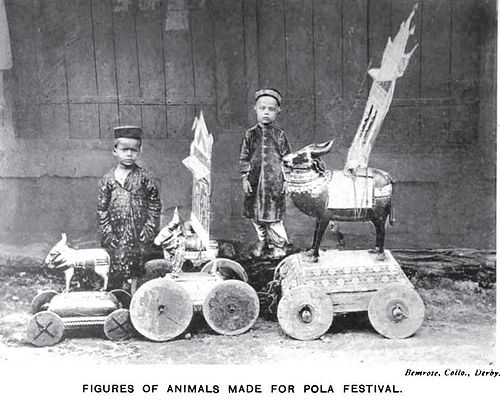
The most widely documented and celebrated element of Kunbi folk culture is the Kunbi dance (also called the Kanbi dance) of Goa, a graceful group dance performed exclusively by women, accompanied by men playing percussion instruments in the background. The dance is not religious in character; its songs, dating from the pre-Portuguese era, describe everyday social and romantic themes rather than devotional subjects. It is traditionally performed during the Shigmo festival, Goa's version of the spring Holi celebrations, held in the Hindu month of Phalgun (typically February–March), and also features in the Carnival-season Intruz festivities of the Christian Kunbi and Gawda population.
A closely related dance form, Fugdi, is performed by Kunbi and Gawda women across Goa in a circular formation with energetic, rhythmic clapping, and is a central feature of festival and community celebrations throughout the region. Dancers traditionally wear the distinctive checked Kunbi sari described in Section 9, with hair tied in a simple bun decorated with fresh flowers.
8. Cuisine
Kunbi cuisine broadly follows the culinary traditions of the region a given community inhabits, since food, like language, tends to follow geography rather than community alone. Maharashtrian Kunbi households, particularly in the Konkan and Vidarbha regions, favour rice, bhakri (millet or rice flatbread), pulses, and locally grown vegetables, seasoned with the goda masala spice blend distinctive to Maharashtrian cooking, along with kokum and tamarind for souring.
Goa's Kunbi and Gawda communities, being coastal and riverine cultivators, traditionally rely on rice as the staple grain, paired with fish, seasonal vegetables, and coconut-based preparations typical of Konkani and Goan cooking, along with foraged forest produce such as wild greens, mushrooms, and bamboo shoots gathered from the Western Ghats interior where many Kunbi villages are situated. As with most agrarian communities, festival and harvest-time meals are traditionally more elaborate than everyday fare, featuring rice-based sweets and preparations tied to the agricultural calendar.
9. Traditional Dress: The Kunbi Sari
The most visually distinctive marker of Kunbi identity, particularly in Goa, is the Kunbi sari (also spelled Kunbi saree), a thickly woven cotton sari in a checked pattern, traditionally red and white or red and black, coloured using natural dyes made from rice starch, vinegar, and iron ore. Practical for agricultural labour, the sari was traditionally worn short — falling just below the knee — and draped simply, pleated at the waist with the loose end drawn across the chest and knotted over the right shoulder in a style locally called dethali; historically it was worn without a blouse, reflecting the garment's origins as practical field-work attire rather than formal dress.
The Kunbi sari fell out of everyday use through the twentieth century but has since become an important symbol of Goan indigenous heritage, with weavers, designers, and heritage organisations working to revive the craft and have it recognised as a protected regional textile. Today it is most visibly worn by performers of the Kunbi and Fugdi dances at festivals and cultural events, with hair typically worn in a simple bun adorned with fresh flowers and jewellery kept deliberately plain, in keeping with the community's traditional emphasis on simplicity.
10. Traditional Occupation and Livelihoods
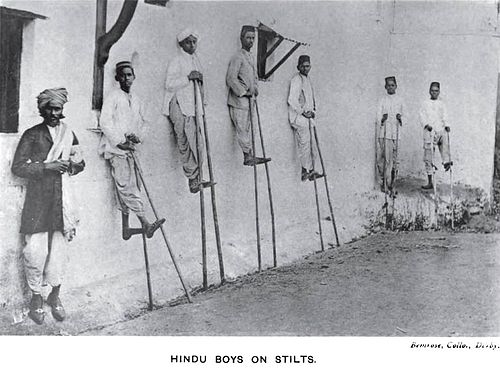
Agriculture remains the historical and, for many rural Kunbi families, the continuing occupational identity of the community. In Maharashtra and the Vidarbha region in particular, Kunbi families have traditionally been landholding cultivators of cotton, rice, millets, and pulses, and remain an important part of the region's rural agrarian economy today. In Goa, traditional Kunbi livelihoods combined settled paddy cultivation in the coastal lowlands with shifting (kumeri) cultivation and forest-based livelihoods in the hilly interior, alongside toddy-tapping and traditional weaving. In present-day India, as with most agrarian communities, younger generations of Kunbi families increasingly pursue education and employment outside traditional farming, in fields ranging from government service to skilled trades and, in Goa particularly, tourism and hospitality.
11. Language
Language use among Kunbi communities follows regional geography rather than a single community-wide tongue. Kunbi families in Maharashtra and Vidarbha speak Marathi and its regional dialects; those in Goa and coastal Karnataka predominantly speak Konkani, along with regional dialects sometimes referred to locally as Kunbi Konkani; and Gujarati Kunbi-Patidar communities speak Gujarati. This linguistic diversity mirrors the community's identity as a broad, regionally rooted agrarian label rather than a single linguistically unified ethnic group.
12. Contemporary Profile
Today, Kunbi communities number in the millions across Western India and remain most strongly associated with rural agrarian life, though urban migration and education have diversified livelihoods considerably over the past two generations. In Goa specifically, the Kunbi community, together with the Gawda and Velip, has in recent decades seen a notable cultural revival, with growing institutional and academic interest in preserving the Kunbi sari, the Kunbi and Fugdi dance traditions, and the community's Konkani oral heritage as part of Goa's broader regional identity. In Maharashtra, the historically close relationship between the Kunbi and Maratha communities continues to shape rural social life, agricultural traditions, and regional cultural identity across the Deccan.
13. Conclusion
The Kunbi are best understood not as a single, uniform group but as a wide agrarian family of communities united by a shared historical role as the cultivators of Western India's fields, from the Deccan plateau to the Konkan coast and the hills of Goa. From the Mavala soldiers who helped found the Maratha Empire, to the Patidar families of Gujarat, to the Kunbi and Gawda communities of Goa who still perform the Kunbi and Fugdi dances in their distinctive checked saris, the Kunbi story is ultimately a story about the enduring centrality of the farmer in Indian rural life — a community whose regional branches, though shaped by different histories, geographies, and faiths, remain united by a common name rooted in the soil itself.
References
- [1]1. Wikipedia. "Kunbi." https://en.wikipedia.org/wiki/Kunbi
- [2]2. Grokipedia. "Kunbi." https://grokipedia.com/page/Kunbi
- [3]3. Grokipedia. "Gauda and Kunbi." https://grokipedia.com/page/Gauda_and_Kunbi
- [4]4. Vajiram & Ravi. "Tribes of Goa: Name List, History, Culture, Festivals." https://vajiramandravi.com/current-affairs/tribes-of-goa/
- [5]5. Incredible Goa. "Everything You Need to Know About Kunbi Sarees." https://www.incrediblegoa.org/lifestyle/everything-you-need-to-know-about-kunbi-sarees/
- [6]6. Historified. "Kunbi: Unearthing the Clothing of Goan, Kunbi & Gowda Tribes." https://historified.in/2023/01/27/kunbi-unearthing-the-clothing-of-goan-kunbi-gowda-tribes/
- [7]7. Pernia's Pop-Up Shop Encyclopedia. "The Rich Heritage of the Goan Kunbi Saree." https://www.perniaspopupshop.com/encyclopedia/goa/kunbi
- [8]8. Aadivasi.org. "Goa — The Timeless Traditions of the Kunbi Tribe." https://www.aadivasi.org/blogs/goa-the-timeless-traditions-of-the-kunbi-tribe
- [9]9. IndiaNetzone. "Kunbi Dance." https://www.indianetzone.com/kunbi_dance
- [10]10. Auchitya.com. "Kunbi Dance of Goa." https://www.auchitya.com/kunbi-dance-of-goa/
- [11]11. Research Gate. "Tribal Imprint on Goa's Cultural Identity: Kunbi-Gawdaization of Goa." https://www.researchgate.net/publication/362833929
- [12]12. Maharashtrian and Konkani regional cuisine overviews, Wikipedia "Malvani cuisine" and "Goan cuisine." https://en.wikipedia.org/wiki/Malvani_cuisine ; https://en.wikipedia.org/wiki/Goan_cuisine