

Mali Community
Discover the Mali community of India: a Hindu gardener-cultivator group with rich history. Explore Phul Mali identity, ties to Saini, Kushwaha, and Sant Savata..
The Mali Community of India
History, Culture, and Community Profile of a Gardener-Cultivator Community
1. Introduction: Who Are the Mali?
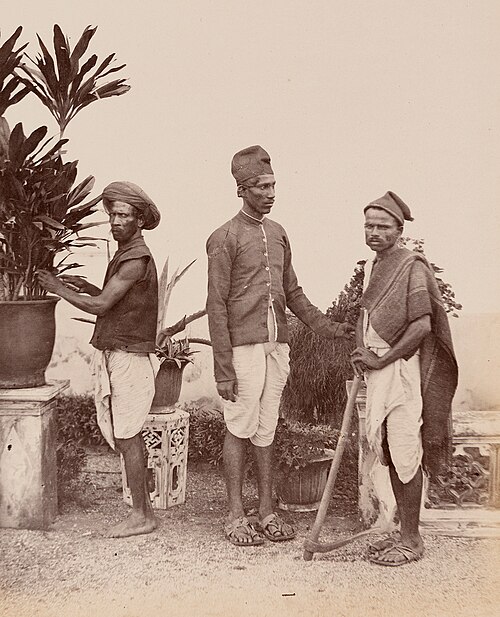
The Mali are a Hindu community of India traditionally associated with gardening, floriculture, and the cultivation of fruits, vegetables, and flowers. Members of the community often refer to themselves as Phul Mali, a name derived from their historic occupation of growing flowers for religious and ornamental use. The Mali are found across a wide geographic area of the Indian subcontinent, including North India, East India, Maharashtra, and the Terai region of neighbouring Nepal, and today form one of the larger cultivator communities in western and northern India.
The name “Mali” is used regionally in different forms and is closely linked, especially in North India, to communities that today identify as Saini, Kushwaha, Shakya, and Maurya — names that in various regions are understood to describe closely related or overlapping cultivator groups. This profile brings together the documented history, culture, religious life, customs, and notable contributions of the Mali community as recorded in scholarly and reference sources.
2. Etymology and Meaning of the Name
The word “Mali” is generally derived from the Sanskrit term mala, meaning “garland,” reflecting the community's traditional association with growing flowers and making garlands for temple worship and religious festivals. Within the broader Mali community, occupational sub-names arose from the specific crop or task a family group specialised in — for instance, Phul Mali (flower growers), Jire Mali (cumin growers), Halde Mali (turmeric growers), and Baghban (gardeners) — illustrating how the community name diversified regionally according to local horticultural specialisation.
3. Origins and Historical Background
The Mali emerged historically as a cultivating community specialising in irrigated horticulture — growing fruit, vegetables, and flowers on land watered by wells or canals — as distinct from purely rain-fed (“dry”) grain farming. The anthropologist Iravati Karve identified the Maratha, Kunbi, and Mali as the three principal farming communities of Maharashtra, noting that while the Marathas and Kunbis were traditionally dry-land farmers dependent on the monsoon, the Mali cultivated their fields year-round using well or canal irrigation, growing fruit, vegetables, sugarcane, and select cereals.
In parts of North India, and particularly in Rajasthan and Punjab, sections of the Mali community are historically linked to the Saini community, with some families adopting the Saini name during the 20th century. Community organisations in Rajasthan today describe the Mali, Saini, Kushwaha, Shakya, and Maurya as closely related communities under a shared social and cultural umbrella, though the precise historical relationship between these groups is understood differently in different regions.
4. Geographic Distribution
The Mali community is dispersed across a broad swathe of India and into the Terai plains of Nepal. The table below summarises the community's principal areas of settlement.
| Region | Presence / Notes |
|---|---|
| Maharashtra | Concentrated in five districts of Western Maharashtra and one district of the Vidarbha region; historically specialised in horticulture, sugarcane, and irrigated cash crops. |
| Rajasthan | Significant population; associated with the Saini, Kushwaha, Shakya, and Maurya communities in contemporary social organising. |
| Punjab | Malis in the northern plains of Punjab are largely linked to Saini-origin communities engaged in market gardening. |
| Gujarat, Madhya Pradesh | Notable Mali populations engaged in horticulture and market gardening. |
| North India (general) | Found widely across the Hindi-speaking states, often under the Mali, Saini, Kushwaha, Shakya, or Maurya names. |
| East India / Bengal / Assam | Present under related names such as Bhuinmali; historically associated with flower and garland supply for temples. |
| Terai region, Nepal | A recognised community within the Terai region, per Nepal's Central Bureau of Statistics. |
5. Regional Names and Sub-Groups
The Mali are not a single, uniform unit but a cluster of regionally distinct sub-groups, historically differentiated by the crop each group specialised in cultivating. Reference sources record numerous such sub-divisions, including:
- Phul Mali — growers of flowers for religious and ceremonial use (the most widely used self-designation).
- Jire Mali — cultivators of jire (cumin).
- Halde Mali — cultivators of halad (turmeric).
- Baghban — those engaged in general gardening.
- Kachchi Mali, Lodh Mali, Mahar Mali, Var Mali, and Dhanya Mali — further regional sub-groups named for locality or specialisation.
- Bhuinmali — a related name used in parts of Assam and Bengal, historically associated with the supply of flowers and garlands for temple worship.
In Rajasthan and other parts of North India, the names Saini, Kushwaha, Shakya, and Maurya are used by community organisations to describe closely allied cultivator communities, and joint community bodies (such as the 'Mahatma Phule Brigade' in Rajasthan) represent the shared interests of these groups. As with many large occupational communities, not all groups using the Mali name share an identical origin or regional history — the name functions as an umbrella term covering a number of related cultivating communities.
6. Religion, Deities, and Worship
The Mali community is predominantly Hindu. Devotional practice within the community draws on several major strands of Hindu worship:
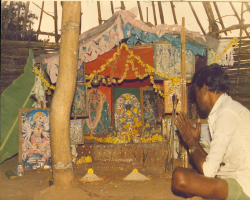
- Vaishnavism — devotion to Vishnu and his incarnations, particularly Rama and Krishna, is widely observed.
- Devi worship — in several regional traditions, a form of Devi (often identified with a local incarnation of Mahakali) is regarded as the community's principal deity, and traditional weddings are performed in front of her image or shrine.
- Shaiva devotion — worship of Shiva is also recorded among Mali families in parts of Maharashtra.
- Ancestor veneration — offerings to deceased family members are made on designated days and during festivals, reflecting a belief that ancestral spirits continue to guide and protect the living.
The Mali community also holds a distinctive place in Maharashtra's Varkari (Vithoba-devotional) tradition through the medieval poet-saint Savata Mali (Sant Savata Maharaj), a 13th-century gardener-saint from Aran (in present-day Maharashtra) revered as one of the important Varkari sants alongside figures such as Dnyaneshwar, Eknath, and Chokhamela. Savata Mali's teachings emphasised that devotion to God could be pursued through one's ordinary occupation and daily labour — in his case, gardening — without renouncing worldly life, a message that continues to resonate within the community's religious identity.
7. Festivals and Religious Observances
Like most Hindu communities in India, the Mali observe major pan-Indian festivals including Diwali, Holi, and Makar Sankranti. Given the community's deep historical association with agriculture and horticulture, local harvest festivals and seasonal celebrations tied to the agricultural calendar also hold particular significance, marking sowing and harvest cycles important to a cultivating community.
8. Marriage and Social Customs
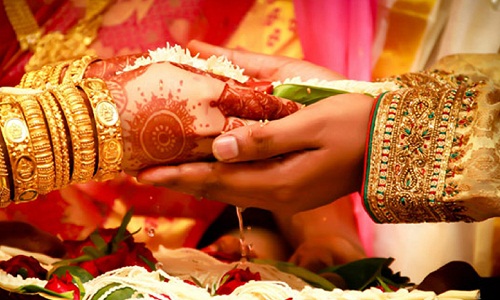
Marriage within the Mali community is traditionally contracted within the community, while being prohibited between members of the same clan/sect and between first or second cousins. A few customs recorded among Mali communities include:
- Devi as witness — in several regional traditions, weddings are traditionally performed before an image or shrine of Devi, the community's principal deity.
- The Maur — a ceremonial marriage crown prepared for both the bride and groom, a distinctive feature of traditional Mali weddings.
- Widow remarriage — remarriage of widows has historically been permitted among the Mali, reflecting a comparatively flexible approach to social custom.
- Funerary practice — the dead may be either buried or cremated according to family and regional custom; where burial is practised, the body is traditionally laid with the feet facing north.
9. Traditional Occupation and Livelihood
Gardening, floriculture, and the cultivation of fruit and vegetables have historically defined Mali livelihoods. The community's association with irrigated, year-round cultivation — as opposed to rain-fed grain farming — gave it an early and lasting connection to well- and canal-irrigation techniques.
In 20th-century Maharashtra, Mali cultivators were pioneers in applying irrigation to cash-crop farming, particularly sugarcane, and were instrumental in establishing farmer-owned cooperative sugar mills. This innovation later spread to other farming communities across Maharashtra and contributed to the state's emergence as a major centre of India's cooperative sugar industry, with hundreds of sugar mills eventually established across the state and beyond. Beyond agriculture, community members today are engaged in a wide range of occupations, including trade, small business, government service, and — particularly since the community's 19th- and 20th-century involvement in social and labour movements — trade unionism and public life.
10. Language
The Mali community does not have a single distinct language of its own; members speak the principal regional language of the area in which they live. This includes Marathi in Maharashtra, Hindi and Rajasthani in Rajasthan and neighbouring North Indian states, and Gujarati in Gujarat, reflecting the community's wide geographic spread and its integration into regional linguistic and cultural life.
12. Notable Figures
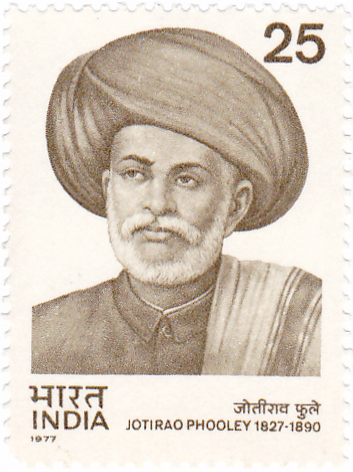
- Mahatma Jyotirao Phule (1827–1890) — social reformer, educator, and founder of the Satyashodhak Samaj; a pioneering advocate for women's education.
- Savitribai Phule (1831–1897) — pioneering educator and social reformer; among the first women in India to run a school for girls.
- Narayan Meghaji Lokhande (1848–1897) — labour organiser widely regarded as the father of the trade union movement in India; an early leading member of the Satyashodhak Samaj.
- Gyanoba Sasane — early leading member and financial supporter of the Satyashodhak Samaj.
- Sant Savata Mali (13th century) — Varkari poet-saint from Aran, Maharashtra, revered for teaching that devotion could be practised through one's daily labour.
- Ashok Gehlot — veteran Indian politician and former Chief Minister of Rajasthan.
- Dr. Amol Kolhe — actor and Member of Parliament from the Shirur Lok Sabha constituency, Maharashtra.
This list reflects individuals whose community background is documented in reference sources; it is illustrative rather than exhaustive.
13. The Mali Community in Nepal
The Mali are also present in the Terai plains of Nepal. According to the 2011 Nepal census, 14,995 people (approximately 0.1 percent of Nepal's population) identified as Mali. By province, the community's representation was recorded as highest in Madhesh Province (about 0.2 percent of the provincial population), with smaller populations recorded in Bagmati, Gandaki, Koshi, Lumbini, Karnali, and Sudurpashchim provinces.
14. Conclusion
The Mali of India represent a long-established, widely dispersed cultivating community whose identity is rooted in the horticultural occupation from which its name derives. From irrigated flower, fruit, and vegetable farming to the pioneering of cooperative sugarcane cultivation in Maharashtra, and from the devotional legacy of the Varkari saint Savata Mali to the transformative 19th-century social reform work of Jyotirao and Savitribai Phule, the community has combined a strong agricultural tradition with a notable record of social contribution. Today, through active community associations, the Mali continue to navigate questions of socio-economic development and identity across the diverse regions of India and Nepal where they are found.
15. References
1. Wikipedia. "Mali caste." https://en.wikipedia.org/wiki/Mali_caste
2. Bharatpedia. "Mali caste." https://en.bharatpedia.org/wiki/Mali_caste
3. Joshua Project. "Mali (Hindu traditions) in India." https://joshuaproject.net/people_groups/18786/IN
4. Terralingua. "Flower Gardens and Collective Knowledge." https://terralingua.org/stories/flower-gardens-and-collective-knowledge/
5. Maharashtra State Gazetteer. "Chapter VII — Religion and Gods of Maharashtra." https://gazetteers.maharashtra.gov.in/cultural.maharashtra.gov.in/english/gazetteer/
6. O'Hanlon, Rosalind. Caste, Conflict and Ideology: Mahatma Jotirao Phule and Low-Caste Protest in Nineteenth-Century Western India. Cambridge University Press, 2002.
7. Omvedt, Gail. Reinventing Revolution: New Social Movements and the Socialist Tradition in India. M.E. Sharpe, 1993.
8. Bhadru, G. "Contribution of Satyashodhak Samaj to the Low Caste Protest Movement in 19th Century." Proceedings of the Indian History Congress, vol. 63, 2002.
9. Pandit, Nalini. "Narayan Meghaji Lokhande: The Father of Trade Union Movement in India." Economic and Political Weekly, vol. 32, no. 7, 1997.
10. Central Bureau of Statistics, Nepal. Population Monograph of Nepal, Volume II.
11. Central Bureau of Statistics, Nepal. "2011 Nepal Census, District Level Detail Report."