

Lubana Community
Discover the vibrant history of the Lubana community in India. Learn about their journey from Punjab's ancient traders to a prominent Sikh and Hindu community..
The Lubana (Labana) Community of India
History, Migration, Sikh Heritage, Customs, and Diaspora of a Punjab Trading Community
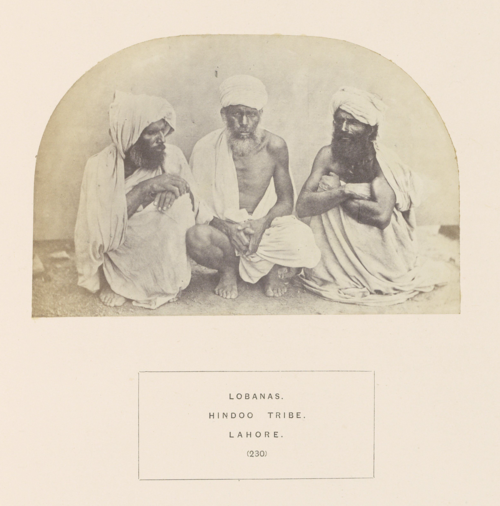
1. Introduction: Who Are the Lubana?
The Lubana, also spelled Labana, Lobana, or Lavana, are a merchant and transport community of northern India, historically associated with the trade and transportation of salt, saltpetre, and other goods across the Punjab region. Today, the community is found primarily in Punjab and Haryana, with smaller populations across Himachal Pradesh, Jammu, Rajasthan, Madhya Pradesh, Delhi, and Uttar Pradesh. In Punjab and Haryana, the great majority of Lubanas are Sikh; smaller Hindu Lubana populations are recorded further south and east, and a small Muslim Lubana presence existed in pre-partition West Punjab.
Once a mobile trading and transport community moving goods by camel, ox, and cart, the Lubanas settled into agriculture and landholding from the eighteenth and nineteenth centuries onward, particularly under Sikh and later British administration in Punjab. This profile draws on published community histories, Sikh historical sources, and available demographic surveys to summarize what is reliably known about Lubana origins, history, religion, language, customs, and notable community members.
2. Name and Etymology
The name “Lubana” is generally traced to the Sanskrit word lavana, meaning salt, combined with a term for trade or transport — reflecting the community's traditional occupation as carriers and dealers in salt and, later, saltpetre (used in gunpowder manufacture), silk, grain, and other goods moved along overland trade routes. The nineteenth- and twentieth-century ethnographers Kahan Singh Nabha (in the Punjabi reference work Mahan Kosh) and William Crooke (in Tribes and Castes of the North-Western India) both connect the community's name to the salt trade. The community has also historically been associated with the broader Banjara network of itinerant traders and carriers found across India.
Alternate spellings and forms of the name — Lubana, Labana, Lobana, Lavana, and Lubhana — are used interchangeably in historical and community sources, generally reflecting regional pronunciation rather than distinct groups.
3. History and Migration
3.1 Nomadic Traders and Carriers
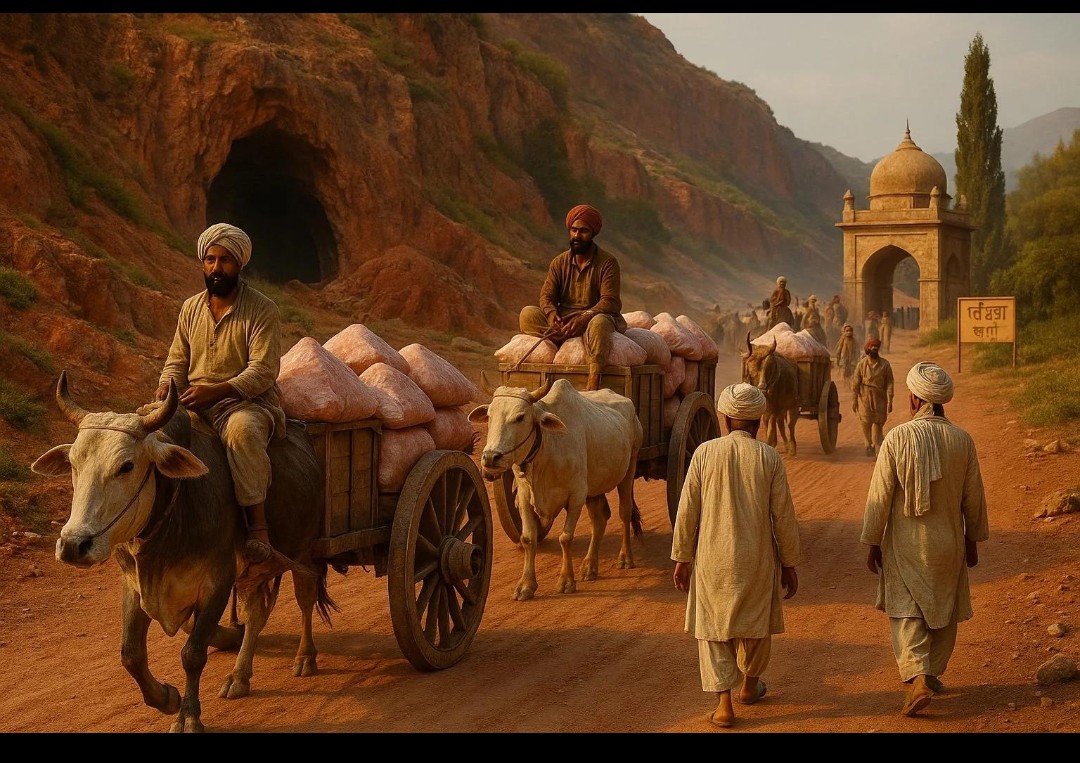
Before settling into agriculture, the Lubanas were a mobile trading and transport community, moving salt, grain, saltpetre, and other merchandise by pack animal and cart across Punjab and neighboring regions, reportedly found across the full breadth of undivided Punjab, from Bahawalpur in the west to Kangra and Chamba in the Himalayan foothills. Like other historically mobile trading groups of India, Lubana caravans moved with their families and livestock, and the community is remembered in some sources as having practiced tree and folk-deity veneration — including reverence for the peepal tree and the folk deity Gugga Peer — before its widespread conversion to Sikhism.
As Lubana groups settled in a given area, they frequently named their new villages “Tanda,” a term in the community's traditional Lubanki dialect for a travelling group or caravan. Villages bearing the Tanda name, or the compound name “Nangal Lubana,” survive today across Punjab, including in Kapurthala district.
3.2 The Sikh Gurus and the Lubana Community
From the time of Guru Nanak (1469–1539) onward, a large proportion of Lubanas adopted Sikhism, and the community subsequently became closely associated with Sikh religious history. The best-documented episode is that of Baba Makhan Shah Lubana (1619–1674), a Lubana merchant from Tanda in the Jhelum district, who is credited in Sikh tradition with identifying Guru Tegh Bahadur as the ninth Sikh Guru in 1664. According to the account, Makhan Shah had vowed during a shipwreck to donate five hundred gold coins to the Guru if his vessel and cargo were saved; upon reaching Bakala in search of the Guru's rightful successor among several claimants, he tested each by offering two gold coins, until Guru Tegh Bahadur alone recognized that the full pledged sum had not yet been given. Makhan Shah then proclaimed from a rooftop, “Guru ladho re” (“I have found the Guru”), an episode still recounted in Sikh tradition today.
Later Sikh chronicles, including Kesar Singh Chibber's eighteenth-century Bansavalinama, record Lubana Sikhs contributing funds and manpower to Banda Singh Bahadur's campaigns in the early eighteenth century. During the Sikh misl period of the eighteenth century, Lubana Sikhs are recorded serving under several of the Sikh misls, including the Bhangi, Ramgarhia, Shaheed, and Ahluwalia misls.
3.3 Transition to Agriculture
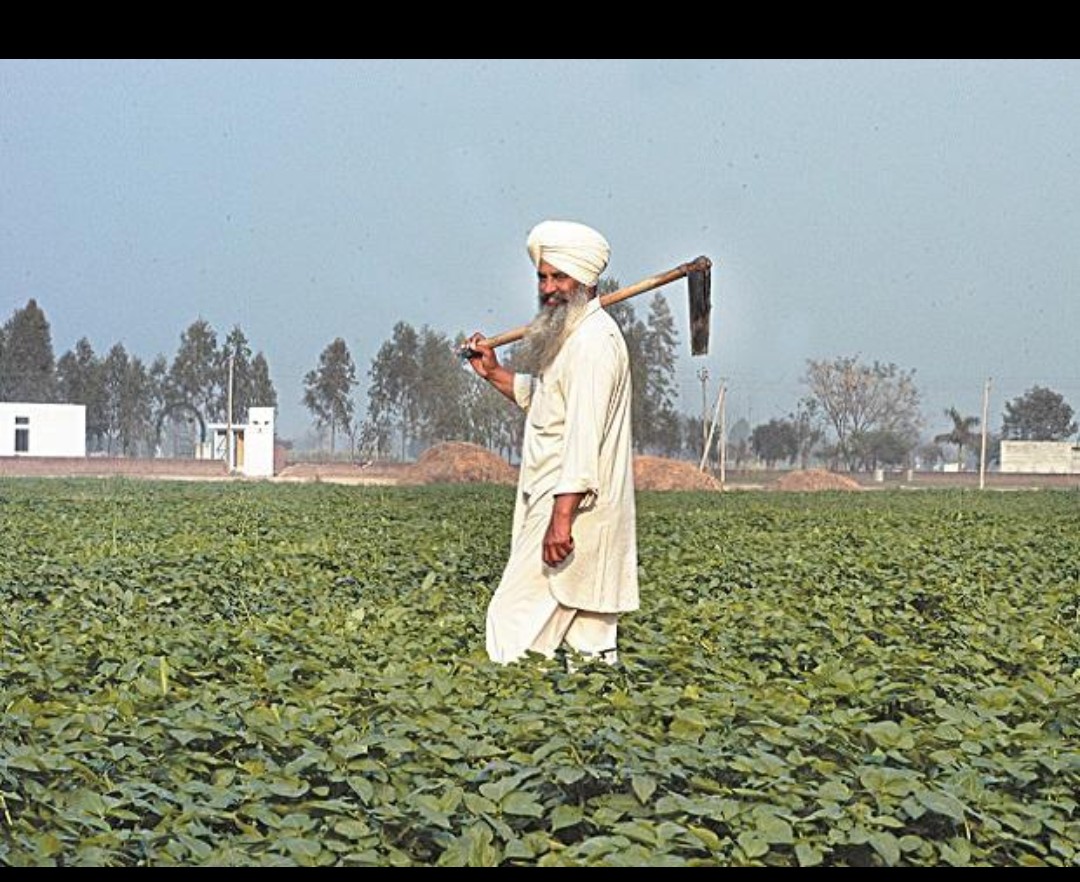
The community's financial and social position improved under Sikh rule in Punjab, particularly during the reign of Maharaja Ranjit Singh, as Lubanas increasingly moved from mobile trade into settled agriculture and landholding. This transition continued and accelerated under British colonial administration, by which point most Lubanas in Punjab were primarily agriculturists; the British also classified Lubanas among Punjab's recognized agricultural and martial communities. Lubana companies served in the British Indian Army during the First and Second World Wars, and, as with many Punjabi communities, some Lubana soldiers also joined the Indian National Army during the Second World War.
In the early twentieth century, the community also took part in Punjab's Akali (Gurdwara reform) movement of the 1920s and in Congress-led civil disobedience campaigns, and it established its own gurdwaras and schools. A notable figure of this period was Prem Singh Labana (1882–1950), a Lubana religious and social leader from Gujrat district who promoted education within the community, participated in the Akali movement, served on the Shiromani Gurdwara Prabandhak Committee (SGPC) from 1926 to 1950, and was twice elected to the Punjab Legislative Assembly, in 1937 and 1946.
4. Geographic Distribution and Population
The Lubana community today is concentrated in Punjab, particularly the Doaba and Majha regions, and in neighboring Haryana. Smaller populations are recorded in Himachal Pradesh, Jammu and Kashmir/Ladakh, Rajasthan, Madhya Pradesh, Delhi, and Uttar Pradesh.
Reliable, single-figure population counts for the community as a whole are not available. Indian census operations do not enumerate most communities by sub-group, and published estimates vary considerably depending on region and religious affiliation. Survey-based estimates for Hindu-tradition Lubana households alone (excluding the larger Sikh Lubana population of Punjab) put their number at roughly 28,000 across India, concentrated in Madhya Pradesh, Jammu and Kashmir, and Rajasthan; the Sikh Lubana population of Punjab and Haryana, where the community is most numerous, is understood from regional histories to be substantially larger, though no single authoritative figure is published.
Population figures in this section come from independent survey organizations rather than official Indian census sub-group data, and should be read as approximate.
5. Religion
Religious affiliation within the Lubana community varies by region. In Punjab and Haryana, the great majority of Lubanas are Sikh, a legacy of the community's centuries-long association with the Sikh Gurus, the SGPC, and Punjab's gurdwara institutions. Community religious life in Punjab has historically centered on local deras (religious centers), such as the Dera Sant Baba Prem Singh Muralewale at Begowal in Kapurthala district, which continues to serve as a focal point for the community.
Outside Punjab and Haryana — notably in Rajasthan, Madhya Pradesh, Himachal Pradesh, and parts of Jammu and Kashmir — Lubana communities are recorded as predominantly Hindu, following mainstream Hindu devotional and festival practice alongside inherited family and clan custom. A smaller Muslim Lubana population existed historically in pre-partition West Punjab.
6. Language
Most Lubanas today speak Punjabi (in Punjab and Haryana) or Hindi (in Rajasthan, Madhya Pradesh, and other states), depending on region. The community is historically associated with a distinct dialect known as Lubanki, described in community and linguistic sources as a blend of Punjabi, Hindi, and elements of Marwari and other regional languages, reflecting the community's history of long-distance trade and movement. Lubanki survives today mainly as a heritage dialect among older speakers rather than as a first language of most younger community members, most of whom speak the standard regional language of wherever they live.
7. Clan (Kinship) Structure
Like many historically endogamous communities of northern India, the Lubana community traditionally organizes marriage alliances around a set of exogamous clans — that is, individuals are expected to marry outside their own clan while generally marrying within the wider community. Sources on Lubana social organization record eleven principal clans, traditionally regarded as being of equal standing:
- Dharawat
- Dhogan
- Multani
- Sandlas
- Basi
- Gundalia
- Datnawat
- Anderia
- Tageria
- Kalchana
- Baluda
These clan names continue to appear as family surnames among Lubana families today — for example, the surname Sandlas, borne by several prominent modern community members, derives from this clan system.
8. Social Structure and Community Life
Family and clan identity remain central to Lubana social life. Community councils and elders have traditionally played a role in settling disputes and preserving customs, and property historically passed through family lineage lines. As in many traditional Punjabi and North Indian communities, marriage was historically arranged within the wider community and regulated by clan exogamy, and older social custom in some Lubana communities discouraged the remarriage of widows and divorced women, a pattern that has substantially relaxed in contemporary practice.
Religious deras headed by community elders or spiritual leaders have historically doubled as centers of social organization, education, and philanthropy for the community, particularly in Punjab's Doaba belt.
9. Cuisine
Lubana households in Punjab and Haryana generally share the broader North Indian and Doaba Punjabi culinary tradition: wheat breads such as roti and paratha, rice, lentils (dal), seasonal vegetables, and dairy products including lassi and ghee form the everyday staple diet, with festive and celebratory meals including regionally prepared meat dishes. No separately documented, distinctly Lubana culinary tradition appears in the available published sources; the community's food culture is best understood as part of the wider Doaba Punjabi Sikh and Hindu culinary landscape rather than as a cuisine unique to the Lubana community itself.
10. Traditional Dress
Traditional Lubana dress follows the broader conventions of Punjabi Sikh and Hindu communities of the region: men traditionally wearing kurta-pyjama with a turban, and women wearing salwar kameez, with more elaborate attire reserved for weddings and festivals. As with cuisine, the available published sources do not document a sartorial tradition distinct to the Lubana community specifically; dress customs are shared broadly with the wider Doaba Punjab region.
11. Genetics and DNA Ancestry
No dedicated, peer-reviewed population-genetics or DNA-ancestry study focused specifically on the Lubana/Labana community has been published to date. Broader population-genetic research on Punjab's communities generally situates them within the wider Indo-Aryan-speaking, northwestern South Asian genetic landscape, but no Lubana-specific Y-DNA, mitochondrial DNA, or autosomal study exists in the current scientific literature. Individuals interested in their own ancestry composition are encouraged to rely on personal DNA testing results rather than community-level genetic claims, given the absence of dedicated research on this specific community.
12. Diaspora
Lubana families have migrated abroad as part of the broader twentieth- and twenty-first-century pattern of Punjabi emigration, with established communities in the United Kingdom, Canada, and the United States. Diaspora gurdwaras and community organizations named for Baba Makhan Shah Lubana — including community societies in British Columbia, Canada, and in the United States — serve as gathering points for Lubana Sikh families abroad, alongside broader Punjabi Sikh diaspora institutions. Diaspora families have also settled in California's Central Valley, among other North American destinations, carrying Punjabi language, Sikh worship, and community ties with them.
13. Notable Figures
Baba Makhan Shah Lubana (1619–1674) — Sikh merchant credited with identifying Guru Tegh Bahadur as the ninth Sikh Guru in 1664, a foundational episode in Sikh historical memory.
Prem Singh Labana (1882–1950) — Community social and religious reformer, educator, longtime SGPC member (1926–1950), and twice-elected member of the Punjab Legislative Assembly (1937, 1946).
Bibi Jagir Kaur (born 1954) — Punjab politician and the first woman elected president of the Shiromani Gurdwara Prabandhak Committee (SGPC), the central body administering Sikh gurdwaras, serving in that role on three occasions.
Jasmine Sandlas (born 1985) — Indian-American Punjabi playback singer and songwriter, born in Jalandhar, Punjab, to a Punjabi Sikh Lubana family, known for Bollywood and independent Punjabi music including “Yaar Naa Miley” and the album Gulabi.
This list is illustrative rather than exhaustive.
14. Conclusion
The Lubana community traces a distinctive arc within Punjab's regional history: a mobile trading and transport people, once carrying salt and saltpetre along the routes of northern India, that became closely woven into Sikh religious memory through figures such as Baba Makhan Shah Lubana, and that settled over the eighteenth and nineteenth centuries into agriculture and landholding across Punjab and neighboring states. Today the community is spread across Punjab, Haryana, and several other Indian states, predominantly Sikh in the Punjab heartland and Hindu in many communities further south and east, united by a shared name, a shared clan system, and a shared historical memory of trade, migration, and settlement.
References
- [1]1. Wikipedia. “Labana.” https://en.wikipedia.org/wiki/Labana
- [2]2. Wikipedia. “Makhan Shah Labana.” https://en.wikipedia.org/wiki/Makhan_Shah_Labana
- [3]3. Wikipedia. “Guru Tegh Bahadur.” https://en.wikipedia.org/wiki/Guru_Tegh_Bahadur
- [4]4. Wikipedia. “Prem Singh Labana.” https://en.wikipedia.org/wiki/Prem_Singh_Labana
- [5]5. Wikipedia. “Jasmine Sandlas.” https://en.wikipedia.org/wiki/Jasmine_Sandlas
- [6]6. Wikipedia. “List of Lubana-Banjaras.” https://en.wikipedia.org/wiki/List_of_Lubana-Banjaras
- [7]7. Wikipedia. “Nadu Shah Labana.” https://en.wikipedia.org/wiki/Nadu_Shah_Labana
- [8]8. Wikipedia. “Jagir Kaur.” https://en.wikipedia.org/wiki/Jagir_Kaur
- [9]9. Sikh Review (Angelfire archive). “Lubana Sikhs: Salt of the Earth.” https://www.angelfire.com/realm2/reiki_transcendental/SikhReview/may2000/socio2.htm
- [10]10. All About Sikhs. “Baba Makhan Shah Lubana — Guru Ladho Re.” https://www.allaboutsikhs.com/guru-ladho-re-guru-ladho-re/
- [11]11. Joshua Project. “Labana (Hindu traditions) in India.” https://joshuaproject.net/people_groups/17352/IN
- [12]12. Joshua Project. “Labana (Sikh traditions) in India.” https://joshuaproject.net/people_groups/18128/IN
- [13]13. The Tribune (India). “Bibi Jagir’s Begowal Dera Spurred Her Rise in Politics.” https://www.tribuneindia.com/news/archive/punjab/bibi-jagir-s-begowal-dera-spurred-her-rise-in-politics-693453
- [14]14. Baba Makhan Shah Lubana Sikh Society (British Columbia). https://lubanasikhsocietybc.com/about/