

Arora Community
The Arora community is a prominent North Indian community historically associated with trade, commerce, and entrepreneurship, particularly in Punjab and surrounding regions.
The Arora Community
Origins, History, Social Position, Culture, and Legacy of a Punjab–Sindh Mercantile Community
1. Introduction: Who Are the Arora?
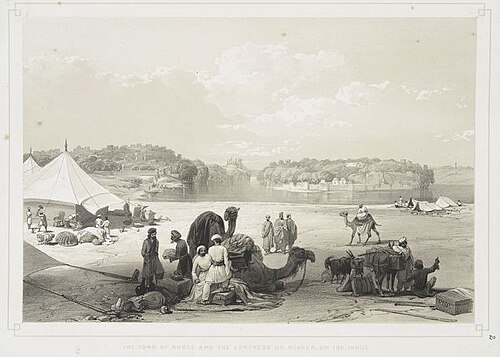
The Arora are an Indian community, comprising both Hindus and Sikhs, whose ancestral homeland lies in the region of northern Sindh and southern Punjab, in what is today Pakistan. Following the partition of India in 1947, the great majority of Arora families migrated eastward and settled across Indian Punjab, Delhi, Haryana, Uttar Pradesh, and other parts of northern India, and today Arora communities are also found throughout the Indian diaspora in North America, the United Kingdom, and beyond.
The community's name is generally traced to Aror (also spelled Alor or Arorkot), an ancient town on the Indus river near present-day Rohri in Sindh province, Pakistan, which served for centuries as an important regional capital and trading centre. Traditionally engaged in shopkeeping, trade, accountancy, and moneylending, the Arora are closely linked historically to the Khatri community of Punjab, with several scholars describing them as a regional sub-group within the wider Khatri social and mercantile network. Today the community is widely recognised as a forward, urbanised, and highly literate group, well represented in business, medicine, engineering, administration, and the armed forces.
2. Origins and Early History
2.1 Aror: The Ancestral Town
Aror, the town from which the community draws its name, stood on the banks of the Indus in Sindh and is associated by some scholars with the ancient Roruka, described in early Buddhist literature as the capital of the Sauvira Kingdom, a kingdom of the lower Indus valley mentioned in late Vedic sources. Little is documented about the city's history prior to the Arab conquest of Sindh in the early eighth century CE. According to the Chachnama, an early Persian chronicle of the Arab conquest, members of a Brahman ruling group were established at Aror, and the town was, for a time, the seat of a local ruling dynasty.
In 711–712 CE, Aror was captured by the Umayyad general Muhammad ibn al-Qasim, who defeated the ruler Raja Dahir. Community tradition and several regional histories hold that, following this conquest, the Khatri and mercantile families of Aror dispersed from Sindh and resettled in the cities of Punjab along the Indus, Jhelum, Chenab, and Ravi rivers, coming to be known thereafter as "Aroras" — the people of Aror. The historian W. H. McLeod, however, notes that many Arora families are also traceable to the Pothohar plateau of northern Punjab, suggesting the community's early geography was broader than Sindh alone.
2.2 Relationship with the Khatri Community
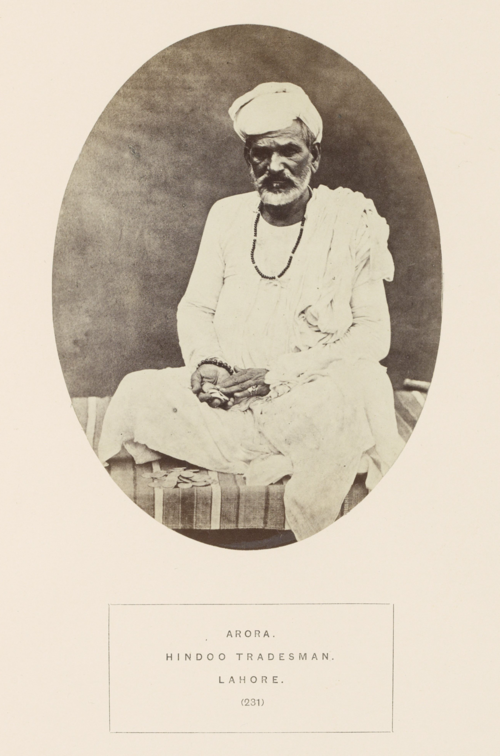
The Arora are closely associated with the Khatri caste of Punjab, and the precise nature of the relationship between the two groups has long been debated by colonial ethnographers and later scholars. One widely cited explanation, recorded in the Amritsar district gazetteer, holds that Khatris proper trace their lineage to Lahore and Multan, while Aroras are "Khatris of Aror" — that is, Khatris whose ancestral home was the Sindh town of Aror rather than the Punjab heartland. The historian Scott Cameron Levi has similarly described the Arora as a sub-caste of the Khatris, and the anthropologist Grant Evans likewise characterises the Lahore Arora as a regional sub-group within the Khatri jati.
This closeness is reflected in practice: intermarriage between Aroras and Khatris has historically been, and remains, common, and in 1936 an all-India assembly of Khatris held at Lahore resolved that Aroras, along with the Sood and Bhatia communities, should be recognised as Khatris "for all intents and purposes." This resolution was not universally accepted at the time, but over subsequent decades the boundary between the two communities has become progressively less significant in everyday social life, and today many families and matrimonial networks treat Khatri and Arora as closely allied, frequently inter-marrying groups.
2.3 Territorial Sub-Groups
Historically, the Arora community was internally organised into territorial sub-groups reflecting the regions from which particular family lines originated. In Sikh community tradition, four such groups are recorded: the Uttaradhis (from the north), the Dakhanas (from the south), the Dahras (from the west of Punjab), and the Sindhis (from Sindh itself); the Dahras and Dakhanas are sometimes treated as a single combined group. Before Indian independence, marriage was generally arranged within one's own territorial sub-group — Uttaradhi, Dakhana, or Dahra — but after 1947, and particularly after the displacement and resettlement caused by Partition, the circle of acceptable matrimonial alliances widened considerably to include Aroras from other sub-groups, and, increasingly, Khatris as well.
3. The Partition of India and Resettlement
The Partition of India in 1947 was the single most transformative event in the community's modern history. Aroras, alongside Khatris, formed a large proportion of the Hindu and Sikh Punjabi population that was compelled to leave West Punjab and Sindh, both of which became part of the new state of Pakistan, and to resettle in Indian Punjab, Delhi, and neighbouring states. Studies of Partition-era migration identify Arora, Khatri, Bedi, and Ahluwalia as among the most significant communities among the displaced Punjabi population that rebuilt urban commercial and professional life in independent India.
Because the community's traditional livelihoods centred on trade, shopkeeping, and accountancy rather than landholding, many Arora families were able to re-establish themselves relatively quickly in India's expanding towns and cities after 1947, a pattern noted in later social surveys of the community's post-Partition economic recovery.
4. Social Position and Varna Status
The Arora are officially classified in India as a forward (general, non-reserved) caste, and government-commissioned reports — including those of the Gurnam Singh Commission (1990) and the K. C. Gupta Commission (2012) — have found the community to be socially, educationally, and economically advanced, noting that it has maintained a high literacy rate despite the displacement it experienced at Partition. A socio-economic survey conducted by Maharshi Dayanand University similarly found Arora and Khatri families to be well represented in both government and private-sector employment, engaged as doctors, engineers, administrators, and white-collar professionals, and "economically well-off," no longer dependent on the community's traditional occupations of shopkeeping or moneylending.
The community's precise position within the traditional Hindu varna framework has been a subject of some scholarly discussion, since Punjab's mercantile castes did not map neatly onto the four-fold varna system as understood further east and south in India. Different scholars have described the Arora (and the closely related Khatris) in different ways:
- Sociologist Bam Dev Sharda (University of Utah) classes the Arora, together with the Khatris, Agarwals, Banias, and Ahluwalias, as a mercantile caste of Vaishya varna claiming twice-born (dvija) status.
- Anthropologist Nicola Mooney (University of Toronto) and scholar Grant Evans instead describe the Arora, along with the Khatris, as belonging to the Kshatriya (warrior) varna — the second of the traditional four varnas.
- Some community traditions likewise hold that the Aroras are of Kshatriya stock.
- Other scholars have noted that in Punjab the term "Arora" functions as a broad, generic label for numerous local merchant jatis, whose formal twice-born status has at times been contested even as the community has, in practice, been accorded a social ranking comparable to that of twice-born groups in the wider regional hierarchy.
Within Sikh social organisation specifically, historian Ethne K. Marenco records that Jat Sikhs traditionally occupied the top of the community's informal social hierarchy, with Khatri and Arora Sikhs ranked below them in social terms even though, under Hindu varna categories applied to the same families, Khatris and Aroras were accorded Kshatriya status. This apparent tension reflects the more general observation that formal varna theory and lived regional social ranking in Punjab did not always align precisely.
5. Traditional Occupations and Economic Life
The Arora were traditionally one of Punjab's principal trading and moneylending communities, alongside the Khatris and Agarwal Banias, and specialised in shopkeeping, petty trade, and accountancy in towns across West Punjab and the districts around Multan and the Derajat (Dera Ismail Khan and Dera Ghazi Khan). The British ethnographer Denzil Ibbetson observed that Arora-Khatri traders were especially concentrated in these areas and carried on business across Afghanistan and Central Asia. During the colonial period, community numbers in some parts of Punjab grew so large that many Aroras had to seek livelihoods outside the traditional occupations of shopkeeping, village accountancy, and moneylending.
The community also engaged in agriculture, and colonial-era observers such as Malcolm Lyall Darling described Arora landholders as diligent farmers who, alongside cultivation, turned their hand to basket-weaving, metalworking, goldsmithing, and tailoring. Aroras were also among the Hindu merchant castes — together with Agarwal Banias and Khatris — active in Punjab's timber trade prior to 1900. In the eighteenth century, Hindu Punjabi Arora and Khatri financiers played a documented role in the regional grain trade with Afghanistan and, according to historical accounts, extended loans that helped finance the military campaigns of Durrani rulers such as Ahmad Shah Durrani, reflecting the community's long-standing importance in regional finance and trade networks.
In contemporary India, the community has diversified well beyond these traditional occupations. Economic surveys describe today's Arora population as prominently represented in medicine, engineering, public administration, banking, and other professional and white-collar fields, alongside a continuing strong presence in business and trade.
6. Surnames and Clan Names
Like other Punjabi mercantile communities, the Arora do not use a single common surname; instead, families are identified by a large number of clan or lineage names (often loosely referred to as gotras), many of which are shared with, or closely related to, Khatri clan names. In the 1951 Census of India, Arora respondents in Punjab recorded their community identity under a wide variety of related labels, including Khatri, Arora Khatri, Arorae, Rore, Aror, and Rora Khatri, with many also returning specific Arora clan or sub-caste names.
Surnames widely associated with the Arora community — some shared with the Khatri community — include, among many others:
- Ahuja, Ahluwalia*, Alreja, Aneja, Arya, Babbar, Bajaj, Batra, Baweja, Bhagat, Chhabra, Chawla, Chugh, Dhingra, Dutta, Gaba, Ghai, Grover, Gulati, Juneja, Kalra, Kamra, Kataria, Kharbanda, Khurana, Kukreja, Luthra, Madan, Makhija, Malhotra*, Mehndiratta, Munjal, Nagpal, Narang, Narula, Pahuja, Raheja, Rajpal, Sachdev/Sachdeva, Saluja, Sethi*, Taneja, Thukral, Tuteja, and Wadhwa.
(Names marked with an asterisk are sometimes claimed by both Khatri and Arora lineages, illustrating the close historical overlap between the two communities noted above.) Clan endogamy has traditionally been observed — marriage within one's own gotra or clan name is conventionally avoided — while marriage across different Arora clans, and increasingly across Arora and Khatri lines, has long been, and remains, common practice.
7. Religion and Faith Traditions
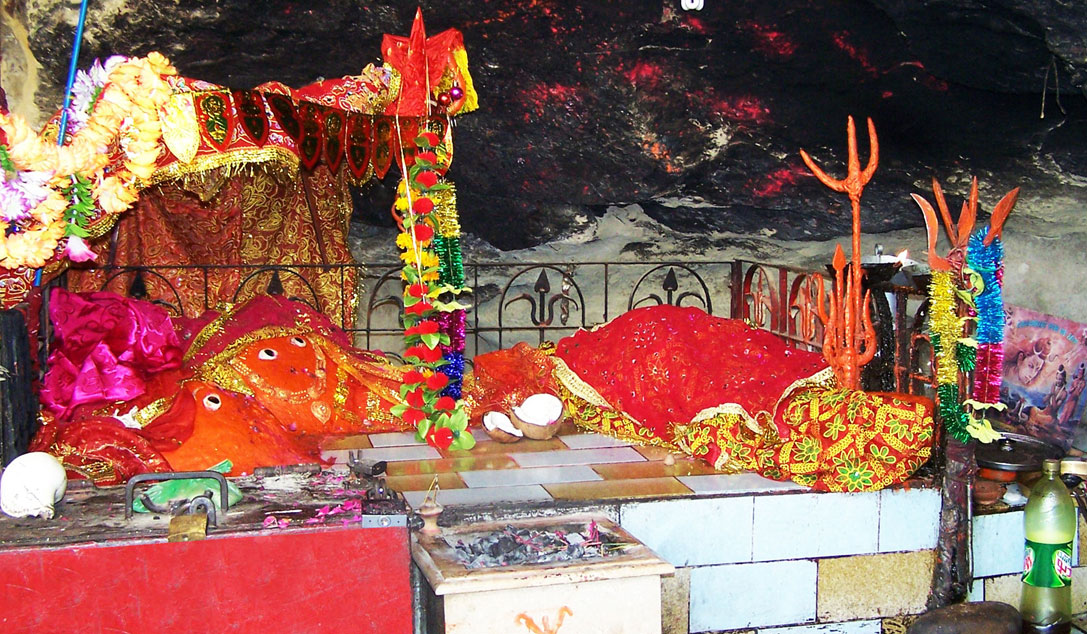
The Arora community is religiously diverse, comprising both Hindu and Sikh families, and the two branches are often referred to simply as Hindu Arora and Sikh Arora. This dual religious character reflects the broader devotional landscape of pre-Partition Punjab and Sindh, where Hindu and Sikh identities within trading families were often closely intertwined, and where many households honoured both Hindu deities and the Sikh Gurus within the same family tradition.
In the erstwhile princely state of Bahawalpur, historical accounts record that Aroras followed a range of devotional traditions, including the Pushtimarga (Vallabha) tradition associated with Sri Lalaji and the Gaudiya Vaishnava-linked Gunjamali and Tailanga Gokula Gosain lineages, as well as Nanak-panthi devotion centred on the teachings of Guru Nanak — again illustrating the community's characteristically fluid Hindu–Sikh religious profile in undivided Punjab.
The community was also prominent in the late nineteenth-century Arya Samaj reform movement founded by Swami Dayananda Saraswati: historical studies note that more than half of the male membership of the Arya Samaj in 1891 Punjab belonged to the Khatri and Arora merchant castes. Scholars such as Christophe Jaffrelot and N. G. Barrier attribute this to Dayananda's teaching that caste status should rest on merit rather than birth alone, which offered these prospering mercantile communities a path to religious and social standing commensurate with their rising economic position.
Arora and Khatri pilgrims have also historically formed a substantial proportion of devotees at major North Indian pilgrimage sites. A study of Hindu pilgrimage in cultural geography found that "Khatri-Aroras" were among the most numerous Hindu caste groups making pilgrimage from the Punjab and Delhi region, forming a dominant share of pilgrims at the Badrinath temple, at Haridwar, at the Jwalaji temple, and, especially during the Shravan Ashtami fair, at the Chintpurni temple.
8. Culture, Language, and Social Life
Arora families are predominantly Punjabi-speaking, and the community shares in the broader linguistic and cultural life of Punjab; families with roots in Sindh have also historically retained Sindhi language and cultural ties. Community life places a strong traditional emphasis on education, extended-family ties, and hospitality, values commonly cited in socio-economic surveys as underlying the community's high literacy and professional attainment even after the disruption of Partition.
The community also played a notable role in the religious and reform life of colonial Punjab. W. H. McLeod records that Aroras were prominent participants in the Singh Sabha movement, a nineteenth-century Sikh reform and revival movement, with figures such as the writer and scholar Vir Singh and Mehtab Singh playing influential roles within it — evidence of the community's active engagement in both Hindu reform (through the Arya Samaj) and Sikh religious revival during the same historical period.
In contemporary Indian public life, Arora representation remains notable: following the 2022 Punjab Legislative Assembly election, eleven members of the legislature from the majority government were reported to belong to the Arora community, and community associations have periodically sought formal representation in state ministries, reflecting the group's continued civic and political engagement in Punjab.
9. Marriage Customs

Traditional Arora and Khatri weddings in Punjab follow the broader pattern of North Indian Hindu and Sikh nuptial custom, adapted to family and regional practice depending on whether a given household follows Hindu or Sikh rites. Ceremonies for Hindu Arora families are typically conducted around the sacred fire (following Vedic rites broadly similar to those of other Punjabi Hindu mercantile communities), while Sikh Arora families solemnise marriage through the Anand Karaj ceremony performed in the presence of the Guru Granth Sahib, as is customary among Sikhs generally.
As noted above, marriage practice has traditionally observed clan (gotra) exogamy — avoiding marriage within one's own clan name — combined with community endogamy, historically restricted first to one's own territorial sub-group (Uttaradhi, Dakhana, or Dahra) and, since Partition, more broadly to the Arora community as a whole and to the closely allied Khatri community, among whom intermarriage is well documented and common.
10. Diaspora
Displacement at Partition scattered Arora families across northern India, and subsequent decades of migration have carried the community further afield. Significant Arora populations are found today in Indian Punjab, Delhi, Haryana, and Uttar Pradesh, as well as in diaspora communities across North America (the United States and Canada), the United Kingdom, and other countries with substantial Punjabi Hindu and Sikh populations. Diaspora Arora families frequently maintain ties to Punjabi cultural and religious life abroad through temple and gurdwara congregations, community associations, and Punjabi-language cultural events, alongside participation in the broader Indian and Sikh diaspora institutions of their adopted countries.
11. Notable Aroras
The following figures are documented in historical and encyclopaedic sources as belonging to, or descending from, the Arora community. This list is illustrative rather than exhaustive.
- Diwan Kaura Mal (d. 1752) — Governor of Multan and twice Minister of Lahore under the Mughal administration; led a joint campaign against Multan in 1749 and was posthumously honoured with the title "Maharaja Bahadur." He died in battle against the forces of Ahmad Shah Durrani on 6 March 1752.
- Bhai Vir Singh (1872–1957) — Poet, scholar, and novelist, regarded as a foundational figure of modern Punjabi literature and an influential leader of the Singh Sabha reform movement.
- Lieutenant General Punita Arora — In 2004, became the first woman to attain the three-star rank of Lieutenant General in the Indian Army (and, concurrently, Vice Admiral rank in the Indian Navy).
Numerous well-known Punjabi surnames associated with the wider Arora–Khatri mercantile network — including Chawla, Chugh, Dutta, Gulati, Kalra, Khurana, Malhotra, Munjal, Nagpal, Narula, Sachdev, and Thukral, among others — are documented in genealogical and surname reference sources as belonging to this community, and individuals bearing these names have gone on to prominence across Indian business, public service, science, and the arts.
12. Conclusion
The Arora present a distinctive case of an Indian mercantile community shaped as much by geography and displacement as by ritual status: rooted in the ancient Indus-valley town of Aror in Sindh, closely interwoven with the Khatri community of Punjab across many centuries of shared trade, intermarriage, and social life, and religiously divided — without division of kinship — between Hindu and Sikh observance. The upheaval of 1947 scattered the community from its ancestral home in West Punjab and Sindh, yet the same qualities that had long defined it — a strong orientation toward trade, education, and urban professional life — enabled a comparatively rapid rebuilding of community life in independent India. Today, from the temples of Haridwar and Chintpurni to the legislatures of Punjab and the professional classes of the Indian diaspora, the Arora story remains a living thread within the wider social fabric of Punjab and Sindh.
References
- [1]
- [2]
- [3]
- [4]
- [5]
- [6]
- [7]
- [8]
- [9]
- [10]
- [11]
- [12]
- [13]This profile draws primarily on the English-language Wikipedia article on the Arora community (and cross-linked pages on related surnames and individuals) together with the cited historical and journalistic sources. Historical claims regarding varna status, social ranking, and community origins reflect the range of views recorded in the scholarly and gazetteer literature summarised above; readers seeking primary or peer-reviewed academic sources are encouraged to consult the works cited within the referenced Wikipedia articles.