

ramghariya Community
Ramgarhia Community: A prominent Sikh community known for craftsmanship, engineering skills, entrepreneurship, and Jassa Singh Ramgarhia.
The Ramgarhia Community of Punjab, India
History, origins, social standing, culture, and diaspora of a Sikh artisan community
1. Introduction: Who Are the Ramgarhia?
The Ramgarhia are a community of Sikhs from the Punjab region of northwestern India. The name covers two closely related artisan groups, the Tarkhan (traditionally carpenters and woodworkers) and the Lohar (traditionally blacksmiths and ironworkers). “Ramgarhia” has become an honorific, community wide identity used mainly by Sikhs of carpenter and blacksmith caste background. It sets them apart from Hindu carpenters of the same broad lineage, who generally go by the surname Dhiman.
The name comes from Ramgarh, a fort near Amritsar that was rebuilt in the mid eighteenth century by the Sikh military leader Jassa Singh, who was afterward known as Jassa Singh Ramgarhia. Over time his honorific title was taken up as a collective identity by Sikhs of the Tarkhan and Lohar castes. In Punjab, Ramgarhias are concentrated especially in and around the industrial towns of Phagwara, Kartarpur, Batala, and Goraya. Outside Punjab there are notable Ramgarhia populations in Assam, in East Africa (historically Kenya and Uganda), and in diaspora communities across the United Kingdom, Canada, and the United States.
2. Origins and Early History
2.1 Caste Origins and Ties to the Sikh Gurus
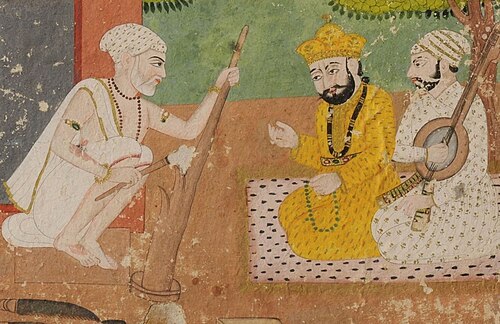
Ramgarhia Sikhs trace their community's link with Sikhism to Bhai Lalo of Eminabad, a carpenter and devoted follower of Guru Nanak, the founder of Sikhism. According to Sikh tradition, Guru Nanak stayed at Bhai Lalo's home and shared with him a hymn rebuking the Mughal invader Babur for his conquest of India, an episode that is central to how the community remembers its early place within the Sikh faith. Community historians record that at least seventy two Tarkhan and Lohar Sikhs served the Sikh Gurus directly in various roles during the seventeenth and early eighteenth centuries.
Other figures named in this tradition include a Lahore carpenter called Jeeon, at whose invitation Guru Hargobind is said to have stayed for three months in 1612, and Bhai Rupa, a Tarkhan credited with officiating the wedding of Guru Gobind Singh. His descendants, known as the Bagrian wale, later served as priests for the Phulkian princely states, conducting royal coronation and wedding ceremonies. Hardas Singh Bhanwra and his son Bhagwan Singh Bhanwra, both Tarkhan Sikhs, served in the military forces of Guru Gobind Singh. Bhagwan Singh later governed the Doaba region during the short lived Sikh rule established by Banda Singh Bahadur in the early eighteenth century.
2.2 Jassa Singh Ramgarhia and the Ramgarhia Misl
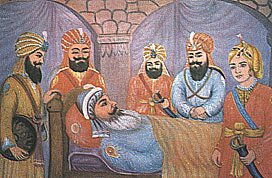
The community's modern name cannot really be separated from the life of Jassa Singh Ramgarhia (1723 to 1803), Bhagwan Singh's son, born near Amritsar into a Tarkhan family. His birth name is recorded as Jassa Singh Thoka, “Thoka” being an older caste designation meaning carpenter. During the unsettled eighteenth century, a period marked by conflict between the Sikhs and the Mughal and Afghan powers, Jassa Singh rose to prominence as a soldier and became the leader, or misldar, of one of the Sikh confederacy's twelve major misls, its military bands.
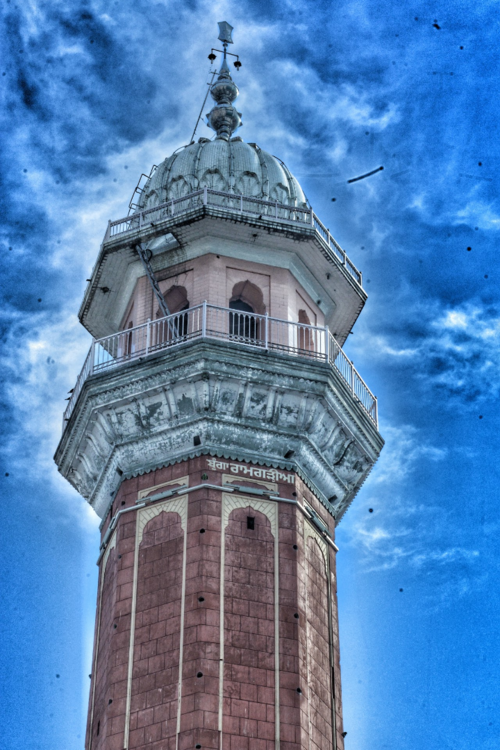
His misl took its name from Ram Rauni, a mud brick enclosure built near Amritsar for the protection of the Sikhs, which Jassa Singh's forces later rebuilt and fortified into a stone fort renamed Ramgarh. It was from this point that he became known as Jassa Singh Ramgarhia, and his followers as the Ramgarhia Misl. At its peak the Ramgarhia Misl held substantial territory in the Bari Doab, including Batala and Gurdaspur district. Jassa Singh allied at different times with other misl leaders, among them the Kanhaiya and Sukerchakia misls, and his forces are recorded as having campaigned as far as Delhi and the Gangetic Doab. After his death in 1803, leadership passed to his son, Jodh Singh Ramgarhia, whose followers were later drawn into the political struggles surrounding Maharaja Ranjit Singh's consolidation of the Sikh Empire, into which the Ramgarhia Misl's territories were eventually absorbed.
2.3 The Namdhari Connection
Ramgarhias also played a notable part in the Namdhari (Kuka) movement of the nineteenth century, a Sikh reform and revivalist movement whose prominent leader, Baba Ram Singh (Satguru Ram Singh), came from a Tarkhan background. Ram Singh and his followers were among the earliest organised opponents of British rule following the annexation of Punjab in 1849, and many Namdharis were killed in the course of the movement. Because of this history, a section of the Ramgarhia community continues to follow Namdhari beliefs and practices, including reverence for a living guru (dehdhari), a practice outside mainstream Sikh doctrine. This has, at times, been a point of discussion between the more Khalsa oriented Ramgarhias and those closer to Namdhari tradition.
3. Traditional Occupation and Craftsmanship
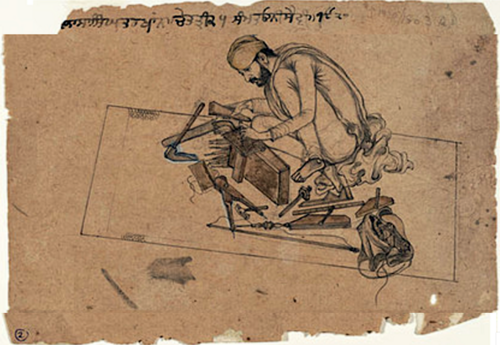
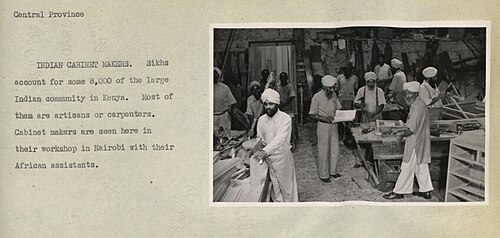
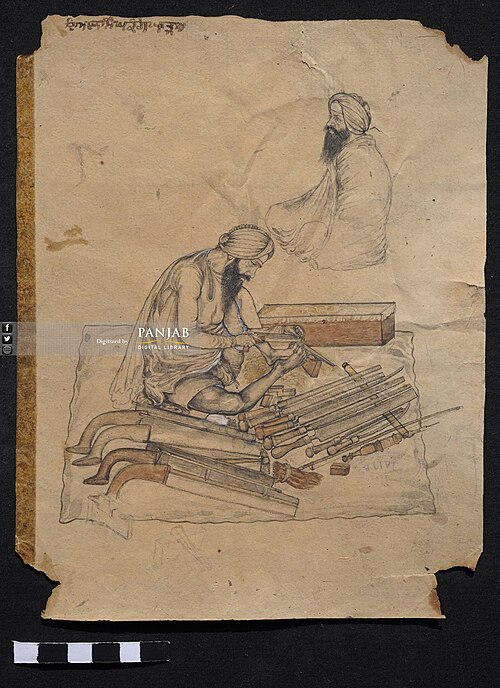
Historically, Ramgarhias worked as carpenters, blacksmiths, and bricklayers. Occupational skill was passed down within family workshops, usually from a father or elder brother to a son or younger brother. Under Punjab's traditional jajmani system, in which artisan and service castes provided skilled labour to landowning patrons in return for a share of the harvest or a fixed payment, Ramgarhias occupied the position of skilled artisans (mistry) serving Jat Sikh landowners (sardars and zamindars) as their patrons.
The community's craft identity has a strong devotional side to it. Ramgarhias traditionally regard the Hindu deity Vishvakarma, revered across South Asia as the divine architect and patron of craftsmen, as their trade guru, even while the Sikh Gurus remain their spiritual guides. Ramgarhia and Dhiman artisans alike describe themselves as Babey Vishvakarmey di aulad, or descendants of Baba Vishvakarma. This is expressed through annual tool veneration ceremonies held around the festivals of Bhai Dooj (the day after Diwali) and Dasahra. On Bhai Dooj morning, workshop tools are cleaned and ceremonially rested in a corner of the workshop, a custom known as sand raj baithey han, meaning the tools are resting on the royal seat, and using them on this day is considered a transgression (pap). The following day the tools are sprinkled with water, a ceremony called chhita dena, a prayer to Baba Vishvakarma is recited, and prasad (blessed food) is distributed among the family.
According to the Punjabi art historian Mohinder Singh Randhawa, many of the eighteenth century Kangra school miniature painters, along with a number of prominent twentieth century Sikh artists, were themselves of carpenter caste background. That points to a long standing link between the Tarkhan community and fine craftsmanship that goes beyond furniture and construction.
3.1 Tarkhan, Lohar, and Dhiman
The table below sets out the main sub-groups historically associated with the Ramgarhia identity.
| Group / Sub-caste | Traditional Craft | Region of Concentration (Punjab) | Present Status |
|---|---|---|---|
| Tarkhan | Carpentry, woodwork, joinery | Doaba region (Jalandhar, Kapurthala, Hoshiarpur) | Now generally styled Ramgarhia; classified OBC in Punjab |
| Lohar | Blacksmithing, ironwork | Across Punjab | Absorbed into the wider Ramgarhia identity |
| Dhiman | Carpentry (Hindu carpenters of the same got/clan lineage) | Punjab, Himachal Pradesh | Distinct religiously (Hindu) but shares clans and intermarries with Ramgarhias |
4. Social Structure and Position in Punjab Society
Within Sikh Punjab's social hierarchy, which, despite Sikhism's formal rejection of caste, has historically kept caste like distinctions among its constituent communities, the Ramgarhia occupied a position below that of the numerically and politically dominant Jat Sikh landowning community. Scholars such as Paramjit S. Judge have noted that Ramgarhias were traditionally ranked lower than Jat Sikhs in the customary caste hierarchy, occupying a servantile or client role, referred to as kammis or sepidars, relative to their Jat patrons.
At the same time, the community is noted by scholars, including Sewa Singh Kalsi, for its comparatively strict observance of the outward articles of the Sikh faith, such as kesh (uncut hair) and the dastar (turban). Some scholars, among them W. H. McLeod and Roger Ballard, have linked this to a strategy of upward social mobility, while others, Kalsi included, put it down instead to a genuine embrace of the Khalsa's egalitarian religious message through the amrit sanchar, or Khalsa initiation ceremony.
A turning point came with the Punjab Land Alienation Act of 1900, colonial era legislation that classified Ramgarhias as a non agricultural community and barred them from buying or owning agricultural land, land ownership being, at the time, a significant marker of social status in Punjab. This restriction, opposed by Jat Sikh landowners who resisted efforts to reclassify the community, pushed Ramgarhias to organise collectively. Community associations (biradari organisations) formed in Shimla in 1883 to 1884 and Lahore in 1893. A Ramgarhia conference opposing the Land Alienation Act was held at Gujranwala in 1901 under Ram Singh Thekedar, and in 1909 a further conference led to the founding of the Vishvakarma Vans Sudhar Sabha, Punjab, which in 1911 was renamed the Ramgarhia Sabha, Punjab. These organisations, and the broader movement behind them, helped bring together a more unified Ramgarhia identity and pointed community energy toward education, trade, and urban industrial employment rather than agriculture.
During the Akali movement of the 1920s, which sought Sikh political and religious reform against colonial authority, the Ramgarhia community was generally more cautious than the Jat Sikh led Akalis, having kept up a relationship of loyalty to the British administration.
4.1 Reservation Status
In recognition of the community's historically disadvantaged social and economic position, the Ramgarhia caste, taking in Tarkhan and Lohar sub-groups, was added to the Other Backward Classes (OBC) list in the state of Punjab in 2001, a classification meant to improve access to educational and economic opportunities.
4.2 Contemporary Standing
According to the scholar Peter Childs, the Ramgarhia today rank second only to the Jat Sikhs in Punjab's social hierarchy, a position put down to the community's considerable economic and social advancement, particularly through trade, industry, and skilled employment, which lifted the group well beyond its earlier, more limited caste position. At the same time, the scholar Joginder Singh has observed that Ramgarhias, along with other numerically significant but less politically dominant communities such as the Labanas and Sainis, still have comparatively limited influence over Punjab's agriculture dependent political and religious institutions, which remain heavily shaped by Jat Sikh landowning interests. In response, Ramgarhia associations continue to run their own educational and socio religious institutions and to mobilise diaspora networks in support of community identity and advancement.
5. The East African and Wider Diaspora
From the late nineteenth century onward, Ramgarhia artisans became closely associated with British colonial infrastructure projects across the empire. Their skills were especially valued in East Africa, where the British actively encouraged their migration from the 1890s onward. Ramgarhia craftsmen contributed significantly to the construction of the Kenya to Uganda railway, completed in 1901, along with roads, canals, and other public works. In time, Ramgarhias came to make up as much as ninety percent of the Sikh population in East Africa, and the community there set up its own dedicated religious and social institutions. A particularly revered religious figure among East African Ramgarhia Sikhs was Baba Puran Singh Karichowale.
Because the constraints of Punjab's jajmani system and its land ownership restrictions did not apply in East Africa, the community's social path there looked quite different from its path in Punjab. Rather than pursuing agricultural land ownership as a status marker, East African Ramgarhias placed particular emphasis on education. By the 1960s the community had largely moved on from its earlier artisan occupations into business, contracting, administration, and technical professions, developing a distinct East African Ramgarhia Sikh identity connected to, but separate from, the community's roots in Punjab. East African Ramgarhias also kept up financial and institutional ties back to Punjab. For example, they helped fund the 1931 construction of a gurdwara in memory of Bhai Lalo at the village of Tatlewali.
Within India, the British also encouraged Ramgarhia migration to Assam in the early twentieth century, where the community's skills in construction, repair, and maintenance were valued on the region's tea plantations. Removed from the direct authority of Jat Sikh landlords back in Punjab, the Ramgarhia community in the Brahmaputra Valley of Assam was able to raise its social standing further, drawing on organisational lessons learned through its earlier gurdwara building and community cohesion efforts in Punjab.
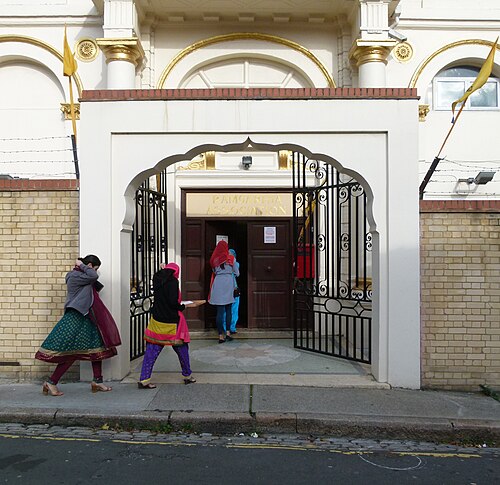
In the decades following Indian independence and, in East Africa, the era of decolonisation, many Ramgarhia families resettled further afield, building substantial communities in the United Kingdom (notably in cities such as Leeds, Bradford, Birmingham, and Southall in London), Canada (particularly in Ontario and British Columbia), and, to a lesser extent, the United States and other Commonwealth countries. These diaspora communities have founded numerous dedicated Ramgarhia gurdwaras and cultural associations. Examples include the Canadian Ramgarhia Society, which runs Gurdwara Sahib Brookside in Surrey, British Columbia, the Ramgarhia Sikh Society in Mississauga and the Ramgarhia Gurdwara in Stoney Creek, Ontario, and long established Ramgarhia gurdwaras and boards in the United Kingdom, including in Leeds and Birmingham, which continue to serve as centres of worship, Punjabi language and religious education, and community life.
6. Religion, Faith Practice, and Internal Diversity
The great majority of Ramgarhias are Sikh by religion, and the community's identity is closely tied to Sikh history through its traditional links to Bhai Lalo and service to the Sikh Gurus. As noted above, Ramgarhias are often observed to keep the outward articles of Sikh faith, including uncut hair and the turban, with particular consistency. That said, the community is not entirely uniform in religious practice. A segment of Ramgarhias associated with the nineteenth century Namdhari movement follows the dehdhari, or living guru, tradition, a practice that sits outside mainstream Sikh religious norms and has at times been a source of internal discussion between Khalsa oriented and Namdhari oriented sections of the community. Devotion to Vishvakarma as the community's patron of craftsmanship, described above, exists alongside mainstream Sikh religious practice rather than in place of it, and is shared with the Hindu Dhiman community, which is linked to the Ramgarhia through common clan (got) origins despite the two communities' religious differences.
7. Language
The everyday and community language of the Ramgarhia is Punjabi, written in the Gurmukhi script, in keeping with the broader Punjabi Sikh population. Religious practice follows mainstream Sikh liturgical tradition, centred on the Guru Granth Sahib and conducted in Gurmukhi Punjabi, without a separate liturgical language specific to the Ramgarhia community. In the diaspora, Punjabi language classes are commonly offered through Ramgarhia gurdwaras and community organisations as a way of keeping the language alive among younger generations.
8. Notable Figures
8.1 Historical and Religious Figures
- Jassa Singh Ramgarhia (1723 to 1803), founder and chief of the Ramgarhia Misl, one of the twelve major Sikh confederate misls of the eighteenth century, after whom the community's modern name is taken.
- Bhai Lalo of Eminabad, a carpenter and companion of Guru Nanak, regarded by the community as its earliest link to the Sikh faith.
- Baba Ram Singh (Satguru Ram Singh), nineteenth century leader of the Namdhari (Kuka) movement and an early organised opponent of British colonial rule in Punjab.
- Nand Singh, a revered Sikh saint associated with the Ramgarhia community.
8.2 Public Life and Sport
- Giani Zail Singh, elected the seventh President of India in 1982, the most prominent Ramgarhia Sikh to hold high public office.
- Harbhajan Singh, Indian international cricketer, of Ramgarhia community background.
- Jasprit Bumrah, Indian international cricketer, of Ramgarhia community background.
- Jatinder Singh, Omani international cricketer, who has spoken publicly about his family's generations long involvement in carpentry as part of the Ramgarhia community.
This list reflects individuals whose Ramgarhia community background is documented in published sources. It is meant to illustrate, not to be a complete record.
9. Contemporary Reflections
A few themes come up repeatedly in scholarly discussion of Ramgarhia identity today. One is the community's shift from a socially subordinate artisan caste, constrained by the jajmani system and colonial era land laws, into an economically successful and increasingly influential group, a change scholars connect closely to migration, education, and the decline of traditional agrarian caste structures. Another is the geographic and institutional divergence between Ramgarhia communities in Punjab, East Africa, and the wider Western diaspora, each of which has developed a somewhat different relationship to the core Ramgarhia identity, shaped by its own local history, economic opportunities, and social context. A third is the community's continuing internal diversity, spanning Khalsa observant Sikhs, sections that retain Namdhari religious practice, and shared cultural and clan ties to the Hindu Dhiman community, all of which remain part of ongoing community self understanding rather than settled or uncontested matters.
10. Conclusion
At its core, the Ramgarhia story is about artisans. Their technical skill in carpentry, blacksmithing, and construction, combined with a sustained devotion to the Sikh faith going back to the time of Bhai Lalo and Guru Nanak, carried them from a constrained position within Punjab's traditional agrarian caste order to a position of considerable social, economic, and institutional standing in modern Punjab and across a global diaspora. From the eighteenth century military and political achievements of Jassa Singh Ramgarhia and the Ramgarhia Misl, through the community's colonial era struggles against land ownership restrictions and its formation of self help organisations, to its substantial contribution to East African infrastructure and its present day gurdwaras and associations spanning Punjab, Assam, East Africa, the United Kingdom, Canada, and beyond, the Ramgarhia identity remains closely tied to craftsmanship, faith, and community self organisation.
References
- [1]1. Wikipedia. “Ramgarhia.” https://en.wikipedia.org/wiki/Ramgarhia
- [2]2. Wikipedia. “Jassa Singh Ramgarhia.” https://en.wikipedia.org/wiki/Jassa_Singh_Ramgarhia
- [3]3. Wikipedia. “Ramgarhia Misl.” https://en.wikipedia.org/wiki/Ramgarhia_Misl
- [4]4. Wikipedia. “Jodh Singh Ramgarhia.” https://en.wikipedia.org/wiki/Jodh_Singh_Ramgarhia
- [5]5. Wikipedia. “Other Backward Class.” https://en.wikipedia.org/wiki/Other_Backward_Class
- [6]6. Wikipedia. “Ontario Gurdwaras Committee.” https://en.wikipedia.org/wiki/Ontario_Gurdwaras_Committee
- [7]7. SikhiWiki. “Jassa Singh Ramgarhia.” https://www.sikhiwiki.org/index.php/Jassa_Singh_Ramgarhia
- [8]8. SikhNet. “Jassa Singh Ramgarhia.” https://www.sikhnet.com/news/jassa-singh-ramgarhia
- [9]9. All About Sikhs. “Historical Sikh Events: Ramgarhia Misl.” https://www.allaboutsikhs.com/historical-sikh-events-ramgarhia-misl/
- [10]10. The Times of India. “Ramgarhias in OBC list.” 31 August 2001. https://timesofindia.indiatimes.com/city/chandigarh/Ramgarhias-in-OBC-list/articleshow/433739102.cms
- [11]11. Canadian Ramgarhia Society, Gurdwara Sahib Brookside. https://ramgarhiabc.ca/
- [12]12. SikhiWiki. “Gurdwaras in Canada.” https://www.sikhiwiki.org/index.php/Gurdwaras_in_Canada
- [13]13. Singh, Joginder (2014). “Sikhs in Independent India.” In Singh, Pashaura; Fenech, Louis E. (eds.), The Oxford Handbook of Sikh Studies. Oxford University Press.
- [14]14. Judge, Paramjit S. (1996). Strategies of Social Change in India. M. D. Publications.
- [15]15. Kalsi, Sewa Singh (1992). The Evolution of a Sikh Community in Britain: Religious and Social Change Among the Sikhs of Leeds and Bradford. Community Religions Project, University of Leeds.
- [16]16. Singha, H. S. (2000). The Encyclopedia of Sikhism (over 1000 Entries). Hemkunt Press.
- [17]17. Childs, Peter (2013). Encyclopaedia of Contemporary British Culture. Routledge.
- [18]This profile draws on Wikipedia and other publicly available reference and community sources, current as of 2026. Community history, especially oral tradition and caste social history, can vary between sources, so readers looking for academic level certainty should consult the cited scholarly works directly.