

Bhatia Community
Explore the Bhatia community's rich history, origins, culture, and ancestry. Discover their mercantile legacy across Punjab, Rajasthan, Gujarat, and Sindh.
The Bhatia Community
Origins, History, Culture, and Ancestry of a North-Western Indian Mercantile Community
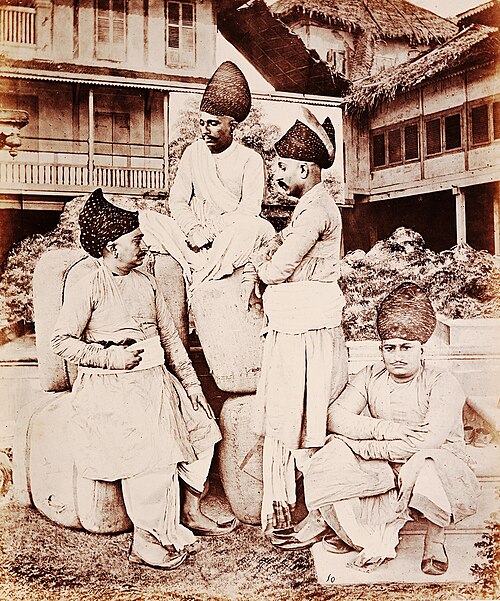
1. Introduction: Who Are the Bhatias?
The Bhatias are a mercantile community traditionally associated with the north-western regions of the Indian subcontinent, principally Punjab, Rajasthan, Gujarat (notably the Kutch and Saurashtra regions), and Sindh (now in Pakistan). Long recognised as one of India's most accomplished trading and business communities, the Bhatias built commercial networks that, by the eighteenth and nineteenth centuries, extended from Central Asia and the Persian Gulf to East Africa and Southeast Asia.
The community traces its ancestry to the Bhatti (or Bhati) clan of Rajputs, ruling lineages associated with Jaisalmer in Rajasthan, and holds that its name is itself a derivative of "Bhatti." Over the centuries, sections of the community moved out of Rajasthan into Sindh, Kutch, Saurashtra, and Punjab, gradually transitioning from a warrior and agrarian background into trade, banking, and shipping — a transition so complete that today the Bhatias are counted, alongside the Khatris, Aroras, and Lohanas, among the principal trading castes of north-western India.
This profile draws on published historical scholarship, ethnographic accounts, and general population-genetics literature on the mercantile communities of north-western India to outline what is reliably known about Bhatia origins, social organisation, religious life, customs, cuisine, and diaspora. As with any community history built substantially on oral tradition and colonial-era ethnography, some claims particularly precise dates and genealogical links should be read as community tradition rather than settled historical fact.
2. Origins and Early History
2.1 The Rajput and Bhatti Connection
Community tradition and much of the secondary literature trace the Bhatias to the Bhatti Rajput dynasty, a Yaduvanshi (Chandravanshi) lineage that ruled the Jaisalmer region of Rajasthan from around the twelfth century. The Bhatias regard themselves as descendants of this Bhatti stock and, by extension, claim Kshatriya (warrior-caste) origin, a claim reflected in the community's own name.
Historians who have examined the question caution that the community's precise geographical and social origins remain uncertain. The British-era ethnographer Alexander Cunningham derived the name "Bhatia" from "Bhat," meaning a warrior, while other colonial administrators such as Denzil Ibbetson linked the community to Bhatner, Jaisalmer, and the wider Rajputana region. The historian André Wink has traced a twelfth-century connection between the Bhatias of Jaisalmer and the Caulukya dynasty of Gujarat, while other scholars have placed an early Bhatia presence in Sindh as far back as the seventh century — indicating that the community's early history was shaped by more than one wave of migration rather than a single, cleanly documented event.
2.2 Migration to Sindh, Kutch, and Punjab
According to community tradition, a significant migration of Bhatia families from Jaisalmer toward Sindh took place in the early fourteenth century, a period that coincides with the Delhi Sultanate's military campaigns in Rajasthan, including Alauddin Khalji's siege of Jaisalmer around 1316 CE. In Sindh, the community settled around Thatta and the wider Multan trading region, and over succeeding generations took up agriculture and fishing before turning decisively toward commerce.
From Sindh, further waves of migration carried Bhatia families into the Kutch and Saurashtra regions of Gujarat from around the mid-fourteenth century onward, and into Punjab. This dispersal, over several centuries, is the source of the community's present-day regional sub-divisions (see Section 3), each shaped by the language, customs, and trading opportunities of its adopted region.
2.3 From Warriors and Agriculturists to Merchants
Multiple historians note that, prior to becoming a trading community, both the Bhatias and the closely related Lohanas were primarily agriculturists. Historian Chhaya Goswami describes the Bhatias' traditional ritual position in caste society as "ambiguous," neither straightforwardly high nor low, and identifies them as a traditional Bania (trading) caste. Sociologist A. M. Shah and historian Dwijendra Tripathi similarly place the Bhatias, alongside the Lohanas and Vaishnava Banias, within the Vaishya varna, the traditional merchant and trading class of Hindu society, while the community's own oral tradition continues to emphasise its Kshatriya, Rajput ancestry. Both threads — martial origin and mercantile destiny — are given weight in most serious historical treatments of the community, and are best understood as complementary rather than contradictory: a community that moved, over centuries, from land and arms into trade and finance.— the time large-scale European colonial trade reached the Indian Ocean, the Bhatias, together with the Khatris and Lohanas, were already established as one of the earliest identifiable Indian merchant diasporas in Central Asia. Historian Scott Levi, a specialist in the history of Central Asia, describes the trade and moneylending networks built by these communities as extending "across Afghanistan, Central Asia, and eventually reached even beyond the Arabian Peninsula and East Africa to the Caribbean islands in the west, and to Southeast Asia and China in the east."
3. Regional Sub-Groups
Centuries of dispersal across Rajasthan, Sindh, Gujarat, and Punjab produced a set of regionally rooted Bhatia sub-groups, each retaining a distinct dialect, and in some cases distinct customs, while sharing a common origin narrative and, among Hindu Bhatias, a common devotion to Vaishnavism.
| Sub-group | Region of association | Primary language |
|---|---|---|
| Kutchi Bhatia | Kutch, Gujarat | Kutchi |
| Halai Bhatia | Jamnagar / Halar region, Saurashtra, Gujarat | Halari (a Kutchi-related dialect) |
| Thattai Bhatia | Thatta, Sindh (historically); today largely diaspora in the Persian Gulf | Sindhi |
| Sindhi Bhatia | Sindh (Hyderabad, Nasarpur, and other towns) | Sindhi |
| Punjabi Bhatia | Punjab (India and Pakistan) | Punjabi |
| Veha / other minor groups | Bahawalpur and adjoining Saraiki-speaking tracts | Saraiki |
Sub-group names and regional associations as recorded in community histories and ethnographic literature; boundaries between groups are cultural and linguistic rather than administrative, and usage varies by source.
The Thattai, Halai, and Kutchi Bhatias are historically linked through their shared adherence to the Pushtimarg ("Path of Grace") tradition of Vaishnavism founded by Vallabhacharya, which shaped both their religious practice and their strictly vegetarian cuisine (see Section 9). Punjabi Bhatias, by contrast, include both Hindu and Sikh families and are more closely integrated with the wider Punjabi mercantile milieu of Khatris and Aroras.
Following the Partition of India in 1947, Sindhi and Thattai Bhatia families were displaced from Sindh; many resettled in Bombay (Mumbai), Gujarat, and other parts of India, while a substantial number of Thattai Bhatias subsequently migrated onward to the Persian Gulf states, where distinct diaspora communities persist to this day. Punjabi Bhatia families were similarly displaced across the new India–Pakistan border, with many resettling in Indian Punjab, Delhi, and other cities, while others remained in or resettled within Pakistani Punjab.
4. Genetics and DNA Ancestry
As a long-established, historically endogamous trading community of north-western India, the Bhatias are of interest to population genetics in the same way as related mercantile groups such as the Khatris, Aroras, and Lohanas, with whom they have historically intermarried and are frequently grouped in scholarly discussion.
Published population-genetic research on north-western Indian mercantile and trading communities generally finds a genetic profile shaped by two broad ancestry components: a Steppe-pastoralist-related, "Ancestral North Indian" (ANI) component associated with Indo-European-speaking migrations into South Asia in the Bronze Age, and an older, indigenous "Ancestral South Indian" (ASI) component shared with the broader South Asian population. North-western Indian trading and merchant castes, as a category, tend to show a substantial ANI component relative to many other South Asian groups, though the precise proportions vary considerably by study, by specific community, and by region — and no large, peer-reviewed, Bhatia-specific genome-wide study directly comparable to those available for some other South Asian communities was identified for this profile.
On the male (Y-DNA) line, the broader north-western Indian trading-caste milieu — of which the Bhatias form a part — has been associated in various regional genetic surveys with a mix of haplogroups including R1a (linked to Bronze Age Steppe migrations), R2, H, J2, and L, the last three generally understood as reflecting older, indigenous South Asian and West Asian trade-linked lineages. Because dedicated, methodologically robust genetic studies specific to the Bhatia community are limited, these patterns should be understood as indicative of the wider regional and occupational milieu the Bhatias belong to, rather than as confirmed, community-specific findings.
Like other historically endogamous merchant communities of India, sustained in-group marriage over many generations is expected to have produced somewhat reduced genetic diversity relative to more open-marrying populations, a pattern documented in general terms for comparable Punjab trading castes. This makes family genetic history and carrier screening a useful consideration for community members, as it is for many long-endogamous South Asian communities, though no Bhatia-specific founder-mutation research was located for this profile.
This section summarizes general patterns reported in the population-genetics and genealogical-DNA literature on north-western Indian trading communities; dedicated, large-sample genetic studies specific to the Bhatia caste are limited, ancestry estimates vary by study and reference panel, and individual DNA-test results may differ substantially from any community-level generalisation.
5. Social Structure and Position
Within the traditional caste order of north-western India, the Bhatias occupied a position broadly comparable to that of other major trading castes such as the Khatris, Aroras, and Lohanas, with whom they were historically known to intermarry on occasion despite their formally distinct identities. Historian Chhaya Goswami's characterisation of the Bhatias' ritual status as "ambiguous" — neither unambiguously high nor low in the traditional hierarchy — reflects the community's unusual dual heritage as both a claimed Kshatriya lineage and a working Vaishya (trading) caste.
The community engaged Saraswat Brahmins as family priests, a practice recorded in ethnographic literature on the community and shared with several other north-western Indian trading groups. Bhatia social organisation has traditionally centred on extended patrilineal families and clan or gotra groupings, with community associations, caste panchayats, and, in the diaspora, formal community organisations playing an important role in maintaining group identity, mutual support, and charitable activity.
Education, entrepreneurship, and reputation for commercial trustworthiness have long been central community values, and the Bhatias have historically shown strong representation in trade, industry, shipping, and, in more recent generations, in professional and corporate careers in India and across the diaspora.
6. Religion and Belief
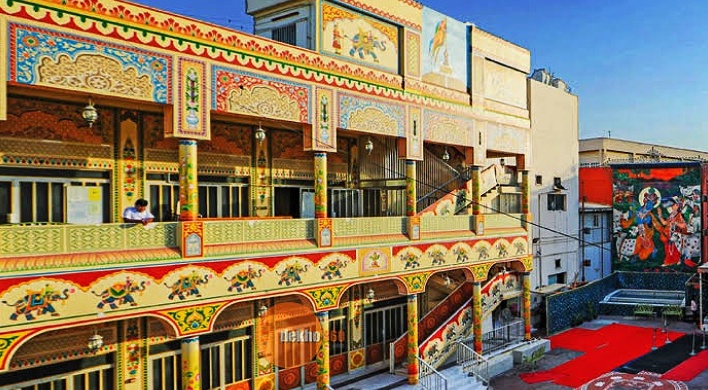
The great majority of Hindu Bhatias follow Vaishnavism, with particular devotion to Krishna and Rama as principal forms of Vishnu. Many Bhatia families, especially among the Kutchi, Halai, and Thattai sub-groups, are followers of the Pushtimarg ("Path of Grace") tradition founded by the sixteenth-century theologian Vallabhacharya, centred on devotion to Shrinathji, a child form of Krishna. This affiliation has shaped not only religious practice but also community dietary custom (see Section 9).
The community also maintains distinctive folk-religious devotions connected to its maritime and mercantile history, including reverence for Hinglaj Mata, whose principal shrine lies in present-day Balochistan, Pakistan, and for the sea itself, worshipped in some coastal Bhatia communities as Dariya Sagar or Dariya Lal, reflecting the importance of seaborne trade to community livelihood over many generations. Bhatia patronage has historically supported major Vaishnava institutions; the Dwarkadhish Temple at Dwarka in Gujarat, for instance, has been a significant beneficiary of Bhatia religious giving, and the historic Shrinathji Temple in Bahrain — said to be the oldest Hindu temple in the Gulf region — was built in 1814 and continues to be managed by the Thattai Bhatia community there.
A smaller number of Bhatia families are Jain by faith, reflecting the same broader north-western Indian mercantile milieu, shared closely with the Vaishnava Bania communities, in which Vaishnav Hindu and Jain trading families have long lived and traded side by side.
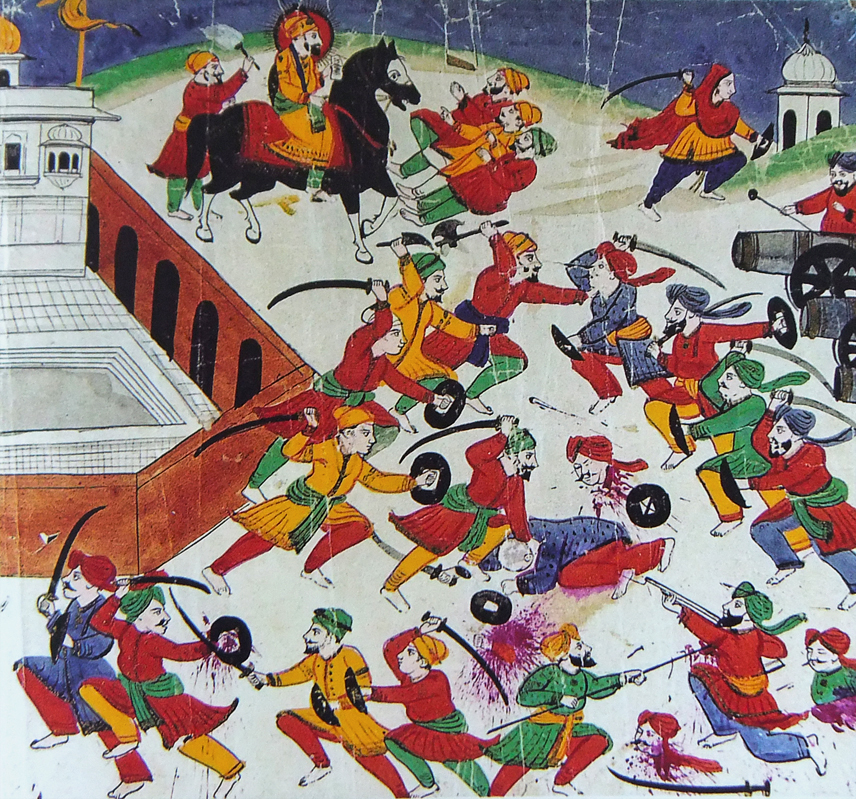
A significant minority of the community, especially among Punjabi Bhatias, embraced Sikhism from the community's early years. Bhai Banno, son of Bishan Chand Bhatia of village Mangat (in present-day Gujrat district, Pakistan), was a devoted follower of the fifth Sikh Guru, Guru Arjan, and played a recorded role in the preparation of an early recension of the Sikh scripture, the Adi Granth, historically known as the "Banno Bir." Sikh Bhatia soldiers are also recorded among the small Sikh forces at two of the most commemorated engagements in Sikh history: the Battle of Chamkaur (1704) and the Battle of Muktsar (1705), both fought against Mughal forces.
7. Marriage, Family, and Social Customs
Bhatia marriage has traditionally been endogamous within the wider community while exogamous with respect to gotra and close kin, with community norms in some regions historically requiring that a match fall outside seven generations of shared descent. Marriages have traditionally been arranged through family networks, with caste associations in many cities historically playing a role in facilitating introductions; as with most South Asian communities, contemporary practice increasingly includes love marriages and marriages negotiated directly between individuals, alongside continuing family involvement.
Wedding ceremonies among Hindu Bhatias generally follow the wider North Indian and Gujarati Vaishnava Hindu template — engagement, mehendi, sangeet, a Vedic wedding ceremony (vivaah) with the sacred fire and the saat phere (seven circumambulations), followed by a reception — with regional inflections drawn from the family's specific sub-group (Kutchi, Halai, Thattai, Sindhi, or Punjabi) and its associated language and local custom. Sikh Bhatia families follow the Anand Karaj ceremony conducted in a gurdwara, in keeping with Sikh Rehat (code of conduct).
Extended family ties remain strong, with community and caste associations — active in India and across major diaspora centres — continuing to organise cultural events, matrimonial networking, and charitable and educational initiatives on the community's behalf.
8. Language
The Bhatias are notable for their linguistic diversity, a direct legacy of the community's dispersal across several distinct linguistic regions of the subcontinent. Kutchi Bhatias speak Kutchi; Halai Bhatias speak Halari, a related dialect associated with the Halar region around Jamnagar; Sindhi and Thattai Bhatias speak Sindhi; and Punjabi Bhatias speak Punjabi. Bhatia families in the Saraiki-speaking tracts around Bahawalpur speak Saraiki. Hindi and, for diaspora families, the language of the host country (English, Arabic, and others) are widely spoken alongside these community languages, particularly among younger generations.
9. Cuisine
Bhatia cuisine varies considerably by sub-group and historically included both vegetarian and non-vegetarian traditions; British-era ethnographic sources record that the community as a whole was not originally strictly vegetarian. Over time, however, the Kutchi, Halai, and especially Thattai Bhatia sub-groups adopted strict lacto-vegetarianism, avoiding onion and garlic as well as certain pulses such as masoor dal and rajma, in keeping with the Saatvik (pure) dietary principles of the Pushtimarg Vaishnava tradition to which many families adhere.
- Bhee (lotus stem) dishes — a defining ingredient of Thattai Bhatia and wider Sindhi cuisine, prepared as a vegetable curry, in pickles, or as a sun-dried snack.
- Kadhi — a yogurt-and-gram-flour based curry; "Bhatia Kadhi" is recognised within Sindhi culinary circles as a distinct community variant.
- Palka jo Saag and Methi Vanghar — leafy-green and fenugreek preparations traditionally cooked in an iron wok (locally, the lo ji kadai), valued for both flavour and iron content.
- Macroli phoolpatasha and macroli patata — macaroni-based dishes reflecting the historical influence of European trade contacts on Sindhi and Thattai Bhatia cooking.
- Red rice flour preparations — dishes made from unhulled or partially hulled red rice, valued in Thattai Bhatia cooking for their nutty flavour and nutrient content.
- Sayun (sweetened vermicelli) and other festive sweets, prepared for community festivals such as Cheti Chand and Diwali.
A traditional meal in many Bhatia households, particularly among the Thattai Bhatia, follows an unusual sequence by North Indian standards: rice is served first, followed by phulka (flatbread) courses, rather than the reverse order common elsewhere in India.
10. Traditional Dress and Ornaments
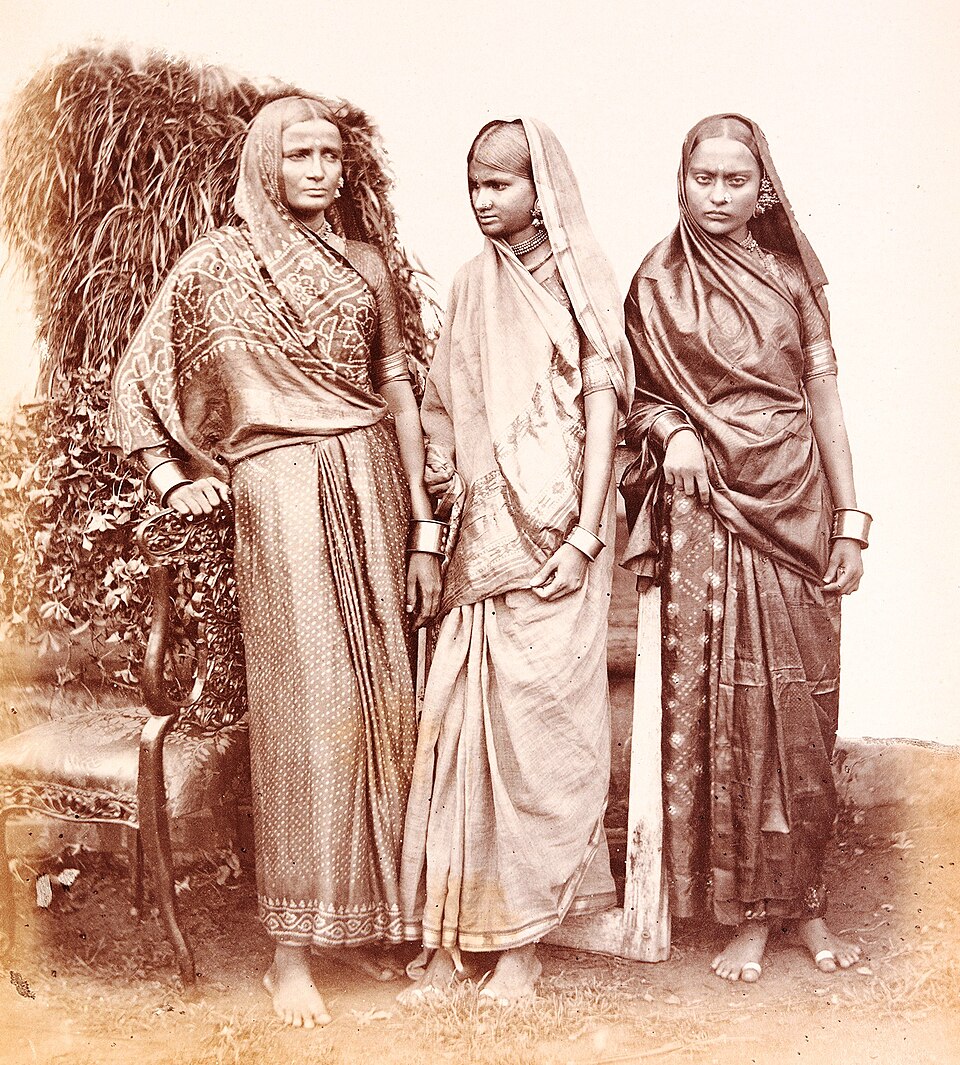
Historic Bhatia dress reflected the community's regional dispersal as much as a single unified style. Women traditionally wore regionally distinctive saris and odhnis (draped veils/shawls) — Kutchi and Halai Bhatia women's dress showing the embroidery and mirror-work traditions associated with Kutch and Saurashtra, while Sindhi and Thattai Bhatia women's traditional dress reflected Sindh's ghagra-choli and ajrak-influenced textile traditions. Gold jewellery, including bangles, necklaces, and nose ornaments, has traditionally held both ornamental and ceremonial significance, particularly as part of bridal trousseau.
Men traditionally wore the dhoti or the regionally styled pajama-kurta, with formal or ceremonial occasions calling for a jacket or achkan. As with most Indian mercantile communities of the twentieth and twenty-first centuries, everyday dress has largely converged with mainstream Indian and, for diaspora families, Western fashion, with traditional attire reserved chiefly for weddings, religious festivals, and community events.
11. Diaspora
The Bhatias were among the earliest identifiable Indian merchant communities to establish an overseas trading diaspora, with a documented presence in Central Asia, Afghanistan, and along Indian Ocean trade routes well before European colonial trade reshaped the region. Bhatia trading families from Thatta in Sindh established an early and long-lasting settlement in Muscat, Oman, from where they conducted trade linking the Arabian Peninsula and India; the historical figure Sewjee Topan is recorded as an influential Bhatia trader at the Omani court under Sultan Seyyid Said in the nineteenth century.
From the nineteenth century onward, Bhatia trading families extended their networks further into East Africa — notably Zanzibar, Kenya, and other coastal territories — as well as to Southeast Asia. In Mumbai (then Bombay), Kutchi and other Bhatia families became prominent in the city's mercantile and industrial life from the nineteenth century, with figures such as Sheth Gokuldas Tejpal Bhatia, a major philanthropist who endowed hospital and educational institutions in Mumbai and Kutch, illustrating the community's long tradition of business success paired with charitable giving.
The Partition of India in 1947 significantly reshaped the community's geography: Sindhi and Thattai Bhatia families were displaced from Sindh, with many resettling in India, and, over subsequent decades, migrating onward to the Gulf states particularly Bahrain, Dubai, and other parts of the UAE where organised Thattai Bhatia community life, including dedicated temples and cultural associations, continues today. Punjabi Bhatia families were similarly displaced, resettling on both sides of the new India–Pakistan border. In the later twentieth and twenty-first centuries, professional and business migration has additionally established smaller Bhatia communities in the United Kingdom, North America, and other parts of the world, generally maintaining active caste and cultural associations to preserve community ties and support new arrivals.
12. Notable Figures
The following names are illustrative examples drawn from published, publicly available sources rather than an exhaustive record; the Bhatia community has produced a substantial number of business leaders, philanthropists, and public figures across India, Pakistan, the Gulf, and the wider diaspora over the past two centuries.
- Sheth Gokuldas Tejpal Bhatia (19th century) — a leading Mumbai-based merchant and philanthropist originally from Kothara, Kutch, remembered for endowing the G. T. Hospital and associated educational institutions in Mumbai, as well as schools in Kutch.
- Nagarsheth Topan Bhatia (16th–17th century) — a prominent trader invited to the newly founded port city of Mandvi in Kutch by the ruler Rao Khengarji I, credited with developing Mandvi's trade and shipping and with commissioning the historic Lakshminarayan Temple there in 1607.
- Sewjee Topan — a Bhatia trader recorded as an influential figure at the Omani royal court under Sultan Seyyid Said in the nineteenth century, part of the community's long-standing trading presence in Muscat.
- Bhai Banno — a devoted Sikh follower of Guru Arjan associated with an early recension of the Adi Granth (the "Banno Bir"), and, according to Sikh historical tradition, connected with the initiation of Maharaja Ranjit Singh's ancestors into Sikhism.
- The Morarji Gokuldas, Khatau, and Thackersey business families — Bhatia-associated Mumbai industrial families historically prominent in the city's textile-mill and shipping industries (including ventures such as Varun Shipping), which contributed significantly to the city's industrial growth from the nineteenth century onward.
13. Conclusion
The Bhatias illustrate a pattern seen among several of north-western India's leading trading communities: a lineage claiming martial, Rajput origins that, over some seven centuries of migration across Rajasthan, Sindh, Gujarat, and Punjab, transformed into one of the subcontinent's most far-reaching mercantile diasporas. From the Bhatti forts of Jaisalmer to the trading houses of Mandvi, Muscat, Zanzibar, and Mumbai, and on to contemporary community life in the Persian Gulf and around the world, the Bhatia story combines a distinctive regional diversity of language and custom with a shared devotion, for most of the community, to Vaishnava tradition, and a long, well-documented reputation for commercial enterprise. As with many South Asian communities whose history rests significantly on oral tradition and colonial-era ethnography alongside more recent scholarship, some elements of the Bhatia origin story remain a matter of community memory rather than settled historical record — a reminder that family history, archival research, and, where available, genetic testing each offer a complementary, partial window onto a community's past.
References
- [1]1. Wikipedia. "Bhatia caste." https://en.wikipedia.org/wiki/Bhatia_caste
- [2]2. Goswami, Chhaya. Globalization before Its Time: The Gujarati Merchants from Kachchh. Penguin UK, 2016.
- [3]3. Levi, Scott. "Multanis and Shikarpuris: Indian Diasporas in Historical Perspective," in Global Indian Diasporas: Exploring Trajectories of Migration and Theory, ed. Gijsbert Oonk. Amsterdam University Press, 2007.
- [4]4. Wink, André. Al-Hind – The Making of the Indo-Islamic World: The Slave Kings and the Islamic Conquest, 11th–13th Centuries, Vol. 2. E. J. Brill, 1997.
- [5]5. Tripathi, Dwijendra. Business Communities of India: A Historical Perspective. Manohar, 1984.
- [6]6. Shah, A. M. The Structure of Indian Society: Then and Now. Routledge, 2012.
- [7]7. Markovits, Claude. The Global World of Indian Merchants, 1750–1947: Traders of Sind from Bukhara to Panama. Cambridge University Press, 2000.
- [8]8. Falzon, Mark-Anthony. Cosmopolitan Connections: The Sindhi Diaspora, 1860–2000. Brill, 2004.
- [9]9. Puri, Baij Nath. The Khatris, a Socio-cultural Study. M. N. Publishers and Distributors, 1988.
- [10]10. DNA India. "Meet the Bhatias: Small community, big achievements." https://www.dnaindia.com/lifestyle/report-meet-the-bhatias-small-community-big-achievements-2112415
- [11]11. Journal of Ethnic Foods (Springer Nature). "Tracing the journey of Thattai Bhatia community through their culinary identity." https://link.springer.com/article/10.1186/s42779-021-00108-1
- [12]12. GOYA. "Thathai Bhatias & A Desert Cuisine Rooted in Migration." https://www.goya.in/blog/thathai-bhatias-a-desert-cuisine-rooted-in-migration
- [13]13. Panja Khada – The Official Thathai Bhatia Food Website. https://panjakhada.com/
- [14]14. Wikipedia. "Thattai Bhatias." https://en.wikipedia.org/wiki/Thattai_Bhatias
- [15]15. Wikipedia. "Sindhi cuisine." https://en.wikipedia.org/wiki/Sindhi_cuisine
- [16]16. Singha, H. S. The Encyclopedia of Sikhism (over 1000 Entries). Hemkunt Press, 2000.
- [17]17. Singh, Jagjit. The Sikh Revolution: A Perspective View. Bahri, 1981.
- [18]18. Grokipedia. "Bhatia caste." https://grokipedia.com/page/Bhatia_caste
- [19]19. Bipin Thanky. "Bhatia community of Gujarat." http://bipinthanky.blogspot.com/2017/07/bhatia-community-of-gujarat.html