

Maharashtra Kshatriya Community
Explore Maratha Kshatriya ancestry, history, and cultural traditions in Maharashtra. Delve into lineages, Shivaji Maharaj's era.
The Kshatriya-Identifying Maratha Communities of Maharashtra
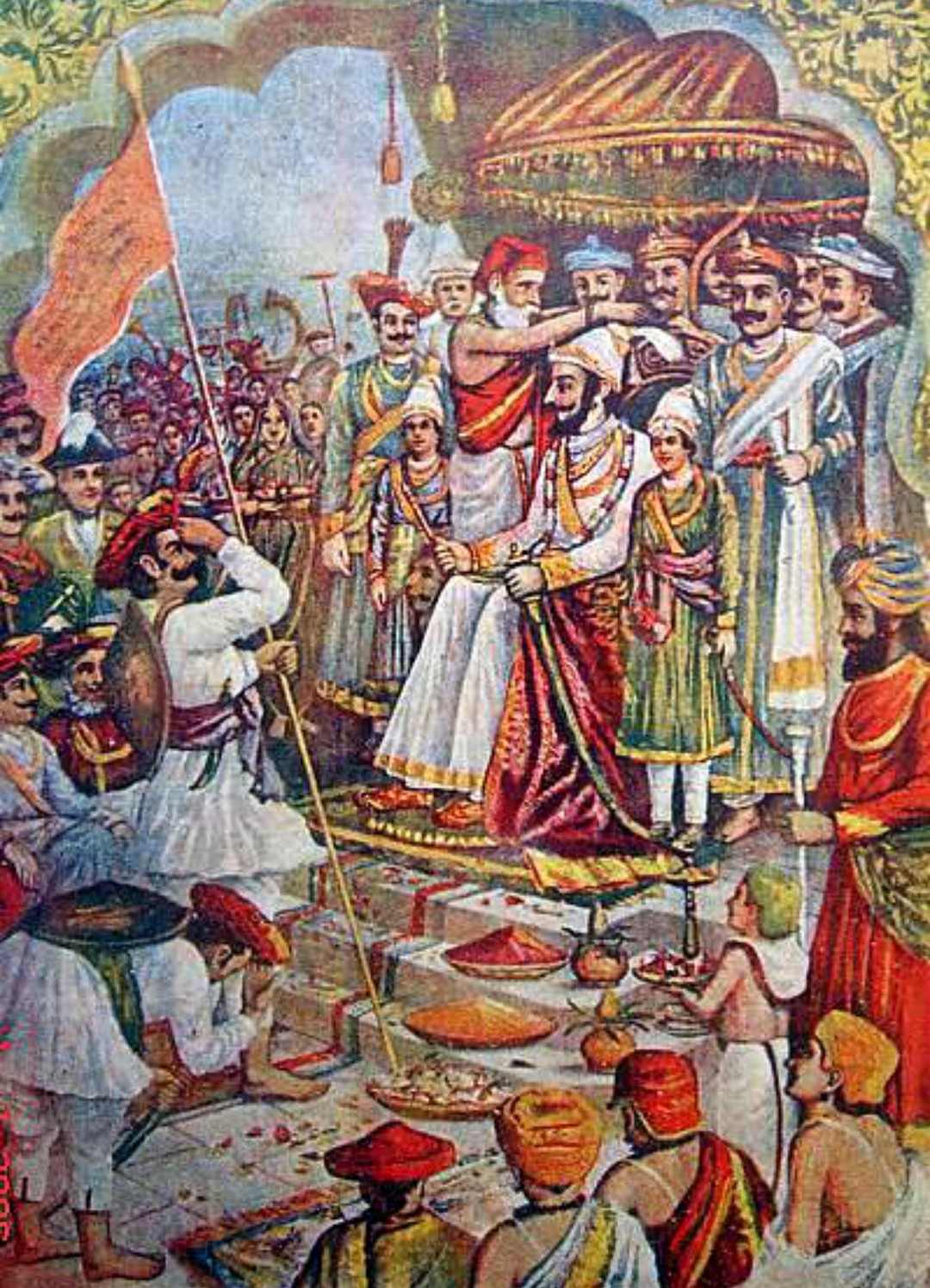
History, Identity, Culture, Kinship, Folklore, and Contemporary Life
Note on Terminology
“Kshatriya” is a classical varna category associated in Hindu textual traditions with rulership, warfare, protection, and political authority; it is not, by itself, the name of one single modern endogamous community. In Maharashtra, Kshatriya identity has historically been expressed through different regional and family traditions. The best-documented and most important case is the Maratha world, especially families and lineages that have historically described themselves as Kshatriya. This profile therefore uses “Maharashtra Kshatriya” as a cultural-historical umbrella while focusing primarily on Maratha Kshatriya-identifying traditions.
This distinction matters. It would be inaccurate to state that every person who identifies as Maratha is Kshatriya, or that every Maratha lineage shares one identical ancestry, ritual status, or historical experience. Government gazetteers and modern scholarship describe the relationship between Maratha and Kunbi identities as historically complex, with regional and social variation. The purpose of this profile is to document traditions respectfully rather than settle caste-status debates.
1. Introduction: Who Are Maharashtra’s Kshatriya-Identifying Marathas?
The Kshatriya idea has a long history in South Asian political and religious thought. In classical Hindu social theory, Kshatriyas were associated with kingship, military protection, governance, and the defence of political order. In practice, however, the social history of India was far more varied than a simple four-varna model suggests. Modern historians therefore distinguish between the textual category of Kshatriya and the many regional communities that have claimed, inherited, negotiated, or been assigned Kshatriya status at different times.
In Maharashtra, the strongest historical association between Kshatriya identity and a regional political community is found in the Maratha world. The term “Maratha” itself has changed meaning over time. In the early-modern Deccan it could function as a broad regional and military designation; over the colonial period it increasingly became a more clearly defined caste/community category. Prachi Deshpande’s scholarship emphasizes this historical transformation and the importance of studying Maratha identity in its regional context.
Within the broader Maratha population, some families and lineages have maintained traditions of Kshatriya descent, royal or chiefly ancestry, martial service, sacred genealogy, and high-status ritual practice. The celebrated example is the Bhonsle lineage of Chhatrapati Shivaji Maharaj. Other Maratha families developed their own histories through service to local rulers, military organization, landholding, village leadership, and later participation in political and educational institutions.
Consequently, “Maharashtra Kshatriya” is best understood as a historical-cultural identity rather than a single uniform biological or social group. Family histories, surnames, kul traditions, regional customs, and marriage networks can differ substantially from one district to another.
2. Historical Background
Maharashtra occupies a strategic position in the Deccan, connecting the western coast, the plateau, and routes toward central and southern India. Its social history was shaped by long interaction among farming communities, village officials, military households, merchants, religious institutions, artisans, pastoral groups, and ruling dynasties.
Before the rise of the Maratha state, the region had been governed by several major powers, including the Yadavas of Devagiri, the Bahmani Sultanate, and the Deccan Sultanates of Ahmadnagar and Bijapur. Marathi-speaking military and landed families served different states and gradually accumulated political experience, property, local authority, and networks of patronage.
During the seventeenth century, the emergence of Shivaji transformed these existing social and military networks into a new political order. Stewart Gordon’s study of the Marathas emphasizes the importance of elite families, loyalty networks, military organization, land rights, revenue arrangements, and the strategies through which political legitimacy was constructed.
The historical record therefore does not support a simple story in which a single, unchanged Kshatriya community suddenly appeared in the seventeenth century. Instead, Kshatriya ideals interacted with older Deccan lineages, military service, landholding, political patronage, genealogy, and changing social boundaries.
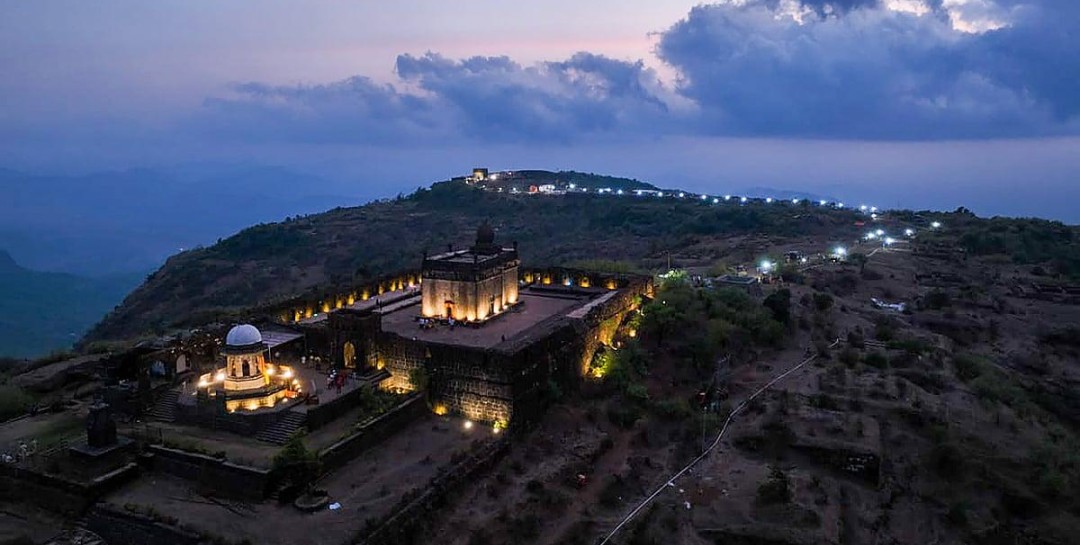
3. Shivaji Maharaj and the 1674 Coronation
Chhatrapati Shivaji Maharaj is the central historical figure in the Kshatriya traditions of Maharashtra. His coronation at Raigad in 1674 was not merely a ceremonial event; it was an important statement about sovereign kingship, political legitimacy, and the status of the new Maratha state.
Before the coronation, questions concerning the appropriate ritual status and genealogy of Shivaji had to be addressed. The learned Brahmin Gagabhatta of Banaras played a prominent role in the ritual preparations and accepted a genealogy connecting Shivaji’s Bhonsle family with the Sisodia rulers of Mewar. The coronation was subsequently performed with Vedic and royal rites appropriate to the political claim being made.
The historical interpretation of this episode is complex. Contemporary and later sources differ in how they explain the genealogy and the social meaning of the ceremony. Modern historians therefore treat the coronation as an important example of how genealogy, ritual, political authority, and ideas of Kshatriya kingship could reinforce one another. This profile records the event without presenting one disputed genealogical interpretation as an established biological fact.
After the coronation, Shivaji used royal titles and symbols that explicitly emphasized Kshatriya kingship. The ceremony helped place the Maratha state within the wider Sanskritic language of sovereignty while also giving political form to a distinctly Deccan kingdom.
4. The Maratha Polity and the Expansion of Maratha Power
After Shivaji’s death in 1680, the Maratha polity survived major military pressures and continued to develop. Under later rulers and ministers, particularly during the eighteenth century, Maratha power expanded across large parts of the Indian subcontinent.
The Maratha political system was not a centralized empire in the same sense as the Mughal or Roman models. Stewart Gordon describes it as a changing political order in which military commanders, ruling families, revenue rights, local elites, and political alliances were continuously negotiated. Major houses associated with the wider Maratha political world included the Bhonsles, Shindes (Scindias), Holkars, Gaekwads, Pawars, and other influential families.
Maratha military organization included cavalry, infantry, forts, artillery, local levies, and networks of commanders. Forts such as Raigad, Pratapgad, Sinhagad, Rajgad, and others became enduring symbols of Maratha political memory.
The eighteenth century also saw the development of important administrative and revenue practices. Maratha power affected political and commercial life far beyond present-day Maharashtra, leaving a substantial historical legacy in central, western, and northern India.
5. Kula, Clan, Surnames, Devak, and Family Deities
Kinship is an important part of many Maratha family traditions. Families may identify themselves through a surname, kula or lineage tradition, gotra in contexts where it is used, a kuladevata or family deity, and a devak. These elements can differ considerably between regions and families.
The famous tradition of the “96 clans” (Shahannava Kuli) is widely associated with Maratha identity. It should be treated as a historical and genealogical tradition rather than as one universally fixed list. Published lists vary, and not every Maratha family uses the same classification.
Maratha surnames include many names associated historically with families, places, occupations, titles, military service, or local authority. Examples found in historical literature include Bhonsle/Bhosale, Shinde, Holkar, Gaekwad, Pawar, More, Mohite, Ghorpade, Jadhav, Kadam, Chavan, and others. A surname alone, however, cannot reliably establish a person’s caste, clan, or ancestry.
Devak traditions are especially notable. A devak may be a plant, tree, animal, natural object, or symbolic object associated with a lineage and used in marriage rituals. Historical ethnographic descriptions record restrictions on marriage between families sharing the same devak in some traditions. Because practices vary, these customs should be understood as family traditions rather than universal rules.
Family deities (kuladevata or kuladaivata) are another important feature. Depending on lineage and region, families may revere deities such as Bhavani, Khandoba, Mahadev, Ganapati, Renuka, Jyotiba, Ekvira, or other regional and household gods and goddesses. Worship may involve visits to ancestral temples, annual family gatherings, offerings, vows, and festivals.
6. Language and Literary Culture
Marathi is the principal language associated with the cultural history of Maharashtra and has been central to Maratha political and family life for centuries. Regional speech varies across the state, including differences between Desh, Konkan, Khandesh, Vidarbha, and other areas.
Marathi literary culture includes devotional poetry, saint literature, bakhar chronicles, court records, family documents, letters, genealogies, and oral narratives. The bhakti traditions of figures such as Dnyaneshwar, Namdev, Eknath, Tukaram, and Ramdas shaped the broader religious and literary environment of Maharashtra, even though these traditions cannot be treated as belonging exclusively to any one caste.
Maratha historical memory is also preserved through powada, a Marathi heroic ballad tradition associated with the celebration of warriors, battles, rulers, and notable events. Powadas have helped transmit stories of Shivaji Maharaj, his commanders, forts, and later Maratha heroes.
7. Religion, Worship, and Sacred Geography
Most traditional Maratha Kshatriya-identifying families have historically followed Hindu religious practices, while individual families may emphasize different sectarian traditions. Shaiva, Vaishnava, Shakta, Ganapatya, and local devotional practices can coexist within the same extended family.
Bhavani of Tuljapur has a particularly prominent place in the historical memory surrounding Shivaji Maharaj. Khandoba of Jejuri is another major deity in Maharashtra with a wide social following and strong connections to pastoral, agrarian, warrior, and household traditions. The worship of local village deities and guardian spirits has also been important in rural Maharashtra.
Temples, forts, pilgrimage centres, village shrines, and ancestral places form a sacred geography linking families to particular regions. Family visits to ancestral villages and kuladevata temples remain meaningful even for people who now live in cities or outside Maharashtra.
8. Marriage and Family Traditions
Traditional marriage arrangements have historically been organized around kinship, family reputation, lineage, ritual compatibility, and community networks. In some families, marriage rules take account of kula, gotra, devak, and close blood relationships. The precise rules vary considerably.
Wedding ceremonies commonly include Ganapati worship, family deity invocations, the exchange of garlands, antarpat, mangalashtaka recitations, kanyadan or other family-specific rites, saptapadi or related fire rituals, and blessings from elders. Modern weddings often combine customary rites with contemporary venues, photography, professional catering, and smaller guest lists.
Historically, marriage was embedded in extended-family networks and could strengthen ties between landholding, military, administrative, and village families. Today, education, urbanization, professional mobility, and digital matchmaking have broadened the ways in which families meet potential spouses.
Widowhood, age at marriage, and women’s participation in education and employment have also changed significantly over time. It is therefore important not to describe older customs as universal features of present-day Maratha families.
9. Festivals and Seasonal Traditions
Festival life combines pan-Indian Hindu observances with distinctive Maharashtrian customs. Gudi Padwa, the Marathi New Year, is widely celebrated with the raising of a gudi at the household entrance and family worship. The festival is associated with renewal, prosperity, and the beginning of a new annual cycle.
Ganesh Chaturthi has an especially strong public and household presence in Maharashtra. Families install images of Ganesha, perform daily worship, invite relatives and neighbours, and conclude the observance with immersion. Public Ganesh festivals became especially influential in modern Maharashtra.
Other important observances include Navratri, Dussehra, Diwali, Holi, Makar Sankranti, Nag Panchami, Hanuman Jayanti, Mahashivratri, and local jatra or temple festivals. Rural families may also observe agricultural festivals such as Pola, which honours working cattle and reflects the importance of agriculture in the region.
Family-specific festivals can centre on the kuladevata, ancestral village, or a local shrine. Such practices are often strongest among households that maintain an active relationship with their ancestral village.
10. Food and Culinary Culture
Maharashtrian food is regionally diverse, and there is no single “Kshatriya cuisine.” Traditional rural diets have often been shaped by local agriculture, climate, household income, and religious practice.
Common Maharashtrian staples include bhakri made from jowar or bajra, rice, varan, amti, pithla, vegetables, pulses, chutneys, pickles, and seasonal greens. In different parts of Maharashtra, wheat, rice, millets, and pulses have varying importance.
Festive foods include puran poli, modak, shrikhand, basundi, karanji, ladoos, and a wide range of savoury preparations. Non-vegetarian food is also part of the culinary traditions of many Maratha households, although dietary practice differs by family, region, religious observance, and personal preference.
Food is often an important expression of hospitality. Wedding feasts, temple meals, harvest celebrations, and family gatherings have traditionally provided occasions for relatives and neighbours to share regional dishes.
11. Traditional Dress and Ornaments
Traditional male dress in Maharashtra includes the dhotar, kurta or sadra, pheta or pagadi, and, in some settings, the angarkha or waistcoat. The style and colour of the turban could communicate region, occasion, or family tradition.
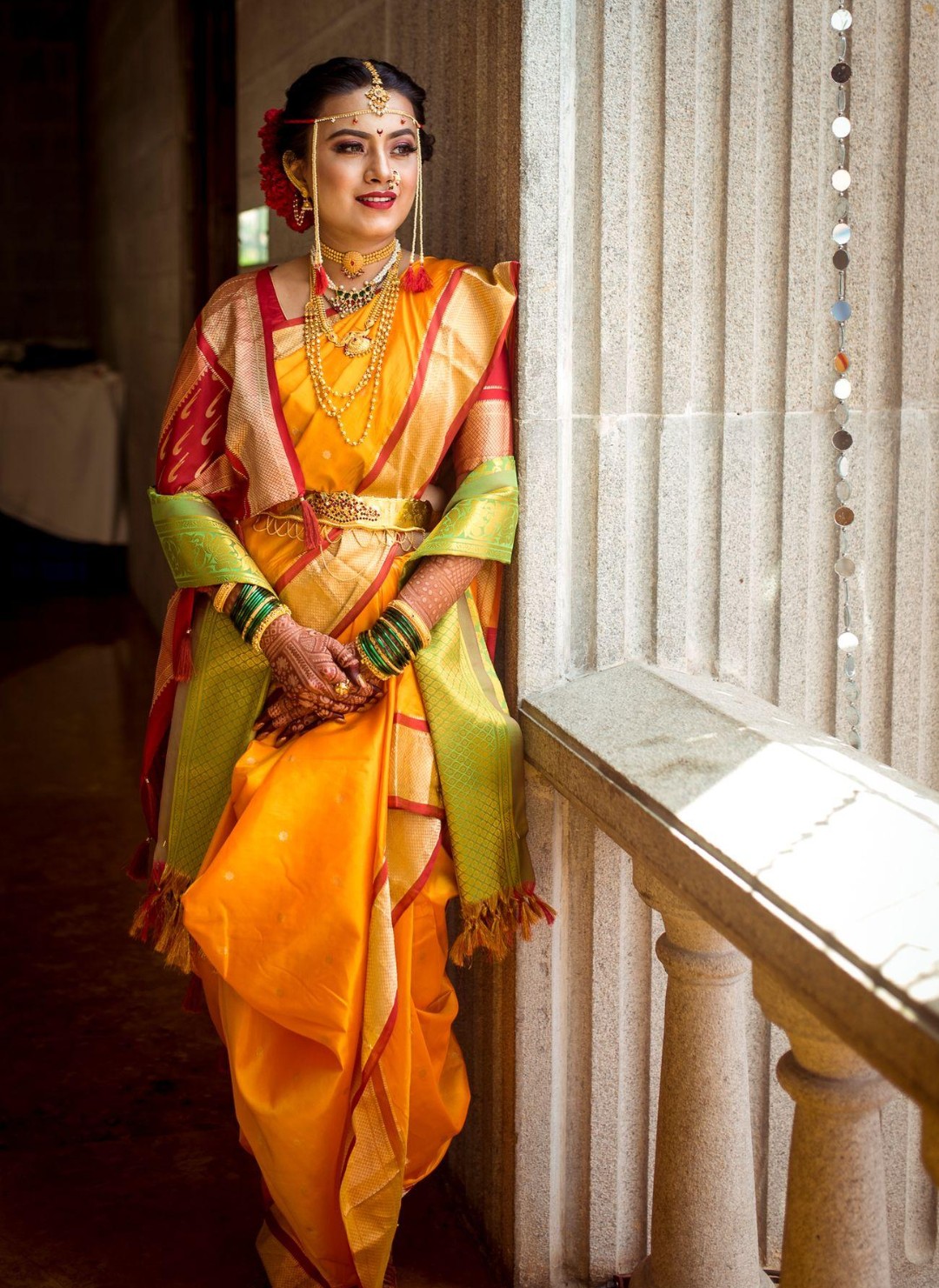
Women’s traditional clothing includes the nauvari or nine-yard sari and other regional sari styles. The nauvari is particularly associated with the mobility required for rural and working life and has become a powerful symbol of Maharashtrian cultural identity.
Traditional jewellery may include the nath, thushi, tanmani, bugadi, patlya, bangles, necklaces, and other regional forms. Jewellery traditions vary by district, family, economic status, and occasion.
Modern clothing is now dominant in everyday life, while traditional dress remains common at weddings, religious ceremonies, cultural events, festivals, and historical commemorations.
12. Houses, Villages, Forts, and Material Culture
Traditional rural Maharashtra included courtyard houses, wadas, tiled roofs, wooden structural elements, agricultural storage spaces, and arrangements adapted to local climate and available materials. Larger families and elite households could occupy substantial wadas with multiple rooms and courtyards.
Village life historically revolved around agriculture, water resources, temples, markets, local offices, and networks of kinship and service. The patil, village headman, was an important local institution in many areas, although village administration varied across time and region.
Forts are among the most visible elements of Maratha historical heritage. Raigad, Rajgad, Pratapgad, Sinhagad, Torna, and numerous other forts are closely associated with the political and military history of the Maratha period. They are now major heritage and tourism sites as well as places of family and regional memory.
Traditional objects such as swords, spears, shields, farming implements, household copperware, wooden chests, religious icons, and manuscripts may survive in old family homes. Such objects are valuable as family heritage, but their interpretation should be supported by provenance rather than assumed solely from family stories.
13. Folklore, Oral Tradition, and Historical Memory
Oral tradition is one of the richest aspects of Maharashtra’s Maratha cultural heritage. Families preserve stories about ancestors, military service, land, village leadership, migration, temple patronage, marriages, and relationships with historical rulers.
Powadas are especially important as performance traditions. They use music, rhythm, poetry, and dramatic narration to remember heroic figures and events. Stories of Shivaji Maharaj and his commanders are among the most prominent examples.
Family genealogies, kulavrittantas, old letters, copper-plate or land records, temple registers, and household manuscripts can supplement oral history. Oral narratives are valuable historical evidence, but they should be distinguished from independently verified historical documentation. Different branches of the same family can preserve different versions of an origin story.
Folk memory also survives through festivals, village jatras, devotional songs, proverbs, sayings, and stories associated with local deities. These traditions show how historical identity is transmitted not only through books but through performance and everyday family practice.
14. Traditional Livelihoods and Social Organization
Agriculture has historically been one of the most important occupations associated with Maratha society. Farming households cultivated crops suited to local conditions, including jowar, bajra, wheat, rice, pulses, sugarcane, cotton, and oilseeds in different regions.
Military service was another major historical pathway. Maratha rulers and chiefs relied on networks of cavalrymen, infantrymen, commanders, fort personnel, and local officials. Military service could provide land, revenue rights, status, and opportunities for political advancement.
Village leadership and landholding were also important. Families holding patil, deshmukh, deshpande, or related local offices could acquire substantial authority, although these offices were not exclusive to one community in every period or place.
In the nineteenth and twentieth centuries, the occupational profile broadened dramatically. Education, government employment, law, teaching, medicine, business, industry, engineering, and politics became increasingly important. The growth of cities such as Mumbai, Pune, Nagpur, Nashik, Kolhapur, and Aurangabad/Chhatrapati Sambhajinagar accelerated this transition.
15. Education, Reform, and Public Life
Modern education changed Maharashtra profoundly. Schools, colleges, universities, print culture, social-reform movements, and political organizations created new opportunities for rural and urban families.
Maratha educational organizations and institutions played an important role in expanding access to schooling, especially in the twentieth century. Cooperative institutions, including sugar cooperatives, also became important in parts of rural Maharashtra and contributed to the development of local economic and political networks.
Chhatrapati Shahu Maharaj of Kolhapur is remembered for educational and social reforms, while Karmaveer Bhaurao Patil is strongly associated with expanding education among rural populations through the Rayat Shikshan Sanstha. Their legacies are broader than one caste, but they are important to understanding the educational history of Maharashtra.
Contemporary Maratha families are represented across many professions. Community identity may coexist with strongly modern identities based on education, occupation, region, language, and urban experience.
16. Diaspora and Contemporary Life
Migration from Maharashtra has taken several forms. Families moved from villages to nearby towns, from smaller cities to Mumbai and Pune, and from Maharashtra to other Indian states. More recently, professionals and students have established communities in North America, Europe, the Gulf, Australia, and other parts of the world.
Migration has changed family organization. Joint families remain important in some households, but nuclear households are common in cities. Digital communication, family WhatsApp groups, online genealogical projects, and social media have created new ways of maintaining links with ancestral villages and relatives.
Many families continue to return to their native villages for weddings, temple festivals, funerals, ancestral ceremonies, or annual kuladevata visits. These journeys help preserve a sense of continuity even when everyday life is urban or overseas.
17. Genetics and Ancestry: What Can Safely Be Said?
There is no scientifically responsible basis for assigning a single genetic profile to everyone described as a “Maharashtra Kshatriya.” Kshatriya is a historical-social category, while modern Maratha society contains multiple lineages and has experienced centuries of marriage, migration, political mobility, and regional interaction.
Individual DNA tests can estimate genetic ancestry and identify relationships, but they cannot by themselves prove a traditional caste, varna, clan, royal pedigree, or descent from a particular historical dynasty. A surname is likewise not a genetic test.
Published genetic research on South Asian populations shows that genetic variation is structured by geography, endogamy, and population history, but community-level findings should not be converted into claims about the ancestry of every individual. For this reason, this profile deliberately avoids unsupported claims such as a fixed “Maratha DNA,” a uniquely Rajput genetic origin for all Kshatriya-identifying families, or a single ancestral migration.
For family-history research, the strongest approach is to combine documentary evidence—birth and marriage records, land documents, temple registers, family papers, genealogies, and reputable historical sources—with DNA evidence where appropriate. Genetic results are best treated as one source of evidence rather than as a replacement for history.
18. Contemporary Identity
Today, Kshatriya-identifying Maratha families live within a highly modern and diverse Maharashtra. Community identity may be expressed through family deity worship, surnames, ancestral villages, marriage networks, festivals, historical memory, Marathi language, and respect for the region’s political and cultural heritage.
Shivaji Maharaj remains an especially powerful cultural symbol. His legacy is interpreted in many ways—as a model of kingship, administration, military organization, regional state formation, fort-building, and political leadership. Maharashtra Tourism itself presents Shivaji Maharaj Jayanti as a major celebration of Maharashtra’s identity and heritage.
At the same time, contemporary identity should not be reduced to martial history. Modern families are farmers, entrepreneurs, teachers, doctors, engineers, civil servants, artists, researchers, soldiers, businesspeople, and professionals in many other fields.
The most accurate way to understand the community today is therefore as a living social tradition: historically rooted, internally diverse, regionally connected, and continuously reshaped by education, migration, urbanization, intergenerational change, and new forms of communication.
19. Conclusion
Maharashtra’s Kshatriya traditions are best understood through the interaction of political history, family memory, regional culture, and changing social identities. The Maratha experience is central to this story, particularly the rise of Shivaji Maharaj and the development of a powerful Maratha polity in the seventeenth and eighteenth centuries.
The Kshatriya identity attached to some Maratha lineages has a long and important history, but it should not be generalized into a claim that all Marathas share one origin or that all Maharashtra families have the same social history. Historical evidence instead points to a diverse society in which military service, landholding, kinship, genealogy, political authority, and regional identity interacted over centuries.
Family traditions—kuladevata worship, devak customs, marriage practices, ancestral villages, oral histories, powadas, festivals, food, dress, and Marathi language—continue to connect many families to this past. For genealogy and ancestry research, the most reliable picture emerges when oral tradition is carefully compared with documentary history and, where useful, genetic evidence.
In this sense, the heritage of Maharashtra’s Kshatriya-identifying Maratha families is not only a story of warriors and rulers. It is also a story of farming communities, village institutions, family networks, religious traditions, literature, education, migration, and adaptation—the many strands that together form a living cultural identity.
20. References and Further Reading
- Cambridge University Press. Stewart Gordon, The Marathas 1600–1818. The New Cambridge History of India. Cambridge University Press. https://www.cambridge.org/core/books/marathas-16001818/1098497E96D2AFA760D18DB311A91C80
- Deshpande, Prachi. “Caste as Maratha: Social categories, colonial policy and social conflict in colonial Maharashtra.” Indian Economic & Social History Review 41, no. 1 (2004). https://journals.sagepub.com/doi/pdf/10.1177/001946460404100102
- Government of Maharashtra, Maharashtra State Gazetteers. “Change in Social Structure.” Official Maharashtra Gazetteers. https://gazetteers.maharashtra.gov.in/cultural.maharashtra.gov.in/english/gazetteer/land_and_people/L%20%26%20P%20pdf/Chapter%20IV/5%20Change%20In%20Social%20Structure.pdf
- Government of Maharashtra, Department of Tourism. “Chhatrapati Shivaji Maharaj Jayanti.” https://maharashtratourism.gov.in/festivals/chh-shivaji-maharaj-jayanti/
- Government of Maharashtra, Department of Tourism. “Gudi Padwa.” https://maharashtratourism.gov.in/festivals/gudi-padwa/
- Government of Maharashtra, Department of Tourism. “Ganesh Chaturthi.” https://maharashtratourism.gov.in/festivals/ganesh-chaturthi/
- University of Mumbai. M.A. History study material, “Social, Economic and Administrative History of the Marathas.” https://mu.ac.in/wp-content/uploads/2022/06/Paper-IV-Social-Economic-and-Administrative-History-of-the-Marathas-English-Version.pdf
- Gokhale Institute of Politics and Economics. “Discovering Boundaries, Building Dialogues: Historical Sociology, Economics, and the Evolution of the Dominant Caste in Western India.” https://gipe.ac.in/discovering-boundaries-building-dialogues-historical-sociology-economics-and-the-evolution-of-the-dominant-caste-in-western-india/
- National Law School of India University Library catalogue. Stewart Gordon, The Marathas 1600–1818. https://opac.nls.ac.in/cgi-bin/koha/opac-detail.pl?biblionumber=33196
- India Kanoon. Subrao Hambirrao Patil v. Radha Hambirrao Patil (1928), historical discussion and citations concerning Maratha Kshatriya claims. https://indiankanoon.org/doc/1717494/
- India Kanoon. Maharaja of Kolhapur v. S. Sundaram Ayyar (1924), historical materials on Maratha social classification. https://indiankanoon.org/doc/1488842/
- National Commission for Backward Classes. Historical material concerning Maratha and Kunbi classifications and older ethnographic sources. https://ncbc.nic.in/Writereaddata/addmh17.pdf
- University of California, Los Angeles (UCLA), MANAS. “Shivaji and the Marathas.” https://southasia.ucla.edu/history-politics/mughals-and-medieval/shivaji-and-the-marathas/