

Meena Community
The Meena Community of India
Origins, Culture, and Heritage of a Prominent Rajasthani Community
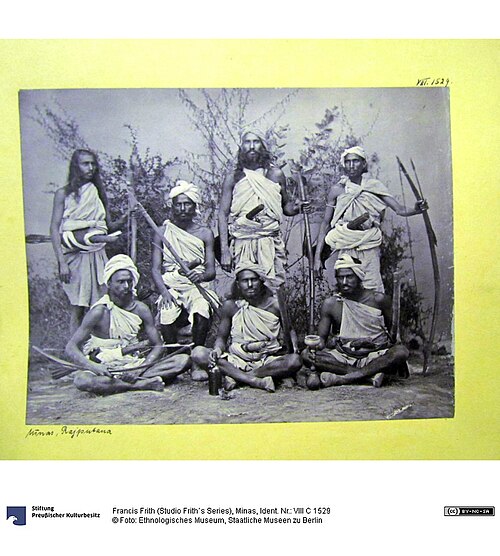
Table of Contents
1. Introduction: Who Are the Meena?
The Meena (also spelled Mina, and sometimes rendered Meenanda) are one of the largest indigenous communities of northern and western India, concentrated overwhelmingly in the state of Rajasthan, with smaller populations in Madhya Pradesh, Maharashtra, Uttar Pradesh, Punjab, Haryana, and the National Capital Territory of Delhi. Census data places the community at around 5 million people nationally, and reports put them at roughly 7 to 14 percent of Rajasthan's population, making them one of the state's largest indigenous communities.
The Meena gained formal government recognition as a distinct community in 1954, following a long and difficult colonial-era history in which they were officially stigmatised. Today the Meena are known for strong educational and administrative achievement, with a growing presence in the civil services, police, judiciary, and politics of Rajasthan.
This profile draws on historical scholarship, ethnographic surveys, and population-genetic research to examine the community's traditional origins, its political history in Rajasthan, its social structure and customs, and its cuisine, dress, and contemporary achievements.
2. Origins and Early History
2.1 Mythological and Traditional Origins
Meena tradition holds that the community descends from the Matsya avatar — the fish incarnation — of the Hindu god Vishnu, and the community's name is popularly connected to the Sanskrit and Hindi word meen, meaning fish. The Meena also identify themselves as descendants of the people of the ancient Matsya Kingdom, referenced in early Indian textual tradition and believed to have flourished in the region corresponding to present-day Jaipur and Alwar around the sixth century BCE.
Historians note that while it is plausible that communities inhabiting the historical Matsya region were referred to as Meena, a direct, continuous line of descent from that ancient kingdom to the present-day community cannot be established with documentary certainty. The historian Nandini Sinha Kapur has written that Meena oral traditions of a glorious ancient past were substantially developed and elaborated from the early nineteenth century onward, a process of identity reconstruction she compares to similar traditions of "invented" heritage found among other communities worldwide. Such traditions, she notes, often serve as a form of collective memory and social affirmation for a community whose own history had not been formally recorded and was, for long periods, described unfavourably by outside observers.
2.2 The Matsya Kingdom and Meena Rule in Rajasthan
Regardless of the precise antiquity of the community's name, historical and epigraphic evidence indicates that Meena chieftaincies and small kingdoms controlled significant parts of present-day eastern Rajasthan prior to the rise of the Rajput states. The area around Amber (Amer), near modern Jaipur, was initially under Meena rule before passing to the Kachhwaha Rajput dynasty in the medieval period; the ruler Alan Singh Chanda is remembered in local tradition as a Meena ruler of Amber. Meena rule and influence is similarly recorded at Dhundhar (the historical region around Jaipur), Bundi, Kota, Jhalawar, Karauli, and Jalore, before these territories passed to Rajput or, in some cases, Muslim rulers.
The transition of political power away from the Meenas unfolded over several centuries and through a mixture of conquest, alliance, and treaty. In several instances, defeated or displaced Meena chiefs retained local standing through negotiated arrangements — a pattern reflected in the later Zamindar/Chaukidar distinction described in Section 5.
2.3 Colonial-Era History and the Criminal Tribes Act
During the medieval and colonial periods, outside chroniclers — including some Persian court accounts and, later, British colonial administrators — frequently described the Meenas in unfavourable terms, characterising them as a lawless hill community. This characterisation culminated in one of the most difficult chapters of the community's modern history: under the Criminal Tribes Act of 1871, Meenas in the Rajasthan and Punjab regions were formally listed as a "criminal tribe" in 1872, a designation later reinforced by the Habitual Criminals Act of 1930. Colonial ethnographers such as Herbert Hope Risley and Denzil Ibbetson categorised the community as a semi-wild hill tribe. In the 1840s, Meenas in Jaipur organised significant resistance to British authority under the leadership of Lakshminarayan Jharwal.
The Criminal Tribes Act was repealed in 1949, and the formal stigmatisation of the Meena as a criminal community ended in 1952. The community's subsequent formal constitutional recognition in 1954 marked a significant turning point, opening access to constitutional protections and welfare provisions that have contributed substantially to the community's modern educational and professional advancement, discussed further in Section 13.
3. Genetics and Population Studies
Population-genetic research on the Meena, while more limited than for some other South Asian communities, situates them firmly within the broader genetic landscape of Rajasthan and North-West India. A 2011 genetic-marker study comparing several population groups of Rajasthan — the Bhil, Damaria, Garasia, Meena, and Saharia communities alongside the Rajput population — found that, based on a panel of Alu insertion and RFLP markers, the Meena and Rajput populations clustered closely together in genetic-affinity analysis, more closely than either group clustered with the other populations sampled. The study's authors linked this to the fact that the Meena and Rajput communities share a number of clan names, consistent with a long history of geographic proximity, alliance, and intermarriage between the two groups in Rajasthan.
Taken together, the available genetic evidence points to the Meena as a population with deep roots in the North-West Indian subcontinent, closely connected to neighbouring Rajasthani communities such as the Rajput, rather than a population of distinct external origin.
Population genetics in this area remains an active and still-developing field of research, and findings should be understood as reflecting group-level statistical patterns from specific sampled populations rather than definitive claims about any individual's ancestry.
4. Social Structure, Clans, and Sub-Groups
The Meena community is organised into numerous patrilineal clans and sub-clans, locally known as adakhs, each said to trace descent from a common ancestor. Recorded adakhs include Ariat, Ahari, Katara, Kalsua, Kharadi, Damore, Ghoghra, Dali, Doma, Nanama, Dadore, Manaut, Charpota, Mahinda, Rana, Damia, Dadia, Parmar, Phargi, Bamna, Khat, Hurat, Hela, Bhagora, and Wagat, among others. Marriage within one's own adakh is traditionally avoided, in keeping with clan-exogamy practices common across many North Indian communities.
Beyond clan identity, the community includes several recognised social groupings that reflect its historical experience:
| Sub-group | Also Known As | Distinguishing Feature |
|---|---|---|
| Zamindar Meena | Land-holding Meena | Comparatively well-off; settled on lands historically associated with agreements reached with Rajput rulers |
| Chaukidar Meena | Guardian Meena | Descend from those who continued to resist Rajput rule rather than settling under it |
| Ujwal / Ujala Meena | Parihar Meena | Claim Rajput descent and higher status; traditionally vegetarian |
| Bhil Meena | — | A sub-division associated with sanskritisation among some Bhil communities adopting Meena identity |
| Meo Meena | — | Concentrated historically in the Mewat region of Alwar and Bharatpur |
Historian Kumar Suresh Singh has noted that the Meena have retained a strong tradition of customary law governing community affairs. Scholars have also observed that Meena women historically enjoyed comparatively favourable rights in several respects relative to some other Hindu caste communities of the region, including the ability to remarry after widowhood.
5. Language
The Meena do not possess a single distinct tribal language of their own; rather, community members speak the regional Indo-Aryan languages and dialects of the areas in which they live, including Hindi, Mewari, Marwari, Dhundari, Harauti, Mewati, Wagdi, and Malvi. An earlier claim that the community spoke a distinct "Mina" language was found on linguistic review to be unsubstantiated, and the corresponding language code was formally retired in 2019. Linguists classify Meena speech patterns as falling within the Indo-Aryan language family, consistent with the broader linguistic landscape of Rajasthan.
6. Religion, Festivals, and Beliefs
The overwhelming majority of Meenas — approximately 99.7 percent according to available data — practise Hinduism, worshipping mainstream Hindu deities alongside family and clan deities (kul devta) that vary by gotra. The community engages Brahmin priests for major life-cycle rituals such as birth, marriage, and death, in a manner broadly comparable to other Hindu communities of Rajasthan.
Notable community observances include:
- Meenesh Jayanti — celebrated on the third day of the bright fortnight (Shukla Paksha) of the Chaitra month, in honour of the Matsya (fish) avatar of Vishnu from which the community traces its name.
- Pitra Tarpan on Diwali — a ritual offering to ancestors performed after a collective bath on the day of Diwali.
- Gotameshwar and Bhuria Baba fairs — regional fairs of particular significance to the community, the latter observed around Vaishakh Purnima.
- The Dharadi tradition — the ceremonial worship of trees and plants during marriages, festivals, and other rites.
- Participation in major pan-Hindu festivals including Holi, Diwali, and Navratri, with community celebrations on the seventh day of Navratri traditionally marked by acrobatics, mock swordplay, singing, and dancing.
Pabuji, a fourteenth-century Rajasthani folk deity venerated across several communities of the region, is also an object of devotion among sections of the Meena and neighbouring communities.
7. Marriage and Family Customs
Meena marriages are traditionally endogamous at the community level and exogamous at the clan (adakh) level. Several distinct marriage practices are recorded within the community, including Biyah (the standard, formally arranged marriage), Padna, and Nata (a recognised process by which a widow or a woman leaving an earlier marriage may remarry). Bhopa priests have traditionally played a role in matchmaking, drawing on horoscope matching before a marriage is finalised.
Family structure is traditionally patrilineal, typically organised around nuclear or small joint households with the father as head of the family. Compared to some neighbouring communities, scholars have noted that Meena customary law affords women relatively favourable standing in matters such as remarriage. As with many Rajasthani rural communities, weddings are occasions for extended community celebration, including music, drumming, and dance.
8. Cuisine
Meena cuisine reflects the community's long agrarian heritage and its rural, arid Rajasthani setting. Traditional Meena kitchens are centred on a mud-and-brick chulha (oven), historically fired with coal or dried dung cakes, on which rotis and other breads are cooked directly over an open flame. Cooking is typically done in heavy brass or thick-bottomed utensils such as the kadhai (wok), tawa (griddle), and handi (pot), and spices are traditionally ground fresh using a stone mortar and pestle.
As with much of Rajasthani cuisine more broadly, the community's traditional food culture has been shaped by the scarcity of water and fresh vegetables typical of the region, favouring dishes and preparations that keep well without refrigeration. Everyday staples include wheat- and millet-based breads, lentil preparations, and dairy products, supplemented by seasonal vegetables and, for non-vegetarian households, meat dishes prepared for festive occasions.
9. Traditional Dress, Ornaments, and Art
Traditional Meena women's attire centres on the lugdi (also called angrakha) — a flowing skirt or dress noted for its intricate embroidery and mirror work — paired with an odhni or chunri (a long head scarf), along with a kanchli-kurti (fitted bodice). Meena Lugdi garments are recognised for their vivid colour palette, most commonly red, green, blue, and yellow, and their elaborate hand embroidery, which is regarded as a distinctive regional craft tradition in its own right. Traditional Meena men's dress consists of a dhoti and kurta.
Meena women are also well known for Mandana paintings, a traditional wall and floor art form using natural pigments to create geometric and figurative motifs — most often depicting animals, plants, and auspicious symbols — on the walls and courtyards of homes, particularly ahead of festivals and ceremonies. This art form has drawn scholarly and contemporary artistic interest as a significant example of Rajasthani folk visual culture.
10. Housing and Village Life
Traditional Meena villages, historically referred to by terms such as pal, are typically headed by a village leader known as a patel. Homes were traditionally simple structures — referred to in some regional accounts as jhopadi — built with locally available materials suited to Rajasthan's semi-arid climate. Villages were often organised around extended clan and family groupings, reflecting the community's patrilineal social structure.
11. Education, Livelihoods, and Socioeconomic Profile
Historically, the Meena have been predominantly an agricultural community, and farming remains a major occupation for many households today, alongside animal husbandry and, increasingly, government service. Since gaining formal constitutional recognition in 1954, the community has invested heavily in education, and the Meena are today widely regarded as the most literate and among the most educationally successful tribal communities in Rajasthan.
This has translated into a strong and growing presence in India's civil services, police, judiciary, and armed forces. Media coverage in recent years has highlighted villages such as Nayabas in Rajasthan's Neem ka Thana district — sometimes described as an "IAS-IPS factory" — where a large share of residents, including a growing number of women, have entered the Indian Administrative Service, Indian Police Service, Indian Revenue Service, and allied state services over the past four decades, a shift the community itself attributes to sustained, multi-generational investment in education.
12. Geographic Distribution and Population
The Meena are concentrated most heavily in Rajasthan, particularly in the districts of Jaipur, Dausa, Alwar, Sawai Madhopur, Udaipur, Bhilwara, Karauli, Tonk, and Bundi, and are recorded as making up roughly half of Rajasthan's total tribal population. Smaller Meena populations are also present in Madhya Pradesh, where the community's formal administrative classification differs by district, as well as in Maharashtra, Uttar Pradesh, Punjab, Haryana, and Delhi.
13. Notable Figures
The Meena community's history includes both early ruling figures and, in the modern era, a substantial number of individuals prominent in public administration, politics, and public service. This list is illustrative rather than exhaustive.
- Alan Singh Chanda — remembered in regional historical tradition as a Meena ruler of Amber prior to the establishment of Kachhwaha Rajput control over the region.
- Lakshminarayan Jharwal — led a significant Meena movement against British colonial authority in Jaipur in the 1840s.
- Madan Meena — contemporary artist and researcher known for his work documenting and reviving Mandana wall-painting traditions among Meena women.
- Numerous serving and retired officers of the Indian Administrative Service, Indian Police Service, and allied civil services, reflecting the community's strong modern record in public administration — exemplified by clusters of achievers from villages such as Nayabas in Sawai Madhopur/Neem ka Thana.
The community has also had significant representation in Rajasthan's state legislature and in the Lok Sabha over the decades since independence, reflecting its demographic weight in the state's tribal-reserved constituencies.
14. Conclusion
The Meena present a distinctive case among India's tribal communities: a community with a documented history of pre-Rajput political authority in eastern Rajasthan, a difficult and well-documented colonial-era experience of official stigmatisation under the Criminal Tribes Act, and — since gaining constitutional recognition in 1954 — one of the most notable trajectories of educational and administrative advancement among India's tribal communities. From the fish-avatar mythology of Meenesh Jayanti and the visual folk art of Mandana painting to the closely studied genetic affinities linking the Meena to Rajasthan's Rajput population, the community's story reflects both deep local roots in North-West India and a rich, continuing cultural identity that remains central to the social fabric of Rajasthan today.
References
- [1]
- [2]
- [3]
- [4]
- [5]
- [6]
- [7]
- [8]
- [9]
- [10]
- [11]
- [12]
- [13]
- [14]
- [15]
- [16]