

Muslim Genome Project Community
Explore the diverse history, vibrant culture, and rich traditions of Indian Muslims in India. Delve into centuries of heritage & Culture.
Muslims in India: History, Culture, Traditions, and Contemporary Life
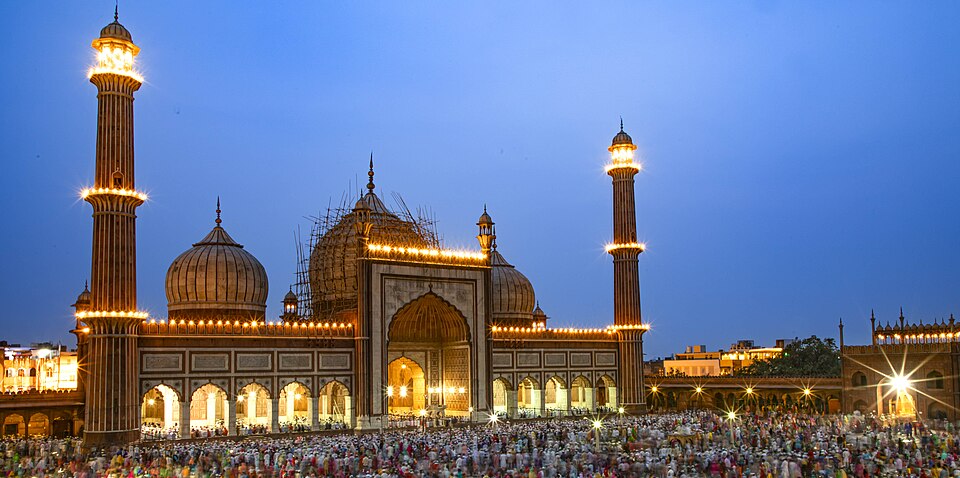
1. Introduction: Islam and Muslim Communities in India
Islam has been part of the history of the Indian subcontinent for more than a millennium and has developed into one of the country's major religious and cultural traditions. Indian Muslims are not a single homogeneous community: they include people from many regions, linguistic backgrounds, social histories, schools of Islamic thought, and cultural traditions. Muslim life in India has been shaped by both the wider Islamic world and the diverse societies of the subcontinent. Arabic, Persian, Turkic, Central Asian, African, and other connections interacted over centuries with local Indian languages, customs, foodways, arts, institutions, and social practices.
According to the 2011 Census of India, 172,245,158 people were recorded as Muslim, making Muslims the country's second-largest religious community and approximately 14.23% of the population at that census. The Government of India recognizes Muslims as one of the six notified minority communities under the National Commission for Minorities Act, 1992. The census data also show that Muslims live throughout India, with particularly large populations in Uttar Pradesh, West Bengal, Bihar, Maharashtra, Assam, Kerala, Jammu and Kashmir, Karnataka, Jharkhand, and other states and union territories.
This profile focuses on the historical development, religious life, languages, family and social customs, architecture, food, clothing, festivals, scholarship, arts, oral traditions, livelihoods, diaspora, and contemporary heritage of Muslims in India. Because Indian Muslim communities are highly diverse, customs described here should be understood as examples of regional or family traditions rather than practices followed by every Muslim.
2. Origins and Early History
2.1 Early Contacts through Trade
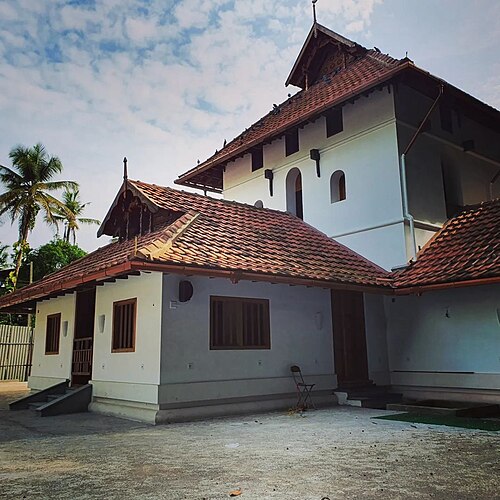
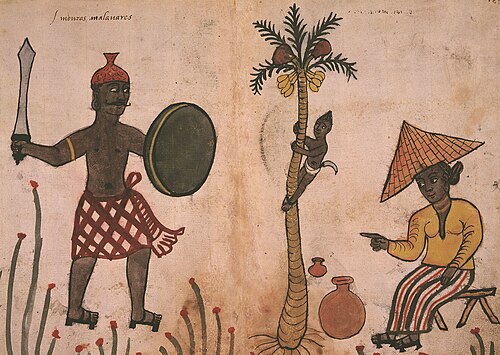
The earliest sustained Muslim presence in India developed through maritime and overland networks linking the Indian Ocean, Arabia, Persia, and South Asia. Arab Muslim merchants travelled to the western coast of India, especially the Malabar Coast, as part of long-established commercial networks dealing in spices and other goods. Muslim trading communities became established in coastal centres, where they interacted with local societies. Kerala's Mappila Muslim tradition is one important example of this long history of interaction between Islam, Indian society, and the Indian Ocean world.
2.2 Sindh and the Early Medieval Period
In 711–712 CE, the Arab commander Muhammad ibn Qasim led the Umayyad conquest of Sindh. Muslim political authority in Sindh was important historically, but it did not by itself produce the Islamization of the whole Indian subcontinent. Muslim communities developed through multiple processes over many centuries, including trade, migration, settlement, patronage, religious teaching, Sufi networks, political expansion, and local forms of conversion and cultural change.
2.3 The Delhi Sultanate and Regional Muslim States
From the late twelfth and early thirteenth centuries, Muslim-ruled states expanded across parts of northern India. The Delhi Sultanate included several ruling dynasties, including the Mamluks, Khaljis, Tughlaqs, Sayyids, and Lodis. At the same time, independent and semi-independent Muslim states developed in regions such as Bengal, Gujarat, Malwa, Kashmir, and the Deccan. These states were not culturally identical, and their relationships with local populations varied.
The medieval period saw the growth of cities, markets, educational institutions, mosques, tombs, caravan routes, workshops, and court cultures. Persian became an important language of administration and high literary culture in many Muslim-ruled states, while local languages continued to flourish. Indo-Islamic architecture developed through the interaction of Islamic architectural ideas with Indian building traditions, materials, craftsmen, and regional styles.
3. The Mughal Period and the Deccan
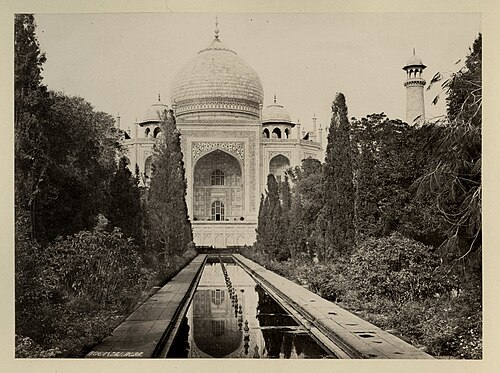
The Mughal Empire, founded by Babur in 1526, became one of the most influential Muslim-ruled empires in Indian history. Under rulers including Akbar, Jahangir, Shah Jahan, and Aurangzeb, Mughal institutions expanded over large parts of the subcontinent, although the extent of effective control varied across time and region. Mughal rule contributed to major developments in administration, painting, architecture, garden design, manuscript culture, military organization, textiles, cuisine, and Persian and vernacular literary culture.
The Mughal period was also a period of intellectual and cultural exchange. Persianate court culture interacted with Indian languages and traditions. The development of Urdu and related literary registers took place over a long period and involved contributions from speakers of different languages and religious backgrounds. The Deccan likewise became an important centre of Muslim political and cultural life, with states such as the Bahmani Sultanate and later Deccan Sultanates supporting architecture, scholarship, literature, music, and trade.
4. Sufism and Muslim Religious Culture
Sufism refers to diverse traditions of Islamic spirituality that emphasize, among other themes, remembrance of God, ethical discipline, spiritual guidance, and the cultivation of inner character. Sufi orders, or silsilas, became important in many parts of India. Among the best-known Indian traditions are the Chishti, Suhrawardi, Qadiri, and Naqshbandi lineages, although their histories and practices differed.
Figures such as Khwaja Muinuddin Chishti of Ajmer, Nizamuddin Auliya of Delhi, Baba Farid of Punjab, and many regional saints became important in Indian Muslim memory. Sufi khanqahs and shrines could serve as places of spiritual instruction, charity, hospitality, and community gathering. Shrine traditions also became important repositories of local memory, stories, poetry, and devotional practices.
The annual commemoration known as urs is associated with many Sufi shrines. The word is commonly explained in connection with the saint's union with God after death. Urs observances vary by shrine and region and may include prayers, recitation, devotional music, charity, food distribution, and fairs. Participation can also extend beyond a single religious community at some shrines. These practices are not uniform across Indian Muslims, and some Muslims do not participate in shrine-centred traditions.
Indian Sufi traditions contributed significantly to the development of literary, musical, and artistic cultures. Qawwali became particularly associated with Sufi devotional settings in South Asia. Amir Khusrau is traditionally remembered as an influential figure in the development of Indo-Persian literary and musical culture, although claims about his invention of particular instruments or musical forms should be treated cautiously.
5. Religious Beliefs and Everyday Practice
Indian Muslims share the central foundations of Islam with Muslims worldwide. These include belief in one God (Allah), the prophethood of Muhammad, the Qur'an as the revealed scripture of Islam, and accountability before God. The Five Pillars traditionally identified in Islamic teaching are the declaration of faith (shahada), ritual prayer (salat), almsgiving (zakat), fasting during Ramadan (sawm), and pilgrimage to Mecca (hajj) for those who are physically and financially able.
Daily prayer, Qur'an recitation, family religious education, mosque attendance, charity, and observance of Ramadan are important parts of Muslim life. The degree and form of observance varies between individuals and families. Friday congregational prayer, or Jumu'ah, has particular importance in many communities.
Indian Muslims include both Sunni and Shia communities, as well as smaller groups and distinct religious traditions. Within Sunni Islam, different schools and movements have developed in India, including Deobandi, Barelvi, Ahl-i Hadith, and others. Shia communities include Ithna Ashari (Twelver) Muslims as well as other Shia traditions. These labels describe religious and intellectual traditions, not a single uniform lifestyle.
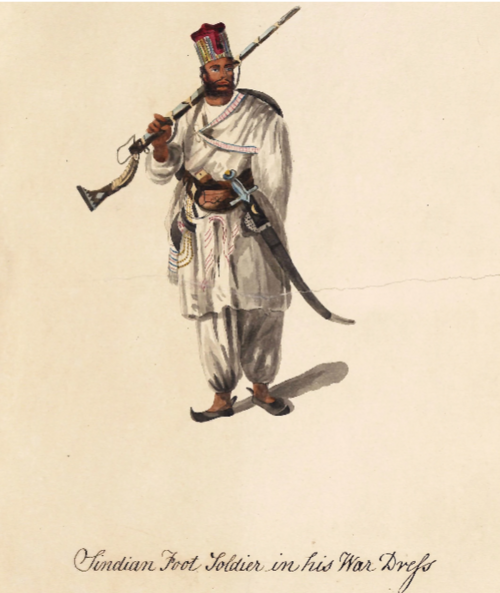
6. Languages and Literary Traditions
Muslims in India speak many of the country's languages. Depending on region and family history, Indian Muslims may speak Urdu, Hindi, Bengali, Malayalam, Tamil, Telugu, Kannada, Marathi, Gujarati, Kashmiri, Punjabi, Assamese, Konkani, Sindhi, and numerous other languages. Muslim identity in India therefore cannot be equated with a single language.
Urdu has a particularly important place in Indian Muslim literary history, but it is also part of India's wider multilingual literary heritage. Urdu developed in interaction with Indo-Aryan vernaculars, Persian, Arabic, Turkic languages, and diverse regional cultures. Indian Urdu literature includes poetry, prose, journalism, religious writing, fiction, drama, and scholarship.
Persian was an important language of administration and literary culture in many precolonial Muslim courts. Arabic remained central to Qur'anic learning, Islamic theology, law, and religious scholarship. Regional Muslim literary traditions also developed in Bengali, Malayalam, Tamil, Sindhi, Kashmiri, Gujarati, Punjabi, Marathi, and other languages.
7. Education, Scholarship, and Institutions
Indian Muslims have maintained a long tradition of religious scholarship through madrasas, mosques, private study circles, Sufi institutions, and scholarly families. At the same time, Muslim participation in modern education expanded through schools, colleges, universities, reform movements, and community organizations.
Institutions associated with Muslim educational history include Aligarh Muslim University, Jamia Millia Islamia, Darul Uloom Deoband, Nadwatul Ulama, Osmania University, and many regional colleges and madrasas. These institutions differ substantially in purpose and intellectual orientation. Muslim educational life in India includes traditional Islamic studies as well as modern disciplines such as medicine, law, engineering, humanities, sciences, commerce, and social sciences.
8. Family Life, Marriage, and Social Customs
Marriage is an important institution in many Indian Muslim families. Islamic marriage, or nikah, is a legal and religious contract between the spouses. Customs surrounding engagement, wedding ceremonies, clothing, music, food, gifts, and celebrations vary greatly by region and family. In many communities, the nikah is accompanied by a walima, or wedding feast, and may be preceded by locally distinctive celebrations.
Indian Muslim weddings often incorporate regional customs. For example, wedding traditions in Kerala differ from those in Uttar Pradesh, Kashmir, Bengal, Hyderabad, or Assam. Mehndi or henna is widely associated with South Asian weddings, including Muslim weddings, but it is not uniquely Islamic.
Family structures also vary. Some families maintain extended-family households and close kin networks, while others live in nuclear households. Naming practices commonly draw from Arabic, Persian, Turkic, South Asian, and regional traditions. Names such as Muhammad, Ahmad, Ali, Fatima, Aisha, Hasan, Husain, and many others are common, but Indian Muslims also use a wide variety of local and modern names.
9. Clothing and Personal Appearance
Muslim clothing in India reflects both Islamic modesty traditions and regional Indian dress. Men may wear kurta-pajama, sherwani, lungi, dhoti-style regional garments, shirts and trousers, or other local clothing. Caps such as the taqiyah are worn by some men, particularly for prayer or religious occasions.
Women may wear salwar-kameez, sari, lehenga, abaya, long dresses, or regional forms of dress. Some women wear hijab or other forms of head covering, while practices differ considerably among individuals and communities. Clothing should therefore be understood as a combination of religious interpretation, regional culture, personal preference, and family tradition.
10. Food and Culinary Heritage
Indian Muslim culinary traditions are extraordinarily diverse and have contributed to India's broader food culture. Muslim cuisines developed through the interaction of local Indian ingredients and cooking traditions with culinary influences from West and Central Asia and other regions connected through trade and empire.
Well-known dishes associated with particular Indian Muslim culinary traditions include biryani, pulao, nihari, haleem, kebabs, korma, qorma-style gravies, sheermal, naan, samosa, and a wide variety of breads, rice dishes, sweets, and meat preparations. Many of these foods are now enjoyed far beyond Muslim communities and have numerous regional forms.
Kerala's Mappila cuisine includes dishes such as pathiri, Malabar-style biryani, and a range of meat, fish, coconut, and rice preparations. Hyderabad has a distinctive Deccani Muslim culinary tradition, while Lucknow and Delhi are known for different North Indian culinary styles. Bengal, Kashmir, Assam, Maharashtra, Gujarat, Tamil Nadu, and Karnataka likewise have their own Muslim food traditions.
During Ramadan, families commonly prepare foods for iftar, the meal that breaks the daily fast. Dates, fruit, drinks, snacks, and regional dishes may be served. Eid meals vary by region and family and may include biryani, kebabs, sweets, seviyan or sheer khurma, breads, and other festive foods.
11. Festivals and Religious Observances
11.1 Ramadan and Eid al-Fitr
Ramadan is the ninth month of the Islamic lunar calendar and is observed by many Muslims through fasting from dawn to sunset, prayer, Qur'an recitation, charity, and reflection. The fast is traditionally broken at sunset with iftar. Eid al-Fitr marks the end of Ramadan and is generally celebrated with congregational prayer, family visits, festive meals, charity, and new or special clothing.
11.2 Eid al-Adha
Eid al-Adha is associated with the Islamic pilgrimage season and commemorates the willingness of Prophet Ibrahim (Abraham) to obey God's command. Muslims who are able may perform the ritual sacrifice of an eligible animal, with meat commonly distributed among family, friends, and people in need according to religious and local practice. The festival is observed throughout India, with regional differences.
11.3 Muharram
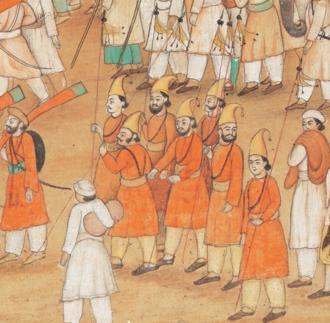
Muharram is the first month of the Islamic calendar. For Shia Muslims, the first ten days culminate in Ashura, which commemorates the martyrdom of Husain ibn Ali at Karbala in 680 CE and is marked by mourning ceremonies, sermons, processions, and devotional practices. Sunni communities also observe Ashura, although religious practices and meanings differ. Muharram observances in India have historically acquired distinctive regional forms.
11.4 Other Observances
Some Indian Muslim communities observe occasions such as Mawlid or Milad-un-Nabi, commemorating the birth of the Prophet Muhammad, while others do not observe it as a religious festival. Likewise, shrine urs festivals are important to many Sufi-oriented communities but are not universal. The diversity of observance is an important feature of Muslim religious life in India.
12. Mosques, Shrines, and Architecture
Mosques are central institutions of Muslim religious life. India's mosques range from early coastal structures and medieval congregational mosques to neighbourhood mosques, historic monuments, and contemporary buildings. Architecture varies according to region, period, materials, and local craftsmanship.
Important examples of Indo-Islamic architecture include the Qutb complex in Delhi, the Jama Masjid of Delhi, the Adhai Din Ka Jhonpra in Ajmer, the Gol Gumbaz in Vijayapura, the Charminar in Hyderabad, the Bibi Ka Maqbara in Aurangabad, and numerous mosques and tomb complexes in Gujarat, Bengal, Kashmir, the Deccan, and elsewhere.
The Taj Mahal in Agra is one of India's most famous Mughal monuments. Built under Shah Jahan as a mausoleum for Mumtaz Mahal, it is an important example of Mughal architecture incorporating Persianate, Central Asian, and Indian artistic and architectural traditions. The Archaeological Survey of India maintains many historic Islamic monuments as part of India's shared cultural heritage.
Sufi dargahs are another important category of Muslim sacred architecture. The Ajmer Sharif shrine of Muinuddin Chishti is among the best-known, but hundreds of regional shrines form part of India's religious landscape. Their architecture and ritual life vary considerably.
13. Folklore and Oral Tradition
Oral tradition is an important part of Indian Muslim cultural heritage. Families and local communities transmit stories about saints, ancestors, migrations, places, religious teachers, historical events, weddings, occupations, and notable local figures. Sufi shrines in particular can preserve oral memories connecting saints with towns, villages, rulers, travellers, artisans, and families.
Religious storytelling may include narratives of prophets, saints, moral exemplars, and important historical events. In different regions, these stories are expressed in Urdu, Bengali, Malayalam, Tamil, Kashmiri, Punjabi, Sindhi, Hindi, and other languages. Oral poetry, devotional songs, qawwali, marsiya, naat, and local storytelling traditions form important parts of this heritage.
Because oral traditions change as they are transmitted, they should be treated as valuable cultural evidence and community memory rather than automatically as literal historical documentation. Where a claim concerns a specific historical event, written sources, archaeology, inscriptions, or other independent evidence are useful for verification.
14. Music, Poetry, and the Arts
Indian Muslims have made major contributions to the country's musical and literary heritage. Qawwali is one of the best-known forms associated with South Asian Sufi traditions. Naat poetry praises the Prophet Muhammad, while marsiya and related poetic forms are particularly important in Shia mourning traditions.
Urdu poetry has produced some of India's most influential literary figures, including Mir Taqi Mir, Mirza Ghalib, Muhammad Iqbal, Faiz Ahmad Faiz, Firaq Gorakhpuri, and many others. The wider history of Urdu also includes major contributions from writers of different religious backgrounds.
Muslim artists, musicians, calligraphers, architects, craftsmen, filmmakers, actors, singers, and writers have contributed to Indian cultural life across centuries. Islamic calligraphy, manuscript illumination, textile arts, metalwork, woodwork, embroidery, and architectural decoration are also important parts of the country's artistic heritage.
15. Regional Muslim Communities and Traditions
There is no single Indian Muslim culture. Regional communities have distinctive histories. Mappila Muslims of Kerala have a strong maritime, Arabic-Malayalam, literary, and culinary heritage. Muslims of the Deccan developed distinctive Dakhni and Hyderabadi traditions. Bengali Muslims have contributed to Bengali literature, music, food, and regional religious culture. Kashmiri Muslims have distinctive linguistic, architectural, craft, and Sufi traditions.
Muslims in Uttar Pradesh and Delhi have played major roles in Urdu literature, education, crafts, administration, and urban culture. Gujarat's Muslim communities have long been connected to Indian Ocean commerce. In Assam and Bengal, Muslim histories are intertwined with riverine agriculture, migration, trade, and regional political developments. Tamil, Telugu, Kannada, Marathi, Konkani, and other Muslim communities similarly possess distinctive regional histories.
Some Muslim communities also maintain occupational, kinship, or locality-based identities. These identities have changed over time and should not be treated as a single fixed hierarchy. India's Muslim social history includes diverse experiences of migration, settlement, craft specialization, agriculture, trade, scholarship, military service, and urban employment.
16. Livelihoods, Trade, and Economic Life
Muslims in India participate in virtually every major sector of the economy, including agriculture, manufacturing, textiles, handicrafts, transport, trade, retail, education, medicine, engineering, law, public administration, business, entertainment, and professional services. Historically, particular communities became associated with occupations such as weaving, metalwork, leatherwork, trading, maritime commerce, and artisan crafts, but occupational patterns have changed substantially with urbanization and economic modernization.
Indian Muslim trading communities have long participated in domestic and international commerce. The Malabar Coast, Gujarat, Bengal, and the Deccan were connected to commercial networks extending across the Indian Ocean and beyond. Contemporary Indian Muslims likewise participate in national and international business and professional networks.
17. Modern History: Colonial Rule and Reform
British colonial rule transformed Muslim institutions, education, landholding, political representation, and the language of public administration. The decline of Persian as an administrative language and the rise of English and regional languages altered educational priorities. Muslim intellectuals responded in different ways, including through educational reform, religious revival, modernist scholarship, literary activity, and political organization.
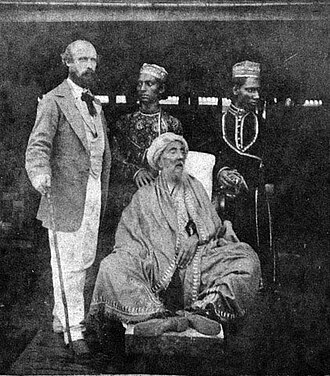
The nineteenth and early twentieth centuries saw the growth of institutions and movements associated with Muslim education and reform. Sir Syed Ahmad Khan's educational movement led to the development of the Muhammadan Anglo-Oriental College, which later became Aligarh Muslim University. Deoband became an influential centre of Islamic learning. Nadwatul Ulama sought, among other aims, to engage traditional Islamic scholarship with changing educational circumstances.
Muslims participated in India's anti-colonial movements in many different ways. Leaders, scholars, students, workers, religious figures, writers, and ordinary citizens took part in movements including the Khilafat and Non-Cooperation movements and other strands of the Indian freedom struggle. The history of Indian Muslims in the colonial period is therefore diverse and cannot be reduced to a single political position.
18. Partition and Independence
The partition of British India in 1947 created India and Pakistan and caused enormous human displacement and suffering. Muslim, Hindu, Sikh, and other families were affected by migration, violence, separation, and loss of property and community networks. Many Muslims remained in India and became citizens of the newly independent Republic of India.
The Constitution of India established a framework of equality before the law, freedom of religion, and cultural and educational rights. Indian Muslims have since contributed to public life in politics, administration, armed forces, education, science, business, cinema, literature, sport, arts, and civil society. The community's post-independence history includes both achievements and continuing debates about education, employment, representation, heritage, and social development.
19. Contemporary Muslim Life in India
Indian Muslims today live in metropolitan cities, small towns, villages, coastal communities, mountain regions, and rural areas. Some families maintain strong traditional practices, while others combine religious traditions with highly modern lifestyles. Digital media, migration, higher education, new professions, and global connections have created additional forms of Muslim cultural expression.
Mosques and community organizations remain important, while Muslim participation in universities, professional associations, cultural organizations, media, and civil society has expanded. Indian Muslim youth participate in a broad range of fields, including technology, medicine, law, research, entrepreneurship, public service, arts, sports, and creative industries.
It is important to distinguish the religious identity of Muslims from political or ideological positions held by particular individuals or organizations. Indian Muslims, like other large religious communities, contain a wide range of opinions, practices, levels of observance, and social backgrounds.
20. Diaspora and Global Connections
Indian Muslims have participated in migration to the Gulf countries, Southeast Asia, East Africa, the United Kingdom, North America, Europe, and other parts of the world. Migration has often followed existing trade and family networks, especially from Kerala, Gujarat, coastal Karnataka, Hyderabad, and other regions.
Diaspora communities frequently maintain links with Indian languages, food, religious institutions, family networks, and festivals. Remittances and transnational connections have also affected local economies and community institutions in several parts of India.
21. Heritage and Cultural Legacy
The heritage of Indian Muslims is part of India's broader civilizational and cultural history. It includes historic cities, mosques, tombs, forts, gardens, libraries, manuscripts, educational institutions, languages, poetry, music, crafts, cuisine, textiles, and oral traditions. Muslim heritage is not confined to monuments built by Muslim rulers; it also includes everyday practices preserved by families and local communities.
Indian Islamic heritage also demonstrates the importance of cultural interaction. Persianate traditions interacted with Sanskritic and vernacular intellectual worlds; Arabic and Persian words entered South Asian languages; local craftsmen shaped Indo-Islamic architecture; regional foods absorbed new ingredients and techniques; and Muslim communities developed distinctive expressions in Malayalam, Bengali, Tamil, Kashmiri, Urdu, and other Indian languages.
A balanced understanding of Indian Muslim history recognizes both continuity and change. It avoids treating Muslims as a foreign population and also avoids portraying them as a culturally uniform group. Indian Muslim communities have developed through centuries of settlement, local interaction, migration, religious learning, family formation, and participation in the social and economic life of the subcontinent.
22. Conclusion
Islam in India is both an ancient and continuously evolving tradition. Muslim communities have been part of Indian society for more than a thousand years, with roots in maritime trade, migration, settlement, political history, scholarship, and local religious and cultural developments. Over time, Indian Muslims created and participated in distinctive traditions of architecture, literature, food, music, education, craftsmanship, trade, and devotional life.
The most accurate way to understand Indian Muslims is through their diversity. A Muslim family in Kerala may have a very different language, cuisine, wedding tradition, and historical experience from a Muslim family in Kashmir, Bengal, Hyderabad, Gujarat, Delhi, or Assam. Yet these communities share connections to the broader Islamic tradition while also belonging deeply to the regional cultures of India.
Today, Indian Muslims remain an integral part of the country's cultural, social, economic, and intellectual life. Their mosques, shrines, languages, literature, food, festivals, family traditions, educational institutions, crafts, and oral histories form an important part of India's shared heritage.
23. References
Office of the Registrar General & Census Commissioner, India. Population Census 2011, Table C-01: Population by Religious Community, India. https://censusindia.gov.in/nada/index.php/catalog/11361
Government of India, Ministry of Minority Affairs / Press Information Bureau. Assistance to Minority Communities, 22 July 2021. https://www.pib.gov.in/PressReleasePage.aspx?PRID=1737756
Encyclopaedia Britannica. Islam in India and related entries on Indian history and religion.
Eaton, Richard M. India in the Persianate Age: 1000–1765. University of California Press, 2019.
Eaton, Richard M. The Rise of Islam and the Bengal Frontier, 1204–1760. University of California Press, 1993.
Green, Nile. Making Space: Sufis and Settlers in Early Modern India. Oxford University Press, 2012. https://academic.oup.com/book/6150
Aquil, Raziuddin. “Political and Cultural Roles of Sufis in Medieval and Early Modern India.” The Oxford Handbook of the Mughal World, Oxford University Press.
Narang, Gopi Chand. The Urdu Ghazal: A Gift of India's Composite Culture. Oxford University Press, 2020.
Datla, Kavita Saraswathi. The Language of Secular Islam: Urdu Nationalism and Colonial India. University of Hawai‘i Press, 2013.
Archaeological Survey of India. Publications and monument records on Indo-Islamic architecture and heritage. https://asi.nic.in/
Encyclopaedia of Islam, Brill. Scholarly reference entries on Islam, South Asia, Sufism, Mughal India, and regional Muslim communities.
Wikipedia. “Islam in India.” Used as a starting reference for cross-checking topics; factual claims were checked against government and scholarly sources where possible. https://en.wikipedia.org/wiki/Islam_in_India