

Nagar Community
Explore the rich history, ancient origins in Vadnagar, and significant legacy of Nagar Brahmins Gujarat. Learn about this influential community's role..
The Nagar Community of Gujarat
History, Society, and Legacy of a Brahmin Community from Vadnagar
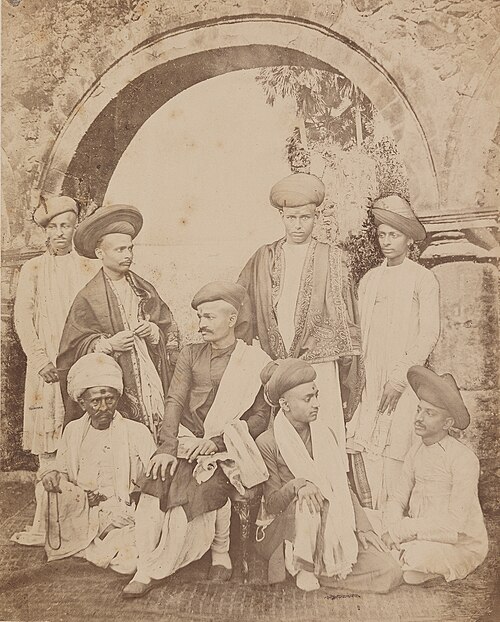
1. Introduction: Who Are the Nagars?
The Nagars, also called Nagar Brahmins, are a Brahmin community whose traditional homeland lies in Gujarat, in western India. For centuries they occupied an unusually prominent place in the region's political, administrative, and literary life, serving as court officials, ministers, scholars, and financiers under a succession of ruling powers, from the Chaulukya and Vaghela dynasties through the Gujarat Sultanate, the Mughal Empire, and British colonial administration.
Unlike many Brahmin communities whose traditional role centred on temple priesthood, a large section of the Nagars historically moved away from purely ritual occupations toward administration, scholarship, and public life, a pattern of specialisation that has shaped much of their historical reputation in Gujarat.
2. Origins and Early History
Nagar tradition and most scholarly accounts trace the community's origin to Vadnagar, an ancient town in northern Gujarat historically known by names such as Anarta, Anandapura, and Chamatkarapura. The Junagadh rock inscription of the Western Kshatrapa ruler Rudradaman I, dated to around 150 CE, already refers to a region called Anarta in this part of Gujarat, and later Maitraka-era land grants record donations made to Brahmins of Anandapura, a name closely identified with Vadnagar. The Harsola copper plates, issued in 949 CE by a Paramara king, record the grant of villages to Nagar Brahmins tracing their origin to Anandapura, among the earliest epigraphic references to the community by name.
The Nāgara Khaṇḍa, a regional purana composed in stages between roughly the late 13th and 17th centuries and later appended to the Skanda Purana, functions as a quasi-caste text for the Vadnagar Nagars, describing the holy sites around the town and reinforcing its sacred status for the community. The Vadanagara Prashasti further records that during the reign of the Chaulukya king Kumarapala, a protective wall was built around the town to enclose the "viprapura", or Brahmin quarter.
Archaeological work near Vadnagar has uncovered a fortification roughly four kilometres in length, which some scholars associate with the historical Anartapura, along with a Bodhisattva image dated to the third or fourth century CE, suggesting that the town was also a Buddhist centre in earlier periods, well before its association with the Nagar Brahmins became prominent.
3. The Name "Nagar"
The community's name is generally understood to derive from its place of origin, Vadnagar, rather than from the general Sanskrit word nagara meaning "town" or "city", although the two are related, since Vadnagar was itself a significant urban centre in ancient and medieval Gujarat. Over time the Nagars spread outward from Vadnagar and became especially concentrated in the Kathiawar (Saurashtra) peninsula, alongside continuing communities in Ahmedabad, Vadodara (Baroda), and other Gujarati towns.
4. Branches and Internal Divisions
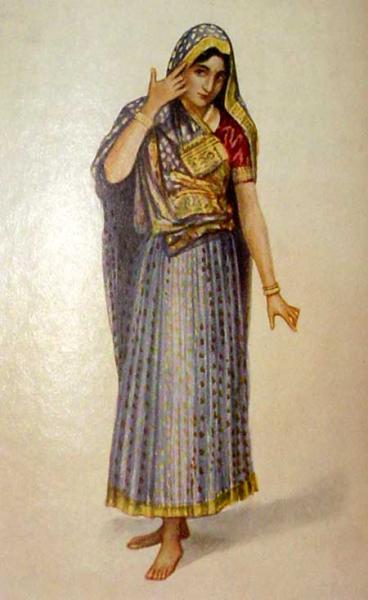
Like many old Brahmin communities, the Nagars are not a single undivided group but are organised into several branches, traditionally referred to as śākhās. According to the Vastupala Charita of Jinaharsha Gani, the Vaghela king Vishaladeva formally constituted several of these branches at a yajna held at Darbhavatipura, identified with modern Dabhoi. The principal branches recorded in this tradition, and in later community usage, are summarised below.
| Branch (Śākhā) | Traditional Seat / Association | Notes |
|---|---|---|
| Vadnagara (Visnagara) | Vadnagar | Regarded by tradition as the original branch, named for the town of origin |
| Sathodra (Sāṭhodarā) | Sidhpur/Sathoda area | One of the five branches said to derive from a yajna at Dabhoi |
| Krishnora (Kr̥ṣṇorā) | Krishnagarh | Also spelt Krasnora |
| Chitroda (Citroḍā) | Chitrapura | One of the five traditional branches |
| Prashnora (Praśnora) | — | One of the five traditional branches |
Table compiled from traditional accounts recorded in the Vastupala Charita and subsequent scholarship; branch names appear in slightly different transliterations across sources (for example, Krishnora is also written Krasnora).
Beyond these named branches, older textual sources also describe two broader internal distinctions. The first separates Gr̥hasthas, Nagars who received land grants from kings and were therefore not dependent on priestly service, from Bhikṣus, who earned their livelihood through alms and priestly duties. The second distinction, found in the Nāgara Khaṇḍa, separates Nagars who resided within the town of Vadnagar from Bāhyas, those who lived outside it, sometimes as a consequence of excommunication under community rules of the time. These internal categories illustrate that, from an early period, a significant part of the community was oriented toward landholding, administration, and scholarship rather than temple priesthood alone.
5. Vedic and Religious Tradition
Nagar Brahmins are noted for their comparatively broad Vedic affiliation: unlike many Brahmin subcastes that follow a single Veda, all four Vedas are represented among Nagars, specifically the Rigveda (mainly through the Shankhayana Sutra), the Shukla Yajurveda (Madhyandina recension), the Samaveda (Kauthuma shakha), and the Atharvaveda (Shaunaka shakha). During the Chaulukya and Vaghela periods, Nagars held prestigious positions at royal courts alongside Jain officials and other Brahmin groups, and their recorded occupations of that era included composing Sanskrit literature, performing Vedic rituals, and conducting royal funeral rites. They were also well known across India as officiants at tirtha, or pilgrimage sites associated with sacred waters.
6. Nagars in Medieval and Early Modern Courts
Nagar Brahmins occupied important administrative posts in the courts of the Gujarat Sultanate and, later, the Mughal Empire, learning Persian, the administrative language of the period, in order to serve effectively in these roles. In the later medieval period, many Nagars also became prominent as financiers and moneychangers, with Vadnagar continuing to serve as a centre for this activity. This combination of court service, scholarship, and finance gave the community an unusually wide footprint in Gujarat's pre-colonial economy and administration.
Some scholars have also noted parallels between the social and occupational role of the Nagars in Gujarat and that of the Kayastha community in eastern India, since both groups moved substantially into administrative and clerical work rather than remaining confined to conventional caste occupations. A related and more specific hypothesis, discussed by scholars such as D. R. Bhandarkar and Rabindra Nath Chakraborty, proposes a historical connection or even shared ancestry between Nagar Brahmins and Bengali Kayasthas, partly on the basis of shared surnames and a theory of an eighth-century Nagar settlement in Bengal. This hypothesis has been contested by other historians, including H. K. Barpujari and R. C. Majumdar, who have questioned both the surname evidence and the historical basis for significant Nagar migration into Bengal. The connection between the two communities therefore remains an open and debated question in the scholarly literature rather than an established fact, and the more cautious conclusion, offered by scholars such as Harald Tambs-Lyche, is that the two communities represent broadly comparable social and occupational patterns rather than a documented common origin.
7. The Colonial Period and the 19th-Century Reform Era
Under British colonial administration, Nagars adapted once again, this time by learning English and taking up administrative posts within the new colonial bureaucracy, much as earlier generations had learned Persian under the Sultanate and Mughal courts. In the late 19th century, Nagars were prominent among the leadership of the Gujarat Vernacular Society, an influential institution in the development of modern Gujarati literature and public life, working alongside members of the Vania (merchant) community.
The community's association with education and civic reform in this period was substantial. Several Nagars were pioneering figures in 19th-century Gujarati social reform, literature, journalism, and education, and the dialect of Gujarati spoken by Nagar Brahmins in Ahmedabad came to be regarded, by the 19th century, as the prestige dialect of the Gujarati language, a marker of the community's outsized cultural influence relative to its numerical size.
8. Language
Nagars are Gujarati speakers, and their historical prominence in literature, journalism, and public administration gave the Ahmedabad Nagar dialect particular prestige within the wider Gujarati-speaking world during the colonial period. In earlier centuries, proficiency in Sanskrit was central to the community's identity as scholars and ritual specialists, while facility in Persian and, later, English marked its adaptation to successive court and colonial administrations.
9. Social Structure and Occupations
Historically, the Nagar community combined the ritual and scholarly authority typical of Brahmin status with a strong and, in Gujarat, somewhat distinctive orientation toward secular administration, law, finance, and public service. This dual character, land-holding and court-service alongside Vedic learning, is reflected in the ancient Gr̥hastha–Bhikṣu distinction described earlier, and it continued into the modern period, when Nagar families were disproportionately represented among Gujarat's lawyers, judges, civil servants, editors, and educationists relative to the community's size.
10. Notable Nagars
The Nagar community has produced a long list of individuals prominent in Gujarati literature, education, law, and public life, particularly from the nineteenth century onward. The following is a representative, non-exhaustive selection drawn from published biographical and historical sources:
- Narsinh Mehta — the celebrated 15th-century Gujarati poet-saint, revered as one of the earliest and most influential figures in Gujarati bhakti (devotional) literature.
- Dayaram — an important Gujarati devotional poet of the 18th and 19th centuries.
- Ranchhodlal Chhotalal — a pioneering industrialist credited with founding Ahmedabad's early textile mills.
- Bhagwanlal Indraji — a noted 19th-century archaeologist and epigraphist.
- Govardhanram Tripathi — author of the landmark Gujarati novel Sarasvatichandra.
- Narmadashankar Dave (Narmad) — a foundational figure in modern Gujarati literature and prose.
- Manilal Dwivedi — Gujarati poet, philosopher, and reformist writer.
- Durgaram Mehta — an early social reformer associated with 19th-century reform movements in Gujarat.
- Hansa Mehta — educationist, writer, and one of the few women members of India's Constituent Assembly, who played a role in drafting the Universal Declaration of Human Rights.
- Sumant Mehta and Sharda Mehta — physician-reformers associated with public health and women's education in Gujarat.
- Indulal Yagnik — writer, journalist, and political activist prominent in the Gujarat and Mahagujarat movements.
- Anandshankar Dhruv — scholar, educationist, and long-serving vice-chancellor of Benares Hindu University and Gujarat Vidyapith.
- Makrand Mehta — historian noted for his work on Gujarati business and social history.
This list draws on published biographical sources and is illustrative rather than complete; the community's contribution to Gujarati public life over the past two centuries is considerably broader than can be captured here.
11. The Nagars Today
In present-day Gujarat, Nagars remain associated in public memory with their historical role in scholarship, administration, and literature, though, like most traditional Indian communities, their members today are engaged across the full range of modern professions rather than in any single traditional occupation. Nagar community associations (Nagar samaj organisations) continue to exist in various Gujarati cities and among the diaspora, maintaining historical and cultural links to Vadnagar and to the community's literary and civic heritage.
12. Conclusion
The history of the Nagar community offers a distinctive case among Indian Brahmin communities: a group whose identity, from its earliest epigraphic mentions to its nineteenth-century literary flowering, has been shaped as much by scholarship, court service, and civic engagement as by conventional priestly function. From the ancient land grants recorded at Anandapura and the branch divisions formalised at Dabhoi, to the prestige Gujarati dialect of nineteenth-century Ahmedabad and a long roll of writers, reformers, and administrators, the Nagar story is a specific and well-documented thread within the broader social history of Gujarat.
References
- [1]1. Wikipedia. "Nagar Brahmin." https://en.wikipedia.org/wiki/Nagar_Brahmin
- [2]2. A. M. Shah (1998). The Family in India: Critical Essays. Orient Longman.
- [3]3. T. Sasaki (2011). Nature and Human Communities. Springer.
- [4]4. Narain, Dhirendra (1989). Research in Sociology. Concept Publishing Company.
- [5]5. Sharma, Tej Ram (1978). Personal and Geographical Names in the Gupta Inscriptions. Concept Publishing Company.
- [6]6. Tambs-Lyche, Harald (1996). Power, Profit, and Poetry: Traditional Society in Kathiawar, Western India. Manohar.
- [7]7. Sathaye, Adheesh A. (2015). Crossing the Lines of Caste: Vishvamitra and the Construction of Brahmin Power in Hindu Mythology. Oxford University Press.
- [8]8. Majumdar, Asoke Kumar (1956). Chaulukyas of Gujarat. Bharatiya Vidya Bhavan.
- [9]9. Isaka, Riho (2022). Language, Identity, and Power in Modern India: Gujarat, c. 1850–1960. Routledge.
- [10]10. Desai, Neera (1978). Social Change in Gujarat: A Study of Nineteenth-Century Gujarati Society. Vora & Co.
- [11]11. Yagnik, Achyut, and Sheth, Suchitra. The Shaping of Modern Gujarat: Plurality, Hindutva and Beyond. Penguin Books.
- [12]12. Kapadia, Aparna (2018). In Praise of Kings: Rajputs, Sultans, and Poets in Fifteenth-Century Gujarat. Oxford University Press.