

Naidu Community
Naidu is a prominent South Indian community known for its rich heritage, leadership traditions, courage, and contributions to governance, agriculture, and public service.
NAIDU COMMUNITY
History, Culture, and Heritage of a Telugu Title-Community
1. Introduction: Who Are the Naidus?
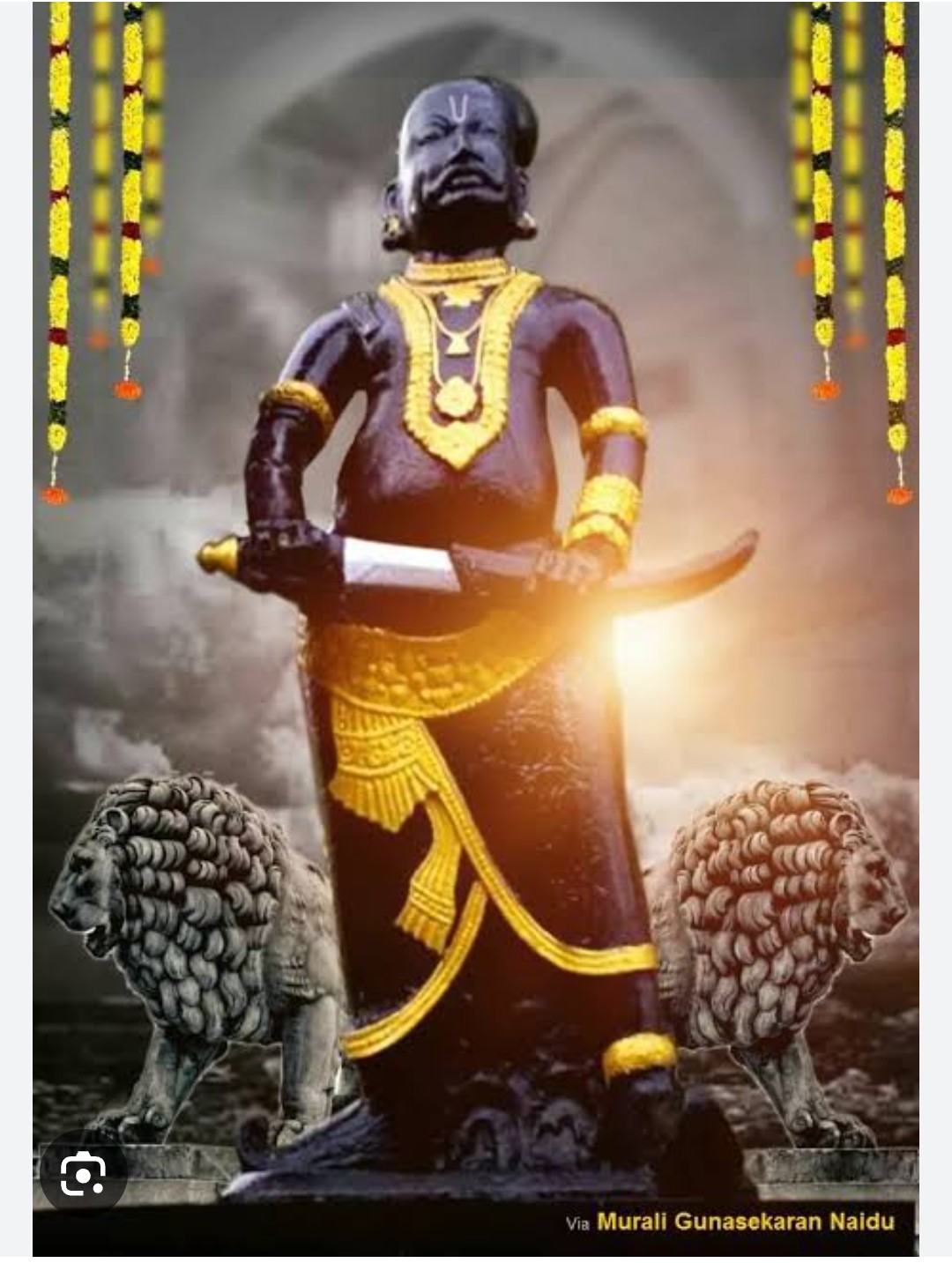
Naidu (also spelled Nayudu or, in South Africa and parts of the diaspora, Naidoo) is a title of honour used across a cluster of Telugu-speaking communities of South India, rather than the name of a single caste or lineage. The word is a contraction of the Telugu “Nayakudu,” meaning leader, chief, or headman, and it was historically conferred on landholders, village headmen, and military commanders in Andhra kingdoms.
Communities that traditionally carry the Naidu title include the Kapu, Balija, Kamma, Velama, Gavara, Golla, Boya, and Turpu Kapu, among others, so a person surnamed Naidu today may trace descent to any of several distinct Telugu communities depending on region and family history. The title is most heavily concentrated in Andhra Pradesh and Telangana, and spread through migration and historical service in regional kingdoms to Tamil Nadu, Karnataka, Kerala, Odisha, and, from the nineteenth century onward, to the overseas Indian diaspora, most notably in South Africa.
This profile traces the historical origin of the Naidu title, the constellation of communities associated with it, and the language, customs, cuisine, dress, and diaspora history shared broadly across Telugu Naidu families, while noting that specific practices can vary from one community and region to another.
2. Origins and Etymology of the Title
2.1 From “Nayaka” to “Naidu”
The title traces to the Telugu word Nayakudu (leader or protector), which appears in inscriptions as early as the Vishnukundina dynasty, which ruled the Krishna–Godavari river delta region of Andhra around the third century CE. Under later Andhra dynasties, including the Kakatiyas of Warangal, “Nayaka” was one of roughly two dozen titles used to designate regional military commanders and landholders who administered territory in exchange for service to the crown, a system that historians connect to the Nayankara tenure arrangement of the Kakatiya period.
2.2 The Vijayanagara Empire and the Spread of the Title
The title reached its widest circulation during the Vijayanagara Empire (14th–17th century), which conferred “Nayaka” on commanders and provincial governors, including many who were not originally Telugu speakers, as it expanded across the Tamil- and Kannada-speaking south. This is why, today, related titles such as Naicker and Nayak are also found among non-Telugu communities of Tamil Nadu and Karnataka, while “Naidu” in its specific form remains closely identified with Telugu-origin families. Several regional Nayaka kingdoms that emerged as Vijayanagara declined for example, the Nayaka rulers of Madurai, Thanjavur, and Gingee were established by governors who had originally held the Nayaka title.
Although the title was not originally hereditary, being tied to administrative or military office rather than birth, it was widely adopted as a hereditary surname by descendant families over subsequent centuries, so that by the modern era “Naidu” functions as a common surname rather than an active administrative rank.
3. Communities Associated with the Naidu Title
Because “Naidu” is a shared honorific rather than a single caste name, it is used today, in varying regional proportions, by several distinct Telugu communities. The table below summarizes the principal ones.
| Community | Traditional Occupation | Primary Region Today |
|---|---|---|
| Kapu (including Telaga, Ontari) | Land-owning agriculturists; historically also warriors and military commanders | Coastal Andhra Pradesh |
| Balija | Traders and merchants; some sub-groups also agrarian | Rayalaseema, coastal Andhra, Tamil Nadu, Karnataka |
| Kamma | Land-owning agriculturists | Rayalaseema, Andhra Pradesh, northern and western Tamil Nadu |
| Velama | Land-owning agriculturists and historical feudal chieftains | Telangana, coastal Andhra Pradesh |
| Gavara | Traders and agriculturists | Coastal Andhra Pradesh (Visakhapatnam and Vizianagaram districts) |
| Golla | Traditionally pastoralists (cattle- and sheep-herding) | Andhra Pradesh and Telangana |
| Boya | Traditionally hunters, soldiers, and agriculturists | Rayalaseema and Andhra Pradesh |
| Turpu Kapu | Agriculturists and, traditionally, warriors | North coastal Andhra Pradesh (Srikakulam, Vizianagaram, Visakhapatnam) |
There is a broad regional pattern to which community the Naidu title most often signifies: in Rayalaseema and in northern and western Tamil Nadu it is most closely associated with the Kamma community, while in Coastal Andhra it is most closely associated with the Kapu community. In Tamil Nadu and Karnataka, families using the closely related Naicker title may or may not share Telugu ancestry, since the title was extended to local commanders during Vijayanagara rule.
4. Regional Presence and Migration History
The core homeland of Naidu families is Andhra Pradesh and Telangana, particularly the fertile Krishna and Godavari river delta districts of Coastal Andhra and the plateau districts of Rayalaseema. From this base, Telugu-speaking Naidu families migrated over several centuries into neighbouring regions, generally following patterns of trade, military service, or agricultural settlement.
- Tamil Nadu and Karnataka: Migration accelerated during and after the Vijayanagara period, when Telugu warrior and merchant families settled in the Tamil country as administrators, garrison commanders, and traders; many of their descendants continue to use the Naidu or the related Naicker title.
- Kerala: Community accounts describe smaller Naidu populations, numbering in the low thousands of families, whose ancestors migrated to Kerala roughly two centuries ago from the Madurai and Tirunelveli regions, with a notable settlement of Telugu Naidus in and around Kochi tracing their arrival to the late eighteenth century, some accounts linking it to service in regional armies of the period.
- Odisha and other states: Smaller Naidu populations are also recorded in Odisha and elsewhere, generally linked to historical trade or administrative movement out of the Telugu country.
- Overseas diaspora: From the mid-nineteenth century, Telugu-speaking families bearing the Naidu title including many who would become the Naidoo families of South Africa left the Madras Presidency as indentured labourers and, in smaller numbers, as free “passenger” migrants, settling in Natal, Mauritius, Fiji, Malaysia, and the Caribbean under British colonial labour schemes (see Section 10).
5. Social Structure and Traditional Livelihoods
Naidu-title communities are traditionally organized as patrilineal, patriarchal family units grouped into exogamous gotras (lineage groups); marriage within one's own gotra is traditionally avoided, while marriage within the broader caste or sub-caste community has traditionally been preferred. Extended families and clan or lineage networks remain socially significant, particularly around major life events such as weddings and family reunions.
Historically, most Naidu-title communities were land-owning agriculturists, and several among them among them the Kapu, Kamma, Velama, and Boya communities also carry a historical identity as warriors and military commanders, reflecting the title's origins in the Nayaka system of the medieval and Vijayanagara periods. The Balija and Gavara communities, by contrast, are more closely associated with historical trading and mercantile occupations, and the Golla community with pastoralism. In the modern era, these historical occupational distinctions have substantially blurred, and Naidu-title families today are found across agriculture, business, the professions, government service, and, notably, the Telugu and Tamil film industries.
Naidu-title communities overwhelmingly follow Hinduism, worship both major pan-Indian deities such as Venkateswara, Shiva, and Krishna and regional village or family deities such as Poleramma, Gangamma, and Ankalamma, and observe caste and family customs that are broadly shared with other landholding and agrarian Telugu communities.
6. Language
Telugu is the historic mother tongue of Naidu families and remains so for the great majority in Andhra Pradesh and Telangana. Families whose ancestors migrated to Tamil Nadu, Karnataka, or Kerala generations ago are frequently now Tamil-, Kannada-, or Malayalam-speaking in daily life, while many retain awareness of Telugu ancestry and, in some households, continue to use Telugu domestically or in religious contexts. In the South African and wider Indian Ocean diaspora, Telugu has been actively maintained as a heritage and community language through organizations, language classes, and religious institutions, even where English or Afrikaans has become the primary everyday language.
7. Culture, Festivals, and Family Life
Naidu-title families follow the broader festival calendar of Telugu Hindu society. Major festivals include:
- Ugadi — the Telugu New Year, marked with the preparation of ugadi pachadi, a dish combining sweet, sour, bitter, and spicy ingredients to symbolise the varied experiences of the year ahead.
- Sankranti (Makara Sankranti) — a multi-day harvest festival celebrated with rangoli (muggu) floor art, kite flying, and the decoration of cattle, reflecting the community's historical agrarian roots.
- Dasara (Navaratri) and Diwali — widely observed with family gatherings, prayer, and festive food.
- Local and family deity festivals — many Naidu families observe annual worship of a family or village deity (kula devata), often linked to an ancestral village temple.
Hospitality, respect for elders, and strong extended-family ties are widely emphasised community values, and large family or clan gatherings, especially around weddings, remain an important part of social life.
8. Marriage and Wedding Traditions
Naidu families generally follow the broader Telugu Hindu wedding tradition, which blends Vedic ritual with regional South Indian custom. While the length and elaborateness of the celebration has shortened considerably from the multi-week wedding season once traditional in the nineteenth century to a more typical three-to-five-day modern format, most of the following ceremonies remain common:
- Nischitartham — a formal engagement ceremony in which families exchange gifts and the priest fixes an auspicious wedding date using the Hindu calendar (panchangam).
- Pellikuthuru and Pellikoduku — separate pre-wedding ceremonies for the bride and groom involving the application of turmeric paste (haldi) and oil, considered to purify and beautify the couple before the wedding; this is often paired with the Mangala Snanam, a ceremonial purifying bath.
- Kashi Yatra — a lighthearted ritual in which the groom mock-departs on a pilgrimage to renounce worldly life, only to be persuaded by the bride's father or brother to return and marry.
- Kanyadaanam — the formal giving away of the bride by her parents.
- Mangalsutra Dharana — the ritual heart of the ceremony, in which the groom ties the mangalsutra (a turmeric-dyed thread bearing two gold pendants known as sutralu) around the bride's neck in three knots, symbolising the union of thought, word, and deed; the thread is customarily replaced by a gold chain some days after the wedding.
- Talambralu — a joyful ritual in which the bride and groom shower each other with a mixture of rice and turmeric.
- Saptapadi — the couple takes seven ceremonial steps together around the sacred fire, each step representing a marital vow.
As with much of Telugu Hindu society, the bride's maternal uncle and brother traditionally play prominent ceremonial roles, and the wedding muhurtam (auspicious moment) is often set for late evening or close to midnight rather than in the morning.
9. Cuisine
Naidu families share in the wider Andhra and Telugu culinary tradition, which is known across India for its bold use of chilli, tamarind, and regional souring agents, alongside a strong tradition of pickles and lentil-based dishes.
- Gongura dishes — sorrel leaves (gongura), a distinctively Andhra ingredient, are used in a tangy pachadi (chutney/pickle), a lentil preparation (gongura pappu), and, in non-vegetarian households, gongura mamsam (mutton with sorrel), regarded as one of the signature dishes of Telugu cuisine.
- Avakaya — a well-known raw mango pickle made with chilli powder, mustard powder, and sesame oil, a staple pantry item in most Telugu homes.
- Pesarattu — a savoury crepe made from whole green gram (moong dal), typically served with ginger chutney or, in the popular “MLA pesarattu” variant, stuffed with upma.
- Pappu and pulusu — everyday lentil preparations (pappu) and tangy tamarind-based stews (pulusu), commonly paired with mudda pappu (plain-cooked toor dal) and ghee as comfort food.
- Non-vegetarian dishes — in non-vegetarian households, chicken and mutton curries (kodi/mamsam kura), fish curries (chepala pulusu), and prawn preparations (royyala iguru) are common, reflecting both the coastal and inland strands of Andhra cooking.
- Sweets — festive sweets such as boorelu, pootharekulu, and rava laddu are prepared for festivals and weddings.
As with Telugu cuisine generally, Naidu family food traditions vary somewhat between the coastal Andhra, Rayalaseema, and Telangana regions, with Rayalaseema cooking generally considered spicier and coastal Andhra cooking making fuller use of seafood.
10. Traditional Dress and Ornaments
Traditional Naidu dress broadly follows patterns common to landholding Telugu Hindu families of the region. Women traditionally wore the saree, often in regional handloom weaves such as those from Venkatagiri, Pedana, Mangalagiri, and Dharmavaram, with heavy gold jewellery, including temple-style necklaces and bangles, worn on festive and ceremonial occasions. The mangalsutra, described above, is the customary marker of married status. Men traditionally wore the dhoti (pancha) with an angavastram (upper cloth) for formal or religious occasions, a style broadly shared with other landholding castes of the Telugu region. Contemporary daily dress among Naidu families, as with most South Indian communities, has largely converged with mainstream Indian and Western fashion, with traditional dress reserved chiefly for weddings, festivals, and religious ceremonies.
11. Diaspora
The most historically significant overseas Naidu (Naidoo) population is in South Africa. Beginning in 1860, the British colonial government of Natal recruited indentured labourers from the Madras Presidency, including substantial numbers of Telugu speakers from the Andhra region, to work on Natal's sugar plantations; a further wave arrived as free “passenger” migrants and traders. Telugu indentured and passenger families anglicised the Naidu title to “Naidoo,” and their descendants, several generations removed from India, remain one of the most visible Telugu-surnamed communities in the world today.
South African Naidoo families were prominent in the twentieth-century Indian community's civic and political life. The Andhra Maha Sabha of South Africa, founded to preserve Telugu language and culture among the descendants of indentured Andhra migrants, has been active since the early twentieth century, and members of Naidoo families played leading roles in the Natal and Transvaal Indian Congresses and, later, in the anti-apartheid movement, including as part of the Treason Trial defendants and the wider Congress Alliance.
Beyond South Africa, communities descended from nineteenth- and twentieth-century Telugu emigration bearing the Naidu/Naidoo title are also found among the Indian diaspora populations of Mauritius, Fiji, Malaysia, Singapore, and the Caribbean, generally tracing similar origins in colonial-era indentured or trading migration from the Madras Presidency. More recent, twentieth- and twenty-first-century migration for education, business, and professional employment has additionally established Naidu-title communities in the United Kingdom, the United States, Canada, Australia, and the Gulf states, generally maintaining Telugu cultural and religious associations similar to those found among other South Indian diaspora groups.
12. Prominent Figures
12.1 Politics and Public Life
- Sarojini Naidu (1879–1949) — poet and independence activist known as the “Nightingale of India”; the first Indian woman to serve as president of the Indian National Congress and later Governor of the United Provinces.
- Padmaja Naidu (1900–1975) — freedom fighter and later Governor of West Bengal; daughter of Sarojini Naidu.
- M. Venkaiah Naidu — 13th Vice President of India (2017–2022).
- N. Chandrababu Naidu — Chief Minister of Andhra Pradesh and long-serving leader of the Telugu Desam Party.
- Thambi Naidoo (1875–1933) and family — South African Telugu-origin activists who worked closely with Mahatma Gandhi during the early Satyagraha campaigns in Transvaal, with several descendants continuing as anti-apartheid activists into the late twentieth century.
12.2 Sports
- C. K. Nayudu (1895–1967) — first captain of the Indian cricket team and one of India's most celebrated early cricketers.
- C. S. Nayudu — Indian Test cricketer who played from 1934 to 1952.
- M. Buchi Babu Naidu — pioneering figure in South Indian cricket, sometimes described as the “father of South Indian cricket.”
12.3 Cinema and the Arts
- Raghupathi Venkaiah Naidu — pioneering filmmaker widely credited as the “father of Telugu cinema.”
- Daggubati Ramanaidu — prolific Telugu film producer and one of the most influential figures in South Indian cinema.
- Sobha Naidu — acclaimed Kuchipudi classical dancer.
- Dwaram Venkataswamy Naidu — noted Carnatic violinist.
12.4 Science, Industry, and Education
- G. D. Naidu — inventor, engineer, and entrepreneur, popularly known as the “Edison of India” for his mechanical innovations.
- Galla Ramachandra Naidu — industrialist and founder of the Amara Raja Group.
- Raghupathi Venkataratnam Naidu — social reformer and educationist.
This list is illustrative rather than exhaustive; Naidu-title families have produced a substantial number of political leaders, scholars, entrepreneurs, artists, and civic figures across Andhra Pradesh, Tamil Nadu, and the global diaspora over the past two centuries.
13. Conclusion
The Naidu community is better understood as a title-based network of related Telugu communities than as a single, uniform caste. Rooted in the medieval Nayaka system of military and administrative leadership and spread widely through the Vijayanagara Empire's expansion, the title today links land-owning and mercantile Telugu families across Andhra Pradesh, Telangana, Tamil Nadu, Karnataka, and Kerala, and, through nineteenth-century indenture and later voluntary migration, a substantial global diaspora most visibly the Naidoo families of South Africa. What unites Naidu-title families across this geography is not a single origin story but a shared Telugu linguistic and cultural heritage: common festivals, wedding customs, cuisine, and, in many families, an inherited memory of the leadership and land-holding roles from which the title itself first arose.
References
- [1]1. Wikipedia. “Naidu.” https://en.wikipedia.org/wiki/Naidu
- [2]2. Wikipedia. “Kapu (caste).” https://en.wikipedia.org/wiki/Kapu_(caste)
- [3]3. Wikipedia. “Turpu Kapu.” https://en.wikipedia.org/wiki/Turpu_Kapu
- [4]4. Wikipedia. “Andhra cuisine.” https://en.wikipedia.org/wiki/Andhra_cuisine
- [5]5. Wikipedia. “Telugu Hindu wedding.” https://en.wikipedia.org/wiki/Telugu_Hindu_wedding
- [6]6. Wikipedia. “Thambi Naidoo.” https://en.wikipedia.org/wiki/Thambi_Naidoo
- [7]7. Wikipedia. “Naransamy Roy Naidoo.” https://en.wikipedia.org/wiki/Naransamy_Roy_Naidoo
- [8]8. Wikipedia. “M. J. Naidoo.” https://en.wikipedia.org/wiki/M._J._Naidoo
- [9]9. GKToday. “Kapu Caste.” https://www.gktoday.in/kapu-caste/
- [10]10. Kapu Sangam. “An Open Thought on Our Community.” https://kapusangam.com/profilegrid_blogs/an-open-thought-on-our-community/
- [11]11. Kapu Community. “The Rich History of the Kapu Community.” https://kapucommunity.com/history
- [12]12. South African History Online. “Indian Indentured Labour in Natal 1860–1911.” https://sahistory.org.za/article/indian-indentured-labour-natal-1860-1911
- [13]13. The Heritage Portal. “A Brief History of Indian Indenture in South Africa.” https://www.theheritageportal.co.za/article/brief-history-indian-indenture-south-africa
- [14]14. Andhra Maha Sabha of South Africa. “A Brief History of the Andhra People in South Africa.” http://www.amssa.org.za/about-amssa/history-amssa/
- [15]15. Ancestors Research South Africa. “Indian South Africans.” https://www.ancestors.co.za/indian-south-africans/
- [16]16. Perniaspopupshop Wedding Encyclopedia. “A Deep Dive into Andhra Pradesh's Wedding Ceremonies.” https://www.perniaspopupshop.com/wedding-encyclopedia/andhra-pradesh-telangana
- [17]17. Sailu's Food. “Authentic Andhra Recipes.” https://www.sailusfood.com/categories/andhra_food_recipes_vantakalu
- [18]18. Andhra Cultural Portal. “Culinary Tour of Andhra.” http://andhraportal.org/culinary-tour-of-andhra/
- [19]19. GenoConnect community profile format (structural reference). https://www.genoconnect.co/communities/syrian-catholic
- [20]This profile synthesizes publicly available historical, ethnographic, and genealogical sources. Community customs vary by region, sub-community, and individual family, and this document is intended as a general cultural overview rather than an authoritative or exhaustive account.