

Nadar Community
A Tamil-speaking community known for entrepreneurship, trade, education, and significant social and economic progress in South India.
The Nadars of Tamil Nadu
History, Social Transformation, and Identity of a South Indian Community
The Nadars, historically recorded as Shanar or Shanan and occasionally referred to as Nadan, are a Tamil community concentrated in the southern districts of Tamil Nadu. Few communities in modern South India have been studied as closely by historians and sociologists, largely because their history offers such a clear window into how caste status could be renegotiated, contested, and eventually reshaped over the course of a century. Within a few generations, a community that had occupied a fairly low rung in the traditional social order of the Tamil country and the former princely state of Travancore built for itself a position of real educational, commercial, and political weight in the region.
What follows draws chiefly on the published scholarship on the community, in particular the long-standing academic work of the political scientist Robert L. Hardgrave Jr., alongside other historians and sociologists who have written on caste mobility in colonial and post-colonial Tamil Nadu. Wherever the record is uncertain or contested, that uncertainty is noted rather than smoothed over. A full list of sources appears at the end of the document.
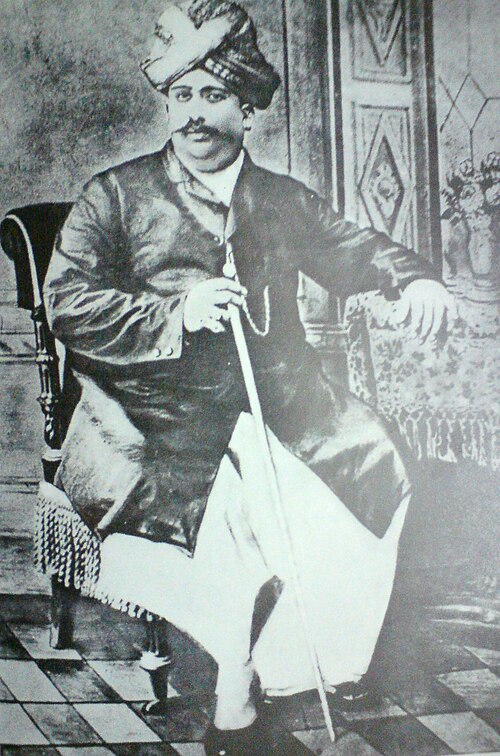
1. Who Are the Nadars?
Nadars are a Tamil caste today classified as an Other Backward Class by both the Government of Tamil Nadu and the Government of India. They are concentrated in Kanyakumari, Thoothukudi (Tuticorin), Tirunelveli, Tenkasi, and Virudhunagar districts, and historically formed a large population in the former princely state of Travancore, in what is now southern Kerala, as well.
It would be a mistake to think of the Nadars as having always been a single, tidy caste group. The community instead grew out of a cluster of related subcastes of quite varied social and economic standing, which only gradually came together under the shared name Nadar over the course of the nineteenth and twentieth centuries. Understanding that process of unification, and the community's long push for social advancement alongside it, is really the key to understanding Nadar history as a whole.
2. Name and Etymology
For much of the colonial period the community was recorded in official documents as Shanar, sometimes spelled Shanan. In 1921 it legally adopted the name Nadar instead, a title said to have originated with the Nelamaikkarars, the traditional landed aristocracy within the Shanar community, who had earlier used it as an exclusive marker of their own status.
Community tradition holds that the original name of the group was Shantror or Shandrar, meaning noble one, and that this was gradually corrupted into Shanar. Historians, however, have found no firm documentary basis for that account. A related title, Channar, is used separately by the Ezhava community of Kerala, though scholars have not established a clear historical link between the two names.
3. Origins
Where the Nadars came from as a distinct social group is not something historians agree on with any confidence. Hardgrave thought it likely that the Teri palmyra forests around present-day Thiruchendur were the community's original home tract.
From the late nineteenth century, a number of Nadar writers and community leaders began to argue that the Nadars descended from the rulers of the ancient Pandyan kingdom, and that the community's low ritual standing under colonial rule was the direct result of a deliberate political demotion, known in this telling as Deshaprashtam or ostracism, imposed by the Nayak rulers of Madurai once they had taken over Pandya territory. Hardgrave, while cautious, did not dismiss this claim outright. He pointed to the traditions preserved among the Nelamaikkarars and to the archaeological remains found beneath the Teri palmyra forests near Thiruchendur and at Korkai, the old Pandyan capital, both areas where the Nadar population remains predominant today, as at least suggestive of some connection to the Early Pandyas. Other historians are less convinced, and note that there is little solid evidence tying the community directly to the later Pandya royal line. The caste identity of the historical Pandya kings themselves is, in any case, not something that can be established with certainty. What is clear is that by the nineteenth century, the belief that the Nadars had once ruled Tamil Nadu had become, in Hardgrave's phrase, an article of faith within the community.
A separate strand of legend recounts that some Nadars migrated to Sri Lanka at an early period but eventually returned to India after receiving poor treatment there. Quite apart from this legendary account, a number of Nadars did emigrate from South India to Sri Lanka during the British colonial era as part of the wider movement of labour to the island's plantations.
4. Subcastes and Social Structure
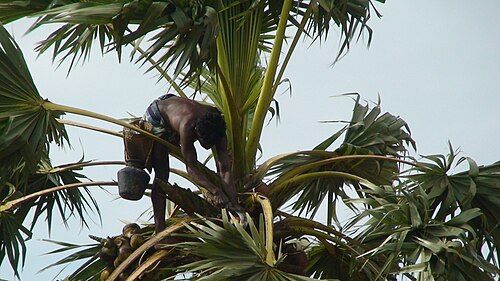
Traditionally the community was made up of five major subcastes, each largely endogamous and each carrying a distinct social and economic standing, that were brought together under the common Nadar name only in the modern era. By far the largest of these, the Karukkupattaiyathar or Mara Nadar, made up roughly four fifths of the whole community and was itself divided internally between a small landowning aristocracy, the Nelamaikkarars, and the far more numerous palmyra-climbing families who worked beneath them.
Traditionally the community was made up of five major subcastes, each largely endogamous and each carrying a distinct social and economic standing, that were brought together under the common Nadar name only in the modern era. By far the largest of these, the Karukkupattaiyathar or Mara Nadar, made up roughly four fifths of the whole community and was itself divided internally between a small landowning aristocracy, the Nelamaikkarars, and the far more numerous palmyra-climbing families who worked beneath them.
Traditionally the community was made up of five major subcastes, each largely endogamous and each carrying a distinct social and economic standing, that were brought together under the common Nadar name only in the modern era. By far the largest of these, the Karukkupattaiyathar or Mara Nadar, made up roughly four fifths of the whole community and was itself divided internally between a small landowning aristocracy, the Nelamaikkarars, and the far more numerous palmyra-climbing families who worked beneath them.
Traditionally the community was made up of five major subcastes, each largely endogamous and each carrying a distinct social and economic standing, that were brought together under the common Nadar name only in the modern era. By far the largest of these, the Karukkupattaiyathar or Mara Nadar, made up roughly four fifths of the whole community and was itself divided internally between a small landowning aristocracy, the Nelamaikkarars, and the far more numerous palmyra-climbing families who worked beneath them.
| Subcaste / Group | Traditional Region | Traditional Role | Notes |
|---|---|---|---|
| Karukkupattaiyathar (Mara Nadar) | Around Manadu; the wider Tirunelveli belt | Largest group, about four fifths of the community; includes the Nelamaikkarars (landed aristocracy) and the palmyra climbers beneath them | Claim descent from the Pandyas and regard themselves as the original inhabitants of the tract |
| Mel-nattar | Southern Travancore and western Tirunelveli | Cultivators and traders | The name comes from Mel-nadu, meaning western country; tradition connects them to the old Chera line |
| Nattathis | Nattathi village, near Sawyerpuram in present-day Thoothukudi district | Cultivators, traders, and money lenders; some held zamindari rights under British rule | Historically a largely Christian and endogamous group |
| Flag bearer group | Pandya country, said to have migrated from the Kaveri banks in Thanjavur | Palmyra climbers who traditionally served as flag bearers to the Pandyan kings | Palmyra climbing remains their traditional occupation |
| Kalla Shanar | Tirunelveli region | Toddy tapping; traditionally palanquin bearers | Historically regarded as the community's least advantaged subgroup |
This older subcaste structure survives most clearly today in southern Tirunelveli. North of Tirunelveli the distinctions have largely faded from everyday use, and the Karukkupattaiyathar group is now generally just called Group A, with the remaining four subcastes together forming Group B.
The Nelamaikkarars, as the traditional aristocracy of the community, held their position either directly under the Nayak rulers around Thiruchendur or as lesser lords under regional chieftains known as Palaiyakkarars. They commanded genuine respect across caste lines, including from the Vellalars and Brahmins. Nelamaikkarar men traditionally rode on horseback, and their women travelled in covered palanquins, both visible markers of a status well above that of the ordinary palmyra climber.
5. Traditional Occupations
In the early nineteenth century most Nadars worked in the palmyra industry, climbing palmyra palms to draw sap that was then processed into jaggery, an unrefined cane or palm sugar used as a staple sweetener, and in some cases into toddy, a mildly fermented palm drink. A smaller number of families, chiefly among the Nelamaikkarars, were instead substantial landowners and money lenders. It is worth noting that although Nadar climbers were closely identified with the toddy trade through their occupation, the community itself did not, as a rule, drink toddy.
At the start of the nineteenth century, Nadars formed the overwhelming majority of the population between the Thamirabarani River and Cape Comorin (Kanyakumari), reportedly somewhere between 80 and 90 percent. Despite this numerical dominance, the community at the time had only limited interaction with other groups and remained internally divided along its various endogamous subcaste lines, which meant it lacked much sense of shared identity or cohesion.
6. Social Position and the Path to Mobility

Within the traditional caste hierarchy of the Tamil country, and especially within the notably rigid hierarchy of Travancore, which Swami Vivekananda once described as a lunatic asylum of castes, Nadars ranked below the major landowning and elite castes because of their occupational association with toddy, though above communities regarded as low caste. They were barred from entering temples built by higher-ranked communities. In Travancore, restrictions on Nadar climbers went further still. One especially stark example was the rule that Nadar climber women, unlike the aristocratic Nadan women, were not permitted to cover their upper body in the manner of higher-status women.
Discontent with restrictions of this kind led a considerable number of Nadar climbers, from the early nineteenth century onward, to convert to Christianity, often with active encouragement from missionaries working in the region, in the hope of improving their social standing. When both Christian and Hindu Nadar climber women subsequently began wearing an upper garment in the style worn by upper caste women, they met with resistance and mistreatment from men of higher ranking castes. The episode, remembered today as the Upper Cloth Controversy, grew into a serious and at times violent social conflict in nineteenth century Travancore. It was eventually settled in favour of the Nadar climber women, with the involvement of Travancore state officials, British Christian missionaries, and the reformer Vaikunta Swami, and the women secured the right to cover their upper body as other women of the region already did.
From the middle of the nineteenth century, a separate group of Nadar traders who had moved north from southern Tirunelveli into the Virudhunagar area found considerable commercial success. As this Northern Nadar merchant class grew wealthier through trade, its members began adopting customs, titles such as Nadan, which had earlier belonged only to the Nelamaikkarars, and social practices drawn from the North Indian Kshatriya or warrior-ruler tradition, in a process that sociologists call Sanskritisation, aimed at raising the community's standing within the wider caste order. Castes traditionally ranked above the Nadars, notably the Vellalars and the Maravars, contested this claim to higher status, and the resulting tension eventually spilled over into open conflict, most notably the Sivakasi riots of 1899. The Sanskritising claims of the Northern Nadars were not widely accepted at first, but the confrontations that followed pushed the community to organise itself far more effectively in the decades that came after.
7. Community Organisation: The Nadar Mahajana Sangam
It became clear over time that scattered, town-based Nadar associations could achieve only so much on their own. In February 1910, at the initiative of T. Rattinasami Nadar, a wealthy Nadar of Porayar in Thanjavur district, community leaders from across the region gathered for a plenary meeting that led to the founding of the Nadar Mahajana Sangam. Rattinasami Nadar's uncle, V. Ponnusami Nadar, was elected its first president. The Sangam was open to any Nadar man, of any subcaste or religion, and set itself the broad goal of uplifting the community as a whole, including encouraging marriage across the different Nadar subcastes and supporting the palmyra-climbing families who remained the community's most disadvantaged members.
Education sat at the centre of the Sangam's work almost from the start. As early as 1885, Northern Nadar leaders had already used community mahimai funds to set up the Kshatriya Vidhyasala High School in Virudhunagar. From 1921 the Sangam began offering scholarship loans to students, including help with study abroad, and by 1964 had extended more than three thousand such loans. It also supported the founding of village schools and, in 1947, established Sengamala Nadar (Senthikumara Nadar) College. Nadar-run cooperative institutions, including the community bank that later became the Tamilnad Mercantile Bank, contributed a share of their profits to fund this scholarship activity.
The Sangam also worked, with only partial and uneven success, to move Nadar climbers away from toddy production and toward jaggery instead, and later lobbied successive governments over the regulation of the palmyra and toddy trade. After Indian independence, the Sangam threw its weight behind the constitutional vision of a caste-less society, encouraging its own members to open community schools, wells, and temple tanks to people of every caste. Gestures of this kind did a good deal to earn the community wider social recognition and respect.
8. Religion
8.1 Hinduism
The great majority of Hindu Nadars follow Saivism, with only a single traditional kuttam, or clan grouping, following Vaishnavism instead. The god Murugan holds a particularly important place in community devotion, and the goddess Bhadrakali is regarded as the community's tutelary deity. Nadars traditionally trace their descent from her, and a Bhadrakali temple typically stands at the heart of a Nadar settlement.
Every Hindu Nadar belongs, through patrilineal descent, to a kuttam with its own family deity and family temple. Families that migrated to new areas would often carry soil from the ancestral family temple to consecrate a new shrine in their adopted home, and members of a kuttam traditionally gathered at least once a year at the family temple. Important moments in family life, such as a child's first haircut or the first invitation sent out for a wedding, were traditionally marked with an offering or an announcement at the family deity's shrine.
Nadar patronage also runs through the history of some of the region's major temples. The Murugan temple at Thiruchendur, one of the six principal abodes of Murugan in Tamil tradition and a major pilgrimage site on the Thoothukudi coast, sits in the very heart of the old Nadar homeland described by Hardgrave. Temple accounts record that after Dutch forces removed the temple's main idol in the seventeenth century, it was recovered from the sea and restored to the temple with the help of local devotees, among them a Nadar patron of the temple's services. Episodes of this kind reflect the community's long and continuing association with the religious life of the region, even during the period when Nadars faced restrictions at temples controlled by other castes.
8.2 Christianity
A significant minority of Nadars are Christian, drawn from both Catholic and Protestant traditions. The first recorded Nadar Christian congregation was founded at Vadakkankulam in 1680, following the conversion of a group of Nadar women, with a church built there in 1685 and a permanent mission established in 1701. Conversion among Nadars came from a mix of motives: genuine religious conviction on one hand, and on the other, as already noted, the hope of improved social standing, though the results did not always match what missionaries had intended. By 1970, Christian Nadars numbered around 150,000, against an estimated 1.5 to 2 million Hindu Nadars in the former Madras State. Like their Hindu counterparts, Christian Nadars have traditionally married within the community.
9. Martial Tradition
The community has its own traditional martial art, historically known as Adimurai or Chinna Adi, also called Varma Adi, part of the broader Tamil martial tradition of Varma Kalai. Since 1958 this style has often been described as a southern form of Kalaripayattu, though scholars are careful to point out that it is historically a distinct tradition from the Kalaripayattu long associated with Kerala.
10. Political History
Through the 1920s and 1930s, the Nadar Mahajana Sangam threw its support behind the wider non-Brahmin movement in the Madras Presidency and the Justice Party. Under the leadership of W. P. A. Soundrapandian Nadar as Sangam president, the community also allied itself with Periyar E. V. Ramasamy's Self-Respect Movement, and Northern Nadars took part in self-respect marriages, a practice associated with the movement, during this period.— the late 1940s community political loyalty had shifted substantially toward the Indian National Congress, helped along by the rise of K. Kamaraj, a Nadar leader who went on to serve as Chief Minister of Tamil Nadu and become a major figure in national Congress politics, notwithstanding some early scepticism toward him within his own community. After the Kamaraj era, Nadar political support spread out across several parties, and the community's political mobilisation became correspondingly less centred on any single organisation. Even so, observers of Tamil Nadu politics continue to describe the community as influential across the spectrum, with Nadar leaders present in nearly every party of any consequence in the southern districts.
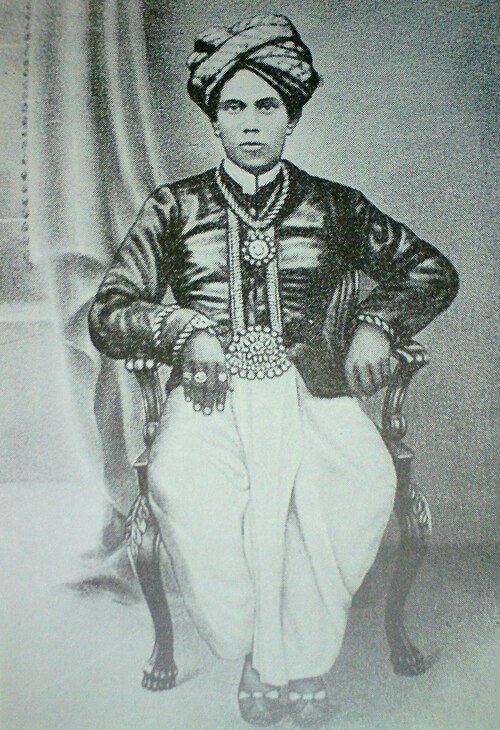
11. Entrepreneurship and Economic Life
From the colonial period onward, Nadar merchants built up extensive trading networks across the Madras Presidency. They established fortified trading compounds known as pettais and local trade associations known as uravinmurais, which drew on voluntary contributions called mahimai to protect commercial interests and fund community welfare.
The community's name is closely tied to the transformation of Sivakasi, in Virudhunagar district, into one of India's major industrial towns. In the 1920s, the cousins P. Ayya Nadar and A. Shanmuga Nadar travelled to Calcutta to learn the craft of matchstick manufacturing, and on their return set up some of Sivakasi's earliest safety match factories, later branching out into fireworks and printing, both industries that remain central to the town's economy today. Sivakasi went on to account for a large share of India's total production of safety matches and fireworks, and is sometimes called India's mini Japan, after a remark attributed to Jawaharlal Nehru, in recognition of the industrial energy the town showed from the 1960s onward. Firms and institutions founded during this period include National Fireworks and the Ayya Nadar Janaki Ammal College, both associated with P. Ayya Nadar, and the Kaliswari, or Kakka, fireworks brand associated with A. Shanmuga Nadar.
The Nadar Bank, founded with pooled community funds and later renamed the Tamilnad Mercantile Bank, remains one of the oldest surviving private sector banks in India. Its history is a fair illustration of the broader nineteenth and twentieth century Nadar practice of pooling community resources for banking, education, and welfare rather than relying solely on outside institutions.
12. Contemporary Status
Nadars, once largely barred from entering temples built by higher ranking castes, are today frequently found among the trustees of Hindu temples across Tamil Nadu. The community is generally described as financially strong and politically influential in the state's southern districts, and it has an established presence in Tamil language media, including a long historical association with the Dina Thanthi newspaper group. Writing in the 1970s, the political scientist M. Crawford Young summed up the community's trajectory as a striking case of status reversal, achieved through caste solidarity, the reworking of older ritual restrictions, and the effective use of education, commerce, and political engagement.
Nadars continue to be classified as an Other Backward Class by both the Government of Tamil Nadu and the Government of India, a classification that reflects continued official recognition of the community's historical position even as its overall socio-economic profile has changed a great deal over the twentieth and twenty-first centuries. The community's history of organised social and economic advancement remains a subject of ongoing interest to historians and sociologists working on caste and social change in India.
13. Notable Nadars
- K. Kamaraj, former Chief Minister of Tamil Nadu and a senior leader of the Indian National Congress.
- Shiv Nadar, founder of HCL Technologies and of the Shiv Nadar Foundation, which established the Sri Sivasubramaniya Nadar College of Engineering.
- Tamilisai Soundararajan, physician and politician who has served as Governor of Telangana and Lieutenant Governor of Puducherry.
- H. Vasanthakumar, businessman, founder of Vasanth & Co., and former Member of Parliament.
- Marshal Nesamony, politician associated with the Tamil language political movement in Kanyakumari district.
- V. Radhika Selvi, former Union Minister of State for Home Affairs, Government of India.
- V. V. Ramasamy Nadar, a figure associated with the Self-Respect Movement in early twentieth century Tamil Nadu.
- Vijay Vasanth, actor and Member of Parliament.
- P. Ayya Nadar and A. Shanmuga Nadar, the entrepreneurs credited with founding Sivakasi's match and fireworks industries in the 1920s.
This list is meant to be illustrative rather than complete. Members of the community have gone on to distinguish themselves in business, industry, education, and public life well beyond the names given here, both within Tamil Nadu and abroad.
14. Conclusion
The history of the Nadar community shows how a set of related, historically low-ranked subcastes could come together under a shared identity and, over roughly a century, work their way to real social, educational, and economic standing within a changing colonial and post-colonial India. The story runs from the palmyra groves of the Teri forests and the Upper Cloth Controversy of nineteenth century Travancore, through the founding of the Nadar Mahajana Sangam and the industrial rise of Sivakasi, to the community's present day place in Tamil Nadu's politics, commerce, and media. Few communities offer as clear or as well documented an example of caste mobility in modern Indian social history.
References
- [1]1. Hardgrave, Robert L. (1969). The Nadars of Tamilnad: The Political Culture of a Community in Change. Berkeley: University of California Press.
- [2]2. Mandelbaum, David G. (1970). Society in India, Volumes 1 to 2. Berkeley: University of California Press.
- [3]3. Templeman, Dennis (1996). The Northern Nadars of Tamil Nadu: An Indian Caste in the Process of Change. Oxford University Press.
- [4]4. Venkatachalapathy, A. R. (2011). "More Kshatriya than thou! Debating caste and ritual ranking in colonial Tamilnadu." In Bergunder, M., Frese, H., and Schroder, U. (eds.), Ritual, Caste and Religion in Colonial South India. Primus Books.
- [5]5. Young, M. Crawford (1976). The Politics of Cultural Pluralism. University of Wisconsin Press.
- [6]6. Polgreen, Lydia (10 September 2010). "New Business Class Rises in Ashes of South India's Caste System." The New York Times.
- [7]7. Wikipedia. "Nadar (caste)." https://en.wikipedia.org/wiki/Nadar_(caste)
- [8]8. Wikipedia. "Ayya Nadar." https://en.wikipedia.org/wiki/Ayya_Nadar
- [9]9. Wikipedia. "Shanmuga Nadar." https://en.wikipedia.org/wiki/Shanmuga_Nadar
- [10]10. Wikipedia. "Standard Fireworks (India)." https://en.wikipedia.org/wiki/Standard_Fireworks_(India)
- [11]11. Wikipedia. "Nadar Mahajana Sangam." https://en.wikipedia.org/wiki/Nadar_Mahajana_Sangam
- [12]12. Wikipedia. "Tamilnad Mercantile Bank." https://en.wikipedia.org/wiki/Tamilnad_Mercantile_Bank
- [13]13. Madras Musings. "Steering Sivakasi into becoming a mini Japan." https://madrasmusings.com/vol-35-no-2/ayya-and-shanmugam-who-steered-sivakasi-into-becoming-a-mini-japan/
- [14]14. Forbes India. Ramnath, N. S. (3 July 2009). "A bank controlled by Tamil Nadu's close-knit, powerful Nadar community."
- [15]15. Oneindia and Sindhu Travel Hub. "Thiruchendur Murugan Temple: History and Significance."