

Ezhava Community
A community for people of Ezhava heritage — connect, explore ancestry, and share identity.
The Ezhava Community of Kerala
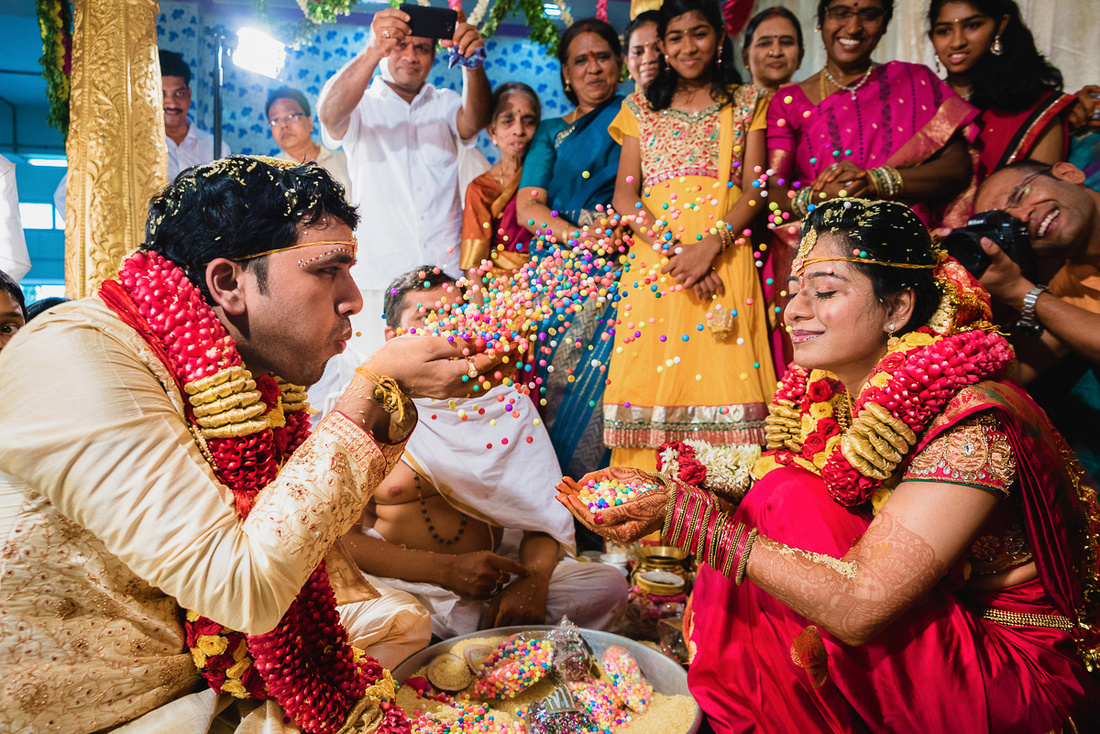
Few communities have shaped the modern history of an Indian state as decisively as the Ezhavas have shaped Kerala. Today the single largest Hindu community in the state by most estimates between one-fifth and one-fourth of Kerala's population the Ezhavas moved in barely a century from being classified as
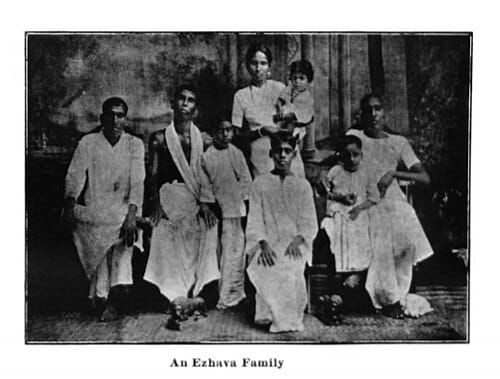
1. Etymology and Names Across Regions
- Ezham/Eezham theory: The most widely cited theory derives “Ezhava” from Ezham (Eelam), the old Tamil name for Sri Lanka, implying the ancestors of the community migrated from the island.
- Villavar theory: An alternative and increasingly favoured theory connects Ezhava to Villavar, meaning “archers” or “bowmen” — a Dravidian warrior lineage associated with the founding of the Chera dynasty of ancient Kerala. Ilavar/Ezhavar would then be a regional form of Villavar.
- Buddhist-connection theory: A third view holds the name and community identity crystallised as Buddhist practice declined in Kerala and its former adherents were absorbed into a distinct social category outside Brahminical Hinduism.
- Thiyya / Theeyya — in Malabar (Kozhikode, Kannur, Kasaragod) in north Kerala
- Billava — in Dakshina Kannada and Udupi, coastal Karnataka (Tulu Nadu)
- Chovan / Chogan / Ilavan — older Malayalam terms found in temple and land records
- Nadar-related and Ezhuvar terms — among Tamil-speaking related groups, and cognate community names (Goud/Ediga in Andhra-Telangana, Kalal/Jaiswal in parts of north India, Bhandari in Maharashtra-Goa) are sometimes cited by community writers as sharing a distant toddy-tapping/agrarian occupational ancestry, though the historical linkages vary in strength and are debated.
2. History: From Antiquity to the Colonial Period
2.1 Origin Narratives and Folklore
- The four bachelors of Eezham: Folk songs recount that the king of Sri Lanka despatched four unmarried men to Kerala at the request of the Chera king Bhaskara Ravi Varma around the first century CE, to introduce coconut cultivation — explaining both the name Ezhava and the community's deep historical association with the coconut palm.
- The eight warrior families: A parallel legend describes eight martial families sent by a Sri Lankan king to help put down a civil conflict in Kerala, said to be the ancestors of the community's warrior lineages.
- The Vadakkan Paattu tradition: The Northern Ballads (Vadakkan Paattukal) of Malabar celebrate the Thiyya warrior Aromal Chekavar and the Puthooram family of Chekavar swordsmen, whose legendary exploits are still performed and sung in north Kerala and are traditionally traced to the same group of Sri Lankan-origin warriors.
2.2 Traditional Occupations and Early Social Role
- Coconut cultivation and toddy tapping (sap-tapping from coconut and palmyra palms for jaggery, vinegar and traditionally also for arrack/toddy) — the community's best-known traditional occupation.
- Ayurvedic medicine: Many Ezhava families were hereditary Ayurvedic physicians (Vaidyars), including palace physicians to the Travancore and Cochin royal houses. The Cholayil family (makers of Medimix and Cuticura) and the Vaidyar lineages of Kottakkal trace to this tradition; some families also practised visha chikitsa, the traditional treatment of snake and scorpion poisoning.
- Kalaripayattu and martial service: Ezhava/Thiyya warriors served as soldiers, militia and Kalari (martial-arts academy) trainers to local chieftains; the Chekavar swordsmen of the Vadakkan Paattu ballads are the most celebrated example.
- Weaving, trade and agriculture: textile manufacture, spice trade and paddy cultivation were also widespread within the community.
3. The Kerala Renaissance: Sree Narayana Guru and Social Reform
- 1888 – Aruvippuram consecration: Guru consecrated a Shiva idol at Aruvippuram, a direct challenge to the Brahminical monopoly over temple consecration, famously declaring it “our own model, without caste distinctions or religious bigotry.”
- 1903 – SNDP Yogam founded: On 15 May 1903, Guru and Dr Padmanabhan Palpu founded the Sree Narayana Dharma Paripalana (SNDP) Yogam to promote education, temple rights and social upliftment, with Guru as lifelong president and the poet Kumaran Asan as its first general secretary.
- Guru's teaching: Guru's most quoted maxim, “Oru Jaathi, Oru Matham, Oru Daivam Manushyanu” (“One Caste, One Religion, One God for Mankind”), rejected caste altogether rather than merely seeking a better position for Ezhavas within it.
- 1924 – Sivagiri pilgrimage conceived and 1928 – Vaikom Satyagraha: Guru lent his moral authority to the Vaikom Satyagraha (1924–25), the landmark agitation for the right of avarna communities to use the public roads around the Vaikom Mahadeva temple, alongside Periyar E.V. Ramasamy and Mahatma Gandhi.
- 1936 – Temple Entry Proclamation: The Travancore Temple Entry Proclamation of 12 November 1936, issued by Maharani Regent Sethu Lakshmi Bai's successor administration under Sri Chithira Thirunal, opened state temples to all Hindus regardless of caste — a milestone won substantially through decades of Ezhava-led agitation.
- Guruvayur Satyagraha (1931–32): Led by K. Kelappan with strong Ezhava participation and support from leaders such as T.K. Madhavan, this campaign sought entry rights at the Guruvayur temple and built national attention, drawing Gandhi's involvement.
4. Sub-Sects and Regional Divisions: How They Formed
4.1 Why the Sub-Sects Formed
Political fragmentation: Pre-1956 Kerala was divided among the princely states of Travancore and Cochin and the British-administered Malabar district. Each region developed its own administrative treatment of the community, its own caste nomenclature, and different degrees of access to colonial-era education Malabar Thiyyas, under direct British rule, generally gained earlier access to English education and government service than Ezhavas under the more caste-rigid princely administrations.
Occupational specialisation: Families who specialised for generations in a particular trade (toddy-tapping, Ayurveda, weaving, fishing-community intermarriage, or temple menial service) were sometimes set apart as distinct endogamous sub-groups by the wider community.
Status and marriage-circle claims: Certain sub-groups, such as the Channar/Kollakkar Ezhavar of south Travancore, claimed higher status and sought to marry only within a narrower circle, reinforcing sub-caste boundaries over time.
4.2 Regional Sub-Divisions
| Region | Sub-groups | Notes |
|---|---|---|
| South Kerala / South Travancore | Channar (Kollakkar) Ezhavar; Malayalam Ezhavar; Nadi Ezhavar; Pachili Ezhavar; Puzhakkar Ezhavar | Channar/Kollakkar claimed the highest status; Pachili Ezhavar were associated with intermarriage into fishing communities; Puzhakkar were traditionally in service roles to Malayalam Ezhavar households |
| North Malabar | <a href="/communities/thiyya">Thiyya</a> Chon (Chovan); Pandi Chon (Izhuvan); Velan Kandi Chon | Chovan/Thiyyachon is the group most closely identified today simply as “<a href="/communities/thiyya">Thiyya</a>” |
| South Malabar | <a href="/communities/thiyya">Thiyya</a> Chon; Vaisya <a href="/communities/thiyya">Thiyya</a> (Thekkan Chon); Pandi Chon | Reflects overlap and cross-migration between Malabar and Cochin/Travancore nomenclature |
| Cochin / Central Kerala | Thiyyachon, Pandichon, Velaakatichon, Nadichon, Pachalichon | Recorded by the folklorist P. Bhaskaranunni; broadly mirrors both the north Malabar and south Travancore patterns |
| Coastal Karnataka (Tulu Nadu) | Billava; Poojari (a Billava sub-sect, Dakshina Kannada) | Billava is considered the Tulu-speaking counterpart of the Ezhava/<a href="/communities/thiyya">Thiyya</a> community, sharing toddy-tapping tradition and martial (Garadi) training |
4.3 The Thiyya – Ezhava Question
4.4 Post-Reform Sub-Groups and Conversions
- A notable number of Ezhavas in central Travancore and the High Ranges converted to Christianity under British-era missionary activity.
- In Malabar, Basel Mission (German Evangelical) activity from the mid-19th century drew converts substantially from the Thiyya community.
- Following the 1936 Temple Entry Proclamation and B.R. Ambedkar's calls to “convert out” of Hinduism, a section of Ezhava youth converted to Sikhism (forming the group sometimes called the “Ezhava Akalis”), though many later re-converted to Hinduism.
- Mithavaadi Krishnan and others promoted conversion to Buddhism as a rejection of caste altogether, prefiguring similar debates elsewhere in India decades later.
5. Geographic Distribution
| Region | Community name used | Notes on concentration |
|---|---|---|
| South Kerala (Thiruvananthapuram, Kollam, Pathanamthitta, Alappuzha) | Ezhava | Historic heartland of Travancore Ezhava society; Chempazhanthy (Guru's birthplace) and Sivagiri (Varkala) are here |
| Central Kerala (Kottayam, Ernakulam, Thrissur) | Ezhava | Greater historical interaction with <a href="/communities/syrian-christian">Syrian Christian</a> communities in trade and land tenancy |
| North Kerala / Malabar (Kozhikode, Kannur, Kasaragod, Wayanad, Malappuram) | <a href="/communities/thiyya">Thiyya</a> | Historically under the Zamorin, Kolathiri and Arakkal administrations, later British Malabar; more contact with Arab traders and Mappila Muslims |
| Coastal Karnataka (Dakshina Kannada, Udupi, and parts of Kasaragod) | Billava | Tulu-speaking counterpart community, closely linked culturally and by tradition |
| Tamil Nadu, Andhra Pradesh/Telangana, Maharashtra, Goa and other states | Ezhuvar/Illathar (TN); Goud/Ediga (Telugu states); Bhandari (Maharashtra-Goa) | Community writers cite these as historically related occupational/agrarian groups; the extent of shared ancestry varies and is debated among scholars |
6. Diaspora
- Gulf Cooperation Council countries (UAE, Saudi Arabia, Qatar, Oman, Kuwait, Bahrain) — the largest Ezhava diaspora population, concentrated in trade, healthcare, engineering, hospitality and skilled/semi-skilled labour. Community welfare associations (Ezhava/Thiyya samajams) are active in Dubai, Abu Dhabi, Doha and other Gulf cities.
- Southeast Asia (Malaysia, Singapore) — older migration linked to 19th–20th century plantation and trading economies, with established community associations among Malayali settlers.
- North America (United States, Canada) — professional migration, particularly in medicine, engineering, IT and academia, from the 1970s onward; the Sree Narayana Association of North America (SNA) is a prominent diaspora body promoting Guru's teachings and community welfare.
- United Kingdom, Australia and other destinations — smaller but growing communities, largely professional migration, with local SNDP-affiliated and cultural associations.
7. Language
- North Malabar Thiyya dialects of Malayalam carry distinctive vocabulary and intonation still recognisable today, closely related to broader north Kerala Malayalam speech patterns.
- Ayurvedic and martial-arts vocabulary preserved within Vaidyar and Kalari-teaching families drew heavily on Sanskrit and older Tamil medical terminology.
- Ritual and folk-performance language — the verses of Poorakkali, Vadakkan Paattu ballads and Thottam Pattu (invocatory songs sung before Theyyam) — preserves archaic Malayalam and Tamil forms rarely used in everyday speech.
8. Religious Practices, Beliefs and Prayers
Ezhava religious life historically blended Puranic Hinduism with older Dravidian deity worship, ancestor and serpent veneration, and a documented historical layer of Buddhist influence a combination scholars often describe as representative of Kerala's pre-Brahminical religious substratum.
8.1 Deities and Worship
- Bhagavathy (the Mother Goddess/Kali) and Muruga/Subrahmanya: inherited from the old Tamil Sangam-era religious background shared with other Dravidian communities.
- Chathan, Chithan and Arathan: Sanskrit-influenced folk-deity names that community historians connect to Buddhist-era veneration of the Buddha, absorbed into later folk Hinduism.
- Ayyappan (Sabarimala): widely revered; Ezhava devotees participate extensively in the Sabarimala pilgrimage, and community tradition holds that Cheerappanchira Panicker, an Ezhava Kalari guru, trained Ayyappan in martial arts according to certain temple legends.
- Serpent worship (Naga worship): maintained through the Sarpa Kavu, a small sacred grove kept within the traditional homestead (see Section 12).
- Sree Narayana Guru himself: is venerated by many Ezhava families in a manner approaching worship, with his portrait and teachings (Daiva Dasakam, a devotional “Ten Verses to God”, and Atmopadesa Satakam, “One Hundred Verses of Self-Instruction”) recited in many households and SNDP branch functions.
8.2 Prayers and Devotional Recitation
8.3 Ritual Practices
- Kuruthi: a ritual historically performed at Devi/Bhagavathy/Durga temples, in south-central Kerala before Padayani and Mudiyettu performances and in north Kerala alongside Theyyam and Pana; it traditionally involved animal sacrifice. Sree Narayana Guru actively opposed animal sacrifice, and the practice has substantially declined among reform-influenced Ezhava communities as a result.
- Poorakkali: a ritual folk dance performed by trained dancers at Bhagavathy temples in Malabar during the Malayalam month of Meenam (March–April), performed in eighteen distinct stages (niram) around a ceremonial lamp.
- Arjuna Nritham (Mayilpeeli Thookkam): a ritual dance offering performed chiefly in Bhagavathy temples of Alappuzha, Kollam and Kottayam districts.
- Thali Kettu Kalyanam: a ceremonial “mock marriage” once practised among some prosperous Ezhava (Pramani) families before a girl reached puberty, in which a gold thali was tied by a man from the same community; the custom has long fallen out of practice.
- Sarpam Thullal and household serpent rites: periodic ritual offerings at the family Sarpa Kavu, especially observed in southern and central Kerala households.
9. Festivals and Important Dates
| Occasion | When Observed | Significance |
|---|---|---|
| Onam | Malayalam month of Chingam (Aug–Sep) | Kerala's principal harvest festival; observed with Onasadya (feast), Pookalam (flower carpets) and Vallamkali (boat races) in many Ezhava households and localities |
| Vishu | Malayalam New Year, mid-April | Marked with the Vishukkani (auspicious first sight of the year) and family gatherings |
| Sree Narayana Guru Jayanti | Chithira star, Malayalam month of Meenam (approx. late Aug – depends on the almanac used; widely observed around August) | Birth anniversary of Sree Narayana Guru; public holiday in Kerala, marked by processions and SNDP functions |
| Sree Narayana Guru Samadhi Day | Malayalam month of Kanni (approx. September) | Commemorates Guru's passing in 1928; observed at Sivagiri and SNDP branches statewide |
| Sivagiri Theerthadanam (Sivagiri Pilgrimage) | 30 December – 1 January every year | Founded by Guru's disciples and approved by him in 1928; pilgrims dressed in yellow undertake a structured pilgrimage to Sivagiri Mutt, Varkala, centred on eight development goals Guru laid down: education, cleanliness, devotion, organisation, agriculture, trade, handicrafts and technical training |
| SNDP Yogam Foundation Day | 15 May 1903 (anniversary observed annually) | Marks the founding of the Sree Narayana Dharma Paripalana Yogam by Guru and Dr Palpu |
| Vaikom Satyagraha anniversary | 30 March (agitation began 1924) | Commemorates the campaign for the right to use public roads near the Vaikom temple |
| Temple Entry Proclamation Day | 12 November 1936 | Anniversary of the Travancore proclamation that opened state temples to all Hindus |
| Sabarimala pilgrimage season | Mandalam-Makaravilakku period, mid-Nov – mid-Jan | Major annual pilgrimage widely observed by Ezhava devotees of Ayyappan |
10. Traditions, Family Structure and Housing
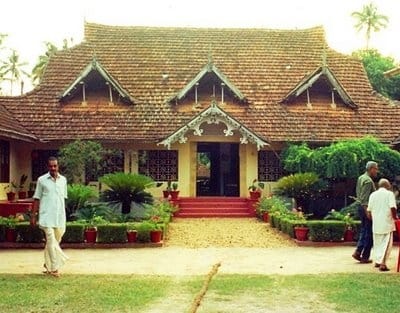
10.1 The Tharavadu Joint-Family System
- Northern Malabar: matrilineal descent with patrilocal residence and property arrangements.
- Northern Travancore: matrilineal descent with matrilocal property arrangements.
- South Malabar: a patrilineal system with partible (divisible) property.
- Southern Travancore: a blend of surrounding practices.
These customary arrangements were formally reformed by colonial and princely-state legislation in Malabar in 1925 and in Travancore in 1933 — gradually shifting most Ezhava families toward nuclear-family, patrilineal norms over the 20th century.
10.2 Homestead and the Sarpa Kavu
Traditional Ezhava homesteads, like other Kerala Hindu households, typically maintained a Sarpa Kavu (“abode of the serpent gods”) a small sacred grove, often only a few square metres, left uncleared within the household compound and dedicated to serpent deities. For Ezhava and Billava households this grove could be sited in any corner of the compound except the east; by contrast, Nair households conventionally placed it in the southwest. Traditional house construction favoured laterite and timber, tiled or thatched roofing suited to Kerala's monsoon climate, and a layout oriented around a central courtyard (nalukettu-style in wealthier Tharavadus), with separate structures for kitchen, granary (para) and cattle.
11. Traditional Dress
Ezhava dress historically followed the same broad Kerala Hindu conventions as neighbouring communities the mundu (white cotton wraparound cloth) for men and the mundum-neriyathum (a two-piece white-and-gold-bordered garment, the forerunner of the modern set-mundu/set-sari) for women but was for centuries restricted by sumptuary caste rules. Colonial-era and community accounts record that Ezhava dress and ornaments were regulated: certain forms of upper-body covering, jewellery and cloth quality reserved for higher castes were historically denied to Ezhava men and women, and Ezhava women were for a period denied the right to cover their upper body in the presence of upper-caste individuals. Ritual performers retain older sartorial conventions: Poorakkali and Arjuna Nritham dancers, for instance, perform in white dhoti with sandalwood paste on the forehead and a cloth wrapped around the head, following a ritual bath before the performance. These caste-based dress restrictions were formally and socially dismantled over the late 19th and early 20th centuries as part of the broader Kerala Renaissance, and today Ezhava dress is indistinguishable from general Malayali Hindu dress, worn on formal and festival occasions alongside contemporary clothing.
12. Cuisine
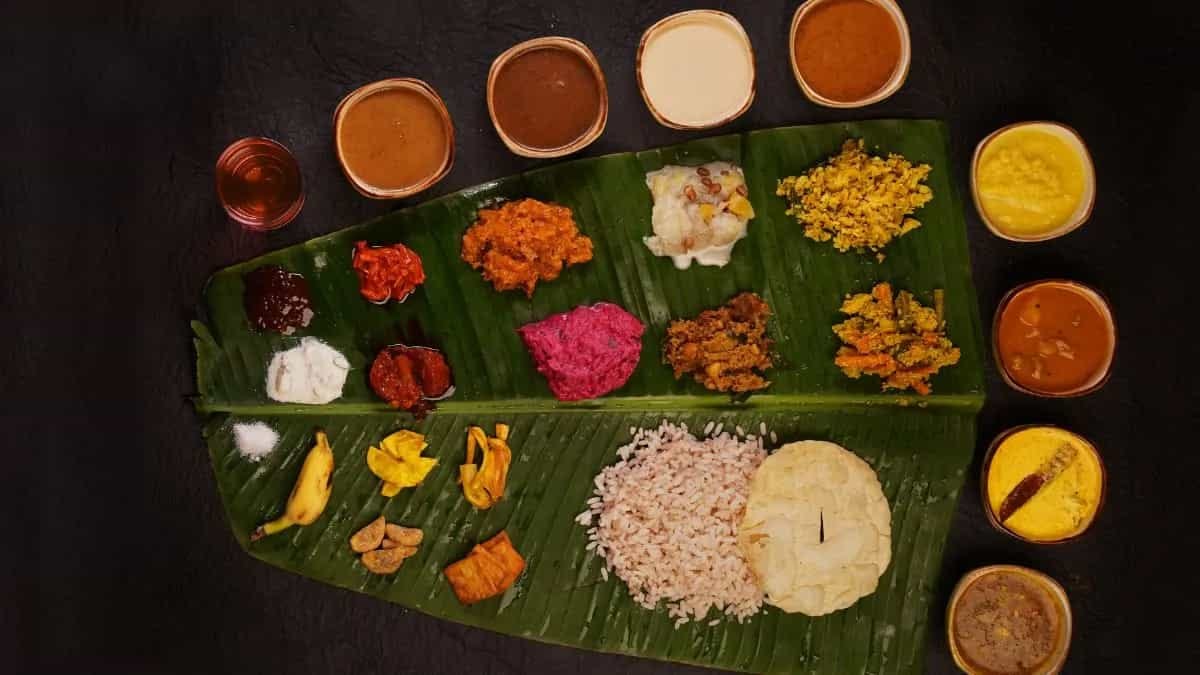
- Coconut-based cooking: grated coconut, coconut milk and coconut oil feature heavily, reflecting the community's traditional occupation, in curries, chutneys and the rice-based staples common across Kerala.
- Palm produce: jaggery (unrefined palm sugar) and vinegar derived from palm sap are traditional household staples, alongside the historic (now largely discontinued in most households) production of toddy and arrack.
- Onasadya and festival feasts: the elaborate vegetarian banana-leaf feast served during Onam, with dishes such as avial, olan, thoran, sambar, pachadi, kaalan and payasam, is prepared in Ezhava households as in most Kerala Hindu homes.
- Everyday fare: rice-based meals with fish curry (Kerala's coastal and riverine geography made fish a staple protein for most non-Brahmin Hindu communities), along with tapioca, jackfruit and seasonal vegetables.
- Ayurvedic dietary influence: families with a Vaidyar (Ayurvedic physician) tradition often maintained specific dietary practices tied to Ayurvedic principles of balance between foods and seasons.
13. Physical Traits: Historical Record and Present Understanding
What modern population genetics does establish (see Section 14) is that Ezhavas/Thiyyas show substantial genetic continuity with other Kerala communities and carry one of the higher proportions of indigenous South Asian (AASI) ancestry recorded among Kerala's non-tribal populations evidence of very long-term residence in the region rather than any biologically distinct “type.” As with any large population of several million people spread across multiple districts and, in the case of Billavas, a different linguistic region, there is naturally wide individual variation in physical appearance within the community, and no single physical description reasonably characterises it.
14. Genetics: What DNA Studies Reveal
Population genetics has, in the last decade and a half, offered an independent line of evidence to weigh the community's competing origin theories Sri Lankan migration, indigenous Dravidian descent, or Buddhist-era social realignment.
14.1 Autosomal Ancestry
South Asian genomes are commonly decomposed into two broad ancestral components: AASI (Ancient Ancestral South Indian, the oldest layer of South Asian ancestry, tracing to populations that reached the subcontinent tens of thousands of years ago) and ANI (Ancestral North Indian, carrying a stronger signal of Iranian-farmer and Bronze Age Steppe-pastoralist ancestry associated with later migrations into the subcontinent). Genetic surveys of Kerala communities find Ezhavas and Thiyyas carrying a markedly higher AASI/ASI proportion, and correspondingly lower ANI proportion, than Nair or Namboothiri Brahmin populations in the same region placing them genetically closer to Kerala's Scheduled Caste communities than to the groups historically above them in the social hierarchy, even though their traditional ritual status placed them as Sudra-equivalent rather than Dalit.
14.2 Y-DNA (Paternal Lineage)
Studies of the Y-chromosome, which traces direct paternal descent, find the haplogroup H-M69 a lineage that arose within the Indian subcontinent over 30,000 years ago, long before agriculture or any known migration into South Asia as the dominant paternal lineage among Ezhava men, together with smaller contributions from R2-M124 and L-M20 (both ancient South Asian lineages) and J2-M172 (linked to the spread of Neolithic farming). By contrast, R1a-Z93, the haplogroup most closely associated with Bronze Age Indo-Aryan migration into South Asia, occurs at comparatively low frequency in Ezhava men relative to Nair or Namboothiri populations. A 2011 Y-STR haplotype study of 104 Ezhava men from Kerala (published in the Croatian Medical Journal) similarly found extremely high genetic diversity 98 unique haplotypes among 104 individuals consistent with a large, long-established population rather than a small founding migrant group.
14.3 Maternal Lineage (mtDNA)
Mitochondrial DNA studies, which trace direct maternal descent, find Ezhava women carry predominantly ancient South Asian haplogroups such as M2 (among the oldest mtDNA lineages in South Asia, estimated at 50,000–60,000 years old) and M3, alongside smaller South Asian-specific lineages. This maternal profile closely resembles that of other Kerala communities across the social spectrum, including Nairs and Scheduled Castes suggesting that whatever differences in ANI ancestry exist between these groups were driven mainly by male-line gene flow rather than differences in the underlying female population.
14.4 Ezhava, Thiyya and Billava: Genetic Continuity
14.5 What the Evidence Says About Origin Theories
Taken together, the genetic data weighs against a scenario of substantial, relatively recent migration from Sri Lanka: if a sizeable Sri Lankan-origin founding population existed, genetic analysis would be expected to show a distinct signature closer to Sinhalese or Sri Lankan Tamil populations, which current studies do not find. Instead, the community clusters genetically with other Kerala non-Brahmin groups, and its high AASI ancestry and dominant ancient H-M69 paternal lineage point toward very long, continuous habitation of the Kerala/coastal Karnataka region lending stronger support to the indigenous Dravidian origin theory, while leaving room for the community's oral traditions of Sri Lankan or Buddhist-era connection to reflect genuine but smaller-scale cultural and historical contact rather than a large founding migration.
14.6 Endogamy and Genetic Signatures
Like most historically endogamous Indian communities, Ezhavas show elevated “runs of homozygosity” in genomic studies stretches of the genome inherited identically from both parents consistent with sustained in-community marriage over an estimated 50–70 generations (roughly 1,500–2,000 years). Historical sub-caste divisions (Section 4) appear to have created only modest internal genetic structuring rather than sharply distinct sub-populations. Since the Narayana Guru reform era, rates of marriage across community lines have gradually increased, though the majority of marriages are still reported within the community, meaning any broader genetic diversification driven by social reform will only become clearly measurable across further generations.
15. Prominent Figures
15.1 Spiritual Leaders and Reformers
- Sree Narayana Guru (1856–1928) — philosopher, social reformer, founder of SNDP Yogam
- Dr Padmanabhan Palpu (1863–1950) — physician, co-founder of SNDP Yogam
- Sahodaran Ayyappan (1889–1968) — reformer who championed inter-caste dining
- T.K. Madhavan (1885–1930) — temple-entry campaigner and journalist
- Nataraja Guru (1895–1973) — philosopher, founder of the Narayana Gurukula, Varkala
- Vagbhatananda (1885–1939) — founder of the Atmavidya Sangham reform movement in Malabar
15.2 Politics and Public Life
- C. Kesavan and R. Sankar — former Chief Ministers of Kerala/Travancore-Cochin
- V.S. Achuthanandan and Pinarayi Vijayan — prominent Kerala Chief Ministers of more recent decades
- Vayalar Ravi and Mullappally Ramachandran — senior national-level political leaders
15.3 Literature and Journalism
- Kumaran Asan (1873–1924) — poet, “Mahakavi,” first SNDP general secretary
- C.V. Kunhiraman (1871–1949) — founder of the newspaper Kerala Kaumudi
- O.V. Vijayan — acclaimed novelist, author of Khasakkinte Itihasam
- Moorkoth Kumaran — short-story writer and educator
15.4 Arts, Cinema and Sport
- Mohanlal — leading Malayalam and Indian film actor
- Sreenivasan — actor, director and screenwriter
- Shaji N. Karun and I.V. Sasi — acclaimed film directors
15.5 Science, Civil Service and Business
- Dr K.N. Raj — noted economist, former Vice-Chancellor, Delhi University
- S.D. Shibulal — co-founder of Infosys
- Gokulam Gopalan — businessman, founder of the Gokulam Group
- The Cholayil family — Ayurvedic-medicine entrepreneurs (Medimix, Cuticura)
16. Social Contributions and the Present-Day Community
17. Frequently Asked Questions
Are Ezhavas and Thiyyas the same community?
Are Ezhavas originally from Sri Lanka?
What is the SNDP Yogam?
What percentage of Kerala's population is Ezhava?
What is the Billava community's relationship to Ezhavas?
18. Conclusion
References and Further Reading
- Shinde, V. et al. and related Y-STR haplotype study of the Ezhava population of Kerala, Croatian Medical Journal (2011).
- Genome Biology and Evolution — comparative genetic study of Thiyya, Ezhava, Nair and related South Indian communities.
- P. Bhaskaranunni, community and folklore records on Ezhava/Thiyya sub-caste divisions.
- N.R. Krishnan, writings on Ezhava caste nomenclature and sub-groups.
- Robin Jeffrey, The Decline of Nair Dominance and other Kerala social-history scholarship on caste reform and the SNDP movement.
- SNDP Yogam institutional history and Sivagiri Mutt records.
- Colonial ethnographic records: Edgar Thurston, Castes and Tribes of Southern India; William Logan, Malabar Manual (cited here as historical record, not as scientifically reliable classification).
- Contemporary reporting and academic theses on Ezhava social history, University of Hyderabad and Madurai Kamaraj University repositories.