

Namboodiri Community
The Namboodiri community is the traditional Brahmin community of Kerala, known for its Vedic scholarship, temple traditions, and rich cultural heritage..
The Nambudiri Brahmins of Kerala
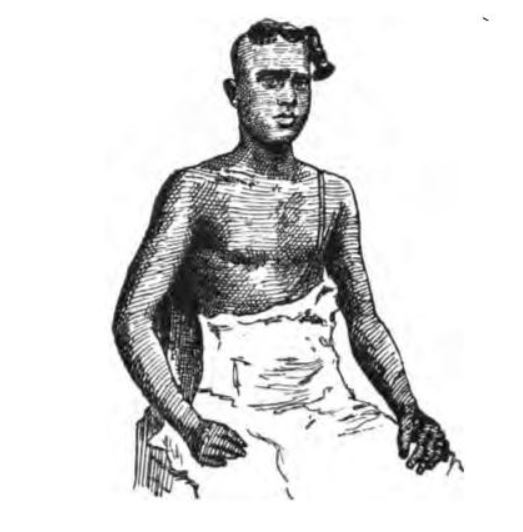
History, Society, Customs, and Legacy of Kerala's Traditional Brahmin Community
1. Introduction: Who Are the Nambudiris?
The Nambudiris (also spelled Nampoothiri, Namboodiri, Namboothiri, or Nambūdiri) are a community of Malayali Brahmins native to Kerala, on India's southwestern Malabar Coast. Traditionally regarded as the highest-ranking caste in Kerala's social order, the Nambudiris were, for many centuries, the region's principal landholders, its ritual and religious authority, and the custodians of Sanskrit learning and Vedic tradition in South India.
Today the Nambudiri community forms a small minority within Kerala's population, concentrated mainly in the Palakkad, Kozhikode, and Kannur districts of the Malabar region, with smaller numbers in the former princely territories of Cochin and Travancore. Despite their small numbers, their historical influence on Kerala's religion, land system, language, literature, and performing arts has been described by scholars as pervasive.
2. Origins and Early History
Nambudiri tradition traces its own origin to the legendary sage Parashurama, the sixth avatar of Vishnu, who is said to have created the land of Kerala by throwing his axe into the sea and to have brought Brahmin families to settle the new territory from the banks of the Narmada, Krishna, and Kaveri rivers. This account forms part of community mythology rather than verified history.
Historically, Brahmin communities are attested in the Tamil country from the Sangam period onward, and one scholarly theory holds that the Nambudiris descend from these early Brahmins, who moved westward into Malabar during the Kalabhra interregnum, retaining the practice (shared with the Dikshitars of Tamil Nadu) of wearing the sacred hair-tuft (kudumi) at the front of the head rather than the back. Other researchers propose that the Nambudiris migrated into Kerala from further north, via Tulu Nadu and Karnataka, or reached the region through the Palakkad Gap in the Western Ghats and settled along the Bharathappuzha river, where many of Kerala's oldest Nambudiri settlements are found.
Anthropologists Heike Moser and Paul Younger note that a Nambudiri Brahmin presence in Kerala is attested from before the 9th century CE through land grants recorded by local ruling families. Historian Romila Thapar suggests that Kerala's kings and chiefs actively encouraged Brahmin settlement by offering tax-exempt land grants in exchange for the performance of Vedic rites that helped legitimise their own royal authority. Nambudiris are also thought to have gained land and influence by assisting local rulers during conflicts between the Chola and Chera dynasties, periods in which some Vedic schools reportedly also functioned as centres of military training.
The Nambudiris are widely credited with shaping the Malayalam language, which developed partly through the Sanskrit influence they brought to a Dravidian linguistic base, and with the introduction of the Grantha script, the ancestor of the modern Malayalam script.
3. Religious and Vedic Heritage
Nambudiris are traditionally regarded as unusually rigorous preservers of orthodox Vedic ritual. Several Vedic textual traditions survive among them that have become rare or extinct elsewhere in India:
- The Śākala recension of the Rigveda — the only recension of the Rigveda still current anywhere in India — is preserved by Nambudiris, along with the Āśvalāyana and the rare Śāṅkhāyana (Kauṣītaki) Śrauta traditions.
- The Taittirīya branch of the Yajurveda, including the Baudhāyana and Vādhūla Śrauta and Gṛhya Sūtras.
- The Jaiminīya recension of the Samaveda, elsewhere preserved only among the Śōḻiya Brahmins of Tamil Nadu, from whom Nambudiri tradition holds the community historically split.
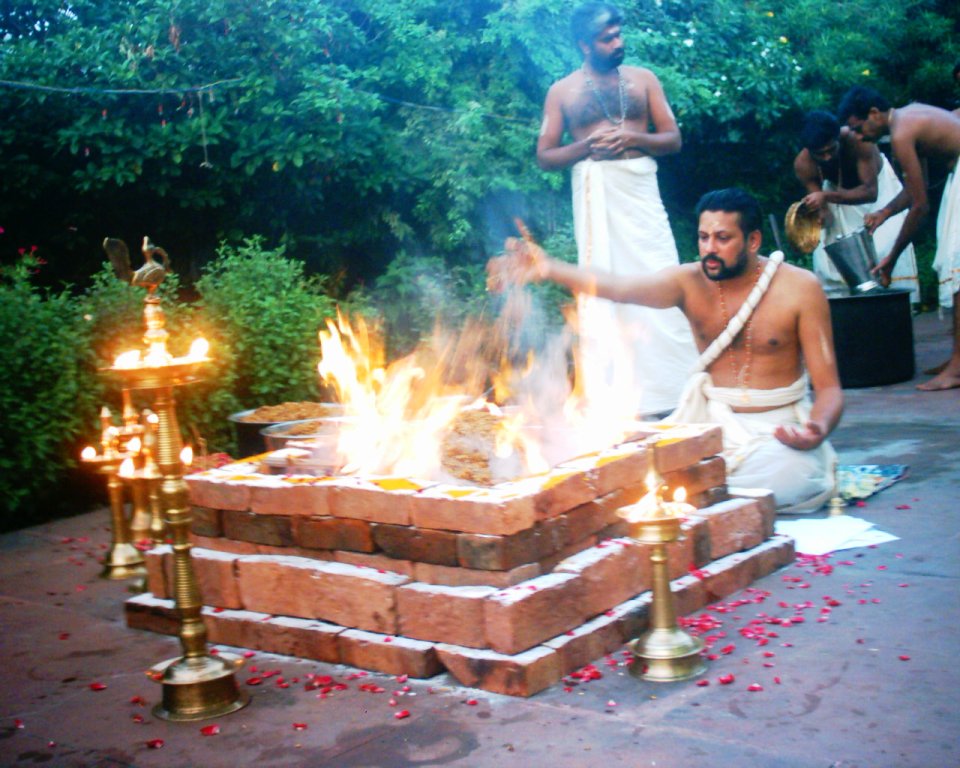
The community is closely associated with Śrauta ritualism and the Pūrva-Mīmāṃsā school of Hindu philosophy. Their most celebrated Vedic rite is the Agnicayana (the building of the fire-altar), an elaborate twelve-day ritual described by scholars such as Frits Staal and Robert Gardner as among the oldest continuously performed rituals in the world; it was documented as still being conducted by Nambudiris at least as recently as 1975. The scholar David Knipe notes that the Agnicayana also continues to be performed in Andhra Pradesh, indicating that its survival, while rare, is not unique to the Nambudiri community.
Adi Shankara, one of the most influential philosophers in Hindu intellectual history and the systematiser of Advaita Vedanta, is traditionally held to have been a Nambudiri by birth. He is credited with establishing the practice, still followed today, of appointing only Nambudiri priests as the chief priest (Rawal) of the Badrinath temple in the Himalayas. The spiritual head of the Nambudiri community holds the title Azhvanchery Thamprakkal, meaning "emperor" in Sanskrit; this figure historically held rights connected with the Guruvayur temple, and traditional accounts hold that the presence and blessing of the Azhvanchery Thamprakkal formed part of the coronation ceremony of the Zamorin, the Nair ruler of Kozhikode.
4. Social Structure and Land: The Jenmi System
From roughly the medieval period until Kerala's land reforms of 1957, Nambudiris were, together with Nair aristocratic families, the principal landholders of Kerala under a system known as janmi (or Jenmimar) — a form of hereditary, tax-exempt land tenure. Nambudiri families and the temples they controlled owned a substantial share of agricultural land, particularly in the Malabar region, and the community has been described by historians as forming part of Kerala's traditional feudal elite.
The anthropologist Joan Mencher described the Nambudiris as "a wealthy, aristocratic landed caste of the highest ritual and secular rank," and other scholars have noted that, at the height of their influence, Nambudiris held religious and social authority that in practice extended beyond, and was largely independent of, the political power of Kerala's kings. The historian Cyriac Pullapilly observed that Nambudiri influence extended into nearly every sphere of traditional Kerala life, including religion, politics, economics, and culture.
Kerala's land reform legislation, beginning in 1957, gradually ended the janmi system, redistributing land to tenant cultivators and substantially reducing the landed wealth that had historically underpinned Nambudiri social standing.
5. Family Life and the Illam
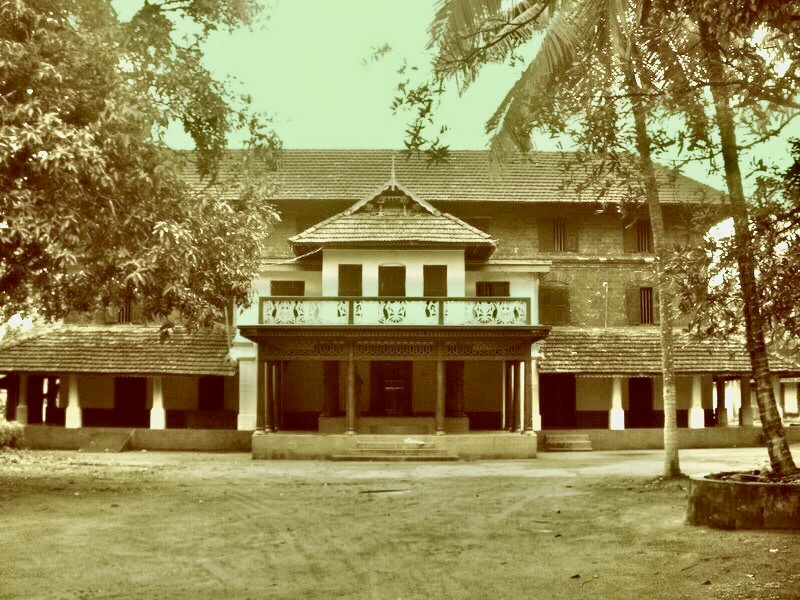
The traditional Nambudiri ancestral home is known as an illam, typically a large tiled house built around a central courtyard, often including a dedicated space for domestic worship, in keeping with the community's Vedic religious practice and its historical position as a landowning household.
A distinguishing feature of traditional Nambudiri family law was a strict form of primogeniture: in many Nambudiri families, only the eldest son married a woman from within the Nambudiri caste and produced heirs to the family's property, in order to keep ancestral landholdings undivided across generations. Younger sons historically formed sambandham relationships — a recognised but non-Vedic conjugal arrangement — with women of the matrilineal Nair community or with Kshatriya women; historians note that children of these unions were not considered Nambudiris and belonged instead to their mother's matrilineal lineage, while by the Nair community's own kinship norms the same union was regarded as a valid marriage. Scholars such as K. M. Panikkar have argued that this arrangement contributed to the development of Kerala's distinctive matrilineal and matrilocal kinship systems among the Nair and related communities. By the 1920s, this form of hypergamous union between Nambudiri men and Nair women had become uncommon and was in decline.
This system of restricted marriage, along with the practice of secluding unmarried and married Nambudiri women within the illam, became the focus of significant internal reform in the early twentieth century (see Section 12).
6. The Shodasakriyakal: The Sixteen Traditional Rites
Nambudiri religious life is structured around the Shodasakriyakal, a set of sixteen traditional household (grihya) rites of passage prescribed in the Smriti texts, several of which are performed for both male and female children. Key rites include:
- Choulam — the child's first ceremonial haircut, performed in the third, fifth, or seventh year, and followed by the ceremonial piercing of the ears (Kathukuthal).
- Upanayanam — the sacred-thread ceremony marking a boy's formal initiation into Vedic study, traditionally conferred around the fifth, seventh, or eighth year and regarded within the community as a ritual second birth; for a family's first son, the officiating teacher (Aachaaryan) is customarily the boy's own father, while for younger sons a paternal uncle often takes this role.
- Samavartanam — the ritual marking the completion of a young Nambudiri's period of Vedic studentship (brahmacharya).
- Marriage (Veli) — discussed in detail below, one of the most elaborate of the sixteen rites.
A Nambudiri man traditionally became eligible to perform the community's larger Vedic sacrifices (yagams) only after completing this sequence of household rites.
7. Marriage Customs
A wedding conducted according to full Nambudiri custom is known as Veli from the perspective of the groom's family and Penkoda (or Kanyadanam) from the perspective of the bride's family; the bride herself is traditionally referred to as Kudi. Marriages are arranged with careful attention to horoscope-matching, and the wedding season traditionally unfolds over several days of interlinked ceremonies, including:
- Veli Nischayam — the formal engagement, at which family elders confirm the match and fix an auspicious date and time for the wedding.
- Ayniyoonu — a ritual meal taken separately by the bride and groom in their respective family homes at the same auspicious hour, shortly before the wedding.
- Punyaham — a purification ceremony performed with consecrated water ahead of the main rites.
- Thaalikettu — the tying of the sacred marriage thread. Uniquely among the recognised Brahmin marriage styles of India, Nambudiri custom (called Kanthasoothram) has the bride's own father tie this thread, rather than the groom, a distinction noted by community scholars as allowing the bride to retain certain ritual responsibilities toward her own parents and husband in later life.
- The main marriage rite itself, centred on Vedic fire offerings (homam) before the sacred fire, with the couple treating Agni, the fire, as witness to their union (agni sakshi).
The Nambudiri wedding is thus, like weddings in many other Brahmin communities across India, fundamentally a Vedic fire ceremony, distinguished chiefly by its distinctive sequence of preliminary and attendant rites and by the community's unusual thaalikettu custom.
8. Language, Literature, and Learning
Nambudiris played a central role in the historical development of Malayalam, which most scholars consider to have evolved from a west-coast dialect of early Middle Tamil, subsequently enriched by extensive Sanskrit vocabulary and literary influence carried by the Nambudiri community. The introduction of the Grantha script, ancestor of the modern Malayalam script, is likewise connected with this Brahmin migration and its scholarly traditions.
The scholar T. P. Mahadevan has argued that the Nambudiris preserve an especially early recension of the Sanskrit epic Mahabharata, one that became a foundational source for the later Malayalam-language retelling of the epic — a claim reflecting the community's long-standing role as custodians of Sanskrit textual tradition in Kerala.
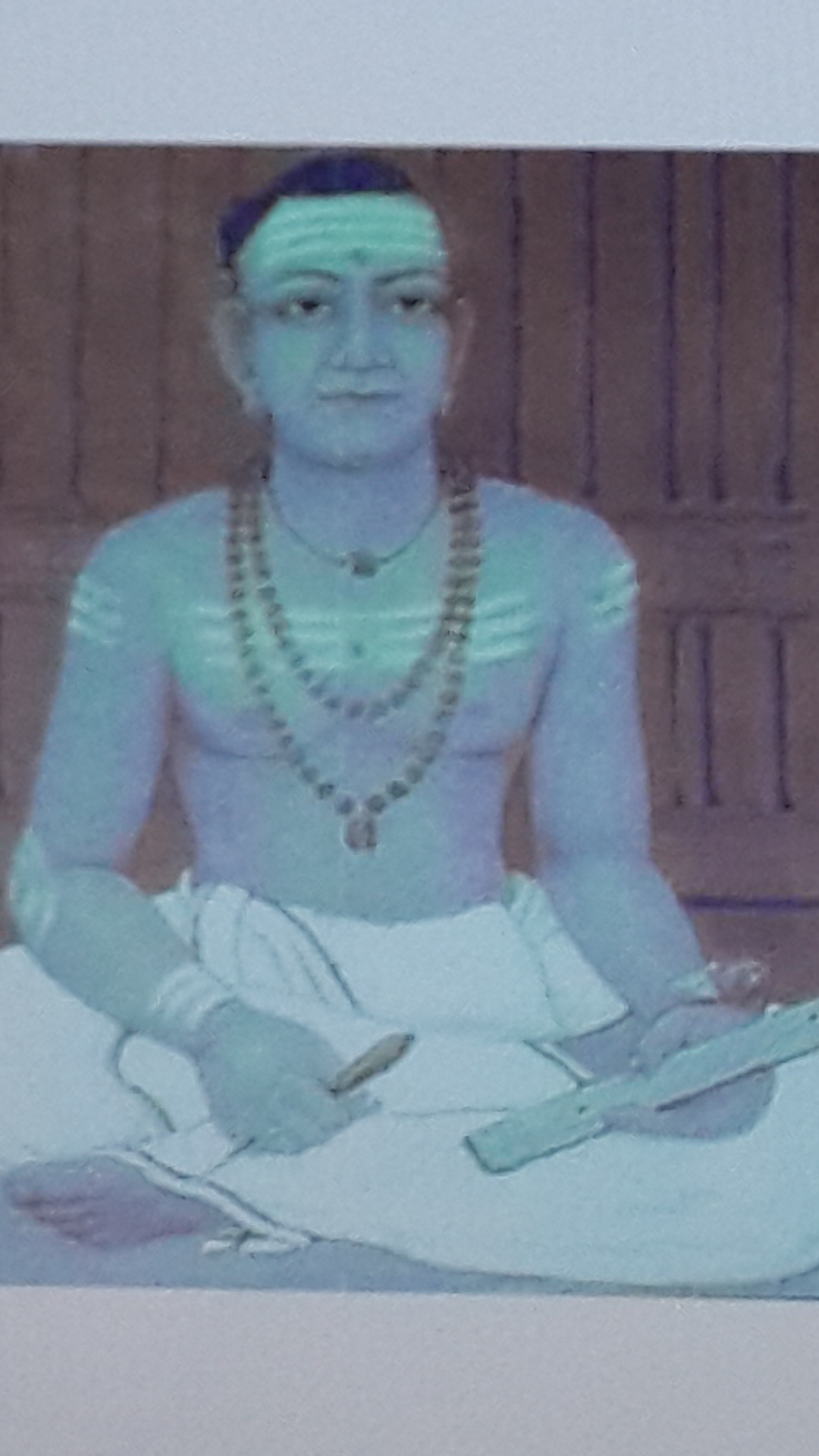
Among the Nambudiri community's most celebrated scholarly figures is Melpathur Narayana Bhattathiri, the noted logician, poet, and mathematician who composed the devotional Sanskrit classic Narayaneeyam. The community's traditions of Sanskrit scholarship also intersect with the broader history of the Kerala school of astronomy and mathematics, whose founder, Madhava of Sangamagrama, and later exponent, Nilakantha Somayaji, are counted among Kerala's most significant pre-modern mathematicians.
9. Cuisine
Nambudiri cuisine is an elaborate, strictly vegetarian culinary tradition historically shaped by classical Brahminical dietary categories, which classify foods as sattvik (pure), rajasik, or tamasik, with Nambudiri household cooking historically restricted to the sattvik category — avoiding meat, fish, egg, onion, and garlic.
The community's cuisine is closely associated with the Kerala sadya, an elaborate vegetarian banquet traditionally served on a plantain leaf. Classic elements of a Nambudiri sadya include the "four curries" (naalu curry) — erisseri, kaalan, olan, and a sweet madhura curry — alongside fried banana chips (upperi), pickles (uppilittathu), and pappadam, followed by payasam, a sweetened milk- or jaggery-based pudding served near the meal's end. Certain Nambudiri households historically avoided specific dishes, such as palada payasam, considered by some traditional families to be inappropriate for reasons connected to its texture and preparation. Some Nambudiri families have also traditionally been associated with temple kitchens, cooking ceremonial offerings at major Kerala shrines.
10. Traditional Dress and Appearance
Traditional Nambudiri male dress was notably simple: a plain cloth known as a thorthu or thortumundu worn at home, with an additional set of cloths, called a vasthram, worn when travelling outside the illam. Nambudiri men traditionally wore their sacred hair-tuft (kudumi or śikhā) at the front of the head, a style shared with the Dikshitar Brahmins of Tamil Nadu and cited by scholars as a marker of the community's ancient Tamil-country origins, in contrast to Brahmin groups elsewhere in South India who wear the tuft at the back.
Traditional Nambudiri women's dress, worn within the illam and at community functions, historically consisted of a plain white mundu (lower cloth) and, in earlier centuries, forms of covering associated with the community's historical practice of seclusion (a version of purdah), a custom that came under sustained internal reform pressure in the early twentieth century, as discussed below.
11. Performing Arts and Patronage
Nambudiris were historically important patrons of Koodiyattam, the ancient Sanskrit theatre tradition native to Kerala and recognised by UNESCO as a Masterpiece of the Oral and Intangible Heritage of Humanity. Nambudiri households and temples supported Koodiyattam performances and the associated Chakyar and Nangyar performing communities, helping to sustain the tradition across many centuries within temple precincts.
12. Social Reform: The Yogakshema Sabha
The early twentieth century brought a significant internal reform movement within the Nambudiri community, formalised with the founding of the Yogakshema Sabha in 1908. This movement campaigned for reforms including the right of all Nambudiri men — not only eldest sons — to marry within the community, the promotion of English-language education, and the ending of the purdah-like seclusion of Nambudiri women. Contemporary and later scholarship, including work published in the journal Samyukta, has examined the historical position of Nambudiri women (antharjanam) within the community's traditional ritual and social codes, noting the significant changes brought about over the twentieth century as reform movements, wider Kerala social change, and improved access to education reshaped family life within the community.
Historian Susan Bayly traces a broader decline in Nambudiri political and social pre-eminence to the period 1729–1748, when the Travancore ruler Marthanda Varma began drawing on Tamil Brahmin administrators rather than Nambudiris for his civil service, while other historians emphasise the later, more decisive impact of British-era legal, educational, and judicial reforms — introduced following the Charter Acts of 1833 and 1853 — on landholding, inheritance, and marriage practices across Kerala's traditional communities, including the Nambudiris, Nairs, Ezhavas, and Saint Thomas Christians.
13. Land Reform, Education, and the Modern Community
The Kerala land reforms initiated in 1957 dismantled the janmi land tenure system, redistributing agricultural land historically held by Nambudiri and other landed families to cultivating tenants. This, together with the twentieth-century social reforms described above, substantially transformed the community's economic base over the course of the twentieth century, as inherited landholding gave way to the same reliance on modern education and professional careers that reshaped Kerala society more broadly during this period.
According to the 1901 Census, Nambudiris made up approximately 0.47 percent of Kerala's population, with more than 66 percent of the community's population concentrated in the former British Malabar district, particularly the present-day Palakkad and Kozhikode districts, and smaller populations in Kannur district and the former princely territories of Cochin and Travancore.
14. Notable Nambudiris
The community has produced a number of individuals of national and regional significance across religion, scholarship, the arts, and public life, including:
- Adi Shankara — 8th–9th century philosopher and principal systematiser of Advaita Vedanta.
- Madhava of Sangamagrama and Nilakantha Somayaji — medieval astronomer-mathematicians of the Kerala school of astronomy and mathematics.
- Melpathur Narayana Bhattathiri — logician, poet, and author of the Narayaneeyam.
- Akkitham Achuthan Namboothiri — celebrated Malayalam poet and recipient of the Jnanpith Award, India's highest literary honour.
- Namboothiri (born Karuvattu Mana Vasudevan Namboodiri) — renowned Malayalam illustrator and sculptor.
- Akkitham Narayanan — noted contemporary Indian painter.
This list is illustrative rather than exhaustive; the community has also contributed numerous scholars, ritual specialists, and cultural figures to Kerala public life over the past century.
15. Conclusion
The Nambudiri story is, in many respects, the history of traditional Kerala itself refracted through a single community: a Brahmin population whose Vedic scholarship, temple patronage, and landholding shaped the region's religious, linguistic, and social institutions for well over a millennium, and whose own twentieth-century transformation — from a secluded, land-based aristocracy to a modern, professionally oriented community — mirrored the wider social changes that redefined Kerala in the modern era. From the Śrauta rites preserved in their Vedic schools to the sadya feasts of their kitchens, and from the Sanskrit epics they safeguarded to the reform movements they generated from within, the Nambudiri legacy remains deeply woven into the cultural fabric of Kerala.
References
- [1]1. Wikipedia. "Nambudiri." https://en.wikipedia.org/wiki/Nambudiri
- [2]2. Mencher, Joan (1966). "Namboodiri Brahmins: An Analysis of a Traditional Elite in Kerala." Journal of Asian and African Studies, 1(3), Brill Publishers.
- [3]3. Moser, Heike; Younger, Paul (2013). "Kerala: Plurality and Consensus." In Berger, Peter; Heidemann, Frank (eds.), The Modern Anthropology of India: Ethnography, Themes and Theory. Routledge.
- [4]4. Mahadevan, Thennilapuram P. (2016). "On the Southern Recension of the Mahābhārata, Brahman Migrations, and Brāhmī Paleography." Electronic Journal of Vedic Studies, 15(2).
- [5]5. Prange, S. R. (2018). Monsoon Islam: Trade and Faith on the Medieval Malabar Coast. Cambridge University Press.
- [6]6. Collins, Randall (1986). Weberian Sociological Theory. Cambridge University Press.
- [7]7. Pullapilly, Cyriac K. (1976). "The Izhavas of Kerala and their Historic Struggle for Acceptance in Hindu Society." In Smith, Bardwell L. (ed.), Religion and Social Conflict in South Asia. E. J. Brill.
- [8]8. Knipe, David M. (2015). Vedic Voices: Intimate Narratives of a Living Andhra Tradition. Oxford University Press.
- [9]9. Namboothiri Websites. "Shodasakriyakal." https://namboothiri.com/articles/shodasakriyakal.htm
- [10]10. Namboothiri Websites. "Food and Food Habits." https://www.namboothiri.com/articles/food.htm
- [11]11. Namboothiri Websites. "Namboothiris and The 1901 Census Report." https://www.namboothiri.com/articles/1901-census.htm
- [12]12. eSamskriti. "Marriage Rituals of Namboodiris, Kerala." https://www.esamskriti.com/e/Culture/Ceremonies/Marriage-Rituals-Of-Namboodiris,-Kerala-1.aspx
- [13]13. Jothishi. "The Traditions and Customs of a Kerala Namboothiri Wedding." https://jothishi.com/the-traditions-and-customs-of-a-kerala-namboothiri-wedding/
- [14]14. Samyukta: A Journal of Gender and Culture. "Rituals and the Namboothiri Women." https://samyuktajournal.in/rituals-and-the-namboothiri-women/
- [15]15. The Kerala Museum. "Rajas, Brahmins, and Landlords: Land and Caste, Part 1." https://keralamuseum.org/article/rajas-brahmins-and-landlords-land-and-caste-part-1/
- [16]16. Menon, A. Sreedhara (1991). A Survey of Kerala History. Viswanathan.
- [17]This document is a general community and history profile compiled from published historical, anthropological, and community sources. It is intended for educational and informational purposes; readers interested in academic depth are encouraged to consult the cited works directly.