

Patidar Community
Patidars (Patels) are a prominent Gujarati community traditionally associated with agriculture, landownership, and business.
The Patidars of Gujarat
History, Culture, and Community of a Leading Gujarati Landowning Caste
1. Introduction: Who Are the Patidars?
The Patidars — formerly and still sometimes known as Kanbis (Gujarati: Kaṇabī) — are a landowning agrarian caste and community native to the Indian state of Gujarat. Today the Patidar community is one of the largest and most economically influential communities in Gujarat, prominent in agriculture, business, industry, and public life both within India and across a substantial global diaspora. The community is closely associated with the surname "Patel," which was traditionally the title of a village headman and which the community adopted en masse during the nineteenth and twentieth centuries.
According to the 2011 Socio Economic and Caste Census, Patidars number approximately 1.5 crore (15 million) people and constitute roughly 21.7% of Gujarat's population, although other estimates place the figure closer to 12–14% of the state; the difference reflects varying definitions of who is counted within the broader Kanbi–Patidar fold. The community is not a single monolithic group but a family of related sub-castes sharing a common agrarian heritage, land-tenure history, and regional identity centred on Gujarat, particularly the fertile Charotar tract of central Gujarat.
2. Origins and Historical Development
2.1 From Kanbi Cultivators to Patidar Landholders
The word "Patidar" derives from pati (a share or parcel of village land held under a cooperative revenue-tenure system) and dar (holder) — a patidar was, literally, a holder of one such landed share. The title was originally conferred specifically on the land-owning, tax-collecting elite among Gujarat's Kanbi cultivators, who served as village revenue collectors under the Mughal and later Maratha administrations, sometimes also taking the titles Desai, Amin, and Patel.
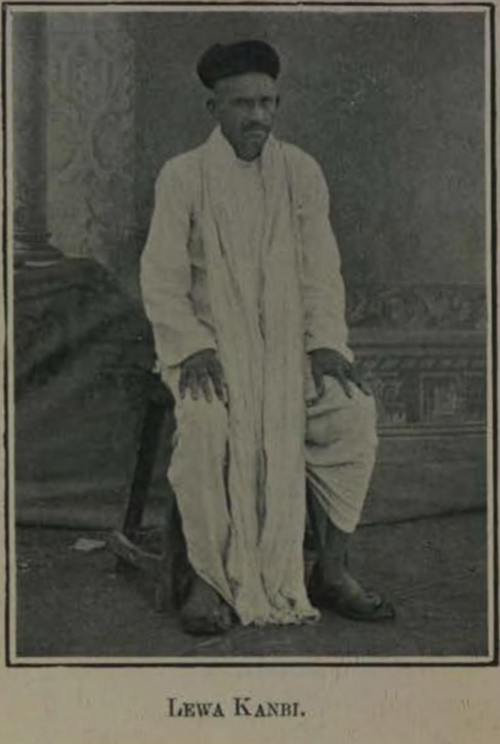
Under the coparcenary landholding system known as narwadari, prevalent from at least the seventeenth century in the Kheda district, Leva Kanbi landholders jointly shared responsibility for the revenue owed on village lands, a communal arrangement that both protected the community from the demands of external administrations and reinforced close village and kin ties.
2.2 British Land Reforms and the Rise of the Patidar Identity
The transformation of the general Kanbi cultivating population into the broader Patidar identity is closely tied to land-revenue reforms introduced during the British Raj. British administrators in Gujarat found a patchwork of local land-tenure systems and increasingly favoured the village-based (narva) model that the Kanbis had traditionally adopted over the landlord-based system favoured by the Koli community, another major agrarian group of the region. This administrative preference, combined with steady improvements in irrigation, crop selection, and transport from the 1860s onward, allowed Kanbi cultivators to expand their landholdings, diversify into trade and moneylending, and accumulate considerable agrarian wealth over the following decades.
During the nineteenth century, the community increasingly adopted the term "Patidar" in place of "Kanbi" to emphasise the higher status associated with secure land ownership, along with the surname Patel. The Raj administration formally recognised Patidar as a distinct caste designation in the 1931 Census of India, in which all Gujarat entries previously recorded as "Kanbi" were reclassified as "Patidar."
2.3 Traditional Genealogical Narrative
Community tradition and the genealogical records maintained by hereditary Barot bards trace Patidar ancestry to the Hindu deity Rama, holding that the two principal sub-castes — the Levas and the Kadvas — descend respectively from Lava and Kusha, the twin sons of Rama, who according to this tradition were sent from Ayodhya to Gujarat and took up cultivation. Historians of the community, including scholars A. M. Shah and R. G. Shroff, view this account as an example of a broader South Asian pattern in which agrarian communities commissioned genealogists and bards to construct prestigious ancestral narratives as their economic standing rose — a practice also documented among several other Indian landowning castes of the period.
In the same era, the community increasingly emphasised ritually observant Hindu practices — vegetarianism, devotion to Krishna, and the giving of dowries — and, as many Patidars moved into trade and commerce, some sections came to identify with Vaishya (mercantile) status alongside long-standing agricultural traditions, reflecting the community's gradual diversification from a purely cultivating caste into trade, moneylending, and eventually modern business and the professions.
3. Sub-Communities and Regional Groups
The Patidar community comprises several sub-groups, distinguished chiefly by region and, traditionally, by marriage circle:
- Leva (Leuva) Patidars — the largest and, historically, most prosperous branch, concentrated in the Charotar region of central Gujarat (notably Kheda and Anand districts) as well as Saurashtra and southern Gujarat (Surat, Navsari, Valsad, and Bharuch districts, where the sub-group is sometimes called Leva Patel).
- Kadva (Kadava) Patidars — concentrated historically in north Gujarat, with a significant and distinct Kutchi Kadva Patidar community established in Kutch district, which over generations absorbed elements of Kutchi language and regional culture alongside core Patidar customs.
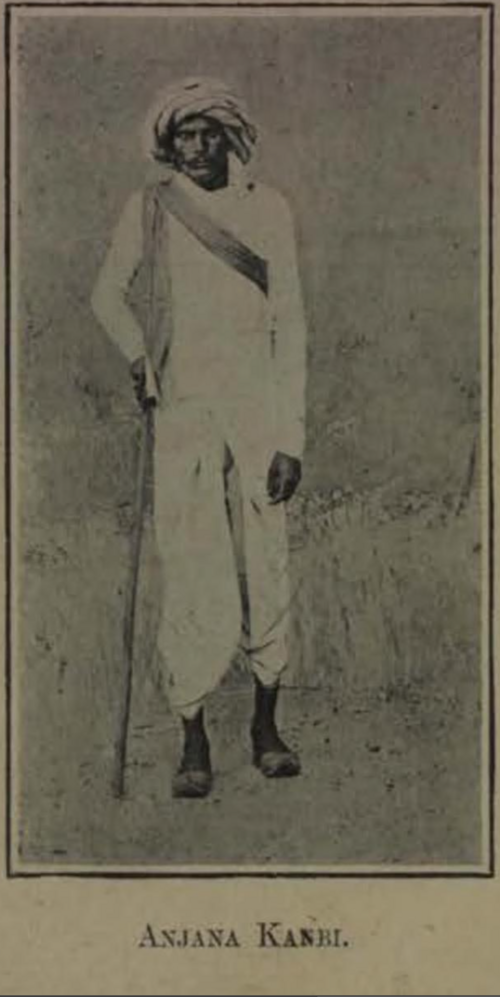
- Smaller regional and historical sub-groups, including the Matia (southern Gujarat), Chullia (Saurashtra), Bhakta, Anjana, and Uda Kanbi groups, each with locally distinct customs, though many have become closely assimilated to the Leva or Kadva mainstream over time.
The Leva and Kadva communities traditionally dine together but historically did not intermarry, each maintaining its own social and marriage networks; the most prestigious Leva families are traditionally associated with the Charotar tract, home region of Sardar Vallabhbhai Patel, independent India's first Deputy Prime Minister, whose life and legacy remain a source of particular community pride.
4. Social Customs and Community Values
Patidar social life traditionally centres on the joint or extended family, with several generations often living together and elders accorded particular respect and authority within the household. Community solidarity is expressed through large kin and caste associations (samaj), regional gaam (village-based) organisations, and periodic community gatherings that bring together members from across India and the diaspora for social, matrimonial, and philanthropic purposes.
Historically an agrarian people, Patidars have long placed a high value on land, thrift, and hard work, and since the late nineteenth century have shown a strong and sustained commitment to education, which the community credits as a key factor in its subsequent success in business, medicine, engineering, and public administration. Philanthropy is also a notable community value, with Patidar trusts and associations funding schools, hospitals, and community halls both in Gujarat and among diaspora communities abroad.
Most Patidars follow mainstream Vaishnavite and Shaivite Hindu practice, and many households are affiliated with the Swaminarayan tradition — including both the BAPS (Bochasanwasi Akshar Purushottam Swaminarayan Sanstha) and other Swaminarayan branches — which has a particularly large Patidar following in Gujarat and the diaspora. Community members also worship regional kuldevis (lineage or clan goddesses), with the goddess Umiya Mata especially widely revered among Kadva Patidars, who maintain major temples dedicated to her, including the prominent Umiya Mataji temple at Unjha in north Gujarat.
5. Festivals
As predominantly Hindu Gujaratis, Patidars observe the major festivals of the Hindu calendar with particular regional flavour:
- Navratri — the nine-night autumn festival honouring the goddess Durga is among the most significant community celebrations, marked by the energetic Garba and Dandiya Raas folk dances performed at community halls and temples across Gujarat and the diaspora.
- Diwali — the festival of lights, celebrated with family gatherings, lamp-lighting, sweets, and, for many business families, the ceremonial opening of new account books (Chopda Pujan) marking the Gujarati new year.
- Uttarayan (Makar Sankranti) — the kite festival marking the sun's transition into the northern hemisphere, celebrated with rooftop kite-flying and festive food, and especially popular in Gujarat's towns and cities.
- Janmashtami and Holi — also widely observed, alongside temple-centred devotional gatherings (bhajan and garba evenings) that remain an important part of community social life.
6. Marriage and Wedding Traditions
Patidar marriage has traditionally been endogamous, arranged within the caste and, in earlier generations, further organised around gol — clusters of villages of comparable social standing that formed informal but structured marriage circles, a system that historically helped preserve social parity between allied families. In recent decades, arranged marriage remains common, though it is increasingly conducted with greater involvement of the prospective bride and groom, and community matrimonial organisations and events, both in India and in the diaspora, continue to play a significant role in facilitating matches.
A traditional Gujarati Hindu wedding — followed with local variation by most Patidar families — includes a sequence of ceremonies such as the Mandap Muhurat (setting up the wedding canopy), Pithi (a turmeric-paste ceremony for the bride and groom), Garba and Sangeet evenings of music and dance, the Hindu wedding rite itself performed around the sacred fire (with the Saptapadi, or seven ceremonial steps, at its centre), and a concluding Vidaai as the bride departs for her marital home. Wedding celebrations are typically large, festive, multi-day community events, and are an important occasion for extended family and samaj gatherings.
Among some regional sub-groups, notably certain Kadva Patidar communities of Kutch, community histories record earlier customs of collective, periodically-timed marriage ceremonies conducted once every several years to share costs and strengthen village ties; such practices had already fallen out of use by the mid-twentieth century as individual family weddings became the norm.
7. Cuisine
Patidar cuisine forms part of the broader Gujarati vegetarian culinary tradition, reflecting the community's long history as prosperous, land-owning agriculturists with access to Gujarat's grain, pulse, dairy, and vegetable produce. Typical elements of Patidar and wider Gujarati home cooking include:
- Dal-bhaat-shaak-rotli — the everyday staple meal of lentil curry, rice, a vegetable preparation, and flatbread, often given a characteristic Gujarati touch of a little sugar or jaggery balancing salt and spice.
- Thepla, dhokla, and khakhra — savoury steamed, griddled, or baked snacks made from gram flour, wheat, or millet, popular as breakfast items, travel food, and tea-time snacks.
- Undhiyu — a festive mixed-vegetable dish traditionally prepared in winter, especially around Uttarayan, combining seasonal vegetables, beans, and fenugreek dumplings slow-cooked with spices.
- Farsan and sweets — a wide range of savoury fried snacks (farsan) and milk- or flour-based sweets (mithai) such as mohanthal, basundi, and the Diwali favourite ghari, prepared for festivals, weddings, and guests.
Vegetarianism remains widely observed within the community, particularly on religious occasions, in keeping with the broader Vaishnavite Hindu emphasis adopted by the community over the nineteenth and twentieth centuries, although practice today varies by family and generation.
8. Traditional Dress
Traditional Patidar dress historically followed broader Gujarati agrarian fashion. Men customarily wore a dhoti or the loose-fitting Gujarati kediyu (a flared, tied tunic) with a turban (pagh) styled distinctively by region, while women traditionally wore the ghagra-choli-odhni ensemble — a flared skirt, fitted blouse, and draped veil — with the odhni draped in the distinctive Gujarati style, along with silver or gold jewellery. Formal and ceremonial dress today, as across most of urban Gujarat, has substantially converged with mainstream Indian fashion, with traditional dress, particularly the kediyu and colourful chaniya-choli, remaining especially prominent during Navratri and at weddings.
9. Language
The Patidar community is Gujarati-speaking, and Gujarati (along with its regional dialects, such as Kathiyawadi in Saurashtra and Kutchi-inflected Gujarati in Kutch district) is the community's everyday language across India. Among the diaspora, Gujarati continues to be maintained as a home and community language across several generations, often alongside English and the languages of host countries, supported by community-run language and cultural classes.
10. Education, Livelihoods, and Economic Life
Historically an agricultural community, the Patidars invested heavily in education from the late nineteenth century onward — a striking shift, given that as late as 1891 only about a tenth of Leva and Kadva Kanbis were recorded as literate. This sustained investment in schooling is widely credited by community historians with the group's subsequent success across medicine, engineering, law, academia, and public administration over the twentieth century.
Beyond agriculture — where Patidar farmers played a significant part in Gujarat's twentieth-century dairy and agricultural cooperative movement, including the Amul dairy cooperative centred in the community's Charotar heartland — Patidars have diversified extensively into trade, textiles, diamond processing and trading, real estate, pharmaceuticals, and a wide range of other industries, and are numbered among Gujarat's most prominent business and industrial families.
11. Diaspora
Patidars began migrating from Gujarat to British-controlled East Africa more than a century ago, where many found opportunities in trade, the civil service, and, from the 1920s and 1930s, employment supporting British railway construction. Many East African Patidar families subsequently re-migrated to the United Kingdom, particularly from the 1960s and 1970s onward, establishing well-known British Gujarati communities in cities such as Leicester and London.
Significant migration from India directly to the United States followed the Immigration and Nationality Act of 1965, which enabled sustained "chain migration" as early professional immigrants sponsored relatives. Patidars developed a particularly strong presence in the American hospitality industry: Gujarati-owned businesses, a large proportion of them Patel-run, are estimated to control a substantial share of hotels and motels in the United States, and the community is also prominent among franchise owners of major fast-food and retail chains. Today, established Patidar communities exist across the United States, United Kingdom, Canada, East Africa, and Australia, sustained by active samaj associations, temples, and cultural and matrimonial organisations that maintain ties to Gujarat.
12. Notable Figures
The Patidar community has produced prominent figures across politics, industry, religion, and public life. A representative, non-exhaustive selection includes:
- Sardar Vallabhbhai Patel (1875–1950) — senior Indian independence leader, first Deputy Prime Minister and Home Minister of independent India, and architect of the political integration of India's princely states; widely regarded as the community's most celebrated historical figure.
- Vitthalbhai Patel (1873–1933) — Indian legislator and the first Indian to serve as President of the Central Legislative Assembly.
- Pramukh Swami Maharaj, born Shantilal Patel (1921–2016) — spiritual head of the BAPS Swaminarayan Sanstha for over four decades.
- Dada Bhagwan, born Ambalal Muljibhai Patel (1908–1988) — spiritual teacher and founder of the Akram Vignan movement.
- Babubhai J. Patel, Chimanbhai Patel, Keshubhai Patel, and Anandiben Patel — Patidar leaders who each served as Chief Minister of Gujarat.
- Karsanbhai Patel — founder of the Nirma industrial group; Pankaj Patel — chairman of Zydus Lifesciences; Savji Dholakia — prominent diamond industrialist and philanthropist.
This list is illustrative rather than exhaustive; the community has produced a large number of political leaders, entrepreneurs, religious figures, and professionals across Gujarat and the diaspora over the past century and a half.
13. Conclusion
The Patidars trace a distinctive historical arc: from Kanbi peasant cultivators of pre-colonial Gujarat, through a decisive rise in status and prosperity under the land-tenure arrangements of the British Raj, to one of contemporary Gujarat's most prominent landowning, business, and professional communities, with an extensive and economically active global diaspora. Anchored in the agrarian heartland of Charotar and neighbouring regions, and united by shared customs of family, festival, faith, and community association, the Patidar story is at once a history of land, an account of caste and social mobility in modern India, and a living, globally dispersed regional culture that continues to maintain strong ties to its Gujarati roots.
This profile draws on published historical and sociological scholarship and general reference sources on the Patidar community. Community customs vary by region, sub-group, and family, and continue to evolve; readers seeking definitive guidance on specific customs are encouraged to consult community organisations or primary historical sources listed below.
References
- [1]1. Wikipedia. "Patidar." https://en.wikipedia.org/wiki/Patidar
- [2]2. Wikipedia. "Kadava Patidar." https://en.wikipedia.org/wiki/Kadava_Patidar
- [3]3. Wikipedia. "Leva Patel." https://en.wikipedia.org/wiki/Leva_Patel
- [4]4. Basu, Pratyusha (2009). Villages, Women, and the Success of Dairy Cooperatives in India: Making Place for Rural Development. Cambria Press.
- [5]5. Pocock, David (1972). Kanbi and Patidar: A Study of the Patidar Community of Gujarat. Clarendon Press.
- [6]6. Shah, A. M.; Shroff, R. G. (1958). "The Vahīvancā Bāroṭs of Gujarat: A Caste of Genealogists and Mythographers." The Journal of American Folklore, 71(281).
- [7]7. Hardiman, David (1981). Peasant Nationalists of Gujarat: Kheda District 1917–1934. Oxford University Press.
- [8]8. Charotar Samaj of USA. "Charotar Leuva Patel-Patidar Community." https://www.14gaam.com/
- [9]9. Leuva Patidar Samaj of USA. "Who We Are." https://www.lpsofusa.com/WhoWeAre.aspx
- [10]10. History of the Kutch Kadva Patidar Community, Nakhatrana. https://nakhatrana.wordpress.com/2025/04/11/history-of-the-kutch-kadva-patidar-community/
- [11]11. The Indian Express. "Gujarat protests: Who are the Patidars, and why are they angry?" https://indianexpress.com/article/explained/simply-put-who-are-gujarats-patidars-and-why-are-they-angry/