

Punia Community
history, lineage, and culture across Rajasthan, Haryana, and Punjab. Discover ancestral roots and traditional customs.
The Poonia Community
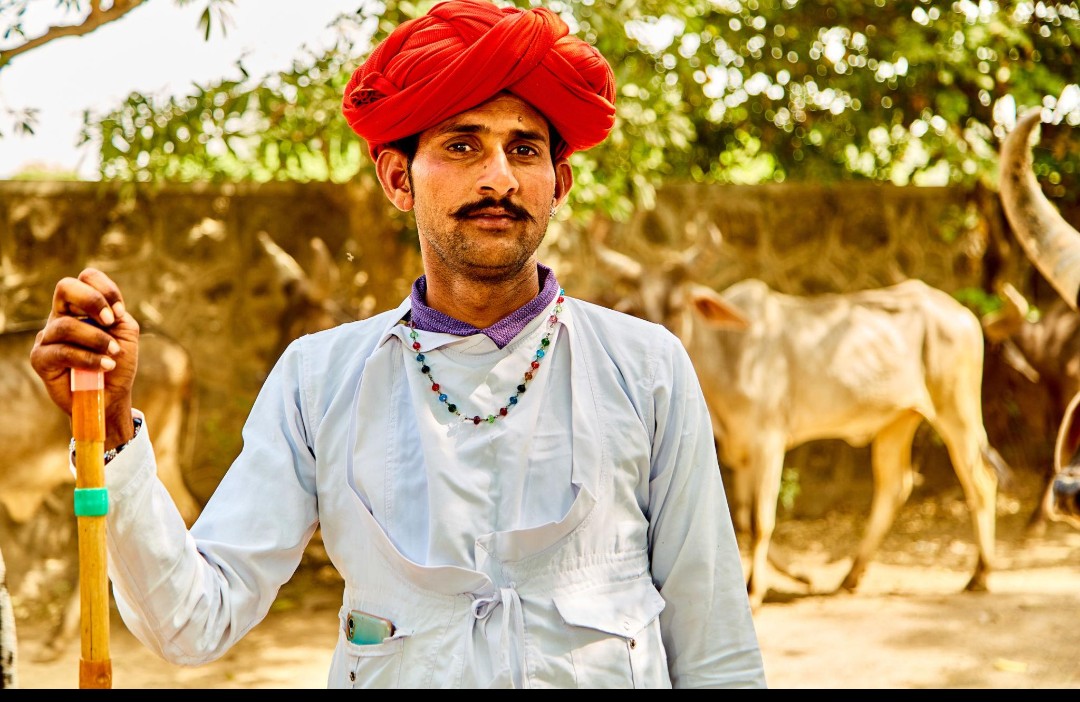
History, Lineage, and Culture of a Jat Clan of Rajasthan, Haryana, and Punjab
1. Introduction: Who Are the Poonias?
The Poonia (also spelled Punia or Puniya) are a Jat clan, or gotra, found chiefly across northern India, with their heaviest concentration in the Bikaner division of Rajasthan — particularly the districts of Churu, Hanumangarh, Sri Ganganagar, and Bikaner — and further populations spread through Haryana, Punjab, and parts of western Uttar Pradesh. Traditionally an agrarian, land-owning community, the Poonias are counted among the older and more prominent Jat gotras of the Jangladesh region, the semi-arid tract straddling northern Rajasthan and southern Haryana that was historically home to a cluster of self-governing Jat chieftaincies before the rise of the Bikaner princely state.
Like most Jat clan names, "Poonia" functions primarily as a gotra — an exogamous lineage identifier used to regulate marriage — rather than as a separate caste or religious group. Members of the community are overwhelmingly Hindu, follow the broader social and religious customs of the Jat peasantry of the region, and are recorded across multiple modern Indian states as well as in smaller diaspora numbers in the United Kingdom, North America, and the Gulf.
This profile draws on Jat clan histories, gazetteer records, and biographical material on notable community members to sketch the Poonias' traditional origins, their historical role in the Jangladesh chieftaincies, and the customs, livelihoods, and public life associated with the clan today.
2. Origins and Early History
2.1 Traditional and Genealogical Accounts
Jat clan historians trace the Poonia gotra to a legendary ancestor named Paunbhadra (also rendered Pon Bhadra), said to be a descendant of the Puru lineage through Virabhadra. According to the chronology recorded by the Jat historian Ram Sarup Joon in History of the Jats, Virabhadra had four sons — Pon Bhadra, Kalhan Bhadra, Atisur Bhadra, and Jakh Bhadra — from whom several present-day Jat gotras are said to descend, including the Poonia (from Pon Bhadra) and the Jakhar (from Jakh Bhadra). A separate strand of clan lore links the Poonias to the wider "Naga" or Shiva-associated grouping of Jat gotras recorded in some regional gazetteers, though such genealogies belong to oral and bardic tradition rather than to independently verified history, and different clan historians offer varying versions.
Historians of the Jat community more broadly connect gotras such as Poonia to older tribal and clan groupings of the northwestern subcontinent — variously linked in scholarly and popular writing to the Shivi (Sibi) people of the Punjab-Rajasthan borderland, and, at a deeper and more disputed level, to Central Asian pastoral groups who are thought to have moved into the Indus and Sutlej plains in ancient times before spreading into Rajasthan, Haryana, and the western Gangetic plain. As with Jat origins generally, this early history rests on a mix of bardic genealogy, colonial-era ethnography, and later scholarship, and firm consensus is limited.
2.2 The Jangladesh Chieftaincies
The clearer, better-documented chapter of Poonia history begins in the medieval period, when the Poonias were one of a small number of Jat clans — commonly listed alongside the Godara, Saran, Sihag, Beniwal, and Johiya — who held sway over the arid Jangladesh tract before the region's conquest by the Rathore rulers of Bikaner. Clan accounts and district gazetteers describe the Poonias as one of six (in some tellings, seven) leading Jat cantons of Jangladesh, ruling a network of villages from a capital identified in Jat historical writing as Jhasal, with authority extending toward Marod, near present-day Rajgarh in Churu district.
In the fifteenth century, Rao Bika — founder of the Bikaner princely state in 1488 — and his allies exploited rivalries among these Jat clans to bring Jangladesh under Rathore rule. Clan histories record that the Godara Jats allied with the Rathores, which contributed to a Poonia defeat and prompted some Poonia families to move eastward into present-day Uttar Pradesh, while others record local Poonia resistance to the new Rathore administration, including clashes with Rathore rulers of Bikaner in the following century. Poonia villages nonetheless persisted, and continued to expand, throughout the territory of the later Bikaner State.
2.3 The Colonial Period
Bikaner State entered into treaty relations with the British East India Company in the early nineteenth century, and Poonia Jat cultivators and landholders — like the wider agrarian population of the region — carried on under this arrangement largely as before, continuing settled farming and village life under the thikana (estate) system while the princely state managed external relations and, over time, introduced more standardised land-revenue administration. Colonial-era district gazetteers for Hisar, Bikaner, and neighbouring areas record numerous Poonia-founded villages across the region, several of which retain the clan's name in some form to this day.
3. Geographic Distribution Today
The Poonia gotra remains most heavily concentrated in northern Rajasthan, with district-level surname data pointing to Churu, Bikaner, Hanumangarh, and Sri Ganganagar as core areas, alongside a significant presence across Haryana (notably Hisar, Bhiwani, and neighbouring districts) and smaller populations in Punjab and western Uttar Pradesh. Numerous villages across these states carry Poonia-derived names — among them Dhani Poonia and Pabasi in Churu district, and Puniya Ka Bas in Jhunjhunu district — reflecting the clan's long settlement history in the region. Smaller numbers of Poonia families are also recorded in Punjab among Sikh Jat households, illustrating the broader pattern by which individual Jat gotras are found across the community's Hindu, Sikh, and (elsewhere in the subcontinent) Muslim branches.
In keeping with wider patterns of Jat migration from Haryana and Rajasthan since the mid-twentieth century, Poonia families are also found today in diaspora communities in the United Kingdom, North America, and the Gulf states, generally as part of the broader Jat and Punjabi-Haryanvi immigrant population rather than as a distinct diaspora institution of their own.
4. Social Structure and the Gotra System
As a gotra, Poonia identity operates primarily as a rule of marriage: Jat custom in this region requires marrying outside one's own gotra (and, traditionally, outside one's own village), so a Poonia individual would not marry another Poonia, but might marry into gotras such as Godara, Sihag, Beniwal, Saran, or any of the dozens of other Jat clans recorded across Rajasthan, Haryana, and Punjab. This exogamous structure, shared with the wider Jat community, is understood locally as reinforcing kinship ties and alliances across villages rather than concentrating them within one lineage.
Traditional village and clan life among the Poonias, as among other Jat gotras of the region, has historically involved informal caste councils and clan assemblies (panchayats and, at a wider regional level, khaps) that took up matters of local custom, land, and dispute resolution, alongside the more everyday institutions of village governance. Land-owning agriculture has long been the community's core traditional occupation, and family and clan ties — including periodic gatherings of the wider kin group — remain a valued part of social life.
5. Language
Poonia families are Hindi speakers in the standard sense, but the everyday spoken language across their core areas of settlement is a regional dialect rather than standard Hindi. In Rajasthan's Bikaner division, this is principally Bagri (also called Bagri-Rajasthani), a Rajasthani dialect spoken across Churu, Hanumangarh, Sri Ganganagar, and Bikaner districts; in Haryana, it is Haryanvi; and in parts of western Uttar Pradesh and the Delhi region, Braj or Khadi Boli influences are more prominent. Standard Hindi is used for education, administration, and wider communication, while the regional dialect remains the language of home and village life.
6. Culture, Customs, and Social Life
Poonia social and cultural life follows closely the broader customs of the Jat peasantry of Rajasthan and Haryana, shaped by a historically agrarian economy, a strong martial and landholding self-identity, and the semi-arid geography of the Jangladesh tract.
- Agrarian rhythm: Traditional life has revolved around the agricultural calendar of the region — millet (bajra), gram, and, in irrigated tracts, wheat and cotton — along with cattle and camel rearing suited to the arid Bikaner countryside. Festivals and family gatherings have traditionally been timed around sowing and harvest seasons.
- Family and kinship: Extended, multi-generational joint families have traditionally been the norm, with strong emphasis on clan solidarity, hospitality toward guests, and respect for elders. Family reunions and religious gatherings bring together dispersed branches of a lineage from across Rajasthan, Haryana, and beyond.
- Festivals: Poonia households, as Hindu Jat families, observe the major festivals shared across the region — Holi, Diwali, Teej, Gangaur, and Raksha Bandhan among them — along with local fairs and village deity worship characteristic of the Bikaner and Hisar countryside.
- Martial and sporting tradition: Jat communities of this belt, the Poonias included, have long placed value on physical strength and sport, historically expressed through wrestling (kushti) and, in the modern era, through a strong presence in Indian athletics, wrestling, and field hockey — a pattern visible in the number of Poonia and Punia sportspeople who have represented India internationally (see Section 12).
7. Marriage Traditions
Poonia weddings follow the broader pattern of Jat and North Indian Hindu marriage custom, combining Vedic and regional Hindu rites with local social observance. As noted above, marriages are arranged outside the Poonia gotra and, by long-standing custom, outside the couple's own village, in keeping with the exogamy rules observed by Jat clans across Rajasthan and Haryana.
A typical ceremony includes the customary pre-wedding rituals of the region — such as the haldi (turmeric) ceremony and sangeet gatherings of family and friends — followed by the baraat (groom's wedding procession) and the core Vedic rites of the wedding itself, including phere (the couple's circling of the sacred fire) which formalises the marriage. As with Jat weddings generally, the occasion is typically marked by large gatherings of the extended family and village community, communal feasting, and an emphasis on the social and kinship ties the marriage creates between the two families' villages.
8. Cuisine
Poonia households share the traditional cuisine of the Bikaner–Hisar–Churu belt, shaped by the region's dry, sandy terrain and its dependence on hardy, drought-resistant crops.
- Bajra roti and khichdi: Flatbread made from pearl millet (bajra), often paired with a bowl of curd, jaggery, or ghee, has long been a staple of the everyday rural diet in this arid region.
- Ker sangri: A signature dry-region dish of the Bikaner–Churu area, made from the ker berry and sangri bean, both native desert plants, cooked with spices — closely associated with Rajasthani Jat and Rajput households alike.
- Dal-baati-churma: A festive dish widely eaten across Rajasthan, combining baked wheat-flour balls (baati) with lentil curry (dal) and a sweet, crumbled wheat preparation (churma), typically served on festive or family occasions.
- Dairy: Given the community's traditional cattle and camel-rearing economy, milk, ghee, buttermilk (chaas), and curd form a substantial part of the everyday diet, as they do across the wider Jat farming community of the region.
9. Traditional Dress
Traditional Poonia dress mirrors that of the wider rural Jat community of Rajasthan and Haryana. Men have traditionally worn a dhoti or the regional pyjama with a kurta, along with a turban (pagri) whose colour and style can signal region, occasion, or status — a garment that remains important at weddings and formal community events even where everyday dress has shifted to more contemporary clothing. Women have traditionally worn the ghagra-choli-odhni ensemble common to Rajasthani and Haryanvi villages, along with silver jewellery — bangles, anklets, and neck ornaments — that has historically formed part of a woman's personal wealth and dowry. As with most farming communities of the region, everyday dress today has largely shifted toward contemporary clothing, with traditional attire reserved chiefly for weddings, festivals, and formal occasions.
10. Traditional Housing
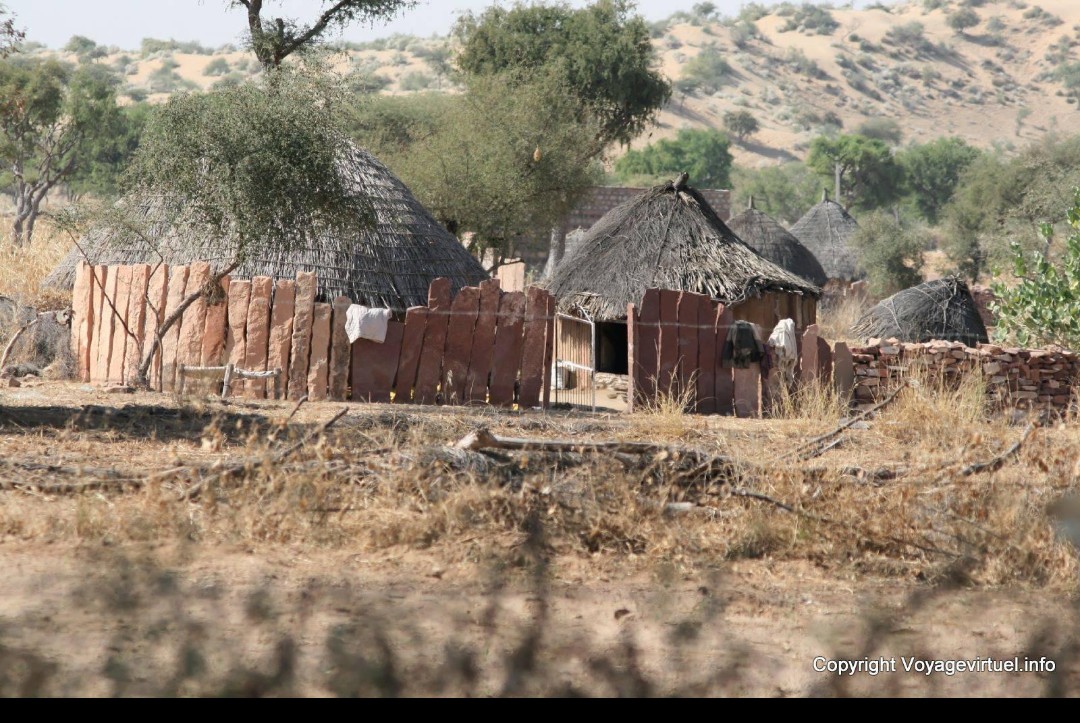
Historic Poonia villages in the Bikaner–Churu tract follow the building style typical of the region's arid zone: thick-walled houses built of mud, brick, or local stone, designed to insulate against the area's extreme summer heat and cold winter nights, generally organised around a central courtyard (aangan) used for daily household work, livestock, and family gatherings. Flat or gently sloped roofs, small windows, and shared walls between neighbouring houses are common adaptations to the desert climate. As elsewhere in rural Rajasthan and Haryana, concrete construction has become increasingly common in recent decades, though older courtyard houses remain in many villages.
11. Folklore and Oral Tradition
Like other Jat gotras of the region, Poonia clan history has been preserved substantially through oral genealogy and bardic tradition — recitations of lineage and ancestry historically maintained by community bards (bhats and charans) and by clan elders, rather than through a single written textual source. Much of what is recorded today about the Poonia gotra's legendary descent from Paunbhadra, and about the clan's role in the Jangladesh chieftaincies, was first written down by twentieth-century Jat historians such as Ram Sarup Joon and Thakur Deshraj, drawing on these older oral and bardic traditions. Village-level lore about the founding of individual Poonia villages — such as accounts of particular ancestors founding settlements after migrating from an earlier family seat — likewise survives chiefly through local memory and clan record-keeping.
12. Education, Livelihoods, and Socioeconomic Profile
Historically an agrarian community defined by land ownership and farming in the semi-arid tracts of Bikaner and Hisar, the Poonias, like the broader Jat peasantry of Rajasthan and Haryana, have seen a marked shift over the past several decades toward education, government service, the armed forces, and professional careers, alongside continued involvement in agriculture. Investment in schooling has grown steadily across rural Rajasthan and Haryana in this period, and members of the community are found today across government administration, the armed and police services, law, medicine, sport, and politics, in a pattern broadly consistent with the wider socioeconomic trajectory of the Jat farming communities of the region.
13. Notable People
The Poonia (Punia) surname is carried by a number of individuals who have achieved recognition in Indian public life, sport, and, in a few cases, international sport under other national colours. This list is illustrative rather than exhaustive.
- Krishna Poonia — Olympic discus thrower who won gold at the 2010 Commonwealth Games in New Delhi, India's first Commonwealth gold in women's track and field; received the Arjuna Award (2010) and the Padma Shri (2011), and later served as an MLA in Rajasthan.
- Bajrang Punia — Olympic and World Championship medallist freestyle wrestler, one of India's most decorated wrestlers of the 2010s and 2020s.
- Savita Punia — Goalkeeper and former captain of the Indian women's national field hockey team, a member of India's Tokyo Olympics bronze-medal-contending squad.
- Seema Punia (Seema Antil) — Discus thrower and multiple-time Asian Games and Commonwealth Games medallist for India.
- Jai Narayan Poonia (1934–2021) — Rajasthan politician and former Public Works Minister, elected multiple times from the Churu district.
- Satish Poonia — Rajasthan politician who has served as state president of the Bharatiya Janata Party in Rajasthan.
- Priya Punia — Indian women's international cricketer.
- Balwan Poonia — Rajasthan politician and farmer-union figure, elected MLA from the Bhadra constituency.
This list draws on individuals publicly identified with the Poonia/Punia surname and clan; inclusion reflects public achievement and record, not any endorsement of political affiliation.
14. Conclusion
The Poonia clan's story runs from a legendary genealogy reaching back to the Puru lineage, through several centuries as one of the ruling Jat cantons of the Jangladesh tract before the rise of Bikaner State, and into the present day as a widely distributed Jat gotra across Rajasthan, Haryana, Punjab, and beyond. Rooted historically in the demanding agrarian landscape of the Thar's eastern fringe, the community's traditions of land, clan, and kinship continue to shape family life even as its members have moved steadily into education, government service, sport, and public life across modern India and, in smaller numbers, abroad.
References
- [1]The following sources were consulted in preparing this profile. As with many Jat clan histories, information on early origins draws substantially on bardic and oral genealogy as recorded by community historians, and should be understood as traditional history rather than independently verified academic record.
- [2]
- [3]
- [4]
- [5]
- [6]
- [7]
- [8]
- [9]
- [10]
- [11]
- [12]
- [13]
- [14]