

Ror Community
The Ror community is a North Indian agrarian community, historically associated with farming, rural society, and settlements mainly in Haryana, western Uttar Pradesh, and nearby regions.
The Ror Community of India
History, Origins, Genetics, Society, and Culture of an Agrarian Community of Haryana and Western Uttar Pradesh
1. Introduction: Who Are the Ror?
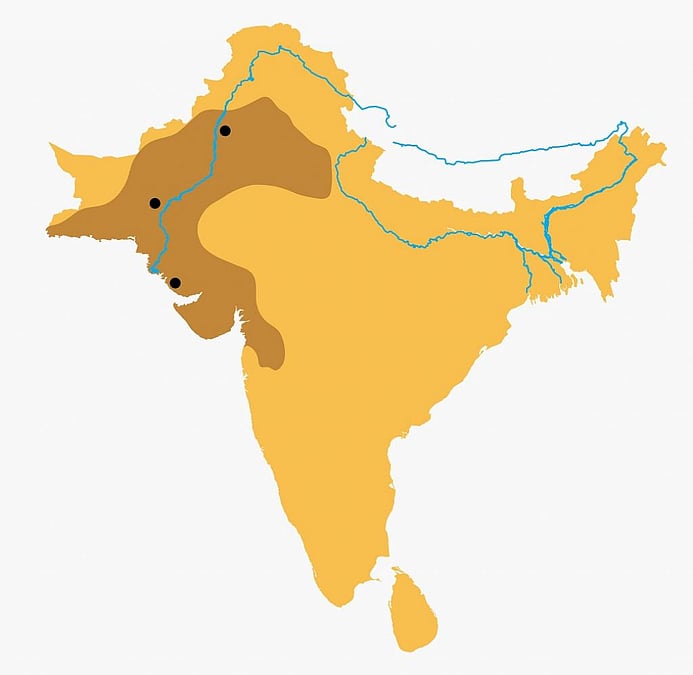
The Ror (also spelled Rod) are an agrarian caste community found predominantly in the Indian state of Haryana, with smaller populations across western Uttar Pradesh, parts of Rajasthan, and the Haridwar district of Uttarakhand. Historically a farming and, in some accounts, soldiering community, the Ror are concentrated in the Kurukshetra, Karnal, Panipat, Kaithal, and Rohtak belt of Haryana, a region closely associated with the community's traditional heartland. Population estimates place the community's numbers across India at roughly 750,000, according to figures drawn from genetic-research literature, though no fully authoritative modern caste census exists.
The name "Ror" is a subject of ongoing debate among historians, community organisations, and genealogists, with several competing explanations for its origin. What is clearer from documentary and genetic evidence is that the Ror form a distinct, historically endogamous farming community whose identity has been shaped by land, agriculture, and a strong sense of clan lineage. This profile draws on colonial-era ethnographic surveys, modern population-genetics research, community organisational records, and contemporary journalism to present a balanced picture of Ror history, society, and culture.
2. Origins and Early History
2.1 Etymology and the Question of Origins
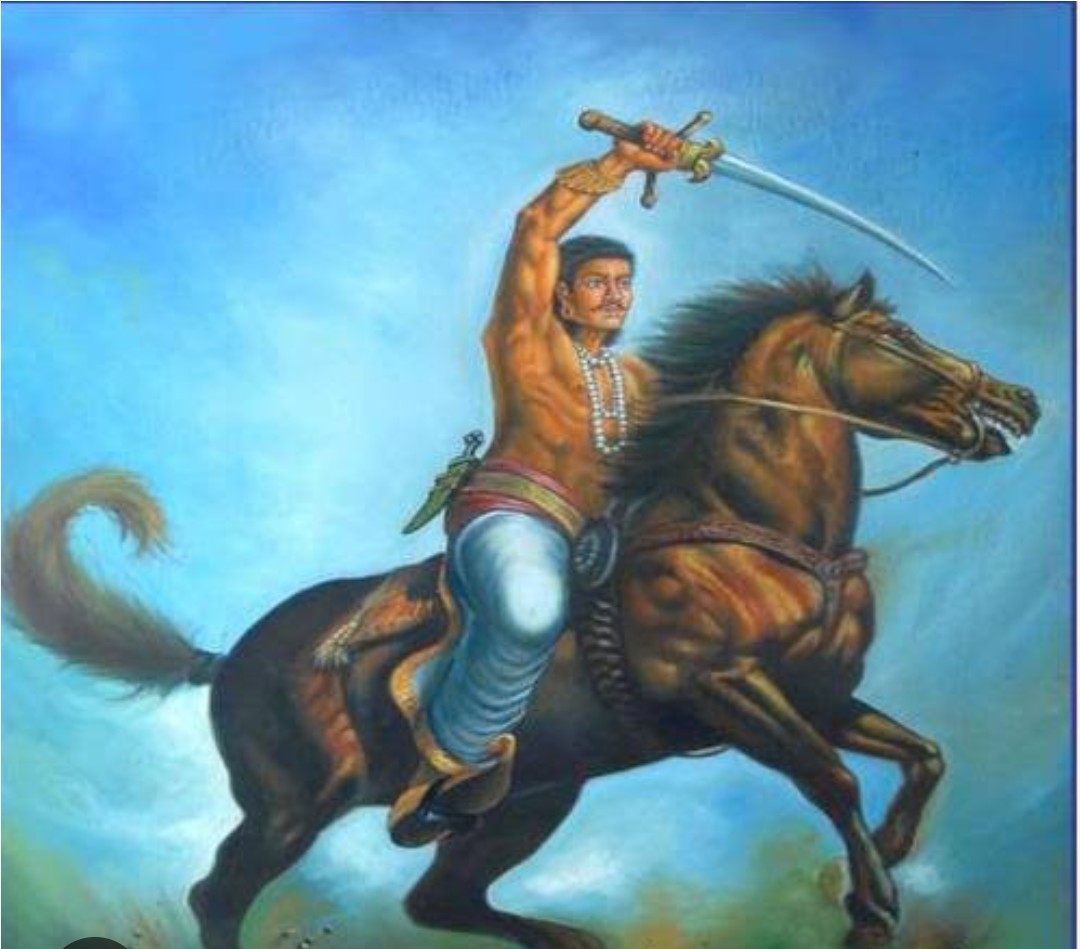
No single, universally accepted account of the Ror name and origin exists, and the community's own traditions offer more than one narrative. One line of scholarship connects the name to Roruka (also rendered Rori or Alor), an ancient city in the Sindh region of the Indus Valley mentioned in early Buddhist and Jain literature as a capital of the Sauvira kingdom; on this reading, the Ror take their name from this ancient urban centre and trace a long history of movement from the Sindh–Gujarat–Rajasthan borderlands toward the Punjab and Haryana plains over many centuries.
A second explanation, recorded by the colonial ethnographer H. A. Rose in his Glossary of the Tribes and Castes of the Punjab and North-West Frontier Province, places the community's immediate place of origin at Badli, in the Jhajjar tehsil of Rohtak district, from which Ror families are traditionally said to have dispersed to found villages across the Thanesar (Kurukshetra) region, with Amin recorded as their principal or "tika" village. Rose's survey, based on field enquiries in the late nineteenth century, describes the Ror as a sturdy agricultural population settled chiefly in the Dhak forest tracts of Thanesar.
A separate oral tradition, current within parts of the community itself, holds that the Ror descend from Rajput ancestors who took up the practice of widow remarriage — a custom generally avoided among higher-status Hindu groups of the period — and were consequently regarded as a distinct community from the Rajputs proper. Some community genealogies go further and claim descent from a Suryavanshi Kshatriya lineage connected to the ancient rulers of Roruka. These genealogical claims are part of the community's own oral and clan tradition; they have not been independently verified by historians and are treated by scholars as plausible but unproven.
A separate and much more localised tradition, popular chiefly in and around Panipat, links a portion of the community — sometimes referred to as "Ror-Maratha" families — to Maratha soldiers who did not return home after the Third Battle of Panipat in 1761, choosing instead to settle in villages around Panipat, Karnal, and Kurukshetra. Families in this tradition observe the anniversary of the battle each January. This narrative is well known locally, but it is not accepted by all Ror families, and it has been directly questioned by a 2021 genetic analysis (discussed in Section 3) that found no evidence of recent shared ancestry between the Ror and Maratha populations. Many Ror families, including that of the javelin thrower Neeraj Chopra, have publicly stated that they identify simply as Ror and not as descendants of Marathas.
Because none of these origin narratives has been conclusively proven, this profile presents them as competing community and scholarly traditions rather than settled fact.
2.2 Colonial-Era Documentation
The Ror were recorded as a distinct caste group in British-era ethnographic surveys and censuses of the Punjab region, which then included present-day Haryana. The 1921 Census of India enumerated Ror populations concentrated mainly in Karnal district. Colonial gazetteers classified the community primarily by its agricultural and, in some records, martial occupations, without formally assigning it a Kshatriya or other varna status — a classification that remains a point of community discussion. Anthropological Survey of India volumes from the 1990s, including K. S. Singh's People of India: Haryana and Communities, Segments, Synonyms, Surnames and Titles, document the Ror as a defined community with recorded gotras (clan names), several of which overlap with clans also found among the Jat community of the same region.
2.3 Historical Rulers Named Ror
Separately from the community's own genealogical traditions, historical and archaeological sources refer to a Ror or Rori dynasty that ruled parts of Sindh and the lower Punjab before the Arab conquest of Sindh in the early eighth century CE, a period described in the medieval chronicle Chach Nama, which records the defeat of the last ruler of this line, Raja Dahir, by Muhammad bin Qasim. Some Ror community historians and websites connect this ancient ruling lineage to the modern community's name and identity. Independent historians note that while the name association is suggestive, no continuous documentary chain has been established linking the medieval Sindh dynasty to the present-day agrarian community of Haryana, and the connection should be regarded as plausible rather than proven.
3. Population Genetics and DNA Ancestry
The Ror have been the subject of notable population-genetics research because of a distinctive genetic signature identified among them relative to neighbouring Northwest Indian communities. A study titled "The Genetic Ancestry of Modern Indus Valley Populations from Northwest India," published in December 2018 in the American Journal of Human Genetics by an international team of researchers, analysed genome-wide DNA data from over 250 individuals across four Northwest Indian communities — the Ror, Jat, Gujjar, and Kamboj — sampled within roughly 100 to 400 kilometres of Kurukshetra, alongside previously published data on the Khatri community of Punjab.
The study found that the Ror, along with the Jat, showed a distinctly elevated affinity to West Eurasian population groups compared to their regional neighbours, sharing more genetic drift with European reference populations than any of the other groups sampled. The researchers proposed that this pattern most likely reflects long-term genetic continuity from Bronze Age Steppe-belt migrations into the Indus Valley region, rather than recent admixture, and suggested that the Ror could serve as a useful proxy population for the Ancestral North Indian (ANI) genetic component identified in earlier South Asian population studies. The Ror also showed the lowest average level of runs of homozygosity among the groups studied, a pattern the authors interpreted as indicating a comparatively larger historical effective population size rather than unusually high inbreeding.
A separate genetic analysis conducted in 2021, reported by fact-checking outlet Alt News, examined whether the Ror community of Panipat shares recent common ancestry with the Maratha community of Maharashtra, in connection with the popular local tradition described in Section 2.1. Gyaneshwer Chaubey of Banaras Hindu University, one of the researchers involved, stated that the study did not find evidence of recent common ancestry between the Ror and Maratha populations going back at least 1,500 years, indicating that the Ror-Maratha migration story, while culturally significant to some families, is not supported by the genetic data examined.
Ancestry findings summarised here reflect published population-genetics research current as of the study dates noted; such estimates can vary with sample size, reference panels, and subsequent research, and individual genetic-testing results may differ from community-level averages.
4. Social Structure, Clans, and Gotras
The Ror community is organised into a number of gotras, or clan names, several of which are shared with the numerically larger Jat community of Haryana and, to a lesser extent, with Rajput lineages — a pattern the Wikipedia entry on the community and colonial ethnographers alike have noted. Marriage within one's own gotra is traditionally avoided, consistent with the exogamous-gotra, endogamous-caste marriage pattern common among North Indian agrarian communities. Community-recorded gotras associated with Ror families in the Panipat region include Dahiya, Ghartan, Kadian, Lather, Malik, Mehla, Sagwal, and Sangwan, among others.
Historically, the community's social identity has been closely tied to landownership and agriculture, with land traditionally conferring social standing within Haryana's rural hierarchy. The community today holds land in several hundred villages across Haryana, with a smaller number of villages in western Uttar Pradesh and Uttarakhand's Haridwar district. The Ror are officially classified in the general or backward-class category depending on the state, and are not designated as a Scheduled Caste or Scheduled Tribe.
5. Language
The everyday spoken language of the Ror community is Haryanvi (also called Bangru or Jatu in some regional usage), a dialect of Western Hindi spoken widely across rural Haryana and adjoining districts of western Uttar Pradesh. Standard Hindi is used for education, administration, and formal communication, and English and Hindi have become increasingly common among younger, urban-based members of the community in cities such as Delhi, Chandigarh, and Panipat.
6. Religion and Festivals
The great majority of Ror are Hindu by religion and follow customary Hindu ritual practice, though a section of the community follows Sikhism, and a smaller proportion identifies with the reformist Arya Samaj movement. Holi and Diwali are recorded as the community's major festivals, alongside other festivals widely observed across rural Haryana such as Teej and Lohri (the latter concentrated in the northern districts closer to Punjab). Kurukshetra, a district at the centre of the traditional Ror heartland, carries additional religious significance in the wider Hindu tradition owing to its association with the Mahabharata and the Bhagavad Gita, and it remains a site of pilgrimage and festival observance for communities across the region, including the Ror.
7. Marriage Customs and Social Practices
Ror marriages traditionally follow the broader pattern of rural Haryanvi Hindu weddings, arranged within the caste but outside one's own gotra, and historically solemnised through Vedic rites. Academic sociological research, including an unpublished doctoral thesis from Kurukshetra University, has specifically studied the practice of watta-satta (also called adla-badli) — a reciprocal exchange-marriage arrangement in which two families simultaneously marry a son and daughter to each other's children — among the Ror and the neighbouring Bishnoi community of Haryana. This practice, along with a range of associated pre-wedding rituals such as tail chadhana (an oil ceremony) and baan (a ceremonial rite performed before the wedding), has traditionally featured in Ror and other Haryanvi Hindu weddings, though sociological studies note that many of these rituals have been simplified or have fallen out of practice among younger, more urbanised generations.
As with other landed agrarian communities of the region, extended patrilineal families and clan ties remain socially significant, and community organisations such as the Ror Mahasabha play a role in coordinating social functions, reform initiatives, and collective representation on issues affecting the community.
8. Cuisine
There is no large body of published material documenting cuisine specific to the Ror as distinct from the wider agrarian food culture of rural Haryana, and Ror households generally share in the broader Haryanvi culinary tradition associated with the wheat- and sugarcane-growing districts of the state. Everyday and festive dishes commonly associated with this regional cuisine include kachri ki sabzi, bathua raita, churma, and pinni, along with dairy-based preparations such as lassi and chhach (buttermilk) that reflect the agricultural and pastoral character of the region. Wheat and sugarcane remain the principal crops of the Kurukshetra–Karnal–Panipat belt where most Ror families live, and agricultural produce continues to shape everyday diet in the community.
Cuisine details in this section describe the general Haryanvi regional food culture shared by Ror households and their agrarian neighbours, rather than dishes exclusive to the Ror as a caste.
9. Traditional Dress and Ornaments
Traditional dress among Ror men, as among other agrarian communities of rural Haryana, has historically consisted of a dhoti or tehmat (a wrapped lower garment) worn with a kurta and a pagri (turban), the last of these carrying strong connotations of honour and respect within rural social custom. Ror women traditionally wear a ghagra (long skirt) and choli (fitted blouse) with a chunni or orhni (headscarf), often in bright colours with embroidery for festive occasions.
- Ornaments historically worn by Haryanvi agrarian women, including Ror women, include the hansli or hansil (a rigid, shaped neck ornament, often in silver), the nath (nose ring), payal (anklets), jhumka-style earrings, and, for older women particularly, heavier traditional silver jewellery.
- Men traditionally wore simple silver or gold rings and, on ceremonial occasions, a turban tied in a locally distinctive style.
As with cuisine, most published documentation of these dress and ornament traditions describes the shared material culture of rural Haryana rather than practices unique to the Ror; the community's dress customs are best understood as part of this wider regional heritage. Contemporary daily dress has, as elsewhere in India, largely shifted toward mainstream Indian and Western clothing, with traditional attire retained chiefly for weddings, festivals, and cultural events.
10. Education, Livelihoods, and Socioeconomic Profile
Agriculture — principally wheat and sugarcane cultivation — has historically been the dominant occupation of the Ror community, supplemented in some areas by animal husbandry, as recorded in a 1990 report of the Government of Haryana's Backward Classes Commission. Landownership has traditionally been central to the community's social and economic identity in its home districts. As with much of rural Haryana, the community has seen increasing diversification in recent decades into government service, the armed forces, private business, and professional careers, alongside continued engagement in farming.
11. Community Organisation and Contemporary Public Life
The Ror Mahasabha, headquartered at Karnal, is the community's principal representative organisation and has historically worked toward social reform within the community. Along with several other Haryana communities — including the Jat, Jat Sikh, Tyagi, and Bishnoi — the Ror Mahasabha has, at various points since the mid-2010s, pursued reservation under the Other Backward Classes or Special Backward Classes categories at both the state and central government levels, submitting memoranda to government committees on the matter. As of the most recent published reporting, the community's reservation status has been the subject of ongoing legal and political developments in Haryana, alongside similar demands from neighbouring communities.
Reservation policy is a live and evolving area of Indian public policy; readers seeking the current, legally applicable status for any community are encouraged to consult official Haryana government notifications.
12. Notable Figures
The Ror community has produced individuals of national and international distinction, particularly in sport.
- Neeraj Chopra — Olympic gold medallist (Tokyo 2020) and world champion javelin thrower, from Khandra village in Panipat district, Haryana; widely identified in national media as belonging to the Ror community, a description his family has publicly confirmed while distancing themselves from the separate, contested "Ror-Maratha" ancestry narrative.
- Manoj Kumar — Indian professional boxer and Commonwealth Games medallist, who has publicly described himself as belonging to the Ror community of Haryana.
This list reflects individuals whose Ror community background has been documented in published national media; it is illustrative rather than exhaustive.
13. Contemporary Reflections
Two themes recur in discussion of Ror identity today. The first concerns the community's origins: as detailed in Section 2, the Ror maintain several distinct and only partly reconcilable traditions about their own ancestry — ranging from claims of ancient Sindh-based Kshatriya lineage, to Rajput descent through widow remarriage, to a localised Maratha-soldier narrative in the Panipat area — and modern genetic research has engaged with, and in the Maratha case directly questioned, some of these traditions. The community's story is therefore better understood as a layered set of oral traditions still being examined by historians and geneticists, rather than a single settled narrative.
The second theme is the community's contemporary civic life, in which the Ror Mahasabha and allied organisations continue to engage with questions of social classification, reservation policy, and representation within Haryana's wider caste landscape, alongside the community's continuing identity as a landholding agrarian population of the Kurukshetra–Karnal–Panipat belt.
14. Conclusion
The Ror are a distinct and historically endogamous agrarian community of Haryana and adjoining regions, whose identity has been shaped over centuries by landownership, clan structure, and a still-debated set of origin traditions ranging from ancient Sindh to Rajput and Maratha ancestry narratives. Modern population genetics has added an important, evidence-based layer to this picture, identifying the Ror as one of the more West-Eurasian-affiliated communities of Northwest India while directly testing, and in one notable case not supporting, one of the community's own oral traditions. From the wheat fields of Kurukshetra and Karnal to the Olympic podium in Tokyo, the Ror story combines deep agrarian continuity, an actively studied genetic profile, and a living, still-evolving community identity within twenty-first-century Haryana.
References
- [1]1. Wikipedia. "Ror." https://en.wikipedia.org/wiki/Ror
- [2]2. Singh, K. S. (1996). Communities, Segments, Synonyms, Surnames and Titles. Oxford University Press, p. 1734.
- [3]3. Report of the Backward Classes Commission, 1990, Government of Haryana. Controller of Printing and Stationery, pp. 145–146.
- [4]4. Singh, Kumar Suresh (1992). People of India: Haryana. Anthropological Survey of India, p. 425.
- [5]5. "Ex-Army officer appointed administrator of Ror Mahasabha." Business Today (PTI), 17 August 2019.
- [6]6. Jatland Wiki. "Ror." https://www.jatland.com/home/Ror
- [7]7. Down To Earth. "Haryana's Rors brought Western flavour to the Indus Valley." https://www.downtoearth.org.in/science-technology/haryana-s-rors-brought-western-flavour-to-the-indus-valley-62422
- [8]8. Pathak, A. K. et al. (2018). "The Genetic Ancestry of Modern Indus Valley Populations from Northwest India." American Journal of Human Genetics. https://www.cell.com/ajhg/fulltext/S0002-9297(18)30398-7
- [9]9. University of Tartu Blog. "Genomic Study: Indian Rors Have Roots in West Eurasia." https://blog.ut.ee/genomic-study-indian-rors-have-roots-in-west-eurasia/
- [10]10. Organiser. "Neeraj Chopra belongs to Ror-Maratha community, descendants of Maratha soldiers who lost 3rd Battle of Panipat in 1761." 6 August 2024. https://organiser.org/2024/08/06/250586/bharat/neeraj-chopra-belongs-to-ror-maratha-community-descendants-of-maratha-soldiers-who-lost-3rd-battle-of-panipat-in-1761/
- [11]11. Alt News. "Does Neeraj Chopra have Maratha lineage? — Alt News Investigation." https://www.altnews.in/does-neeraj-chopra-have-maratha-lineage-alt-news-investigation/
- [12]12. The Tribune. "A Punjabi or Maratha gold?" https://www.tribuneindia.com/news/comment/a-punjabi-or-maratha-gold-297671/
- [13]13. ESPN. "Sleepy Khandra gets jolts of joy as Neeraj Chopra makes history in Tokyo." https://africa.espn.com/olympics/summer/athletics/story/_/id/31980649/neeraj-chopra-haryana-village-celebrates-tokyo-olympics-gold-medal
- [14]14. Outlook India. "Olympic Gold Medallist Neeraj Chopra's Success Lies In His Genes: Scientists." 14 September 2021.
- [15]15. Business Standard (PTI). "Manoj's Mantra: Never back down in face of adversity." 14 April 2018.
- [16]16. The Tribune. "Tyagis, Rors eye quota at Centre." https://www.tribuneindia.com/news/archive/features/tyagis-rors-eye-quota-at-centre-233868
- [17]17. The Tribune. "Now, Rors and Jat Sikhs up the ante." https://www.tribuneindia.com/news/archive/community/now-rors-and-jat-sikhs-up-the-ante-197694
- [18]18. Malik, N. (2020). Watta-Satta Marriage Practice Among Bishnoi and Ror Communities in Haryana: A Sociological Study. Unpublished PhD thesis, Kurukshetra University; cited in ShodhKosh: Journal of Visual and Performing Arts.
- [19]19. Holidify. "Culture of Haryana — Dress, Food, Traditions of Haryana." https://www.holidify.com/pages/haryana-culture-80.html