

Saraswat Brahmin Community
Saraswat Brahmins are a historic Brahmin community known for their rich cultural heritage, religious traditions, and contributions to education and trade.
The Saraswat Brahmin Community
A community profile origins, migration, subgroups, language, customs, cuisine, and notable figures
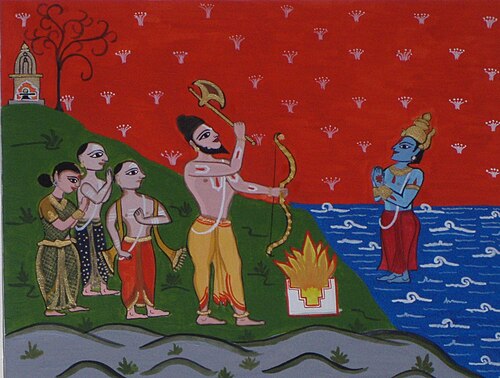
1. Introduction: Who Are the Saraswat Brahmins?
2. Origins and Historical Migration
Historically, Saraswat communities were spread widely across northern and western India: one branch was established along the coast of Sindh and in Gujarat, another in the Punjab and Kashmir regions, and a third sometimes called the Dakshinatya ("southern") Saraswats migrated further down the western coast into the Konkan, Goa, and Kanara. The mid-twentieth-century partition of India in 1947 prompted many Saraswat families from Sindh, Punjab, and Kashmir to resettle in other parts of India, adding a further chapter to the community's long history of migration.
Along the western coast, Saraswat families became closely associated with maritime trade, agriculture, and local administration. Historical accounts describe Saraswat merchants active in ports such as Basrur, Mangalore, and Goa from the fifteenth century onward, trading in commodities such as pepper, rice, areca nut, and cotton and silk cloth with destinations across the Indian Ocean world, including Malabar, the Persian Gulf, and the Red Sea. Many Saraswat families also served in administrative and clerical roles as village accountants (kulkarnis), revenue officials, and diplomatic agents under successive regional rulers, including the Vijayanagara Empire, the Deccan Sultanates, the Maratha Peshwas, and later the Portuguese and British colonial administrations.
3. Regional Branches and Sub-Communities
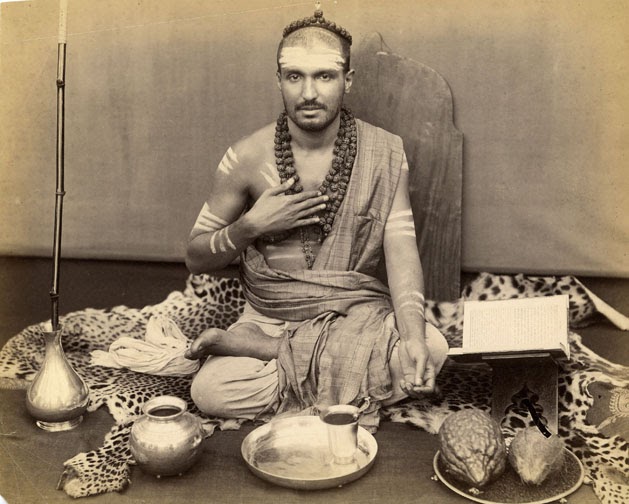
| Branch | Primary Region | Notes |
|---|---|---|
| Kashmiri Pandits | Kashmir Valley | Regarded as holding a prominent social position within Kashmiri society; historically divided into priestly (Guru/Bachabat), astrologer (Jotish), and administrative (Karkun) occupational groups. |
| Mohyal Brahmins | Punjab | Sometimes called "warrior Brahmins" for their historical association with military and administrative service rather than priestly duties; a small number of Mohyal families, known as Hussaini Brahmins, maintain a traditional association with the remembrance of the Battle of Karbala. |
| Gaud Saraswat Brahmins (GSB) | Goa, coastal Karnataka, Kerala, Maharashtra | The largest southern branch; predominantly Konkani-speaking and largely Vaishnava (followers of the Dvaita philosophy of Madhvacharya). |
| Chitrapur Saraswat Brahmins | North Kanara (Karnataka) | A comparatively small community, also called "Bhanap" or "Amchi"; follow the Smartha tradition associated with Adi Shankara and are affiliated with the Chitrapur Math. |
| Rajapur Saraswat Brahmins | Southern Konkan, Kerala | Named for the town of Rajapur in Maharashtra; largely Vaishnava and closely related to the Gaud Saraswat community. |
| Saraswat Brahmins of Punjab and Gangetic India | Punjab, Uttar Pradesh, Bihar | Historically active as landholders and priests in the Gangetic belt, following Shaiva, Shakta, and Vaishnava traditions. |
4. Religion and Philosophy
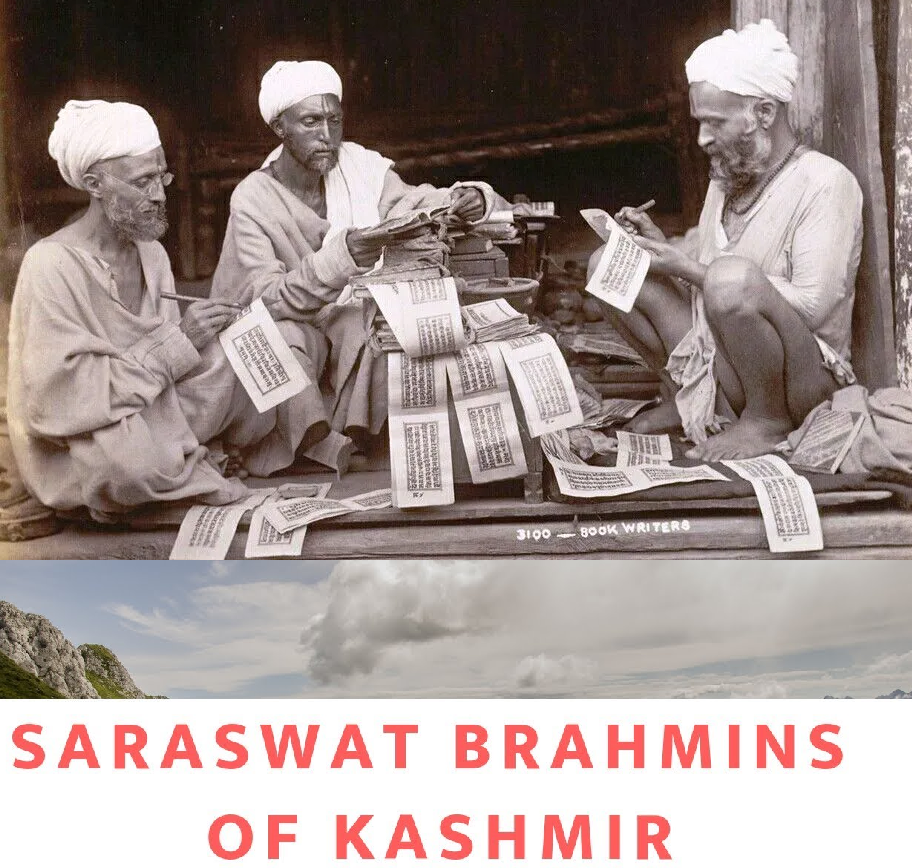
Saraswat Brahmins in Karnataka and Kerala are predominantly followers of Madhvacharya's Dvaita (dualist) school of Vedanta and are affiliated with the Kashi Math or Gokarna Math, while the Chitrapur Saraswats follow the Smartha tradition and the Advaita philosophy associated with Adi Shankara. Writers on the community, including the Konkani author Chandrakant Keni and the historian V. N. Kudva, have noted that the majority of Saraswats, including those in Goa, are today Vaishnavas. Family and clan deities (kuldevta) such as Shantadurga, Mangesh, Mahalasa, and Nagesh, whose temples are historically associated with Goa remain an important part of community religious life, and many families continue to observe Monday vegetarian fasting associated with the worship of Shiva-related family deities.
5. Language
6. Culture, Customs, and Social Life
- Monastic maths — continue to serve as centers of religious authority, education, and community philanthropy for Saraswat families across India and the diaspora.
- Kudumb or family gatherings — gatherings bring together members of extended families and clans for religious observances, celebrations, and the maintenance of genealogical and social ties.
- Kuldevta veneration — worship of family and clan deities (kuldevta/kuldevi), particularly those associated with Goa and the Konkan coast, remains an important part of religious identity even for families long settled elsewhere.
- Festivals — such as Ganesh Chaturthi, Diwali, and Navratri are observed with particular culinary and ritual traditions distinctive to Saraswat households, including specific styles of vegetarian cooking prepared without onion or garlic (savalem randhap) during religious observances.
7. Cuisine
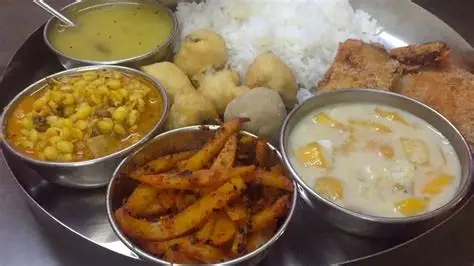
Saraswat cuisine is among the most distinctive culinary traditions of India's western coast, shaped by the community's coastal environment and long history of trade. Coconut, rice, tamarind, and kokum form the foundation of most dishes, and cooking styles vary meaningfully by region and sub-community Goan, Konkani, Karwari (North Kanara), Mangalorean, and Chitrapur Saraswat kitchens each have their own characteristic flavors and specialties.
- Most Konkani and Gaud Saraswat Brahmin families follow a pesco-vegetarian diet, eating fish alongside a largely vegetarian cuisine, while priestly families and many Chitrapur and northern Saraswat households follow a strictly vegetarian, sattvic diet. Saraswat communities in Gujarat and parts of northern India are traditionally pure vegetarians.
- Signature dishes: Ghashi and Hooman — coconut-based curries, often prepared with fish, associated with Goan and Karwari Saraswat cooking.
- Sasav / Saasav — a sweet-and-tangy mustard-coconut relish made with seasonal fruit such as mango or pineapple.
- Sukke, Upkari, and Song — dry or lightly gravied vegetable preparations using coconut, tamarind, and local spices.
- Surnoli and Polle — fermented, lacy rice pancakes traditionally served for breakfast with butter or jaggery.
- Modak and Panchakajjaya — coconut- and jaggery-based sweets prepared especially for the Ganesh Chaturthi festival.
8. Traditional Dress
9. Education, Livelihoods, and Socioeconomic Profile
10. Diaspora
11. Notable Figures
- Jawaharlal Nehru (1889–1964) and Indira Gandhi (1917–1984) — India's first Prime Minister and the country's first woman Prime Minister, from a Kashmiri Pandit (Saraswat) family.
- (1861–1931) — jurist, and Motilal Nehru (1861–1931) — lawyer and political leader, both prominent figures of the Indian independence movement.
- Sir Ramkrishna Gopal Bhandarkar (1837–1925) — orientalist, Sanskrit scholar, and social reformer.
- Manohar Parrikar (1955–2019) — former Defence Minister of India and Chief Minister of Goa.
- Suresh Prabhu — former Union Minister for Railways, Commerce and Industry, and Civil Aviation.
- Dharmananda Damodar Kosambi (1876–1947) and his son Damodar Dharmananda Kosambi (1907–1966) — noted scholars of Buddhism, Pali literature, and, in the latter case, mathematics, statistics, and ancient Indian history.
- Vijay Tendulkar (1928–2008) — celebrated Marathi playwright, screenwriter, and journalist.
- Shenoi Goembab (Vaman Raghunath Varde Valaulikar) — pioneering Konkani writer and language activist, widely regarded as a founder of the modern Konkani literary movement.
- M. Govinda Pai — renowned Kannada poet, honored with the title Rashtrakavi ("national poet").
- Purushottam Laxman (P. L.) Deshpande — celebrated Marathi writer, actor, and humorist, one of the most influential figures in twentieth-century Marathi literature.
12. Conclusion
The Saraswat Brahmins represent one of India's most geographically dispersed and historically layered Brahmin communities a family of related regional groups united by a shared name, a shared devotion to the goddess Saraswati, and a tradition of migration that carried them from the banks of a river celebrated in the Rigveda to the coasts of Goa and Kanara, the valleys of Kashmir, and, in recent generations, to cities around the world. From their historic roles in trade, administration, and religious scholarship to their enduring contributions to Konkani, Marathi, and Kannada literature, and their distinctive coastal cuisine, the Saraswat story is a living thread within the broader tapestry of Indian regional and religious history.
References
- [1][1] Wikipedia. "Saraswat Brahmin." https://en.wikipedia.org/wiki/Saraswat_Brahmin
- [2][2] Wikipedia. "Gaud Saraswat Brahmin." https://en.wikipedia.org/wiki/Gaud_Saraswat_Brahmin
- [3][3] Wikipedia. "List of Gaud Saraswat Brahmins." https://en.wikipedia.org/wiki/List_of_Gaud_Saraswat_Brahmins
- [4][4] Wikipedia. "List of Saraswat Brahmins." https://en.wikipedia.org/wiki/List_of_Saraswat_Brahmins
- [5][5] Wikipedia. "Saraswat cuisine." https://en.wikipedia.org/wiki/Saraswat_cuisine
- [6][6] Wikipedia. "Chitrapur Saraswat Brahmin." https://en.wikipedia.org/wiki/Chitrapur_Saraswat_Brahmin
- [7][7] Wikipedia. "Rajapur Saraswat Brahmin." https://en.wikipedia.org/wiki/Rajapur_Saraswat_Brahmin
- [8][8] Wikipedia. "Mohyal Brahmin." https://en.wikipedia.org/wiki/Mohyal_Brahmin
- [9][9] Wikipedia. "Kashmiri Pandits." https://en.wikipedia.org/wiki/Kashmiri_Pandits
- [10][10] Joshua Project. "Brahmin Gaud Saraswat in India." https://joshuaproject.net/people_groups/19942/IN
- [11][11] G.S.B Mandal, Dombivli. "Who are Gowd Saraswat Brahmins?" https://gsbmandal.org/articles/2/who-are-gowd-saraswat-brahmins-gsbs
- [12][12] The Cultural Heritage of India. "The Vegetarian Saraswat Brahmins of the Konkan Coast." https://cultureandheritage.org/2024/02/the-vegetarian-saraswat-brahmins-of-the-konkan-coast-a-culinary-tradition-rooted-in-the-coastal-environment.html
- [13][13] Indian Community Cookbook Project. "Gowd Saraswat Brahmin Cuisine." https://www.indiancommunitycookbookproject.com/post/gowd-saraswat-brahmin-cuisine-shivani-kulkarni
- [14][14] Kiddle Encyclopedia. "Saraswat cuisine facts for kids." https://kids.kiddle.co/Saraswat_cuisine
- [15][15] Wikipedia. "Surnoli." https://en.wikipedia.org/wiki/Surnoli
- [16][16] Sharma, B. N. Krishnamurti (2000). A History of the Dvaita School of Vedanta and Its Literature, Vol. 1, 3rd ed. Motilal Banarsidass.
- [17][17] O'Hanlon, Rosalind (2013). "Performance in a World of Paper: Puranic Histories and Social Communication in Early Modern India." Past and Present, no. 219.
- [18]Note: This profile summarizes information from the sources listed above, including community-authored and general-reference sources, and reflects widely reported historical and cultural information about the community. Some historical points (for example, precise migration dates and the interpretation of certain Puranic accounts) are treated differently by different scholars and community traditions; this summary presents the generally accepted, non-disputed picture rather than academic debates over caste status or contested historical claims.