

Sisodia Community
Explore the Sisodia Rajput clan's rich heritage: origins, dynastic history, culture, and genetic ancestry. Discover the Mewar legacy and connect with you..
The Sisodiya Rajputs of Mewar
1. Introduction: Who Are the Sisodiyas?
The Sisodiya (also spelled Sisodia, Sesodia, Shishodia, or Sisodya) are a Rajput clan of Rajasthan best known as the ruling lineage of the Kingdom of Mewar, centred on the forts of Chittorgarh and, later, the lake city of Udaipur. As Kshatriya (traditional warrior-ruler) Rajputs, the Sisodiyas trace their descent from the earlier Guhila (Gehlot) dynasty and claim ancestry from the Suryavansha, or Solar Dynasty, of Hindu tradition. For over six centuries the Maharanas of the Sisodiya line ruled Mewar, and the clan today is dispersed across Rajasthan and beyond, with cadet branches, allied lineages, and a rich body of history, architecture, and oral tradition attached to its name.
The clan's name derives from the village of Sisoda (in present-day Rajsamand district, Rajasthan), the residence of the medieval chief Rahapa, whose descendants came to be called Sisodiyas. The line rose to prominence when Rana Hammir Singh reclaimed Chittorgarh in 1326 and re-established Mewar as an independent kingdom, beginning an unbroken royal succession that lasted until the integration of the princely states into independent India in 1947–49.
This profile draws on published historical scholarship, Rajput genealogical literature, and population-genetics research to outline the Sisodiya clan's origins, history, social customs, language, cuisine, dress, architecture, and its lasting cultural legacy in Rajasthan and beyond.
2. Origins and Early History
2.1 The Guhila Ancestry and the Founding of Sisoda
The Sisodiya line is traditionally traced to Bappa Rawal, the eighth-century founder of the Guhila (Gehlot) dynasty of Mewar, who is said to have established his rule at Chittorgarh with the blessing of the sage Harita Rishi and dedicated his kingdom to the god Shiva, worshipped locally as Eklingji. Several generations later, according to the Rajprashasti genealogy, a Guhila prince named Rahapa — grandson of Rana Samar, who is said to have married a sister of the Chauhan ruler Prithviraj Chauhan — adopted the title Rana and spent time at the village of Sisoda, after which his descendants became known as Sisodiya.
2.2 Bappa Rawal, Eklingji, and Divine Kingship
Central to Sisodiya political identity is the doctrine that the true sovereign of Mewar is not the ruling Maharana but the deity Eklingji (a four-faced form of Shiva), whose temple near Udaipur was founded by Bappa Rawal in the eighth century. By long-standing convention, the Maharana of Mewar is regarded as the Diwan, or steward, of Eklingji, ruling on the deity's behalf rather than in his own right. This concept of divine stewardship shaped Mewar's royal ritual and identity for over a millennium, and the reigning head of the family continues to be ceremonially installed as Diwan of the Eklingji temple.
2.3 Re-establishment under Rana Hammir (1326)
The main line of the Guhila dynasty was defeated at the Siege of Chittorgarh in 1303 by the forces of the Delhi Sultanate under Alauddin Khalji. In 1326, Rana Hammir Singh, a member of the Sisodiya branch of the Guhila family, recaptured the region with local support, restored Mewar's independence, and is regarded as the founder of the Sisodiya dynasty proper — the branch to which every subsequent Maharana of Mewar has belonged.
3. Medieval and Early Modern History
3.1 The Golden Age: Rana Kumbha and Rana Sanga
Under Rana Kumbha (r. 1433–1468), Mewar expanded significantly and became one of the most powerful Rajput kingdoms of the era, marked by extensive fort-building, including the massive Kumbhalgarh fortress, and patronage of literature, music, and architecture. Rana Sanga (r. 1508–1527) later brought Mewar to the height of its territorial power, leading a large confederacy of Rajput rulers, before being defeated by the Mughal founder Babur at the Battle of Khanwa in 1527.
3.2 The Sieges of Chittorgarh, Jauhar, and Saka
Chittorgarh was besieged three times in Sisodiya memory: by Alauddin Khalji in 1303, by Bahadur Shah of Gujarat in 1535, and by the Mughal emperor Akbar in 1567–68. Community tradition holds that on each occasion the fort's defenders performed Saka — a final, do-or-die battle — while the women of the fort are remembered to have performed jauhar, a mass act of self-immolation undertaken to avoid capture. These episodes occupy a central place in Rajput historical memory and in later literary and artistic works commissioned by Mewar's rulers.
3.3 Maharana Pratap and the Resistance to the Mughals
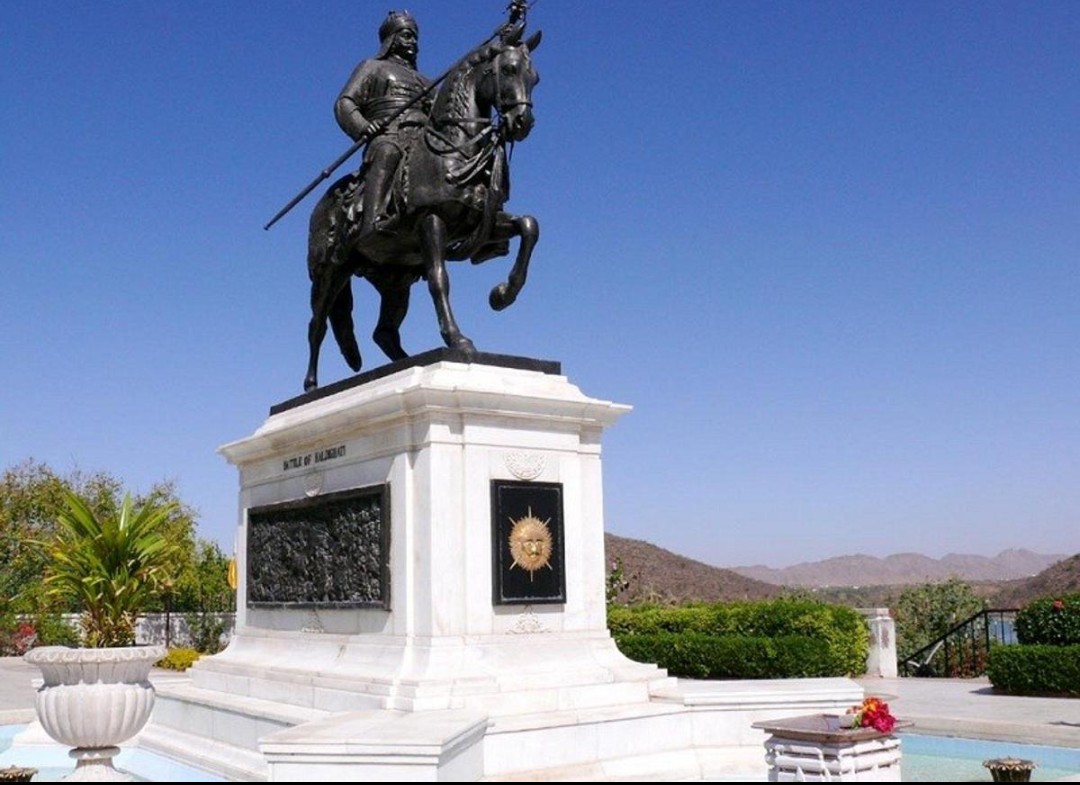
The most celebrated Sisodiya ruler, Maharana Pratap (r. 1572–1597), is remembered for his prolonged military resistance to the expanding Mughal Empire under Akbar, most famously at the Battle of Haldighati (1576). Uniquely among major Rajput houses of the period, the Sisodiyas of Mewar are noted by historians for never entering into a marriage alliance with the Mughal imperial family, a stance later rulers and chroniclers held up as a mark of Mewar's distinct political identity. Later Sisodiya rulers eventually acknowledged Mughal paramountcy, and some served in the Mughal military administration, even as court-commissioned art and literature continued to emphasise the dynasty's earlier record of independence.
3.4 Later Sisodiya Rule and the Coming of British Paramountcy
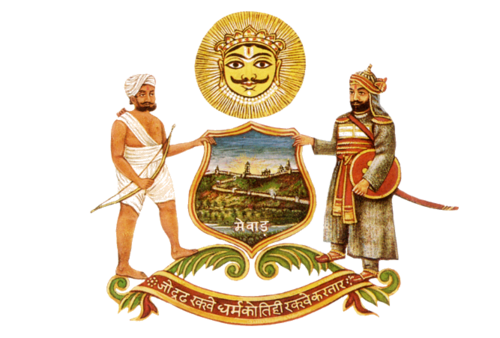
Mewar came under British paramountcy in the early nineteenth century as the princely state of Udaipur (also called Mewar State), while retaining its Sisodiya ruling house and internal autonomy under British oversight. Following India's independence, Mewar acceded to the Union of India in 1949 as part of the broader integration of princely states, and its rulers, like other former princely families, lost their formal governing powers and official titles under later constitutional reform, while continuing as custodians of the family's palaces, temples, and cultural heritage.
4. Clan Structure and Cadet Branches
Like other major Rajput houses, the Sisodiya clan is organised into numerous cadet branches (shakhas), each descending from a historical prince and often associated with a particular estate or jagir within Mewar. Documented branches include:
- Chundawat — descendants of Rana Chunda Sisodia, elder son of Maharana Lakha, who ceded his claim to the throne to his younger brother and whose descendants held an especially prominent place among Mewar's nobility.
- Shaktawat — descendants of Shakti Singh, a sixteenth-century Sisodiya noble.
- Ranawat — descendants of Maharana Pratap.
- Kanawat — descendants of Kanh Singh.
Beyond Mewar itself, several ruling families elsewhere in South Asia have historically claimed descent from or kinship with the Sisodiya line, including the Bhonsle clan of Maharashtra, to which the Maratha Empire's founder Shivaji belonged, and the Rana dynasty that governed Nepal as hereditary prime ministers in the nineteenth and twentieth centuries. These claims of shared ancestry, recorded in traditional genealogical chronicles, reflect the wide prestige historically attached to the Sisodiya name among Rajput and allied ruling houses.
5. Genetics and DNA Ancestry
Population genetics offers a complementary, if still developing, perspective on Rajput ancestry generally; large-scale, clan-specific studies focused narrowly on the Sisodiya lineage itself are not yet available; the summary below reflects broader Rajput and North Indian upper-caste population data.
5.1 Paternal (Y-DNA) Lineages
Studies of Rajput populations report a comparatively high frequency of haplogroup R1a, and specifically its R1a-Z93 subclade, associated with Bronze Age Eurasian Steppe migrations into South Asia; estimates for Rajput samples generally fall in the range of roughly 35–45 percent. Smaller but notable contributions from haplogroups such as J2 (linked to West Asian and Iranian-related ancestry) and other lineages have also been reported among Rajput and allied North Indian groups, consistent with the layered migratory history of the wider region.
5.2 Maternal and Autosomal Ancestry
Maternal-line (mitochondrial) DNA among Rajput populations, as among most South Asian groups, is dominated by indigenous South Asian haplogroups, reflecting deep continuity with the subcontinent's ancient population. At the whole-genome level, Rajput populations show a mixture of Ancestral South Indian (ASI), Indus Valley-related, and Steppe pastoralist-related ancestry components, broadly typical of North Indian upper-caste groups, with regional variation: northwestern populations tend to show a somewhat higher Steppe-related signal, while central and western groups show a greater share of indigenous ancestry.
5.3 Endogamy and Genetic Considerations
Like many long-established Indian communities that have historically practised in-group and clan-based marriage, Rajput populations show genetic signatures consistent with sustained endogamy, including a degree of reduced genetic diversity relative to more outbred groups. As with other endogamous populations worldwide, this can make family genetic history and, where relevant, carrier screening informative for members of the community.
Ancestry estimates in this field vary by study, sample composition, and reference panel, and results from individual consumer DNA tests may differ from broader population averages cited here.
6. Social Structure and Traditional Position
The Sisodiyas belong to the Kshatriya, or traditional ruler-warrior, varna within Hindu social classification, a status reflected in their historical role as Mewar's ruling house and in the broader Rajput identity built around land-holding, military service, and clan honour. The clan's traditional gotra (lineage designation used in genealogical and ritual contexts) is recorded as Vaishampayana.
Rajput society, including the Sisodiyas, has traditionally been organised around the patrilineal kul (clan) and extended jagirdari and thikana estates historically held by cadet branches under the Maharana. Marriage alliances between Rajput clans — such as the historical unions linking the Sisodiyas with the Rathore, Solanki, Chauhan, Kachwaha, and other Rajput houses — served to reinforce political ties across Rajasthan's many kingdoms, a pattern well documented in Mewar's dynastic records.
7. Language
The historical language of the Mewar court and everyday life among the Sisodiyas is Mewari, a dialect of the broader Rajasthani language group, closely related to Marwari and other Rajasthani dialects and written traditionally in the Devanagari script. Standard Hindi is now the dominant language of education, administration, and much daily communication in the region, with Mewari and Rajasthani continuing to be spoken at home and used extensively in folk song, poetry, and oral storytelling.
8. Religion and Customs
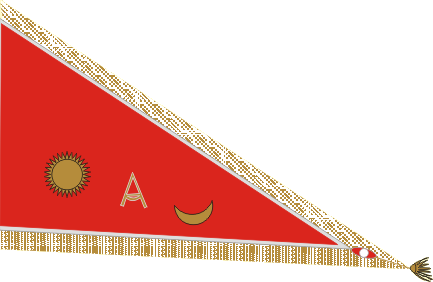
The Sisodiyas are traditionally Hindu, with a particular devotion to Eklingji (Shiva) as the tutelary deity of the House of Mewar; the Maharana's ceremonial installation traditionally includes his recognition as Diwan of the Eklingji temple near Udaipur, and members of the royal family continue to visit the temple on ritual occasions. The clan also claims descent from the Suryavansha, the mythological Solar Dynasty associated in Hindu tradition with the god Rama, and solar symbolism has historically featured in Mewar's royal insignia and flag.
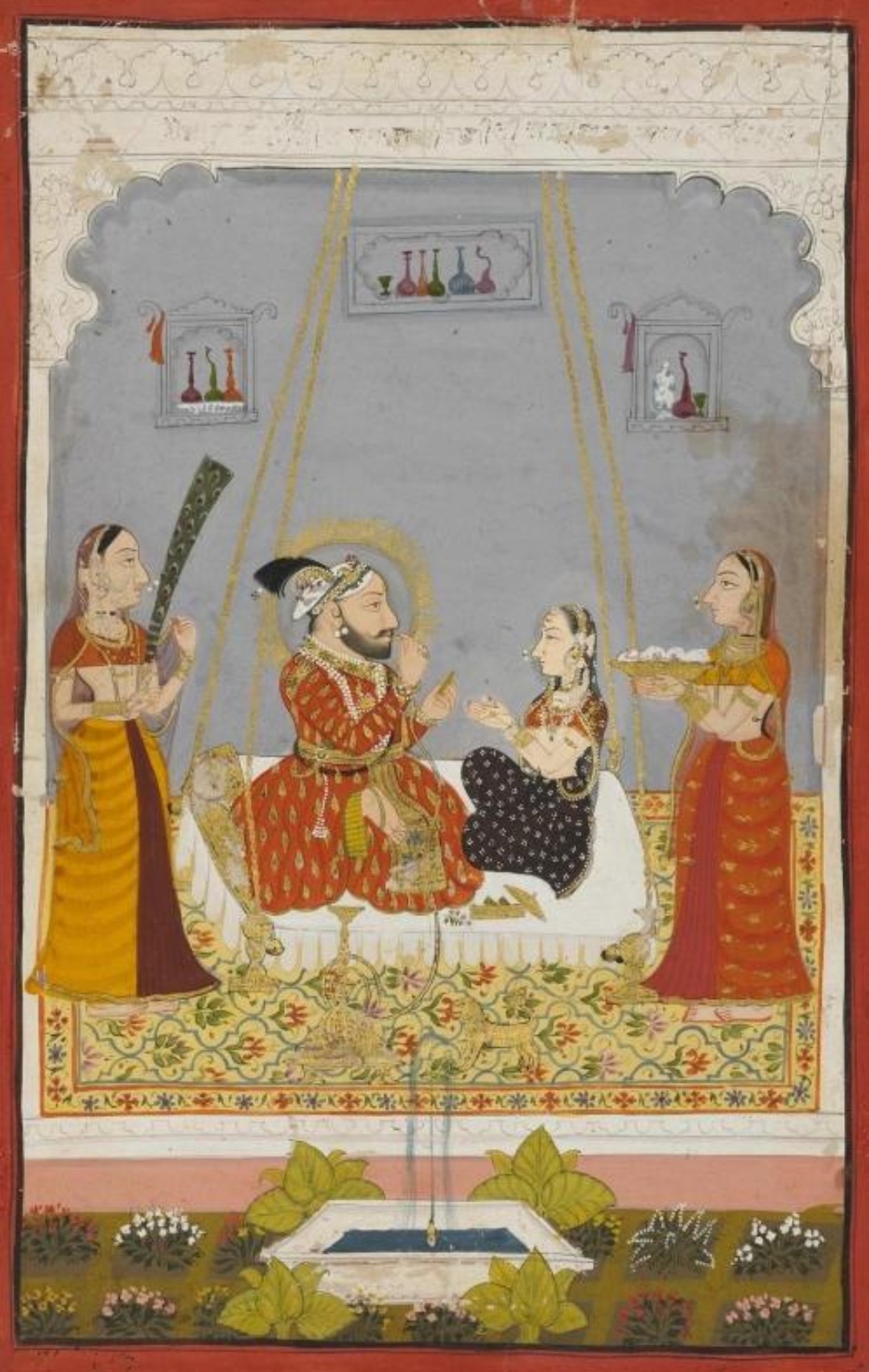
Court and family life historically emphasised Rajput values of valour, hospitality, and honour, along with patronage of Hindu temples, court poets, and bardic chroniclers (Charans and Bhats), who preserved genealogies and heroic narratives in oral and written form. Major Hindu festivals — including Holi, Teej, Diwali, and Mahashivratri (of particular importance given the family's devotion to Shiva) — are observed, with the Mewar region additionally hosting the Mewar Festival, a spring celebration centred on the worship of Shiva and Parvati (as Isar and Gauri) with royal participation.
9. Marriage Traditions
Rajput weddings, including those of the Sisodiya clan, are traditionally elaborate, multi-day Hindu ceremonies conducted according to Vedic rites, historically arranged to reinforce alliances between Rajput houses across Rajasthan. Customary elements include pre-wedding rituals such as tilak (a formal engagement ceremony) and mehndi (henna application), the baraat (groom's ceremonial procession), phere (the couple circling the sacred fire, at the ritual heart of the marriage), and post-wedding rites welcoming the bride into her husband's family. Royal and noble Sisodiya marriages historically carried particular political significance, and were often recorded in genealogical chronicles alongside the alliances they created between Mewar and other Rajput kingdoms.
10. Cuisine
The cuisine associated with the Sisodiyas and the wider Mewar region is part of the broader Rajasthani culinary tradition, shaped historically by the area's arid climate, its emphasis on ingredients that keep well, and the courtly patronage of elaborate feasting. Notable dishes and specialities associated with Mewar and Rajasthan include:
- Dal Baati Churma — a Rajasthani staple of lentils, baked wheat-flour rolls, and a sweetened cracked-wheat dish, traditionally served together and closely associated with Rajasthani and Mewari hospitality.
- Laal Maas — a fiery, chilli-and-yogurt-based meat curry historically associated with Rajput royal and hunting-camp cuisine.
- Gatte ki Sabzi — a gram-flour dumpling curry, a staple of the largely vegetarian everyday cooking common across Rajasthan.
- Ghewar and Mohanthal — festive sweets associated with the Mewar region, traditionally prepared for festivals and celebrations.
- Kachori (both the savoury pyaaz kachori and the sweet mawa kachori) — popular snacks found throughout Rajasthan, including Udaipur and the wider Mewar area.
Feasting historically accompanied court ceremonies, festivals, and family celebrations, with royal kitchens in Udaipur historically noted for elaborate hospitality befitting the Mewar court's status among Rajput houses.
11. Traditional Dress and Ornaments
Traditional Rajput dress, as worn historically by the Sisodiyas and other Rajasthani communities, is distinguished by bright colour, elaborate tie-dye and embroidery work, and status-marking headgear. Key elements include:
- Pagri (turban) — an elaborate, often brightly coloured turban worn by men, historically varying in style, colour, and manner of tying according to region, occasion, and social rank; royal ceremonies in Mewar, such as the Rang ka Dastur, traditionally include the formal changing of the ruling head's turban.
- Angrakha and dhoti/churidar — traditional upper- and lower-body garments for men, historically worn at court and on ceremonial occasions, often paired with a decorative waist sash (kamarbandh) and, for nobility, ceremonial swords.
- Ghagra, choli, and odhni — the traditional three-piece dress of Rajasthani women, comprising a long embroidered skirt, a fitted blouse, and a draped veil, often decorated with bandhani (tie-dye) or laharia patterns.
- Gold and silver jewellery, including borla (a traditional forehead ornament), bangles, and other ornate pieces, historically worn by Rajput women of noble and royal households on ceremonial occasions.
Contemporary daily dress among Sisodiya families, as elsewhere in urban Rajasthan, has largely converged with mainstream Indian fashion, while traditional attire remains prominent at weddings, festivals, and heritage events in and around Udaipur.
12. Architecture and Forts
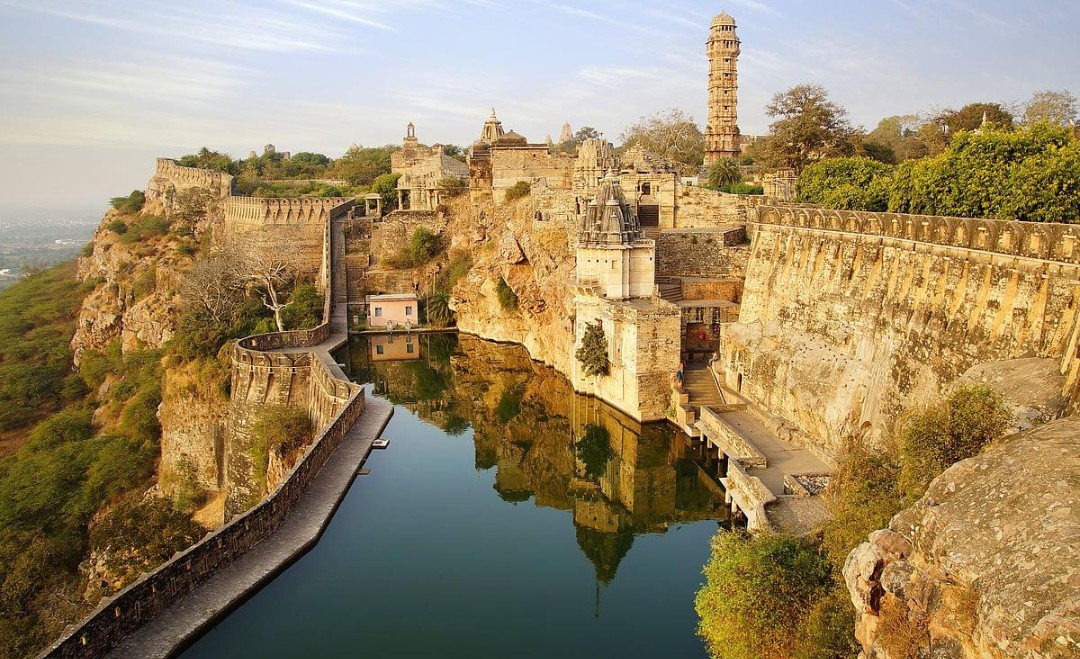
The Sisodiyas are closely associated with some of Rajasthan's most significant fortifications and palaces, reflecting the dynasty's long history as rulers of Mewar. Chittorgarh Fort, the dynasty's ancient capital, remains one of the largest fort complexes in India and a UNESCO World Heritage Site as part of the Hill Forts of Rajasthan. Kumbhalgarh, built under Rana Kumbha in the fifteenth century, is renowned for its massive perimeter wall. The City Palace in Udaipur, begun in 1559 and expanded over roughly four centuries by successive Maharanas, remains the family's principal historic residence and today functions in part as a heritage museum. Mewar's temple architecture, including the Eklingji temple complex, blends Rajput and North Indian temple-building traditions with centuries of royal patronage and renovation.
13. Folklore and Oral Tradition
Sisodiya and wider Mewari history has long been preserved through bardic oral tradition, particularly by the Charan and Bhat communities of court poets and genealogists, whose ballads, eulogies, and chronicles recorded the exploits of rulers such as Rana Sanga and Maharana Pratap. Figures and episodes from this tradition — including the jauhar and saka of Chittorgarh, the loyalty of the royal nursemaid Panna Dhai (celebrated for protecting an infant Mewar prince), and the heroism of Maharana Pratap's resistance to the Mughals — remain widely told stories in Rajasthani folklore and continue to be commemorated through awards, festivals, and cultural institutions in present-day Udaipur. These oral and literary traditions were also drawn upon by the nineteenth-century British official James Tod in his influential (though not uncritically received) chronicling of Rajput history.
14. Notable Historical Figures
- Rana Hammir Singh (r. 1326–1364) — reclaimed Chittorgarh and re-established Mewar's independence, regarded as founder of the Sisodiya dynasty.
- Rana Kumbha (r. 1433–1468) — expanded Mewar's territory and built extensively, including the Kumbhalgarh fort.
- Rana Sanga (r. 1508–1527) — led a major Rajput confederacy and brought Mewar to the height of its territorial power.
- Maharana Pratap (r. 1572–1597) — celebrated for his resistance to the Mughal Empire, notably at the Battle of Haldighati.
- Panna Dhai — the royal nursemaid remembered in Mewari tradition for protecting an infant prince of the ruling house at great personal cost, a widely told story of loyalty in Rajasthani folklore.
- Bhoj Raj Singh Sisodia — eldest son of Rana Sanga and husband of the celebrated Bhakti poet-saint Meera Bai.
This list highlights major historical figures central to Sisodiya dynastic history; the clan's genealogical record includes many further rulers, nobles, and courtiers documented in Mewar's chronicles.
15. Present-Day Heritage and Institutions
The House of Mewar continues to maintain a significant public presence through heritage and philanthropic institutions. The Maharana of Mewar Charitable Foundation (also known as Eternal Mewar), established in 1969 by Maharana Bhagwat Singh, oversees sections of the historic City Palace in Udaipur, now developed as a heritage museum open to the public, and administers annual awards recognising achievement in education, the arts, and public service. The reigning head of the Sisodiya clan continues to be ceremonially installed as Maharana of Mewar and as Diwan of the Eklingji temple, carrying forward customs that date back many centuries, even though the formal governing powers and official titles of Mewar's rulers ended with India's post-independence constitutional reforms.
16. Diaspora and Related Lineages
While the Sisodiya clan's historic homeland is Mewar in southern Rajasthan, its cadet branches and related noble families are found across Rajasthan and neighbouring regions, reflecting the clan's long dynastic and marital ties with other Rajput houses. As noted above, ruling families elsewhere in South Asia — notably the Bhonsle clan of Maharashtra and the Rana dynasty of Nepal — have historically claimed descent from or close kinship with the Sisodiya line. In the modern era, members of Rajput families of Sisodiya descent, like many communities from Rajasthan, are also found in cities across India and, through education and professional migration, in the wider Indian diaspora abroad.
17. Conclusion
The Sisodiya Rajputs of Mewar occupy a distinctive place in Indian history: a dynasty whose rulers, from Rana Hammir to Maharana Pratap, are remembered above all for a sustained record of resistance and independence, and whose self-understanding as stewards of the deity Eklingji shaped a unique tradition of divine kingship. From the fortress walls of Chittorgarh and Kumbhalgarh to the lake palaces of Udaipur, and from bardic ballads of valour to the population-genetic signatures now being studied in Rajput populations more broadly, the Sisodiya story links deep historical memory with an enduring living culture — one that continues today through heritage institutions, festivals, and a widely dispersed clan carrying the Sisodiya name across Rajasthan and beyond.
References
- [1]1. Wikipedia. “Sisodia dynasty.” https://en.wikipedia.org/wiki/Sisodia_dynasty
- [2]2. Wikipedia. “List of ranas of Mewar.” https://en.wikipedia.org/wiki/List_of_ranas_of_Mewar
- [3]6. Wikipedia. “Lakshyaraj Singh Mewar.” https://en.wikipedia.org/wiki/Lakshyaraj_Singh_Mewar
- [4]7. Wikipedia. “Maharana of Mewar Charitable Foundation.” https://en.wikipedia.org/wiki/Maharana_of_Mewar_Charitable_Foundation
- [5]8. Wikipedia. “City Palace, Udaipur.” https://en.wikipedia.org/wiki/City_Palace,_Udaipur
- [6]9. Wikipedia. “Rajput.” https://en.wikipedia.org/wiki/Rajput
- [7]10. Rajras.in. “Mewar (Guhil-Sisodia Dynasty).” https://rajras.in/ras/pre/rajasthan/history/medieval/mewar-guhil-sisodia-dynasty/
- [8]11. IndianRajputs.com. “History of Sisodias.” https://www.indianrajputs.com/history/sisodia.php
- [9]12. Vajiram & Ravi. “Sisodia Dynasty 1326–1947.” https://vajiramandravi.com/current-affairs/sisodia-dynasty/
- [10]13. Chundawat.com. “Sisodia Dynasty: History, Rulers & Legacy.” https://chundawat.com/dynasty/Sisodia/
- [11]14. iloveudaipur.in. “Eklingji Temple – History, Timings, Mahashivratri.” https://www.iloveudaipur.in/eklingji-temple-history-timings-mahashivratri/
- [12]15. Frommer's. “Eklingji & Nagda Temples.” https://www.frommers.com/destinations/udaipur/attractions/eklingji--nagda-temples/
- [13]19. Caleidoscope. “Culture of Rajasthan: Exploring the Vibrant Tradition, Art, Music, Food and Festivals.” https://caleidoscope.in/art-culture/culture-of-rajasthan
- [14]20. Holidify. “Culture of Rajasthan – Festivals, Cuisine, Customs & More.” https://www.holidify.com/pages/culture-of-rajasthan-32.html