

Uttar Pradesh Brahmin Community
Discover your Uttar Pradesh Brahmin heritage. Explore origins, Vedic traditions, geography. Uncover R1a/J2 DNA. Connect with North Indian roots.
The Brahmins of Uttar Pradesh
1. Introduction: Who Are the Brahmins of Uttar Pradesh?
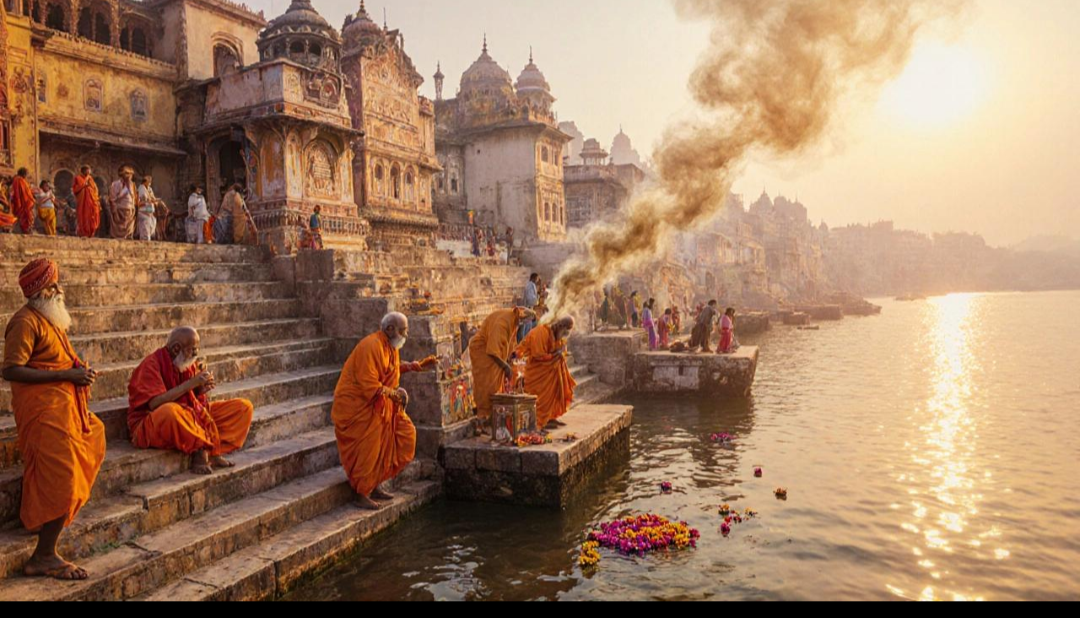
The Brahmins of Uttar Pradesh are one of the largest and most widely dispersed priestly and scholarly communities in North India, with a documented presence stretching from the Ganga-Yamuna doab and the Awadh region in central Uttar Pradesh to Purvanchal in the east, Bundelkhand in the south, and the Braj region in the west. Historically associated with Vedic learning, temple worship, Sanskrit scholarship, and the transmission of ritual and literary knowledge, the community is closely tied to some of North India's oldest centres of religious and intellectual life, including Kannauj, Varanasi (Kashi), Ayodhya, Prayagraj (Allahabad), and Mathura.
This profile traces the community's traditional origins and historical geography, the population-genetic evidence for its ancestry, its languages and literary heritage, its religious vocations and customary practices, and the diaspora and public figures who carry its history into the present.
2. Origins and Early History
2.1 Vedic and Puranic Traditions
Community memory and genealogical literature trace descent to the rishis (seers) of the Vedic period, organised into gotra lineages such as Bharadwaj, Vashistha, Kashyapa, Gautama, Vatsa, and Katyayana, among others. These gotra affiliations, still recorded at weddings and other rites today, functioned historically as markers of descent from a common Vedic teacher-ancestor and continue to guide the convention of marrying outside one's own gotra. The region's association with Vedic learning is reinforced by its geography: the ancient kingdoms of Kashi, Kosala, and Panchala, all situated within or bordering present-day Uttar Pradesh, are remembered in Vedic and Puranic literature as centres of philosophical debate and ritual scholarship.
2.2 Kannauj: The Historical Heartland
The city of Kannauj, on the Ganges in central Uttar Pradesh, occupies a central place in community memory and gives its name to the broad Kanyakubja grouping (from Kanyakubja, an old name for Kannauj). Kannauj rose to particular prominence as a political and cultural capital under Emperor Harshavardhana in the seventh century CE, becoming a magnet for scholars, poets, and religious functionaries. In subsequent centuries, ruling dynasties across northern and eastern India invited Brahmin scholars associated with Kannauj to serve as court priests, teachers, and temple functionaries, a pattern of migration recorded in the traditions of Brahmin communities as far afield as Bengal, Odisha, and Gujarat, who trace part of their ancestry to Kannauj migrants.
2.3 Medieval and Early Modern Developments
From the medieval period onward, Brahmin families across Awadh, the Doab, and eastern Uttar Pradesh built local traditions around temple service, Sanskrit pathshalas (schools), landholding, and administrative or scribal work under successive regional courts. Many families maintained hereditary rights to officiate at particular temples or pilgrimage sites, a pattern still visible today in cities such as Varanasi, Ayodhya, Mathura, and Prayagraj, where multi-generation priestly families continue to serve specific shrines, ghats, and pilgrim lodges.
3. Regional Branches and Communities
Over centuries of settlement, the Brahmins of Uttar Pradesh differentiated into a number of regionally rooted communities, generally distinguished by area of historical settlement, family occupation, or ritual specialisation rather than by any single organising principle. The table below summarises several of the better-documented groupings found across the state.
| Community | Historical Region | Notes |
|---|---|---|
| Kanyakubj | Kannauj and the central Awadh belt | Associated with the historical seat of Kannauj; widely dispersed through subsequent migration |
| Saryupareen | Eastern Uttar Pradesh, along the Sarayu river near Ayodhya | Name traditionally linked to settlement across the Sarayu (Saryu) river; strong association with Ayodhya |
| Sanadhya | Western Uttar Pradesh, around Agra and Mathura | Long-settled landholding and cultivating families of the Braj-Agra belt |
| Golapurab (Galav) | Western Uttar Pradesh and adjoining Madhya Pradesh | Traditionally cultivators and landowners centred near Agra |
| Kattaha (Mahabrahmin) | Found across Uttar Pradesh and neighbouring states | A specialised priestly community whose traditional role is officiating at funeral rites |
These communities are typically endogamous, retain their own gotra lists and family genealogies, and, in some cases, hold periodic gatherings and associations that maintain historical and genealogical records. Marriage across these groupings has become progressively more common in recent generations, particularly in urban and diaspora settings.
4. Genetics and DNA Ancestry
Population-genetic studies of North Indian Brahmin communities, including samples drawn from Uttar Pradesh and neighbouring states, provide some insight into the community's deep ancestry.
4.1 Paternal (Y-DNA) Lineages
Y-chromosome studies of Brahmin populations across North India report a notably high frequency of haplogroup R1a, commonly in the range of 40 to 70 percent of male lineages sampled, a proportion generally higher than in many other regional South Asian populations. Uttar Pradesh, along with Bihar, Madhya Pradesh, and Rajasthan, is among the states where average R1a frequencies are reported to be particularly elevated. Smaller contributions from other haplogroups, including J2, are also recorded in North Indian Brahmin samples, reflecting the broader layering of paternal lineages found across the subcontinent.
4.2 Maternal (mtDNA) Lineages
Maternal-line studies of North Indian populations, including Brahmin samples, show mitochondrial DNA overwhelmingly composed of indigenous South Asian haplogroups, particularly haplogroup M and its many regional subclades, broadly consistent with the deep local ancestry shared across North Indian populations generally.
4.3 Autosomal Ancestry
On the whole-genome level, North Indian populations, including Brahmin communities of Uttar Pradesh, sit within the broader Ancestral North Indian (ANI) and Ancestral South Indian (ASI) admixture gradient that characterises the Indian subcontinent, reflecting deep and layered population history over several millennia. As with most Indian population-genetic research, sample sizes for any single regional community remain modest, and findings should be read as broadly indicative rather than definitive.
This section summarises published population-genetics literature; ancestry findings vary by study, sample size, and reference panel, and individual DNA test results may differ from community-level averages.
5. Religious and Priestly Traditions
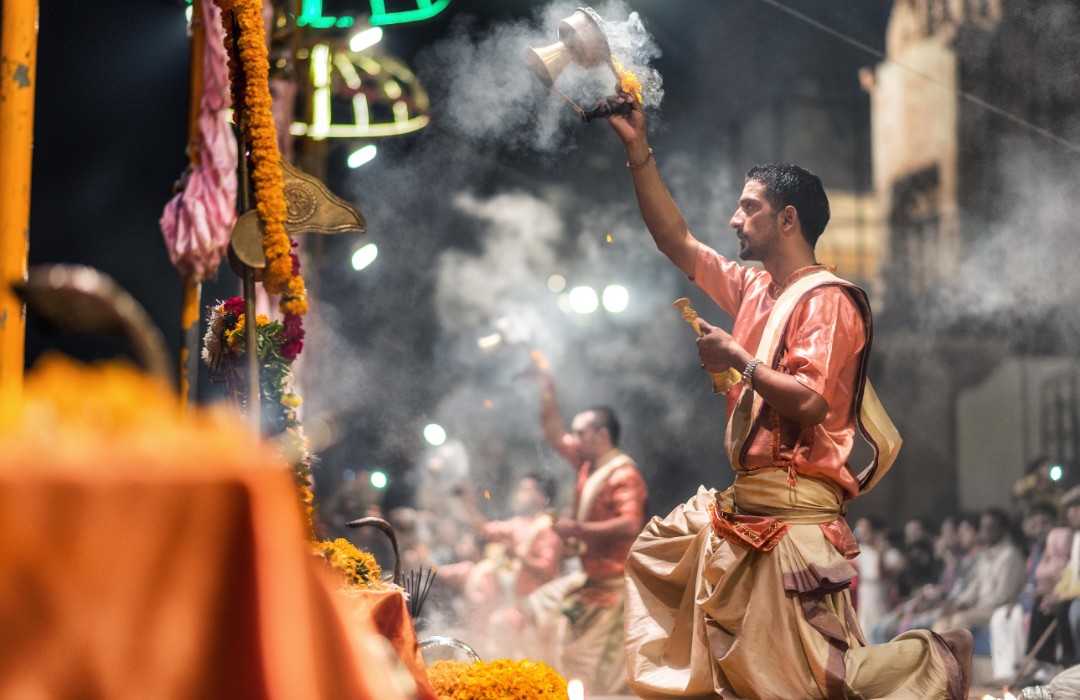
A defining feature of the community historically has been its association with the Hindu priesthood and with Sanskrit scholarship. Brahmin families in Uttar Pradesh have long served as purohits (family priests) performing life-cycle rites, as temple priests (pujaris) at shrines ranging from small village temples to major pilgrimage sites, and, in some lineages, as panda-style genealogist-priests maintaining pilgrim records at riverbank cities.
Varanasi has functioned for over a millennium as one of India's foremost centres of Sanskrit and Vedic scholarship, home to institutions such as the Sampurnanand Sanskrit University and the Kashi Vidvat Parishad, an assembly of Vedic and scriptural scholars that continues to weigh in on questions of ritual and philosophy. Traditional pathshalas and gurukuls in Varanasi, Ayodhya, Mathura, and Prayagraj have trained generations of Sanskrit scholars, ritual specialists, and Ayurvedic and astrological practitioners, alongside more recent modern academic institutions.
Within this broader priestly tradition, some communities such as the Kattaha specialise specifically in funeral rites, serving as the traditional officiants at Hindu cremation and ancestral-offering ceremonies across North India.
6. Language and Literary Tradition
Sanskrit has historically served as the liturgical and scholarly language of the community, used in ritual recitation, scriptural study, and formal learning. In everyday life, however, Brahmin families across Uttar Pradesh speak the regional vernaculars of their locality: Awadhi in the Awadh region centred on Ayodhya and Lucknow, Bhojpuri in the eastern districts bordering Bihar, Braj Bhasha in the Mathura-Agra belt, Kannauji around Kannauj, Bundeli in Bundelkhand, and standard Hindi increasingly across the state.
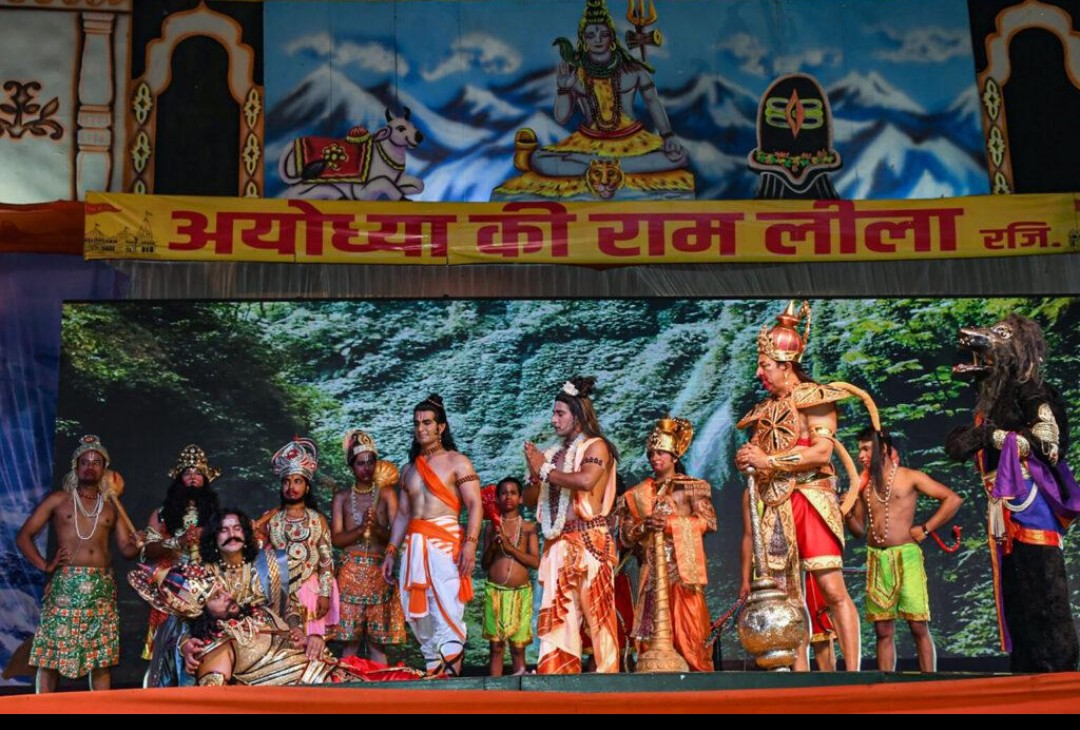
The community has produced some of North India's most influential devotional and literary works. Tulsidas, the sixteenth-century poet-saint associated with Varanasi, composed the Ramcharitmanas, a retelling of the Ramayana in Awadhi that remains one of the most widely recited devotional texts in North India and is performed annually in the Ramlila theatrical tradition across the region. The broader bhakti (devotional) literary tradition of Awadh and Braj, including devotional poetry centred on Rama and Krishna, has been substantially shaped by Brahmin poets, scholars, and reciters over the centuries.
7. Culture, Customs, and Social Practices
Community life is structured around the samskaras, a sequence of Hindu life-cycle rites that include the naming ceremony (namakarana), the first hair-cutting (mundan), the sacred-thread ceremony (upanayana) historically marking a boy's initiation into formal Vedic study, and marriage. Many households continue to observe a broadly satvik (vegetarian) diet, particularly among priestly families, alongside periodic fasting (vrat) on specific days of the lunar calendar.
The Hindu Panchang (lunisolar calendar) governs much of community life, determining auspicious dates for rites and festivals. Major festivals observed with particular devotion include Basant Panchami, associated with Saraswati, the goddess of learning, and celebrated with particular warmth in a community that has long emphasised scholarship; Kartik Purnima; Nag Panchami; Guru Purnima, honouring teachers; and Ram Navami, marking the birth of Rama and observed with special significance in Ayodhya.
8. Marriage and Life-Cycle Traditions
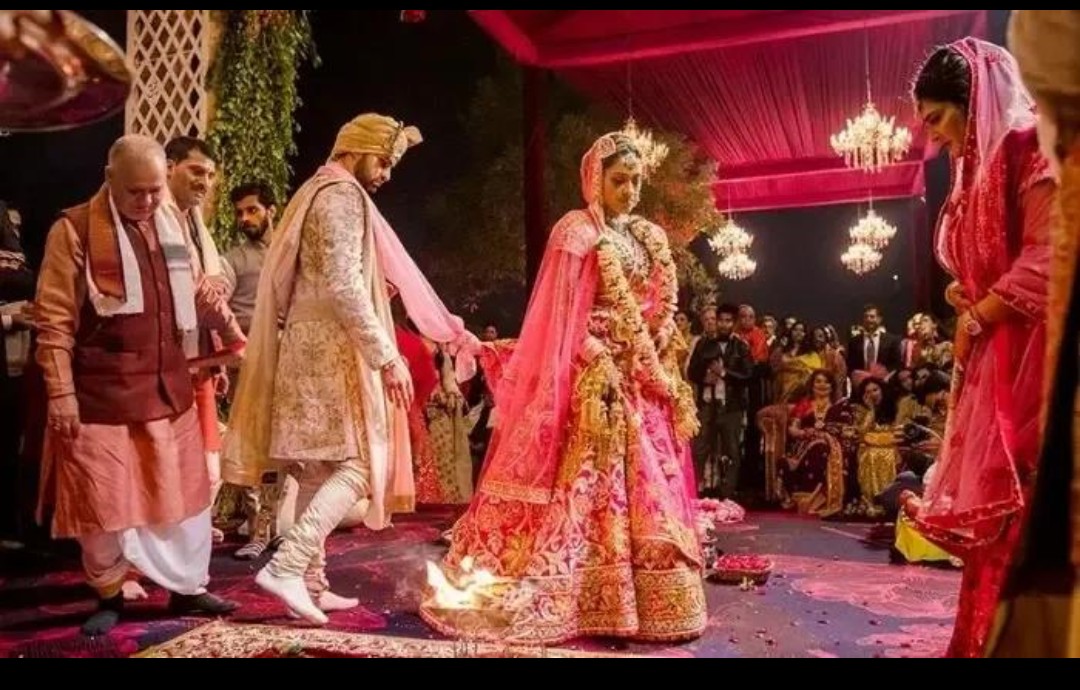
Traditional Brahmin weddings in Uttar Pradesh follow the Vedic format common across North Indian Hindu communities, including the kanyadan (the ceremonial giving away of the bride), the saptapadi (seven ceremonial steps taken together by the couple around the sacred fire), and rites conducted by a family purohit reciting Sanskrit mantras. Marriages are traditionally arranged with attention to gotra exogamy (avoiding marriage within one's own gotra lineage) and astrological compatibility (gun milan) between the couple's birth charts. Many families continue to hold periodic clan or lineage gatherings that maintain genealogical records and strengthen ties among dispersed branches of an extended family.
9. Cuisine
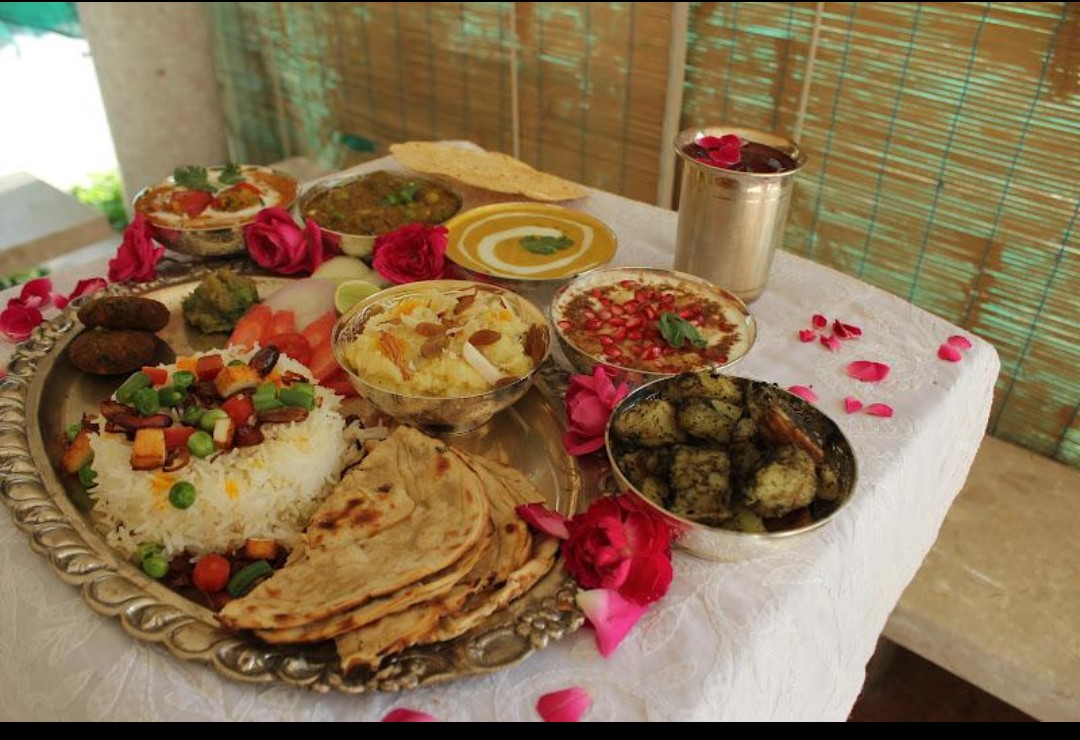
- Predominantly vegetarian, satvik cooking in many households, particularly among priestly families, avoiding onion and garlic on ritual occasions and during certain fasts.
- Wheat-based staples such as roti, poori, and kachori, often paired with seasonal vegetable preparations and dal.
- Regional festive dishes including tehri (a spiced vegetable pulao) and khichdi, particularly associated with the Makar Sankranti festival.
- Prasad and bhog traditions: food ceremonially offered to a deity before distribution to devotees, prepared according to specific ritual conventions in temple kitchens and household shrines alike.
- Regional variation across Awadhi, Braj, Bhojpuri, and Kannauji culinary traditions, reflecting the broader diversity of Uttar Pradesh's cuisine.
10. Traditional Dress and Ornaments
Traditional male attire for ritual and priestly occasions includes the dhoti, worn with a kurta or an angavastram (unstitched upper cloth) draped over the shoulder, along with the janeu (sacred thread) worn diagonally across the torso by initiated men, a tilak mark on the forehead, and, among some ascetics and scholars, rudraksha bead necklaces. Women traditionally wear sarees in regional styles, with gold jewellery, bindis, and, among married women, sindoor (vermilion) in the hair parting and often a mangalsutra or equivalent marker of married status. Contemporary daily dress has largely converged with broader North Indian and pan-Indian fashion, with traditional attire retained chiefly for weddings, festivals, and temple visits.
11. Traditional Housing and Architecture
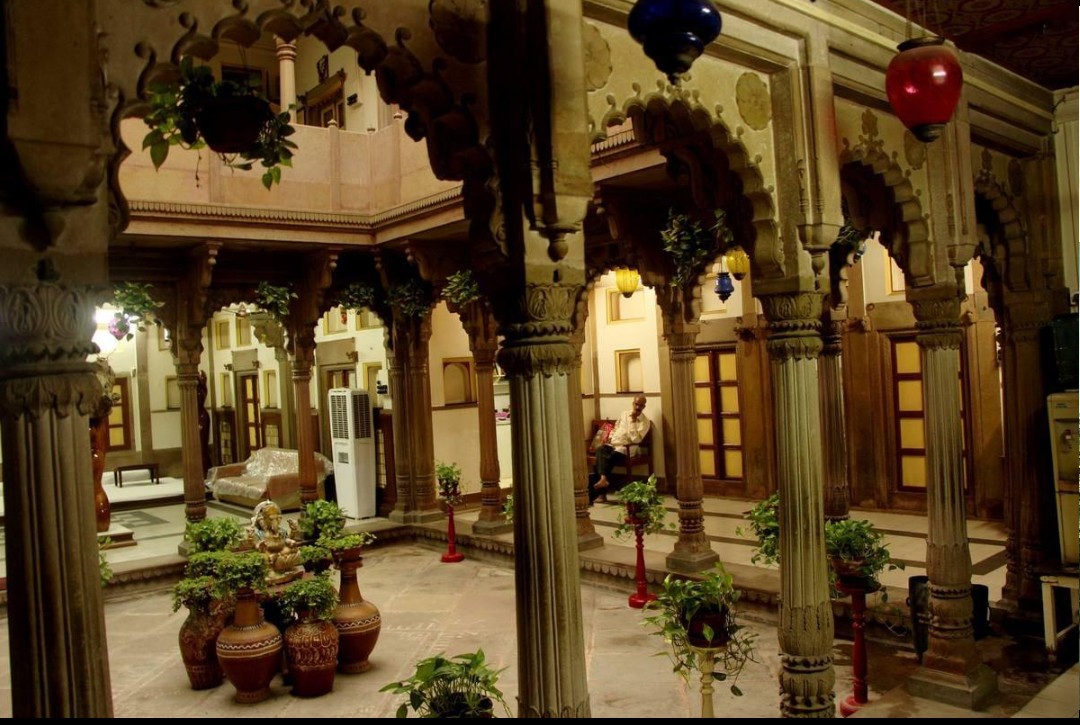
Historic Brahmin households in towns such as Kannauj, Varanasi, and Mathura often took the form of multi-storey havelis built around a central courtyard, incorporating a dedicated puja room or a tulsi chaura (a raised platform for the sacred basil plant) in the courtyard. In riverside cities, particularly Varanasi, many priestly families historically lived in close proximity to the ghats where they performed ritual duties, with some households maintaining dharamshalas (pilgrim rest-houses) attached to the family home to host visiting pilgrims and relatives.
12. Folklore and Oral Tradition
Oral recitation and performance have long been central to community life. The Ramcharitmanas is recited and sung in homes and temples throughout the year and forms the basis of the annual Ramlila, a dramatic re-enactment of the Ramayana performed across North India, especially prominent in Awadh. The tradition of the kathavachak, a reciter and expositor of scripture and epic narrative such as the Bhagavata Purana, has historically been a respected vocation within the community, alongside a broader repository of devotional dohas (couplets), folk songs, and proverbs transmitted across generations.
13. Education, Livelihoods, and Socioeconomic Profile
The community's historical emphasis on Sanskrit and Vedic scholarship gradually extended, from the nineteenth century onward, to modern education, law, journalism, and public administration, alongside the continuation of hereditary priestly and temple-service vocations in many families. Cities such as Varanasi, Prayagraj, and Kanpur developed as centres of higher education partly through the involvement of Brahmin scholars and educationists, and the community today is represented across teaching, law, medicine, civil service, journalism, and the arts, alongside families that continue in priestly and temple-based livelihoods.
14. Diaspora
Uttar Pradesh Brahmins, particularly from the Kanyakubja and Saryupareen groupings, were among the North Indians who migrated as indentured labourers during the nineteenth and early twentieth centuries to British colonial plantation economies, forming part of the ancestry of present-day Indo-Fijian, Indo-Mauritian, Indo-Trinidadian, Indo-Guyanese, and Indo-Surinamese communities. In these diaspora settings, Brahmin migrants and their descendants have often continued to serve as priests and ritual specialists for local Hindu temples, helping sustain Awadhi- and Bhojpuri-inflected Hindi, devotional singing, and ritual practice far from Uttar Pradesh. More recent decades have seen substantial professional migration to the United States, the United Kingdom, and the Gulf states, with diaspora associations in these regions maintaining cultural and religious ties to the home region.
15. Prominent Figures
15.1 Religious and Literary Figures
- Tulsidas (16th century) — poet-saint of Varanasi, author of the Ramcharitmanas.
- Swami Karpatri (1907–1982) — Advaita Vedanta teacher and scholar from Gorakhpur district, widely known as Dharma Samrat.
- Jagadguru Rambhadracharya — Sanskrit scholar and commentator from Jaunpur, honoured within traditional Sanskrit scholarly circles.
15.2 Public Life, Scholarship, and Culture
- Pandit Madan Mohan Malaviya (1861–1946) — born into a family of Sanskrit scholars in Allahabad (Prayagraj); founder of Banaras Hindu University and four-time president of the Indian National Congress.
- Chandra Shekhar Azad (1906–1931) — revolutionary freedom fighter whose family hailed from Badarka village in Unnao district; educated in Sanskrit at Kashi Vidyapeeth, Varanasi.
- Govind Ballabh Pant (1887–1961) — the first Chief Minister of Uttar Pradesh and later Union Home Minister.
- Motilal Nehru and Jawaharlal Nehru — a Kashmiri Pandit family that settled in Prayagraj (Allahabad) and became central to twentieth-century Indian public life.
This list is illustrative rather than exhaustive; the community has produced a large number of scholars, priests, administrators, and public figures across Uttar Pradesh and the diaspora over the past two centuries.
16. Contemporary Reflections
Two themes recur in discussions of the community today. The first is continuity alongside change: hereditary priestly and temple-service roles persist in cities such as Varanasi, Ayodhya, and Mathura even as growing numbers of families pursue professional careers in medicine, engineering, law, and the civil services, both within India and abroad. The second is the ongoing transmission of Sanskrit and devotional literary heritage — through traditional pathshalas, temple recitation, and the annual Ramlila — into a generation increasingly shaped by urban life and diaspora settlement, a balance that institutions such as the Kashi Vidvat Parishad and Sanskrit universities continue to help sustain.
17. Conclusion
The Brahmins of Uttar Pradesh represent a long-settled North Indian community whose historical association with Vedic learning, temple priesthood, and Sanskrit literary production has left a deep imprint on the religious and cultural life of the region. From the scholarly reputation of medieval Kannauj to the living Sanskrit institutions of Varanasi, from the Awadhi verses of the Ramcharitmanas to the ritual life of diaspora Hindu temples founded by indentured migrants generations ago, the community's history is at once a religious tradition, a linguistic and literary legacy, and a living regional culture that continues to evolve across India and the wider world.