Whole Genome Sequencing vs Whole Exome Sequencing: What’s the Difference?
Whole genome sequencing and whole exome sequencing both provide detailed genetic information, but they look at different parts of your DNA. Learn how WGS and WES work, what each can reveal, their differences in coverage, and which approach may suit different genetic research and testing needs.
DNA contains an enormous amount of information about us. But when people talk about genetic testing, one question often comes up:
Should you sequence the whole genome or focus only on the exome?
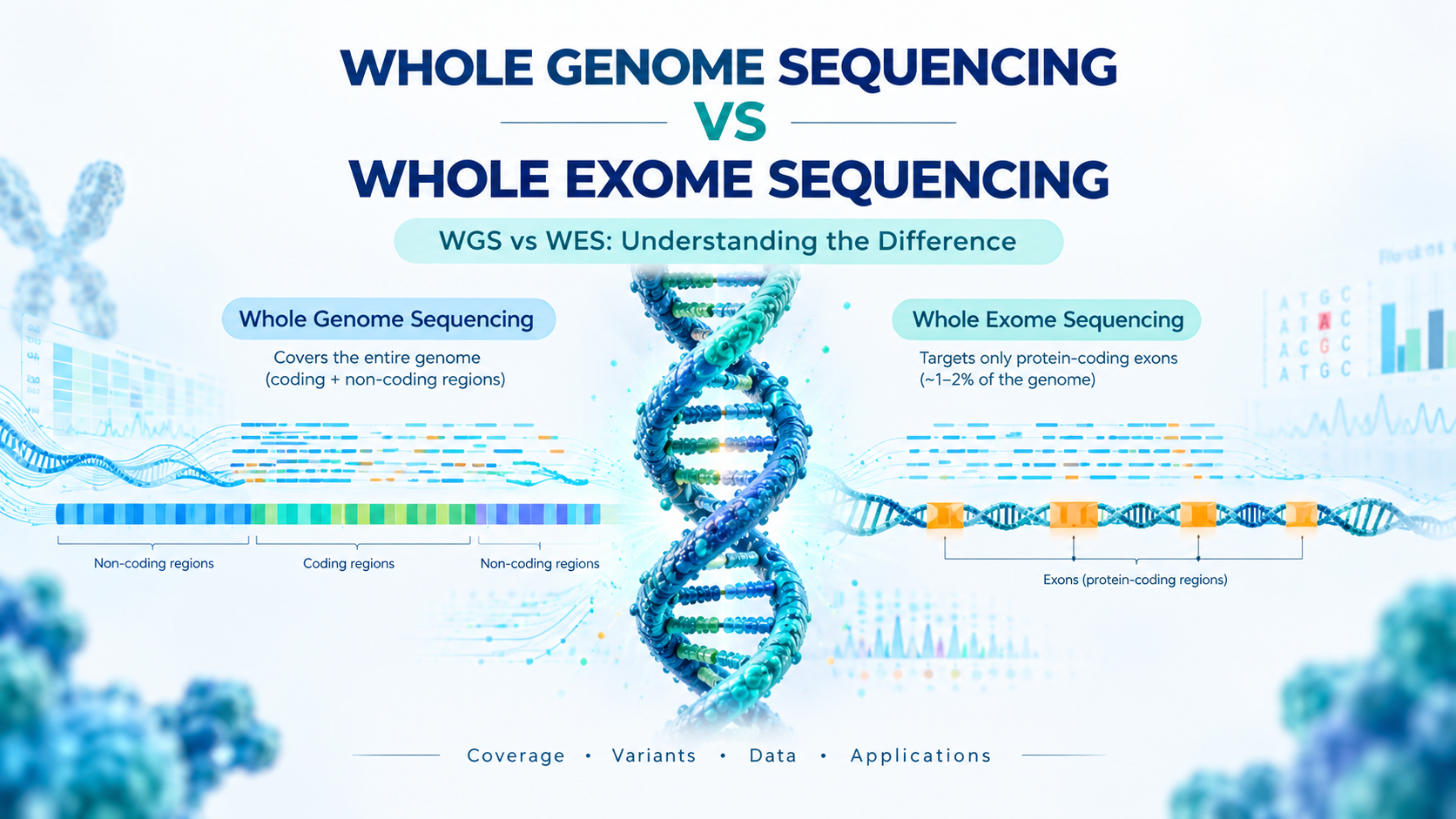
Whole Genome Sequencing (WGS) and Whole Exome Sequencing (WES) are both sequencing technologies, but they do not examine exactly the same part of your DNA.
WGS looks across essentially the entire genome, including coding and non-coding regions. WES focuses mainly on the exome—the protein-coding portions of genes.
That difference affects what variants can potentially be detected, how much data is generated, and what the results can be used for.
Let's break it down in simple terms.
What Is Whole Genome Sequencing?
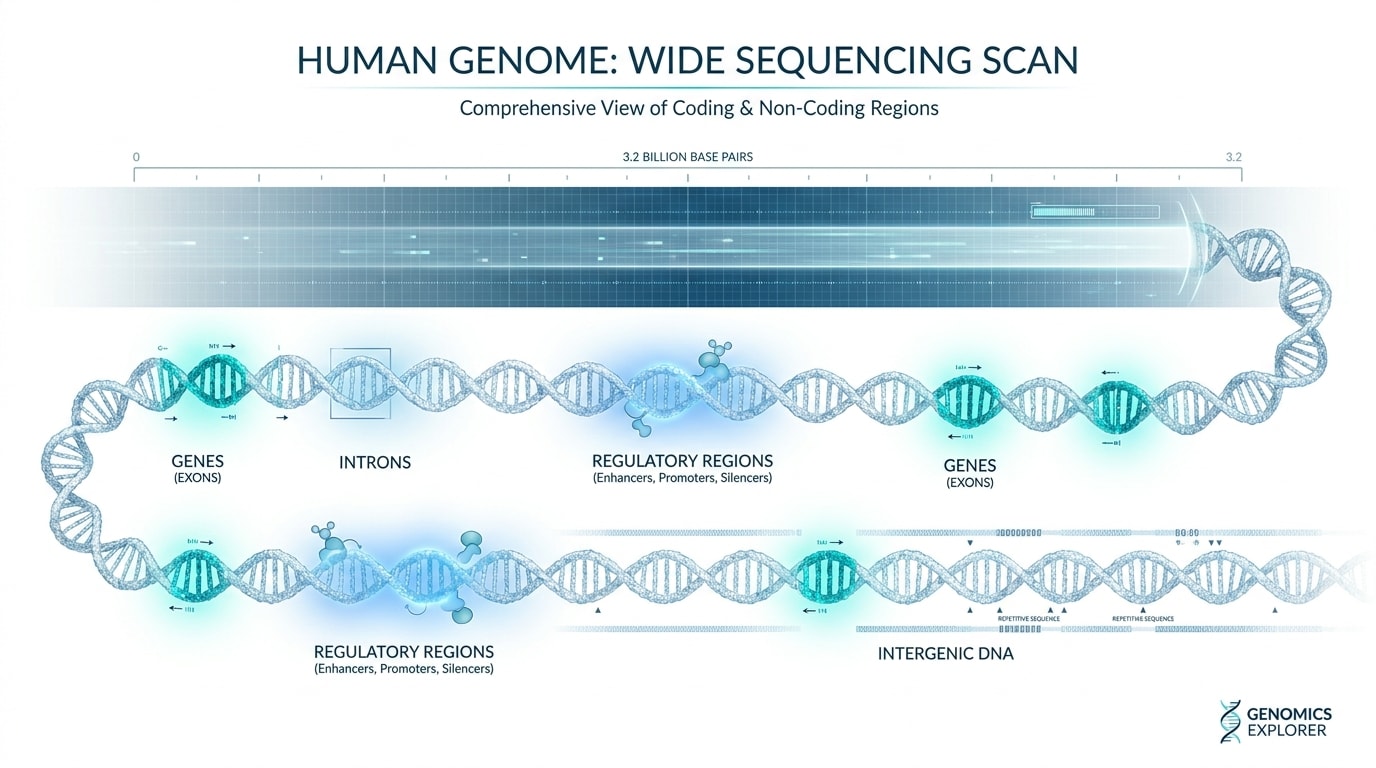
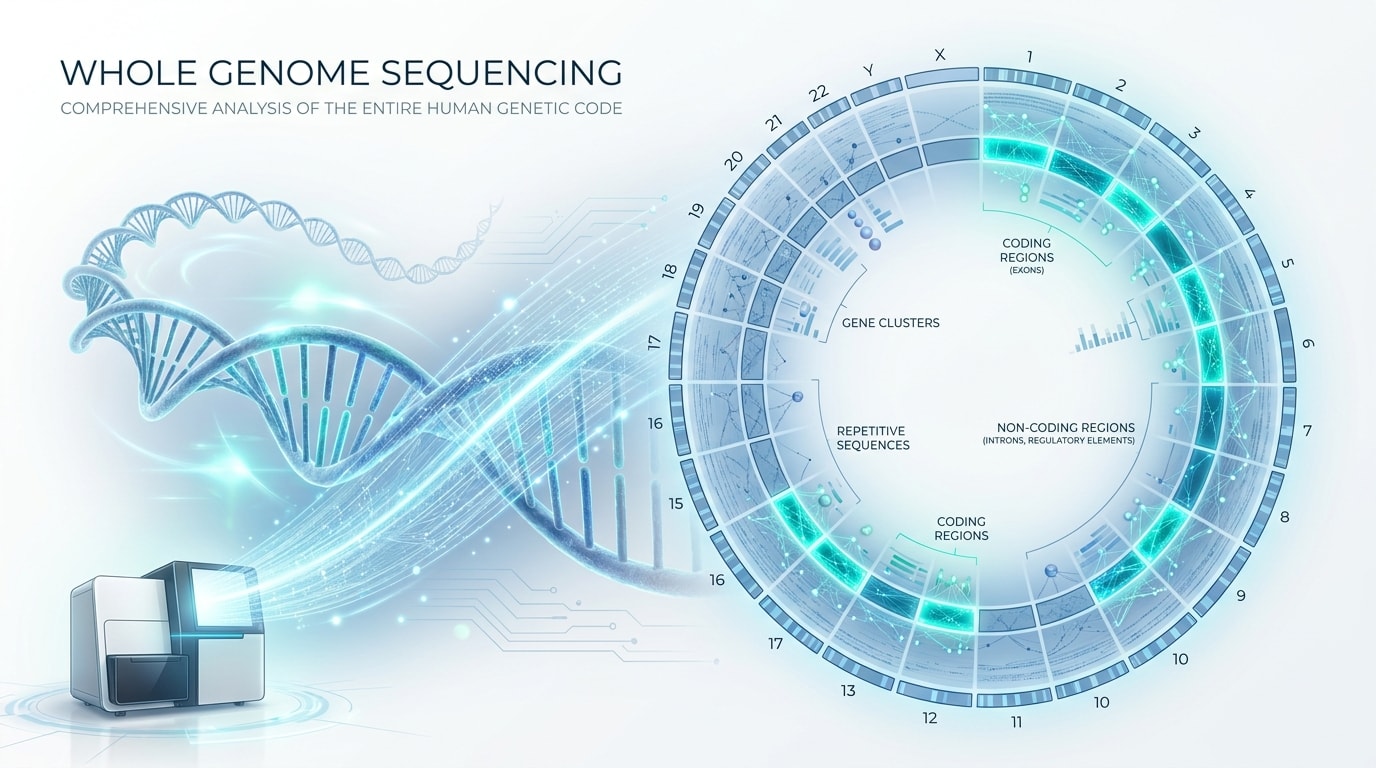
Whole Genome Sequencing (WGS) is a sequencing approach that examines DNA across the genome rather than focusing only on the parts of genes that contain instructions for making proteins.
The human genome contains roughly 3 billion DNA base pairs. WGS aims to read DNA across many different regions of the genome, including:
Protein-coding regions — Parts of genes that contain instructions for making proteins.
Regulatory regions — DNA regions that help control when and how genes are switched on or off.
Introns — Sections found within genes that are usually removed when the final RNA message is processed. Although they do not usually code for proteins, some introns can contain important regulatory information.
Intergenic regions — DNA found between genes. Some of these regions can have important biological or regulatory functions.
Mitochondrial DNA — DNA found inside mitochondria, the structures that help cells produce energy. Mitochondrial DNA is separate from the DNA in the cell nucleus and can provide information about mitochondrial genetic variation and maternal ancestry. The amount of mitochondrial DNA information available depends on the sequencing test and analysis.
Other non-coding regions — DNA that does not directly contain instructions for making proteins. Some of these regions can still have important roles in how the genome works.
This broad approach can provide information about a wider range of genetic variation.
Why Does That Matter?
Not every biologically important genetic variant occurs inside a protein-coding region.
Some variants can occur outside protein-coding regions and may influence:
Gene regulation — how genes are switched on or off.
RNA processing — how the initial RNA copy of a gene is modified before it is used by the cell.
Splicing — how sections of RNA are joined together to create the final RNA message.
Gene expression — how much RNA or protein a gene produces.
Other genomic functions — how different parts of DNA contribute to the structure and activity of the genome.
Because WGS examines the genome more broadly than Whole Exome Sequencing (WES), it can provide information about genetic variation outside the protein-coding regions of genes.
In Simple Terms
Think of the genome as a huge instruction book.
WES mainly focuses on the pages containing protein-making instructions, while WGS aims to read across the entire book, including the instructions, control sections, spaces between genes, and other regions.
This is why WGS can provide a broader view of your genetic information.
What Is Whole Exome Sequencing?
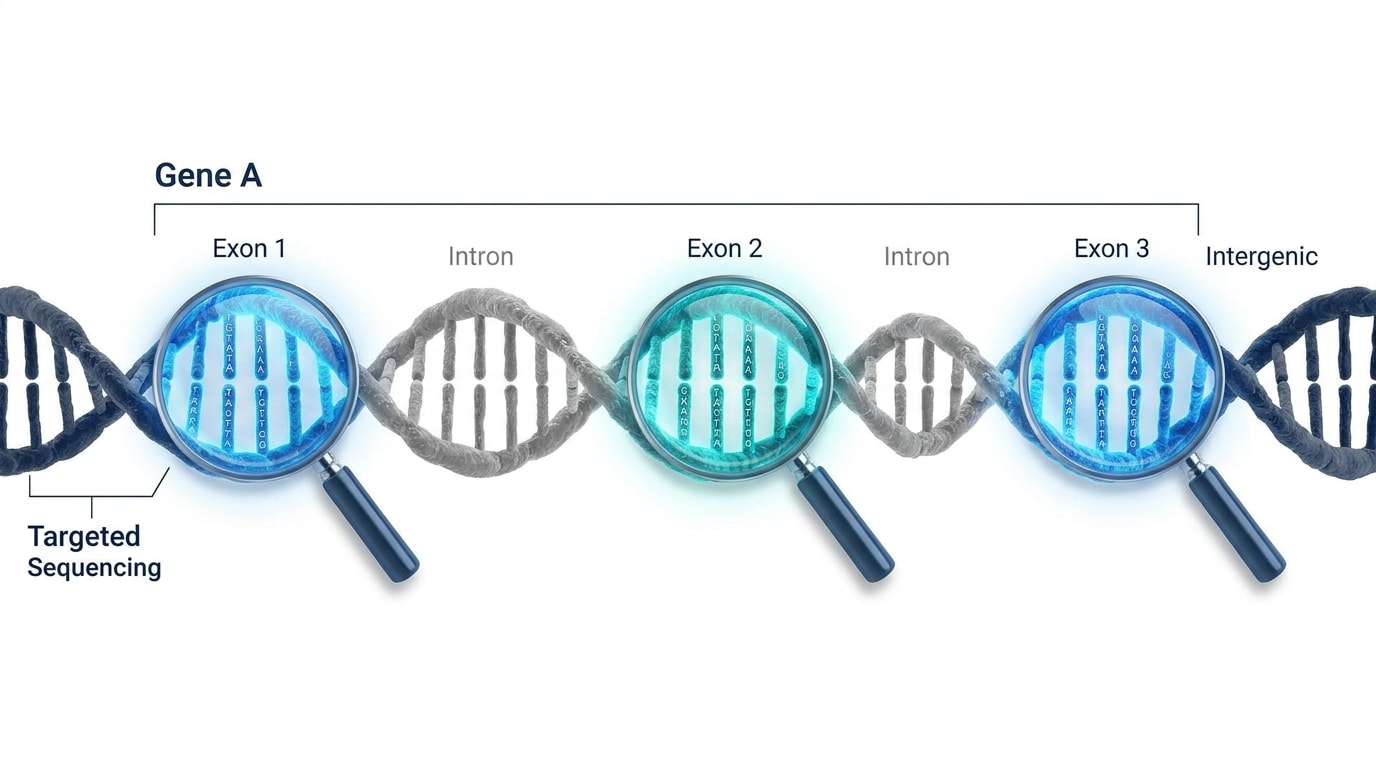
Whole Exome Sequencing (WES) takes a more targeted approach.
Instead of sequencing most of the genome, WES focuses primarily on the exome, which consists of the protein-coding portions of genes known as exons.
Although the exome represents only a small fraction of the genome, it contains a large proportion of known disease-associated variants.
This is one reason WES has become an important tool in:
Rare disease research
Clinical genetics
Mendelian disease studies
Variant discovery
Family-based genetic analysis
Research into inherited disorders
WES can therefore provide substantial genetic information without generating the same breadth of sequence data as WGS.
WGS vs WES: The Key Difference
The simplest way to remember the difference is: WGS looks broadly across the genome, while WES focuses mainly on protein-coding regions. The table below highlights the main differences between the two approaches.
| Feature | Whole Genome Sequencing (WGS) | Whole Exome Sequencing (WES) |
|---|---|---|
| Main target | Broad genome-wide sequence | Protein-coding regions |
| Coding regions | Included | Included |
| Non-coding regions | Included to a much greater extent | Generally not targeted |
| Genome coverage | Broad | Targeted |
| Data generated | More | Less |
| Variant types | Broad range, depending on platform and analysis | Strong focus on coding variants |
| Data interpretation | Can be more extensive | More focused |
| Typical use | Broad genomic analysis | Coding-variant and exome-focused studies |
The key distinction is how much of the genome is examined. WGS provides a broader view of genomic variation, while WES concentrates on protein-coding regions. This difference can influence the types of variants that can be investigated, the amount of sequencing data generated, and the downstream analysis required.
Why Choose Whole Genome Sequencing?
Why Choose Whole Exome Sequencing?
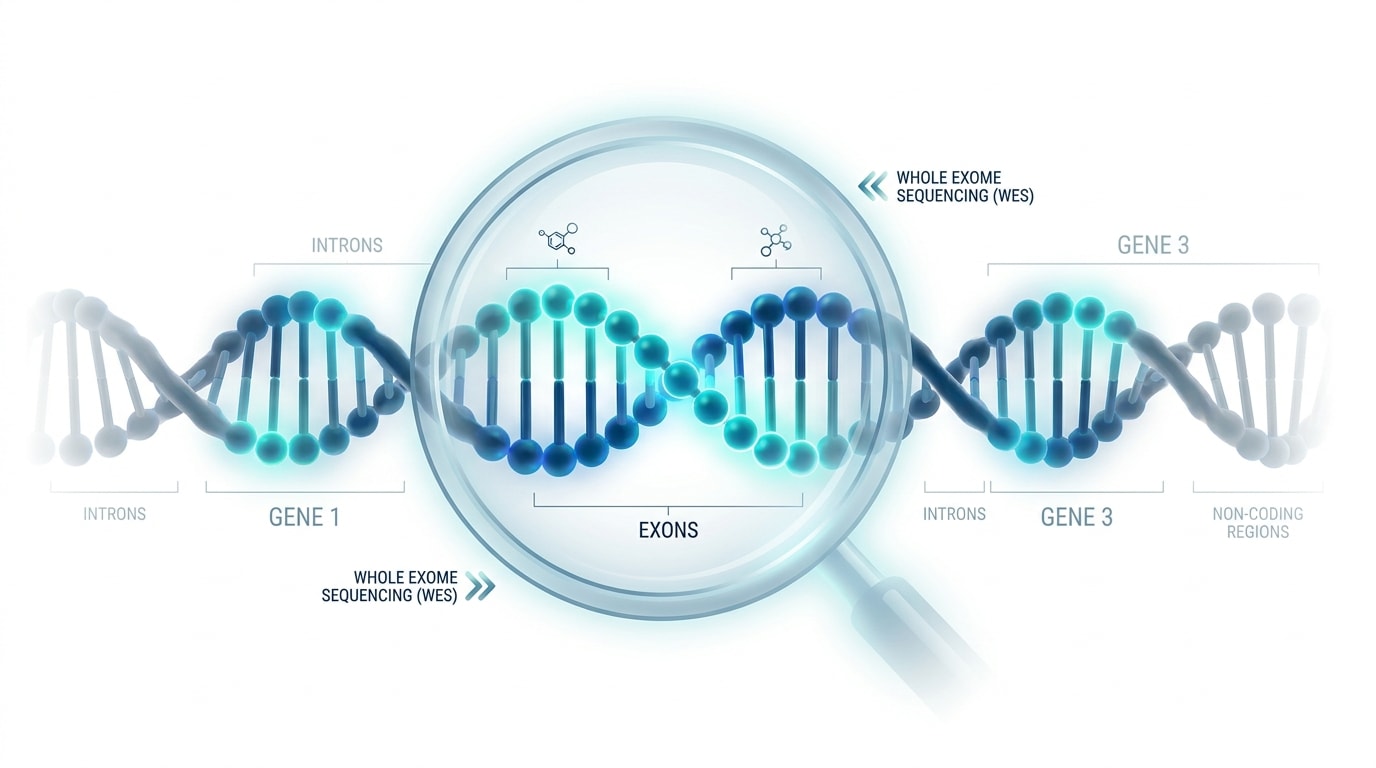
Whole Exome Sequencing (WES) takes a more focused approach to genetic analysis. Instead of examining the genome broadly, it concentrates on the exons—the protein-coding regions of genes.
This targeted approach can be useful when the main goal is to investigate genetic changes that may affect protein function.
WES is commonly used in areas such as:
Rare disease research
Inherited disorder studies
Mendelian disease analysis
Family-based genetic studies
Coding variant discovery
Clinical and translational genomics research
Because WES focuses on a smaller portion of the genome, it generally generates less data than WGS. This can make the downstream analysis more focused when the research question is primarily concerned with protein-coding variants.
However, WES does not provide the same broad view of non-coding regions as WGS. Variants outside the targeted exons may therefore not be captured comprehensively.
When can WES be useful?
WES may be appropriate when:
The focus is on protein-coding genes
Researchers can concentrate on variants located within exons.The study involves rare or inherited disorders
WES can help investigate coding variants that may contribute to genetic conditions.A targeted sequencing strategy is preferred
Focusing on the exome can reduce the amount of genomic data that needs to be processed and interpreted.Family-based analysis is being performed
WES can be used to compare coding variants among affected and unaffected family members.
The choice between WES and WGS ultimately depends on the research question, the genomic regions of interest, the required coverage, and the type of variants being investigated.
WGS vs WES: What About Variant Detection?
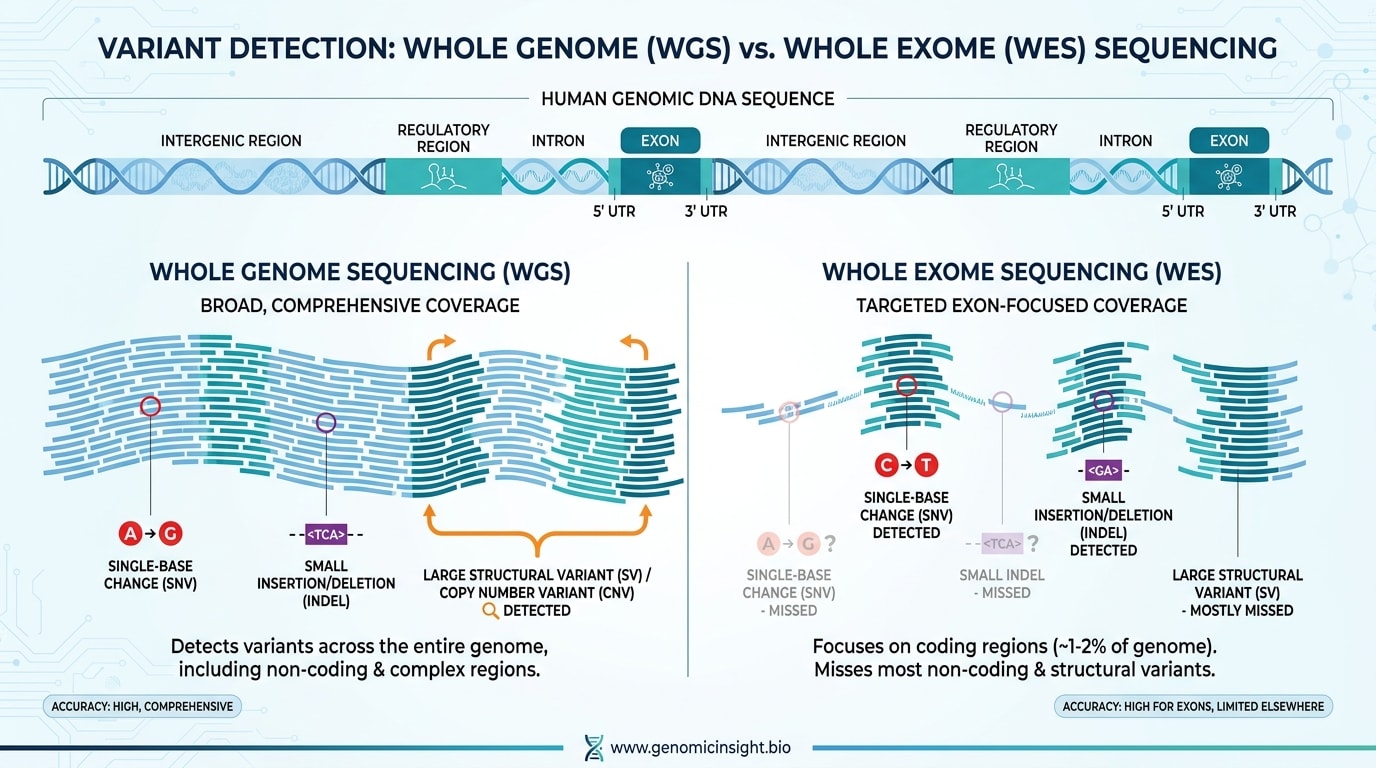
One of the most important differences between WGS and WES is the range of genomic regions available for variant analysis.
WES primarily targets protein-coding exons, so it is particularly useful for studying variants that occur within these regions. WGS examines a much broader portion of the genome, which means it can provide information about variants located both inside and outside protein-coding regions.
WES can be useful for identifying coding variants such as:
Missense variants
Nonsense variants
Small insertions and deletions
Other sequence changes within targeted coding regions
WGS can provide a broader view of:
Coding variants
Intronic variants
Intergenic variants
Regulatory-region variants
Some structural variants, depending on the sequencing technology and analysis pipeline
However, neither WGS nor WES detects every type of genetic variant equally well.
The ability to identify a particular variant depends on several factors, including sequencing technology, read length, coverage, DNA quality, library preparation, alignment methods, and variant-calling software.
For this reason, simply choosing WGS over WES does not guarantee that every possible genetic change will be detected.
Why does this difference matter?
Suppose a genetic variant occurs inside a protein-coding exon. Both WGS and WES may be able to investigate it, depending on the quality and coverage of the data.
But if the variant occurs in a non-coding region outside the exome, standard WES is generally not designed to capture that region comprehensively, while WGS may provide relevant sequence data.
This is why the biological question should come first when choosing a sequencing strategy.
Coverage: Why Does It Matter?
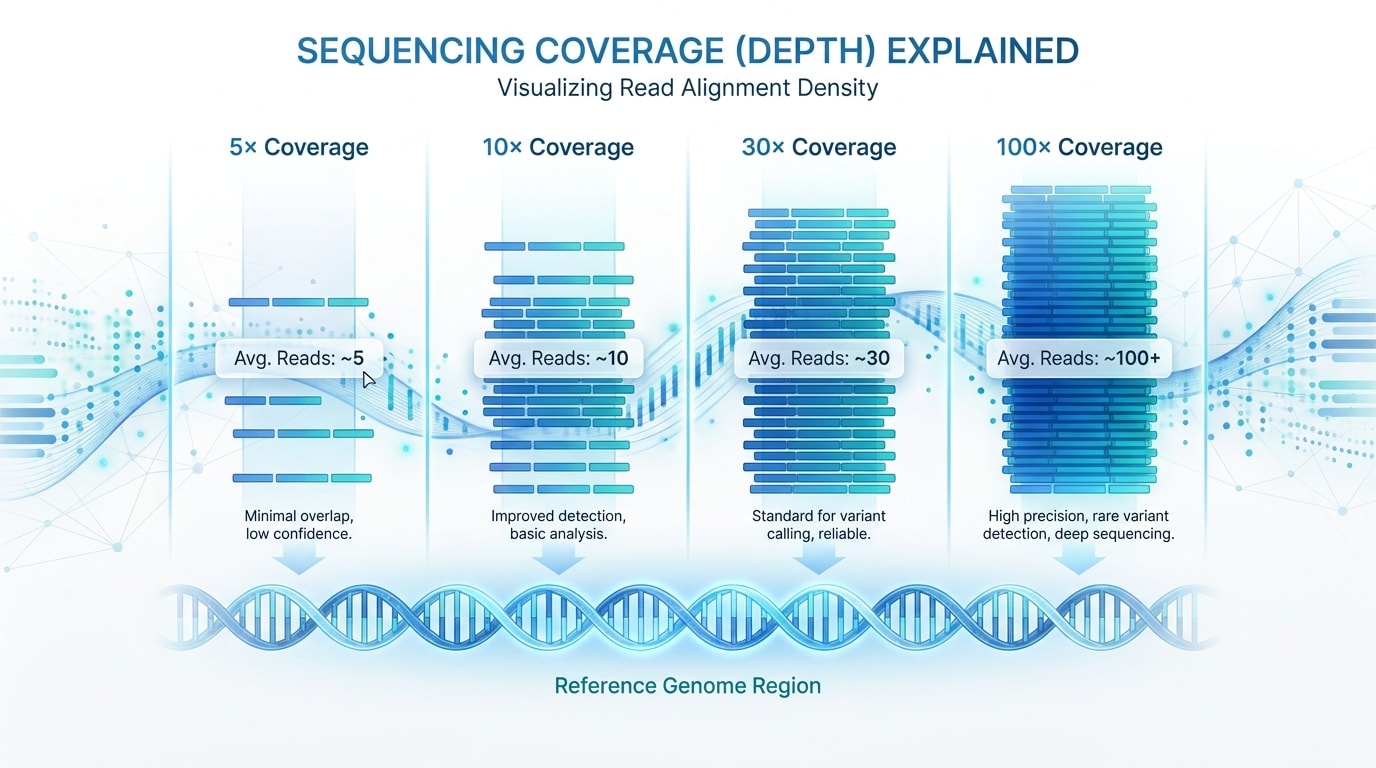
When comparing WGS and WES, you may come across terms such as 5×, 10×, 30×, or 100× coverage.
Coverage, also called sequencing depth, describes how many sequencing reads represent a particular region of DNA on average.
For example, 30× coverage means that a genomic position is represented by approximately 30 sequencing reads on average. Higher coverage can increase confidence in detecting certain variants, although the actual performance depends on the sequencing method, genomic region, read quality, and analysis pipeline.
WGS and WES use coverage differently
WGS distributes sequencing across a much larger portion of the genome. WES, on the other hand, targets a smaller set of regions, allowing sequencing resources to be concentrated on the exome.
This means that a higher coverage number does not automatically make one sequencing approach better than another.
For example, a 30× WGS dataset and a 100× WES dataset are not directly equivalent because they examine different genomic regions.
What can affect sequencing coverage?
Coverage can vary because of factors such as:
DNA sample quality
Library preparation
Sequencing technology
Target enrichment in WES
Genome region
GC content
Read quality
Bioinformatics processing
Coverage can also vary from one genomic region to another within the same dataset. Therefore, looking only at the average coverage may not tell the whole story.
When evaluating a sequencing test, it can be useful to ask not only “What is the average coverage?” but also “How much of the target region reaches the required coverage?”
Understanding both coverage and genomic scope gives a clearer picture of what a sequencing dataset can potentially reveal.
Which Is Better: WGS or WES?
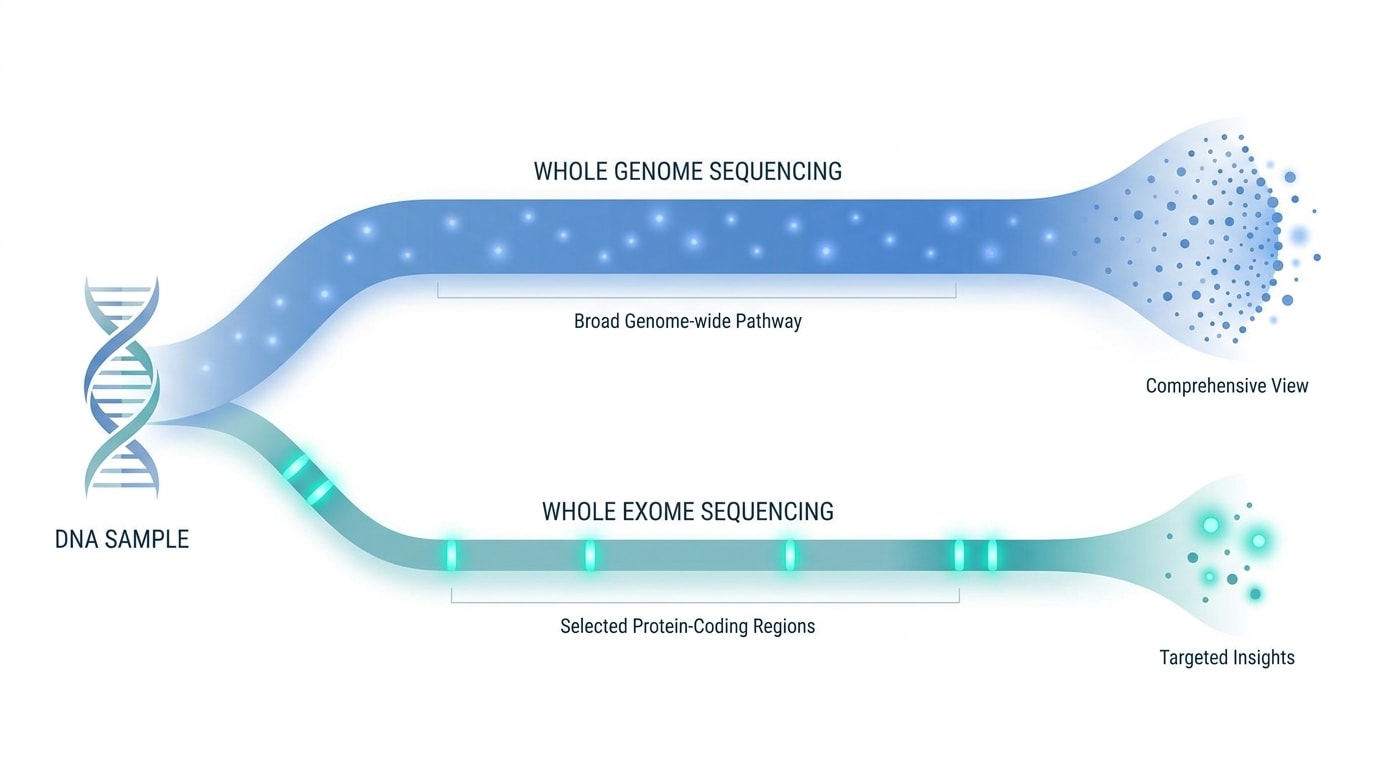
There is no single sequencing approach that is right for every situation. WGS and WES are designed for different levels of genomic coverage, so the better choice depends on what you want to investigate.
If your goal is to examine genetic variation across a broad range of genomic regions, WGS provides a more comprehensive dataset. It can include information from coding as well as many non-coding regions.
If your primary interest is in protein-coding variants, WES provides a more targeted approach by focusing on exons.
WGS may be worth considering when:
You want broader genomic coverage.
Non-coding variants are relevant to your research question.
You are investigating a genetic condition with an unknown molecular cause.
Structural or other genomic variation is part of the study.
You want a dataset that may support broader future reanalysis.
WES may be worth considering when:
Your main focus is protein-coding genes.
You are investigating coding variants associated with rare or inherited disorders.
A more targeted sequencing strategy fits your research question.
You want to focus analysis primarily on the exome.
The decision should therefore be based on the purpose of the test, genomic regions of interest, sequencing coverage, data requirements, and analysis options rather than choosing one technology simply because it produces more data.
In simple terms:
WGS = broader genomic view
WES = focused view of protein-coding regions
WGS vs WES for Research
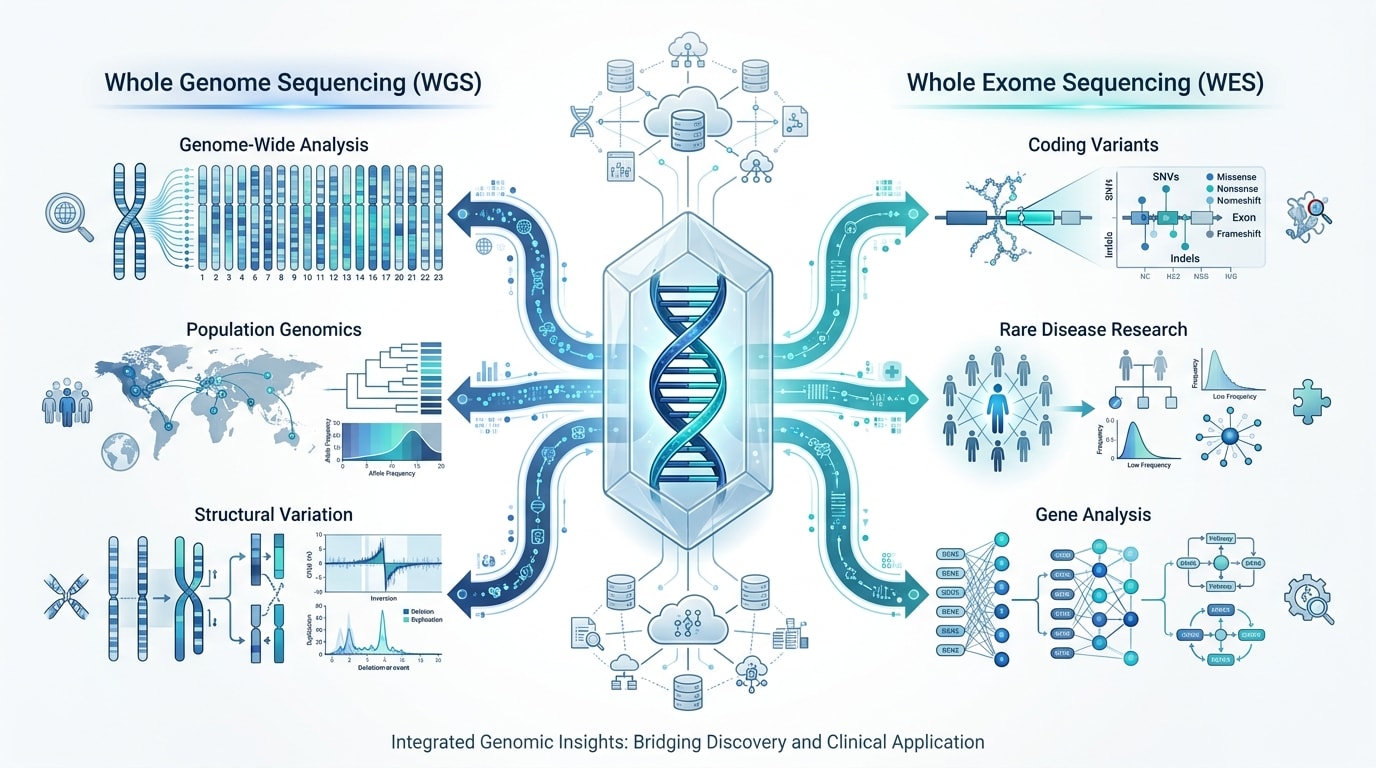
Both WGS and WES are widely used in genomic research, but the choice depends on the scientific question and the type of genetic information researchers need to investigate.
WGS in research
WGS can be useful when researchers want a broad view of genetic variation. Because it examines a much larger portion of the genome, it can support studies involving coding and non-coding regions.
Researchers may use WGS for:
Rare disease and undiagnosed disease research
Population genomics
Genome-wide variant discovery
Structural variation studies
Comparative genomic studies
Investigations where non-coding regions may be relevant
Another potential advantage is that a broad sequencing dataset can be revisited as genomic databases, annotation resources, and scientific knowledge develop.
WES in research
WES is particularly useful when the research question centers on protein-coding regions.
Researchers may use WES for:
Rare inherited disease studies
Mendelian disorder research
Family-based genetic analysis
Coding variant discovery
Gene-disease association studies
Functional studies focused on protein-altering variants
Because WES focuses on a smaller genomic target, researchers can concentrate their analysis on coding regions rather than processing the entire genome.
Choosing the right approach
The decision between WGS and WES should begin with the research question.
If the study requires a broad assessment of genomic variation, WGS may provide the wider dataset. If the primary objective is to investigate protein-coding variants, WES can provide a more focused approach.
The sequencing technology is only one part of the research workflow. Sample quality, sequencing depth, bioinformatics pipelines, reference databases, variant annotation, and interpretation all influence the final results.
What About South Asian Ancestry?
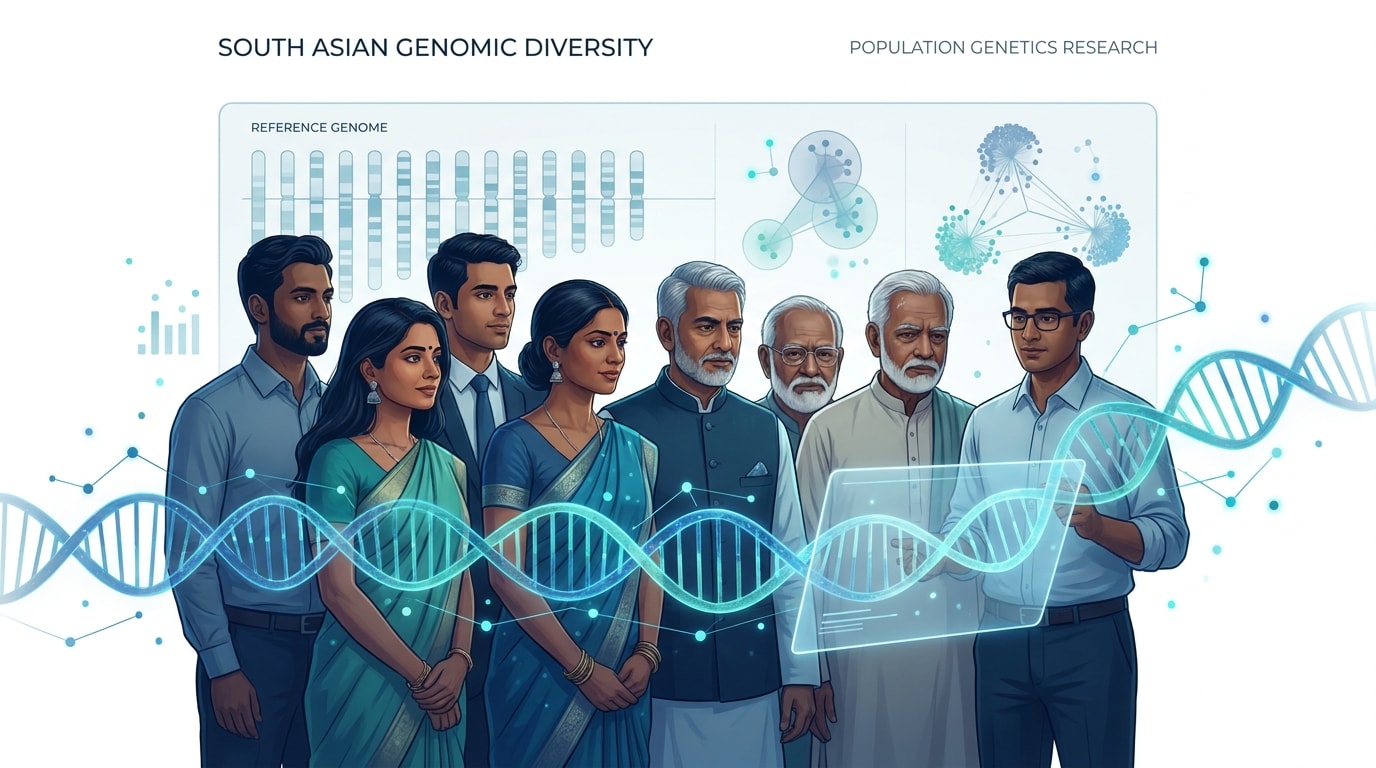
Genetic variation differs across populations, so the reference data used to interpret sequencing results can matter.
This is particularly relevant for people with South Asian ancestry, where genetic variation may not always be equally represented in every reference dataset or population database.
When a variant is compared with population reference data, researchers may consider factors such as:
How frequently the variant occurs in a particular population
Whether the variant has been previously reported
How well the reference dataset represents the person's ancestry
Whether population-specific allele-frequency data are available
What evidence exists about the biological effect of the variant
This does not mean that WGS is automatically more accurate than WES—or vice versa—for South Asian individuals. Both technologies can generate useful genetic data, while the quality of interpretation also depends on the reference populations, databases, sequencing quality, and analytical methods used.
Why population representation matters
Imagine finding a genetic variant that appears to be rare when compared with one reference population. If that same variant is more common in another population, its interpretation may be different.
This is why population-aware genomic analysis can provide important context when studying genetic variation.
For people interested in ancestry, health-related genetics, or raw sequencing data, it can therefore be useful to understand which reference populations and databases are used during analysis, rather than looking only at the sequencing technology itself.
As genomic research expands, improving representation of diverse populations—including South Asian populations—can help researchers better understand genetic variation across different communities.
WGS and WES Are Not the Same as Genetic Interpretation
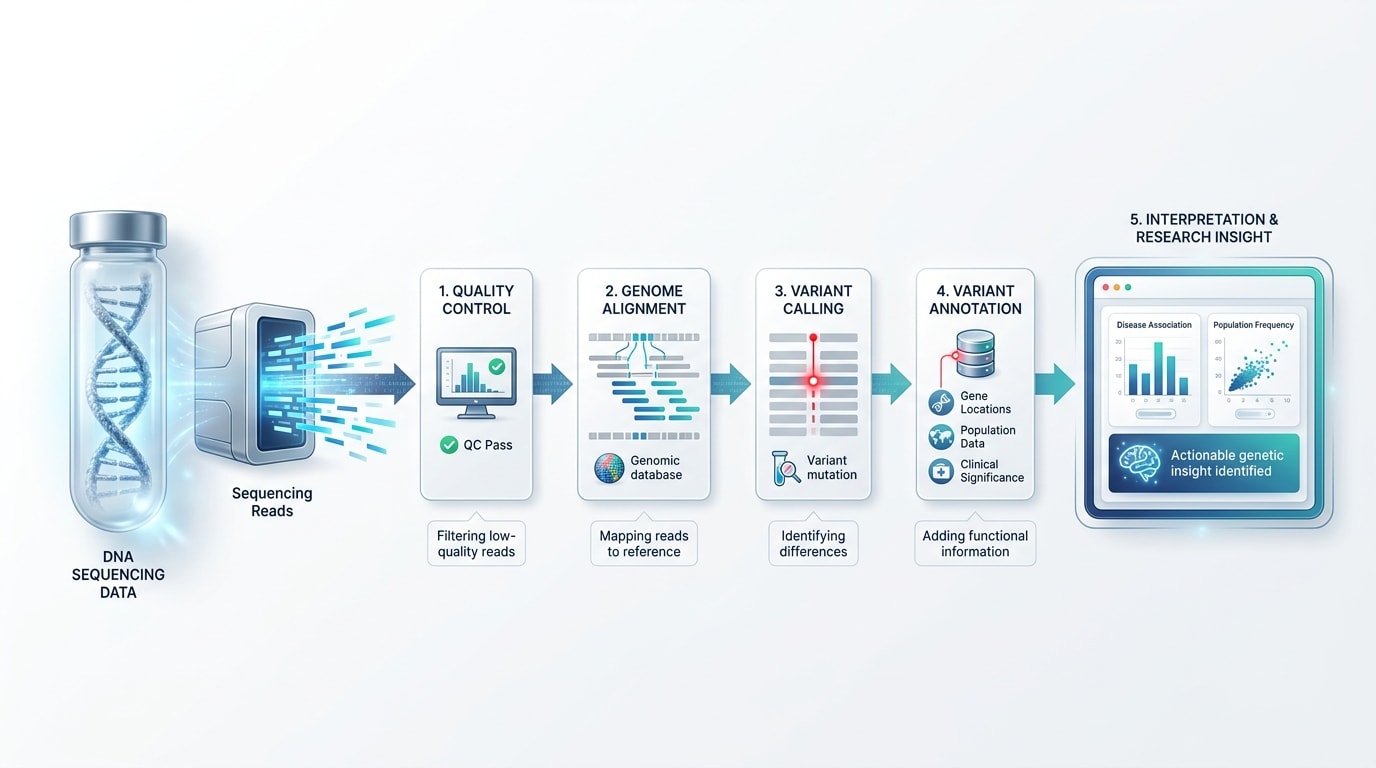
Sequencing is only one part of the genetic testing process.
Whether a test uses Whole Genome Sequencing (WGS) or Whole Exome Sequencing (WES), the sequencing data still needs to be processed, analyzed, annotated, and interpreted before researchers or users can understand what the identified variants may mean.
A typical analysis workflow may include:
DNA sequencing → Quality control → Alignment → Variant calling → Variant annotation → Interpretation
Each step can influence the final results.
From Sequencing Data to Genetic Insights
After sequencing, millions of DNA reads are processed using bioinformatics pipelines. These reads are aligned to a reference genome, and differences between the sample and reference sequence can be identified as potential genetic variants.
The variants may then be annotated using genomic databases and other resources to provide additional information, such as:
Gene and genomic location
Variant type
Population frequency
Previous reports in scientific databases
Predicted functional effects
Known gene–disease associations
The amount of information available for interpretation can differ between WGS and WES because the two approaches examine different portions of the genome.
Why the Same Variant Can Have Different Context
Finding a variant does not automatically mean that it causes a disease or has a specific biological effect.
Its interpretation may depend on several factors, including:
The genomic location of the variant
Population frequency
Previous scientific evidence
Functional evidence
The gene involved
The type of variant
The quality and depth of sequencing data
The reference databases and analytical methods used
This is especially important when interpreting variants in populations that may be underrepresented in commonly used reference datasets.
WGS Provides More Data, Not Automatically More Answers
Because WGS examines a much broader portion of the genome, it can generate substantially more information than WES.
However, more genomic data also means more variants to process and interpret.
WES provides a more focused dataset centered on protein-coding regions, which can make analysis more targeted when the research question primarily concerns coding variants.
Therefore, the value of a sequencing dataset depends not only on how much DNA was sequenced, but also on the quality of the data, the analytical pipeline, available reference resources, and the biological question being investigated.
In simple terms:
Sequencing tells you what genetic data were observed.
Bioinformatics helps identify and annotate the variants.
Interpretation provides context for understanding those variants.
What Happens to the Data?

Whole Genome Sequencing and Whole Exome Sequencing can generate large amounts of genomic data. But sequencing is only the beginning—the data must also be stored, processed, analyzed, and protected.
Depending on the sequencing service and analysis workflow, users may encounter different types of genomic files.
What Types of Data Can Be Generated?
A sequencing workflow can produce several types of files, including:
FASTQ files — contain the raw sequencing reads generated by the sequencing instrument.
BAM or CRAM files — contain sequencing reads aligned to a reference genome.
VCF files — contain identified genetic variants and related information.
Annotation files or reports — provide additional information about genes, variants, population frequencies, or predicted effects.
The exact files provided can vary depending on the sequencing provider, test, analysis pipeline, and service package.
Why Raw Data Can Matter
One important advantage of having access to sequencing data is the possibility of performing additional analysis later.
For example, as new scientific databases, reference populations, variant annotations, and analytical methods become available, previously generated sequencing data may be analyzed again.
This can be particularly relevant for WGS because it covers a broader portion of the genome. WES datasets can also be reanalyzed, although the analysis remains primarily limited to the regions that were originally sequenced.
How Is Genomic Data Stored?
Genomic data can require substantial storage space, particularly for WGS datasets.
Data may be stored locally, on institutional servers, or through cloud-based infrastructure, depending on the organization and workflow. Secure storage, controlled access, backup procedures, and appropriate data-management practices are important because genomic information is highly personal and can potentially remain relevant for an individual's lifetime.
Before choosing a sequencing service, it can therefore be useful to understand:
What genomic files are provided
Whether raw sequencing data are available
How long the data are retained
How the data are stored and protected
Who can access the data
Whether the data can be downloaded
Whether the data can be used for future analysis
Data Ownership and Privacy
Genomic data should be handled with appropriate privacy and security safeguards. Different sequencing providers may have different policies regarding data storage, analysis, sharing, and deletion.
Before purchasing a sequencing service, read the provider's privacy policy, terms of service, and data-use policies carefully. Understanding how your genomic data are handled is just as important as understanding the sequencing technology itself.
In short, a sequencing test does not end when the DNA is sequenced. The resulting data can become a long-term resource for analysis, research, and future interpretation—provided it is stored securely and managed responsibly.
Can WGS and WES Data Be Reanalysed?
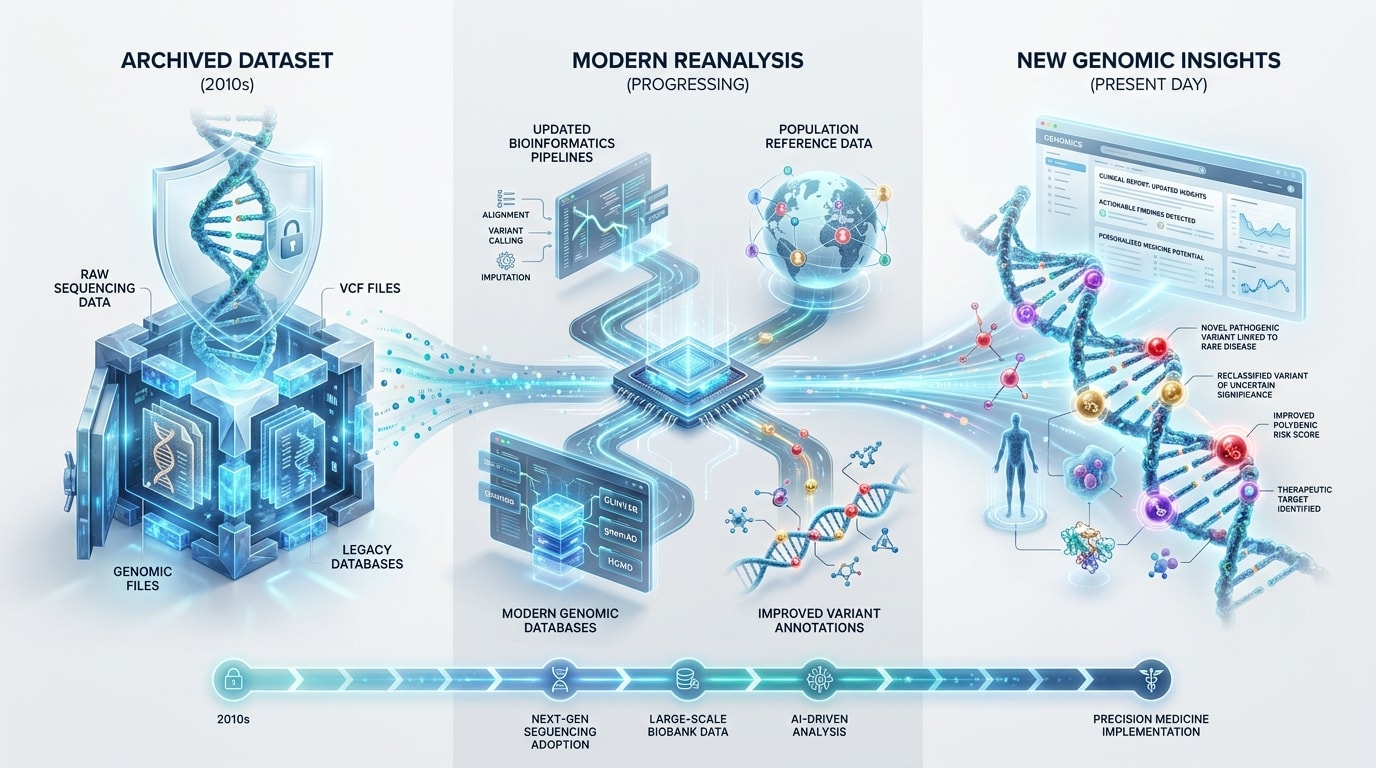
One of the useful aspects of sequencing data is that it does not necessarily become outdated when a new scientific discovery is made.
As genomic databases, reference populations, variant annotations, and bioinformatics methods continue to improve, previously generated sequencing data may sometimes be analyzed again.
This process is known as reanalysis.
Why Reanalysis Can Be Useful
Suppose a sequencing dataset was generated several years ago. At that time, a particular genetic variant may have had limited information available.
Later, researchers may discover:
New gene–disease associations
Additional population frequency data
New evidence about a genetic variant
Improved variant annotation
Better reference genomes or databases
More advanced bioinformatics tools
The original sequencing data can potentially be processed again using updated resources.
WGS and Reanalysis
WGS provides sequence information across a much broader portion of the genome. This can give researchers more flexibility when revisiting the dataset for questions that were not part of the original analysis.
For example, a researcher may initially investigate coding variants and later examine additional genomic regions available in the WGS dataset.
However, reanalysis cannot recover information that was never captured adequately in the original sequencing data. Data quality, sequencing depth, genome regions covered, and the original experimental design still matter.
WES and Reanalysis
WES data can also be reanalysed.
For example, an existing WES dataset could be reviewed using updated gene–disease databases or improved variant-interpretation methods. This may be useful when new information becomes available about genes or coding variants.
However, WES remains focused primarily on the exome. If a future research question concerns a genomic region that was not targeted or adequately captured, the existing WES dataset may not contain the required information.
Why Keeping the Original Data Matters
Reanalysis is one reason why access to original sequencing data can be valuable.
Instead of relying only on a report generated at one point in time, researchers or users may be able to revisit the underlying data when appropriate resources and analytical methods change.
The potential for reanalysis therefore depends on several factors:
The type of sequencing performed
The genomic regions covered
Sequencing quality and depth
Availability of the original data
File format and data integrity
Updated reference databases
Bioinformatics tools and analysis methods
In simple terms:
WGS offers a broader dataset that may support a wider range of future analyses, while WES can be reanalysed mainly within the regions it originally captured.
This makes it useful to think beyond the initial report and consider how genomic data may be used in the future.
WGS vs WES: A Quick Summary
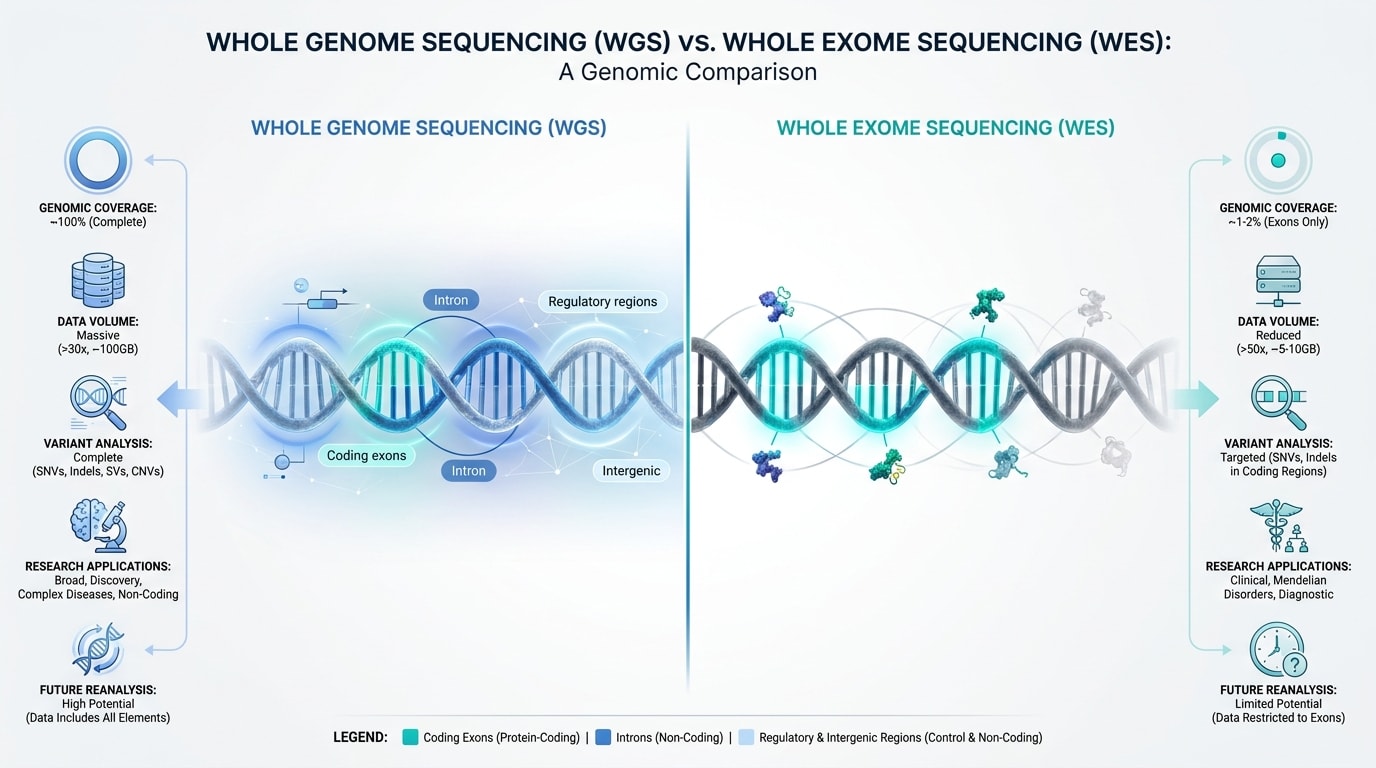
Whole Genome Sequencing and Whole Exome Sequencing both provide detailed information about DNA, but they examine different portions of the genome.
WGS provides a broad view of genomic sequence, covering coding and many non-coding regions. WES focuses primarily on protein-coding regions, making it a more targeted approach.
The Key Takeaway
The main difference is genomic scope.
WGS = broader view of the genome
WES = focused view of protein-coding regions
Neither approach provides every possible type of genetic information. The usefulness of a sequencing dataset depends on the research question, genomic regions of interest, sequencing quality, coverage, bioinformatics workflow, and interpretation resources.
For anyone comparing WGS and WES, it is therefore helpful to look beyond the sequencing method itself and consider what regions are covered, what data are provided, how the data can be analyzed, and whether they can support future research or reanalysis.
Frequently Asked Questions About WGS and WES
1. What is the main difference between WGS and WES?
Whole Genome Sequencing (WGS) examines a much broader portion of the genome, including coding and many non-coding regions. Whole Exome Sequencing (WES) focuses primarily on the protein-coding regions of genes, known as exons.
2. Is WGS better than WES?
There is no single option that is better for every purpose. WGS provides broader genomic coverage, while WES provides a more focused view of protein-coding regions. The appropriate approach depends on the research question, genomic regions of interest, sequencing requirements, and analysis goals.
3. Does WGS detect more variants than WES?
WGS can provide information about variants across a broader range of genomic regions. WES mainly targets coding regions. However, the ability to detect a particular variant depends on factors such as sequencing technology, coverage, DNA quality, and the bioinformatics pipeline.
4. Why does WGS generate more data than WES?
WGS examines a much larger portion of the genome, whereas WES concentrates sequencing resources on targeted protein-coding regions. As a result, WGS generally produces a larger and more comprehensive dataset.
5. What does 30× or 100× sequencing mean?
These numbers refer to average sequencing depth or coverage. For example, 30× means that a genomic position is represented by approximately 30 sequencing reads on average. A higher average coverage does not automatically mean that one sequencing method is better because WGS and WES examine different genomic regions.
6. Can WGS detect non-coding variants?
WGS can provide sequence information from many non-coding regions, including intronic, intergenic, and regulatory regions. Whether a particular variant can be detected and interpreted depends on the sequencing technology and analysis pipeline.
7. Can WES detect non-coding variants?
Standard WES is primarily designed to target protein-coding exons, so it does not comprehensively examine most non-coding regions. Some regions outside the intended targets may be captured incidentally, but this should not be assumed for every genomic position.
8. Can WGS and WES data be reanalysed?
Yes, sequencing data can potentially be reanalysed using updated databases, annotations, and bioinformatics methods. The scope of future analysis depends on which genomic regions were originally sequenced and the quality of the available data.
9. Does ancestry affect genetic interpretation?
Population reference data can influence how genetic variants are interpreted. This can be particularly relevant for populations that are underrepresented in some genomic databases. South Asian ancestry may therefore be an important consideration when evaluating population frequency and genetic variation.
10. Which is more useful for South Asian ancestry?
Both WGS and WES can provide valuable genetic data. For ancestry-related analysis, however, the sequencing method is only one factor. The reference populations, databases, markers analyzed, and interpretation methods also influence the results.
11. What genomic files can I receive from sequencing?
Depending on the provider and service, sequencing workflows may generate files such as FASTQ, BAM/CRAM, and VCF files. The exact files provided can vary between sequencing services and analysis pipelines.
12. Why should I care about raw sequencing data?
Raw or underlying sequencing data can provide greater flexibility for future analysis, depending on the data available and its quality. As databases and analytical methods improve, previously generated data may sometimes be reanalysed.
13. Does WGS include the exome?
Yes. Because the exome is part of the genome, WGS includes the protein-coding regions as part of its broader genomic coverage.
14. Is WES cheaper than WGS?
WES generally requires sequencing a smaller genomic target and can therefore involve less sequencing data. However, the actual cost depends on the provider, sequencing platform, coverage, analysis, data delivery, and other services included in the test.
15. What should I consider before choosing WGS or WES?
Consider the purpose of the test, genomic regions you want to investigate, required coverage, variant types of interest, data you will receive, future reanalysis options, and how your genomic data will be stored and handled.
In short: WGS offers broader genomic coverage, while WES provides a more focused view of protein-coding regions. Understanding these differences can help you choose a sequencing approach that matches your specific goals.
WGS or WES: Which One Fits Your Goals?
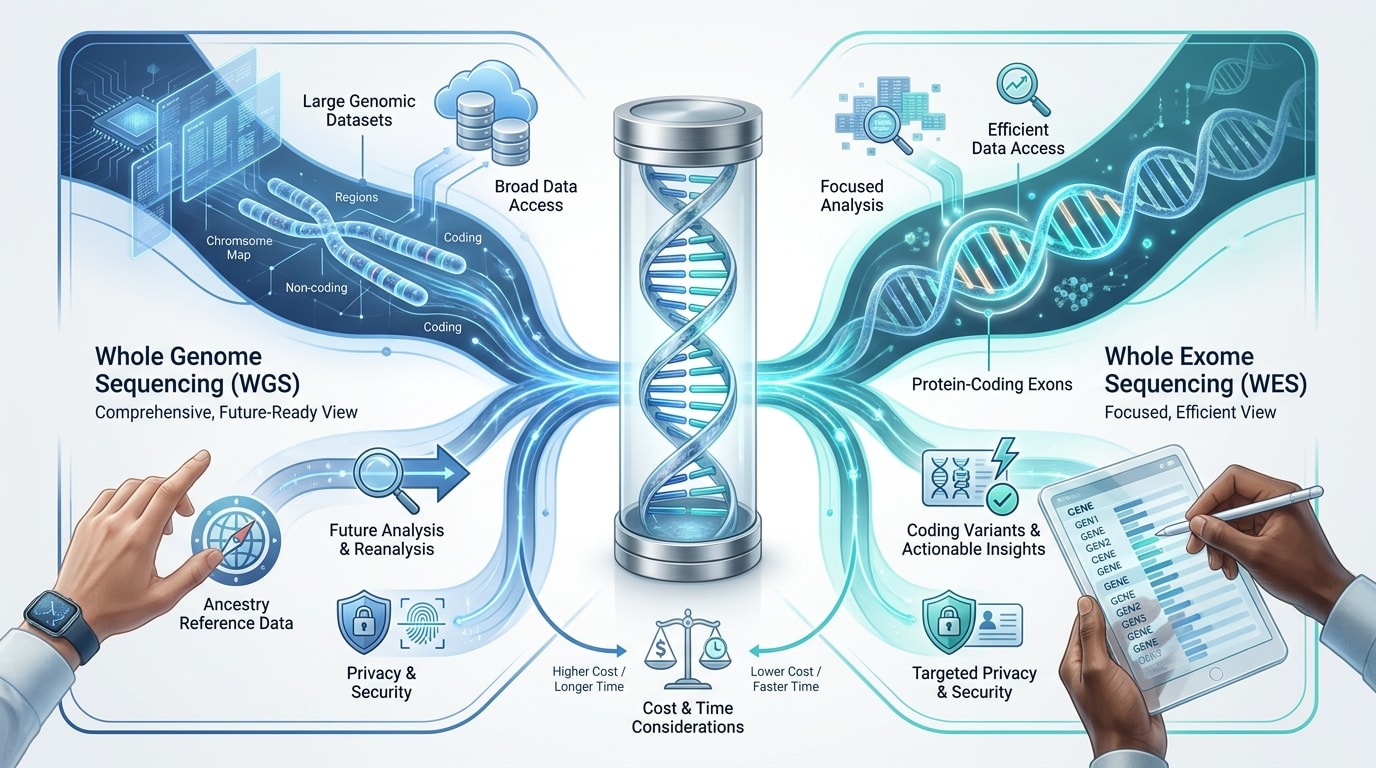
Choosing between Whole Genome Sequencing and Whole Exome Sequencing starts with a simple question:
What do you want to learn from your DNA?
If you want a broader view of genomic variation, including many coding and non-coding regions, WGS provides a wider sequencing scope.
If your primary interest is protein-coding regions and coding variants, WES provides a more focused approach.
Consider WGS if you want:
Broader genomic coverage
Information from coding and many non-coding regions
A dataset that may support a wider range of future analyses
Genomic data for population or research applications
The ability to investigate a broader range of variant types, depending on the sequencing and analysis methods
Consider WES if you want:
A focused analysis of protein-coding regions
Research centered on coding variants
A targeted approach to exome analysis
A smaller genomic dataset to process and interpret
A sequencing strategy focused primarily on genes and their coding regions
Look Beyond the Sequencing Method
The sequencing technology is only one part of the decision.
Before choosing a service, it can also be useful to check:
1. Coverage
Understand the stated sequencing depth and how consistently the target regions are covered.
2. Data access
Check which files and reports are provided and whether you can access your underlying sequencing data.
3. Analysis
Understand what bioinformatics analysis and variant annotation are included.
4. Reference populations
If ancestry analysis is important to you, check which population datasets and reference resources are used.
5. Future use
Consider whether your data may be available for future reanalysis as genomic databases and scientific knowledge evolve.
6. Privacy and data policies
Review how your genomic information is stored, protected, used, and shared.
The Bottom Line
WGS and WES answer somewhat different genomic questions.
WGS provides a broader genomic view.
WES provides a more focused view of protein-coding regions.
The right choice depends on your goals, the genomic regions you want to explore, the type of data you need, and how you plan to use that data.
Once you understand these differences, you can compare sequencing services more confidently—not just by looking at the coverage number or price, but by considering the genomic scope, data access, analysis, interpretation, and long-term value of the dataset.
Explore Genomic Testing with GenoConnect
Understanding the difference between WGS and WES is an important first step when exploring genomic testing.
At GenoConnect, you can explore sequencing options designed to provide access to detailed genetic data and reports. Depending on the option you choose, you can explore different levels of genomic coverage and analysis.
Whether your interest is ancestry, family history, genetic variation, or research, understanding what your sequencing data contains can help you make more informed choices about your genetic information.
Before choosing a sequencing option, consider:
The genomic regions covered
Sequencing depth and coverage
The type of data provided
Available reports and analysis
Ancestry and population reference resources
Raw data access
Data privacy and storage policies
Potential for future data analysis
Explore GenoConnect's sequencing options and learn more about what your DNA data can reveal.
[Explore GenoConnect → https://www.genoconnect.co ]