East Eurasian Ancestry: The Eastern Branch of the Human Family
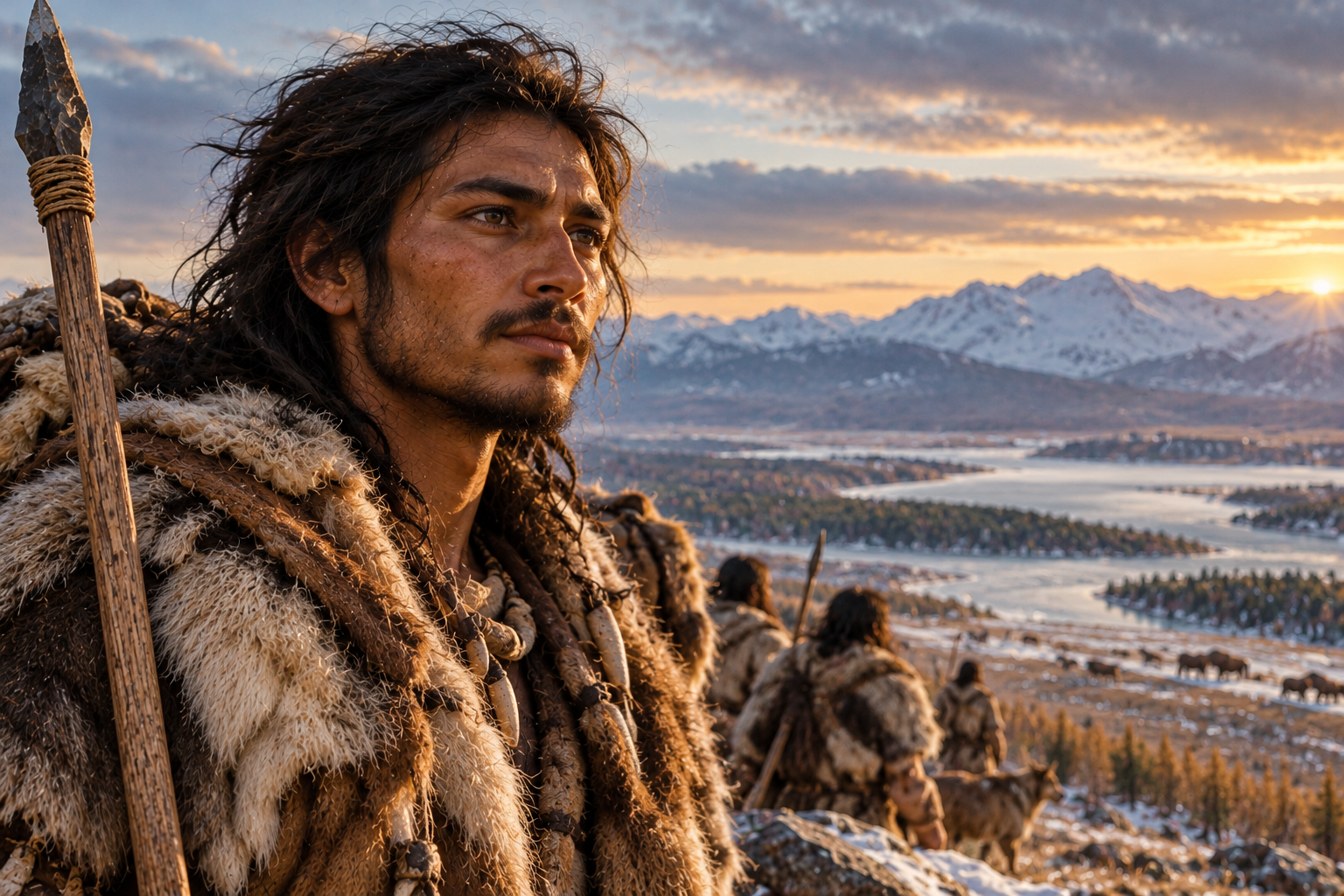
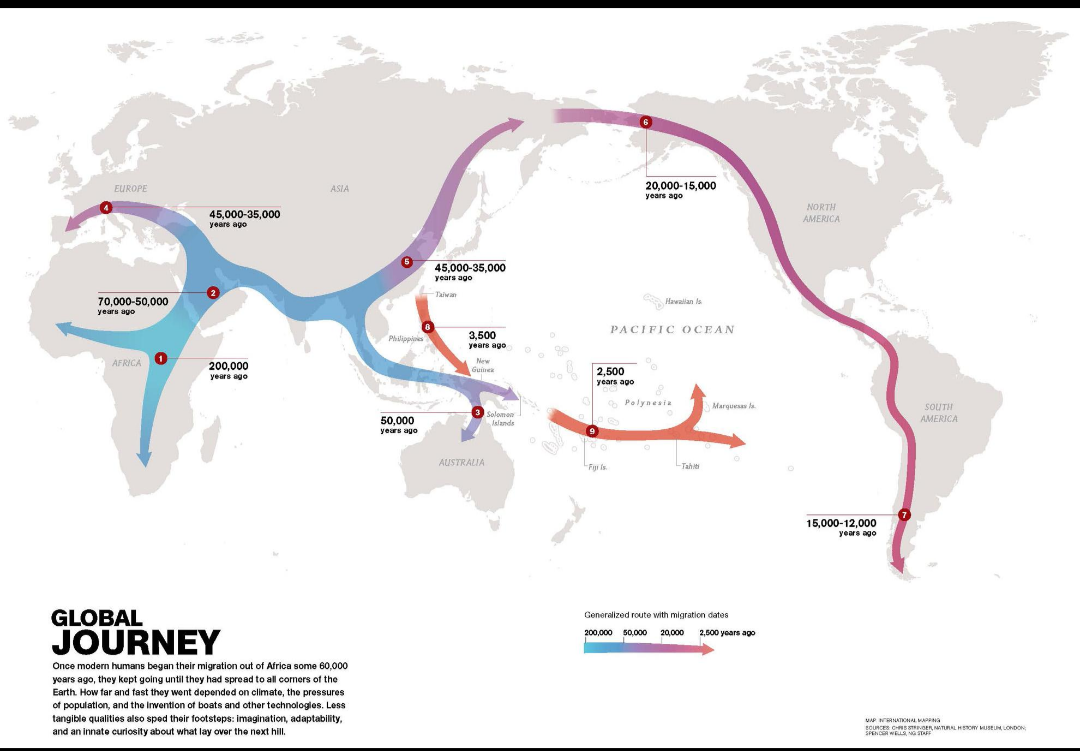
About 50,000 years ago, the small group of humans who had left Africa split into a western and an eastern branch, and the eastern branch went on to settle Asia, Australia, the Pacific and the Americas. Almost every Indian carries some of it, in the oldest layer of South Asian ancestry and, for many communities, in later arrivals from East and Southeast Asia.— Himanshu Pandey
A cave in Bulgaria and a puzzle
Bacho Kiro Cave sits in the green foothills of the Balkan Mountains in northern Bulgaria. About 45,000 years ago, a small group of people sheltered there. They made stone tools, hunted in the valleys below, and left behind a few of their own teeth and pieces of bone among the rubbish on the cave floor. They were some of the first modern humans to live in Europe. Neanderthals still lived in the same hills.
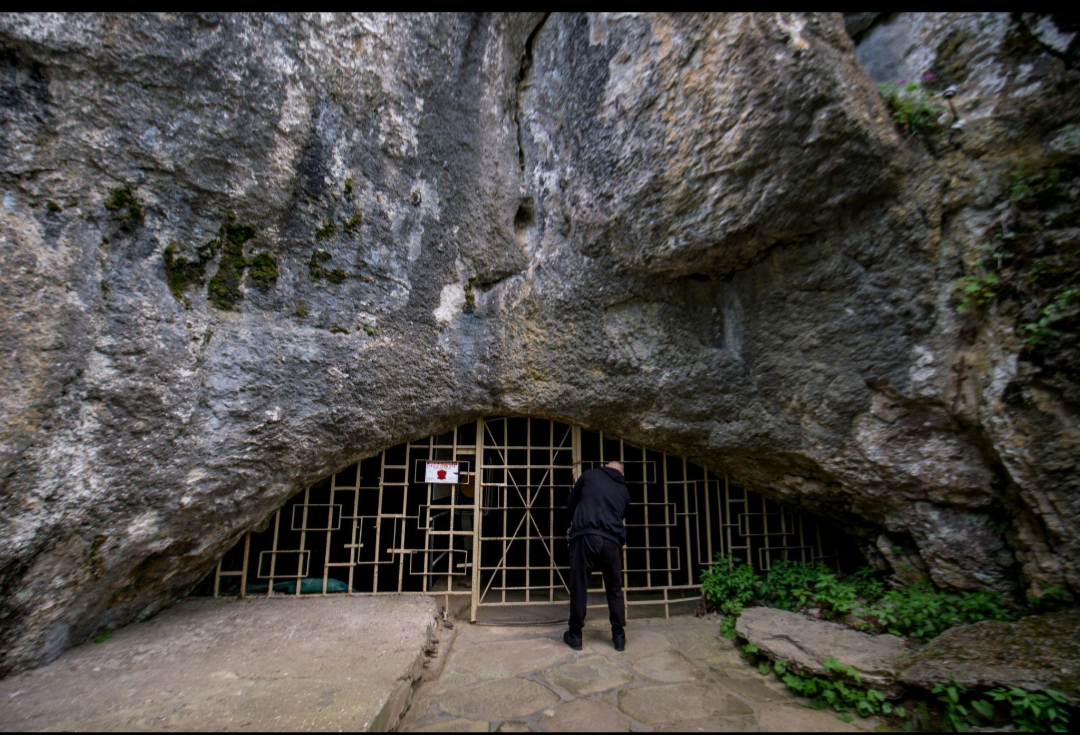
In 2021 Mateja Hajdinjak and her colleagues at the Max Planck Institute for Evolutionary Anthropology in Leipzig read the DNA of three of these people, who lived between about 46,000 and 43,000 years ago [1]. A genome is the full set of DNA a person inherits, half from the mother and half from the father, and a single tooth can still hold enough of it to read. The first surprise was in their family trees. All three had a Neanderthal ancestor only a few generations back in their family history. Neanderthals and Denisovans are often called archaic humans: close cousins of our own species who lived in Eurasia before modern humans arrived and for some time alongside them.
The second surprise was stranger. When the team compared the Bacho Kiro genomes with people alive today, their closest relatives were not Europeans. They were East Asians and Native Americans [1]. Later Europeans did not descend from this group in any large way.
So the story of the eastern branch of the human family begins, of all places, in Europe. The people of Bacho Kiro belonged to an early part of a line that went on to settle China and Siberia, Southeast Asia and the Pacific, Australia and the Americas. The same line is present in the DNA of almost everyone in India.
Who belongs to the eastern branch, and how did one small population reach half the world? The answer is one long family story, and again and again the same thing happens: people arrive, meet others already living there, have children together, and a new population forms.
The fork in the road
Every person living outside Africa today descends mostly from a small group of people who left Africa around 50,000 years ago. In 2025 Elise Kerdoncuff and her colleagues read whole genomes from 2,762 people across India. They found that most of the genetic variation in Indians comes from this single migration out of Africa, with only 1 to 2 percent added later by Neanderthals and Denisovans [2]. Earlier groups had left Africa too, but they left little or no trace in people living now. In 2016 Swapan Mallick and his colleagues found the same for Aboriginal Australians, New Guineans and Andaman Islanders: their modern human ancestry comes from the same source as that of every other population outside Africa [3].
Soon after leaving Africa, this population split in two. One part became the main ancestry of later Europe, West Asia and the grasslands north of the Black and Caspian Seas, known as the Steppe. Geneticists call it West Eurasian. The other part spread east and south, and geneticists call it Eastern Eurasian. Both names describe branches of a family tree rebuilt from DNA. They are not races, skin colours, face types or nationalities, and from here on this article mostly says the eastern branch.
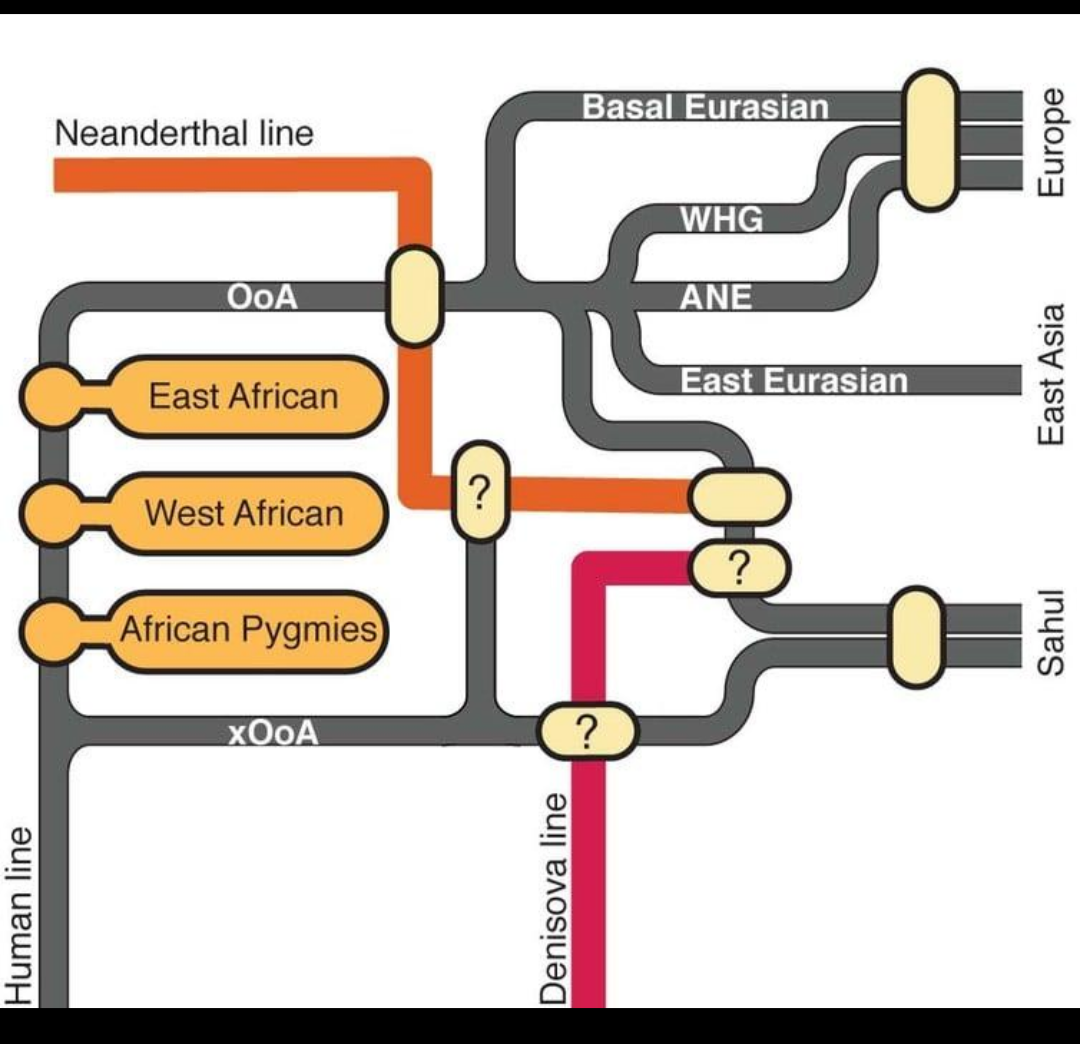
How do we know when the split happened? One clue is a thigh bone that came out of a riverbank near the village of Ust'-Ishim in western Siberia. In 2014 Qiaomei Fu and her colleagues read its genome. The man had died about 45,000 years ago. He came from a population that lived before the western and eastern branches separated, or at the very moment they did [4].
His genome held a second clue. It carried long, unbroken stretches of Neanderthal DNA. With each generation those stretches get cut into smaller pieces, like a sheet of paper torn in half again and again, so long pieces mean the mixing was recent. Fu's team worked out that his ancestors had mixed with Neanderthals some 7,000 to 13,000 years before he was born [4].
The Ust'-Ishim man's people left no detectable descendants among later populations, and neither did a man of similar age from Oase Cave in Romania [1]. Many of the first groups to push into new lands died out. The groups whose children survived became the two great branches.
Cousins in the east
In 2008 archaeologists working in Denisova Cave, in the Altai Mountains of southern Siberia, found the tip of a little finger bone from a young girl. In 2010 David Reich and his colleagues read the genome from it and found a group of humans nobody had known existed [5]. They shared a common origin with Neanderthals but had their own long history in Asia. The team named them Denisovans, after the cave.
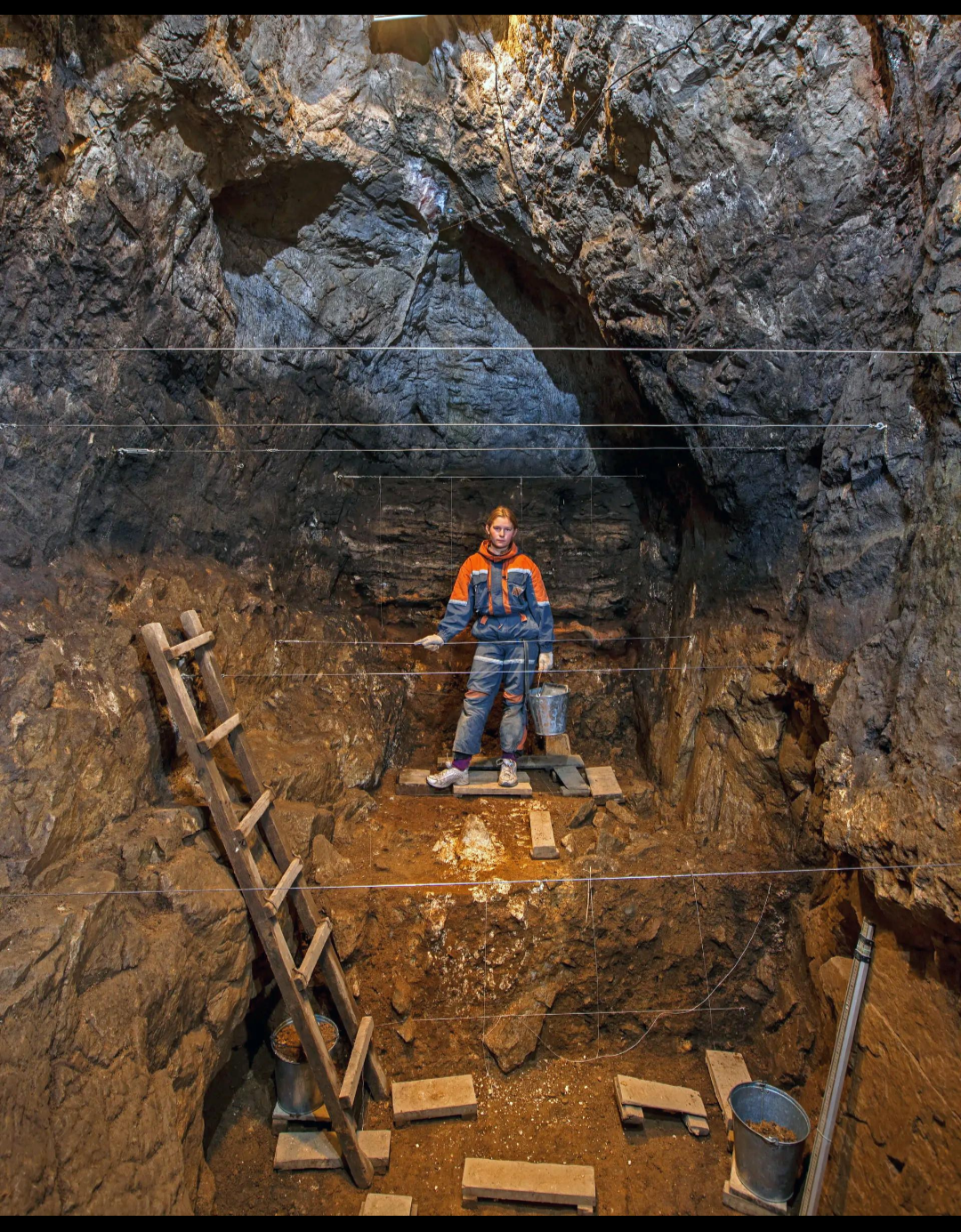
The same study found something just as surprising. People in New Guinea and nearby islands carried about 4 to 6 percent of their DNA from Denisovans [5]. The only way that could happen is admixture: two family lines joining, so that their children carry DNA from both. The ancestors of these islanders had met Denisovans somewhere in Asia and had children with them.
For years the Denisovans had no face. That changed with a skull from Harbin in northeast China. A bridge worker found it in 1933 and hid it in a well. It reached scientists only decades later, and they nicknamed it "Dragon Man". In 2025 Qiaomei Fu's team in Beijing tried to read its DNA. The tooth and the inner ear bone gave nothing, but the hardened plaque on the teeth held mitochondrial DNA [6]. Mitochondrial DNA is a small piece of DNA passed from a mother to all her children, like a family heirloom handed down the female line. The Harbin sequence fell among known Denisovan ones. A second study by the same team found ancient proteins in the skull carrying three variants seen in Denisovans [7]. The skull is at least 146,000 years old.
A jawbone found by a Buddhist monk in Baishiya Karst Cave, high on the Tibetan plateau, tells a similar story. In 2019 Fahu Chen and his colleagues identified it as Denisovan from its proteins and dated it to at least 160,000 years ago [8]. Later work on the cave's soil found Denisovan DNA left about 100,000 and 60,000 years ago [9].
Some of that experience reached modern people. Tibetans carry a version of a gene called EPAS1 that helps the body cope with thin air at high altitude. In 2014 Emilia Huerta-Sánchez and her colleagues showed that this version is found only in Tibetans and Denisovans, and at very low levels among Han Chinese [10]. It came into the Tibetans' ancestors through mixing with Denisovans.
Denisovan DNA is highest today in New Guinea and among Aboriginal Australians, smaller across mainland Asia, and present in India too, where Neanderthal and Denisovan DNA together make up 1 to 2 percent of the genome [2]. Here the trail thins out. The Harbin identification rests on mitochondrial DNA and proteins. No full genome from the cell nucleus has been read, and nobody yet knows exactly where and when each meeting took place.
The coast road south and east
Picture a family walking along a beach about 50,000 years ago, somewhere on the coast of what is now Gujarat or Kerala. The sea is lower than today, and shellfish, fish and fresh water from river mouths make the coast an easy road to follow. Much of the evidence of that road now lies under the sea.
In South Asia, these early people became the ancestors of the region's first hunter-gatherers. Geneticists call them the Ancient Ancestral South Indians, or AASI. In 2019 Vagheesh Narasimhan and his colleagues, in a study of 523 ancient people, showed that the main ancestry of South Asians today comes from a mix between people related to early hunter-gatherers of Iran and people of this deep South Asian line [11]. The AASI sits on the eastern side of the human family tree, and its closest known living relatives, though distant ones, are the Andaman Islanders. No ancient genome of an AASI person has yet been read. Their ancestry is rebuilt from the DNA of living people, and its exact place on the eastern branch is still argued over.
The Andaman Islanders themselves have kept a very old line. In 2005 Kumarasamy Thangaraj and his colleagues in Hyderabad read complete mitochondrial DNA from the Onge and the Great Andamanese. Their lines branched off very deep within a maternal family called haplogroup M, which is spread across India, East Asia, New Guinea and Australia [12]. The team concluded that these lines had probably stayed on the islands in isolation since they were first settled.
Further east, in the forests and rock shelters of mainland Southeast Asia, lived the foragers archaeologists call Hoabinhians, after a province in Vietnam. They hunted, fished and gathered there until about 4,000 years ago. In 2018 Hugh McColl, Eske Willerslev and their colleagues read ancient Hoabinhian genomes from Laos and Malaysia and found that they belonged to a deep line of the eastern branch [13]. Their DNA survives in Southeast Asians today, most strongly among forest-dwelling groups of the Malay Peninsula.
The boldest journey on this road ended in Sahul, the single landmass that joined Australia and New Guinea when the sea was low. Even then, getting there meant crossing stretches of open sea where land could not always be seen. In 2016 Anna-Sapfo Malaspinas and her colleagues read the genomes of 83 Aboriginal Australians and 25 Papuans from the New Guinea Highlands [14]. They found that their ancestors split from other Eurasians between about 51,000 and 72,000 years ago, after the same single exit from Africa. Papuan and Aboriginal Australian ancestors then separated from each other between about 25,000 and 40,000 years ago, while the two lands were still joined.
When did people first set foot in Australia? Most archaeological sites point to about 50,000 years ago. In 2017 Chris Clarkson and his colleagues argued that people were living at Madjedbebe, a rock shelter in Arnhem Land, by about 65,000 years ago [15]. Scientists still argue about this date, mainly over whether stone tools could have sunk through the sandy layers over time.
North into the cold
About 40,000 years ago a man died in Tianyuan Cave, about 50 kilometres southwest of Beijing. In 2013 Qiaomei Fu and her colleagues read part of his DNA. He belonged to a population that was ancestral to many present-day Asians and Native Americans, and that had already split from the ancestors of Europeans [16]. He is one of the earliest people we know of on the line that leads to East Asians.
A fuller look at his genome in 2017, by Melinda Yang and her colleagues, added two twists [17]. The Tianyuan man shared more DNA with a 35,000-year-old person from Goyet Cave in Belgium than other ancient Europeans did. So the split between early Europeans and early Asians was messy. He also shared more DNA with some Native American groups in South America than with others. Some of the population divisions in Ice Age Asia seem to have lasted all the way to the settlement of the Americas.
Further north, at the Yana Rhinoceros Horn Site in Arctic Siberia, people hunted mammoth and woolly rhinoceros about 31,600 years ago. In 2019 Martin Sikora and his colleagues read genomes from two milk teeth found there [18]. The Yana people belonged to a population the team called Ancient North Siberians, distantly related to early West Eurasian hunter-gatherers. Later, people related to East Asians arrived in northeast Siberia and mixed with them. Their children formed a new group, the Ancient Palaeo-Siberians, who are close relatives of Native Americans and of present-day peoples such as the Koryaks [18].
Near Lake Baikal, at a site called Mal'ta, a boy was buried about 24,000 years ago. In 2014 Maanasa Raghavan and her colleagues read his genome, the oldest complete modern human genome known at the time [19]. His mitochondrial DNA belonged to a maternal family later common among Ice Age European hunter-gatherers. His Y chromosome, which is passed from father to son like a surname, sat near the root of most Native American male lines. His wider genome was related to western Eurasians, with no close link to East Asians. The Mal'ta people were part of the western branch who had moved far to the northeast.
His people would become one of the two sources of the first Americans.
Across the land bridge
During the last Ice Age, so much water was locked in ice sheets that the sea fell and a broad plain of dry land joined Siberia and Alaska. Scientists call it Beringia. Herds of bison, horses and mammoths grazed it, and people followed them.
In 2018 Víctor Moreno-Mayar and his colleagues read the genome of a baby girl buried about 11,500 years ago at Upward Sun River in Alaska [20]. She belonged to a population they called Ancient Beringians, a sister line to all other Native Americans. Using her genome, the team worked out that the ancestors of Native Americans split from East Asians about 36,000 years ago, but kept mixing with them until about 25,000 years ago. Between about 25,000 and 20,000 years ago they also mixed with people related to the Mal'ta boy.
That mixing shows clearly in Native Americans today. Raghavan's 2014 study estimated that between 14 and 38 percent of Native American ancestry comes from the Mal'ta-related population, and the rest mostly from the eastern branch [19]. In 2015 she and her colleagues found that the ancestors of all present-day Native Americans, including Athabascan speakers in the north, whose language family includes Navajo and Apache, and the Amerindians further south, came from a single main migration from Siberia no earlier than about 23,000 years ago [21]. Around 13,000 years ago, this population divided into a northern and a southern branch.
Then came the footprints. At White Sands in New Mexico, adults and children walked across the soft mud at the edge of a lake, and their prints later hardened into rock. In 2021 Matthew Bennett and his colleagues dated seeds of a water plant found in the layers above and below the prints to between about 23,000 and 21,000 years ago [22]. Critics pointed out that water plants can take up old carbon and appear older than they are. In 2023 Jeffrey Pigati and his colleagues dated land-plant pollen and the sand grains themselves from the same layers, and got matching ages [23].
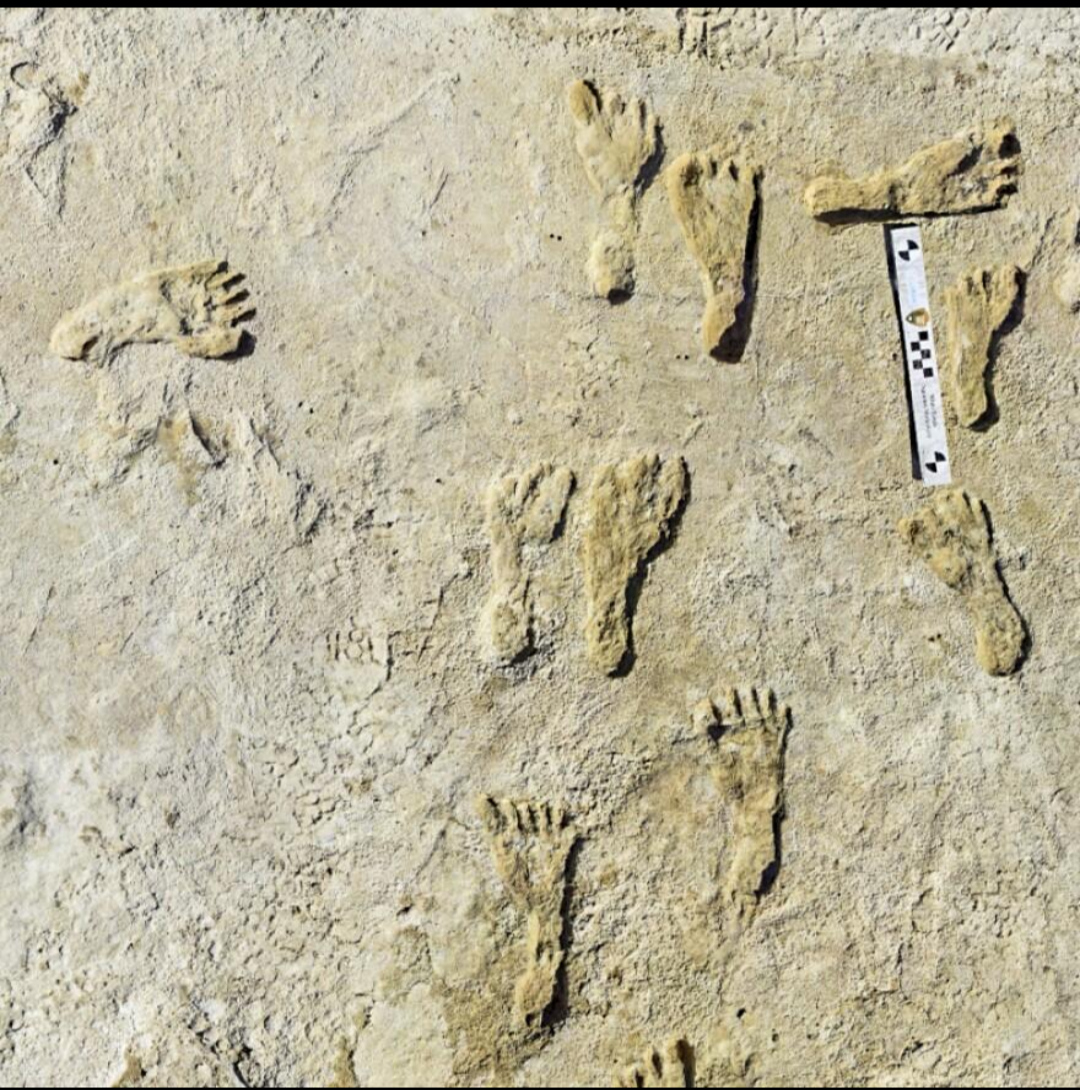
So people were in North America at the height of the last Ice Age. This only just fits the genetic estimate of a migration no earlier than 23,000 years ago. Were the White Sands walkers the ancestors of today's Native Americans, or an earlier group that left no descendants? Did people come down the Pacific coast by boat, or through a gap in the ice sheets? Scientists still argue about the route and about claims of even earlier arrival.
Millet, rice and new languages
Long before the first cities, two great farming traditions began in China. In the north, along the Yellow River, people grew foxtail and broomcorn millet in dry, dusty fields. In the south, along the Yangtze, people grew rice in wet paddies. Farming fed more people than foraging, and farming families grew and moved.
Ancient DNA has begun to show where they moved. In 2020 Chao Ning and his colleagues read 55 ancient genomes from northern China dating from about 7,500 to 1,700 years ago [24]. They found that people along the Yellow River grew steadily more similar over time to people of southern China and Southeast Asia. The same year, Melinda Yang and her colleagues read 26 ancient people from both north and south China, from 9,500 to 300 years ago [25]. Northern and southern Chinese populations were more different in the past than they are today. Northern ancestry spread south after the farming era began and changed the ancestry of southern China.
Language may have travelled with the millet farmers. The Sino-Tibetan family, which includes Chinese, Tibetan, Burmese and many languages of India's Northeast, is spoken today by about 1.4 billion people. In 2019 two teams built family trees of these languages. Laurent Sagart and his colleagues placed their origin among north Chinese millet farmers about 7,200 years ago [26]. Menghan Zhang and her colleagues also placed it in the Yellow River basin, but close to 6,000 years ago [27]. The two dates disagree, and the question is still open.
Rice farmers moved south. In Vietnam, Mark Lipson and his colleagues read the DNA of early farmers from Man Bac, about 4,000 years ago [28]. They carried a mix of southern Chinese farmer ancestry and the deep ancestry of the local foragers, the same mix found in people who speak Austroasiatic languages today. Similar ancestry turned up as far south as Indonesia. The incoming farmers had married into Hoabinhian families, and McColl's study found that both groups contributed to the people of Southeast Asia today [13].
Others went up onto the Tibetan plateau, where they met the thin air that the Denisovan version of EPAS1 helped them survive. Japan has its own version of the same story. In 2021 Niall Cooke and his colleagues read 12 ancient genomes from Japan [29]. The Jomon foragers of Japan had lived in small groups for thousands of years, separated from the mainland since about 20,000 to 15,000 years ago. Rice farming came about 3,000 years ago with people of Northeast Asian ancestry. Then, about 1,700 to 1,300 years ago, a third group arrived carrying more East Asian ancestry. Most people in Japan today carry all three.
Out to sea
Around 3000 BCE, farmers in Taiwan began a voyage that would take their descendants further than any people had gone before. Their ancestors had come from the coast of southern China, as Yang's 2020 study confirmed from ancient DNA [25]. They spoke early forms of the Austronesian languages, the family that now includes Malay and Hawaiian. In outrigger canoes, their descendants moved south into the Philippines and Indonesia, then out into the open Pacific.
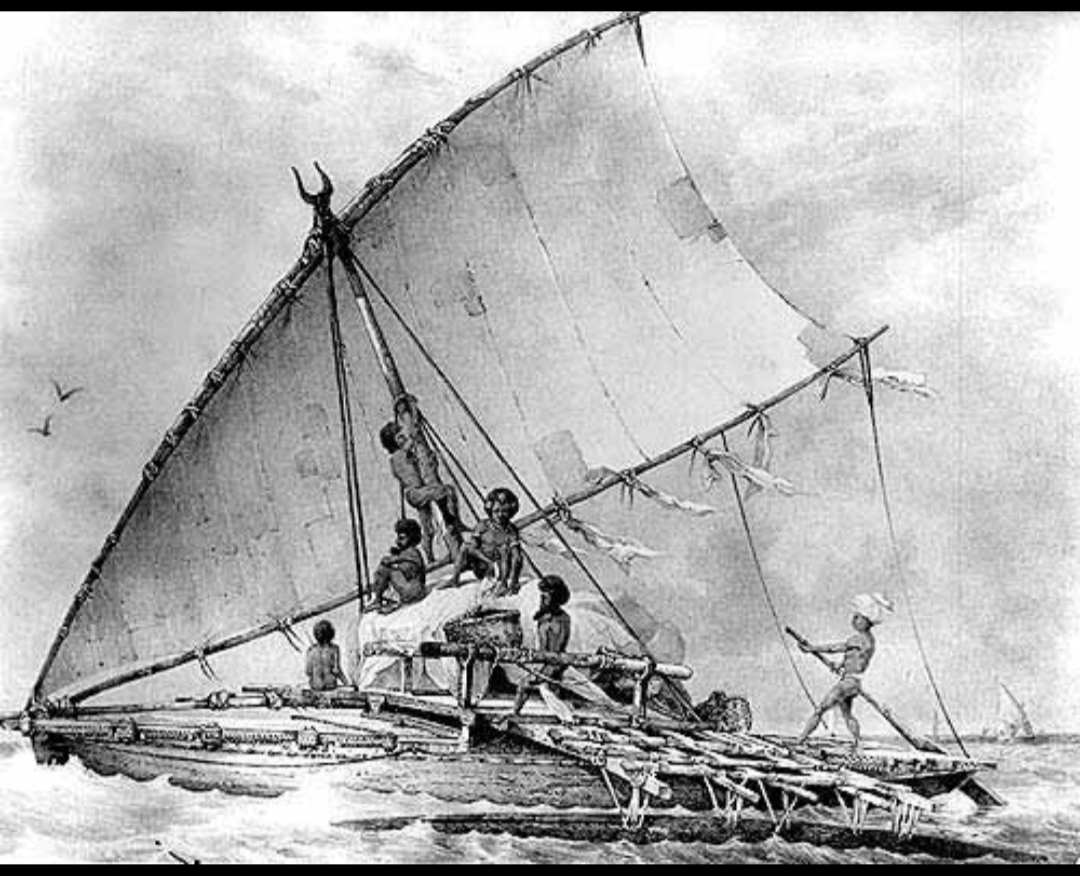
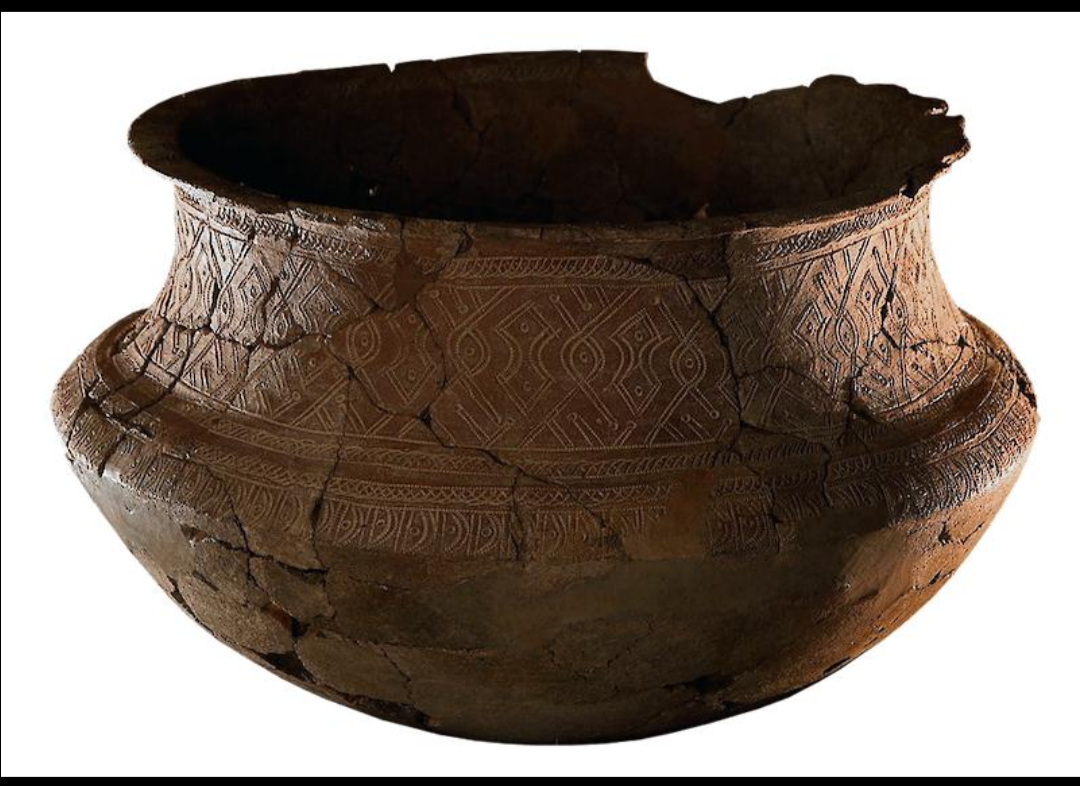
Pacific Islanders today have a different mix. Most carry at least a quarter of their ancestry from Papuan-related people of New Guinea and nearby islands. Skoglund's team concluded that this Papuan ancestry spread through the Pacific later, after the first settlement, as people kept moving between islands and marrying. Their descendants went on to reach Hawaii, Rapa Nui and New Zealand, the last large places on Earth to be settled by humans.
Some sailors went west instead, across the whole Indian Ocean. In Madagascar, about 400 kilometres off the coast of East Africa, the national language is Austronesian, with its closest relatives in Borneo. Yet most Malagasy people carry much of their ancestry from Bantu-speaking Africans. In 2017 Denis Pierron and his colleagues sampled 2,704 people in 257 villages across Madagascar [31]. Every Malagasy person they tested had both African and Austronesian ancestry. The two groups mixed during the last thousand years, and the mix was uneven, with different shares in different parts of the island. Madagascar is the clearest case in this story of language and genes travelling separately. The language came from Borneo; much of the ancestry came from Africa.
India's eastern doors
This may surprise many Indians, but the oldest ancestry in almost every Indian, from Kashmir to Kanyakumari, comes from the AASI, and the AASI sits on the eastern side of the human family tree [11]. Kerdoncuff's study of 2,762 Indians found that most carry ancestry from three groups: South Asian hunter-gatherers, Iranian-related Neolithic farmers, and Steppe herders [2]. The first of these is the AASI. The eastern branch has been part of India since the first people lived here.
A second, later layer came through India's eastern doors. The Austroasiatic languages of India include the Munda languages of central and eastern India, spoken by the Santal, Ho, Munda and others, as well as Khasi in Meghalaya and the languages of the Nicobar Islands. Their speakers carry a share of ancestry related to Southeast Asians. In 2011 Gyaneshwer Chaubey and his colleagues studied a male line common among Indian Austroasiatic speakers, Y-chromosome haplogroup O2a [32]. It was older and more varied in Southeast Asia, which points to Southeast Asia as its source. The eastern ancestry came mostly through fathers, while mothers' lines were mostly local.
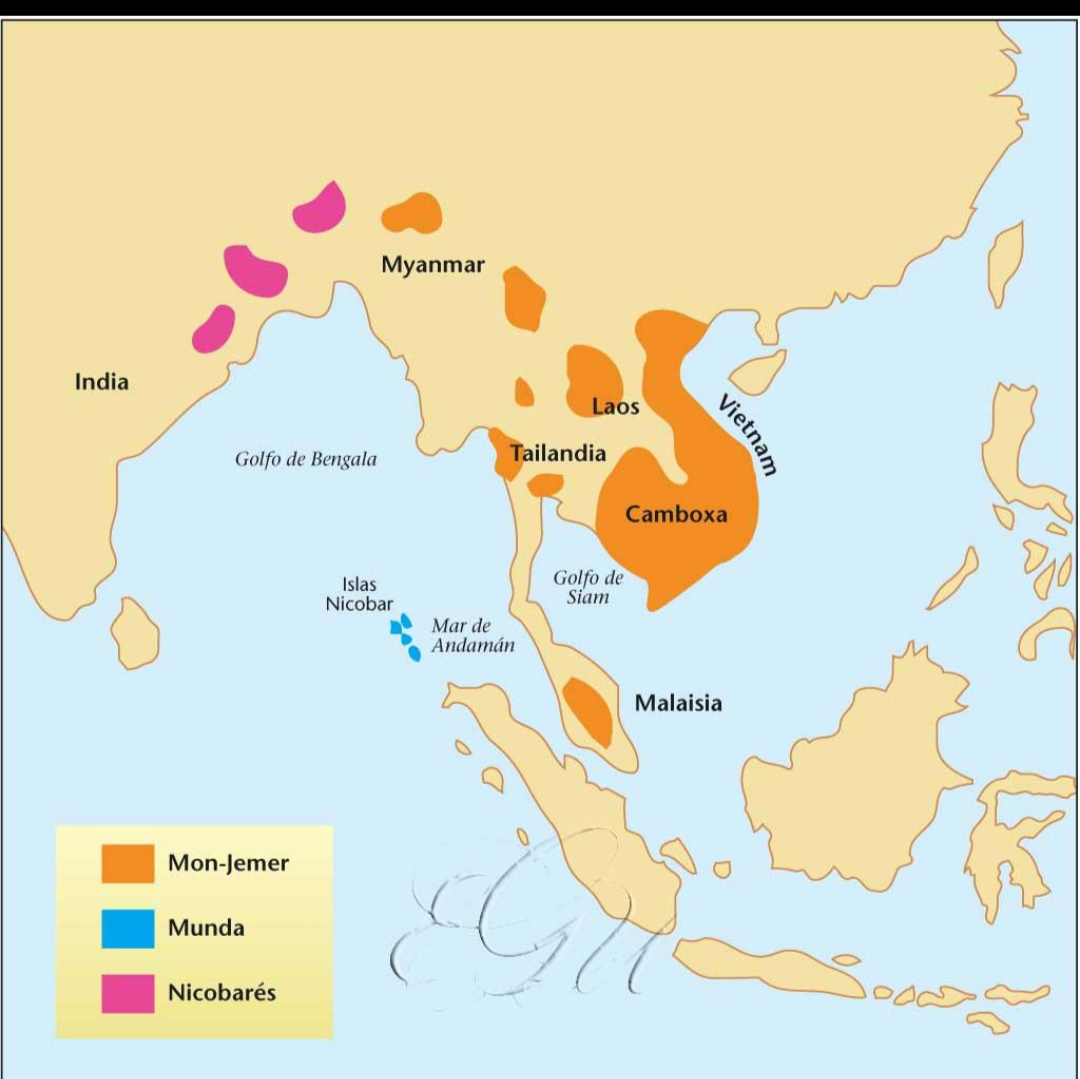
In 2019 Kai Tätte and his colleagues dated the mixing in 102 Munda speakers [33]. For different Munda groups, it happened between about 1800 BCE and the start of the Common Era. Their model put roughly 29 percent of the mixed ancestry with a Southeast Asian source, best matched today by the Lao, and 71 percent with a South Asian source, best matched by Dravidian speakers from Kerala. An ancestry percentage like this is an estimate from a statistical model, worked out by comparing a person's DNA with reference groups. It is not a measurement like height. Chaubey's 2011 paper set out the two competing ideas: Austroasiatic speakers came from Southeast Asia, or their languages spread out of South Asia much earlier [32]. The debate is not closed, but most genetic evidence, including these two studies, supports a Southeast Asian source.
The Khasi show how languages and genes can part ways even inside India. In 2022 Debashree Tagore and her colleagues found that the Khasi are genetically distinct from both the Munda and the Mon-Khmer speakers of Southeast Asia, although all three speak Austroasiatic languages [34]. Genetically the Khasi are closer to their Tibeto-Burman-speaking neighbours in the Northeast. The Nicobarese, on the other hand, are close to Southeast Asians, as Thangaraj's team found in their maternal lines [12].
Tibeto-Burman speakers make up a third strand. They live across the Northeast, from the Naga hills to the plains of Assam, and along the Himalaya. In 2017 Guido Gnecchi-Ruscone and his colleagues studied Sherpa, Tamang and other groups in Nepal [35]. Most Tibeto-Burman groups of the southern Himalaya carry East Asian ancestry that did not come down from Tibet. It came from lowland ancestors who moved out of China, probably through northern Myanmar and northeast India, and mixed with people along the way.
The clearest example of arrival followed by mixing is the Ahom. In 1228 CE a Tai prince named Sukaphaa crossed the Patkai hills from what is now Myanmar into the Brahmaputra valley with a band of followers. His descendants ruled a kingdom in Assam for six centuries. They married into local families, and over the generations the Tai language at court gave way to Assamese. In 2024 Sachin Kumar, Gyaneshwer Chaubey, Niraj Rai and their colleagues read DNA from Ahom people living across the northeastern states [36]. They found heavy mixing with local Tibeto-Burman speakers, links to the Khasi and the Kusunda of Nepal, and a wide genetic distance from the people of Thailand, their ancestors' homeland. They are Assamese in language and in much of their ancestry.
These layers matter because Northeast Indians are often treated as outsiders in their own country. East Asian-related ancestry has been part of India for thousands of years. It is carried by the Munda of Jharkhand, the Khasi of Meghalaya, the Naga of Nagaland and the Ahom of Assam, among many others, and the deeper eastern ancestry of the AASI runs through nearly every Indian family.
Back west across the Steppe
The eastern branch seemed to vanish from Europe after Bacho Kiro. It came back.
In Finland and northwest Russia, Thiseas Lamnidis and his colleagues read DNA from 11 ancient people in 2018 [37]. They found that Siberian ancestry reached northern Europe by at least 1500 BCE. Today it is found in many people of the region, most strongly among speakers of Uralic languages such as Finnish, Estonian and Saami. Hungarian is also a Uralic language.
Later, the eastern Steppe produced a series of empires of horse-riding herders. In 2018 Peter de Barros Damgaard and his colleagues read 137 ancient genomes from across the Eurasian Steppe [38]. They traced how the Xiongnu confederation of Mongolia formed, how groups linked to it moved west from about the second or third century BCE, and how the Hun traditions of the fourth and fifth centuries CE grew from them. During the medieval khanates, Steppe populations mixed further with East Asian groups. In 2020 Choongwon Jeong and his colleagues showed from 214 ancient people in Mongolia that the Xiongnu themselves came from the mixing of several populations, while the Mongols of the thirteenth century had much more eastern ancestry, close to Mongolic speakers today [39].
The Avars took the eastern branch furthest into Europe. In 567 or 568 CE they settled in the Carpathian Basin, in what is now Hungary, and built an empire that lasted more than 200 years. In 2022 Guido Gnecchi-Ruscone and his colleagues read the DNA of 66 people from the region, including the richest Avar burials [40]. The elite Avars carried Northeast Asian ancestry matching earlier people of the Mongolian Steppe. The team concluded that they had moved quickly, across the whole width of Eurasia. Turkic-speaking groups also moved west during these centuries and reached Anatolia in the eleventh century CE.
Each of these groups arrived among people already living there, and in Damgaard's genomes every Steppe people was itself a mix of earlier populations [38]. Languages, titles and burial customs sometimes travelled further than genes. The cousins of the Bacho Kiro people had come back to Europe, this time from the east.
What your own DNA can show
A GenoConnect report may show a percentage labelled East Asian-related or Southeast Asian-related. That number is an estimate. It comes from a statistical model that compares your DNA with reference groups whose ancestry is better known, and it can shift a little as reference groups improve. In published studies, this share is largest among communities of the Northeast and the Himalaya, and smaller but clear among Munda-speaking groups of Jharkhand and Odisha [33, 34, 35].
The deep AASI layer, which also sits on the eastern branch, is usually shown separately in models like these, under a South Asian hunter-gatherer label. It split from other eastern lines tens of thousands of years ago and looks very different in the DNA from the later East Asian arrivals.
Your percentages cannot tell you your language, religion, caste or community. The Ahom speak Assamese, and the people of Madagascar speak an Austronesian language with much of their ancestry from Africa. Ancestry percentages also do not predict what you look like. Two siblings can show different numbers, because each child inherits a different half of each parent's DNA.
What a report can do is place your family inside this long story. If you want to see which lines of the human family run through you, a GenoConnect test can show your mix of AASI, Iranian-related farmer, Steppe and East or Southeast Asian-related ancestry, and the maternal and paternal lines you carry.
What we still do not know
The biggest gap is in India itself. No ancient genome of an AASI person has yet been read. A well-preserved skeleton from before the Indus cities, perhaps from a cool cave or a dry rock shelter, could show exactly where the AASI sits on the eastern branch and how close it really is to the Andaman Islanders.
In Australia, the date of the first arrival is still uncertain. More sites dated with several independent methods, and ancient DNA from the soil of rock shelters, could settle whether people arrived about 50,000 or about 65,000 years ago.
In the Americas, the White Sands footprints show that people were there by about 23,000 years ago, but no human bones of that age have been found. A skeleton with readable DNA from before 20,000 years ago would tell us whether those walkers were ancestors of Native Americans or a lost earlier group.
For the Denisovans, scientists need a full nuclear genome from East Asia, from Harbin, Xiahe or another site. That would show which Denisovan populations mixed with the ancestors of Papuans, Tibetans and Indians, and where those meetings happened.
For the Austroasiatic languages of India, ancient DNA from eastern India from before 2000 BCE would show whether Southeast Asian-related ancestry was already there, or arrived with the languages.
Somewhere in South Asian soil there may be a tooth like the ones at Bacho Kiro, that nobody has read yet. When it is, India's oldest ancestors will have a genome of their own.
Frequently asked questions
Do Indians have East Asian ancestry?
Almost all Indians carry ancestry from the eastern branch through the AASI, the first hunter-gatherers of South Asia [11]. Many communities, especially in eastern and northeastern India and the Himalaya, also carry later East or Southeast Asian-related ancestry from Austroasiatic and Tibeto-Burman speakers [33, 34, 35].
Are Native Americans related to Asians?
Yes. Native Americans descend mostly from the eastern branch, with between 14 and 38 percent of their ancestry from Ice Age Siberians related to the Mal'ta boy, who belonged to the western branch [19, 20].
Who were the Denisovans?
They were archaic humans, close cousins of Neanderthals, known first from a finger bone in Siberia's Denisova Cave and later from a jaw on the Tibetan plateau and the Harbin skull in China [5, 6, 8]. Their DNA survives in living people, most of all in New Guinea and Australia.
Are Northeast Indians related to Chinese people?
Many Northeast Indian communities share ancestry with East and Southeast Asian populations, including people in China, through migrations over thousands of years [34, 35]. They have also mixed for centuries with other Indian populations, and they are Indian by history, language and belonging.
Did Europeans ever have East Asian ancestry?
Some of the first modern humans in Europe, at Bacho Kiro in Bulgaria, were closer to East Asians than to later Europeans [1]. Much later, Siberian ancestry reached Finland and the Baltic, and Steppe peoples such as the Avars carried Northeast Asian ancestry into Hungary [37, 40].
What does East Asian percentage mean in a DNA test?
It is an estimate from a statistical model of how much of your DNA best matches reference groups from East Asia. It is not a measurement, and it says nothing about your language, religion, caste or appearance.
References
- [1]1. Hajdinjak, Mateja, Fabrizio Mafessoni, Laurits Skov, Benjamin Vernot, Alexander Hübner, Qiaomei Fu, Elena Essel, et al. “Initial Upper Palaeolithic humans in Europe had recent Neanderthal ancestry.” Nature 592, no. 7853 (2021): 253–257. https://doi.org/10.1038/s41586-021-03335-3.
- [2]2. Kerdoncuff, Elise, Laurits Skov, Nick Patterson, Joyita Banerjee, Pranali Khobragade, Sankha S. Chakrabarti, Avinash Chakrawarty, et al. “50,000 years of evolutionary history of India: Impact on health and disease variation.” Cell 188, no. 13 (2025): 3389–3404.e6. https://doi.org/10.1016/j.cell.2025.04.027.
- [3]3. Mallick, Swapan, Heng Li, Mark Lipson, Iain Mathieson, Melissa Gymrek, Fernando Racimo, Mengyao Zhao, et al. “The Simons Genome Diversity Project: 300 genomes from 142 diverse populations.” Nature 538, no. 7624 (2016): 201–206. https://doi.org/10.1038/nature18964.
- [4]4. Fu, Qiaomei, Heng Li, Priya Moorjani, Flora Jay, Sergey M. Slepchenko, Aleksei A. Bondarev, Philip L. F. Johnson, et al. “Genome sequence of a 45,000-year-old modern human from western Siberia.” Nature 514, no. 7523 (2014): 445–9. https://doi.org/10.1038/nature13810.
- [5]5. Reich, David, Richard E. Green, Martin Kircher, Johannes Krause, Nick Patterson, Eric Y. Durand, Bence Viola, et al. “Genetic history of an archaic hominin group from Denisova Cave in Siberia.” Nature 468, no. 7327 (2010): 1053–60. https://doi.org/10.1038/nature09710.
- [6]6. Fu, Qiaomei, Peng Cao, Qingyan Dai, E. Andrew Bennett, Xiaotian Feng, Melinda A. Yang, Wanjing Ping, Svante Pääbo, and Qiang Ji. “Denisovan mitochondrial DNA from dental calculus of the >146,000-year-old Harbin cranium.” Cell 188, no. 15 (2025): 3919–3926.e9. https://doi.org/10.1016/j.cell.2025.05.040.
- [7]7. Fu, Qiaomei, Fan Bai, Huiyun Rao, Shaokun Chen, Yannan Ji, Aoran Liu, E. Andrew Bennett, Feng Liu, and Qiang Ji. “The proteome of the late Middle Pleistocene Harbin individual.” Science 389, no. 6761 (2025): 704–707. https://doi.org/10.1126/science.adu9677.
- [8]8. Chen, Fahu, Frido Welker, Chuan-Chou Shen, Shara E. Bailey, Inga Bergmann, Simon Davis, Huan Xia, et al. “A late Middle Pleistocene Denisovan mandible from the Tibetan Plateau.” Nature 569, no. 7756 (2019): 409–412. https://doi.org/10.1038/s41586-019-1139-x.
- [9]9. Zhang, Dongju, Huan Xia, Fahu Chen, Bo Li, Viviane Slon, Ting Cheng, Ruowei Yang, et al. “Denisovan DNA in Late Pleistocene sediments from Baishiya Karst Cave on the Tibetan Plateau.” Science 370, no. 6516 (2020): 584–587. https://doi.org/10.1126/science.abb6320.
- [10]10. Huerta-Sánchez, Emilia, Xin Jin, Asan, Zhuoma Bianba, Benjamin M. Peter, Nicolas Vinckenbosch, Yu Liang, et al. “Altitude adaptation in Tibetans caused by introgression of Denisovan-like DNA.” Nature 512, no. 7513 (2014): 194–7. https://doi.org/10.1038/nature13408.
- [11]11. Narasimhan, Vagheesh M., Nick Patterson, Priya Moorjani, Nadin Rohland, Rebecca Bernardos, Swapan Mallick, Iosif Lazaridis, et al. “The formation of human populations in South and Central Asia.” Science 365, no. 6457 (2019): eaat7487. https://doi.org/10.1126/science.aat7487.
- [12]12. Thangaraj, Kumarasamy, Gyaneshwer Chaubey, Toomas Kivisild, Alla G. Reddy, Vijay Kumar Singh, Avinash A. Rasalkar, and Lalji Singh. “Reconstructing the origin of Andaman Islanders.” Science 308, no. 5724 (2005): 996. https://doi.org/10.1126/science.1109987.
- [13]22. Bennett, Matthew R., David Bustos, Jeffrey S. Pigati, Kathleen B. Springer, Thomas M. Urban, Vance T. Holliday, Sally C. Reynolds, et al. “Evidence of humans in North America during the Last Glacial Maximum.” Science 373, no. 6562 (2021): 1528–1531. https://doi.org/10.1126/science.abg7586.
- [14]23. Pigati, Jeffrey S., Kathleen B. Springer, Jeffrey S. Honke, David Wahl, Marie R. Champagne, Susan R. H. Zimmerman, Harrison J. Gray, et al. “Independent age estimates resolve the controversy of ancient human footprints at White Sands.” Science 382, no. 6666 (2023): 73–75. https://doi.org/10.1126/science.adh5007.
- [15]24. Ning, Chao, Tianjiao Li, Ke Wang, Fan Zhang, Tao Li, Xiyan Wu, Shizhu Gao, et al. “Ancient genomes from northern China suggest links between subsistence changes and human migration.” Nature Communications 11, no. 1 (2020): 2700. https://doi.org/10.1038/s41467-020-16557-2.
- [16]25. Yang, Melinda A., Xuechun Fan, Bo Sun, Chungyu Chen, Jianfeng Lang, Ying-Chin Ko, Cheng-Hwa Tsang, et al. “Ancient DNA indicates human population shifts and admixture in northern and southern China.” Science 369, no. 6501 (2020): 282–288. https://doi.org/10.1126/science.aba0909.
- [17]26. Sagart, Laurent, Guillaume Jacques, Yunfan Lai, Robin J. Ryder, Valentin Thouzeau, Simon J. Greenhill, and Johann-Mattis List. “Dated language phylogenies shed light on the ancestry of Sino-Tibetan.” Proceedings of the National Academy of Sciences of the United States of America 116, no. 21 (2019): 10317–10322. https://doi.org/10.1073/pnas.1817972116.
- [18]27. Zhang, Menghan, Shi Yan, Wuyun Pan, and Li Jin. “Phylogenetic evidence for Sino-Tibetan origin in northern China in the Late Neolithic.” Nature 569, no. 7754 (2019): 112–115. https://doi.org/10.1038/s41586-019-1153-z.
- [19]28. Lipson, Mark, Olivia Cheronet, Swapan Mallick, Nadin Rohland, Marc Oxenham, Michael Pietrusewsky, Thomas Oliver Pryce, et al. “Ancient genomes document multiple waves of migration in Southeast Asian prehistory.” Science 361, no. 6397 (2018): 92–95. https://doi.org/10.1126/science.aat3188.
- [20]29. Cooke, Niall P., Valeria Mattiangeli, Lara M. Cassidy, Kenji Okazaki, Caroline A. Stokes, Shin Onbe, Satoshi Hatakeyama, et al. “Ancient genomics reveals tripartite origins of Japanese populations.” Science Advances 7, no. 38 (2021): eabh2419. https://doi.org/10.1126/sciadv.abh2419.
- [21]30. Skoglund, Pontus, Cosimo Posth, Kendra Sirak, Matthew Spriggs, Frederique Valentin, Stuart Bedford, Geoffrey R. Clark, et al. “Genomic insights into the peopling of the Southwest Pacific.” Nature 538, no. 7626 (2016): 510–513. https://doi.org/10.1038/nature19844.
- [22]31. Pierron, Denis, Margit Heiske, Harilanto Razafindrazaka, Ignace Rakoto, Nelly Rabetokotany, Bodo Ravololomanga, Lucien M-A Rakotozafy, et al. “Genomic landscape of human diversity across Madagascar.” Proceedings of the National Academy of Sciences of the United States of America 114, no. 32 (2017): E6498–E6506. https://doi.org/10.1073/pnas.1704906114.
- [23]32. Chaubey, Gyaneshwer, Mait Metspalu, Ying Choi, Reedik Mägi, Irene Gallego Romero, Pedro Soares, Mannis van Oven, et al. “Population genetic structure in Indian Austroasiatic speakers: the role of landscape barriers and sex-specific admixture.” Molecular Biology and Evolution 28, no. 2 (2011): 1013–24. https://doi.org/10.1093/molbev/msq288.
- [24]33. Tätte, Kai, Luca Pagani, Ajai K. Pathak, Sulev Kõks, Binh Ho Duy, Xuan Dung Ho, Gazi Nurun Nahar Sultana, et al. “The genetic legacy of continental scale admixture in Indian Austroasiatic speakers.” Scientific Reports 9, no. 1 (2019): 3818. https://doi.org/10.1038/s41598-019-40399-8.
- [25]34. Tagore, Debashree, Partha P. Majumder, Anupam Chatterjee, and Analabha Basu. “Multiple migrations from East Asia led to linguistic transformation in NorthEast India and mainland Southeast Asia.” Frontiers in Genetics 13 (2022): 1023870. https://doi.org/10.3389/fgene.2022.1023870.
- [26]35. Gnecchi-Ruscone, Guido A., Choongwon Jeong, Sara De Fanti, Stefania Sarno, Michela Trancucci, Davide Gentilini, Anna M. Di Blasio, et al. “The genomic landscape of Nepalese Tibeto-Burmans reveals new insights into the recent peopling of Southern Himalayas.” Scientific Reports 7, no. 1 (2017): 15512. https://doi.org/10.1038/s41598-017-15862-z.
- [27]36. Kumar, Sachin, Prajjval Pratap Singh, Nagarjuna Pasupuleti, Veena Mushrif Tripathy, Milan Kumar Chauley, Gyaneshwer Chaubey, and Niraj Rai. “The genetic admixture and assimilation of Ahom: a historic migrant from Thailand to India.” Human Molecular Genetics 33, no. 11 (2024): 1015–1019. https://doi.org/10.1093/hmg/ddae054.
- [28]37. Lamnidis, Thiseas C., Kerttu Majander, Choongwon Jeong, Elina Salmela, Anna Wessman, Vyacheslav Moiseyev, Valery Khartanovich, et al. “Ancient Fennoscandian genomes reveal origin and spread of Siberian ancestry in Europe.” Nature Communications 9, no. 1 (2018): 5018. https://doi.org/10.1038/s41467-018-07483-5.
- [29]38. Damgaard, Peter de Barros, Nina Marchi, Simon Rasmussen, Michaël Peyrot, Gabriel Renaud, Thorfinn Korneliussen, J. Víctor Moreno-Mayar, et al. “137 ancient human genomes from across the Eurasian steppes.” Nature 557, no. 7705 (2018): 369–374. https://doi.org/10.1038/s41586-018-0094-2.
- [30]39. Jeong, Choongwon, Ke Wang, Shevan Wilkin, William Timothy Treal Taylor, Bryan K. Miller, Jan H. Bemmann, Raphaela Stahl, et al. “A Dynamic 6,000-Year Genetic History of Eurasia's Eastern Steppe.” Cell 183, no. 4 (2020): 890–904.e29. https://doi.org/10.1016/j.cell.2020.10.015.
- [31]40. Gnecchi-Ruscone, Guido Alberto, Anna Szécsényi-Nagy, István Koncz, Gergely Csiky, Zsófia Rácz, A. B. Rohrlach, Guido Brandt, et al. “Ancient genomes reveal origin and rapid trans-Eurasian migration of 7th-century Avar elites.” Cell 185, no. 8 (2022): 1402–1413.e21. https://doi.org/10.1016/j.cell.2022.03.007.