Who Were the Zagros Neolithic Farmers (ZNF)? Ancient Iranian DNA and Indian Ancestry
About 10,000 years ago, people in the Zagros Mountains of western Iran began herding goats and growing cereals, and their genomes show they were a separate human family from the first farmers of Anatolia and the Levant. South Asians carry a large share of ancestry related to them, but it comes from a sister line that split away before farming began, which makes the Zagros farmers distant cousins of the Indus people.
A village of goat keepers
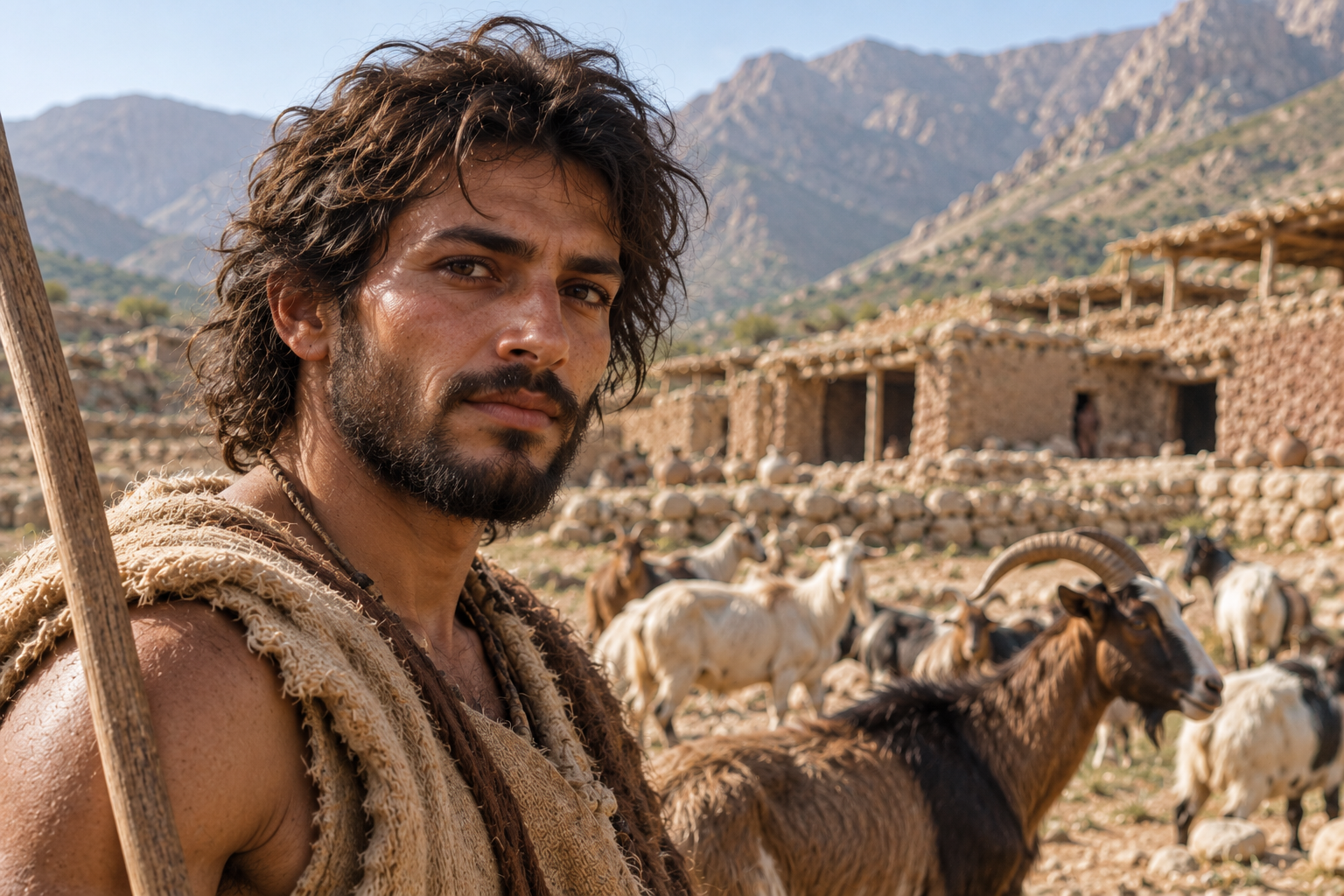
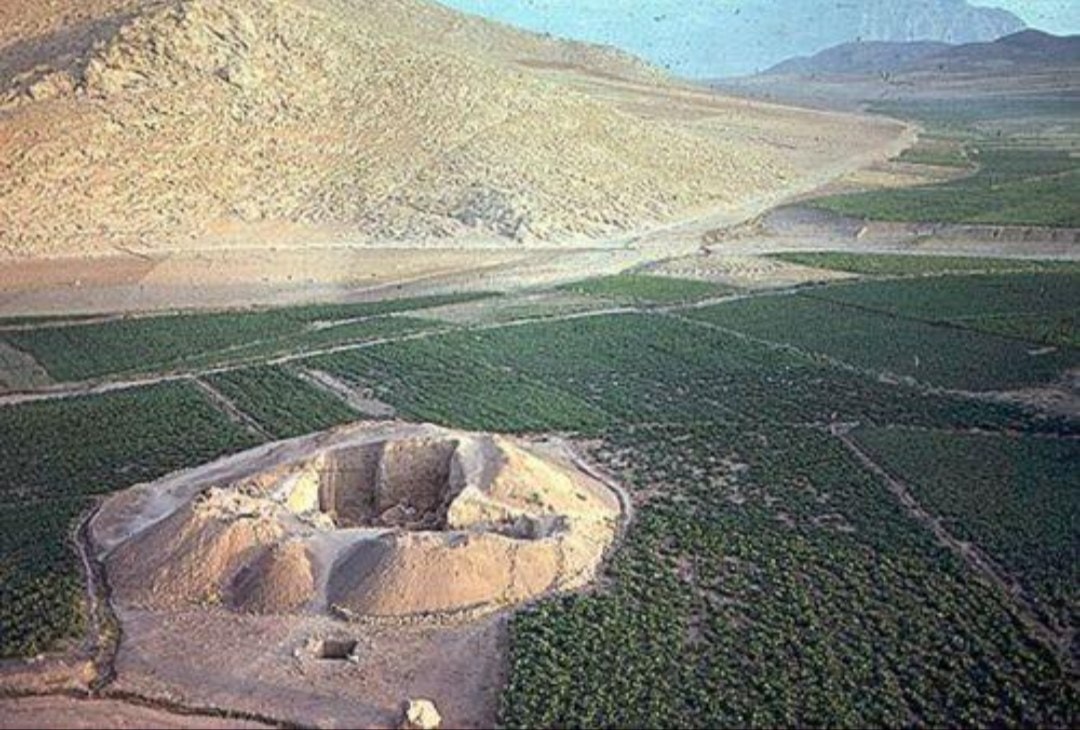
Picture a morning about 10,000 years ago in a high valley of the Zagros Mountains, near today’s city of Kermanshah in western Iran. A small village of mud-brick houses sits on a low rise about 1,400 metres above the sea [1]. Goats wander between the houses. They look like the wild goats on the cliffs above, lean and long-horned. Archaeologists call this village Ganj Dareh.
The goats looked wild, and for a long time that fooled researchers. In 2000 Melinda Zeder and Brian Hesse looked again at goat bones from Ganj Dareh and sorted them by age and sex. Most of the males had been killed young, while most females lived on into adulthood [2]. Hunters tend to go after the biggest animals they can find, usually grown males. Herders eat the young males they do not need and keep the females to breed, and that is the pattern Zeder and Hesse found.
Twenty years later Kevin Daly and his colleagues read DNA from the same kind of goat bones. The managed goats were already on the genetic path to domestic goats about 10,200 years ago, even though their skeletons still looked wild [3]. Domestication is the slow process by which wild plants and animals come to live with people and depend on them, much as a stray dog that keeps coming back to one house slowly becomes that family’s dog. At Ganj Dareh we can see that process near its start.
The next surprise came from a woman buried in the village. In 2016 Marcos Gallego-Llorente, Ron Pinhasi and their team read her genome, the full set of DNA instructions that a person carries in almost every cell [1]. She had lived between about 10,000 and 9,700 years ago. The team expected her to resemble the early farmers of Anatolia, today’s Turkey, whose descendants later carried farming into Europe. She did not. Her closest match among the ancient people then known was a pair of hunter-gatherers from the Caucasus mountains of Georgia, to the north [1].
That result opened the questions this article follows. Who were the people of these mountains, and where did they come from? Where did their relatives go over the next ten thousand years? And why do DNA reports for people from India, Pakistan, Bangladesh and Nepal so often mention something called “Iranian farmer-related” ancestry?
Mountains at the end of the Ice Age
Picture the Zagros about 12,000 years ago: a long chain of limestone ridges running from south-eastern Turkey through north-eastern Iraq and down the western side of Iran. The last Ice Age was ending, and the climate was growing warmer and wetter. Wild goats and sheep grazed the slopes. Wild barley, wheat and lentils grew in the valleys below.
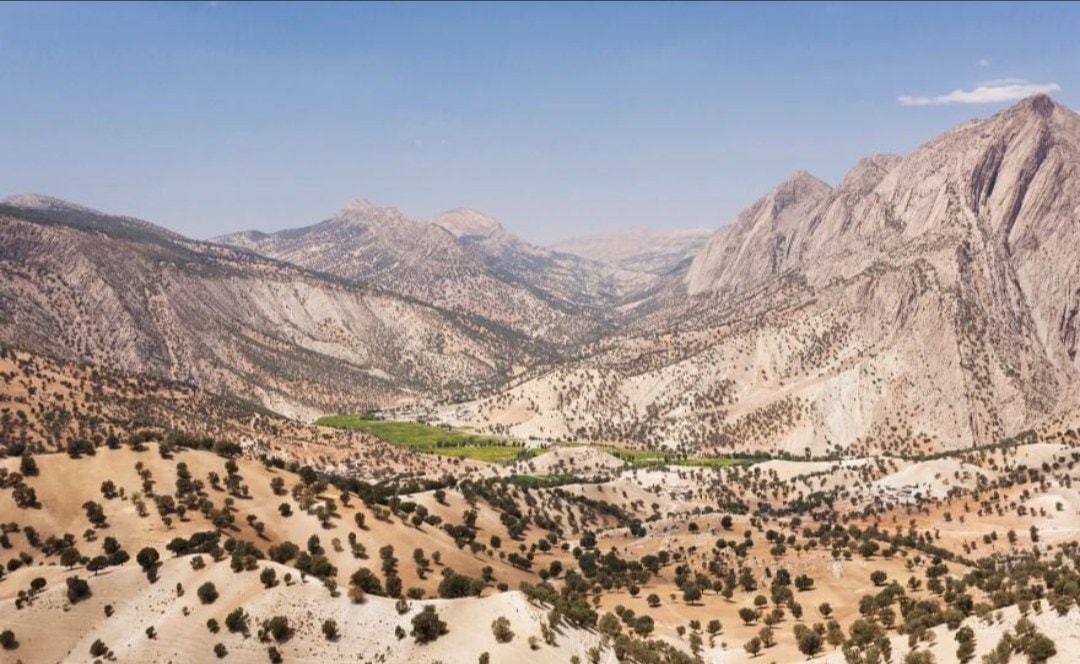
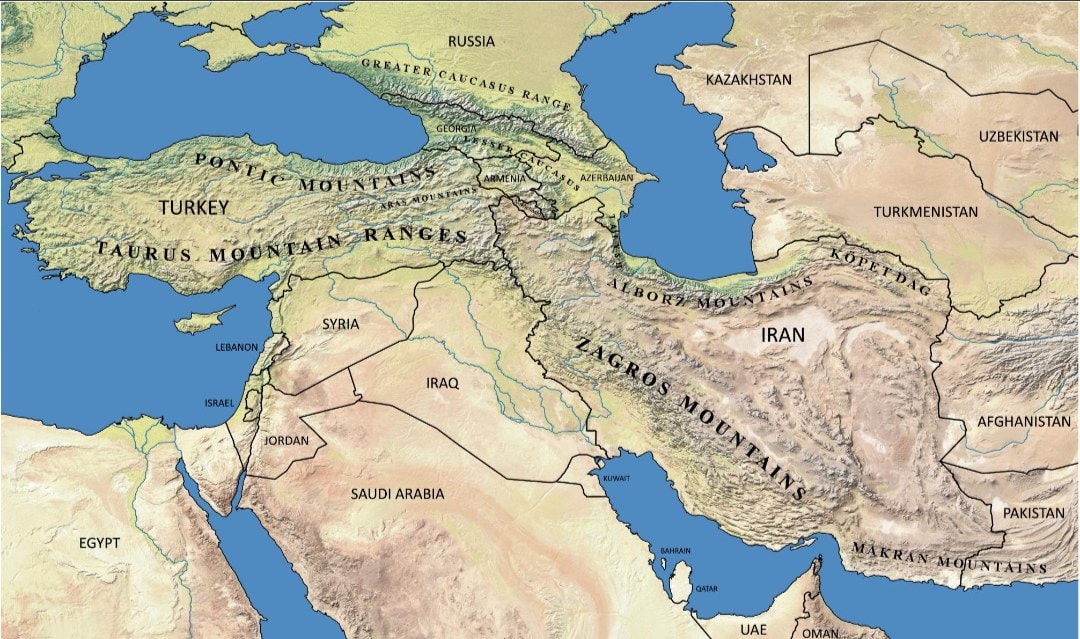
People had lived in these mountains for tens of thousands of years. They used caves and rock shelters, and later open-air camps, and they left behind stone tools, hearths and the bones of the animals they ate. From these remains we know they hunted goat and sheep and gathered seeds and nuts. Their DNA is harder to reach. Geneticists have read very few genomes from hunter-gatherers inside the Zagros itself, so they compare the first Zagros farmers with hunter-gatherers who lived nearby.
The most useful neighbours lived in the Caucasus mountains to the north. In 2015 Eppie Jones and her colleagues read the genomes of two men from caves in western Georgia: one from Satsurblia Cave who lived about 13,300 years ago, and one from Kotias Klde who lived about 9,700 years ago [4]. The team called them Caucasus hunter-gatherers. Their line had split from the ancestors of the early Anatolian farmers about 25,000 years ago, near the coldest part of the Ice Age [4]. When the Ganj Dareh woman’s genome was later compared with every ancient genome then available, these two Caucasus men were her closest match [1].
In 2016 Iosif Lazaridis and his colleagues added more pieces. They read DNA from 44 people of the ancient Near East, including early farmers from the Zagros and a hunter-gatherer buried in Hotu Cave, near the Caspian shore of northern Iran [5]. They found that the first farmers of the Zagros and those of the southern Levant, in today’s Israel and Jordan, were very different from each other, and that each group descended from the hunter-gatherers of its own region [5].
The same study found a hidden ingredient. Roughly half the ancestry of the earliest Near Eastern populations came from a lineage the researchers called Basal Eurasian [5]. Basal Eurasians were a very early branch of the people who left Africa, one that split off before the other non-African groups divided among themselves. No skeleton of a Basal Eurasian has ever been identified. Geneticists know they existed only from the DNA they left in later people, the way an old family name in a village land record can tell you a family once lived there even when none of their houses survive. The exact share changes with the model used, and “roughly half” is Lazaridis’s estimate [5].
Farming begins again, somewhere else
For much of the twentieth century, the story of farming in most books had one starting point. It lay in the western part of the Fertile Crescent, the arc of hills and river valleys that curves from Israel and Jordan through Syria and south-eastern Turkey to Iraq and Iran. Farming was thought to have spread outward from there, reaching the Zagros at the eastern end of the arc later. Archaeologists call this age the Neolithic, or New Stone Age: the long stretch of time when people began to grow food and keep animals while still using stone tools.
A mound called Chogha Golan changed that picture. It lies in the Zagros foothills of Ilam province in western Iran. In 2009 and 2010 Nicholas Conard and Mohsen Zeidi led excavations there and found about 8 metres of layers, all from before pottery, covering roughly 11,700 to 9,800 years ago [6]. Simone Riehl studied the charred seeds. The oldest layers held wild barley, wild lentil and goat-grass, plants that people first gathered and then began to tend. By about 9,800 years ago, domesticated emmer wheat appears [6].
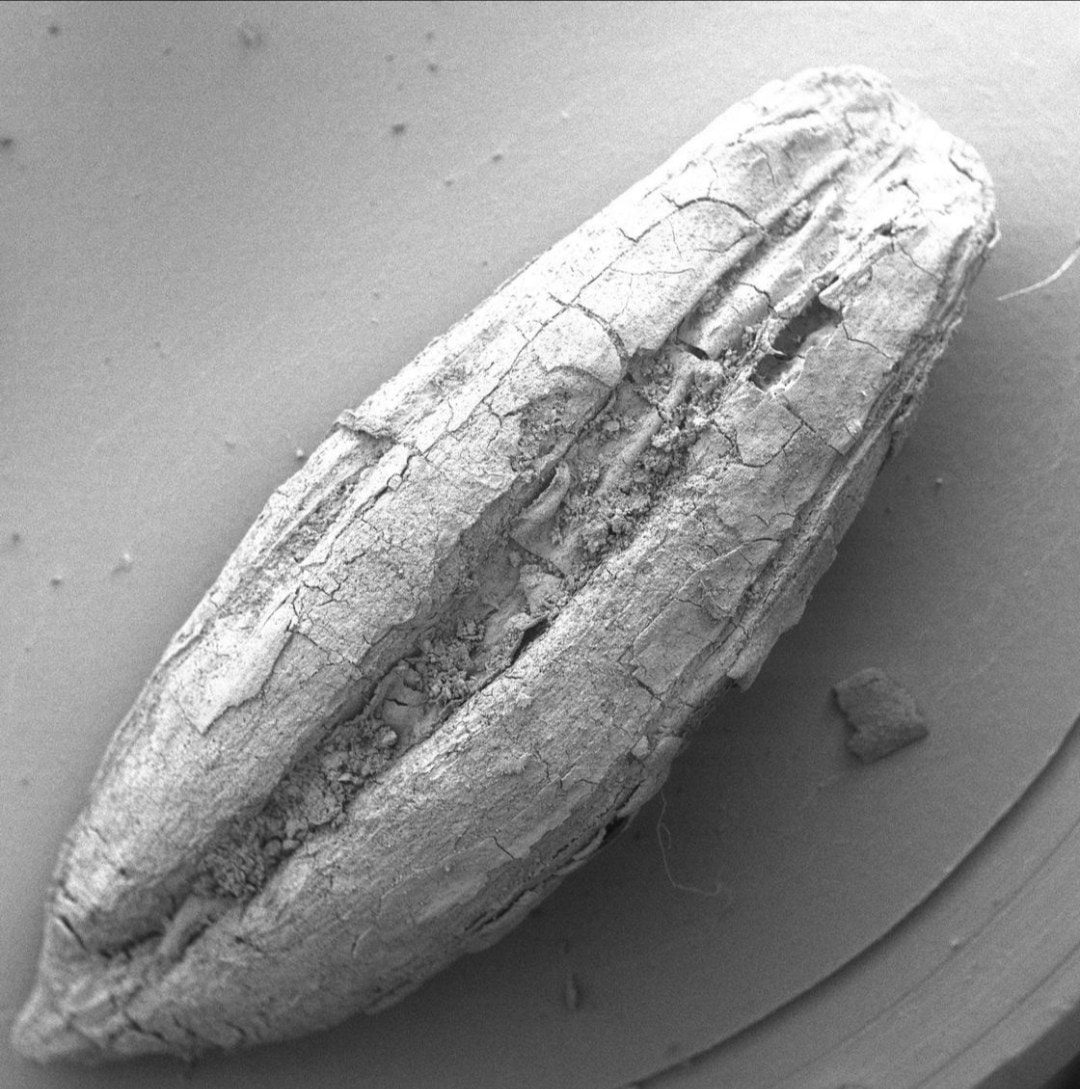
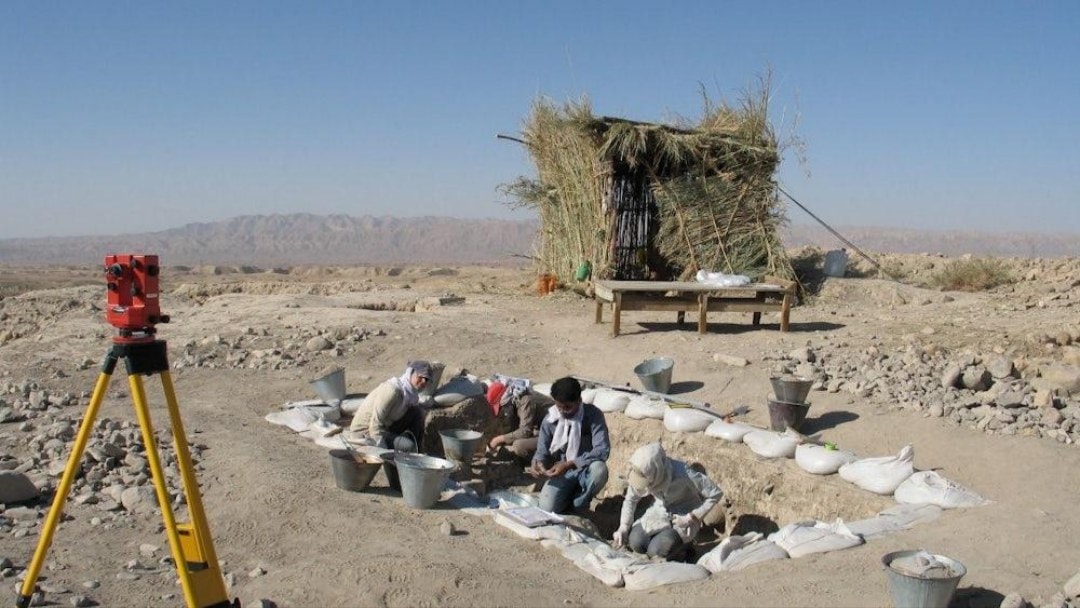
Chogha Golan was one village among several. At Ganj Dareh, people herded goats about 10,000 years ago [2]. At Sheikh-e Abad, high in the central Zagros, Roger Matthews, Wendy Matthews and Yaghoub Mohammadifar dug a long record of village life from the first centuries of farming [7]. On the Deh Luran plain in south-western Iran, Frank Hole, Kent Flannery and James Neely excavated Ali Kosh in the 1960s and found people who grew wheat and barley and kept goats and sheep [8]. In Iraqi Kurdistan, Robert Braidwood’s team had already found a farming village of mud houses at Jarmo in the 1950s [9].
The goats tell the same story from the animal side. Daly’s team found that goats at Ganj Dareh and nearby Tepe Abdul Hosein were genetically distinct from the wild goats people still hunted, while their bones looked the same [3]. The shape of the bones changed only about a thousand years later [3]. Domestication began with people’s choices about which animals to keep and breed, long before it showed in the animals’ bodies.
Riehl and her colleagues read Chogha Golan as evidence that farming began in several centres across the Fertile Crescent at about the same time, the eastern end included [6]. The question is still open. Chogha Golan’s domesticated emmer appears a few centuries after the earliest domesticated cereals in the west. That leaves room for a second reading, in which the people of the Zagros tended wild plants on their own and then took up domestic varieties of some crops from neighbours to the west. Both readings fit the seeds we have. What the evidence does show is that people in the Zagros were cultivating wild plants and managing goats in the same centuries as their western neighbours.
A family apart
In the summer of 2016, three teams published the first genomes of early Zagros farmers within weeks of each other. Gallego-Llorente and Pinhasi read the Ganj Dareh woman [1]. Farnaz Broushaki, Joachim Burger and their colleagues read four people from Wezmeh Cave and Tepe Abdul Hosein in the central Zagros, the best preserved of them a man from Wezmeh who lived about 9,300 years ago [10]. Lazaridis and his team added more people from Ganj Dareh [5]. The three studies reached the same answer.
The early Zagros farmers were genetically far from the early farmers of Anatolia and the Levant. Broushaki’s team estimated that the Zagros line and the line of the early Anatolian farmers had separated between 46,000 and 77,000 years ago [10]. Farming itself is only about 12,000 years old. So two groups of people took up the same new way of life while their family lines had been apart for close to four times that long.
This changed the question of where farming began. Lazaridis’s team concluded that the first farmers of the Zagros and the Levant each descended from local hunter-gatherers [5], and Broushaki’s team concluded that several genetically different hunter-gatherer groups took up farming in south-west Asia [10]. Farming started in more than one place, among people whose families had lived apart since long before the Ice Age ended.
Broushaki’s team also compared their genomes with people living today. The closest matches were people in Pakistan and Afghanistan, and above all Zoroastrians in Iran [10]. Gallego-Llorente’s team found that the Ganj Dareh woman’s people had left little direct trace in Europeans today [1].
Geneticists also look at two small parts of the genome that pass down almost unchanged. Mitochondrial DNA passes from a mother to all her children, so it follows a line of mothers. The Y chromosome passes only from father to son, much like a surname in many families. Each of these lines is sorted into haplogroups, which are branches on one very large family tree: two people in the same haplogroup share a direct ancestor on that line, often thousands of years back.
The Ganj Dareh woman’s mitochondrial DNA belonged to haplogroup X, most likely its branch X2 [1]. Several men from Ganj Dareh whose Y chromosomes could be read belonged to haplogroup R2a, and a later Neolithic man from Iran belonged to G2a [5, 11]. These results come from a handful of people at a few sites. They tell us which lines were present in these villages, and very little about how common each line was.
Daily life in the high valleys
Picture the inside of a house at Ganj Dareh. The walls are mud brick, and some bricks still carry the hoof prints of goats that walked across them while they dried in the sun. Small, box-like rooms open off one another, too small to sleep in. Philip Smith, who excavated the site in the 1960s and 1970s, read them as storerooms for food [12].
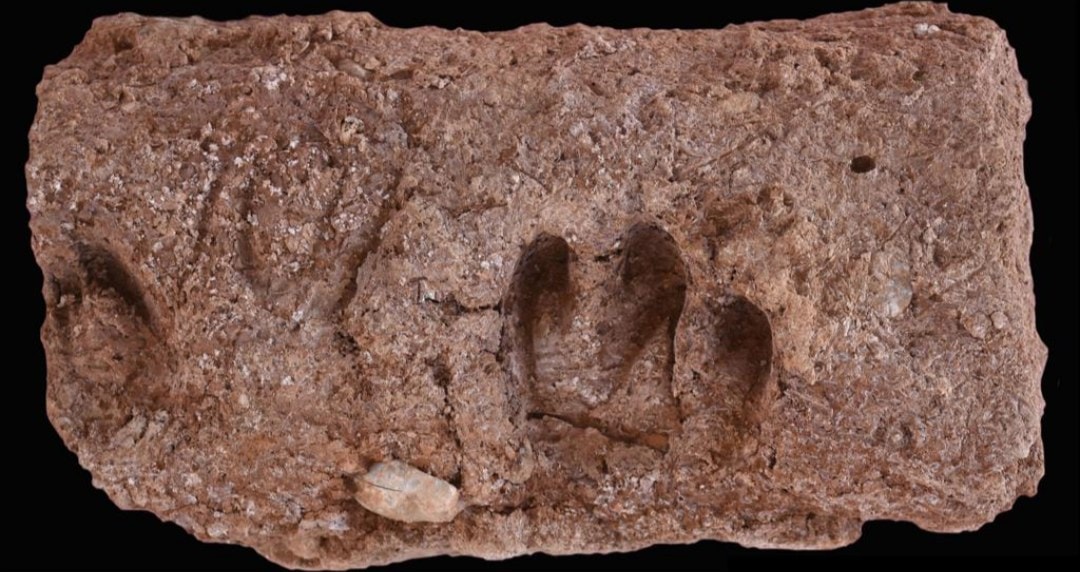
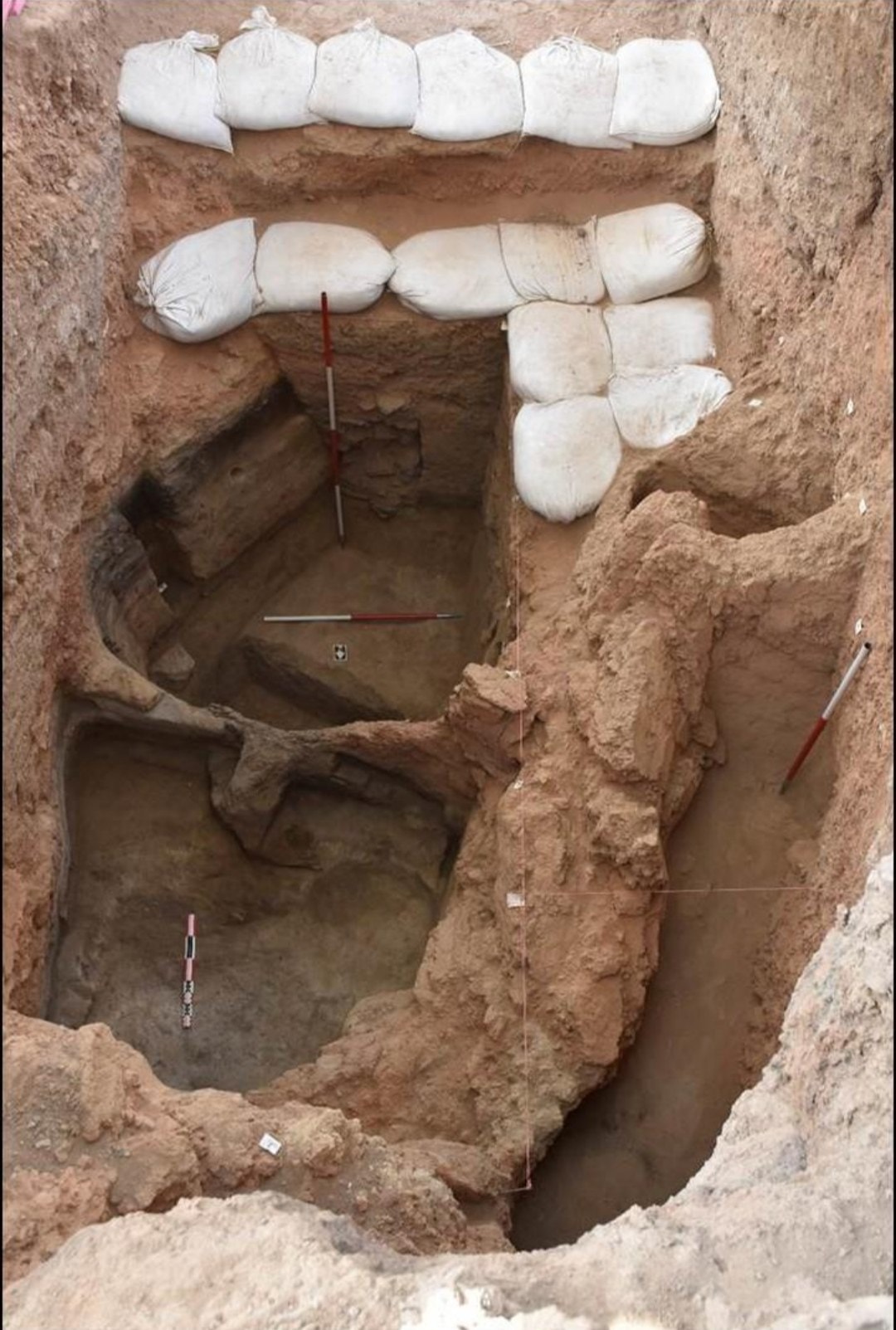
The village was small. Its mound is about 40 metres across and holds 7 to 8 metres of built-up layers, which Smith labelled A to E from top to bottom [1]. The lowest layer held pits and traces of a camp. Above it came buildings of mud brick, and in that level Smith also found small clay objects and simple vessels of lightly fired clay, made long before pottery was common in the Zagros [12]. Much of the village was later burned, and the fire baked the mud walls and helped preserve them [12].
In the same Kermanshah region, at a later village called Tepe Sarab, Robert Braidwood’s team found clay figurines of animals and people, among them a seated female figure [13]. What these figures meant to the people who made them, we do not know. Ideas about fertility or worship are reasonable guesses, and they remain guesses.
Seeds and bones tell us what people ate. At Chogha Golan that meant wild barley, lentils and goat-grass, and later emmer wheat [6]. At Ganj Dareh goat was the main meat, and people still hunted wild goats alongside their herds [3]. The dead were buried within the villages, and their bones are the source of the genomes in this article [1, 5]. Skeletons from these early villages are few, so we know little yet about how healthy their owners were or what illnesses they suffered.
Everything above comes from walls, seeds, bones and clay. How families shared work, or what they believed about the figures they shaped, leaves no trace in a mud wall. Any account of those things is our inference from objects, and the objects can be read in more than one way.
Cousins on the move
Where did the relatives of these hill villagers go? Families moved for new pasture, for land, for marriage and trade, and over thousands of years those short moves added up to long journeys. Geneticists can follow them because people carried their ancestry with them and mixed it with that of the people they met. The word for this mixing is admixture: when two groups who have lived apart begin to have children together, the children carry both histories, the way a river below a meeting point carries water from both streams.
The first road ran east. Over the thousands of years after Ganj Dareh, farmers and herders settled across the Iranian plateau and reached the oases at the edge of Central Asia, in today’s Turkmenistan and Uzbekistan. In 2019 Vagheesh Narasimhan, David Reich and their colleagues published genomes from 523 ancient people, most of them from Central Asia and the far north of South Asia [11]. They found a gradient across south-western Asia that formed from the Neolithic onward: more Anatolian farmer-related ancestry in the west, more Iranian farmer-related ancestry in the east [11]. About 4,000 years ago, Iran-related ancestry was the main part of the ancestry of the people of the Bactria-Margiana towns in the Central Asian oases [11].
A second road ran west. Zagros-related people met and married farmers from Anatolia and the Levant in the lowlands of Mesopotamia and the hills of eastern Anatolia. Lazaridis’s team found that by the Bronze Age, beginning about 5,000 years ago, the sharp differences between the Zagros, Levantine and Anatolian farmers had largely faded because these groups had mixed [5]. A later study led by Lazaridis and Songül Alpaslan-Roodenberg followed this mixing in more than 700 ancient genomes across the “Southern Arc”, the belt of land from south-eastern Europe through Anatolia to the Caucasus and Iran, over 11,000 years [14].
The third road ran north, through the Caucasus. The Caucasus hunter-gatherers were already close cousins of the Zagros people [1, 4]. About 5,000 years ago, new herders appear on the grasslands north of the Black and Caspian Seas, a people archaeologists call the Yamnaya, who lived with wagons and herds and buried some of their dead under earth mounds. In 2015 Wolfgang Haak and his colleagues found that about half of Yamnaya ancestry came from a population related to people of the Near East, and the rest from the hunter-gatherers of eastern Europe [15]. Jones’s team showed the same year that Caucasus hunter-gatherer ancestry had a large part in that southern half [4]. Later work by Chuan-Chao Wang and colleagues on genomes from the Caucasus [16], and the Southern Arc study [14], traced that southern half to Caucasus and Iran-related people who had lived on both sides of the mountains.
From the grasslands, descendants of the Yamnaya and related herders moved west into Europe, where they married into the families of earlier farmers [15]. Much later, related herders moved east and south through Central Asia. Narasimhan’s team found that Steppe ancestry began to reach South Asia about 4,000 years ago [11]. So a share of Caucasus and Iran-related ancestry entered Europe and South Asia by this long northern road, carried inside the Steppe herders’ own mixed ancestry. As the next section shows, South Asia also had an older and much larger Iranian-related strand of its own.
The South Asian puzzle
Open almost any DNA report for a person from India, Pakistan, Bangladesh or Nepal and you will see a name that sounds far from home: Iranian farmer-related. For many people it is the largest single part of the report. It is easy to read this as saying that farmers from Iran walked into South Asia and brought farming with them. The genomes tell a different story.
The first clue came from people who lived in contact with the Indus cities. Narasimhan’s team found a small group of individuals buried at Gonur in Turkmenistan and Shahr-i-Sokhta in eastern Iran whose ancestry did not match their neighbours [11]. Their ancestry was about 45 to 82 percent Iranian farmer-related and about 11 to 50 percent AASI, with almost nothing from Anatolian farmers [11]. AASI, short for Ancient Ancestral South Indian, is the name for the old hunter-gatherer ancestry of South Asia, a line distantly related to present-day Andaman Islanders. Such percentages are a model’s estimates, closer to a weather forecast than to a measurement of height: change the reference groups and the numbers move.
Then came a woman buried at Rakhigarhi, in today’s Haryana, one of the largest cities of the Indus civilisation, about 4,500 years ago. Vasant Shinde, David Reich and their colleagues made more than 100 attempts to read DNA from her bones, which had lain in hot ground for millennia, and got just enough from one sample [17].
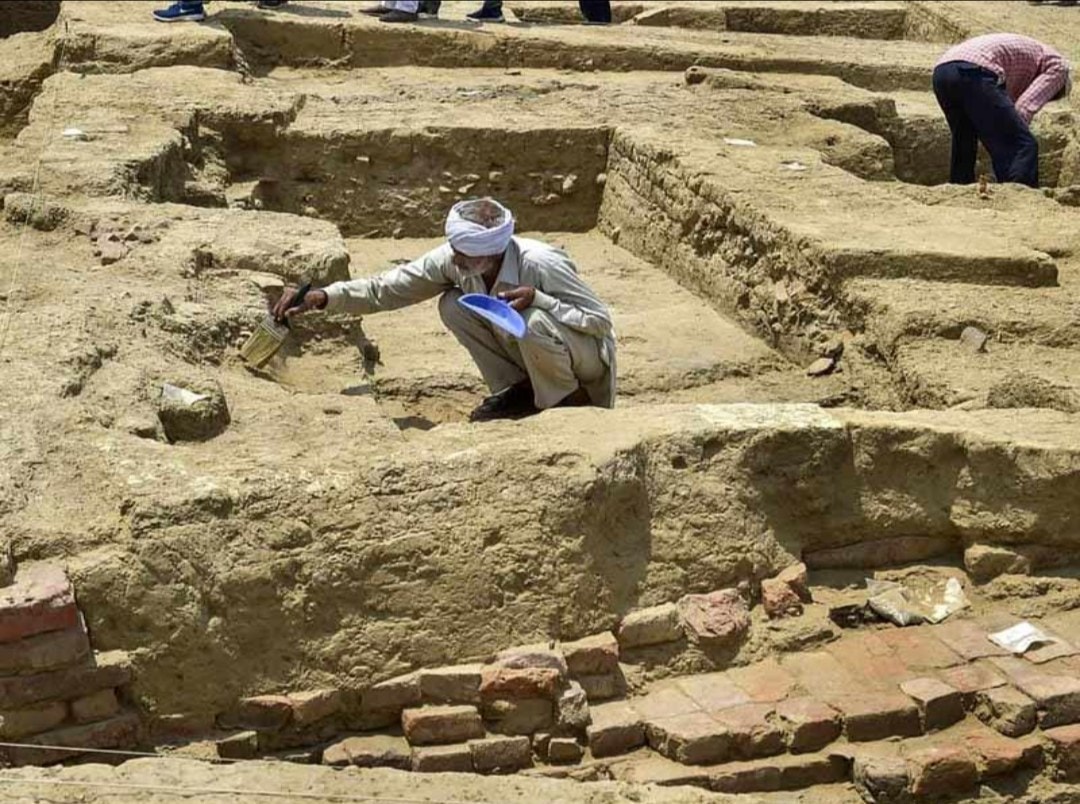
Her ancestry matched the people Narasimhan’s team had found at Gonur and Shahr-i-Sokhta: Iranian-related plus AASI, with no detectable ancestry from Steppe herders [17].
The surprise lay in the Iranian-related part. When the team compared it with the genomes of ancient people from Iran, it traced back to a line that had split away from the Iranian plateau’s farmers, herders and hunter-gatherers before those groups had split from one another, more than 12,000 years ago [17]. That is before farming began anywhere in the Zagros. The paper’s title says it directly: the Harappan genome lacks ancestry from Iranian farmers [17].
A family comparison helps. Picture two cousins whose grandparents were brother and sister. One cousin grows up in Kermanshah and the other in Haryana. They share part of their DNA because their grandparents shared parents, yet neither is the other’s ancestor, and neither family moved into the other’s house. The Zagros farmers and the people of the Indus cities were related in this way. Their shared “grandparents” lived more than 12,000 years ago, and the “cousins” were whole peoples.
If the Indus people’s ancestors did not walk in from the Zagros as farmers, how did farming begin in South Asia? The oldest known farming village in the region is Mehrgarh, at the foot of the Bolan Pass in Balochistan, Pakistan, excavated by Jean-François Jarrige, Catherine Jarrige and their team from 1974 [18]. Its early farmers grew barley and wheat and kept goats and sheep, which had first been domesticated further west, and the zebu, the humped cattle of South Asia, was domesticated in this region [18, 19].
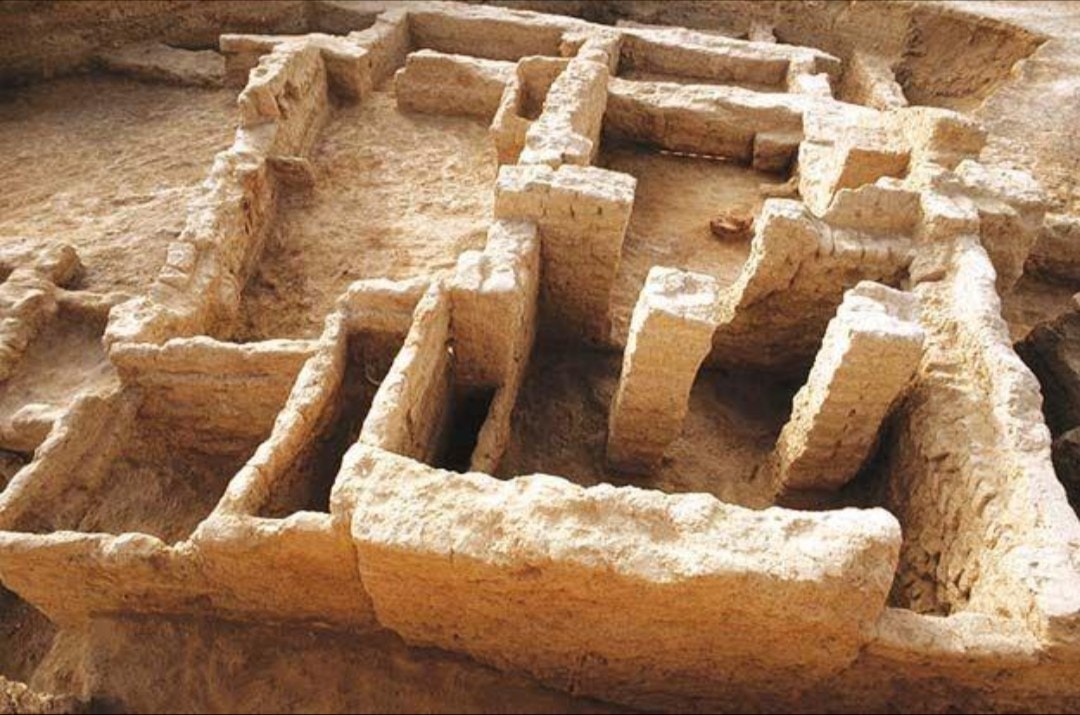
Dorian Fuller’s review of the evidence describes several separate starts of farming across the subcontinent, with rice, millets and pulses domesticated in different regions [19]. Shinde’s team argued that farming in South Asia began among local people who took up crops, animals and ideas from the west, without a large movement of people [17].
In 2025 Elise Kerdoncuff, Laurits Skov, Priya Moorjani and their colleagues read the full genomes of about 2,700 living Indians [20]. They found that most Indians carry ancestry from three groups: South Asian hunter-gatherers, Eurasian Steppe herders, and Neolithic farmers related to Iranian and Central Asian cultures [20]. When they tested which ancient group best fitted the Iranian-related part, the best fits came from early Neolithic and Copper Age people of Central Asian cultures [20]. They also noted that the shortage of ancient DNA from South and Central Asia limits how precisely the source can be placed [20].
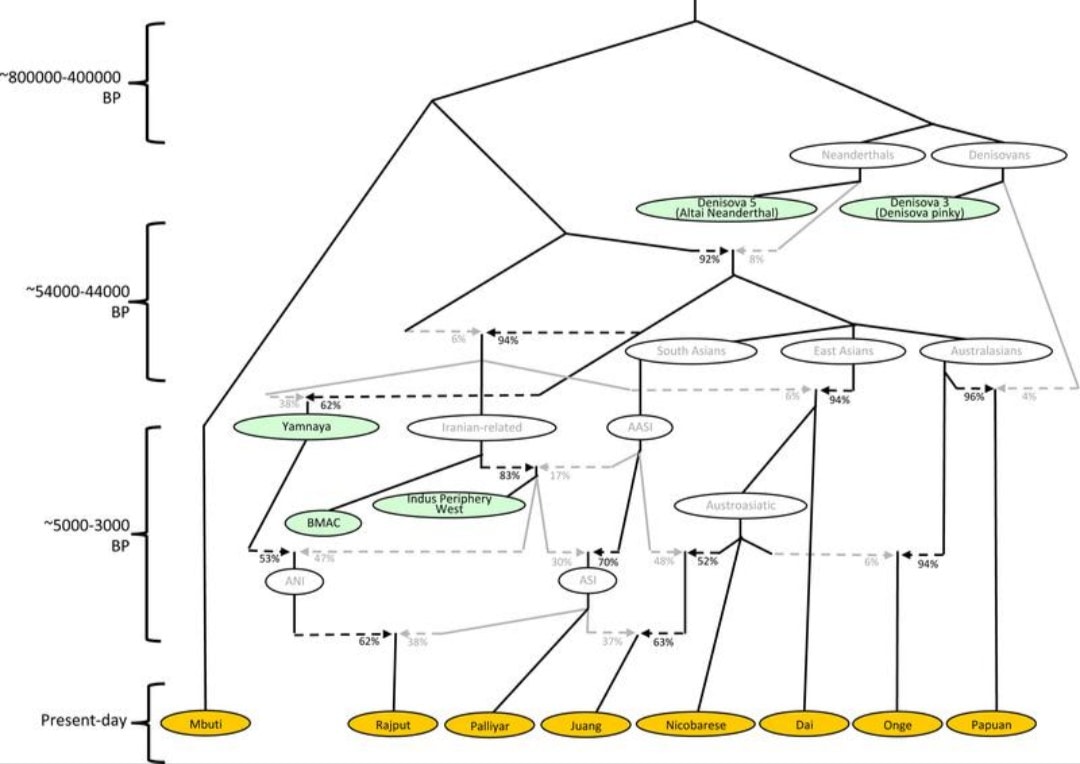
So where did the sister lineage live before the Indus cities? Eastern Iran, southern Central Asia, Balochistan and the north-west of the subcontinent are all possible, and the people of more than one modern country would like the answer to be theirs. Whether Mehrgarh’s first farmers carried this lineage is unknown, because no genome from its earliest burials has been published. Until such genomes exist, the honest answer is that the sister lineage lived somewhere in the wide region between the Iranian plateau and the Indus, and we cannot yet point to the spot.
Where Zagros-related ancestry is today
Walk through a market in Kermanshah, Tabriz or Tbilisi today and many of the people around you carry a large share of ancestry related to the early farmers of the Zagros. That share is highest across Iran, the Caucasus and the mountains between them, among Persians, Kurds, Lurs, Azeris, Armenians, Georgians and their neighbours [5, 14]. Each of these peoples also carries later layers, from Anatolian farmers, from Steppe herders, from Central Asian groups and from the movements and marriages of the last few thousand years [14].
Broushaki’s team found that among people living today, the early Zagros farmers were closest to people in Pakistan and Afghanistan and above all to Zoroastrians in Iran [10]. Zoroastrian communities have tended to marry within their faith for many centuries, which may have kept an older Iranian ancestry profile more intact than in their neighbours. That last point is an inference from history, and the study gives the match, without a full explanation for it.
The Parsis of India and Pakistan carry this story into South Asia. Their ancestors left Iran and settled on the Gujarat coast more than a thousand years ago. In 2017 Gyaneshwer Chaubey, Qasim Ayub, Kumarasamy Thangaraj and their colleagues studied Parsi genomes and found that Parsis are genetically closest to Iranians and to people of the Caucasus [21]. Their mothers’ lines include many South Asian ones, a trace of the first Parsi settlers marrying into local families, which fits the Parsi story of settling in Gujarat “like sugar in milk” [21].
In most of South Asia, Iranian-related ancestry comes through the sister lineage of the Indus people [17, 20]. It is found everywhere in the subcontinent, in different amounts, mixed with AASI and, in many groups, with Steppe ancestry [11, 20]. In Europe, a smaller share of Caucasus and Iran-related ancestry arrived inside the ancestry of the Steppe herders about 5,000 years ago [15].
These strands now sit side by side in billions of people, each mixed in its own proportions. A Kurd in Sulaymaniyah, a Parsi in Mumbai, a Punjabi in Lahore and a farmer in Tamil Nadu each carry some part of this deep family, through different routes and in different amounts, alongside everything else their ancestors met along the way.
What your own DNA can show
Suppose your GenoConnect report shows a large “Iranian farmer-related” share. That number says your genome is best described, with today’s reference samples, as partly coming from a population related to the ancient farmers and herders of Iran. The label names the closest ancient group that geneticists have sampled. It does not mean your ancestors lived in Iran, spoke Persian or were Persians. For most South Asians, the people behind that share lived in South Asia for thousands of years, on the sister line described above.
An “Indus-related” label points to the mix found in the Rakhigarhi woman and the people at Gonur and Shahr-i-Sokhta: Iranian-related ancestry together with AASI. Like every ancestry percentage, these numbers are a model’s estimates, and a different set of reference groups would move them a few points. They describe deep ancestry from thousands of years ago. They say nothing about your religion, language, nationality or caste, which people built and changed in far more recent times.
A GenoConnect DNA test places your genome on these same reference models. It also reports your mitochondrial haplogroup, which follows your mother’s mother’s line, and for men the Y-chromosome haplogroup, which follows the father’s line. Together they show how the strands in this article combine in one family.
What we still do not know
The biggest gap lies in eastern Iran, Balochistan and southern Central Asia. Genomes from villages there, from the time before farming and its first centuries, could show where the sister lineage of the Indus people lived. Kerdoncuff’s team pointed to early Central Asian groups as the closest fit [20], but a closest fit among the groups sampled so far is a different thing from a homeland.
Mehrgarh is the second gap. DNA from its earliest burials would show whether its first farmers carried the sister lineage and how much AASI ancestry they had. That one result would tell us a great deal about how farming began in South Asia.
The third question is how many separate beginnings farming had. More plant and animal remains from the eastern Fertile Crescent, dated layer by layer as at Chogha Golan [6], would show which crops the Zagros domesticated itself and which, if any, it took up from the west. The early Zagros genomes come from only a few sites [1, 5, 10], and genomes from more villages would show whether the Zagros held one farming people or several.
The fourth question is timing in the north. Caucasus and Iran-related ancestry was part of the Yamnaya by about 5,000 years ago [15, 16]. Genomes from the Caucasus and the grasslands in the thousands of years before that would show when the mixing began, and along which valleys.
The bones that could answer these questions are still in the ground, in the Zagros, in Balochistan and along the edges of the Central Asian deserts. Until someone finds them, the clearest picture we have is still the one from Ganj Dareh: a small mud-brick village in a high valley, goats that still looked wild, and a woman whose DNA showed that farming had more than one family behind it.
Frequently asked questions
Did Indians come from Iran?
The genomes say no. The Iranian-related ancestry in South Asians comes from a line that split from the ancestors of Iran’s early farmers, herders and hunter-gatherers more than 12,000 years ago [17]. Its people most likely lived in or near South Asia for thousands of years before the Indus cities. The Rakhigarhi woman had no detectable ancestry from Iranian farmers [17].
What is Iranian farmer-related ancestry?
It is a label for ancestry that geneticists model using genomes of early farmers and herders from the Zagros and the Iranian plateau, because those are the closest ancient samples available. In South Asians, the actual source was a sister population of those farmers, and in 2025 Kerdoncuff’s team found it fits best with early Central Asian groups [20]. The label names a reference group. It does not name a country.
Who were the Zagros farmers?
They were people of the Zagros Mountains, in today’s western Iran and north-eastern Iraq, who began managing goats and growing cereals about 10,000 to 11,700 years ago, at sites such as Ganj Dareh and Chogha Golan [2, 6]. Their genomes show they descended from local hunter-gatherers and were genetically far from the first farmers of Anatolia and the Levant [5, 10].
Did farming start in India or Iran?
Farming started in several places. The Zagros was one of the early centres in south-west Asia [6]. In South Asia, the earliest known farming village is Mehrgarh in Balochistan, where people grew wheat and barley that were first domesticated further west and also domesticated the zebu [18, 19]. Rice, millets and pulses were domesticated within the subcontinent itself [19].
Are Parsis related to Zagros farmers?
Parsis are genetically closest to Iranians and to people of the Caucasus, because their ancestors moved from Iran to Gujarat more than a thousand years ago [21]. Modern Iranians carry a large share of ancestry related to the Zagros farmers, so Parsis do too, mixed with South Asian ancestry through the mothers’ side [21].
Is Iranian-related ancestry the same as Aryan ancestry?
No. These are separate things. Steppe ancestry comes from herders of the grasslands north of the Black and Caspian Seas and began to reach South Asia about 4,000 years ago [11]. Iranian-related ancestry in South Asia is much older: it was already a large part of the Indus people’s ancestry before any Steppe ancestry arrived [17]. “Aryan” is a word from ancient texts about language and culture, and no DNA test measures it.
References
- [1]Gallego-Llorente, Marcos, Sarah Connell, Eppie R. Jones, Deborah C. Merrett, Yeonsu Jeon, Anders Eriksson, Veronika Siska, et al. 2016. “The Genetics of an Early Neolithic Pastoralist from the Zagros, Iran.” Scientific Reports 6: 31326. https://doi.org/10.1038/srep31326.
- [2]Zeder, Melinda A., and Brian Hesse. 2000. “The Initial Domestication of Goats (Capra hircus) in the Zagros Mountains 10,000 Years Ago.” Science 287 (5461): 2254–57. https://doi.org/10.1126/science.287.5461.2254.
- [3]Daly, Kevin G., Valeria Mattiangeli, Andrew J. Hare, Hossein Davoudi, Homa Fathi, Sanaz Beizaee Doost, Sarieh Amiri, et al. 2021. “Herded and Hunted Goat Genomes from the Dawn of Domestication in the Zagros Mountains.” Proceedings of the National Academy of Sciences 118 (25): e2100901118. https://doi.org/10.1073/pnas.2100901118.
- [4]Jones, Eppie R., Gloria Gonzalez-Fortes, Sarah Connell, Veronika Siska, Anders Eriksson, Rui Martiniano, Russell L. McLaughlin, et al. 2015. “Upper Palaeolithic Genomes Reveal Deep Roots of Modern Eurasians.” Nature Communications 6: 8912. https://doi.org/10.1038/ncomms9912.
- [5]Lazaridis, Iosif, Dani Nadel, Gary Rollefson, Deborah C. Merrett, Nadin Rohland, Swapan Mallick, Daniel Fernandes, et al. 2016. “Genomic Insights into the Origin of Farming in the Ancient Near East.” Nature 536 (7617): 419–24. https://doi.org/10.1038/nature19310.
- [6]Riehl, Simone, Mohsen Zeidi, and Nicholas J. Conard. 2013. “Emergence of Agriculture in the Foothills of the Zagros Mountains of Iran.” Science 341 (6141): 65–67. https://doi.org/10.1126/science.1236743.
- [7]Matthews, Roger, Wendy Matthews, and Yaghoub Mohammadifar, eds. 2013. The Earliest Neolithic of Iran: 2008 Excavations at Sheikh-e Abad and Jani. Oxford: Oxbow Books.
- [8]Hole, Frank, Kent V. Flannery, and James A. Neely. 1969. Prehistory and Human Ecology of the Deh Luran Plain: An Early Village Sequence from Khuzistan, Iran. Memoirs of the Museum of Anthropology 1. Ann Arbor: University of Michigan.
- [9]Braidwood, Robert J., and Bruce Howe. 1960. Prehistoric Investigations in Iraqi Kurdistan. Studies in Ancient Oriental Civilization 31. Chicago: University of Chicago Press.
- [10]Broushaki, Farnaz, Mark G. Thomas, Vivian Link, Saioa López, Lucy van Dorp, Karola Kirsanow, Zuzana Hofmanová, et al. 2016. “Early Neolithic Genomes from the Eastern Fertile Crescent.” Science 353 (6298): 499–503. https://doi.org/10.1126/science.aaf7943.
- [11]Narasimhan, Vagheesh M., Nick Patterson, Priya Moorjani, Nadin Rohland, Rebecca Bernardos, Swapan Mallick, Iosif Lazaridis, et al. 2019. “The Formation of Human Populations in South and Central Asia.” Science 365 (6457): eaat7487. https://doi.org/10.1126/science.aat7487.
- [12]Smith, Philip E. L. 1990. “Architectural Innovation and Experimentation at Ganj Dareh, Iran.” World Archaeology 21 (3): 323–35.
- [13]Braidwood, Robert J., Bruce Howe, and Charles A. Reed. 1961. “The Iranian Prehistoric Project.” Science 133 (3469): 2008–10.
- [14]Lazaridis, Iosif, Songül Alpaslan-Roodenberg, Ayşe Acar, Ayşen Açıkkol, Anagnostis Agelarakis, Levon Aghikyan, Uğur Akyüz, et al. 2022. “The Genetic History of the Southern Arc: A Bridge between West Asia and Europe.” Science 377 (6609): eabm4247. https://doi.org/10.1126/science.abm4247.
- [15]Haak, Wolfgang, Iosif Lazaridis, Nick Patterson, Nadin Rohland, Swapan Mallick, Bastien Llamas, Guido Brandt, et al. 2015. “Massive Migration from the Steppe Was a Source for Indo-European Languages in Europe.” Nature 522 (7555): 207–11. https://doi.org/10.1038/nature14317.
- [16]Wang, Chuan-Chao, Sabine Reinhold, Alexey Kalmykov, Antje Wissgott, Guido Brandt, Choongwon Jeong, Olivia Cheronet, et al. 2019. “Ancient Human Genome-Wide Data from a 3000-Year Interval in the Caucasus Corresponds with Eco-Geographic Regions.” Nature Communications 10: 590. https://doi.org/10.1038/s41467-018-08220-8.
- [17]Shinde, Vasant, Vagheesh M. Narasimhan, Nadin Rohland, Swapan Mallick, Matthew Mah, Mark Lipson, Nathan Nakatsuka, et al. 2019. “An Ancient Harappan Genome Lacks Ancestry from Steppe Pastoralists or Iranian Farmers.” Cell 179 (3): 729–35. https://doi.org/10.1016/j.cell.2019.08.048.
- [18]Jarrige, Catherine, Jean-François Jarrige, Richard H. Meadow, and Gonzague Quivron, eds. 1995. Mehrgarh: Field Reports 1974–1985, from Neolithic Times to the Indus Civilization. Karachi: Department of Culture and Tourism, Government of Sindh.
- [19]Fuller, Dorian Q. 2006. “Agricultural Origins and Frontiers in South Asia: A Working Synthesis.” Journal of World Prehistory 20 (1): 1–86. https://doi.org/10.1007/s10963-006-9006-8.
- [20]Kerdoncuff, Elise, Laurits Skov, Nick Patterson, Joyita Banerjee, Pranali Khobragade, Sankha S. Chakrabarti, Avinash Chakrawarty, et al. 2025. “50,000 Years of Evolutionary History of India: Impact on Health and Disease Variation.” Cell 188 (13): 3389–3404. https://doi.org/10.1016/j.cell.2025.04.027.
- [21]Chaubey, Gyaneshwer, Qasim Ayub, Niraj Rai, Satya Prakash, Veena Mushrif-Tripathy, Massimo Mezzavilla, Ajai Kumar Pathak, et al. 2017. “‘Like Sugar in Milk’: Reconstructing the Genetic History of the Parsi Population.” Genome Biology 18: 110. https://doi.org/10.1186/s13059-017-1244-9.