Ancient ancestral south indians/south Asian hunter gatherers
A cave above the rainforest
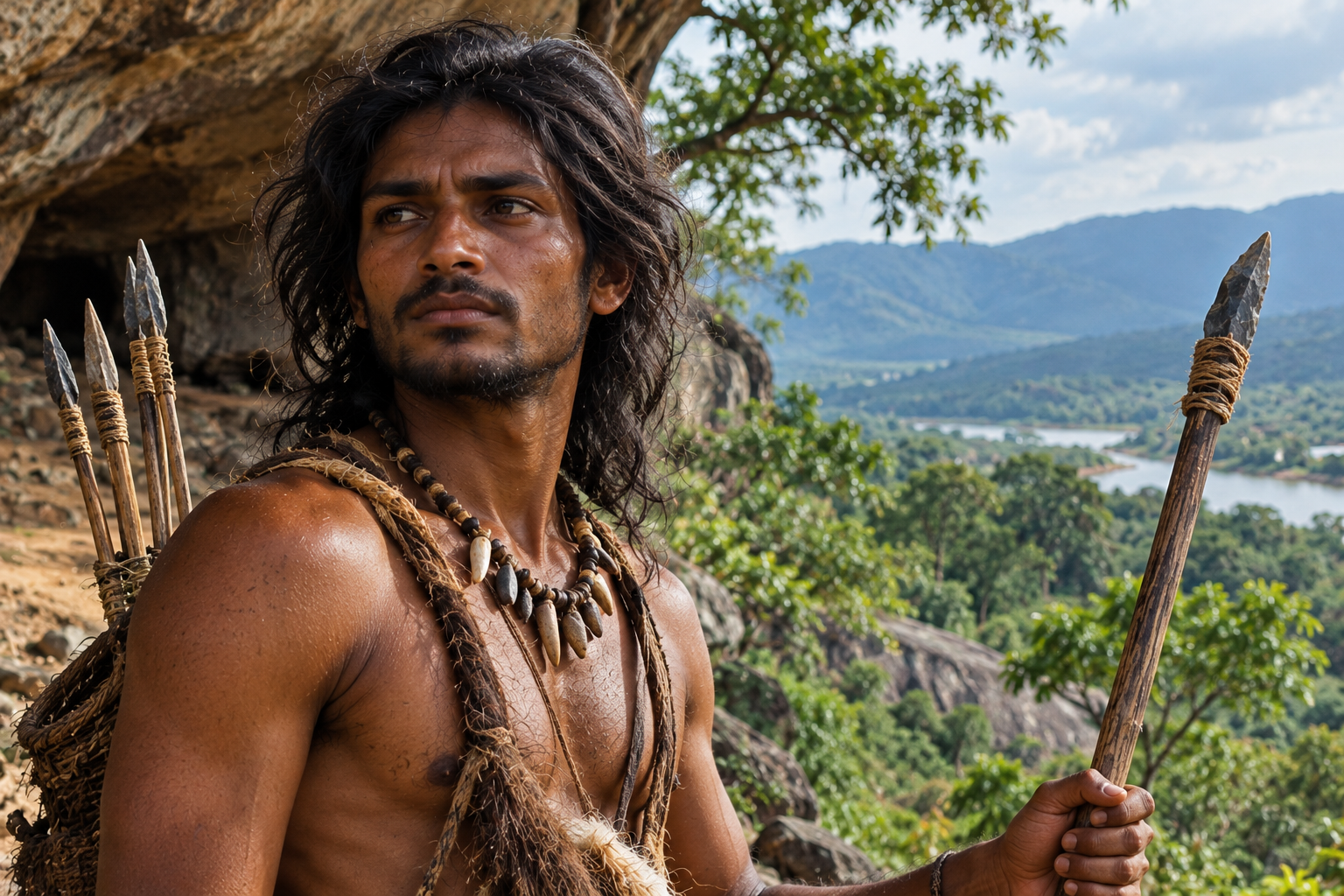
Picture a hunter in the wet forest of south-western Sri Lanka, about 45,000 years ago. Rain drips through the canopy. High in a tree, a langur moves along a branch. The hunter carries a dart or spear tipped with tiny chips of quartz. Later the catch will be carried back to a large cave, cut up and roasted over a fire.
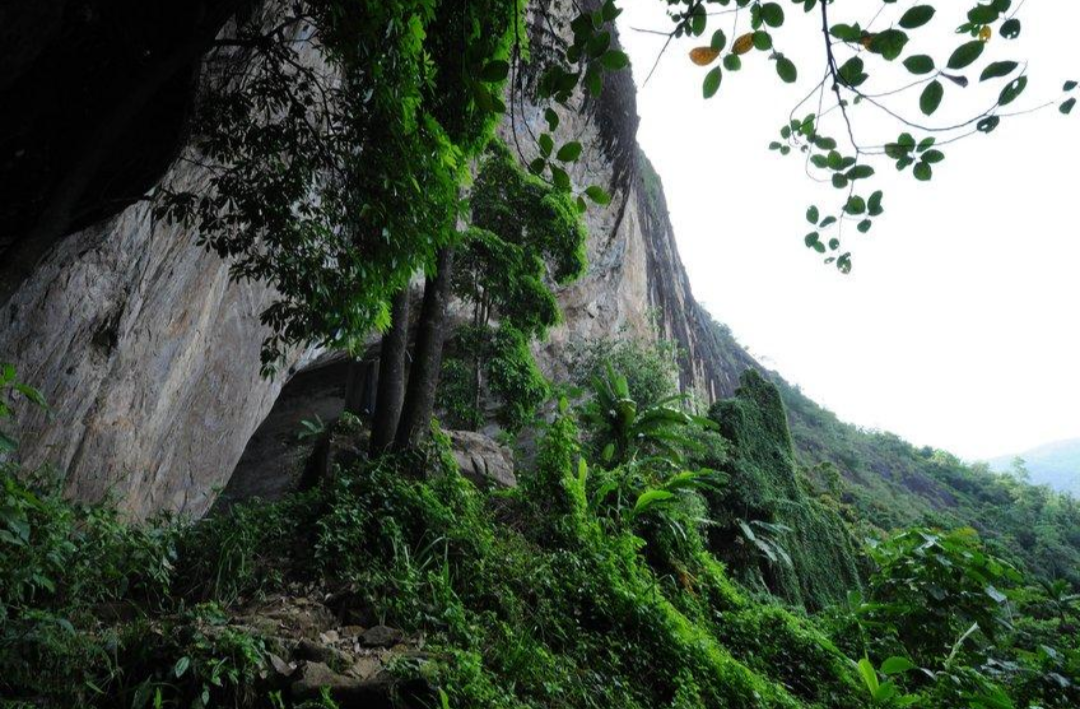
The cave is real. It is called Fa-Hien Lena, and in 2019 Oshan Wedage and his colleagues published new dates for its layers along with a study of the animal bones found in them. Most of the bones came from monkeys and squirrels that live in the treetops, and many carried cut marks and burning [1]. The hunters mostly took adult animals, a habit that let the forest go on feeding people for tens of thousands of years [1]. They even made tools from the bones and teeth of the monkeys they ate [1].
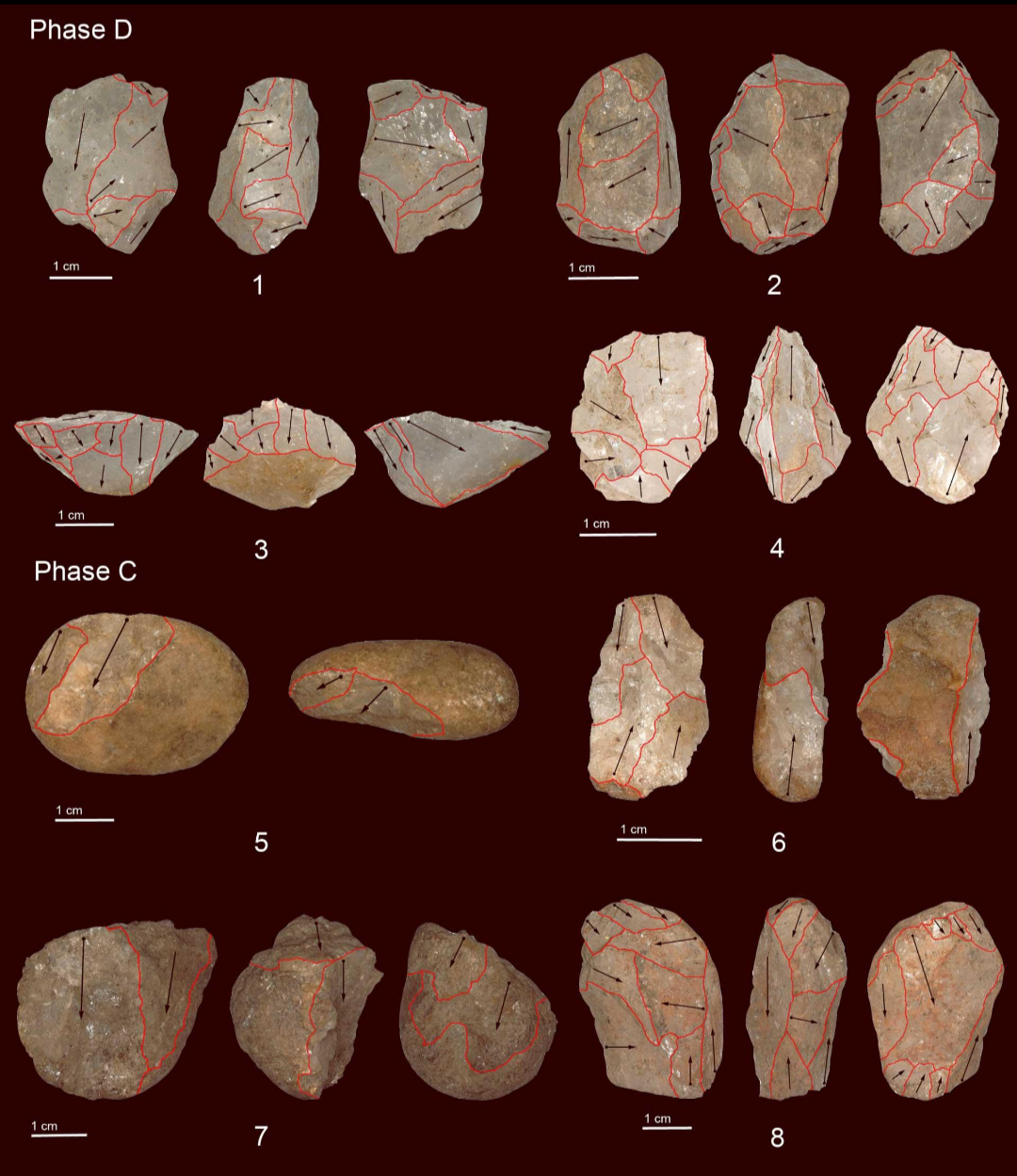
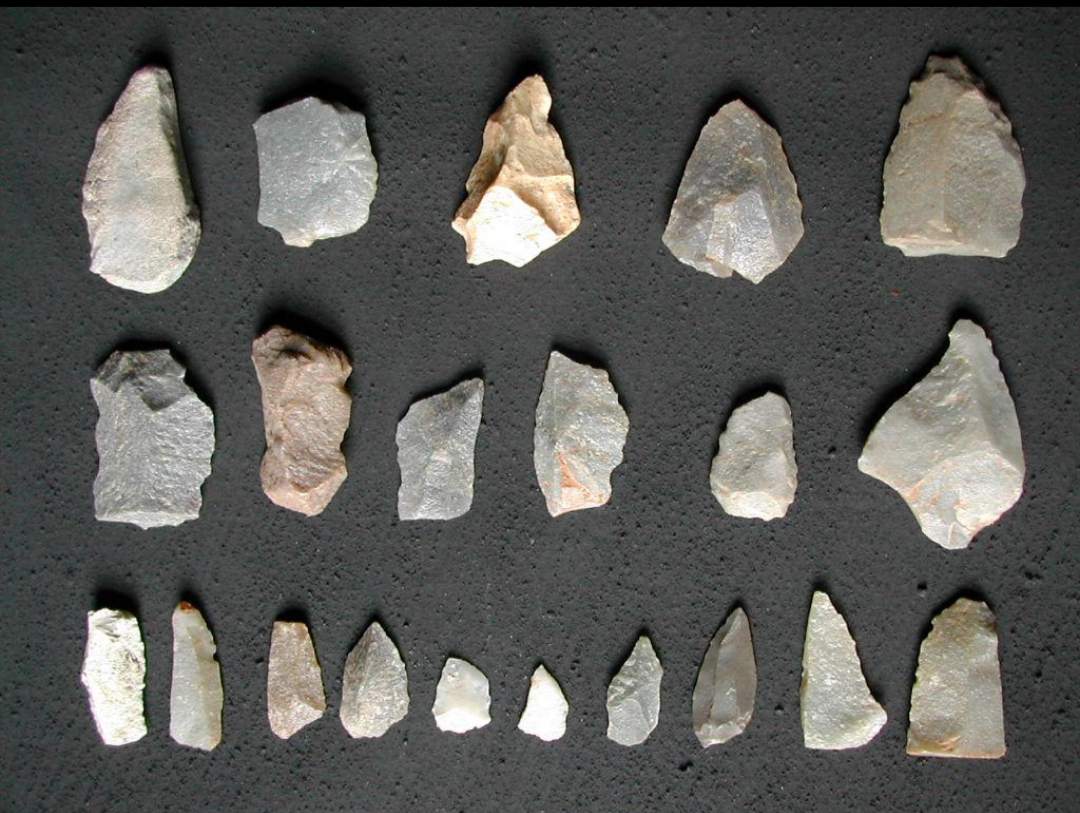
The quartz chips are called microliths. A microlith is a stone blade small enough to sit on a fingertip. People set several of them into a wooden shaft to make an arrow, a dart or a knife. A second study by Wedage's team dated the oldest microliths at Fa-Hien Lena to between 48,000 and 45,000 years ago, the oldest yet found in South Asia [2]. The way people made them barely changed until about 4,000 years ago [2].
So we have the hunters' tools, their food waste and pieces of their skeletons. What we do not have is their DNA. The heat and damp that keep the forest green also break down the genetic material inside old bone. Nobody has yet read the genome of any person who lived in South Asia during those tens of thousands of years, at Fa-Hien Lena or anywhere else.
And yet geneticists are confident that the hunter-gatherers of ancient South Asia have descendants, and a very large number of them. Their ancestry is carried by people in India, Pakistan, Bangladesh, Sri Lanka and Nepal, close to two billion people in all. Geneticists call it AASI, short for Ancient Ancestral South Indian. The name is a little misleading, since these people lived across the whole subcontinent, from the Ganga plain to the rainforests of Sri Lanka. We cannot prove that the Fa-Hien Lena hunters themselves carried AASI ancestry, because their DNA is gone. But they lived in the right place at the right time.
Who were these people? And how can anyone know them without a single sample of their DNA?
A ghost in every genome
Think of a family with no photograph of a great-grandmother. Her great-grandchildren can still piece her together. One has her laugh, another her way with numbers, a third her habit of humming while cooking. Put enough of them in one room and a picture of her starts to form. Geneticists do something similar with AASI.
The raw material is the genome, the full set of DNA instructions a person inherits, half from the mother and half from the father. Each generation shuffles the pieces. Over many generations, a person's genome becomes a patchwork of pieces from thousands of ancestors, and with enough genomes geneticists can work out which ancient populations those pieces came from.
In 2009 David Reich, Kumarasamy Thangaraj and their colleagues compared the DNA of people from 25 groups across India. They found that most Indians descend from a mixture of two ancient populations [3]. They called the first Ancestral North Indians, or ANI, a population related to people of the Middle East, Central Asia and Europe. They called the second Ancestral South Indians, or ASI, a population with no close relatives outside South Asia [3]. Geneticists call this kind of mixing admixture: two family lines that had lived apart join through marriage, and their children carry both.
The picture sharpened when DNA from ancient skeletons became available. In a study circulated in 2018 and published in Science in 2019, Vagheesh Narasimhan and his colleagues analysed DNA from 523 people who lived in Central and South Asia over the past 8,000 years [4]. They showed that ASI was itself a mixture. Its oldest part came from South Asia's hunter-gatherers, and they gave that part a name of its own: AASI [4].
Readers often mix up AASI and ASI, so it is worth stopping here. Think of a family kitchen. AASI is the oldest ingredient on the shelf. ASI is a dish cooked much later, after about 2000 BCE, by combining AASI with ancestry from the people of the Indus cities [4]. Everything in this article is about the ingredient.
Since no AASI person has been sequenced, geneticists need living or ancient stand-ins. For years the closest were the Andaman Islanders. In 2005 Thangaraj's team showed that the maternal lines of the Onge and Great Andamanese form deep branches that have stayed separate since the islands were first settled [5]. Later work by Analabha Basu and colleagues found that Andamanese ancestry is distinct from that of mainland Indians and shares roots with populations of Oceania [6]. The Andamanese are distant cousins of AASI. They are not its descendants in any simple sense.
In 2019 Burak Yelmen and colleagues tried another route. They separated out the South Asian part of hundreds of genomes and found that southern forest communities such as the Paniya make better stand-ins for AASI than the Andamanese do [7]. Groups such as the Paniya and Irula carry the most AASI-related ancestry of any people living today. They also carry later farmer ancestry, like everyone else in the region. When Vasant Shinde's team modelled an ancient Indus genome, they found that either Andaman Islanders or ancient hunter-gatherers from eastern Siberia could stand in for its AASI part, because all of them share ancestry from very deep in time [8].
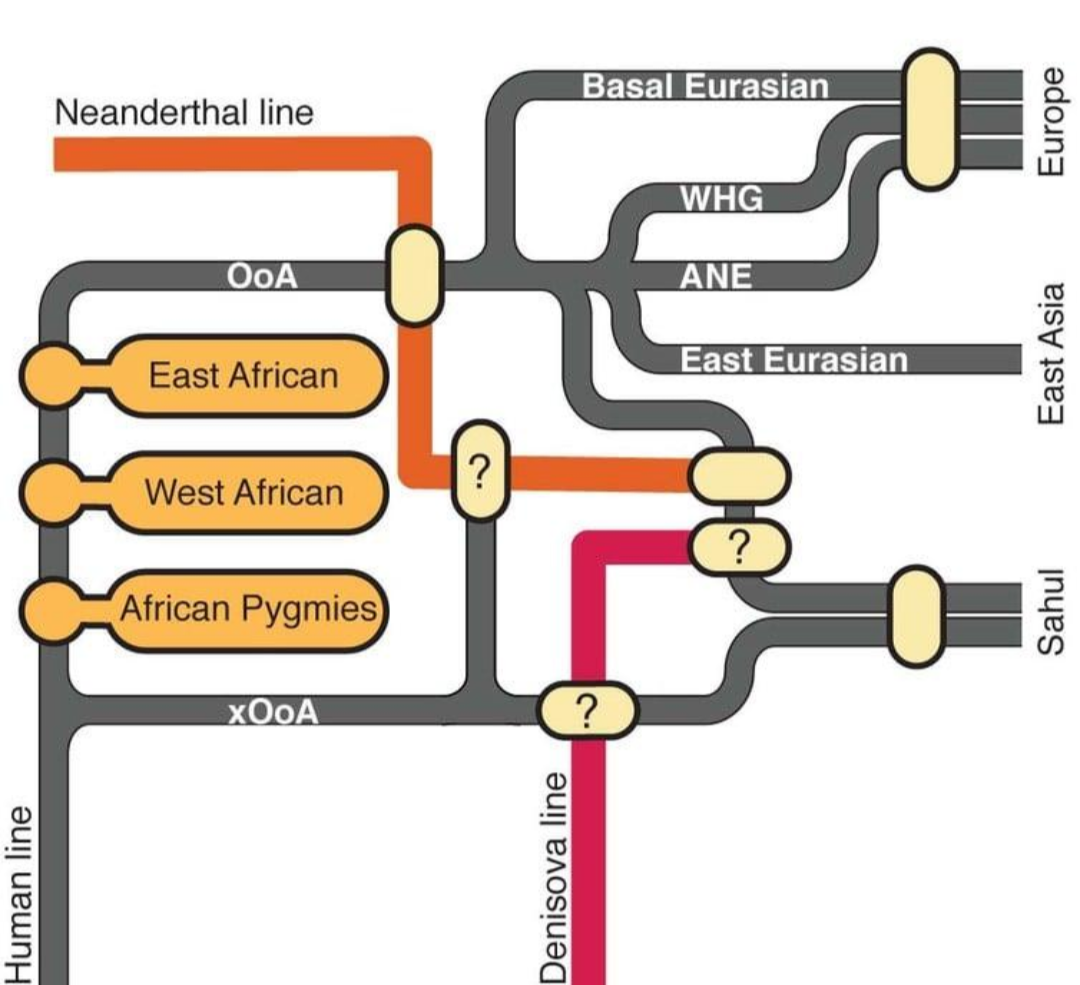
That deep root is the last piece of the reconstruction. Narasimhan's team placed AASI on the eastern side of the human family tree, as one branch of an eastward spread out of Africa that also produced the ancestors of East Asians and Andaman Islanders [4]. Exactly where AASI split from its eastern cousins is still argued over.
Who came first?
On the bank of the Son river near Dhaba, in the Sidhi district of Madhya Pradesh, archaeologists dug down through the floodplain and found a band of pale volcanic ash. It had fallen from the sky after the Toba volcano in Sumatra erupted about 74,000 years ago, one of the largest eruptions of the last few million years. Below the ash and above it lay stone tools.
In 2020 Chris Clarkson and his colleagues published the dates. The same kind of stone toolmaking ran through layers dated from about 80,000 to about 65,000 years ago, with little change across the eruption [9]. Microliths appeared in the upper layers about 48,000 years ago [9]. Clarkson's team argued that the older tools looked like those made by Homo sapiens in Africa and Arabia, and that modern humans were living in India before Toba [9]. In 2007 Michael Petraglia and his colleagues had reported a similar pattern at Jwalapuram in the Jurreru valley of Andhra Pradesh, where the tools also continued across the Toba ash [10].
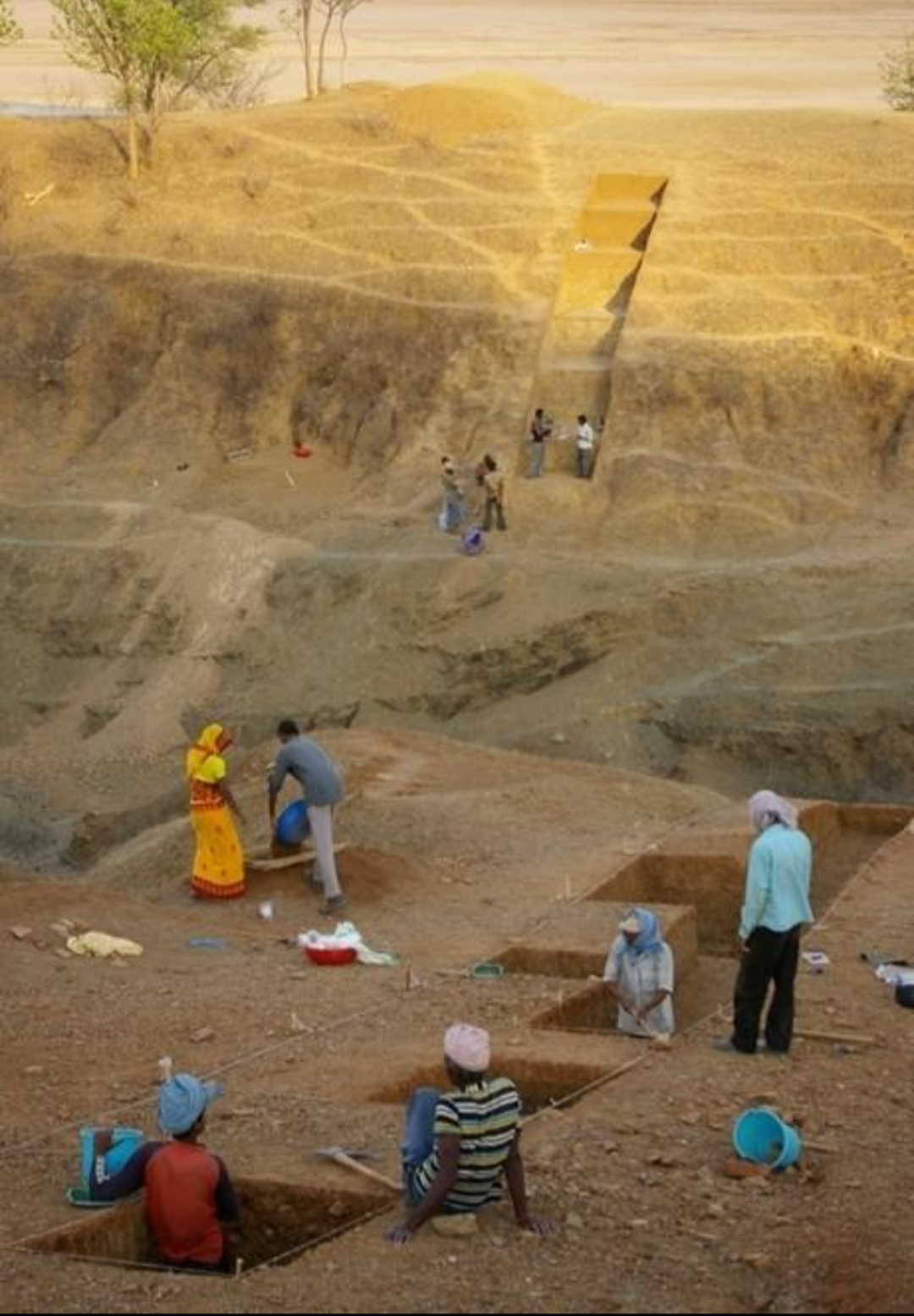
The difficulty is that no human bones of that age have been found in India [9]. Tools can show that someone was there. They cannot show who. Some archaeologists think the toolmakers before 74,000 years ago were modern humans; others think they may have been an older kind of human. Sheila Mishra and her colleagues dated microblades at Mehtakheri in Madhya Pradesh and pointed out that this technology appears suddenly in India, with no local forerunner [11]. To them, the sudden change looks like the arrival of new people.
Genetics adds its own clue. In 2025 Elise Kerdoncuff, Priya Moorjani and their colleagues published whole genomes from 2,762 people across India [12]. They found that most of the genetic variation in Indians today traces back to a single migration out of Africa about 50,000 years ago [12]. Earlier groups may have reached India, they wrote, but if so those groups either did not survive or left little trace in people living now [12].
Here the trail goes quiet. Perhaps the people at Dhaba before Toba died out. Perhaps there were only ever a few of them. Perhaps the later arrivals absorbed them, and their small share of ancestry is too thin to detect with today's methods. Archaeologists and geneticists still argue about this, and the answer will probably need a human fossil.
Forty thousand years of hunters
Once modern humans were settled in South Asia, the story of AASI becomes the story of hunters and gatherers spread across a huge and varied land, over a span of time about eight times longer than everything since the first farming villages. AASI is the name of an ancestry. It is not the name of a single tribe. It covers many separate groups who lived in forests, river valleys and grasslands, spoke languages we will never hear and probably never thought of themselves as one people.
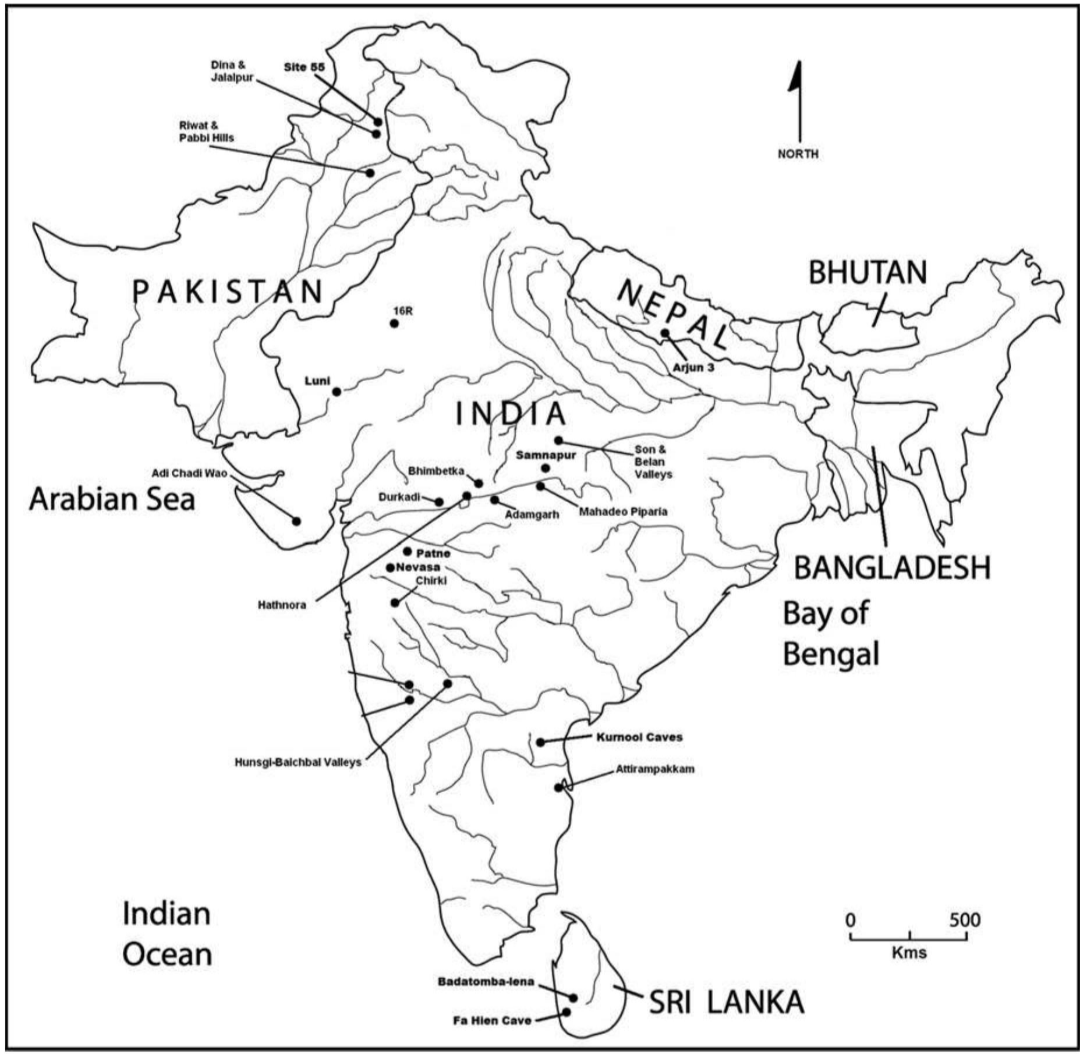
In central India the record begins early. At Mehtakheri, in the Nimar region of Madhya Pradesh, Mishra and her colleagues dated microblades to about 45,000 to 48,000 years ago [11]. They found that people in India kept making microblades from then until about 3,000 years ago, a longer run than anywhere else they knew of [11]. At Dhaba, microliths turn up at about the same time [9]. Far to the south, the rainforest hunters of Fa-Hien Lena went on taking monkeys and squirrels with much the same toolkit for tens of thousands of years [1, 2].
During this long span the last Ice Age came and went. Monsoons weakened and returned, rivers moved, and grasslands and forests spread and shrank. Small bands of hunters followed the animals and the water. They could survive in a rainforest and on a dry plain because microlith tools were light, easy to repair and could be fitted to many kinds of weapon.
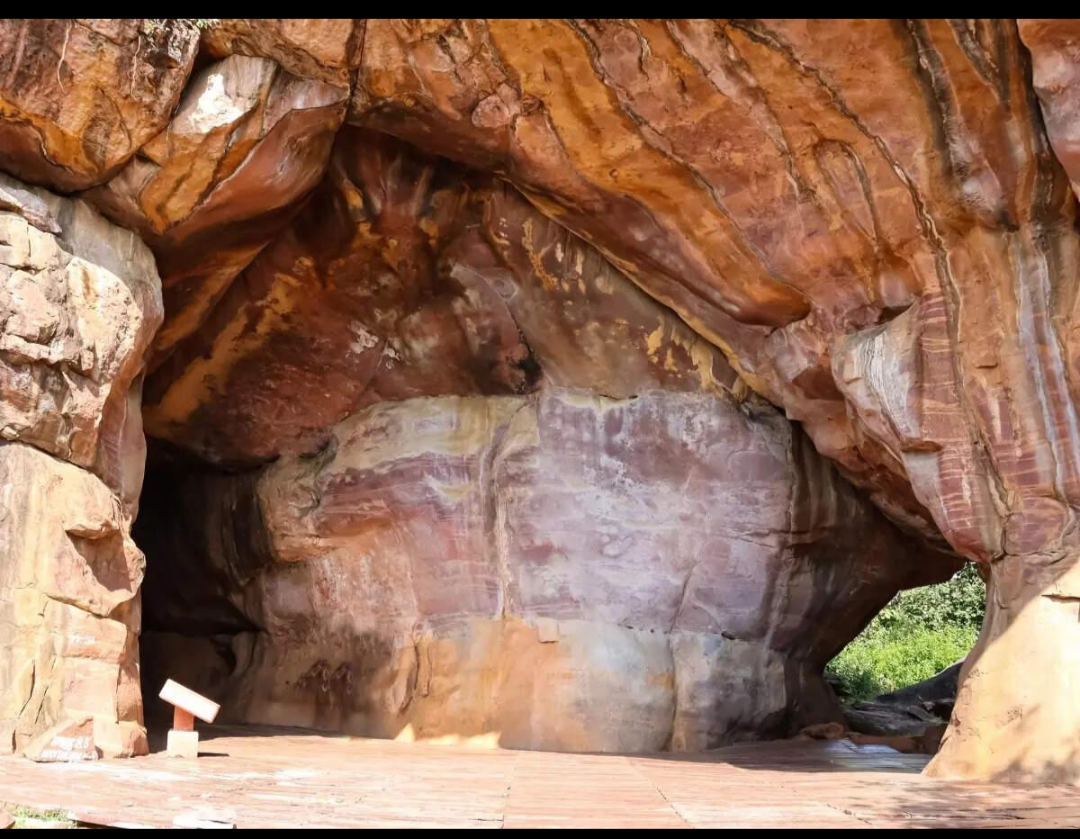
Some of these people painted. At Bhimbetka, in the Vindhyan hills south of Bhopal, hundreds of sandstone rock shelters hold paintings of animals and people. UNESCO, which lists the site as a World Heritage property, describes the paintings as appearing to run from the Mesolithic period, the last long stretch of hunting and gathering, through to historical times [13]. Dating rock paintings is hard, and no firm date for the oldest ones has been published. UNESCO also notes that the traditions of the villages around Bhimbetka today resemble those shown in the paintings [13].
In the Ganga plain, hunters camped beside old oxbow lakes in what is now Pratapgarh district of Uttar Pradesh. At Sarai Nahar Rai, Mahadaha and Damdama they buried their dead inside their camps. John Lukacs and Jagannath Pal studied 47 skeletons from Damdama and compared them with those from the other two sites [14]. The bones show strong muscles for walking long distances and for overhand throwing, the motion of a spear or a stone [14]. These people lived in the Mesolithic. The exact age of the burials is still being worked out, and no genome from them has been published. Hunter-gatherers also camped further west, in Rajasthan and Gujarat, at sites such as Bagor and Langhnaj.
All of these people carried something older still. On the way out of Africa, the ancestors of everyone outside Africa met and had children with Neanderthals and Denisovans, two other kinds of human. Kerdoncuff's team found that this left about 1 to 2 percent of archaic DNA in Indian genomes today [12]. By piecing together these fragments from many people, they recovered about half of the Neanderthal genome and about a fifth of the Denisovan genome from Indians alone [12]. India has more variation in Neanderthal ancestry than any other population outside Africa that they studied [12]. That variety probably reflects the long, mixed history this article describes.
When the farmers came
Around 4,500 to 5,000 years ago, a woman was buried at Rakhigarhi, in present-day Haryana, one of the largest cities of the Indus civilisation. In 2019 Vasant Shinde, Vagheesh Narasimhan and their colleagues published her genome. It is the first genome from an Indus city [8].
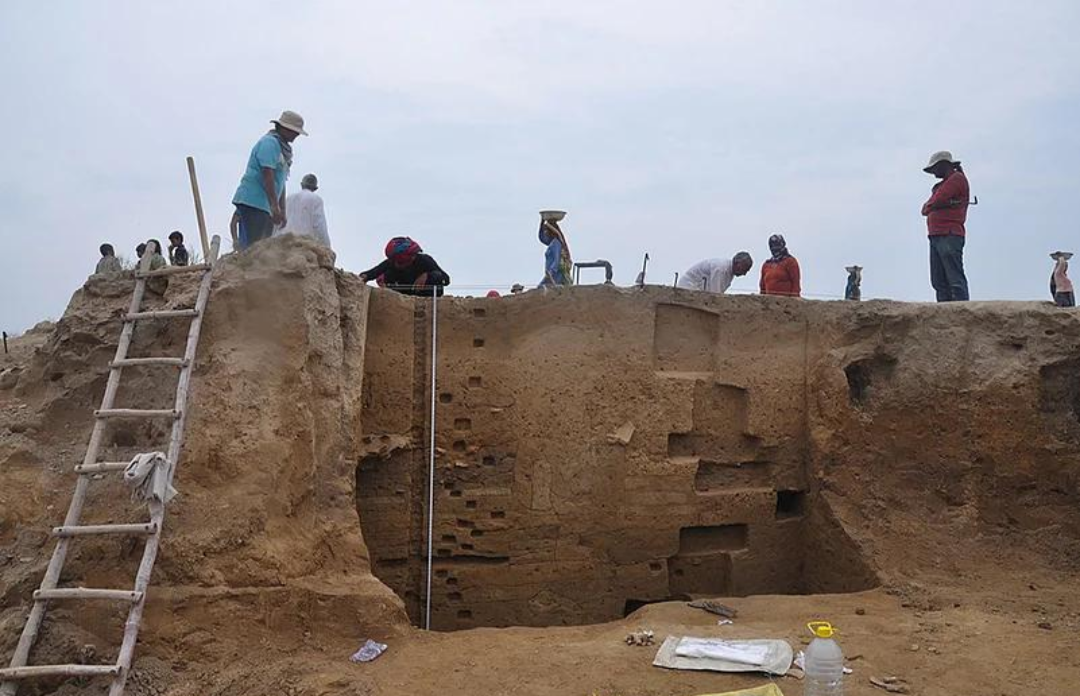
She was a mixture of two ancestries. The larger part was related to ancient people of Iran. The smaller part was AASI [8]. Her Iranian-related ancestry came from a line that had split from the ancestors of Iran's first farmers, herders and hunter-gatherers before those groups separated from each other, more than 12,000 years ago [8]. In other words, her Iranian-related ancestors had lived in or near South Asia for a very long time. They did not arrive with farming. Shinde's team suggested that farming in South Asia may have begun among local people, or spread as an idea, without a large movement of farmers from the west [8]. Eleven people buried at sites in Iran and Turkmenistan that traded with the Indus cities had the same mixture [8].
Narasimhan's team dated the mixing of these two ancestries to between about 5400 and 3700 BCE [4]. So the people of the Indus cities, who built Harappa and Mohenjo-daro, carried AASI ancestry from their hunter-gatherer grandmothers and grandfathers. The people we call "Indus farmers" were partly the descendants of South Asia's hunters.
After about 2000 BCE, as the Indus cities declined, people carrying Indus-related ancestry moved and married further south and east. There they mixed with groups that carried much more AASI ancestry. Narasimhan's team showed that this mixing formed the population geneticists call ASI, whose most direct descendants live in southern India today [4]. This is the second half of the kitchen comparison: ASI is the later dish, made from the AASI ingredient and Indus-related ancestry.
Southern India in this period had its own farming villages. Across the dry granite hills of Karnataka and Andhra Pradesh, people of the Southern Neolithic kept cattle and burned their dung in huge heaps. In 2007 Dorian Fuller, Nicole Boivin and Ravi Korisettar dated many of these ash mounds. They found that each mound was built up by a few generations of people, that villages often grew up on the same spots afterwards, and that the farmers grew some local crops and some that had come from Africa [15]. Who were the ash-mound builders, genetically? No one has yet read DNA from them. It is tempting to link them with the forming of ASI, but here too the evidence has not caught up with the question.
Every newcomer married in
The Indus story repeated itself with every group that came later. Each time, newcomers arrived and their children grew up with local mothers or fathers whose families carried AASI ancestry.
In the second millennium BCE, people descended from herders of the Eurasian steppe reached northern South Asia. Narasimhan's team showed that they mixed with people carrying Indus-related ancestry to form the population geneticists call ANI [4]. Steppe ancestry now makes up as much as 30 percent of the ancestry of some present-day groups [4]. Then ANI and ASI themselves mixed. Priya Moorjani and her colleagues dated this mixing to between about 4,200 and 1,900 years ago, roughly 2200 BCE to 100 CE, and found its mark in nearly every group they studied [16]. So the families with the most steppe ancestry also inherited AASI, twice over: through their Indus-related ancestors and through ASI.
Two kinds of DNA tell the next story especially well. Mitochondrial DNA passes from a mother to all her children, so it follows the mother's line back through time. The Y chromosome passes only from father to son, like a surname. A haplogroup is a branch on one of these family trees, shared by everyone who descends from the same distant ancestor on that line.
The Munda-speaking peoples of eastern and central India, including the Santal, Ho and Mundari, speak Austroasiatic languages related to Khmer and Vietnamese. In 2011 Gyaneshwer Chaubey and his colleagues concluded that their ancestors came from Southeast Asia and then mixed with local Indian populations, with men and women contributing very differently [17]. In 2019 Kai Tätte and his colleagues put numbers on it. Close to all of the maternal lines of Munda speakers match those of other Indians, while about 65 percent of their paternal lines are closer to Southeast Asia [18]. About three-quarters of the Munda genome is shared with other Indian groups [18]. The best living stand-ins for the two sides of the mixture were Lao people from Laos and Dravidian-speaking groups from Kerala, and the mixing happened about 2,000 to 3,800 years ago, roughly 1800 BCE to the start of the Common Era [18]. The newcomers' sons married local women, and those women carried AASI ancestry.
In the Northeast and along the Himalaya, speakers of Tibeto-Burman languages carry their own distinct ancestry. Basu and colleagues identified it as a separate component, and found that across mainland India the different ancestries had mixed widely before marriage within closed groups became the rule [6].
Steppe herders in the north, rice farmers from Southeast Asia in the east, Himalayan peoples in the Northeast: in each case the people who came later married into families that were already here. That is why AASI ancestry runs through all of them.
Where AASI ancestry is today
Board a train in Amritsar and get off at Kanyakumari four days later. On every platform along the way, the people waiting carry AASI ancestry. What changes is how much.
Reich's 2009 study already showed a gradient. In the groups it studied, ANI ancestry ranged from 39 to 71 percent, which means ASI ancestry made up the rest [3]. Yelmen's team described the same pattern from the other side: West Eurasian-related ancestry falls from the northwest of the subcontinent to the southeast [7]. AASI ancestry rises in the same direction. It is highest among some southern and central Indian forest communities such as the Paniya and Irula, and present in every other group in the region [7]. The same ancestry is found among people in Pakistan, Nepal, Bangladesh and Sri Lanka.
Any single number for "how much AASI" should be read with care. An ancestry percentage is an estimate produced by a statistical model. It is not a measurement like height. Because no AASI genome exists, every study has to use a stand-in, and the result changes with the stand-in and the comparison groups chosen. This article does not give a single AASI figure for any group for that reason.
AASI ancestry also travelled far beyond South Asia. The Roma, about eleven million people spread across Europe, have no written records of their origins. In 2012 Isabel Mendizabal and her colleagues showed from genome-wide data that the Roma descend from a single founding population that left north or north-west India about 1,500 years ago [19]. In 2013 Moorjani's team pointed to north-west India as the main source of the South Asian part of Roma ancestry [20]. Haplogroups typical of South Asia, such as the paternal branch H1a-M82 and the maternal branches M5a1, M18 and M35b, are common among Roma today [20]. A Roma family in Hungary or Spain carries a share of AASI ancestry.
Haplogroups can also point back toward AASI-era South Asia, with caution. On the mother's side, about 72 percent of the tribal people and 58 percent of the caste people sampled by Mait Metspalu and his colleagues in 2004 carried branches of macrohaplogroup M [21]. Two of those branches, M2 and M3, are found mainly in India, and M2 is the most common M branch in the country [21]. Metspalu's team argued that the boundaries of these maternal lines were probably set during the first settlement of the region by modern humans [21]. On the father's side, Sanghamitra Sengupta and her colleagues listed C5-M356 and H-M69, with its branch H1-M52, among the Y-chromosome lines that most likely arose inside India [22].
These lines are thought to go back to South Asia's hunter-gatherer past, but linking any haplogroup to AASI is uncertain. A haplogroup follows only one line out of thousands of ancestors, and a branch that began in India could have begun in a group that was already mixed. Read a haplogroup as one thread in a large cloth.
What a percentage cannot tell you
Two friends compare their reports over tea. One has more AASI ancestry than the other. What does the difference mean?
It means that, on average, more of one friend's ancestors came from the population geneticists call AASI. That is all it means. AASI ancestry says nothing about skin colour, worth, intelligence, language, religion or caste status. People with similar percentages speak Tamil, Hindi, Santali and Sinhala, follow every faith in the region and belong to every kind of community.
The differences between neighbouring communities are real, and they have a clear cause. Moorjani's team found that after a long period of widespread mixing, groups in India began marrying mostly within themselves, and the differences between them froze in place [16]. Basu's team dated this shift among upper-caste groups to about 70 generations ago, roughly 1,575 years ago [6]. So when two communities in the same district show different average percentages, the gap is a record of marriage rules kept for many centuries. It is history, and it carries no rank. That history also has a cost: Kerdoncuff's team noted that marrying within communities raises the risk of some recessive genetic disorders in India [12].
Adivasi rights in India rest on law and history: on the Constitution, on land and forest laws, and on the record of how communities have lived and been treated. Genetics has no part in granting or removing those rights. And AASI ancestry belongs to the whole region. A Paniya family in Wayanad, a Brahmin family in Varanasi, a Santal family in Dumka and a Sinhalese family in Kandy all carry it, in different amounts, from the same ancient hunters.
What your own DNA can show
A GenoConnect report may show your AASI ancestry under that name or under a label such as "South Asian hunter-gatherer". Alongside it you will usually see other ancestral components, such as Iranian-related farmer and Steppe ancestry, along with your maternal and, for men, paternal haplogroup.
Read the AASI figure as an estimate with a margin. A change of a few percent between report versions, or between you and a sibling, usually reflects the model and the normal shuffling of DNA between generations. Larger patterns are more meaningful: whether your mix looks like that of neighbouring communities, and whether your maternal or paternal line belongs to one of the old South Asian branches described above.
Published studies rarely look at single communities in detail, so most castes, clans and regional groups have no published ancestry profile of their own. Each person who tests adds to that picture. If you want to see where your own family sits in this long story, a GenoConnect test is a place to start.
What we still do not know
The largest gap is simple: there is still no AASI genome. A skeleton from a cool, dry site in India, or from a deep and stable layer in a Sri Lankan cave, might one day yield one. Human remains from Fa-Hien Lena already exist [1]. A single readable genome would let geneticists test every reconstruction in this article directly.
We do not know how many separate AASI groups there were. A forest band in Sri Lanka and a lakeside camp on the Ganga plain were far apart in space and often in time. Genomes from several regions and periods would show whether they were close relatives or distant ones.
We do not know who made the tools at Dhaba and Jwalapuram before Toba. A human fossil from those layers, or ancient DNA from sediment, could settle whether they were modern humans and whether they left any descendants.
We do not know exactly how AASI groups were related to the ancestors of the Andaman Islanders and to the forest foragers of Southeast Asia. Ancient genomes from both regions, compared side by side, would fix where each branch split from the others.
Until then, some of the clearest traces of these people are a heap of burnt monkey bones on the floor of Fa-Hien Lena, and the ancestry they passed down to nearly two billion people who have never heard of the cave.
Frequently asked questions
What is AASI ancestry?
AASI stands for Ancient Ancestral South Indian. It is the ancestry of the hunter-gatherers who lived across South Asia for tens of thousands of years before farming. Geneticists reconstructed it from the genomes of living South Asians and a few ancient people, because no AASI person's DNA has yet been read [4].
Is AASI the same as Dravidian?
No. Dravidian is a family of languages, including Tamil, Telugu, Kannada and Malayalam. AASI is an ancestry far older than any language spoken today, and people who speak languages from every family in the region carry it. AASI is also different from ASI, a later population that formed after about 2000 BCE by mixing AASI with Indus-related ancestry [4].
Are tribal people the original Indians?
Everyone in South Asia descends partly from the region's ancient hunter-gatherers. Some forest and tribal communities, such as the Paniya and Irula, carry more AASI-related ancestry on average, and they also carry later farmer ancestry [7]. They are present-day communities with long histories of their own.
Are AASI related to the Andamanese or to Australians?
Distantly. AASI belongs to the eastern side of the human family tree that spread out of Africa, alongside the ancestors of East Asians and Andaman Islanders [4]. The Andamanese are cousins on a separate branch, and are not direct descendants of AASI [5, 6, 7].
Do North Indians have AASI ancestry?
Yes. The Indus woman from Rakhigarhi in Haryana carried AASI ancestry [8], and the later mixing of ANI and ASI left its mark on nearly every group in India [16]. AASI ancestry is lower on average in the north-west than in the south, and present everywhere.
Does AASI percentage relate to skin colour?
No. An AASI percentage is a statistical estimate of which ancient population some of your ancestors belonged to. It does not describe how a person looks.
Further reading on GenoConnect: Where did the Indus Valley people go?
References
- [1]1. Wedage, Oshan, Noel Amano, Michelle C. Langley, Katerina Douka, James Blinkhorn, Alison Crowther, Siran Deraniyagala, et al. "Specialized Rainforest Hunting by Homo sapiens ~45,000 Years Ago." Nature Communications 10 (2019): 739. https://doi.org/10.1038/s41467-019-08623-1.
- [2]2. Wedage, Oshan, Andrea Picin, James Blinkhorn, Katerina Douka, Siran Deraniyagala, Nikos Kourampas, Nimal Perera, et al. "Microliths in the South Asian Rainforest ~45–4 ka: New Insights from Fa-Hien Lena Cave, Sri Lanka." PLOS ONE 14, no. 10 (2019): e0222606. https://doi.org/10.1371/journal.pone.0222606.
- [3]3. Reich, David, Kumarasamy Thangaraj, Nick Patterson, Alkes L. Price, and Lalji Singh. "Reconstructing Indian Population History." Nature 461, no. 7263 (2009): 489–94. https://doi.org/10.1038/nature08365.
- [4]4. Narasimhan, Vagheesh M., Nick Patterson, Priya Moorjani, Nadin Rohland, Rebecca Bernardos, Swapan Mallick, Iosif Lazaridis, et al. "The Formation of Human Populations in South and Central Asia." Science 365, no. 6457 (2019): eaat7487. https://doi.org/10.1126/science.aat7487.
- [5]5. Thangaraj, Kumarasamy, Gyaneshwer Chaubey, Toomas Kivisild, Alla G. Reddy, Vijay Kumar Singh, Avinash A. Rasalkar, and Lalji Singh. "Reconstructing the Origin of Andaman Islanders." Science 308, no. 5724 (2005): 996. https://doi.org/10.1126/science.1109987.
- [6]6. Basu, Analabha, Neeta Sarkar-Roy, and Partha P. Majumder. "Genomic Reconstruction of the History of Extant Populations of India Reveals Five Distinct Ancestral Components and a Complex Structure." Proceedings of the National Academy of Sciences 113, no. 6 (2016): 1594–99. https://doi.org/10.1073/pnas.1513197113.
- [7]7. Yelmen, Burak, Mayukh Mondal, Davide Marnetto, Ajai K. Pathak, Francesco Montinaro, Irene Gallego Romero, Toomas Kivisild, Mait Metspalu, and Luca Pagani. "Ancestry-Specific Analyses Reveal Differential Demographic Histories and Opposite Selective Pressures in Modern South Asian Populations." Molecular Biology and Evolution 36, no. 8 (2019): 1628–42. https://doi.org/10.1093/molbev/msz037.
- [8]8. Shinde, Vasant, Vagheesh M. Narasimhan, Nadin Rohland, Swapan Mallick, Matthew Mah, Mark Lipson, Nathan Nakatsuka, et al. "An Ancient Harappan Genome Lacks Ancestry from Steppe Pastoralists or Iranian Farmers." Cell 179, no. 3 (2019): 729–35.e10. https://doi.org/10.1016/j.cell.2019.08.048.
- [9]9. Clarkson, Chris, Clair Harris, Bo Li, Christina M. Neudorf, Richard G. Roberts, Christine Lane, Kasih Norman, et al. "Human Occupation of Northern India Spans the Toba Super-Eruption ~74,000 Years Ago." Nature Communications 11 (2020): 961. https://doi.org/10.1038/s41467-020-14668-4.
- [10]10. Petraglia, Michael, Ravi Korisettar, Nicole Boivin, Christopher Clarkson, Peter Ditchfield, Sacha Jones, Jinu Koshy, et al. "Middle Paleolithic Assemblages from the Indian Subcontinent before and after the Toba Super-Eruption." Science 317, no. 5834 (2007): 114–16. https://doi.org/10.1126/science.1141564.
- [11]11. Mishra, Sheila, Naveen Chauhan, and Ashok K. Singhvi. "Continuity of Microblade Technology in the Indian Subcontinent since 45 ka: Implications for the Dispersal of Modern Humans." PLOS ONE 8, no. 7 (2013): e69280. https://doi.org/10.1371/journal.pone.0069280.
- [12]12. Kerdoncuff, Elise, Laurits Skov, Nick Patterson, Joyita Banerjee, Pranali Khobragade, Sankha S. Chakrabarti, et al. "50,000 Years of Evolutionary History of India: Impact on Health and Disease Variation." Cell 188, no. 13 (2025): 3389–3404. https://doi.org/10.1016/j.cell.2025.04.027.
- [13]13. UNESCO World Heritage Centre. "Rock Shelters of Bhimbetka." Accessed October 29, 2026. https://whc.unesco.org/en/list/925.
- [14]14. Lukacs, John R., and J. N. Pal. "Skeletal Variation among Mesolithic People of the Ganga Plains: New Evidence of Habitual Activity and Adaptation to Climate." Asian Perspectives 42, no. 2 (2003): 329–51. https://doi.org/10.1353/asi.2003.0042.
- [15]15. Fuller, Dorian Q., Nicole Boivin, and Ravi Korisettar. "Dating the Neolithic of South India: New Radiometric Evidence for Key Economic, Social and Ritual Transformations." Antiquity 81, no. 313 (2007): 755–78. https://doi.org/10.1017/S0003598X00095715.
- [16]16. Moorjani, Priya, Kumarasamy Thangaraj, Nick Patterson, Mark Lipson, Po-Ru Loh, Periyasamy Govindaraj, Bonnie Berger, David Reich, and Lalji Singh. "Genetic Evidence for Recent Population Mixture in India." American Journal of Human Genetics 93, no. 3 (2013): 422–38. https://doi.org/10.1016/j.ajhg.2013.07.006.
- [17]17. Chaubey, Gyaneshwer, Mait Metspalu, Ying Choi, Reedik Mägi, Irene Gallego Romero, Pedro Soares, Mannis van Oven, et al. "Population Genetic Structure in Indian Austroasiatic Speakers: The Role of Landscape Barriers and Sex-Specific Admixture." Molecular Biology and Evolution 28, no. 2 (2011): 1013–24. https://doi.org/10.1093/molbev/msq288.
- [18]18. Tätte, Kai, Luca Pagani, Ajai K. Pathak, Sulev Kõks, Binh Ho Duy, Xuan Dung Ho, Gazi Nurun Nahar Sultana, et al. "The Genetic Legacy of Continental Scale Admixture in Indian Austroasiatic Speakers." Scientific Reports 9 (2019): 3818. https://doi.org/10.1038/s41598-019-40399-8.
- [19]19. Mendizabal, Isabel, Oscar Lao, Urko M. Marigorta, Andreas Wollstein, Leonor Gusmão, Vladimir Ferak, Mihai Ioana, et al. "Reconstructing the Population History of European Romani from Genome-wide Data." Current Biology 22, no. 24 (2012): 2342–49. https://doi.org/10.1016/j.cub.2012.10.039.
- [20]20. Moorjani, Priya, Nick Patterson, Po-Ru Loh, Mark Lipson, Péter Kisfali, Bela I. Melegh, Michael Bonin, et al. "Reconstructing Roma History from Genome-Wide Data." PLOS ONE 8, no. 3 (2013): e58633. https://doi.org/10.1371/journal.pone.0058633.
- [21]21. Metspalu, Mait, Toomas Kivisild, Ene Metspalu, Jüri Parik, Georgi Hudjashov, Katrin Kaldma, Piia Serk, et al. "Most of the Extant mtDNA Boundaries in South and Southwest Asia Were Likely Shaped during the Initial Settlement of Eurasia by Anatomically Modern Humans." BMC Genetics 5 (2004): 26. https://doi.org/10.1186/1471-2156-5-26.
- [22]22. Sengupta, Sanghamitra, Lev A. Zhivotovsky, Roy King, S. Q. Mehdi, Christopher A. Edmonds, Cheryl-Emiliane T. Chow, Alice A. Lin, et al. "Polarity and Temporality of High-Resolution Y-Chromosome Distributions in India Identify Both Indigenous and Exogenous Expansions and Reveal Minor Genetic Influence of Central Asian Pastoralists." American Journal of Human Genetics 78, no. 2 (2006): 202–21. https://doi.org/10.1086/499411.