
Pharmacogenomics: Why the Same Medicine Doesn’t Work for Everyone
Discover how your genes influence medicine response, why people experience different effects, and how pharmacogenomics supports personalised medicine.
Imagine you and your friend have the same health problem. Your doctor prescribes the same medicine to both of you. After a few days, your friend starts feeling better, but you notice little improvement. You might even experience unexpected side effects.
You may wonder, “If we are taking the same medicine, why are our bodies responding differently?”
The answer may lie partly in our genes.
Our genes influence many things about our bodies, including how we process certain medicines. This means that a medicine that works well for one person may work differently for another, even when both people take it as prescribed.
Scientists study these differences through a field called pharmacogenomics. It helps us understand how our genetic makeup can influence the way we respond to medicines and how this information may support more personalised healthcare.
What Happens When You Take a Medicine?
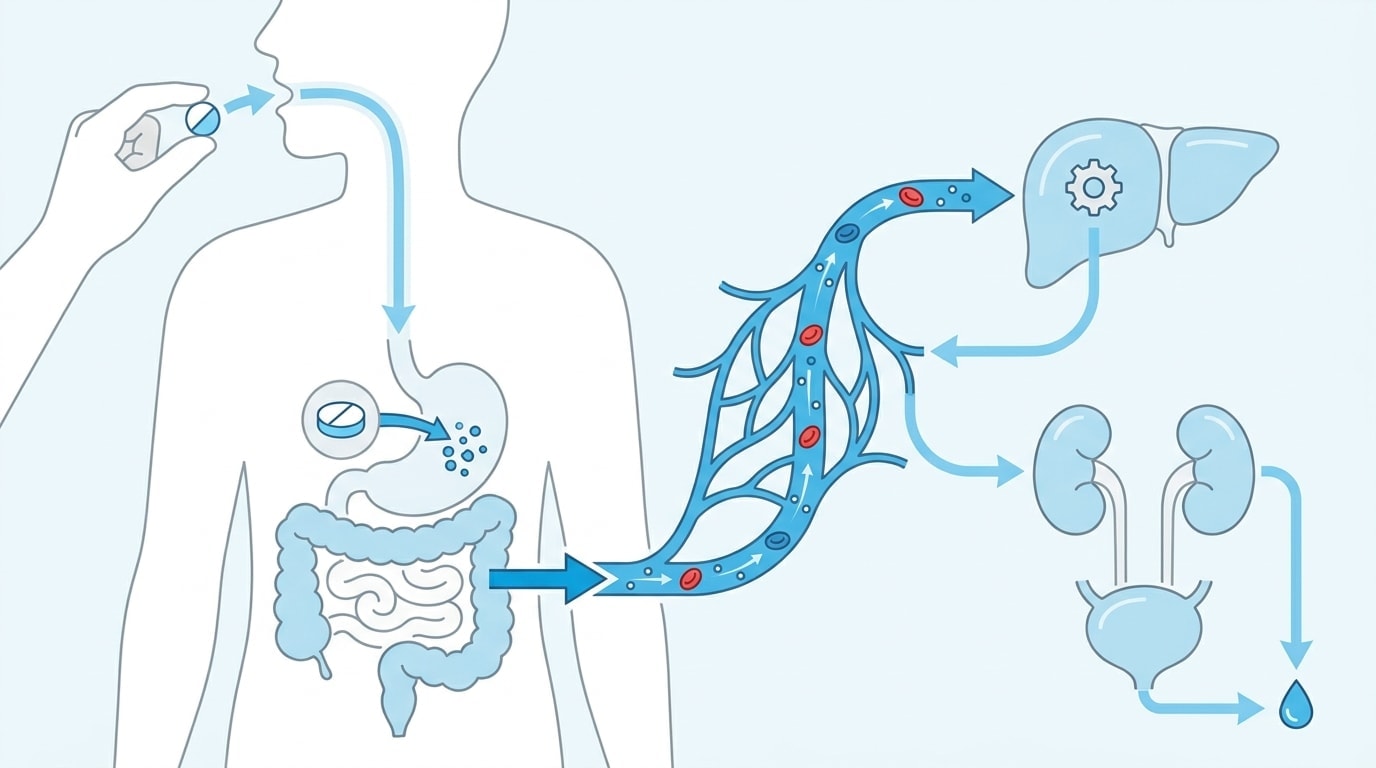
When you swallow a tablet, the medicine begins a journey through your body. It may enter your bloodstream, travel to a particular organ or tissue, interact with its target, and eventually be broken down and removed from the body.
Your body uses several processes to handle medicines:
- Absorption: How the medicine enters your bloodstream.
- Distribution: How the medicine travels through your body.
- Metabolism: How your body chemically processes the medicine, often with the help of enzymes in the liver.
- Elimination: How the medicine or its breakdown products leave your body, often through urine or bile.
Different medicines work in different ways. Some block a particular protein, while others reduce inflammation, kill bacteria, or help correct a chemical imbalance.
Your genes provide instructions for making many of the proteins involved in these processes. Small genetic differences can change how some of these proteins work.
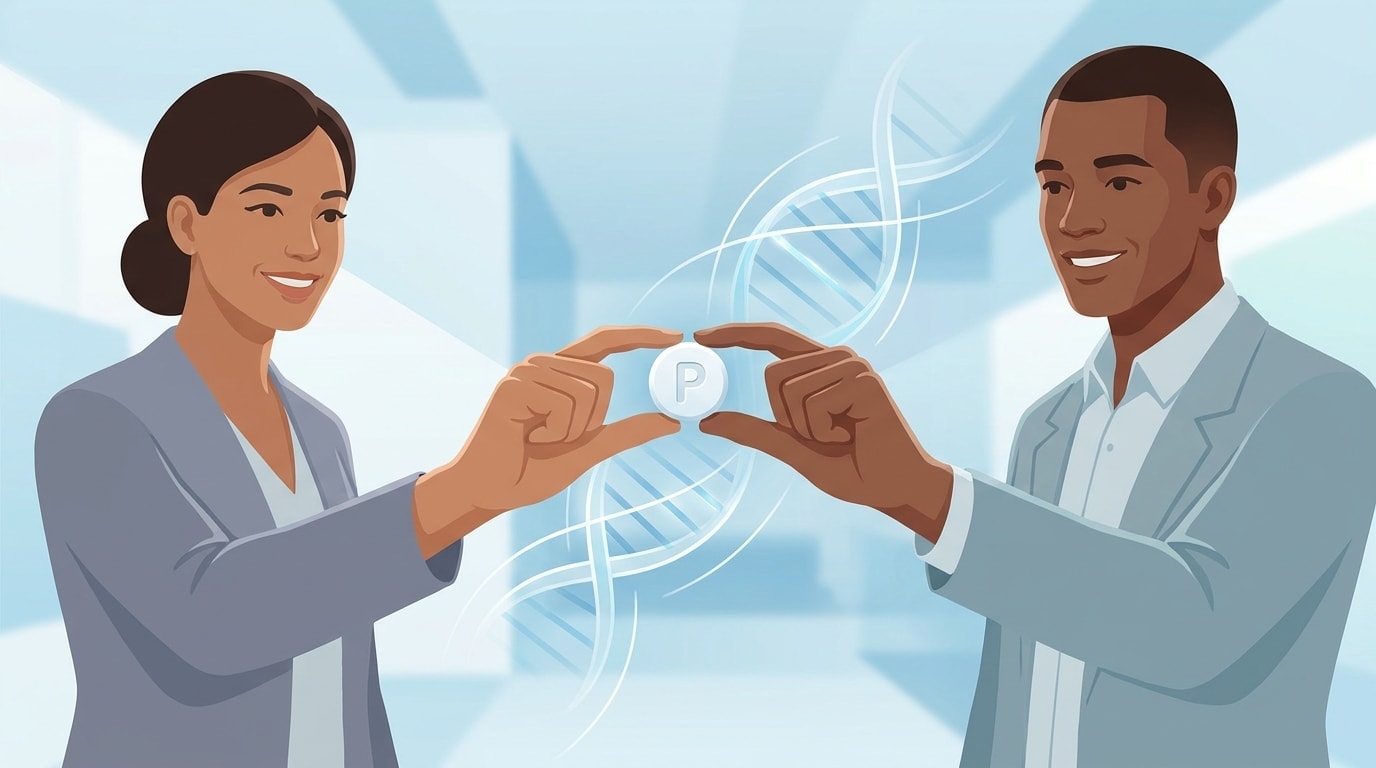
For example, one person may break down a particular medicine quickly, while another may process it more slowly. In some cases, this can affect how much medicine remains in the body, how well it works, or the risk of side effects.
However, genes are only one part of the picture. Age, liver and kidney function, other medications, lifestyle, and health conditions can also influence how someone responds to treatment.
What Is Pharmacogenomics?
Pharmacogenomics combines two areas of science: pharmacology, the study of medicines, and genomics, the study of genes and their functions.
In simple terms, pharmacogenomics studies how your genes can influence your response to medicines.
Some genes affect the enzymes that break down medicines. Others influence how medicines are transported through the body or how they interact with their targets.— identifying certain genetic variations, healthcare professionals may be able to make more informed decisions about selecting a medicine or choosing an appropriate dose.
The goal is not to create a completely different medicine for every person. Instead, it is to use relevant genetic information when there is good scientific evidence that it can improve a treatment decision.
Real Examples: How Genes Can Influence Medicine Response
Example 1: When a Medicine Needs to Be Activated
Imagine a medicine that must be converted into an active form before it can produce its full effect.
Clopidogrel is one such medicine. It helps prevent blood clots in certain patients, including some people who have experienced a heart attack or undergone specific heart procedures.
The body uses an enzyme called CYP2C19 to help activate clopidogrel.
The CYP2C19 gene contains instructions for making this enzyme. Some genetic variants reduce its activity. People who carry certain reduced-function variants may not activate clopidogrel as effectively, which can reduce its ability to prevent blood clots.
In appropriate clinical situations, a healthcare professional may use CYP2C19 genetic test results to help decide whether clopidogrel is suitable or whether an alternative medicine should be considered.
This example shows that a medicine's effectiveness can depend partly on how a person's body processes it.
Example 2: When a Standard Dose May Cause Serious Side Effects
Now consider thiopurines, a group of medicines used in some autoimmune conditions and cancers.
The body uses an enzyme called TPMT to help break down these medicines. Genetic differences in the TPMT gene can lead to reduced enzyme activity in some people.
If someone with significantly reduced TPMT activity receives a standard dose of certain thiopurine medicines, they may face an increased risk of severe bone marrow suppression. This can reduce the production of blood cells and lead to serious complications.
Testing relevant genes before treatment can help healthcare professionals determine whether a lower starting dose or an alternative treatment may be needed. Other clinical factors and, in some cases, additional genetic testing are also important.
In this situation, pharmacogenomics may help reduce the risk of preventable medication-related harm.
These examples demonstrate why genetic information can be useful for selected medicines. They do not mean that every medicine requires genetic testing or that testing guarantees a successful treatment.
Why Do We Need Personalised Medicine?

For many years, doctors have used established treatment guidelines to choose medicines and doses. These guidelines consider factors such as the patient's age, weight, medical condition, and other health information.
This approach remains essential. However, people can still respond differently to the same treatment.
Personalised medicine aims to consider relevant individual differences when making healthcare decisions. Depending on the situation, these differences may include genetics, medical history, laboratory results, lifestyle, and other medications.
Pharmacogenomics can contribute to personalised medicine in several ways:
- Choosing a suitable medicine: Genetic information may help healthcare professionals identify medicines that are more appropriate for a particular patient when established evidence supports a gene–medicine relationship.
- Reducing the risk of side effects: Certain genetic variants are associated with an increased risk of specific adverse drug reactions. Identifying these variants may help guide safer treatment choices.
- Supporting dose selection: For some medicines, genetic information can help determine an appropriate starting dose. The final dose may still depend on other clinical factors and how the patient responds.
- Making treatment decisions more informed: When genetic testing is useful for a particular medicine, the results may help clinicians make decisions before treatment begins rather than relying entirely on adjustments made after observing a patient's response.
The aim is to use the right information at the right time to support better-informed treatment decisions.
Does Everyone Need a Pharmacogenomic DNA Test?
No. Pharmacogenomic testing is not necessary before taking every medicine.
Its usefulness depends on the specific medicine, the genetic variants being tested, the strength of the scientific evidence, and whether the results could change the treatment decision.
For some medicines, genetic testing is already recommended in particular clinical situations. For others, the evidence may be limited or testing may not provide enough additional information to guide treatment.
It is also important to understand that pharmacogenomic testing is different from a general ancestry DNA test.
An ancestry test focuses on genetic information that helps explore family origins and population relationships. A pharmacogenomic test examines selected genetic variants associated with how the body responds to particular medicines.
A broader DNA sequencing test may provide data that can be used to examine certain pharmacogenomic variants, but this depends on the test's coverage, the variants assessed, and the quality of the interpretation. Having DNA data does not automatically mean that every medicine-related genetic question can be answered.
Can Your DNA Tell You Which Medicine Is Right for You?
Your DNA can provide useful information about some aspects of medicine response, but it cannot tell you everything about your future health or guarantee which treatment will work best.
A pharmacogenomic report may identify genetic variants associated with the processing, effectiveness, or safety of selected medicines. Healthcare professionals interpret these results alongside your medical history, current medications, test results, and treatment needs.
For example, a genetic result might indicate that a particular enzyme is likely to have reduced activity. This could be relevant when a medicine depends on that enzyme for activation or breakdown.
However, the result does not automatically mean that you should stop taking the medicine or change your dose. Those decisions require appropriate clinical assessment.
Important: Never start, stop, or change a prescribed medicine based solely on a DNA test. Always discuss relevant results with a qualified healthcare professional.
How GenoConnect Can Help You Explore Your Genetic Information
Your DNA contains information that can help researchers and healthcare professionals better understand individual differences. With advances in genetic analysis, it is becoming possible to explore more aspects of our biology than ever before.
GenoConnect offers DNA testing options that provide insights into ancestry and other genetic information through reports designed to make complex genetic concepts easier to understand. Its health and wellness offerings include pharmacogenomics-related insights, alongside other areas of genetic analysis. The information available depends on the selected testing option and report coverage.
If you are interested in understanding your genetic profile, start by exploring the available testing options and checking what each one includes.
A better understanding of your DNA can help you ask more informed questions about your genetic information and the science behind personalised healthcare.
Frequently Asked Questions
What is pharmacogenomics in simple words?
Pharmacogenomics is the study of how genetic differences influence a person's response to medicines. It can help explain why some people process certain medicines differently or have different risks of side effects.
Why does the same medicine affect people differently?
People differ in their genes, age, health conditions, liver and kidney function, lifestyle, and other medications. These differences can influence how a medicine is processed and how the body responds to it.
Is pharmacogenomic testing the same as ancestry DNA testing?
No. Ancestry testing focuses on genetic information related to family origins and population history. Pharmacogenomic testing examines specific genetic variants that may influence medicine response. A DNA test's suitability for pharmacogenomics depends on which variants it covers and how the results are interpreted.
Can pharmacogenomics prevent all medication side effects?
No. It may help identify certain genetic risks associated with particular medicines, but many side effects are influenced by factors other than genetics. Testing cannot guarantee that a medicine will be effective or free from side effects.
Can I change my medication based on my DNA report?
No. A DNA report should not be used on its own to change treatment. Discuss relevant findings with a qualified healthcare professional, who can determine whether they apply to your medicine and medical situation.
Final Thoughts
Not every medicine works in the same way for everyone, and genetics is one reason why. Pharmacogenomics helps scientists understand these differences and provides healthcare professionals with additional information when choosing or adjusting certain treatments.
As genetic research advances, pharmacogenomics may play an increasingly useful role in personalised medicine. The important thing is to understand what your genetic information can tell you, where its limitations lie, and how it should be interpreted.
Your genes are one part of your health story. Understanding them is a step toward understanding the science behind more personalised healthcare.
Scientific References for Fact-Checking
- U.S. Food and Drug Administration (FDA): Table of Pharmacogenetic Associations.
- Clinical Pharmacogenetics Implementation Consortium (CPIC): Clinical guidelines for CYP2C19 and clopidogrel.
- Clinical Pharmacogenetics Implementation Consortium (CPIC): TPMT and NUDT15 genotype-guided thiopurine dosing guidelines.