Aryan invasion or migration? What genetics says about how it happened
Explore how genetics reveals the truth about the Indo-Aryan migration to South Asia, debunking the invasion theory and 'Aryan race' myths.
Aryan invasion or migration? What genetics says about how it happened
Two stories in two classrooms
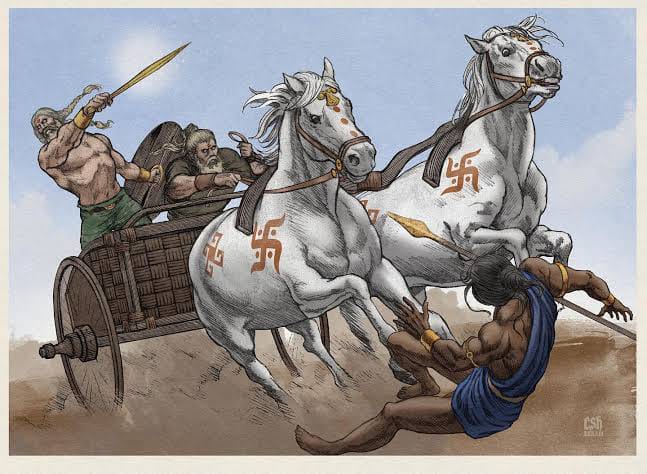
Ask a grandparent and a grandchild in India how the Aryans came, and you may get two different answers. The grandparent may remember a dramatic scene from an old history textbook: horsemen riding in from the north-west, setting fire to the cities of the Indus and driving the older people south. The grandchild is more likely to have read about a migration, with families and their cattle moving slowly through the mountain passes over many generations.
The two words sound close, but the pasts they describe are far apart. An invasion is a war. It is quick and bloody, and it ends with one people ruling over another or replacing them. A migration is slow. Newcomers arrive in small groups and settle near the people already living there. They trade with them, quarrel with them and, in time, marry into their families. After a few generations it becomes hard to say who was the newcomer and who was not.
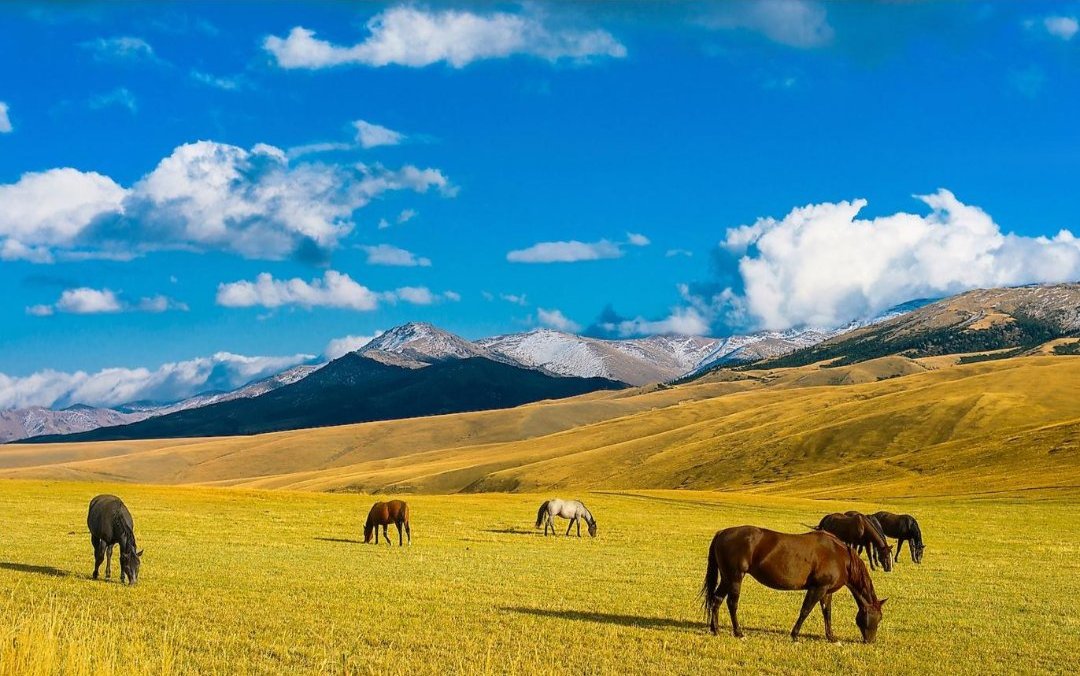
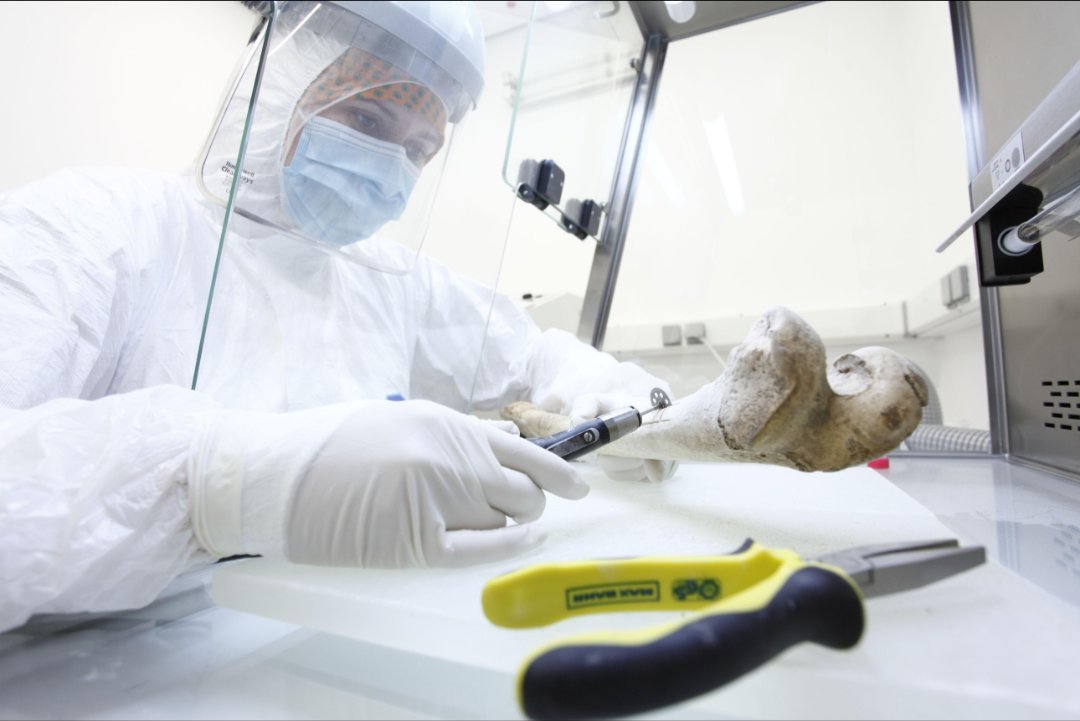
That some people did arrive is no longer in doubt. Around 2600 BCE, the plains of the Indus and its neighbouring rivers held some of the largest cities in the world, among them Harappa, Mohenjo-daro, Rakhigarhi and Dholavira. Far to the north, on the open grasslands between the Black Sea and Kazakhstan that geographers call the Eurasian steppe, lived herders of cattle, sheep and, later, horses. Scientists can now read DNA from ancient bones, and this DNA shows that people carrying ancestry from those steppe herders reached South Asia in the first half of the second millennium BCE. People buried in the Swat Valley of northern Pakistan from about 1200 BCE carry a genetic strand that geneticists call Steppe ancestry [16]. A woman buried at Rakhigarhi in the time of the Indus cities carried none of it [15]. Today Steppe ancestry is part of the make-up of most South Asians, from a very small share in some communities to about 30 percent in others [16].
So the real question is how these people came. Here a story told for more than a century runs into the evidence. To see why the conquest story lasted so long, we have to start with how it was put together.
How a family of languages became a race
The story began with words, long before anyone dug up a skeleton. In the late eighteenth century, European scholars in India noticed that Sanskrit was a cousin of Greek and Latin. The resemblances were too many to be chance, and the scholars concluded that all these languages came from one ancient parent language. Max Müller and others called its speakers "Aryans", after ārya, the word the Vedic poets used for themselves. Müller insisted that this was a name for a family of languages. "To me an ethnologist who speaks of Aryan race, Aryan blood, Aryan eyes and hair, is as great a sinner as a linguist who speaks of a dolichocephalic dictionary or a brachycephalic grammar," he wrote late in life. By then nobody was listening. During the colonial period, the name for a group of languages had turned into the name of a race [1, 2].
Colonial officials gave that change a scientific look. Herbert Risley, who ran the 1901 census of India, measured the noses and heads of Indians and argued that caste ranked people by their share of "Aryan" blood. His main yardstick was the nasal index, the ratio of the width of the nose to its height [3]. The historian Thomas Trautmann has shown how this race science and British scholarship on Indian texts fed each other. Between them they turned a family of languages into a tale of fair conquerors and darker subjects [2].
Indians took up the tale for their own purposes. Jotirao Phule, in Gulamgiri (1873), used it to attack Brahmin power, reading caste as the result of an ancient conquest [4]. The idea later fed the Dravidian movement in the south. B.R. Ambedkar went the other way. In Who Were the Shudras? (1946) he rejected both the racial Aryan and the invasion, and called the invasion theory an invention [5]. In Europe, the racial "Aryan" became a pillar of Nazi ideology. None of these uses has any standing in genetics or linguistics today [1].
The tale lasted because so many people found a use for it. For colonial writers, it made the British the latest in a long line of foreign rulers, and made their rule look natural. Some Indian nationalists found dignity under foreign rule in a shared Aryan past with Europe. Anti-caste thinkers found in it an explanation of caste. Romila Thapar has argued that this is why the idea proved so hard to shake off, long after its evidence had worn thin [1].
"Indra stands accused"
The tale still needed proof from the ground, and in 1946 it seemed to get it. That year Mortimer Wheeler, then Director General of the Archaeological Survey of India, excavated the great mud-brick defences of Harappa. Wheeler knew his Rigveda. Its war god Indra is praised as puraṃdara, the breaker of forts, and here were forts. At Mohenjo-daro, earlier diggers had found groups of skeletons lying in the upper levels of the city. Wheeler read them as the victims of a final massacre and named the killer. "Indra stands accused," he wrote in his report [6].
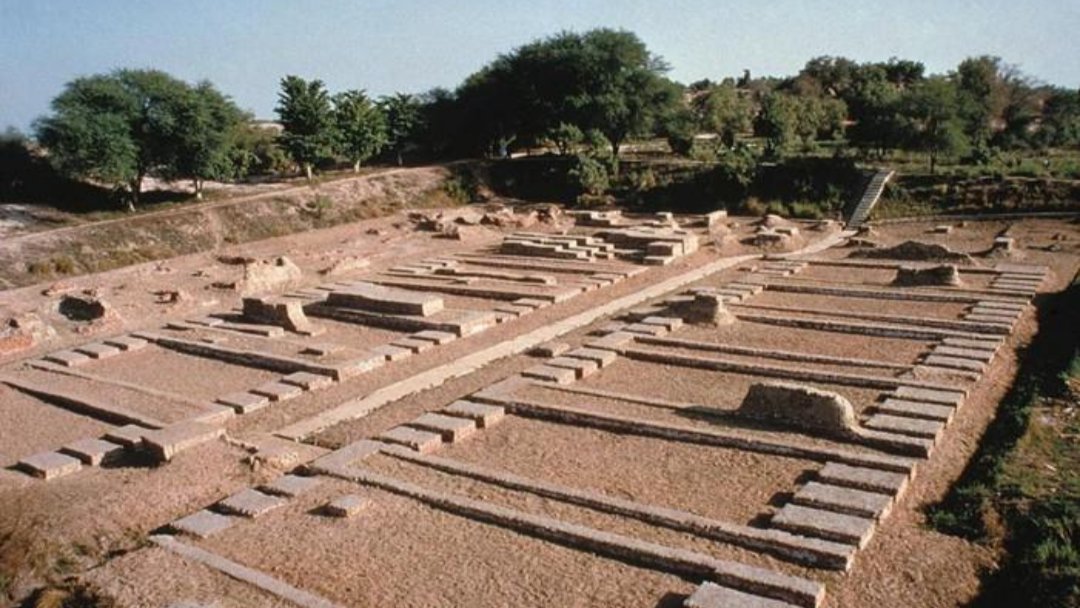
To readers of the time it made perfect sense. The Indus cities had been discovered only in the 1920s, and they seemed to end suddenly. The Rigveda speaks of forts and of enemies whose strongholds Indra breaks. Put the two together and the end of the cities looked like a solved case. The scene went into textbooks across India and stayed there for decades.
A real sack of a city leaves plenty behind, though. Archaeologists would expect burnt layers at site after site, arrowheads and broken weapons, mass graves, and the bodies of defenders at the citadel where they made their last stand. The skeletons of later generations should look different, because a new people would have replaced the old. In 1964 the archaeologist George Dales went back to Wheeler's evidence in an essay titled "The Mythical Massacre at Mohenjo-daro" [7]. The skeletons came from different levels and different times, so they could not be victims of one attack. Nobody had found burned fortifications, weapons, armour or a layer of destruction, and no bodies lay at the citadel. Later, the biological anthropologist Kenneth Kennedy studied skeletons from the north-west across the second millennium BCE and found no break in body form of the kind a conquering people would leave [8]. Jim Shaffer, looking at the wider archaeology, found continuity and gradual change [9]. Indra had an alibi.
The rains that failed
If no army ended the Indus cities, what did? Part of the answer came from an unlikely place: the shells of tiny snails in the bed of a dried-up lake. Yama Dixit, David Hodell and Cameron Petrie studied the snail shells of Kotla Dahar in Haryana. The oxygen locked inside them records a sharp weakening of the summer monsoon about 4,100 years ago, close to the time the cities began to empty [11]. Liviu Giosan and colleagues showed that the rivers of the region shrank as the rains failed [10]. Ajit Singh and colleagues found that many towns in the Ghaggar-Hakra region had grown up along a valley the Sutlej river had left thousands of years earlier, so they depended on the monsoon to water their fields [12].
Picture a farming family in one of those towns around 2000 BCE. The rains come late, then weakly. The river that used to flood their fields each year now stays low. A bad year becomes a bad decade. Some families hold on, and others pack up and walk east, towards land where rain still falls. Archaeology shows this happening across the region. Settlements thinned out in the Indus plain and grew in number further east, in Haryana and western Uttar Pradesh, where the rains were more reliable [10]. The big cities gave way to smaller villages, a change archaeologists call de-urbanisation [32]. The people did not disappear. They followed the water.
Life in those years was hard. Gwen Robbins Schug and colleagues found that injuries from violence at Harappa rose over time [13], and that infectious disease increased in the late phase [14]. This violence happened inside Harappan society, among people under stress. The change also took different forms in different places. In Punjab the later phase is known as the Cemetery H culture, in Sindh as the Jhukar phase, and in Gujarat a late Harappan tradition carried on for centuries [32]. A single invasion would not produce such a patchwork. And all of this began before any Steppe ancestry had reached the region.
Strangers at the edge of the fields
Where were the steppe herders while the Indus cities emptied? Still far to the north. Iosif Lazaridis and colleagues trace their ancestors to the region between the Caucasus and the lower Volga [33]. Over centuries some of their descendants moved east and south. From about 2000 BCE, domestic horses spread from the Volga-Don region across Eurasia, along with light chariots on spoked wheels, as Pablo Librado and colleagues showed [35]. Horses gave herders speed and prestige, and they later appear at the centre of Vedic ritual. They were useful for raiding and display as much as for war. Their arrival tells us that new people and new animals came. It does not tell us that an army came.
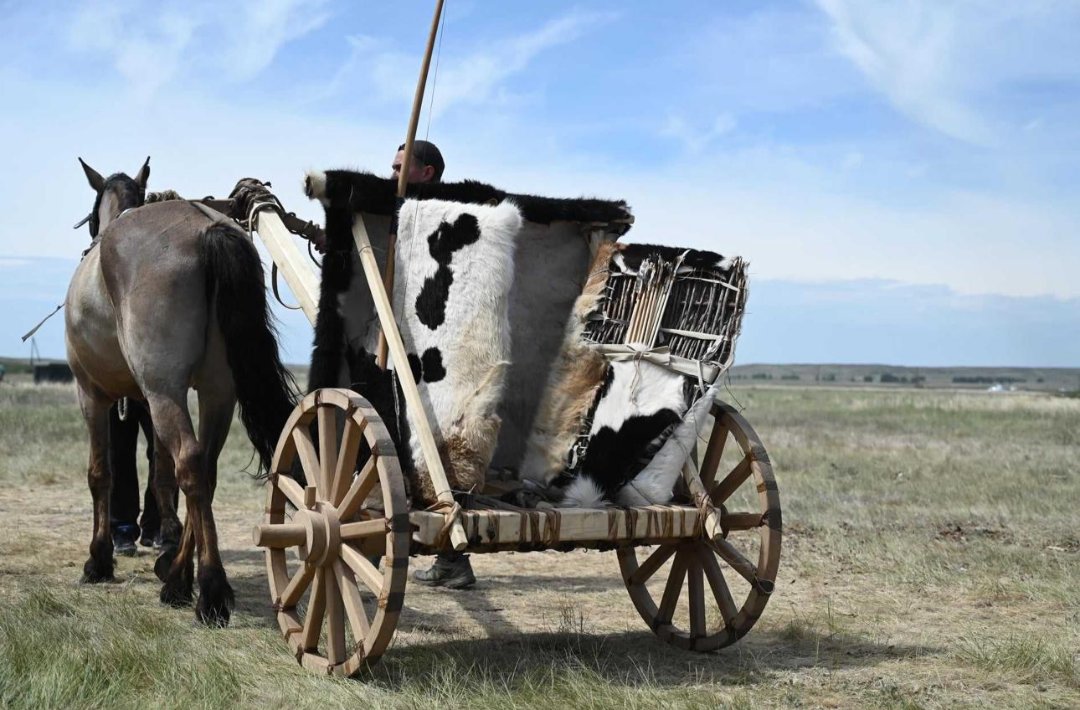
The first genetic traces of these herders on the road south come from Central Asia. Between about 2100 and 1700 BCE, a few people with Steppe ancestry were buried at towns of the Bactria-Margiana culture, in what is now Turkmenistan, Uzbekistan and Afghanistan. They lay among farmers who carried no such ancestry [16]. This is what small groups of herders living on the edge of a farming society look like in the genetic record. An army taking a city would look very different.
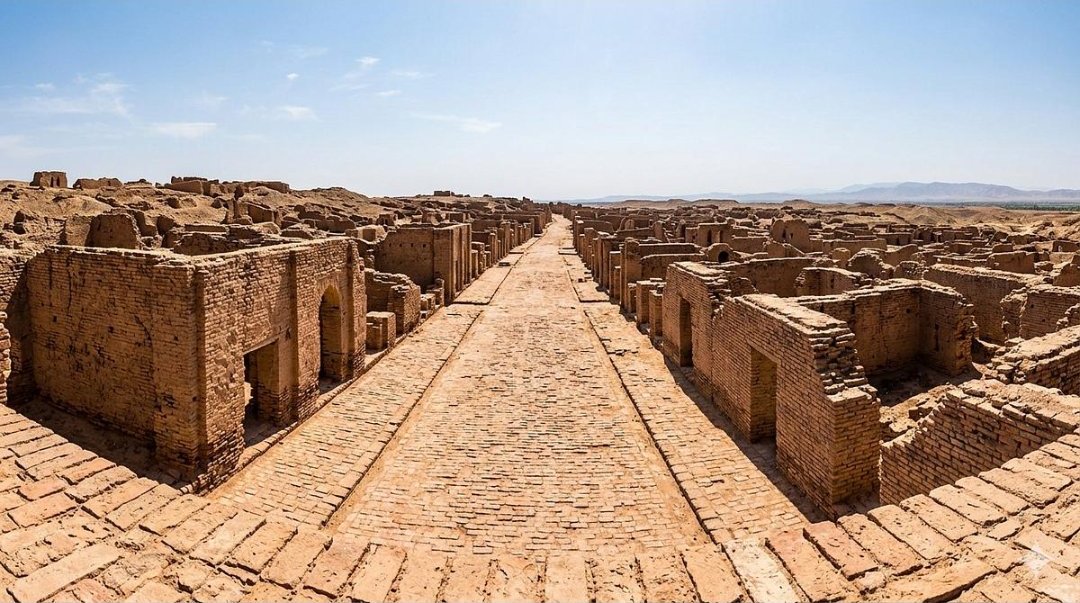
When Steppe ancestry reached South Asia, it came already mixed. Vagheesh Narasimhan and colleagues traced it to herding peoples of the central steppe in the Middle to Late Bronze Age, who already carried some ancestry from European farmers [16]. In the Swat Valley, where the team studied more than a hundred people buried from about 1200 BCE onward, this ancestry was mixed with that of the local Indus-related population, and the share varied from person to person [16]. That kind of variation builds up over many generations of marriage between families.
Studies of living Indians show the same slow pace. In 2009 David Reich and colleagues found that Indians descend from a mix of two ancestral groups, one more common in the north and one in the south. Nearly every group they studied had both, in different proportions [34]. Priya Moorjani and colleagues later dated this mixing to between about 4,200 and 1,900 years ago. After that, many communities began to marry only within their own group [17]. Two thousand years of mixing is what migration looks like in DNA. A conquest would leave a short, sharp burst.
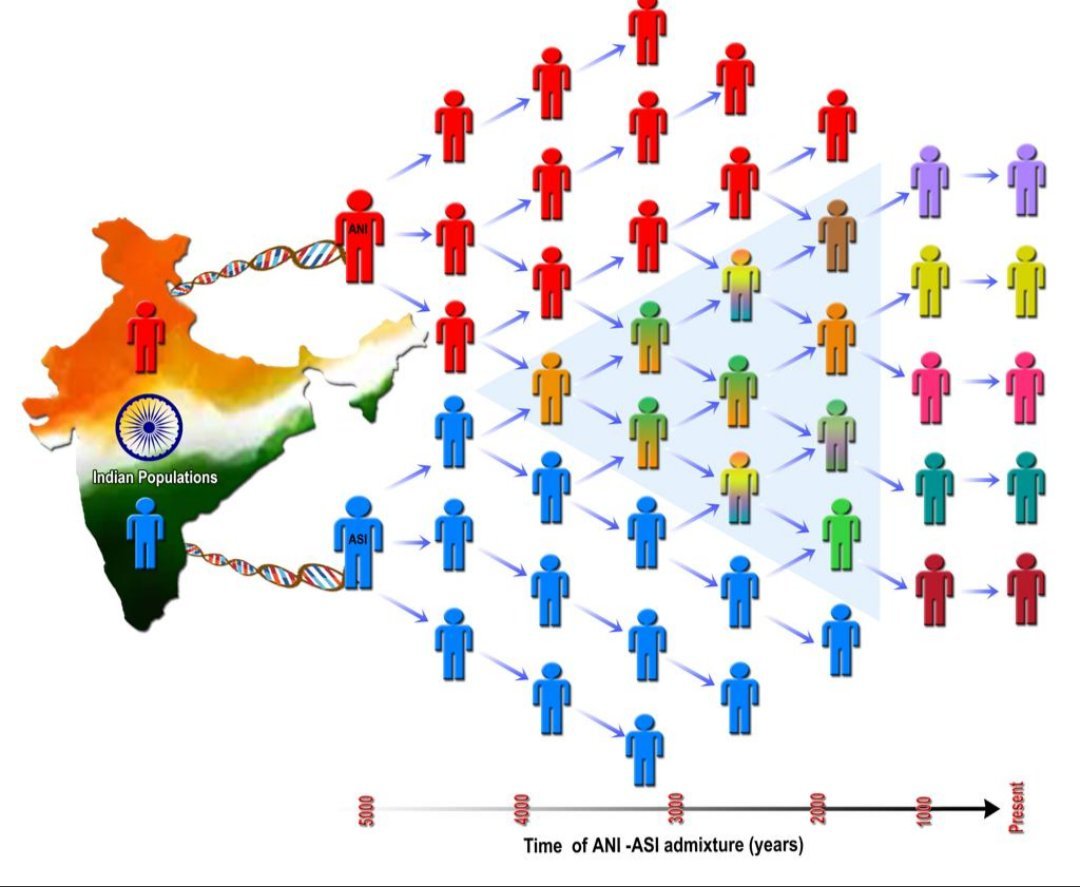
The newcomers also stayed a minority. Steppe ancestry is a small part of the ancestry of most Indians. Most of it still comes from older sources: the first hunter-gatherers who settled South Asia tens of thousands of years ago, and the farmers and city builders of the Indus world [16, 18].
A puzzle in the Y chromosome
One genetic finding is often held up as proof of conquest after all. The Y chromosome passes only from father to son, so it records the male line. In most present-day South Asians, Steppe ancestry is carried more on the male side. Marina Silva and colleagues described the Bronze Age arrival from Central Asia as "strongly male-driven" [19]. It is easy to jump from there to a scene of armed men killing local men and taking their women. The data does not say that.
Silva's team linked the pattern to how early Indo-European herding societies were organised. Descent and property passed through men, and wives moved to their husbands' homes [19]. Over many generations, a system like that can raise the male share of an incoming group's ancestry without a single battle. And the earliest South Asian evidence points the other way. Among the Iron Age people of the Swat Valley, only about 5 percent of Y chromosomes were of the Steppe type, while Steppe ancestry made up about 20 percent of the rest of the genome. There, Steppe ancestry came in mostly through women [16]. DNA can tell us who had children with whom. It cannot tell us how those families began.
How a language travels without an army
If the newcomers were a minority, how did their language, the ancestor of Sanskrit and of Hindi, Bengali, Marathi, Punjabi and many others, come to be spoken across the north? History has many cases of small groups spreading a language through prestige and power. Hungarian came to central Europe with a fairly small group of Magyar horsemen. Turkish spread across Anatolia without replacing its people. English spread across India through government, schools and status, far beyond the few British who ever lived here. The archaeologist David Anthony describes how herders' languages could spread through ties between patrons and clients, shared rituals and the pull of a new way of life [20].
The Indo-Aryan languages carry the marks of that mixing. They took up the retroflex sounds, the hard ṭ and ḍ of Sanskrit and Hindi, which are rare in their relatives in Europe, along with many words from older languages of the subcontinent, Dravidian and Munda among them [21]. The linguist Franklin Southworth has traced words for local plants, animals, farming and crafts that came into Indo-Aryan from these languages, some of them already in the Rigveda, the oldest Indo-Aryan text [21]. So speakers of the newcomers' language lived side by side with speakers of other languages, and many people grew up speaking both. Over generations, more and more families switched to Indo-Aryan while keeping the words and sounds of their grandparents' speech. Conquerors forcing their language on a defeated people would have borrowed far less.
The Rigveda does describe fighting. Indra breaks forts, and hymn 7.18 tells of the Battle of the Ten Kings [22]. Scholars of the invasion era read the dāsas and dasyus, the enemies in the hymns, as dark-skinned natives defeated by fair-skinned Aryans. Hans Hock and others have shown that this racial reading does not hold up. The hymns describe rival groups, many of them Vedic peoples themselves, and the Battle of the Ten Kings was fought largely among Vedic tribes [23].
What happened in Europe
Europe gives a useful comparison, because there the genetic change was far larger. In Britain, Iñigo Olalde and colleagues found that the arrival of the Beaker culture went with "the replacement of approximately 90% of Britain's gene pool within a few hundred years" [24]. In Spain and Portugal, people with Steppe ancestry replaced about 40 percent of the ancestry and nearly all of the male lines by about 2000 BCE [25]. Amy Goldberg and colleagues estimated that the Steppe migration into central Europe was strongly male-biased, though other geneticists argued that their figure was too high [26].
Even these changes are no longer explained as an invasion in the old sense. Simon Rasmussen and colleagues found plague in Bronze Age Eurasia, which may have weakened the older populations before the newcomers arrived [27]. Kristian Kristiansen and colleagues explain the spread of the Corded Ware culture through herding, movement and the taking of local women into incoming communities [28]. If Europe's much larger turnover is explained by migration, South Asia's smaller and later change gives the invasion story even less to stand on.
Why the argument goes on
The language of invasion still shapes public debate in India. In September 2019, at a press conference in Delhi, the Rakhigarhi study's lead author, Vasant Shinde, presented the results as setting aside the Aryan migration theory. Scroll.in reported that his co-authors Vagheesh Narasimhan, Niraj Rai and Nick Patterson disagreed with parts of that statement [29]. In 2024, NCERT revised its Class 12 history chapter on the Harappans to stress "unbroken continuity for 5,000 years" and to cast doubt on Aryan migration [30].
Much of the confusion comes from treating invasion and migration as one claim. Those who rejected the colonial invasion story were right to reject it. Steppe ancestry did not arrive with fire and sword. But a person can reject the invasion and still accept the migration. Edwin Bryant's survey of the debate shows how much clearer it becomes once the two are kept apart [31].
People in India come to this question with different worries. Some fear that an outside origin for Indo-Aryan speech would make the Vedic tradition foreign. Some in the Dravidian movement used the invasion story to explain the divide between north and south. Some anti-caste writers saw in it an explanation of caste. The evidence does not fully suit any of these camps.
One family tree
Go far enough back in the family tree of almost anyone in India today, in any region, language or caste, and you reach the same old populations: the first hunter-gatherers of South Asia, the people of the Indus world, and, in varying shares, the herders who came down from the steppe [16, 18]. Some communities, especially in the north-east, carry other strands as well. The proportions differ from one community to the next, partly because after about 1,900 years ago many groups began to marry only among themselves, which fixed in place whatever mix their ancestors had at the time [17]. Those differences are a record of old marriage customs. Nobody's share of any ancestry comes from a conquering army, because the evidence shows no conquest.
The herders did not stay apart as a separate people ruling over the rest. Their children married into the families around them. Within a few centuries, the descendants of the newcomers and the descendants of the Indus farmers were the same families, speaking a language that carried words from both.
Some parts of the story are still missing. India has few ancient genomes, and none yet from the Ganga plain or from the Vedic period. Nobody has explained why the male and female pattern in Swat runs the other way from today's. New samples may change the details. On the main question the record is clear enough. The people who brought the ancestor of Sanskrit came as migrants, over many generations, and became part of the population they joined. Four thousand years later, their descendants and the descendants of the Indus people are all of us.
References
- [1]Thapar, Romila. "The Theory of Aryan Race and India: History and Politics." Social Scientist 24, no. 1/3 (1996): 3–29.
- [2]Trautmann, Thomas R. Aryans and British India. Berkeley: University of California Press, 1997.
- [3]Risley, Herbert Hope. The People of India. Calcutta: Thacker, Spink & Co., 1908.
- [4]Phule, Jotirao. Gulamgiri [Slavery]. Pune, 1873.
- [5]Ambedkar, B.R. Who Were the Shudras? How They Came to Be the Fourth Varna in the Indo-Aryan Society. Bombay: Thacker & Co., 1946.
- [6]Wheeler, R.E.M. "Harappa 1946: The Defences and Cemetery R37." Ancient India 3 (1947): 58–130.
- [7]Dales, George F. "The Mythical Massacre at Mohenjo-daro." Expedition 6, no. 3 (1964): 36–43.
- [8]Kennedy, Kenneth A.R. "Have Aryans Been Identified in the Prehistoric Skeletal Record from South Asia? Biological Anthropology and Concepts of Ancient Races." In The Indo-Aryans of Ancient South Asia: Language, Material Culture and Ethnicity, edited by George Erdosy, 32–66. Berlin: Walter de Gruyter, 1995. doi:10.1515/9783110816433-007.
- [9]Shaffer, Jim G. "The Indo-Aryan Invasions: Cultural Myth and Archaeological Reality." In The People of South Asia, edited by John R. Lukacs, 77–90. New York: Plenum Press, 1984.
- [10]Giosan, Liviu, et al. "Fluvial Landscapes of the Harappan Civilization." Proceedings of the National Academy of Sciences 109, no. 26 (2012): E1688–E1694. doi:10.1073/pnas.1112743109.
- [11]Dixit, Yama, David A. Hodell, and Cameron A. Petrie. "Abrupt Weakening of the Summer Monsoon in Northwest India ~4100 yr Ago." Geology 42 (2014): 339–342. doi:10.1130/G35236.1.
- [12]Singh, Ajit, et al. "Counter-Intuitive Influence of Himalayan River Morphodynamics on Indus Civilisation Urban Settlements." Nature Communications 8 (2017): 1617. doi:10.1038/s41467-017-01643-9.
- [13]Robbins Schug, Gwen, Kelsey Gray, V. Mushrif-Tripathy, and A.R. Sankhyan. "A Peaceful Realm? Trauma and Social Differentiation at Harappa." International Journal of Paleopathology 2, no. 2–3 (2012): 136–147.
- [14]Robbins Schug, Gwen, et al. "Infection, Disease, and Biosocial Processes at the End of the Indus Civilization." PLoS ONE 8, no. 12 (2013): e84814. doi:10.1371/journal.pone.0084814.
- [15]Shinde, Vasant, et al. "An Ancient Harappan Genome Lacks Ancestry from Steppe Pastoralists or Iranian Farmers." Cell 179, no. 3 (2019): 729–735. doi:10.1016/j.cell.2019.08.048.
- [16]Narasimhan, Vagheesh M., et al. "The Formation of Human Populations in South and Central Asia." Science 365, no. 6457 (2019): eaat7487. doi:10.1126/science.aat7487.
- [17]Moorjani, Priya, et al. "Genetic Evidence for Recent Population Mixture in India." American Journal of Human Genetics 93, no. 3 (2013): 422–438. doi:10.1016/j.ajhg.2013.07.006.
- [18]Kerdoncuff, Elise, et al. "50,000 Years of Evolutionary History of India: Impact on Health and Disease Variation." Cell 188, no. 13 (2025): 3389–3404. doi:10.1016/j.cell.2025.04.027.
- [19]Silva, Marina, et al. "A Genetic Chronology for the Indian Subcontinent Points to Heavily Sex-Biased Dispersals." BMC Evolutionary Biology 17 (2017): 88. doi:10.1186/s12862-017-0936-9.
- [20]Anthony, David W. The Horse, the Wheel, and Language: How Bronze-Age Riders from the Eurasian Steppes Shaped the Modern World. Princeton: Princeton University Press, 2007.
- [21]Southworth, Franklin C. Linguistic Archaeology of South Asia. London: Routledge, 2005.
- [22]Jamison, Stephanie W., and Joel P. Brereton, trans. The Rigveda: The Earliest Religious Poetry of India. 3 vols. New York: Oxford University Press, 2014.
- [23]Hock, Hans Henrich. "Through a Glass Darkly: Modern 'Racial' Interpretations vs. Textual and General Prehistoric Evidence on Ārya and Dāsa/Dasyu in Vedic Society." In Aryan and Non-Aryan in South Asia: Evidence, Interpretation and Ideology, edited by Johannes Bronkhorst and Madhav M. Deshpande. Cambridge, MA: Harvard University, 1999.
- [24]Olalde, Iñigo, et al. "The Beaker Phenomenon and the Genomic Transformation of Northwest Europe." Nature 555 (2018): 190–196. doi:10.1038/nature25738.
- [25]Olalde, Iñigo, et al. "The Genomic History of the Iberian Peninsula over the Past 8000 Years." Science 363, no. 6432 (2019): 1230–1234. doi:10.1126/science.aav4040.
- [26]Goldberg, Amy, Torsten Günther, Noah A. Rosenberg, and Mattias Jakobsson. "Ancient X Chromosomes Reveal Contrasting Sex Bias in Neolithic and Bronze Age Eurasian Migrations." Proceedings of the National Academy of Sciences 114, no. 10 (2017): 2657–2662. doi:10.1073/pnas.1616392114.
- [27]Rasmussen, Simon, et al. "Early Divergent Strains of Yersinia pestis in Eurasia 5,000 Years Ago." Cell 163, no. 3 (2015): 571–582. doi:10.1016/j.cell.2015.10.009.
- [28]Kristiansen, Kristian, et al. "Re-Theorising Mobility and the Formation of Culture and Language among the Corded Ware Culture in Europe." Antiquity 91, no. 356 (2017): 334–347. doi:10.15184/aqy.2017.17.
- [29]Daniyal, Shoaib. "Two New Genetic Studies Upheld Aryan Migration Theory. So Why Did Indian Media Report the Opposite?" Scroll.in, 12 September 2019.
- [30]Scroll Staff. "NCERT Revises Class 12 History Textbook to Cast Doubts about Aryan Migration Theory." Scroll.in, 4 April 2024.
- [31]Bryant, Edwin. The Quest for the Origins of Vedic Culture: The Indo-Aryan Migration Debate. New York: Oxford University Press, 2001.
- [32]Possehl, Gregory L. The Indus Civilization: A Contemporary Perspective. Walnut Creek, CA: AltaMira Press, 2002.
- [33]Lazaridis, Iosif, et al. "The Genetic Origin of the Indo-Europeans." Nature 639 (2025): 132–142. doi:10.1038/s41586-024-08531-5.
- [34]Reich, David, Kumarasamy Thangaraj, Nick Patterson, Alkes L. Price, and Lalji Singh. "Reconstructing Indian Population History." Nature 461 (2009): 489–494. doi:10.1038/nature08365.
- [35]Librado, Pablo, et al. "The Origins and Spread of Domestic Horses from the Western Eurasian Steppes." Nature 598 (2021): 634–640. doi:10.1038/s41586-021-04018-9.