

Baidya Community
Discover the Baidya community, a Bengali Hindu lineage famed for Ayurveda, Kaviraj tradition, and scholarship. Explore their history and culture.
The Baidya Community of Bengal
History, Culture, and Genetics of Bengal's Kabiraj Tradition
1. Introduction: Who Are the Baidyas?
The Baidyas (also spelled Vaidya) are a Bengali Hindu community native to the Bengal region of the Indian subcontinent, found today across West Bengal, parts of Assam and Tripura, and Bangladesh, with a significant global diaspora. The community's name derives from the Sanskrit and Bengali word vaidya, meaning "physician" or "healer," and reflects its historical association with the practice of Ayurveda, Bengal's traditional system of medicine. For many centuries, Baidya families produced generations of kavirajas (traditional physician-scholars) who combined the study of Sanskrit texts with clinical medical practice, and the community became closely identified with scholarship, medicine, and literary and cultural life in Bengal.
Alongside Brahmins and Kayasthas, the Baidyas were one of the three communities from which the bhadralok — Bengal's educated, professional, and land-owning social class of the colonial and early modern periods — was substantially drawn. This profile traces the community's traditional origins and early history, its long association with Ayurvedic medicine, the population-genetic evidence relevant to Bengali ancestry, and the language, customs, cuisine, dress, education, and diaspora that define Baidya identity today.
2. Origins and Early History
The precise origins of the Baidya community are a subject of long-standing historical and genealogical discussion, and the surviving evidence is fragmentary. The community's own traditional genealogical literature (the kulajis, most notably the Chandraprabha, compiled in the late seventeenth century, and the older Sadvaidyakulapanjika of 1653) traces Baidya ancestry to the Ambasthas, a group mentioned in ancient Sanskrit texts and associated in various sources with learning and medicine. Because pre-modern Bengali literature says relatively little about the community's early formation, historians rely heavily on scattered inscriptional evidence and later genealogical writing, and different scholars have reached different conclusions about how the group first took shape.
Epigraphic evidence shows that people identified as "Baidya" or "Vaidya" were active in Bengal from at least the early medieval period. A Gunaighar copper-plate inscription dated to the reign of the Gupta-era ruler Vainyagupta (507 CE) records agricultural land collectively held by Baidyas, understood by historians to refer to a professional community of physicians drawing members from various backgrounds. Later inscriptions, including the Paschimbhag copper-plate of King Sri Chandra, record substantial land grants to Baidyas in the pre-Sena period, and a Bhatera copper-plate of the eleventh century names an official of Baidya lineage serving in the court administration of a local king. Historian Kumkum Chatterjee and others suggest the community had likely crystallised into a distinct hereditary occupational group well before the establishment of Sultanate rule in Bengal.
Some scholars have also proposed a link between the Bengali Baidyas and the Vaidya communities of South India: Sena-dynasty inscriptions record migrations of prominent families into Bengal from the Karnataka region, and early South Indian inscriptions (including seventh- and eighth-century records associated with the Pandya and Chalukya courts) describe individuals of a "Vaidya" lineage noted for scholarship in music and the sastras. Whether these references reflect direct ancestral ties or a shared occupational title used independently in different regions remains a matter of ongoing academic discussion rather than settled fact.
3. The Kaviraj Tradition: Physicians and Scholars
The defining thread that runs through Baidya history is the community's long custom of training in Sanskrit learning and Ayurvedic medicine, practised by kavirajas ("poet-physicians" or "master physicians") who studied classical medical texts such as the Charaka Samhita and Sushruta Samhita at tols (traditional Sanskrit schools) before entering clinical practice. Facility in Sanskrit was considered essential, since it was the language of the medical treatises the community's physicians relied upon, and many Baidya families built substantial personal and institutional libraries of Ayurvedic manuscripts passed down across generations.
This tradition continued into the modern era. During the nineteenth and twentieth centuries, Baidya physicians played a central role in modernising the study of Ayurveda and placing it into conversation with contemporary science and Western medical training. Figures such as Kabiraj Gangadhar Sen Roy, a celebrated nineteenth-century physician, poet, and Sanskrit scholar of Murshidabad, and Kabiraj Gananath Sen, who trained at Calcutta Medical College before becoming the first dean of the Faculty of Ayurveda at Banaras Hindu University, exemplify a generation of Baidya kavirajas who bridged classical Ayurvedic scholarship and modern clinical institutions. This professional identity as physicians, scholars, and men and women of letters remains a defining thread of community memory and pride.
4. Medieval and Early Modern History
Through the Sultanate, Mughal, and Nawabi periods of Bengali history, Baidya families expanded well beyond medicine into scribal administration, revenue management, scholarship, trade, and land-holding, becoming a significant component of Bengal's literate administrative and landowning elite. From around the late fifteenth century, several prominent Baidyas — including the physician-scholar Murari Gupta and the wealthy patron Sivananda Sena — became closely associated with the Vaishnava devotional movement founded by Chaitanya Mahaprabhu, contributing biographical and devotional works in Sanskrit and Bengali.
Baidya writers also contributed substantially to Bengal's Mangalkavya literary tradition, a body of medieval narrative poetry devoted to regional deities; Bijoy Gupta (late fifteenth century) is counted among its foremost poets, alongside later Baidya authors of Chandi Mangal and Manasa Mangal works. In the field of Sanskrit scholarship, Bharatamallika, a seventeenth-century physician and teacher, produced influential commentaries on classical lexicons such as the Amarakosha. By the colonial period, Baidya families had become firmly established, alongside Brahmins and Kayasthas, among the educated professional and landholding households that historians describe as the bhadralok of Bengal, and they were early and enthusiastic participants in the introduction of Western-style education and the professions it opened up.
5. Genetics and DNA Ancestry
Population-genetic research on Bengali communities offers useful context for understanding Baidya ancestry, although Baidya-specific sampling in the published literature remains limited compared to some other Indian communities, and findings should be read as indicative rather than definitive.
5.1 Autosomal Ancestry
Bengali populations as a whole show a genetically distinctive three-way admixture pattern found nowhere else in India in quite the same combination: Ancestral North Indian (ANI) ancestry associated with Indo-Aryan-speaking migrations, Ancestral South Indian (ASI) ancestry reflecting deep indigenous South Asian roots, and a measurable East and Southeast Asian genetic component attributed to long-term contact with Tibeto-Burman-speaking populations to Bengal's northeast — a signal that is more pronounced in Bengal than in most other Indian regions. Within this broader Bengali genetic landscape, traditionally literate and land-holding communities including Baidyas and Kayasthas are generally reported to show an intermediate ANI ancestry profile, positioned between the higher ANI levels reported for Bengali Brahmins and the comparatively higher ASI and East Asian-related ancestry reported in some other Bengali communities.
5.2 Y-DNA and mtDNA Observations
Small-scale genome-wide surveys of self-identified Bengali Vaidya individuals (for example, within the Harappa Ancestry Project's community sampling) have reported that Vaidya participants' overall admixture profiles sit closer to those of other Bengali populations than to North Indian Brahmin populations, suggesting the community's genetic ancestry has been shaped primarily by long residence and intermarriage within Bengal itself, layered on top of the broader Indo-Aryan and indigenous South Asian ancestry shared across the region, rather than reflecting a recent or large-scale migration from outside Bengal.
5.3 Endogamy and Genetic Diversity
As with many historically endogamous South Asian communities, marriage within the Baidya community — and, in earlier centuries, within named sub-groupings tied to genealogical status — was the long-standing social norm, though intermarriage with neighbouring communities such as the Kayasthas has been documented since at least the medieval period and has become progressively more common since the mid-twentieth century. Long-term endogamy of this kind is generally associated, in population genetics, with somewhat reduced genetic diversity and locally elevated carrier frequencies for certain recessive conditions relative to more outbred populations, making family genetic history a useful consideration for community members exploring personal health and ancestry questions.
This section summarizes findings from published population-genetics literature and consumer genomics research; ancestry estimates vary by study, sample size, and reference panel, and individual results from DNA testing may differ from community-level averages.
6. Language
Bengali (Bangla) is the mother tongue of the Baidya community and the primary language of home, culture, and daily life, as it is for Bengali Hindus generally. Historically, however, Sanskrit held a special place within the community as the language of Ayurvedic medical texts, classical literature, and religious study, and rigorous Sanskrit training was a hallmark of traditional Baidya education, particularly for those training as kavirajas. This dual linguistic heritage — vernacular Bengali for everyday life and elite Sanskrit scholarship for medicine, law, and letters — shaped the community's historic reputation for literacy and learning.
7. Culture, Customs, and Social Practices
Baidya religious and social life follows the broader framework of Bengali Hindu Shakta and Vaishnava practice, centred on the veneration of deities such as Durga, Kali, Lakshmi, and Krishna, and observance of the major festivals of the Bengali religious calendar.
- Durga Puja and Kali Puja — the principal autumn festivals of Bengal, marked by elaborate community and family worship, homecoming gatherings, and cultural programs.
- Poila Boishakh (Bengali New Year) — celebrated with family gatherings, new clothes, and traditional foods, marking the start of the Bengali calendar year.
- Saraswati Puja — the worship of the goddess of learning, historically observed with particular devotion in a community that prized scholarship and education.
- Annaprashan, Upanayana, and other life-cycle rites (samskaras) — rites of passage marking milestones such as a child's first solid food and, in some traditional households, the sacred-thread ceremony, conducted according to Bengali Hindu Vedic custom.
A distinguishing thread of community memory, separate from ritual practice, is a continuing cultural emphasis on education, reading, and intellectual pursuits — a legacy widely attributed to the community's centuries-long identification with Ayurvedic scholarship and the disciplined study of Sanskrit texts that it required.
8. Marriage and Family Traditions
Traditional Baidya weddings follow the broader pattern of Bengali Hindu marriage ceremony, typically including the ashirbad (blessing ceremony), gaye holud (a turmeric ceremony for the bride and groom held in their respective homes), the main wedding rites performed around the sacred fire with Vedic mantras, and the sindoor daan and shakha-pola (the application of vermilion and the wearing of red-and-white conch-shell bangles) marking a woman's married status, followed by the bidaai (the bride's ceremonial departure from her natal home) and the bou bhaat, a reception hosted by the groom's family.
Extended families have traditionally maintained strong ties through ancestral family homes, family deities (kul devata), and periodic gatherings of the wider kin network — practices shared broadly with other literate, land-owning Bengali Hindu communities of the same historical period.
9. Cuisine
Baidya cuisine reflects the broader Bengali Hindu culinary tradition, built around rice and fish as staples, a distinctive use of mustard oil and panch phoron (a five-spice blend), and an elaborate tradition of vegetarian and fish-based cooking suited to both everyday meals and festive occasions.
- Shukto — a lightly bitter, multi-vegetable stew traditionally served at the start of a Bengali meal.
- Maacher jhol and machher jhal — everyday fish curries, typically made with freshwater fish such as rohu or hilsa, considered a hallmark of Bengali home cooking.
- Chhanar dalna and various paneer- or lentil-based preparations — reflecting the community's tradition of elaborate vegetarian cooking, historically significant for religious observance days.
- Mishti (Bengali sweets) such as sandesh, rasgulla, and payesh — central to festival and life-cycle celebrations, often prepared at home for special occasions.
As with other traditionally literate, professional Bengali Hindu communities, food in Baidya households has long carried social as well as nutritional significance, with elaborate multi-course meals marking festivals, weddings, and the reception of guests.
10. Traditional Dress and Ornaments
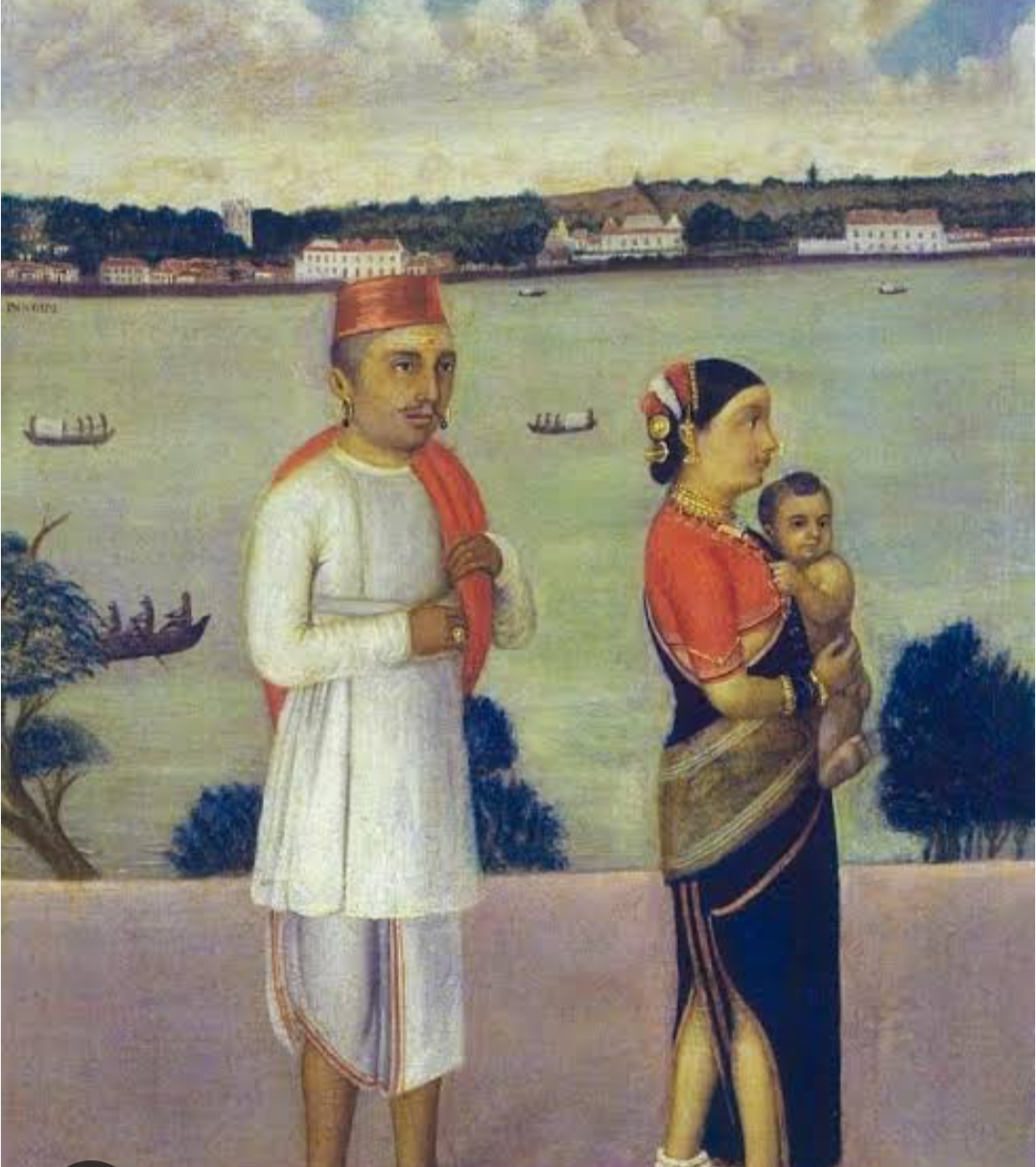
Traditional Baidya dress follows broader Bengali Hindu custom. Women traditionally wore the cotton or silk sari — the red-bordered white tant or the richer Baluchari and Garad silks for festive and ceremonial occasions — often paired with gold jewellery, while married women observed the customary use of sindoor (vermilion) and shakha-pola bangles. Men traditionally wore the dhoti and kurta for formal and religious occasions, a style broadly shared across Bengal's landed and professional Hindu households of the period. Contemporary dress, outside of weddings and festivals, has largely converged with mainstream Indian and pan-Bengali fashion.
11. Education, Livelihoods, and Socioeconomic Profile
Education has long been a defining community value, rooted in the historic requirement that Ayurvedic physicians master Sanskrit medical literature. From the nineteenth century onward, Baidya families were early and active participants in Western-style education introduced under colonial rule, and the community became disproportionately represented in medicine (both Ayurvedic and biomedical), law, the civil service, academia, journalism, literature, and the arts. Census records from the late nineteenth and early twentieth centuries noted notably high literacy rates among Baidyas, including female literacy, relative to Bengal's population as a whole.
Today, the community is represented across medicine, engineering, academia, government service, law, journalism, cinema, and literature, both within India and in the global diaspora, continuing a long-standing association with professional and intellectual life.
12. Regional and Genealogical Groupings
Historically, Baidya genealogical literature (the kulajis) recorded several regional groupings of families within the community, broadly associated with different parts of the Bengal delta — commonly referenced as Rarhi (from the Rarh region of western Bengal), Barendra (from the Barendra region of northern Bengal), and Bangaja or Bangaj (from eastern Bengal, present-day Bangladesh). These groupings functioned historically much like the analogous regional divisions found among Bengali Brahmins and Kayasthas, reflecting geography and family genealogy rather than any difference in religious practice, and in the present day carry little practical significance beyond family history and genealogical interest.
13. Folklore and Literary Tradition
Beyond their historic medical scholarship, Baidya writers left a substantial mark on Bengali literature. Community poets contributed extensively to the medieval Mangalkavya tradition, composing devotional narrative poetry in honour of regional deities such as Chandi and Manasa, and Baidya scholars produced grammatical and lexicographic commentaries that remained standard references for generations of Sanskrit students. This dual identity — as both physicians and men and women of letters — is reflected in the honorific title kaviraj itself, which literally combines "poet" (kavi) and "king" or "master" (raj), an enduring emblem of the community's self-understanding as healers of both body and word.
14. Diaspora
Like other educated, professionally mobile Bengali Hindu communities, Baidyas have participated actively in the broader twentieth- and twenty-first-century pattern of migration out of Bengal, first to other parts of India and, from the mid-twentieth century onward, to North America, the United Kingdom, and other parts of the English-speaking world, driven substantially by opportunities in medicine, engineering, academia, and information technology. Diaspora communities maintain Bengali-language cultural associations, Durga Puja committees, and literary and musical societies that bring together Bengali Hindus of various community backgrounds, including Baidyas, to preserve language, festival traditions, and cultural life abroad.
15. Prominent Figures
15.1 Medicine and Scholarship
- Kabiraj Gangadhar Sen Roy (1798–1885) — celebrated Ayurvedic physician, poet, and Sanskrit scholar of Murshidabad.
- Gananath Sen (1877–1945) — Ayurvedic physician and Sanskrit scholar; first dean of the Faculty of Ayurveda at Banaras Hindu University.
- Madhusudan Gupta (1800–1856) — physician credited with performing India's first recorded human dissection in a modern medical education setting.
- Surendranath Dasgupta (1887–1952) — renowned scholar of Sanskrit and Indian philosophy, author of the multi-volume History of Indian Philosophy.
- R. C. Majumdar (1888–1980) — eminent historian of ancient and medieval India.
15.2 Public Life and the Independence Movement
- Chittaranjan Das ("Deshbandhu") (1870–1925) — lawyer and leading figure of the Indian independence movement.
- Surya Sen ("Master Da") (1894–1934) — Indian revolutionary associated with the Chittagong armoury raid.
- Jatindra Mohan Sengupta (1885–1933) — Indian revolutionary and nationalist leader.
- Pritilata Waddedar (1911–1932) — revolutionary nationalist.
- Prafulla Chandra Sen — third Chief Minister of West Bengal.
- Siddhartha Shankar Ray — fifth Chief Minister of West Bengal.
15.3 Literature, Cinema, and Culture
- Jibanananda Das (1899–1954) — celebrated Bengali poet and novelist.
- Ramprasad Sen (18th century) — renowned Shakta devotional poet and saint.
- Nabinchandra Sen (1847–1909) — Bengali poet.
- Keshub Chandra Sen (1838–1884) — philosopher and social reformer associated with the Brahmo Samaj movement.
- Hiralal Sen (1866–1917) — pioneering Indian filmmaker.
- Mrinal Sen (1923–2018) — internationally acclaimed film director and Dadasaheb Phalke Award recipient.
- Suchitra Sen (1931–2014) — celebrated Bengali film actress.
This list is illustrative rather than exhaustive; the community has produced a large number of physicians, scholars, writers, and public figures across Bengal and the diaspora over the past two centuries.
16. Contemporary Reflections
Contemporary discussion of Baidya identity tends to centre on two related themes. The first is the community's enduring association with medicine, education, and letters — an identity that long predates and has outlasted its original occupational context, as Baidya families today work across a wide range of professions while continuing to take pride in the kaviraj heritage of scholarship and service. The second is the gradual loosening of older endogamous marriage patterns, a trend documented since at least the mid-twentieth century and accelerated by urbanisation, higher education, and life in the diaspora, as younger generations navigate questions of tradition, identity, and intermarriage in a more interconnected Bengali and Indian society.
17. Conclusion
The Baidyas of Bengal represent a community whose identity has been shaped, above all, by a centuries-long tradition of learning — expressed historically through Ayurvedic medicine and Sanskrit scholarship, and carried forward today through a continuing emphasis on education and professional achievement. From the copper-plate inscriptions of early medieval Bengal that first record Baidya landholding, through the kaviraj physician-scholars of the medieval and colonial periods, to a modern diaspora spanning the globe, the Baidya story reflects the broader history of Bengali Hindu culture: a deep engagement with language and letters, a lasting devotion to festival and family tradition, and a distinctive regional identity within the Bengal delta's rich cultural mosaic.
References
- [1]
- [2]
- [3]
- [4]
- [5]
- [6]
- [7]
- [8]
- [9]
- [10]
- [11]