

Bhuimali Community
Explore the Bhuimali community of Bengal and Assam: origin legends, history, Bara and Chhota divisions, culture, cuisine, diaspora, and what DNA can reveal about their AASI, Indus-related and Steppe ancestry.
THE BHUIMALI COMMUNITY
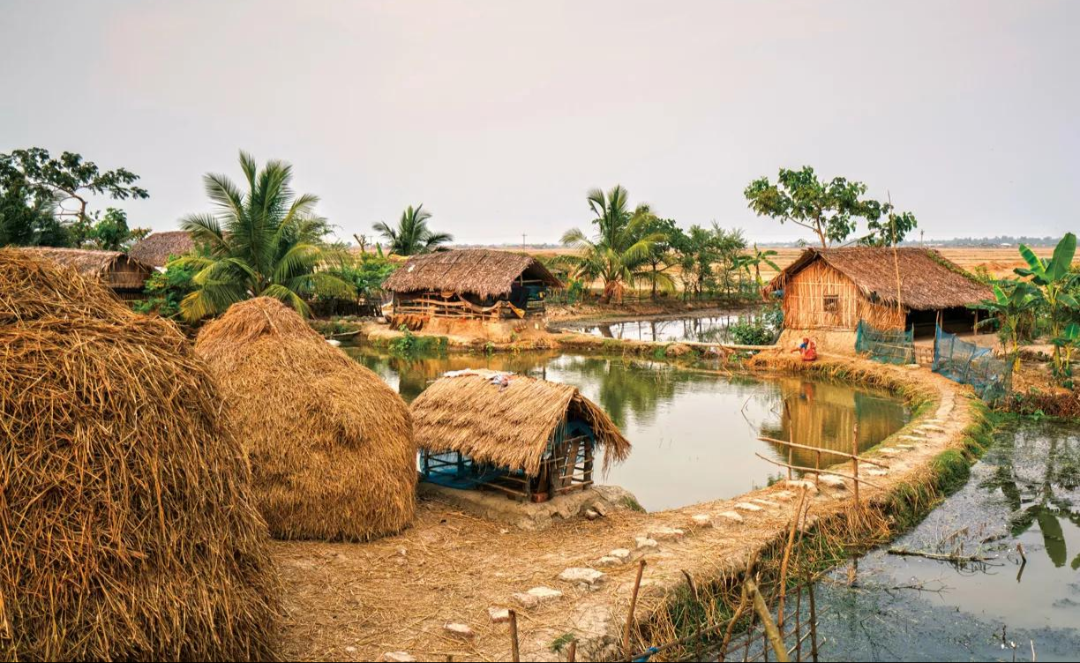
History, Culture, and Ancestry of the "Earth-Gardeners" of Bengal and Assam
Introduction: Who Are the Bhuimalis?
The Bhuimalis (also spelt Bhuinmali or Bhuimali, and in parts of Assam simply called Mali) are a Bengali-speaking Hindu community whose homeland lies in the low, river-cut plains of the Bengal delta. Their heartland historically stretched across the eastern districts of undivided Bengal, around Dhaka, Mymensingh, Noakhali, Tippera (Comilla) and Sylhet, and today the community is found mainly in West Bengal, Assam and Bangladesh, with small numbers in Tripura, Meghalaya and other parts of India.
Unlike communities defined by a single founding ancestor or a conversion event, the Bhuimalis are best understood as a people of a region: a set of related families who shared the same landscape, the same occupations, and the same place in the social order of rural Bengal over many centuries. They are recognised as a Scheduled Caste in West Bengal and in Assam. This profile brings together what is reliably known from colonial ethnography, census data and community tradition, and points out the many questions that only fresh research, including genetic research, can answer.
Etymology of the Name "Bhuimali"
The name is usually explained as a compound of two Bengali words: bhui (from bhumi, "earth" or "land") and mali ("gardener" or "tender of plants"). Read together, Bhuimali means something like "one who works the earth" or "earth-gardener", a name that reflects the community's long association with soil, land clearing, gardening and cultivation. Recorded alternative names include Bhuinmali, Bhuisundar, Bhisunder, Mali, Malakar and Siddhiputra. In Assam the community is officially listed as "Bhuimali or Mali".
Note for readers: the Bhuimalis should not be confused with the Bhuiya (Bhuiyan/Bhuyan) of Jharkhand and Odisha, a separate tribal-origin community, nor with the Baro-Bhuiyans, the medieval landlords of Bengal. The similar-sounding names come from the same root word for land, not from shared descent.
Geography and Homeland
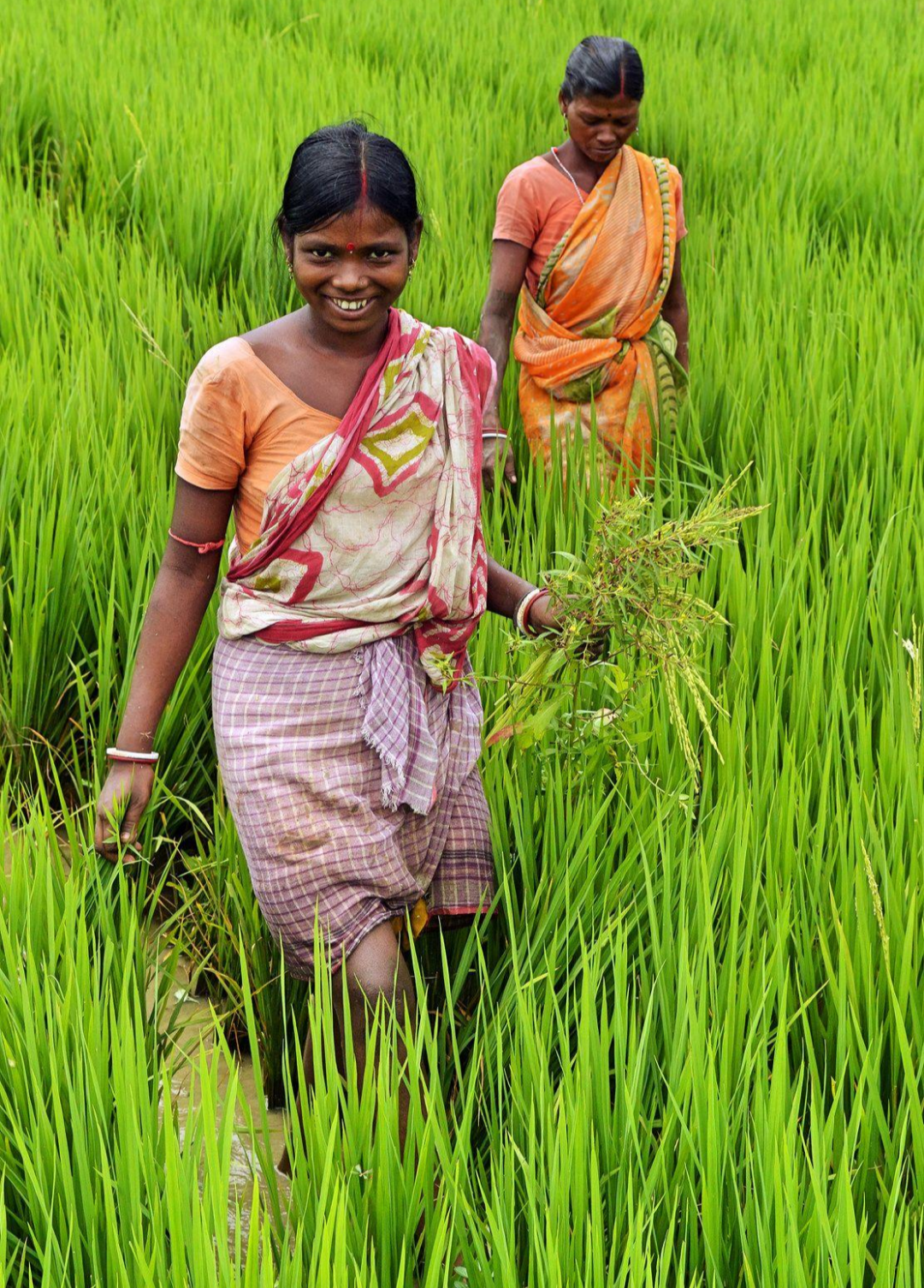
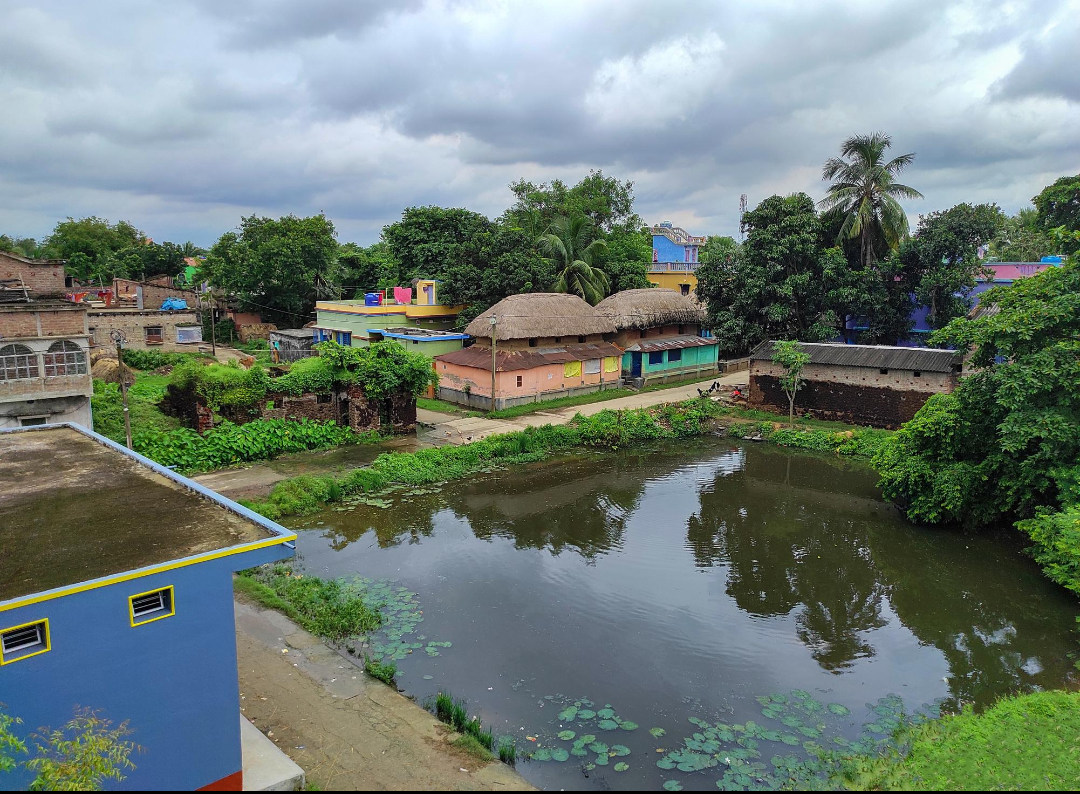
The Bhuimali homeland is the Bengal delta, a landscape of rivers, ponds, paddy fields, bamboo groves and raised village homesteads built to escape the monsoon floods. Life here has always revolved around water and soil: rice cultivation, kitchen gardens, fishing in ponds and canals, and the seasonal rhythm of floods and harvests.
- East Bengal (now Bangladesh): the historic core, especially the Dhaka, Mymensingh, Noakhali, Comilla and Sylhet regions.
- West Bengal: the largest Indian population today, spread across several districts, including North Bengal and the districts that received migrants from East Bengal after 1947.
- Assam: a large population, particularly in the Brahmaputra and Barak valleys, where many families speak Assamese alongside or instead of Bengali.
- Smaller pockets: Tripura, Meghalaya, the Andaman and Nicobar Islands, Delhi and Maharashtra.
Origin Legends and Early History
Like many communities of Bengal, the Bhuimalis explain their origins through a sacred story rather than a dated event. The best-known tradition, recorded by colonial ethnographers and repeated in later surveys, tells of a Bhuimali ancestor invited to a feast hosted by the goddess Parvati. Struck by her grace, he remarked that he would gladly perform the humblest household service for such a woman. Shiva, offended, granted him a beautiful wife but condemned him and his descendants to spend their days as her sweeper. The legend was used within the community to explain why their ancestors, who saw themselves as respectable cultivators, came to be assigned menial work and a low ritual rank.
Historians read such stories as memories of social change rather than literal history. What the evidence does suggest is that the Bhuimalis grew out of the old agricultural and labouring population of the eastern delta. Over the medieval and colonial periods, as Bengal's caste order hardened, the community became tied to specific services: land clearing and earthwork, cultivation, carrying palanquins, drumming at festivals, and, for one section, sweeping and conservancy work. H. H. Risley's The Tribes and Castes of Bengal (1891), which drew on fieldwork by James Wise in Dhaka, is the most detailed early record of the community.
Social Divisions
The community has traditionally been divided into two main endogamous sections, distinguished by occupation and status:
- Bara Bhuimali (Senior Bhuimali): families associated mainly with cultivation, land work, palanquin bearing and similar services. They traditionally considered themselves the higher section.
- Chhota Bhuimali (Junior Bhuimali): families associated with sweeping, scavenging and municipal conservancy work, especially in towns.
Some surveys also list Hari and Mehtar as subgroups or closely linked groups, since these terms were used for sweepers in Bengal. Over the twentieth century, education, government employment and urban migration have loosened these divisions considerably, and many younger Bhuimalis identify simply as Bhuimali or Mali, or use surnames shared with other Bengali Hindu communities.
Population Size
| Region | Approximate population | Source / note |
|---|---|---|
| West Bengal | 84,956 (2011 Census, Scheduled Caste count) | Census of India 2011 |
| Assam | 22,175 (1971 Census, as current estimates range up to about 76,000 | 1971 Census; Joshua Project estimate |
| Rest of India | A few thousand across Tripura, Meghalaya, Andaman and Nicobar, Delhi, Maharashtra | Joshua Project estimate |
| Bangladesh | Around 100,000 (estimate) | Joshua Project estimate; no official caste census |
| Total | Roughly 1.7 to 2.7 lakh worldwide | Estimates vary widely |
Migration, Partition, and Diaspora
The single biggest event in modern Bhuimali history was the Partition of Bengal in 1947 and the waves of migration that followed in the 1950s, 1960s and 1971. A large share of Bhuimali families, along with other Hindu communities of East Bengal, left their villages in present-day Bangladesh and resettled in West Bengal, Assam and Tripura. Many lost land and records in the process, which is one reason why family history, and even proof of caste for official purposes, can be difficult for Bhuimali families today.
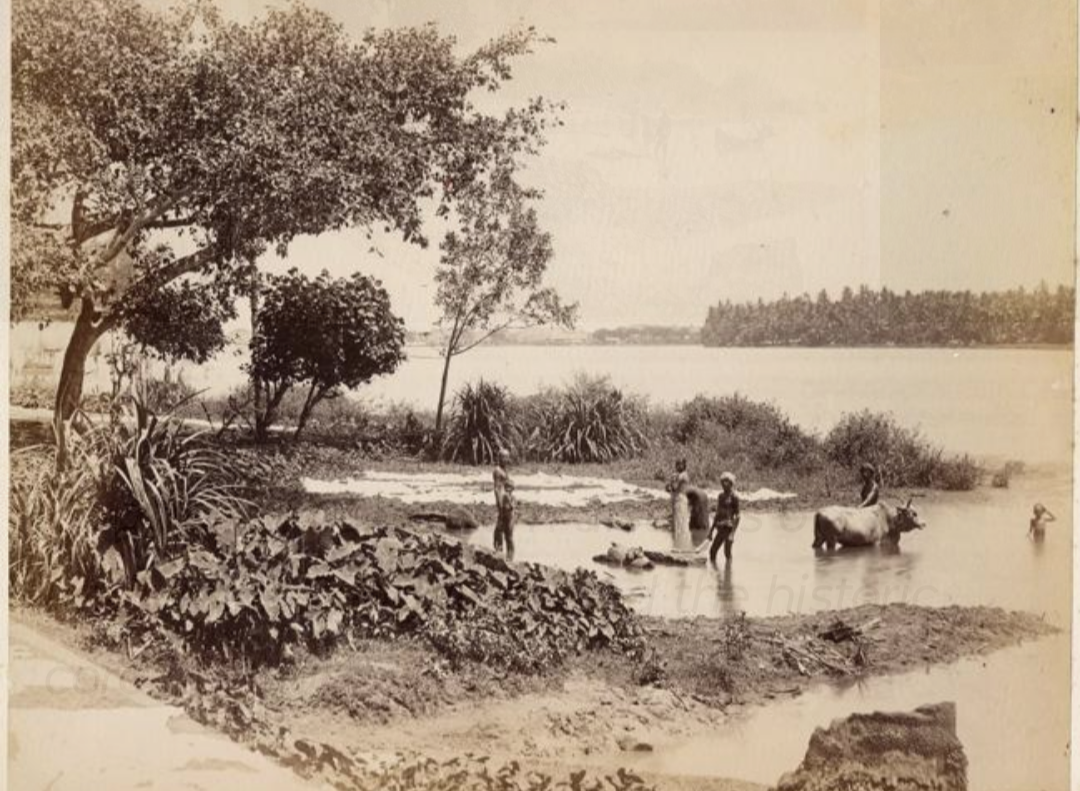
Earlier, during the colonial period, Bhuimali workers also moved to the growing towns of Bengal and Assam to take up municipal conservancy jobs, and some families were drawn to the tea districts. Today the community's diaspora is mostly internal to India, with Bhuimali workers and professionals in Kolkata, Siliguri, Guwahati, Delhi and other cities. A small number live abroad through work and study.
Religion and Belief
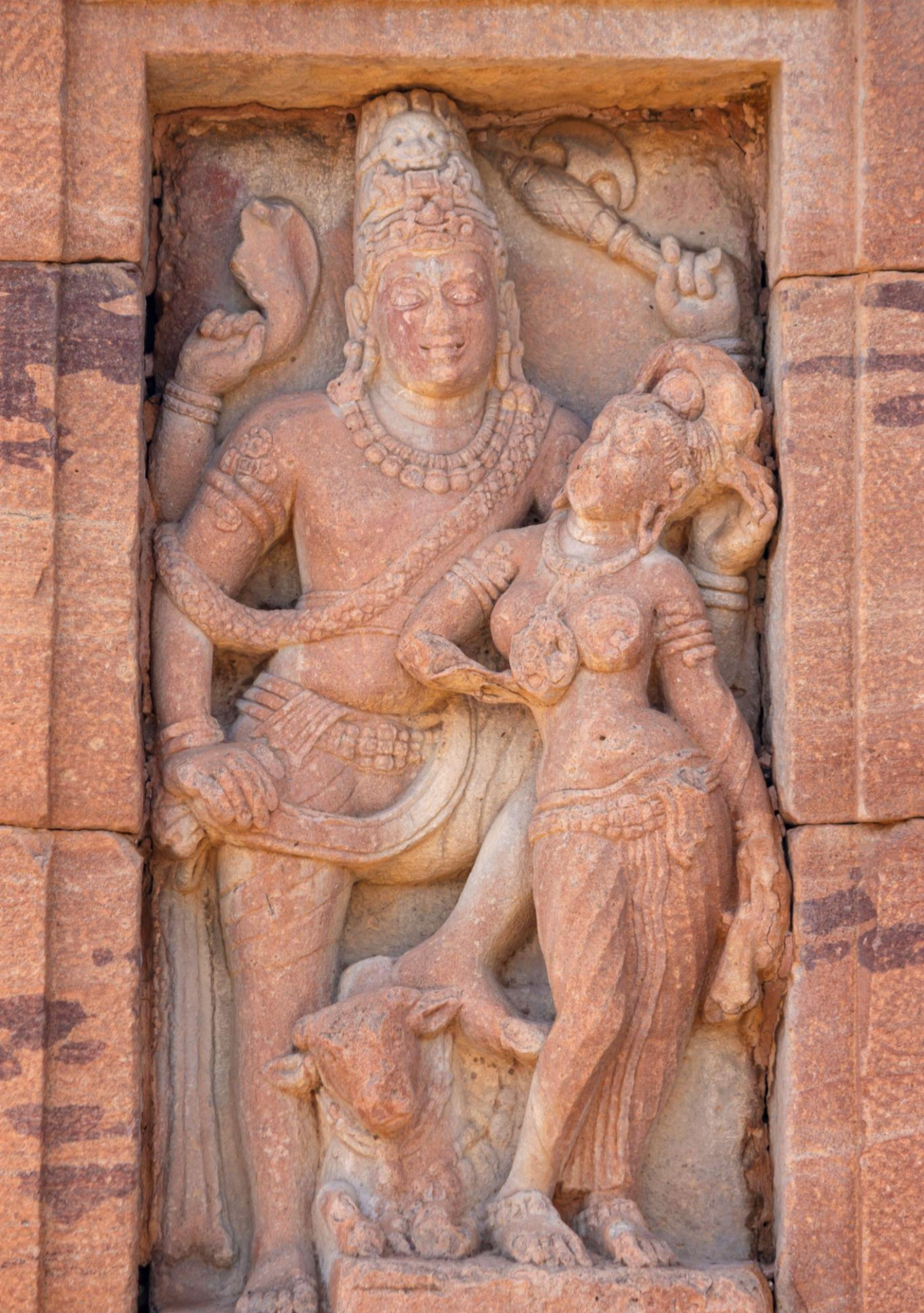
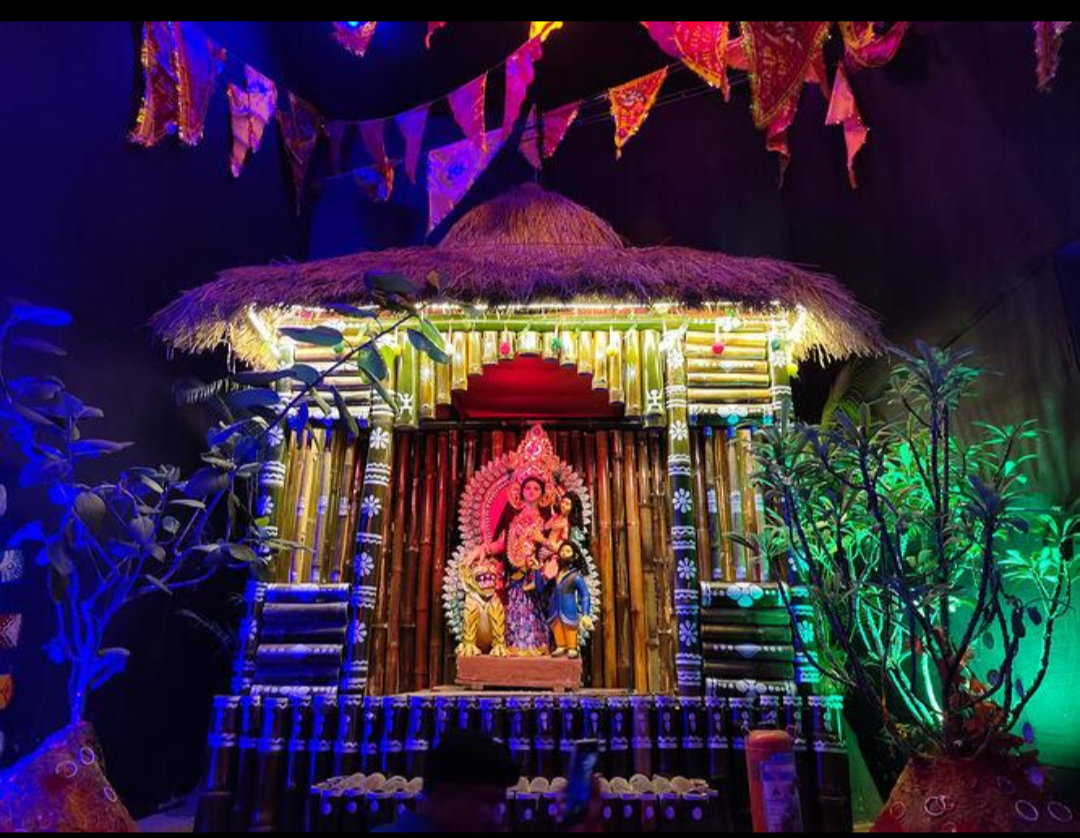
Nearly all Bhuimalis are Hindus. Worship centres on Shiva (who, interestingly, remains an important deity despite the origin legend), Kali, Durga, Manasa the snake goddess, Lakshmi and village deities, along with Vaishnava devotion to Krishna and Chaitanya that is common across Bengal. Local priests perform household rituals and festival offerings. Major festivals include Durga Puja, Kali Puja, Lakshmi Puja, Manasa Puja in the monsoon, Charak and Gajan in honour of Shiva at the end of the Bengali year, and Poila Baisakh (Bengali New Year).
Language
Bengali is the mother tongue of most Bhuimalis, often in eastern dialects (Bangal speech) carried over from Mymensingh, Dhaka, Comilla and Sylhet. In Assam, many families speak Assamese as a first or second language, and some in the Barak Valley speak Sylheti. Hindi is widely understood among urban workers. There is no separate Bhuimali language or script.
Culture, Customs, and Family Life
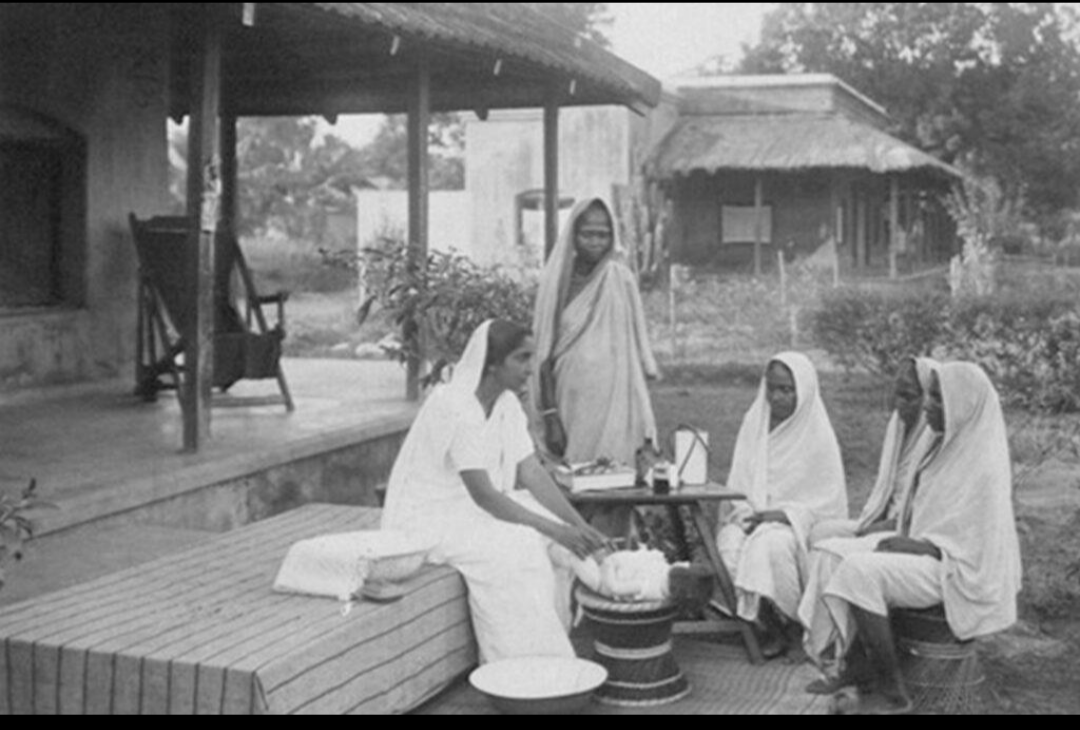
Bhuimali family life follows the broad patterns of rural Hindu Bengal. Marriage is traditionally arranged within the community and outside one's own gotra, and the Bara and Chhota sections historically married among themselves. Weddings include the familiar Bengali rites: the gaye holud (turmeric ceremony), the exchange of garlands, sindoor daan, and the wearing of shankha-pola (conch-shell and red coral bangles) by married women.
Traditional community councils settled disputes, enforced marriage rules and organised festival duties. Music has a special place: Bhuimali men were often engaged as drummers and musicians at village festivals and weddings, and folk songs, kirtan and the singing that accompanies Manasa Puja remain part of community life. Kitchen gardens, flower growing and making garlands for temple worship are small but telling continuities with the meaning of the name Mali.
Small Cultural Things
- Tulsi plant at the courtyard altar, lit with a lamp every evening.
- Alpana (rice-paste floor art) during Lakshmi Puja and weddings.
- Ulu dhwani, the ululation sound women make at auspicious moments.
- Respect for the soil itself: some families mark the start of the sowing season with small offerings to the land.
Cuisine
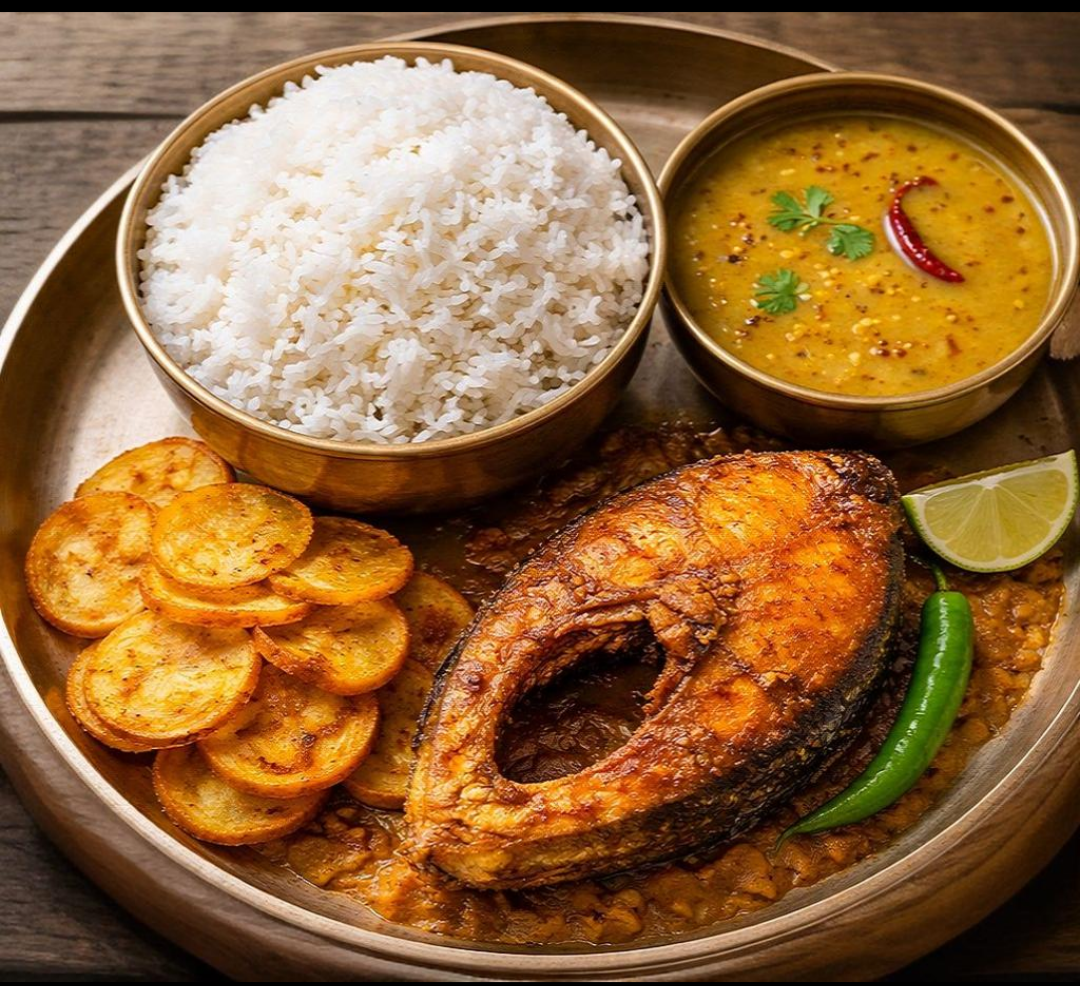
Bhuimali food is the everyday cuisine of riverine Bengal: rice, fish, lentils, and greens from the homestead garden, cooked with mustard oil, panch phoron and green chillies. Eastern (Bangal) influences are strong among families with East Bengal roots.
- Bhat, dal and maacher jhol: rice, lentils and light fish curry, the daily staple.
- Shutki: dried fish, a favourite among families from Sylhet, Mymensingh and Noakhali.
- Shaak bhaja: stir-fried greens such as kolmi, pui and lal shaak from the kitchen garden.
- Panta bhat: fermented rice soaked overnight, eaten with onion, chilli and salt in summer, especially on Poila Baisakh.
- Pitha and payesh: rice-flour cakes and rice pudding made at Poush Sankranti and festivals.
- Muri and chira: puffed and flattened rice, eaten as everyday snacks.
In Assam, Bhuimali households often blend Bengali dishes with Assamese ones such as khar and tenga (sour fish curry).
Dress
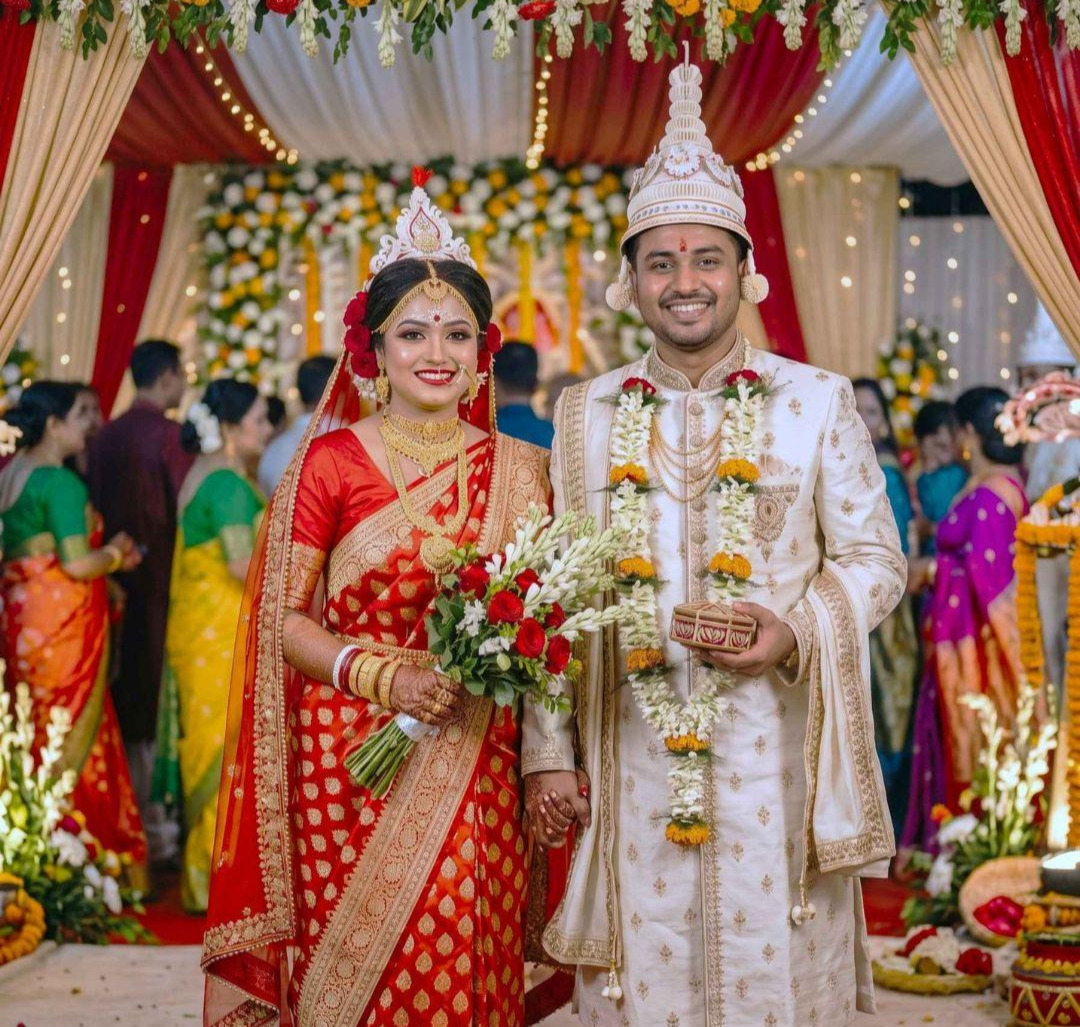
Everyday dress follows rural Bengali and Assamese styles. Women wear cotton saris, typically draped in the Bengali style, with shankha-pola and sindoor after marriage. In Assam many women also wear the mekhela chador. Men traditionally wear dhoti or lungi with a vest or kurta, and a gamchha (checked cotton towel) is almost a symbol of rural working life. Festive wear includes silk or tant saris and dhoti-panjabi for men.
Physical Appearance
There is no single "Bhuimali look". Like most communities of the Bengal delta, Bhuimalis show a wide range of skin tones, facial features and heights, reflecting the deep mixing of ancestral populations in eastern South Asia. Medium to dark brown complexions and dark hair and eyes are common, and in families from the eastern districts and Assam some people show features linked to East Asian-related ancestry that is found widely in the region. Physical appearance is a poor guide to ancestry; only DNA can describe it properly.
Occupations: Past and Present
Historically, the Bhuimalis were cultivators, often landless or tenant farmers, as well as earth-workers, gardeners, palanquin bearers, drummers and, in the Chhota section, sweepers and municipal conservancy workers. Agricultural labour remains important today, but reservations in education and government jobs have opened new paths. Bhuimalis now work as government employees, teachers, railway and municipal staff, police personnel, small business owners and academics. Like many Scheduled Caste communities, they continue to face economic disadvantage, and education is widely seen within the community as the main route to mobility.
Prominent People
Public figures from the community are not well documented in published sources. One recognised name is Anil Bhuimali, an economist at the University of North Bengal who has written and edited widely on Scheduled Caste development, rural poverty and social inequality in India. Many people from the community also carry surnames such as Mali, Malakar, Das, Sarkar or Mondal, which are shared with other Bengali communities, so a surname alone does not indicate community membership. GenoConnect invites Bhuimali readers to share notable figures from the community so this section can grow.
What Can DNA Tell Us About the Bhuimalis?
This is where existing research runs out. No published genetic study has looked specifically at the Bhuimali community. Studies of Bengal and Assam have sampled a few large groups, and they show that people in the region carry a mix of the same ancestral streams found across India, along with an additional East Asian-related component that becomes stronger as you move east. What follows is what we would expect based on regional patterns. It is a starting hypothesis, not a result, and community-wide testing is the only way to confirm or overturn it.
Ancestral Composition: AASI, Indus-Related and Steppe
Most Indians today descend from three major ancient sources: AASI (Ancient Ancestral South Indians, the original hunter-gatherers of South Asia), an Indus Valley-related farming population with Iranian-plateau ancestry, and Steppe pastoralists who arrived in the second millennium BCE. In eastern India, a fourth source, East Asian-related ancestry (linked to Austroasiatic and Tibeto-Burman speakers), is also significant.
| Ancestral component | What we expect for Bhuimalis (hypothesis) | Why |
|---|---|---|
| AASI | Substantial, likely among the larger components | Typical for agricultural and labouring communities of Bengal |
| Indus Valley-related | Substantial | Present across nearly all Indian groups |
| Steppe | Low to moderate | Usually lower in eastern and lower-ranked groups than in north-western or priestly ones |
| East Asian-related | Small to moderate, likely higher in families from Sylhet, Mymensingh and Assam | Regional admixture in the eastern delta and Brahmaputra valley |
Haplogroups: Paternal (Y-DNA) and Maternal (mtDNA)
Haplogroups trace a single line of descent: the father's father's line (Y-DNA) or the mother's mother's line (mtDNA). Based on Bengal-wide data, Bhuimali lineages are likely to include:
- Y-DNA: H1 (an ancient South Asian lineage), R1a (linked partly with Steppe-related ancestry), O2a and O1b (East and Southeast Asian-related, common among Austroasiatic and Tibeto-Burman speakers and in eastern Bengal), and smaller shares of J2, L and C.
- mtDNA: mainly South Asian branches of haplogroup M (such as M2, M3, M5 and M30) and R (including U2), with a minority of East Asian-related lineages such as D4, G and M7 in families from the eastern districts and Assam.
Closest Genetic Neighbours
Which communities are Bhuimalis most closely related to? Our working expectation is that they will cluster with other long-settled agricultural and service communities of the Bengal delta, such as the Namasudra, Poundra (Pod), Rajbanshi, Kaibartta, Hari and Bagdi, and that families from Assam may show links with Assamese plains communities. Families who left East Bengal may also find genetic matches with Bengali Muslims from the same districts, since many Muslim families of the delta descend from the same local population. Only real data will show which of these relationships are close and which are distant.
Conclusion
The Bhuimalis are, in a real sense, a community of the land. Their name ties them to the soil, their history to the paddy fields and towns of the eastern delta, and their modern story to the upheaval of Partition and the slow, hard-won gains of education and public employment. Much of their past survives only in family memory, legends of Shiva and Parvati, and a few pages of colonial ethnography. Genetics offers a new way to recover that past: to show where Bhuimali ancestors came from, which neighbours they share roots with, and how the old divisions of Bara and Chhota relate to real lines of descent.
Frequently Asked Questions
Q. Who are the Bhuimalis?
A Bengali-speaking Hindu community of the Bengal delta and Assam, traditionally associated with cultivation, earthwork, gardening, palanquin bearing and conservancy work.
Q. What does "Bhuimali" mean?
It is usually explained as bhui (earth) plus mali (gardener), meaning "earth-gardener" or "one who works the soil".
Q. Are Bhuimali and Bhuiya the same community?
No. The Bhuiya are a separate community of Jharkhand, Odisha and neighbouring states. The names share a root word for land but the communities are different.
Q. Is Bhuimali a Scheduled Caste?
Yes. Bhuimali is listed as a Scheduled Caste in West Bengal, and "Bhuimali or Mali" is listed in Assam.
Q. What are the Bara and Chhota Bhuimalis?
The two traditional sections of the community. Bara Bhuimalis were mainly cultivators and palanquin bearers; Chhota Bhuimalis were associated with sweeping and conservancy work.
Q. How many Bhuimalis are there?
West Bengal recorded 84,956 in the 2011 Census. Including Assam, other states and Bangladesh, estimates range from roughly 1.7 to 2.7 lakh.
Q. Where did the Bhuimalis originally live?
Mainly in the eastern districts of undivided Bengal, such as Dhaka, Mymensingh, Noakhali, Comilla and Sylhet, now in Bangladesh.
Q. What language do Bhuimalis speak?
Mostly Bengali, often eastern dialects. In Assam many speak Assamese or Sylheti.
Q. What are common Bhuimali surnames?
Mali, Malakar and Bhuimali are common, along with surnames such as Das, Sarkar and Mondal that are shared with many other Bengali communities.
Q. What is the Bhuimali origin legend?
A tradition says an ancestor offended Shiva at a feast hosted by Parvati and was condemned to serve as a sweeper, explaining the community's low ritual rank.
Q. What is the AASI, Indus and Steppe ancestry of Bhuimalis?
No published study has measured it yet. Based on regional data we expect substantial AASI and Indus-related ancestry, lower Steppe ancestry, and some East Asian-related ancestry. Testing with GenoConnect will help give real numbers.
Q. Which haplogroups are common among Bhuimalis?
This has not been studied directly. Regional patterns suggest Y-DNA H1, R1a and O2a, and mtDNA M and R branches, with some East Asian-related lineages.
Q. Which communities are Bhuimalis genetically closest to?
We expect closeness with other Bengal delta communities such as Namasudra, Poundra, Rajbanshi and Kaibartta, but this needs to be confirmed through testing.
Q. Can DNA tell me whether my family is from East or West Bengal?
DNA can show regional patterns and connect you with relatives from particular areas, especially as more people from the region test.
Q. Why should I take a DNA test with GenoConnect?
Because research on individual Indian communities is very limited. Your result helps you understand your own ancestry and builds the first genetic profile of the Bhuimali community for everyone.
References
- [1]Risley, H. H. The Tribes and Castes of Bengal: Ethnographic Glossary. Calcutta: Bengal Secretariat Press, 1891. https://archive.org/details/dli.csl.8587
- [2]Singh, K. S. (ed.). The Scheduled Castes. People of India, National Series Vol. II. Anthropological Survey of India / Oxford University Press, 1993/1994.
- [3]Census of India 2011. A-10 Appendix: District-wise Scheduled Caste population, West Bengal. https://censusindia.gov.in/nada/index.php/catalog/42898
- [4]Wikipedia. "List of Scheduled Castes in West Bengal." https://en.wikipedia.org/wiki/List_of_Scheduled_Castes_in_West_Bengal
- [5]Joshua Project. "Bhuinmali in India." https://joshuaproject.net/people_groups/16426/IN
- [6]Mahabahu. "Asomor anusuchita jatir 16 ta upajati" (16 Scheduled Caste communities of Assam). https://mahabahu.com
- [7]Bhuimali, Anil (ed.). Development of Scheduled Caste. New Delhi: Serials Publications, 2007.
- [8]Indian Kanoon. Santosh Kumar Mandal vs The State of West Bengal, Calcutta High Court, 19 April 2017. https://indiankanoon.org/doc/75955283/