

Dahiya Community
Discover the Dahiya community: explore the history and ancestry of this major Jat and Rajput clan in India. Learn about Dahiya Khap and social structure.
The Dahiya Community of India
History, Social Structure, Culture, and Notable Members of a Major Jat (and Rajput) Clan
1. Introduction: Who Are the Dahiyas?
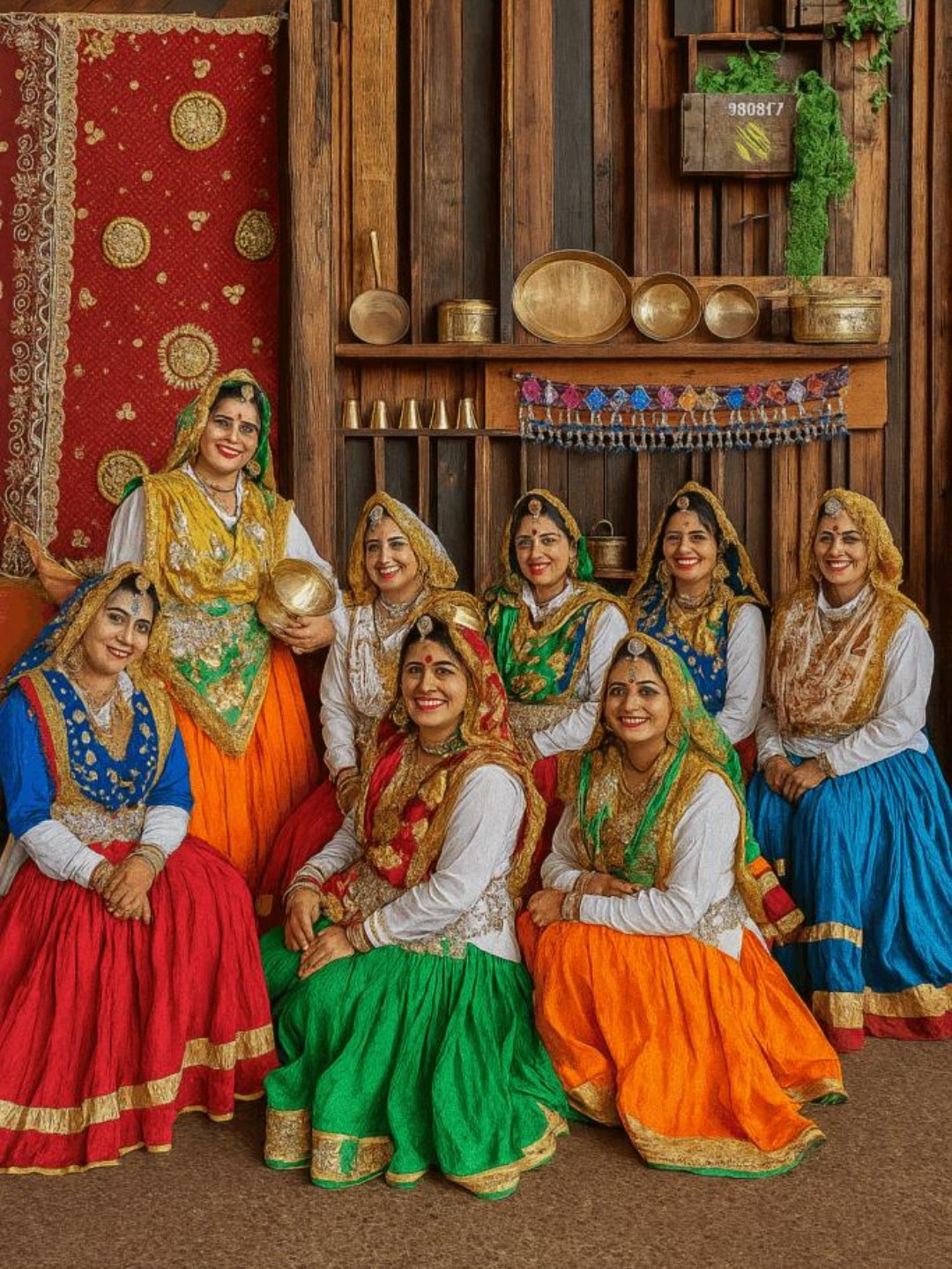
Dahiya (also spelled Dahia or Dahiya) is the name of a major Indian clan, or gotra, found chiefly among the Jat community of Haryana, western Uttar Pradesh, Punjab, and Rajasthan, with a smaller Rajput branch historically associated with Rajasthan. Jats are a large, traditionally agrarian community spread across North India and Pakistan, and within Jat society the clan (gotra) system organises families into named lineages that regulate marriage, community identity, and, in parts of Haryana and western Uttar Pradesh, local social organisation through bodies known as khaps.
The Dahiyas are counted among the largest and most widely distributed Jat clans, particularly in Haryana, where they are concentrated in Rohtak, Sonipat, and Jind districts, with further settlements across Rajasthan (notably Nagaur district), Delhi, and Punjab. The clan is organised, in its Haryana heartland, under the Dahiya Khap, one of the historic khaps of the region, popularly referred to as the "Dahiya Chalisa" (the "Forty [Villages] of the Dahiyas"), reflecting the traditional count of Dahiya-dominated villages in the Rohtak–Sonipat belt, a number that community sources say has since grown well beyond forty.
This profile draws together what is reliably known and traditionally believed about the Dahiya community: its contested and layered origins, its medieval history as both ruling Rajput lineage and Jat agrarian clan, its social organisation through gotra and khap, and the culture, customs, and notable figures associated with it today. Where the record rests on bardic chronicles, inscriptions, or community oral tradition rather than settled academic consensus, this is noted explicitly, in keeping with how such traditions are generally treated in scholarship on North Indian clan history.
2. Origins and Early History
2.1 A Name with Several Layered Traditions
The origin of the Dahiya name and lineage is not settled in a single account; rather, several traditions exist side by side, some resting on colonial-era antiquarian scholarship, some on medieval inscriptions, and some on community oral history.
- Central Asian (Saka) theory: The 19th-century chronicler James Tod, in his Annals and Antiquities of Rajasthan, listed the Dahiya among the "thirty-six royal races" of ancient India and suggested a link between the Dahiya and the Dahae, an ancient Central Asian people (also called the Daai or Dahae) recorded by Greek and Roman writers as living near the Oxus (Amu Darya) river and later associated with the Sakas/Scythians. Later writers, including the Jat clan historian Bhim Singh Dahiya, and the scholar Sundeep S. Jhutti, have echoed this connection between the Dahiya/Dahima clan name and the Dahae of Central Asian antiquity. This remains a historical hypothesis based on name resemblance and classical geography rather than a proven genealogical link, and readers should treat it as one scholarly tradition among others.
- Puranic and Mahabharata tradition: Some community historians, notably Ram Sarup Joon in his widely cited clan history, place the Dahiyas within the Puru lineage of Vedic and epic tradition and associate them, in legend, with the era of the Mahabharata. As with similar clan traditions across North India, this is oral and bardic history rather than independently verifiable record.
- The Dadhichi Rishi tradition: An inscription dated 21 April 999 CE, found at the Kevay (Dadhimati) Mata temple in Kinsariya village, Parbatsar tehsil, Nagaur district, Rajasthan, and commissioned by a ruler named Chachcha Rana, describes his lineage as "Kulam Dahiyakam Jatam" ("born of the Dahiya lineage") and connects the clan, in tradition, to the sage Dadhichi, a Vedic rishi venerated for his self-sacrifice. Many Dahiya and related Dahima families continue to revere Dadhimati Mata (a goddess associated with this tradition, worshipped at the Dadhimati Mata temple in Nagaur district) as a kuldevi, or clan goddess.
Historians broadly agree that whatever its ultimate origin, the Dahiya/Dahima clan name is attested with certainty from the late 10th century CE onward, through inscriptions and later Rajput and Jat genealogical records, and that the clan had, by the medieval period, split into distinct Rajput and Jat branches that nonetheless continued to be recorded together in regional chronicles.
2.2 The Dahima Rajputs of Rajasthan
In Rajasthan, a Rajput clan known as the Dahima (closely associated with the Dahiya name) is recorded among the thirty-six traditional royal races of Rajput genealogy. The Dahima Rajputs are associated with Nagaur district, particularly the area around the Dadhimati Mata temple, and with the historic fort town of Bayana in present-day Bharatpur district. Medieval Dahima nobles served as important feudatories and courtiers of the Chahamana (Chauhan) rulers of Shakambhari and Ajmer, most notably under the celebrated 12th-century king Prithviraj Chauhan III.
According to Rajput and Jat clan histories, a Dahima noble named Kaimas (Kadamvas) served as an early guardian and chief minister to the young Prithviraj Chauhan and held Bayana Fort in jagir (fief). Another Dahima nobleman, Chamundaraya (Chamund Rai), is remembered in tradition as a senior commander (senapati) of Prithviraj Chauhan's army and as the king's brother-in-law by marriage; he is said to have died fighting in Prithviraj's final campaigns against Muhammad of Ghor at the close of the 12th century. By the 13th century, Dahima Rajput power in the Nagaur–Bayana region had been eclipsed amid the wider decline of Chahamana authority following the Ghurid invasions.
2.3 The Dahiya Jats
Alongside the Rajput Dahima lineage, the Dahiya name is recorded, from at least the medieval period, as a prominent Jat clan in the Rohtak–Sonipat tract of present-day Haryana and in adjoining parts of Rajasthan and Punjab. Colonial-era ethnographers and clan historians describe the Dahiyas as one of the largest and most long-settled Jat clans of this region, with their own bardic traditions of migration from the west and settlement in the Delhi–Rohtak plains over many centuries. As with a number of major North Indian lineages, some clan historians describe movement between Rajput and Jat identity over the centuries in particular family branches, a pattern also noted for several other clans in the region; this is a matter of historical and genealogical discussion rather than a settled, singular narrative, and different family branches and sources describe it differently.
Today, the great majority of people bearing the Dahiya surname identify as Jats, concentrated in rural Haryana, and it is this Jat branch that forms the basis of the modern Dahiya Khap and the community as it is generally understood in Haryana today.
3. Social Structure: Gotra and the Dahiya Khap
3.1 The Gotra System
Like other Jat clans, the Dahiyas are organised as a gotra, an exogamous patrilineal lineage group tracing descent, in tradition, to a common ancestor. Among Jats in Haryana, Punjab, western Uttar Pradesh, and Rajasthan, marriage within one's own gotra is customarily prohibited, and in many areas marriage is also traditionally avoided with certain closely related "brother" gotras and within one's own village or immediate cluster of villages, a practice known as village exogamy. Community sources note, for instance, that the Dahiya, Karwasra, Karwa, and Bhagasra gotras are regarded in local tradition as descending from a common ancestral line and are treated as related lineages for the purposes of these customary marriage rules.
3.2 The Dahiya Khap ("Dahiya Chalisa")
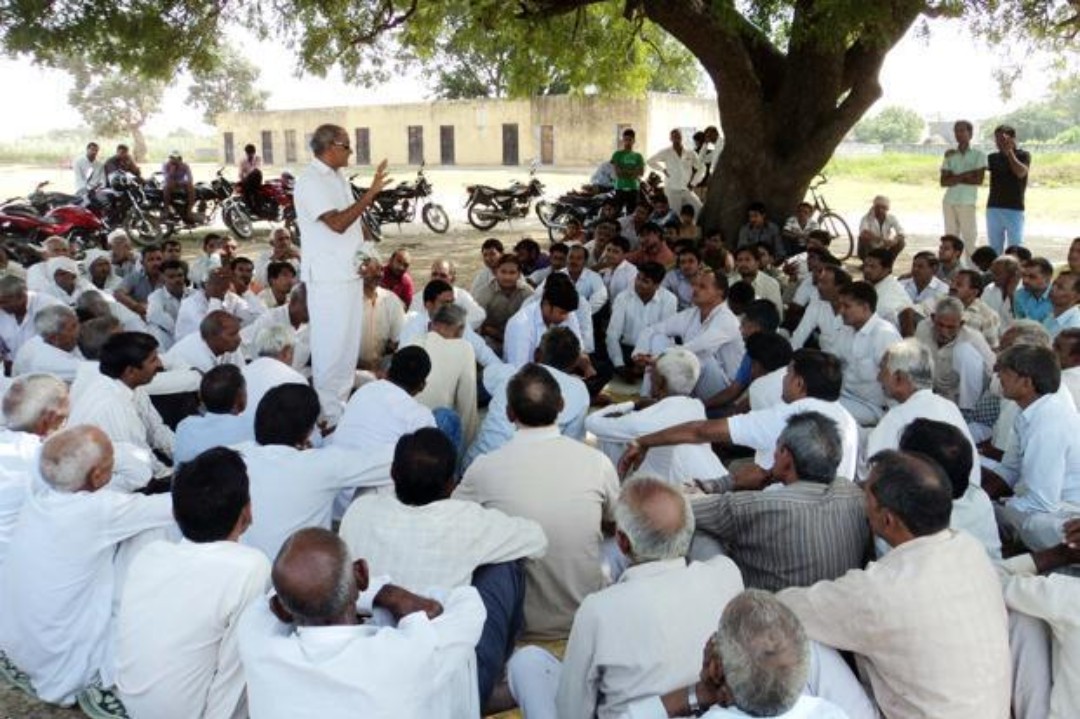
A khap is a traditional, non-governmental community organisation representing a clan or a defined cluster of villages, historically common among Jat communities of Haryana and western Uttar Pradesh and also found in parts of Rajasthan and Madhya Pradesh. Khaps have no formal legal authority under Indian law, but they have historically played a social and coordinating role within their communities, including in matters of local custom, dispute resolution among families, and community events.
The Dahiya Khap is one of the recognised khaps of Haryana, historically centred on the Rohtak and Sonipat districts and popularly called the Dahiya Chalisa, referring to a traditional count of about forty core Dahiya villages; present-day listings compiled by community members record more than fifty Dahiya-dominated villages across the region, including Badhkhalsa, Sisana, Barona, Barota, Kheri Dahiya, Bhadana, Silana, and Rohna, among many others. Because of their number and long settlement in the region, the Dahiyas are often described in Haryana as one of the largest single Jat clans by village count.
4. Geographic Distribution
The Dahiya community today is found predominantly in:
- Haryana — chiefly Rohtak, Sonipat, and Jind districts, with the Rohtak–Sonipat belt regarded as the traditional Dahiya heartland.
- Rajasthan — particularly Nagaur district, historically associated with the Dahima branch and the Dadhimati Mata temple, as well as parts of Bikaner and Marwar.
- Western Uttar Pradesh and Delhi — smaller but long-established Dahiya settlements, including areas within and around the National Capital Region.
- Punjab — a number of Dahiya Jat families, historically noted around the Ropar (Rupnagar) area, in addition to Haryana and Rajasthan.
Beyond India, individual Dahiya families and professionals are found in the wider Indian diaspora, including North America, Europe, the Gulf states, and Australia, following broader patterns of overseas migration from Haryana and northern India, though no dedicated diaspora institutions specific to the clan (as distinct from broader Jat or Haryanvi community associations) are widely documented.
5. Language and Regional Culture
Dahiya families in Haryana speak Haryanvi (also called Bangaru or Jatu), a dialect of the wider Hindi-belt language continuum known for its earthy, direct idiom and distinct vocabulary; Dahiya families in Rajasthan and Punjab share the Marwari/Rajasthani and Punjabi linguistic environments of those regions respectively, alongside Hindi and Punjabi as the languages of wider communication. As with other Jat and agrarian communities of the region, Hindu religious practice, including worship of regional and clan deities alongside major pan-Indian gods and goddesses, forms the customary religious framework of most Dahiya families, with reverence for Dadhimati Mata as a kuldevi (clan goddess) noted among many Dahiya and related Dahima families.
The wider Haryanvi cultural world that most Dahiya families are part of includes a strong oral and performing tradition: ragni (narrative folk songs, often performed in a call-and-response style), saang (folk theatre blending song, dance, and storytelling), and folk instruments and dances associated with harvest and seasonal festivals. Major festivals observed include Holi, Diwali, Teej (a monsoon festival especially associated with women, marked by songs, henna, and swings), Lohri, and Gugga Naumi, a folk festival rooted in regional legend.
6. Marriage and Social Customs
Marriage customs among Dahiya families broadly follow the wider Jat pattern common to Haryana, western Uttar Pradesh, and neighbouring Rajasthan: marriages are arranged within the Jat community but outside one's own gotra and, by long custom, outside one's own village or immediate village cluster, in keeping with the exogamy rules described above. Matches are traditionally negotiated between families, with community and khap networks historically playing a role in facilitating introductions and social recognition of new marital ties between village clusters. As in much of rural North India, marriage ceremonies follow Hindu Vedic rites, and wedding celebrations are typically substantial community occasions involving extended family, feasting, and customary songs and rituals associated with Haryanvi and Jat wedding tradition, such as sangeet-style pre-wedding singing by women of the family.
Extended family identity remains important, and, as with many landed agrarian clans of North India, family and clan gatherings, along with participation in khap-linked community events, continue to serve as occasions for reinforcing kinship ties across the many villages associated with the clan.
7. Cuisine
Dahiya households, particularly in rural Haryana, generally follow the broader Haryanvi Jat culinary tradition, which is simple, hearty, and closely tied to the region's agrarian economy of wheat, millet (bajra), pulses, and dairy farming.
- Bajre ki roti (pearl-millet flatbread) and makki di roti, typically eaten with generous ghee and, in winter, with sarson ka saag or other seasonal greens (saag).
- Kadhi-pakora, a yogurt-and-gram-flour curry with fried dumplings, and simple lentil (dal) preparations, often accompanied by chaas (spiced buttermilk) or lassi.
- Bajre ki khichdi, a millet-and-lentil porridge, and kachri ki chutney, made from a wild regional cucumber.
- Churma, panjiri, and pinni — festive sweets made from wheat flour or millet flour, ghee, and unrefined sugar (bura or shakkar), along with malpua, especially popular during festivals.
Dairy holds a central place in Haryanvi Jat households generally, given the community's long association with cattle and buffalo rearing; milk, ghee, curd, and buttermilk are everyday staples rather than occasional items.
8. Traditional Dress
Traditional Dahiya dress, in keeping with wider Haryanvi Jat custom, historically consisted of the following:
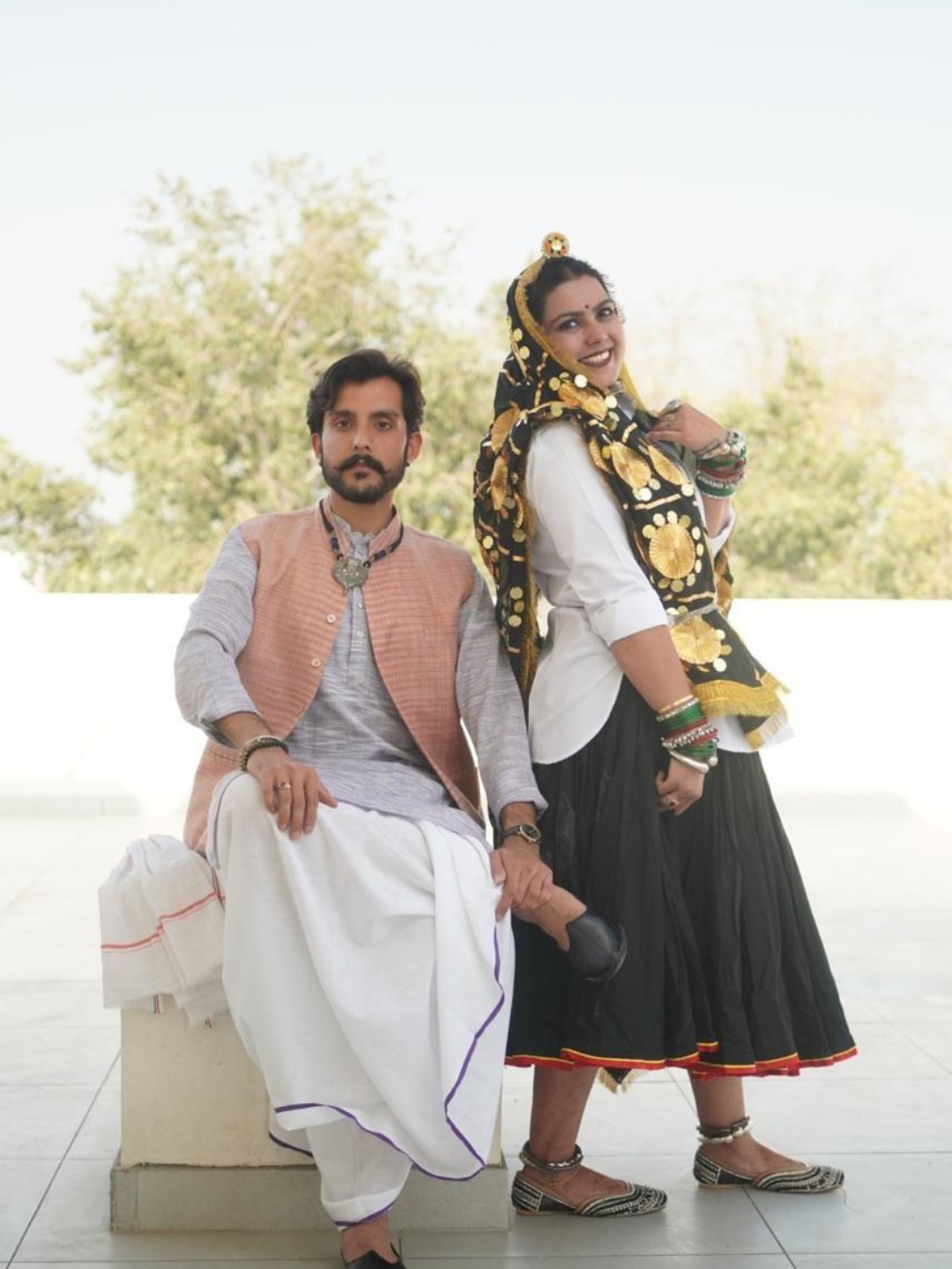
- Men: a white dhoti (a length of cloth wrapped and tucked at the waist) worn with a kurta or shirt, a pagri (turban), and, in cooler months, a woollen or cotton shawl (chaddar). Jutti (traditional leather footwear) completed formal or festive dress.
- Women: a ghagra or daaman (a long, often brightly coloured flared skirt), a kurti or choli (blouse), and a chunder or odhni, a long decorated cloth draped over the head and shoulders in the manner of a sari's pallav. Heavy silver jewellery, historically including ornaments such as the hansli (a rigid neck ornament) among older women, was traditionally worn on festive and ceremonial occasions.
As in most of rural North India, everyday dress among younger Dahiya generations has largely shifted toward mainstream Indian and Western clothing, with traditional attire now reserved chiefly for weddings, festivals, and formal community occasions.
9. Martial Tradition and Military Service
Both the historic Dahima Rajput lineage and the Dahiya Jat clan carry a strong association with military service and martial reputation, a trait widely noted among Jat communities in general, who form a significant proportion of several Indian Army regiments, including the Jat Regiment.
- Medieval period: Dahima nobles such as Kaimas and Chamundaraya served as senior commanders and courtiers under Prithviraj Chauhan III in the 12th century, as described in Section 2.2.
- Bhai Kushal Singh Dahiya, a Jat of Badhkhalsa village (in present-day Sonipat district), is remembered in Sikh tradition for offering himself in place of Bhai Jiwan Singh's head when Mughal forces sought to seize the severed head of Guru Tegh Bahadur being carried to Anandpur Sahib; he was killed as a result, and a memorial to him stands at the Badhkhalsa Memorial Complex in Rai, Sonipat.
- Colonel Hoshiar Singh Dahiya (1936–1998), born in Sisana village, Sonipat district, was awarded the Param Vir Chakra, India's highest military decoration for gallantry, for his leadership during the 1971 Indo-Pakistani War, notably at the Battle of Basantar.
- Jat Mehar Singh Dahiya (1916–1945), from Barona village, Sonipat district, served with the Jat Regiment and separately became a well-known Haryanvi ragni poet, and is remembered as a freedom-era literary figure of the community.
This combination of agricultural livelihood and a strong martial and service tradition — extending into today's Indian Army, police, and paramilitary forces — remains a recurring feature of Dahiya and wider Jat community identity in Haryana.
10. Education, Livelihood, and Contemporary Profile
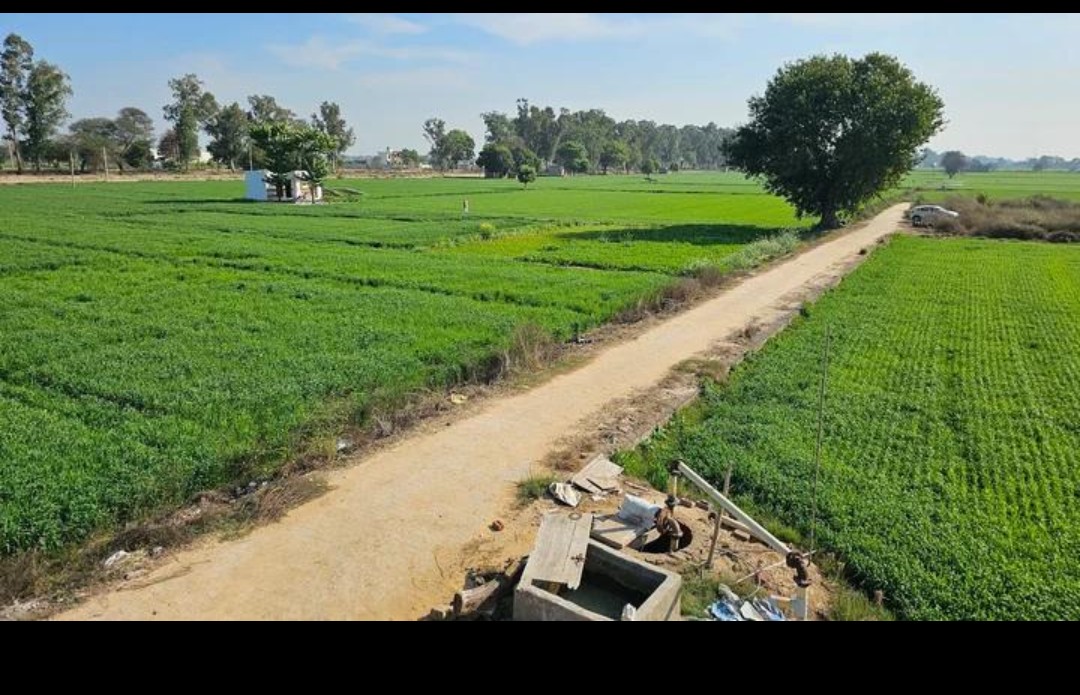
Historically an agrarian community, the Dahiyas, like most Haryanvi Jats, have traditionally been engaged in farming (notably wheat, sugarcane, and cotton in the fertile Rohtak–Sonipat belt) and cattle and buffalo rearing. Since the mid-20th century, and particularly following the Green Revolution's impact on Haryana agriculture, many Dahiya families have diversified into education, government service, the armed forces and police, law, medicine, and, increasingly, private-sector and entrepreneurial careers, a pattern consistent with the broader socio-economic trajectory of landowning Jat families in Haryana over the past several decades.
Wrestling (kushti) and other competitive sport hold a particularly prominent place in Dahiya and wider Haryanvi Jat culture; village akharas (wrestling schools) remain active across the Rohtak–Sonipat region, and the clan has produced a number of wrestlers who have competed at the Olympic and Commonwealth level, discussed in Section 11 below.
11. Notable Members of the Dahiya Community
The Dahiya surname is associated with a wide range of notable figures across sport, the armed forces, politics, academia, science, and the arts. This list is illustrative rather than exhaustive.
11.1 Sport
- Ravi Kumar Dahiya (b. 1999) — Olympic silver medallist wrestler (57 kg freestyle, Tokyo 2020) and Commonwealth and Asian Games medallist.
- Amit Kumar Dahiya (b. 1983) — Commonwealth Games gold medallist wrestler.
- Dharan Singh Dahiya (b. 1967) — Olympic wrestler.
- Rohtas Singh Dahiya (b. 1960) — Indian wrestler.
- Vinod Kumar Dahiya (b. 1986) — Indo-Australian wrestler.
- Nisha Dahiya (b. 1998) — Indian wrestler and Asian Games medallist.
- Vijay Dahiya (b. 1973) and Virender Dahiya (b. 1989) — Indian first-class and international cricketers; Rohit Dahiya (b. 1988) — Indian cricketer.
- Vikas Dahiya (b. 1995) — Indian field hockey goalkeeper.
- Parteek Dahiya (b. 2002) — Indian kabaddi player.
- Preeti Dahiya (b. 2004) — Indian boxer.
11.2 Armed Forces
- Colonel Hoshiar Singh Dahiya, PVC (1936–1998) — Param Vir Chakra recipient, 1971 war.
- Bhai Kushal Singh Dahiya — 17th-century Sikh martyr, honoured in Sikh tradition.
11.3 Politics and Public Life
- Rizak Ram Dahiya (b. 1912) — politician and minister.
- Padam Singh Dahiya (b. 1963), Jai Tirath Dahiya (b. 1952), and Rajneesh Dahiya (b. 1977) — Indian politicians.
11.4 Academia, Science, and Letters
- Bhim S. Dahiya (b. 1938) — academic and politician, and a noted clan historian whose work is widely cited in Jat genealogical scholarship.
- Rajvir Dahiya (b. 1956) — Indo-American scientist.
- Babulal Dahiya (b. 1949) — agriculturist, recognised for his contribution to conserving traditional crop varieties.
- Jat Mehar Singh Dahiya ("Fauji Mehar Singh," 1916–1945) — Haryanvi ragni poet and Jat Regiment soldier.
11.5 Film and Television
- Jagbir Dahiya (b. 1970) — Indian film director and producer.
- Vivek Dahiya (b. 1984) — Indian television actor.
Birth years and biographical details above follow publicly available reference sources; some dates for lesser-documented individuals may vary between sources.
12. Contemporary Reflections
Two broad threads run through the modern Dahiya story. The first is continuity: the clan's identification with specific villages of the Rohtak–Sonipat belt, its khap structure, and its gotra-based marriage customs have persisted for generations even as Haryana itself has urbanised and diversified economically. The second is a widening range of achievement: from the medieval battlefield service of the Dahima nobility, through the freedom-era and independence-war contributions of figures like Kushal Singh Dahiya and Colonel Hoshiar Singh Dahiya, to a contemporary generation of Olympic wrestlers, cricketers, scientists, and public servants who carry the Dahiya name into new arenas while, for many families, retaining strong ties to their ancestral villages and clan identity.
13. Conclusion
The Dahiya community represents one of North India's larger and more historically layered clans — claimed, in different traditions, as descendants of an ancient Central Asian people, as heirs of the Vedic sage Dadhichi, and, in the documented medieval record, as both Rajput courtier-warriors of the Chahamana court and a long-settled Jat agrarian clan of the Delhi–Rohtak plains. Organised today chiefly through the Dahiya Khap of Haryana and its associated gotra customs, the community has carried its identity from the inscriptions of 10th-century Rajasthan and the battlefields of Prithviraj Chauhan, through the wheat fields and akharas of modern Haryana, to Olympic wrestling mats and public life across India and its diaspora.
References
- [1]1. Wikipedia. "Dahiya (surname)." https://en.wikipedia.org/wiki/Dahiya_(surname)
- [2]2. Wikipedia. "Dahiya Khap." https://en.wikipedia.org/wiki/Dahiya_Khap
- [3]3. Wikipedia. "Khap." https://en.wikipedia.org/wiki/Khap
- [4]4. Wikipedia. "Dahae." https://en.wikipedia.org/wiki/Dahae
- [5]5. Wikipedia. "Dahima." https://en.wikipedia.org/wiki/Dahima
- [6]6. Wikipedia. "Hoshiar Singh Dahiya." https://en.wikipedia.org/wiki/Hoshiar_Singh_Dahiya
- [7]7. Wikipedia. "Kushal Singh Dahiya." https://en.wikipedia.org/wiki/Kushal_Singh_Dahiya
- [8]8. Wikipedia. "Mehar Singh Dahiya." https://en.wikipedia.org/wiki/Mehar_Singh_Dahiya
- [9]9. Wikipedia. "Haryanvis." https://en.wikipedia.org/wiki/Haryanvis
- [10]10. Jatland Wiki. "Dahiya." https://www.jatland.com/home/Dahiya
- [11]11. Jatland Wiki. "Dahima." https://www.jatland.com/home/Dahima
- [12]12. Joshua Project. "Jat Dehia (Hindu traditions) in India." https://joshuaproject.net/people_groups/19785/IN
- [13]13. Tod, James (1829). Annals and Antiquities of Rajasthan, cited in Wikipedia, "Dahima."
- [14]14. Jhutti, Sundeep S. (2003). The Getes. Department of East Asian Languages and Civilizations, University of Pennsylvania, cited in Wikipedia, "Dahiya (surname)."
- [15]15. Crafts of Haryana. "Festivals, Folk Dances & Traditions of Haryana." https://craftsofharyana.org/blogs/news/the-rich-culture-of-haryana-festivals-folk-dances-traditions
- [16]16. RitiRiwaz. "Haryana — Culture and Tradition." https://www.ritiriwaz.com/haryana-culture-and-tradition/
- [17]17. Holidify. "Culture of Haryana" and "Traditional Dresses of Haryana." https://www.holidify.com/pages/haryana-culture-80.html ; https://www.holidify.com/pages/haryana-dresses-179.html