

Gaur Community
Gaur Brahmins are a major Hindu community across North India, especially Haryana, Rajasthan, UP, MP & Delhi. Explore their history, culture & ancestry, gotras.
The Gaur Brahmins of North India
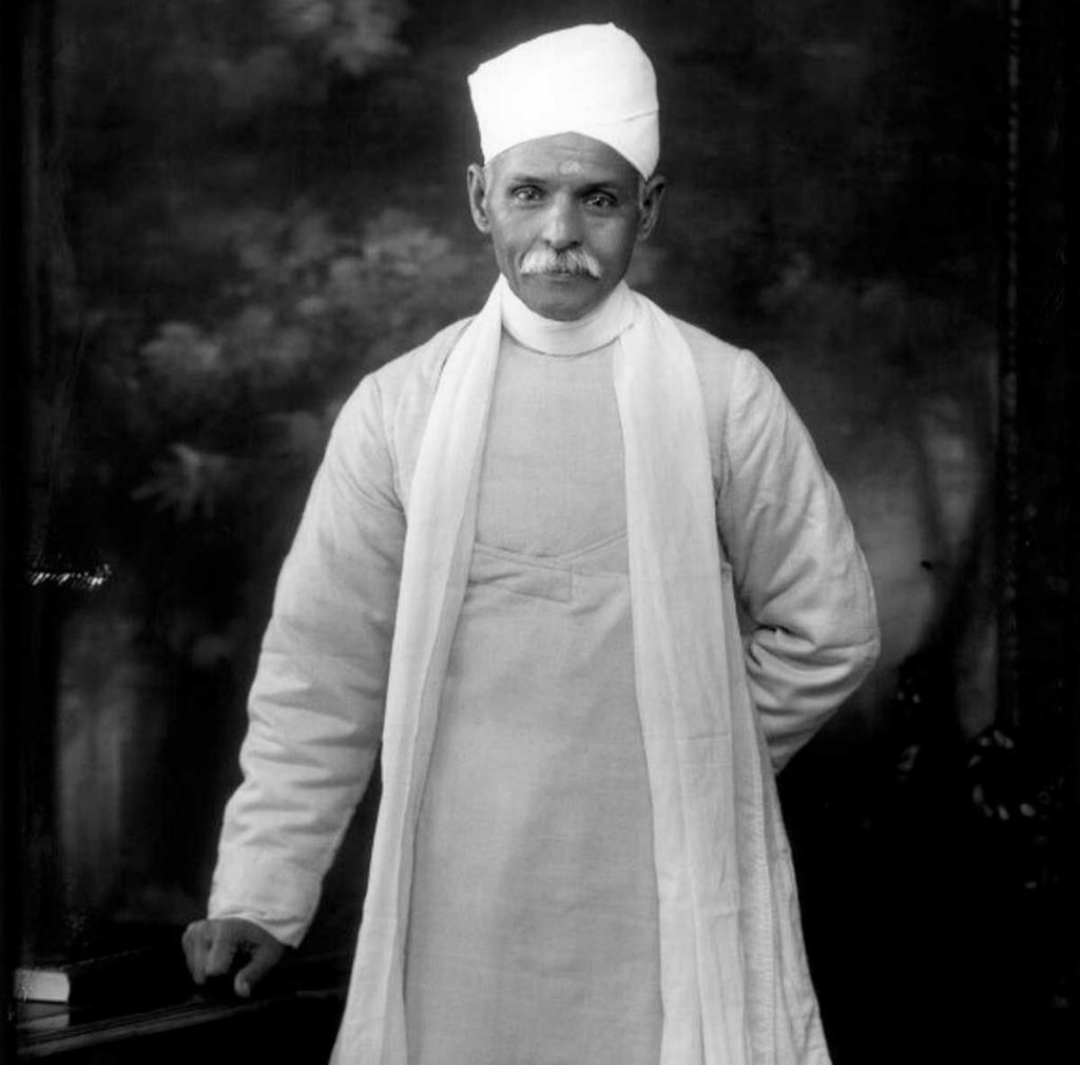
History, Culture, and Society of the Gaud / Gaur Brahmin Community
1. Introduction: Who Are the Gaur Brahmins?
The Gaur Brahmins, also spelled Gor, Gour, Gaud, or Gauda, are a major Hindu Brahmin community concentrated in the western half of Northern India. They are counted among the Pancha Gauda, the traditional grouping of five Brahmin communities said to reside north of the Vindhya mountain range, as distinguished from the Pancha Dravida Brahmin communities of the south. Today, Gaur Brahmins are most numerous in Haryana, Rajasthan, western Uttar Pradesh, Madhya Pradesh, and Delhi, with additional populations in Himachal Pradesh, Punjab, Uttarakhand, and Jammu.
Gaur Brahmins form one of the largest and most widely dispersed Brahmin communities of the Indo-Gangetic belt, with a long-documented history as landholders, priests, scholars, soldiers, and, in the modern era, professionals and public figures. This profile draws on published reference works, community histories, and encyclopedic sources to summarize what is reliably known about the community's traditional origins, classification, geography, language, customs, and notable members.
2. Origins and Early History
2.1 Traditional Homeland
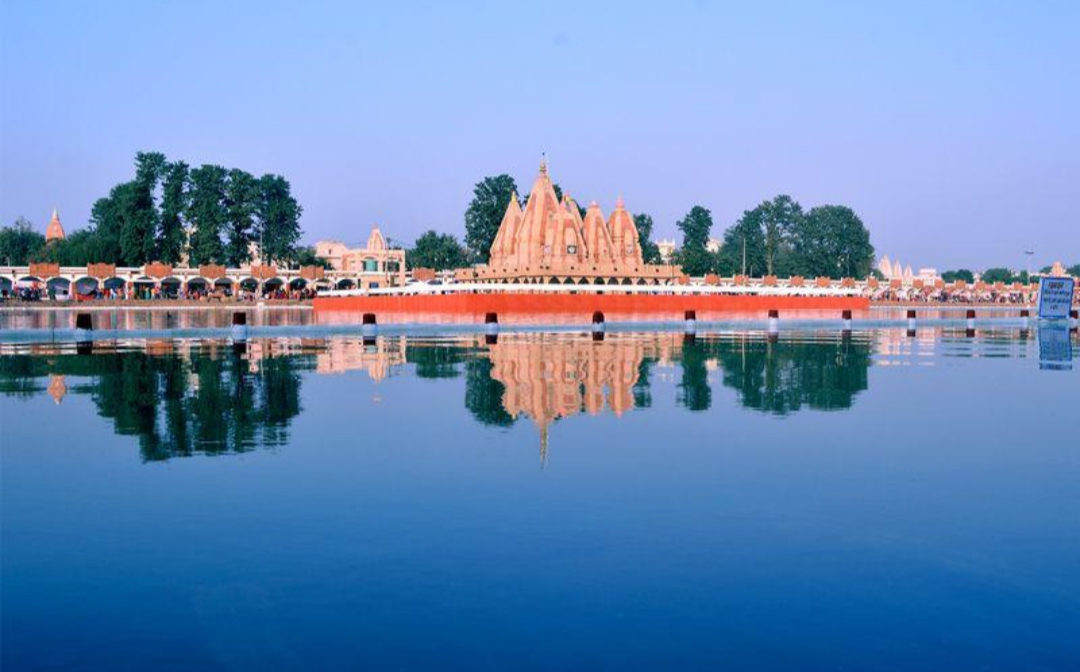
Community tradition and several ethnographic accounts trace the Gaur Brahmins to the Kurukshetra region of present-day Haryana, an area also known in ancient tradition as Brahmavarta, and to the tract of land lying between the Yamuna and Sutlej rivers. From this base, the community is understood to have expanded gradually across the plains of the western Indo-Gangetic belt over many centuries, giving rise to the wide present-day distribution of the community across Haryana, Rajasthan, Delhi, and neighbouring states.
One theory, noted by the colonial-era ethnographer Sir George Campbell in his study of Indian ethnology, proposes that the name “Gaur” may derive from the Ghaggar-Hakra river, an ancient watercourse that in early times was a tributary of the Sarasvati river system and today discharges into the Sutlej near Firozpur. Other scholars, including General Alexander Cunningham, have suggested alternative derivations, such as a connection to the old name for the town of Gonda, while some sources connect the term to the wider “Gauda” designation historically associated with the Bengal region, reflecting long-running scholarly debate over the precise origin of the name.
2.2 The Pancha Gauda Classification
The classification of North Indian Brahmins into five Gauda groups appears in classical sources including Kalhana's twelfth-century chronicle the Rajatarangini and the Sahyadri-khanda section associated with the Skanda Purana. According to this traditional scheme, the five Pancha Gauda communities: Saraswat, Kanyakubja, Gauda (Gaur), Maithil, and Utkala, are understood to have resided north of the Vindhyas, corresponding to the five Pancha Dravida communities of the Deccan and the south. Some versions of the classical texts also record an alternate five-fold division consisting of the Trihotra, Agnivaisya, Kanyakubja, Kanojya, and Maitrayana groups, illustrating that the boundaries of this scheme were understood somewhat differently across regions and periods.
| Pancha Gauda Community | Traditional / Present Region |
|---|---|
| <a href="/communities/saraswat-brahmin">Saraswat Brahmins</a> | Punjab, Kashmir, and the Sarasvati river tract |
| <a href="/communities/kanyakubja">Kanyakubja</a> <a href="/communities/brahmin">Brahmins</a> | Kannauj and the central Gangetic plain (Uttar Pradesh) |
| Gaur (Gauda) <a href="/communities/brahmin">Brahmins</a> | Kurukshetra / Haryana, Rajasthan, western Uttar Pradesh, Delhi |
| Maithil <a href="/communities/brahmin">Brahmins</a> | Mithila region (Bihar / adjoining Nepal) |
| Utkala <a href="/communities/brahmin">Brahmins</a> | Odisha, historical caretakers of the Jagannath Temple, Puri |
It is worth noting that the term “Gauda” is used in the sources in two distinct senses: narrowly, to refer to the specific Gaur Brahmin community discussed in this profile, and broadly, as the umbrella term for the entire north-Indian Pancha Gauda grouping. This dual usage has been a source of some scholarly discussion, since the Gauda Brahmins associated narrowly with the name are today found in greatest numbers not in Bengal (with which the term “Gauda” is also historically associated) but in the region around Delhi and Haryana.
3. Geographic Distribution
Gaur Brahmins today form a significant population across several northern Indian states. They are recorded as especially numerous in Haryana, Rajasthan, and the western districts of Uttar Pradesh and Madhya Pradesh, with meaningful populations also present in Himachal Pradesh, Punjab, Uttarakhand, Jammu, and the National Capital Territory of Delhi. In Delhi specifically, Brahmins, predominantly of the Gaur community, are recorded as forming a substantial share of the population, larger than the combined share of certain other prominent communities in the region, and have historically played an active role in the city's civic and political life.
Because of this broad geographic spread, Gaur Brahmin communities in different regions have, over time, absorbed a degree of local linguistic and cultural variation, while continuing to identify with a shared name, classification, and, in many cases, shared gotra (clan) traditions.
4. Language
As a community spread across several linguistic zones of northern India, Gaur Brahmins do not have a single mother tongue. Depending on region, community members traditionally speak Haryanvi, Rajasthani, and other western Hindi dialects, along with Garhwali in parts of Uttarakhand, Himachali dialects in Himachal Pradesh, and Punjabi in parts of Punjab and Jammu. Standard Hindi is widely used today across the community for education, administration, and inter-regional communication, alongside Sanskrit, which retains a ceremonial and liturgical role in religious rites conducted by community priests.
5. Subdivisions, Branches, and Gotras
Like many large Brahmin communities, the Gaur Brahmins are internally organized into several branches and a large number of gotras (patrilineal clan lineages tracing descent from a common sage-ancestor), which govern rules of exogamy in marriage. Reference works on the community record the following principal branches:
- Aadi-Gaur — considered among the original or founding branches of the community.
- Des Wali Gaur — associated historically with the Madhyadesh (central Gangetic) region.
- Pachade Gaur — the western branch of the Gaur Brahmin community.
- Sri Gaur — a branch with traditions of origin in Kashmir, today found across Uttar Pradesh, Gujarat, Rajasthan, and the Malwa region of Madhya Pradesh.
Additional smaller branches recorded in community and reference sources include the Parik (associated with the sage Parashara), the Dayama or Dadheech Brahmins (associated with the sage Dadhichi), the Khandelwal Brahmins, and the Sarsvata and Sukuwal groups, among others. Gotra names recorded within the community include Vasishtha, Parvridh Vasishtha, Gautam, Kashyap, and Atri, each of which is further subdivided into numerous named lineages (such as Upadhyay, Mishra, Dwivedi, Pandey, Tripathi, Vyas, and many others) that continue to be used as surnames by community members today. The Mudgala gotra is also recorded as shared between Gaur, Saraswat, and certain other Brahmin communities of the north.
Gotra and lineage names vary considerably by sub-region and family tradition; the names above illustrate the range recorded in published community and reference sources rather than an exhaustive list.
6. History and Public Life
Gaur Brahmins have a long-recorded presence in the political, military, and religious history of northern India. During the colonial period, a Scottish missionary and ethnographer, John (Johan) Wilson, described Gaur Brahmin cultivators in his study of Indian castes as capable, industrious farmers noted for the diligence of both men and women in agricultural work, and for the hospitality shown to travellers passing through Gaur villages, observations echoed in other nineteenth-century regional gazetteers describing Brahmin communities of Haryana and the surrounding tract.
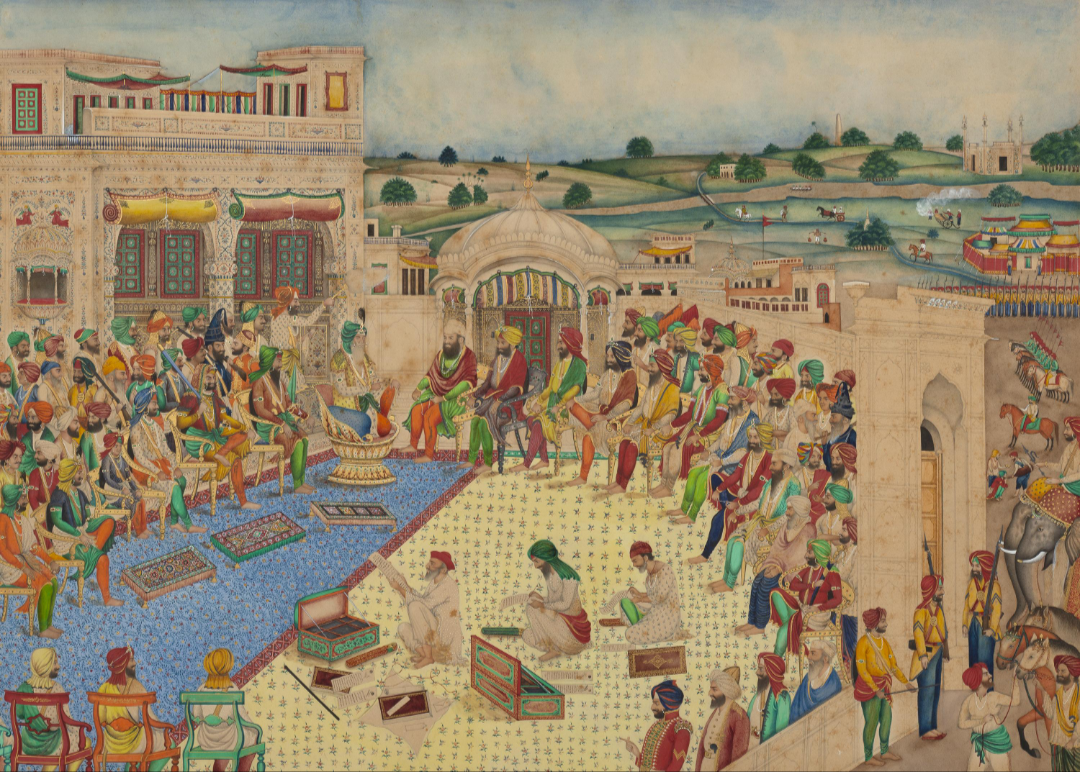
Members of the Gaur Brahmin community also held prominent positions in Punjab's Sikh political and military establishment in the eighteenth and nineteenth centuries, including as chieftains, administrators, and Diwans (ministers), and later rulers of the princely state of Sheikhupura. During the First World War, Gaur Brahmins were recruited into regiments and companies of the British Indian Army, including the 1st Brahmans and 3rd Brahmans regiments, reflecting the community's long association with military service in the region.
7. Religion, Rites, and Priestly Role
As Brahmins, community members traditionally occupy priestly and scholarly roles within Hindu religious life, including the performance of samskaras (life-cycle rites such as naming ceremonies, sacred-thread investiture, and marriage rites), temple worship, and the study and teaching of the Vedas and associated scriptures. Daily and periodic rites such as Sandhyavandanam (ritual prayers performed at set times of day) and observance of one's gotra and Vedic shakha (textual branch) are traditionally maintained within priestly families, though, as with many dispersed Brahmin communities, the degree of continued practice of these rites varies considerably by family and region in the present day.
The community follows mainstream Hindu religious practice, including worship of Shiva, Vishnu, and the Goddess in her various forms, along with reverence for family deities (kuldevis and kuldevatas) associated with particular gotras, a pattern shared broadly with other North Indian Brahmin and Hindu communities of the region.
8. Festivals and Social Customs
Gaur Brahmin households, in common with the wider Hindu communities of Haryana, Rajasthan, and the surrounding region, observe the major festivals of the North Indian ritual calendar. These include Diwali, Holi, Raksha Bandhan, Navratri, and Makar Sankranti, along with Teej (Hariyali Teej and Kajari Teej), a monsoon-season festival particularly observed by women, marked by fasting, the singing of traditional folk songs, the application of mehendi (henna), and swinging on decorated swings, and Gangaur, a spring festival honouring Goddess Parvati that is especially significant in Rajasthan.
Regional cultural traditions associated with Haryana and the wider Gaur homeland include Ragini, a narrative folk-singing tradition performed with instruments such as the dhol and harmonium, and folk dance forms such as Ghoomar (traditionally performed by women) and Been-Baaja (performed by men), both of which remain part of community celebrations at weddings, harvest festivals, and other social occasions.
9. Marriage Traditions
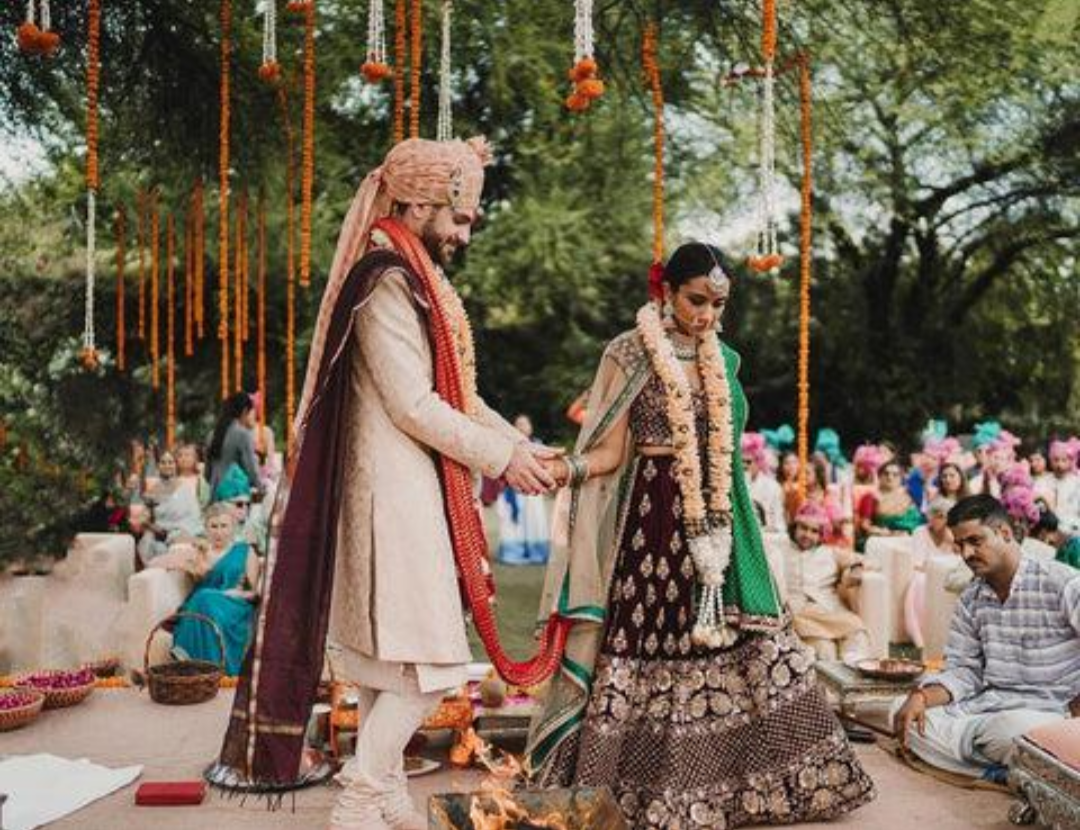
Marriage among Gaur Brahmins traditionally follows the wider North Indian Hindu pattern of arranged marriage conducted according to Vedic rites, with strict observance of gotra exogamy, meaning that marriage partners are chosen from outside one's own gotra and, in many communities, outside the gotras of both parents, in keeping with long-standing Brahminical marriage rules. Wedding ceremonies typically include rites such as the tilak (engagement blessing), haldi (turmeric ceremony), baraat (the groom's wedding procession), the Hindu Vivaha Sanskar performed around the sacred fire (including the saptapadi, or seven vows taken while circling the fire), and the kanyadaan, in which the bride's parents formally give her in marriage. These core rites are shared broadly with other Hindu Brahmin communities of the Indo-Gangetic plain, with regional variation in accompanying folk songs, feasting customs, and post-wedding rituals such as the bidaai (the bride's ceremonial departure from her parental home).
10. Cuisine
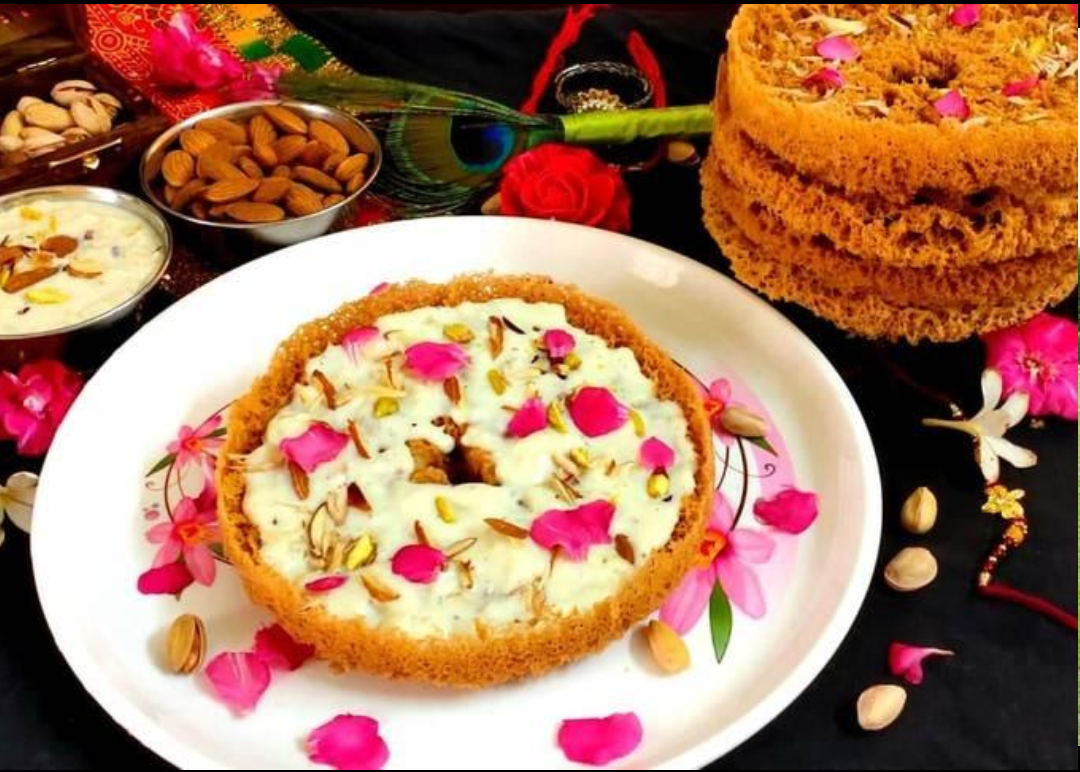
The everyday cuisine of Gaur Brahmin households generally follows the vegetarian culinary traditions associated with Brahmin communities of Haryana, Rajasthan, and the western Gangetic plain, reflecting the agrarian character of the region. Staples include wheat-based breads such as roti and paratha, dals (lentil preparations), seasonal vegetable curries, kadhi (a yogurt-and-gram-flour curry), and dairy products such as ghee, lassi, and buttermilk, which are prominent in the region's cuisine owing to its strong dairy-farming tradition.
Festive and celebratory dishes commonly associated with the wider Haryanvi and Rajasthani Hindu culinary tradition, and shared by the community during festivals such as Teej and Diwali, include ghevar (a disc-shaped, syrup-soaked sweet especially associated with the monsoon season), gulgule (sweet fried dumplings), kheer (rice pudding), and a range of regional sweets and snacks prepared from wheat, gram flour, and jaggery.
11. Traditional Dress
Traditional attire within the Gaur Brahmin community reflects the broader dress traditions of Haryana and Rajasthan. Women traditionally wear the daaman (a long, flared skirt), paired with a kurti (tunic) and an odhni (a draped headscarf), often in bright colours with embroidered detailing, while married women traditionally wear bangles and other ornaments signifying marital status, in keeping with wider North Indian custom. Men traditionally wear a dhoti or mundu with a kurta, and, on formal or ceremonial occasions, a pagri (turban), which in the region traditionally serves as a symbol of honour and social standing, with its colour and style varying by occasion and locality. Contemporary daily dress across the community has, as elsewhere in India, largely converged with mainstream pan-Indian fashion, with traditional attire retained chiefly for weddings, festivals, and religious ceremonies.
12. Education and Modern Livelihoods
Gaur Brahmins have historically placed strong emphasis on education and scholarship, in keeping with the community's traditional priestly and scholarly role. In the modern era, the community is widely represented in teaching, administration, law, medicine, engineering, journalism, and public service, alongside continuing involvement in agriculture and land-holding in its traditional home regions of Haryana and Rajasthan. Community members have also played a prominent and long-recorded role in regional and national politics, particularly in Haryana, Rajasthan, and Delhi.
13. Notable Gaur Brahmins
The following individuals, drawn from religious history, statecraft, and culture, are identified in reference and historical sources as belonging to the Gaur Brahmin community:
- Bhai Almast (16th century) — a religious figure associated with the early Sikh tradition and the Udasi sect.
- Bhai Balu Hasna (16th century) — a religious figure of the early Sikh tradition, closely associated with Bhai Almast.
- Bhatt Raiya Gaur and the Bhatt lineage — a Sultanpur Lodhi family of the Kaushish gotra whose members, including Bhatt Gayand, Bhatt Salh, Bhatt Nalh, Bhatt Kal, Bhatt Das, and Bhatt Sewak, are recorded as contributors to the Guru Granth Sahib and as devoted followers of the Sikh Gurus.
- Khushal Singh Jamadar (19th century) — a military and administrative officer in the court of Maharaja Ranjit Singh of the Sikh Empire.
- Tej Singh (19th century) — a military commander and political leader of the Sikh Empire period.
- Raja Harbans Singh, Raja Fateh Singh, and Raja Dhyan Singh — successive rulers of the princely state of Sheikhupura (1847–1947); Raja Dhyan Singh, the last ruler, is recorded as having helped protect thousands of Hindus and Sikhs during the Partition of Punjab.
- Pandit Madan Mohan Malaviya (1861–1946) — noted educationist, founder of Banaras Hindu University, and a leading figure of the Indian independence movement; the Malviya surname is associated with the Gaur Brahmin community's historical settlement in the Malwa region of Madhya Pradesh.
- Lakhmi Chand (1903–1945) — celebrated Haryanvi poet and performer, widely regarded as the founder of the Saang folk-theatre tradition of Haryana.
This list reflects individuals identified with the community in published historical and encyclopedic sources; it is illustrative rather than exhaustive, and the community has produced many additional scholars, administrators, and public figures across its long history.
14. Conclusion
The Gaur Brahmins represent one of the oldest and most widely distributed Brahmin communities of northern India, with traditional roots in the Kurukshetra region of Haryana and a documented presence, over many centuries, across Rajasthan, Delhi, western Uttar Pradesh, Madhya Pradesh, and neighbouring states. As one of the five classical Pancha Gauda Brahmin groupings, the community has maintained a distinct identity through its gotra system, priestly traditions, and regional customs, while its members have historically played notable roles in religion, military service, regional statecraft, and, in the modern era, education, public administration, and cultural life. From the ballads and folk traditions of Haryana to the community's continuing presence in contemporary Indian public life, the Gaur Brahmin story reflects both a long historical continuity and an ongoing adaptation to modern Indian society.
References
- [1][1] SikhiWiki. “Gaur Brahmins.” https://www.sikhiwiki.org/index.php/Gaur_Brahmins
- [2][9] Deshpande, Madhav M. “Pañca Gauḍa and Pañca Drāviḍa: Contested Borders of a Traditional Classification.” Studia Orientalia Electronica. https://journal.fi/store/article/view/52380/16230
- [3][10] Rodrigues, Tensing. “The Pancha-Gauda and Panch-Dravida Divide.” Navhind Times. https://www.navhindtimes.in/2025/03/02/magazines/panorama/the-pancha-gauda-and-panch-dravida-divide/
- [4][11] Lochtefeld, James G. (2002). The Illustrated Encyclopedia of Hinduism: N–Z. Rosen Publishing. ISBN 9780823931804.
- [5][12] Shri Gaur Brahman Mahasabha, Bikaner. “Brahman Origin — Adi Gaur Brahman Gotra and Sashan.” https://shrigaurbrahmanmahasabhabikaner.yolasite.com/brahman-origin.php
- [6][13] Yadav, Atul (2022). Valour Unlimited: Haryana and the Indian Armed Forces (1914–2000). K.K. Publications.
- [7][14] The Tribune (India). “Hariyali Teej celebrated with fervour at Raj Bhavan.” https://www.tribuneindia.com/news/haryana/teej-celebrated-with-fervour-at-raj-bhavan/amp
- [8][15] Free Press Journal. “Rajasthan Celebrates Hariyali Teej.” https://www.freepressjournal.in/lifestyle/rajasthan-celebrates-hariyali-teej-with-folk-dance-teej-mata-royal-procession-at-jaipurs-city-palace-with-regional-fervour