

Iyer - Vadama Community
Explore the Vadama Iyers, the “northern” Tamil Brahmins of Tamil Nadu and Palakkad: Deccan origins, customs, cuisine, haplogroups and AASI-Steppe ancestry.
The Vadama Iyer community
History, geography, culture and ancestry of the "Northern" Iyers of Tamil Nadu and Kerala
Who are the Vadama Iyers?
The Vadamas are a sub-sect of the Iyers, the Smarta Brahmins of Tamil Nadu. Most Vadama families today live in Tamil Nadu, in the Palakkad district of Kerala, and in pockets of southern Andhra Pradesh, with large urban populations in Chennai, Bengaluru, Mumbai and Delhi. Like other Iyers, they follow the Advaita teaching of Adi Shankara, worship both Shiva and Vishnu, and speak the Brahmin dialect of Tamil at home.
Inside the Iyer fold, the Vadamas are one of several endogamous groups, alongside the Brahacharanam, Vathima, Ashtasahasram, Sholiyar, Mukkani, Gurukkal and others. Each of these is further divided by the village or region a family traces itself to.
Meaning of the name
Vadama comes from the Tamil vadakku, "north", and the name is generally read as "the northerners". Two explanations circulate. The first holds that the Vadamas were the most recent Brahmin migrants into the Tamil country, arriving from the north after the older Iyer groups had settled. The second treats "northern" as a reference to their adherence to Sanskrit learning and Vedic ritual, which came from the north. Historians have also asked whether "north" means northern Tamil Nadu and the southern Deccan, or regions much farther away. Family traditions differ, and the name alone does not settle the question.
Geography and sub-groups
The Vadamas are a geography-based community in two senses. As a whole, they are defined by a remembered northern origin. Within the community, families identify by the region they settled in after arriving in the Tamil country. The main divisions are:
- Vadadesa Vadama ("Vadamas of the northern country"): families who trace themselves to the Deccan, often to Maharashtra, Karnataka or the Telugu country, and who settled in northern Tamil Nadu, around Kanchipuram and Chetpet.
- Choladesa Vadama ("Vadamas of the Chola country"): families long settled in the Kaveri delta, the old Chola country around Thanjavur and Kumbakonam.
- Palakkad Vadamas: Vadama families among the Palakkad Iyers of Kerala, who moved west through the Palakkad Gap from the Tamil delta, mainly from the fifteenth century onward. A Kerala tradition places the first Vadama arrivals there in the late thirteenth century.
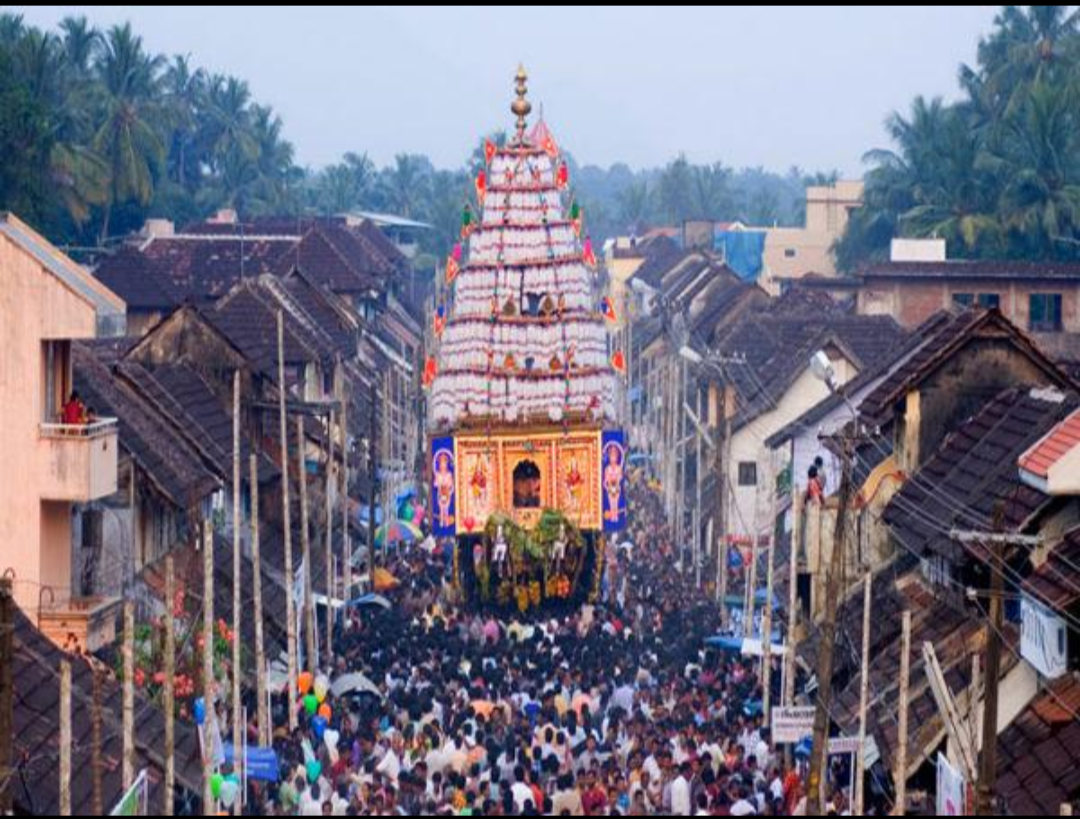
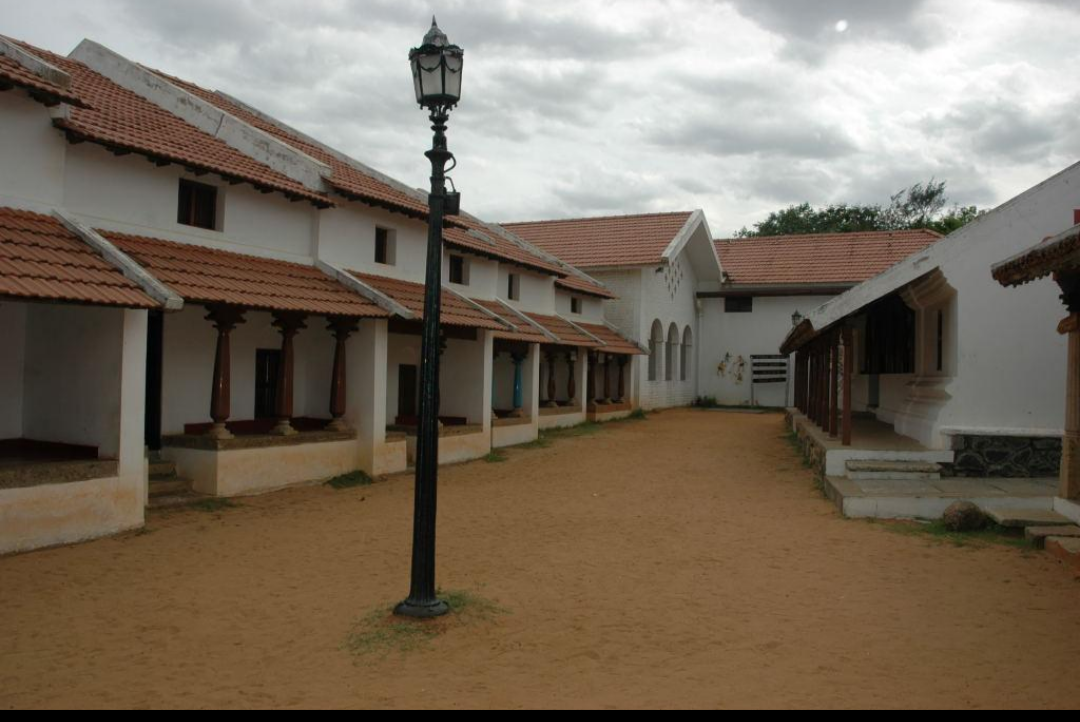
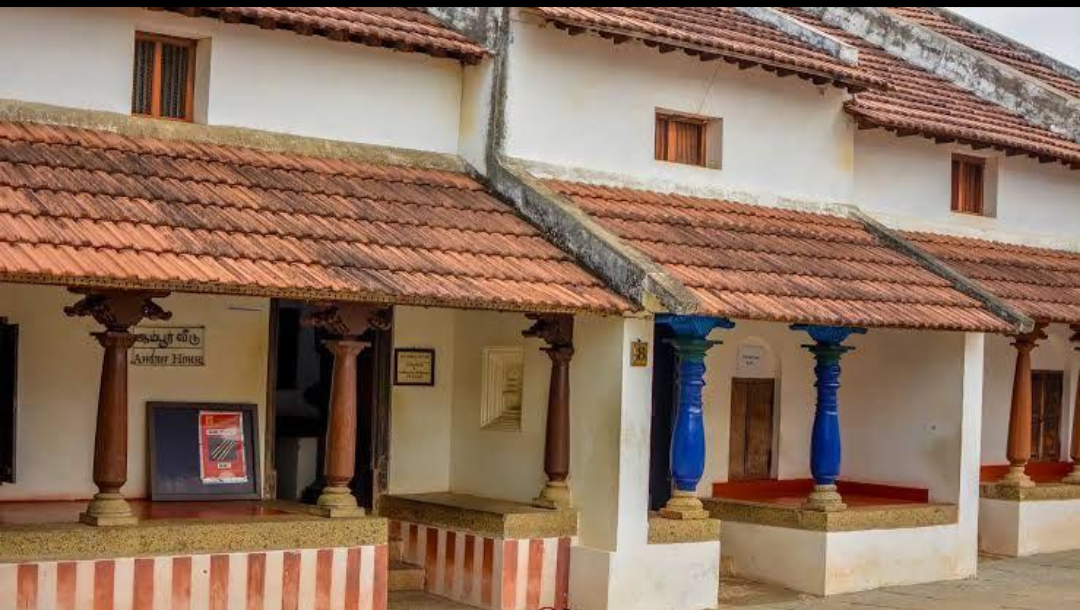
Village identity still matters. Many families can name the agraharam, the Brahmin street around a temple, that their grandparents or great-grandparents came from, even after three generations in a city.
Origins and early history
Brahmins settled in the Tamil region in several waves over more than a thousand years, often through land grants (brahmadeya) from Pallava, Chola and later kings. Some historians hold that all Brahmins who came south during and after the Gupta period ended up being classed as Vadama, which would make the Vadamas the label for later arrivals as a whole rather than one migrating group.
Specific family histories point to the Deccan. One account written by a Vadadesa Vadama, Ramaswami Iyer, traces his people to Brahmins of the Desh region of Maharashtra who moved to the Chittoor area of Andhra Pradesh and then, in the sixteenth century, to northern Tamil Nadu, where a local chief granted them the village of Chetpet. The scholar Appayya Dikshitar and his grand-nephew Neelakanta Dikshitar, both Vadadesa Vadamas, belonged to families remembered as having come from near Nashik. Some Vadama families also came south during the Vijayanagara period as administrators and officials.
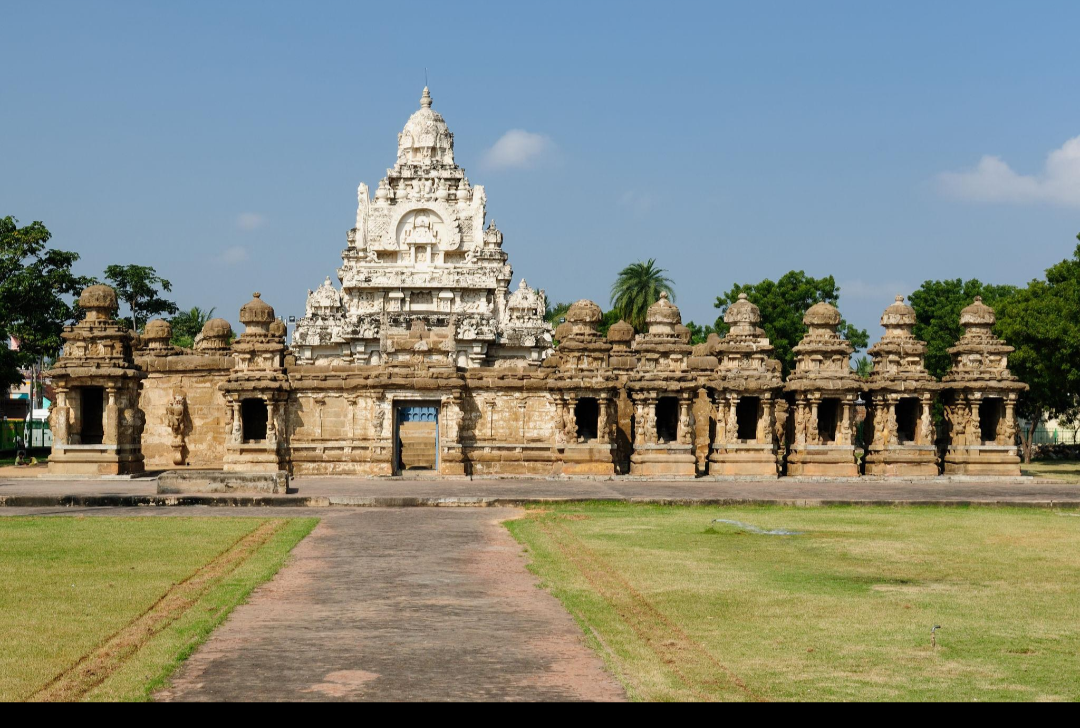
These accounts fit the community's name and its listed relatives: the Vadagalai Iyengars and the Deshastha Brahmins of Maharashtra and Karnataka are often named as related groups. They remain family and community traditions, and different families tell different stories.
Language
Vadamas speak Brahmin Tamil, the Iyer dialect, which keeps many Sanskrit words and its own kinship terms like "athimber" (sister's husband) and "athai" (father's sister). Palakkad Vadamas mix in Malayalam words and intonation. Sanskrit is used for ritual, and older family members often know Vedic chanting.
Religion and ritual
Vadamas are Smartas. They worship the five deities of the panchayatana puja (Shiva, Vishnu, Devi, Ganesha and Surya), and most households follow the Sringeri or Kanchi Kamakoti matha. Rituals follow the grihya sutras of the family's Veda, which for most Vadamas is the Krishna Yajurveda (Apastamba sutra), with smaller numbers following the Rigveda or Samaveda. Each family belongs to a gotra, which is reckoned through the male line and governs marriage.
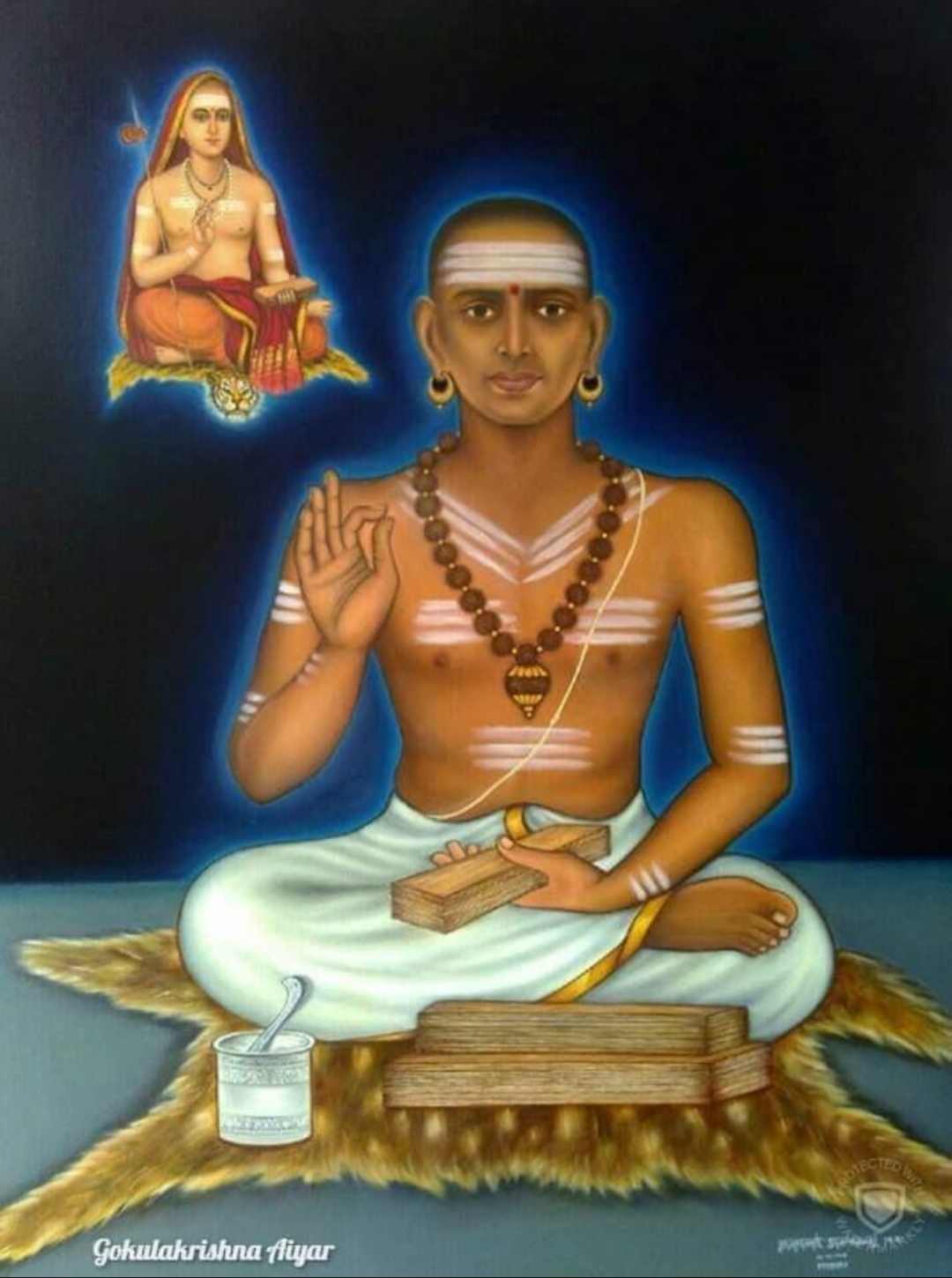
Daily ritual in traditional homes includes sandhyavandanam for men who have had the upanayanam (sacred thread ceremony). Annual observances include Avani Avittam, when the sacred thread is changed, and tarpanam for ancestors on new-moon days. Some old practices separate Vadamas from other Iyers in small ways: older texts note minor differences in rituals, and in Kerala a Vadadesa Vadama man once had a set role in the meal rituals of Nambudiri ascetics.
Customs, family life and marriage
Marriage has traditionally been within the Vadama sub-sect, and often within the same regional group, with different gotras. Matrimonial listings still often state "Vadama" next to the gotra and star. Marriage between Vadamas and other Iyer sub-sects has become common in cities over the past two generations.
A Vadama wedding follows the Iyer pattern: the Sumangali Prarthana (prayer to married women of the family), Vratham, Kasi Yatra (the mock pilgrimage of the groom, who is talked out of becoming an ascetic), the swing ceremony (oonjal), and the tying of the thali (Mangalya Dharanam), followed by the seven steps (saptapadi). Other life-cycle rites include the naming ceremony, the first-year ear piercing, the upanayanam for boys, and the sixtieth and eightieth birthday ceremonies (Shashtiapthapoorthi and Sathabishekam).
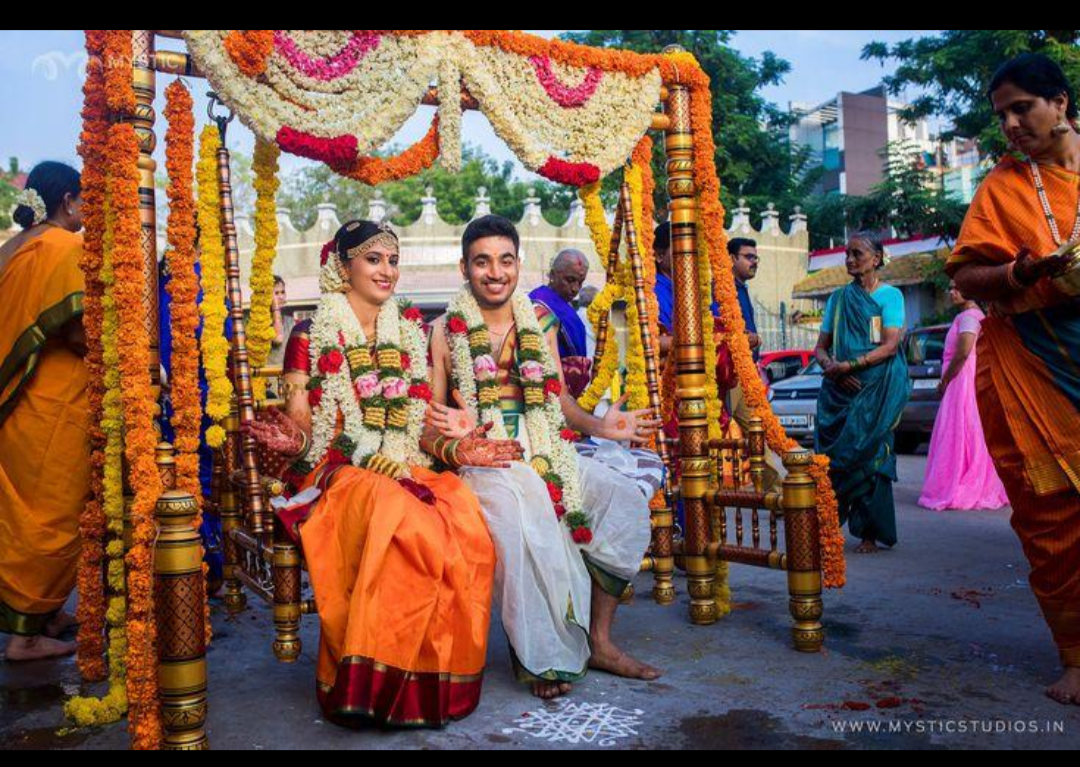
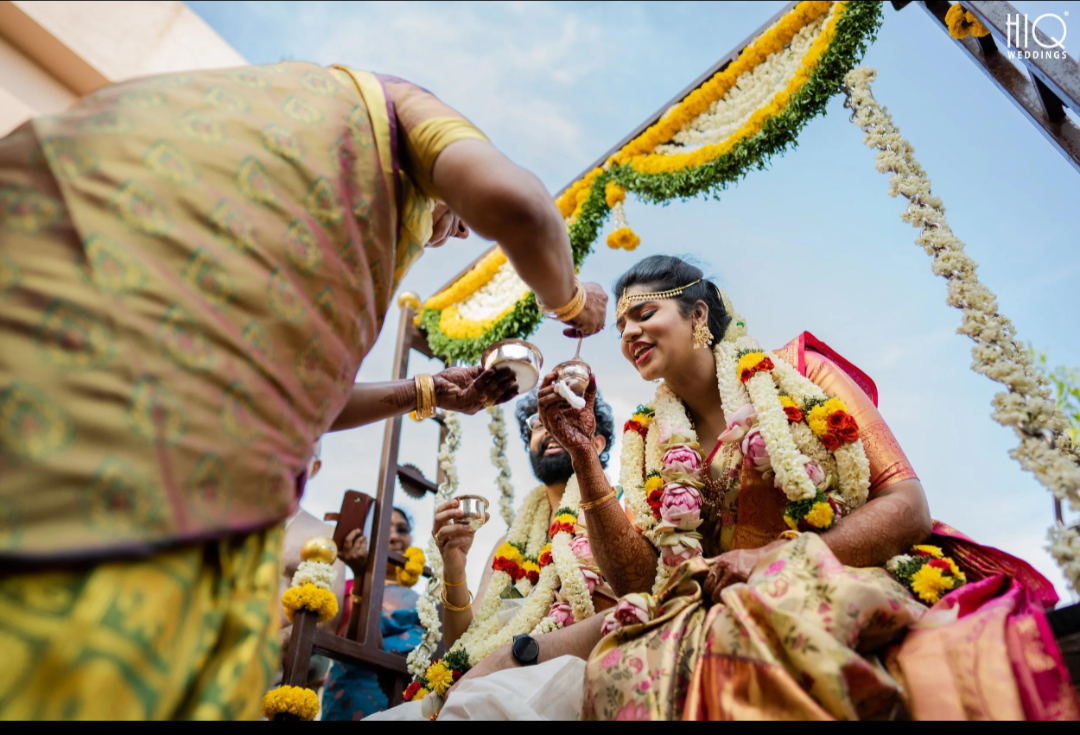
An old Iyer proverb points to the supposed short temper of Vadamas, and some writers have read it as a sign of a past in administration or arms. It is better treated as a joke between sub-sects.
Dress
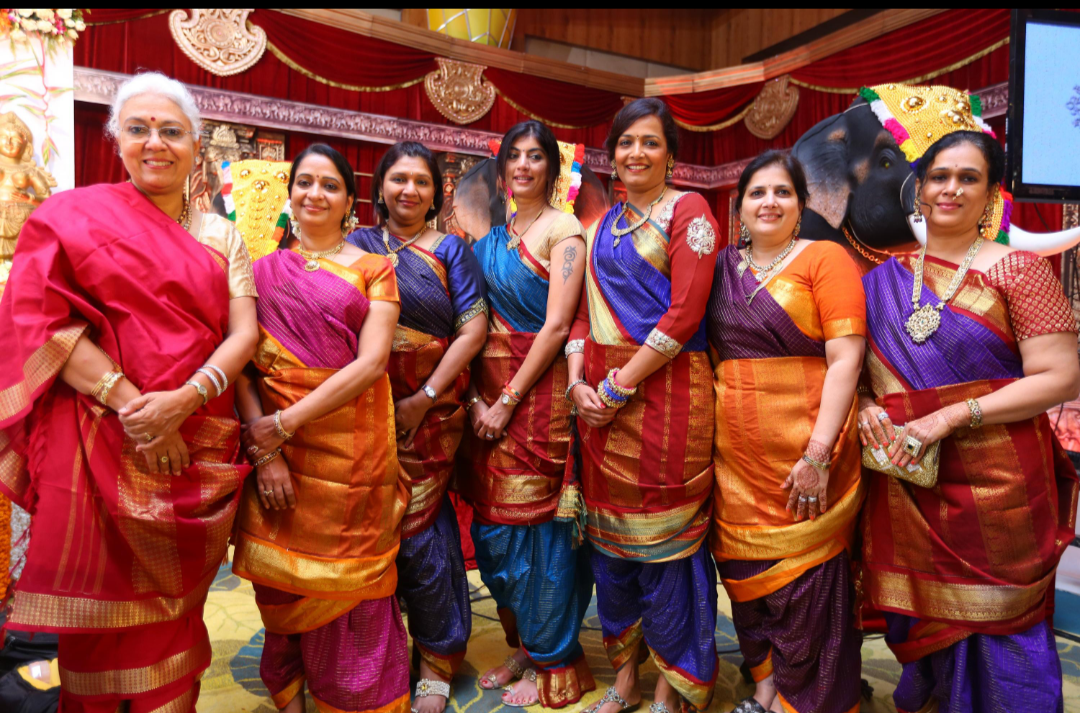
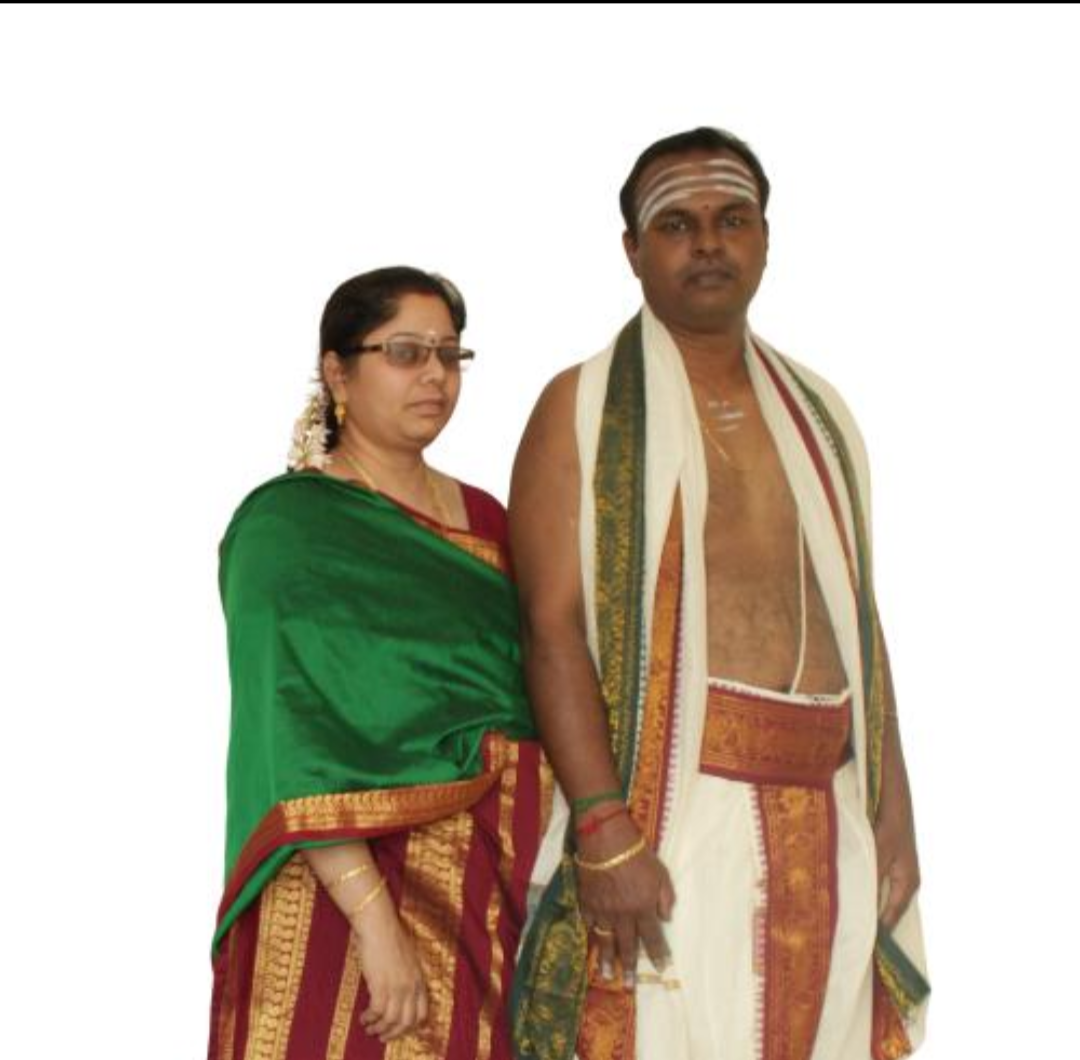
Married women of traditional families wear the nine-yard sari (madisar) for weddings, rituals and death ceremonies, draped in a style that differs slightly between Iyer and Iyengar families. Kanchipuram silk is the standard wedding sari. Men wear the veshti, tied in the panchakacham style for rituals, with an angavastram over the shoulder. Married women traditionally wear a thali and toe rings, and kumkum on the forehead. In daily city life, most Vadamas dress like other urban Indians.
Cuisine
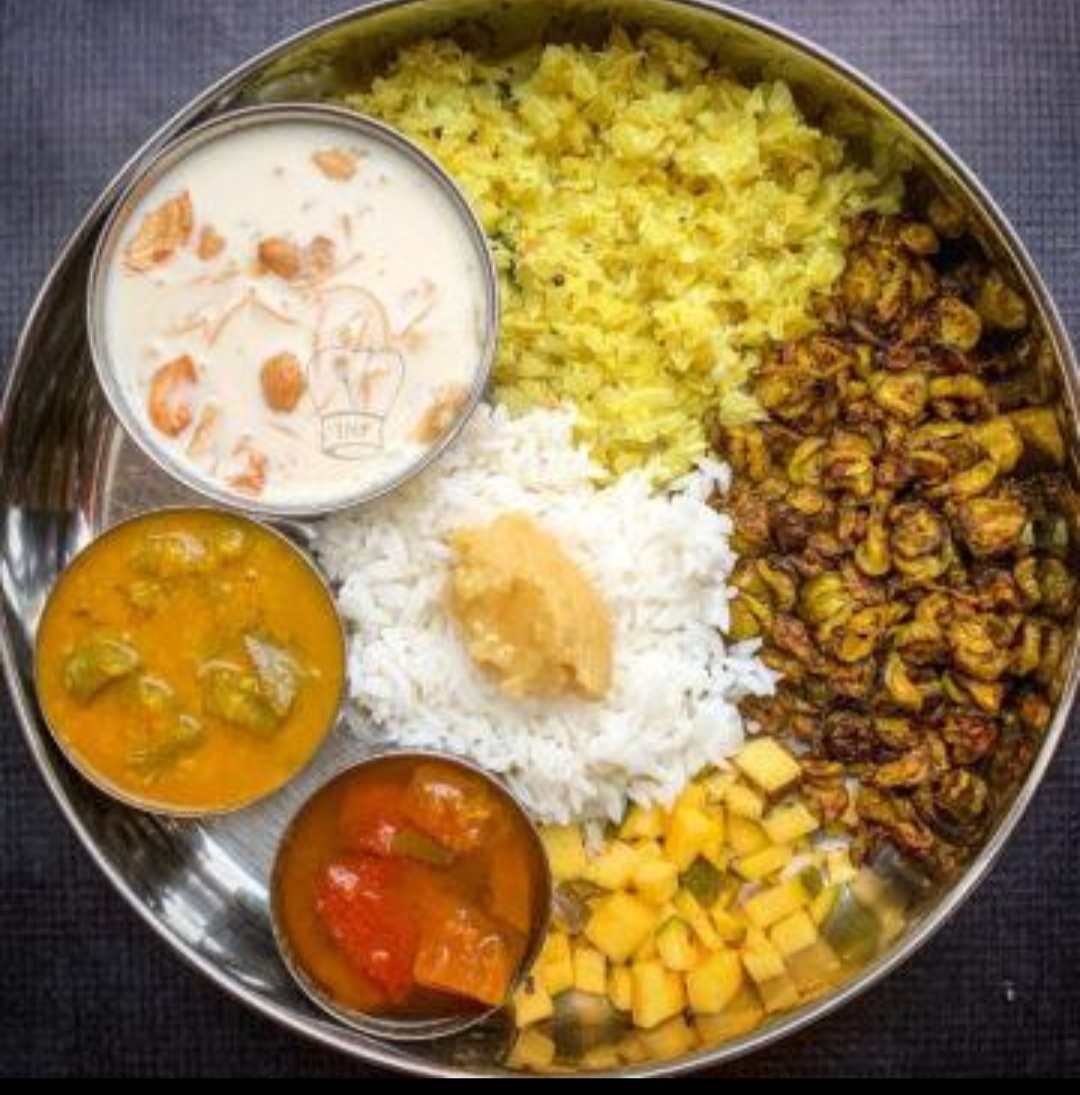
Vadama food is vegetarian and, in traditional homes, avoids onion and garlic on ritual days. It is the Iyer home cooking of Tamil Nadu, with regional flavours from Thanjavur, Palakkad and Chennai. Common dishes include:
- Vatha kuzhambu, a tamarind gravy with sun-dried berries or vegetables
- Mor kuzhambu, buttermilk curry, and mor kali, a savoury buttermilk flour dish
- Rasam in many forms (pepper, tomato, lemon, paruppu)
- Paruppu usili, beans or plantain flower with steamed spiced lentils
- Arachuvitta sambar, sambar made with freshly ground spices
- Akkaravadisal and sakkarai pongal for festivals, and thirukannamudhu, a temple-style payasam
- Thayir sadam (curd rice) at the end of almost every meal
Palakkad Vadama kitchens use more coconut and coconut oil and share dishes such as olan and erissery with Kerala cooking. Shraddham (ancestor-rite) meals have their own fixed menu, which avoids several vegetables such as tomato.
Occupations and education
Historically, Vadama men worked as Vedic priests, teachers of Sanskrit and the Vedas, astrologers, and village accountants and officials. Some families held land granted in agraharams. Under British rule, Vadamas, like other Iyers, moved into English education, law, the civil service, revenue administration and teaching.
Today Vadamas work mostly in salaried professional fields: software and IT, engineering, banking and accounts, medicine, law, academic research and government service. A smaller number keep up family priesthood or Carnatic music as a profession.
Music, scholarship and the arts
Vadamas have a long link to Carnatic music and Sanskrit learning. Syama Sastri, one of the three composers of the Carnatic "trinity", came from a Vadadesa Vadama family whose ancestors left Kanchipuram after a Muslim raid. Appayya Dikshitar (sixteenth century) was among the major Advaita scholars of the south, and his grand-nephew Neelakanta Dikshitar was a poet and scholar. Music lessons, kutcheri (concert) culture during the Chennai December season, and Bharatanatyam classes for girls remain common in Vadama homes.
Diaspora
Large-scale migration began under British rule, when Iyers moved to Madras, Bombay, Calcutta and Delhi for government and professional jobs. Chembur and Matunga in Mumbai, and Karol Bagh and R.K. Puram in Delhi, have well-known Tamil Brahmin populations. Bengaluru has had a Tamil Brahmin presence since the nineteenth century in areas such as Malleswaram and Basavanagudi.
Since the 1970s, many Vadama families have moved abroad, especially to the United States, the United Kingdom, Canada, Australia, Singapore and the Gulf. Community groups abroad usually organise around Iyer or wider Tamil Brahmin identity rather than the Vadama sub-sect alone.
Population
No census has counted Vadamas separately; the last Indian census to record caste in detail was in 1931. Estimates of all Tamil Brahmins put them at roughly 2 to 3 percent of Tamil Nadu's population. Any number for Vadamas alone is an estimate.
Physical traits
There is no fixed Vadama "look". Vadamas show the same range of skin tones, heights and features found among other Tamil and South Indian groups. Studies of caste groups in South India find that Brahmin populations, on average, carry more ancestry from West Eurasian sources than most non-Brahmin Tamil groups, and this can appear as slightly lighter average skin tone. Individual variation within the community is larger than the average difference between communities.
Genetic ancestry
The three main ancestral sources
Most people in India descend from a mix of three ancient groups: Ancient Ancestral South Indians (AASI), hunter-gatherers who lived in South Asia for tens of thousands of years; an Iranian-plateau-related population, the farmers of the Indus Valley Civilisation and its neighbours; and Steppe pastoralists from Central Asia, who arrived roughly 4,000 to 3,500 years ago and are linked to the spread of Indo-European languages.
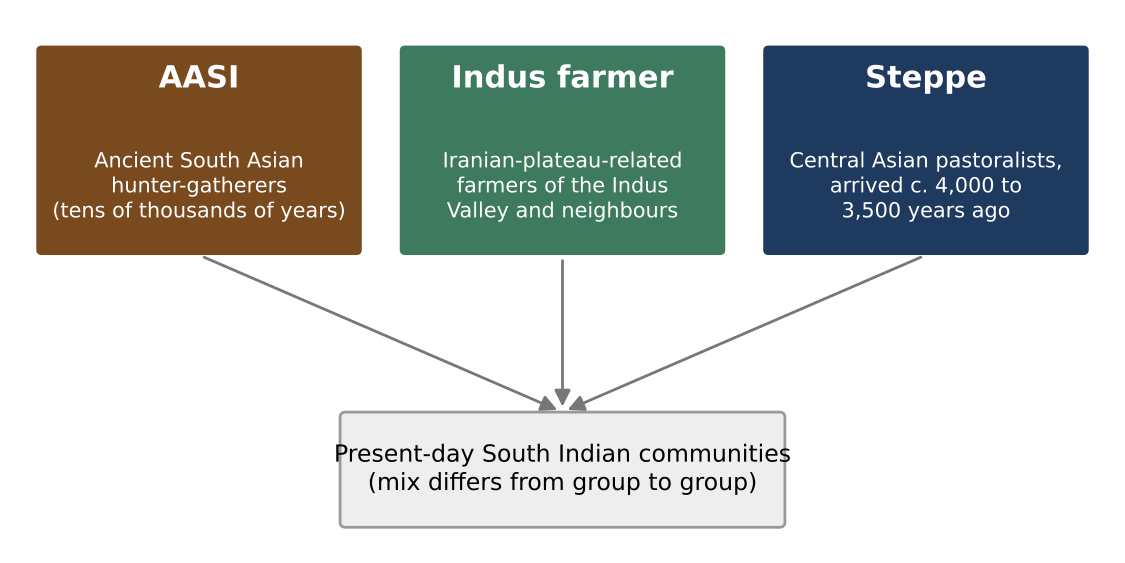
No published study has sampled Vadamas as a separate group, so there are no direct Vadama figures. Studies of South Indian Brahmins in general, including Iyers, give a general picture. South Indian Brahmins tend to carry a larger Indus-farmer-related share and a larger Steppe share than most other Tamil groups, with a substantial AASI share as well. Across Indian Brahmin groups, Steppe ancestry is usually estimated at around 15 to 30 percent of the genome. Where an individual Vadama family falls depends on its history, including how long it has lived in the Tamil country and how far back its northern migration happened. GenoConnect's community feature aims to build these Vadama-level estimates from the people who test.
Y-DNA and mtDNA haplogroups
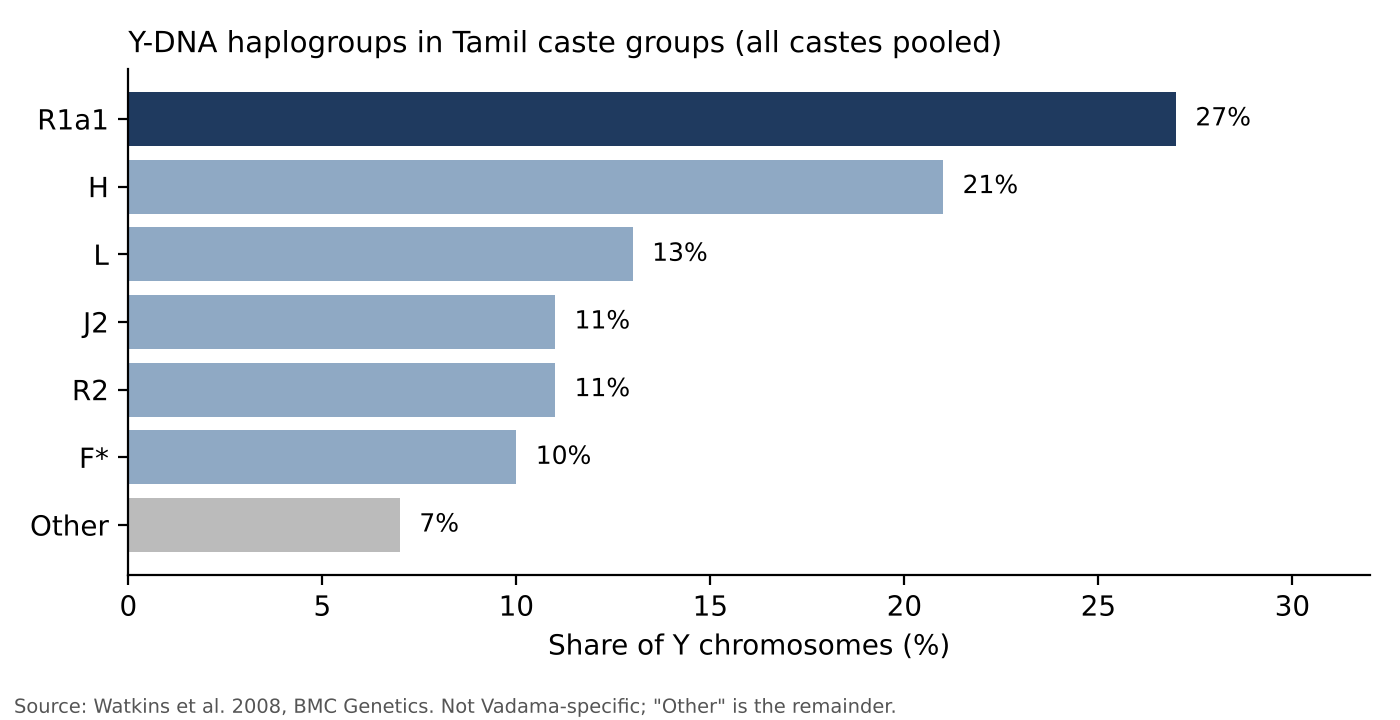
Y-DNA follows the father's line, which in Brahmin families also follows the gotra. Among Tamil caste groups studied, haplogroup R (mostly R1a1 and R2) is the most common, followed by H, L and J2. Brahmin groups across India show high levels of R1a1, reaching about 72 percent in one dataset, alongside J2 and L, which are found in the northwest of the subcontinent and are linked by some researchers to Indus-related populations. A 2012 study of 1,680 men from Tamil Nadu found that more than 80 percent of Y lineages in both castes and tribes belonged to haplogroups that arose inside India long before the historical Brahmin migrations.
mtDNA follows the mother's line. Across India, including among Brahmins, most maternal lineages belong to the M and U2 branches and other haplogroups of South Asian origin, which points to a local maternal base. A Vadama father's line and mother's line can come from very different ancient sources.
Closest communities
An HLA study of Iyers in Madurai found that they clustered with Sourashtrans of Madurai and other Tamil Brahmin groups, separately from hill tribes and from non-Brahmin plains castes such as Kallars and Nadars. The study also found that the Iyers did not cluster with Bhargava Brahmins of Lucknow, which suggests that Brahmin populations in different parts of India have different histories. Based on community history, the groups most likely to be close to Vadamas are other Iyer sub-sects, Vadagalai Iyengars, Palakkad Iyers, and Deshastha and Telugu Smarta Brahmins. Whether Vadadesa Vadamas sit closer to Deccan Brahmins than Choladesa Vadamas do is a question that only DNA from many families can answer.
Vadama family
Most of these are shared with other Iyers. Ask a Vadama grandmother about any of them and you will get a story.
- Madi and ecchil. Clothes washed for ritual use (madi) are dried on a line or bamboo pole set high, so no one touches them by accident. Children learn early to drink water by pouring it from the tumbler without touching their lips, because anything touched by the mouth becomes ecchil.
- Sivamayam at the top of the page. Older Iyers write "Sivamayam" or a small "u"-shaped pillaiyar suzhi at the head of a letter, an exam answer sheet or the first page of a new account book.
- Kanu pidi. The day after Pongal, women and girls set out small balls of coloured rice on a turmeric leaf for crows on the terrace, praying for their brothers. Brothers are expected to give a gift in return.
- Karadaiyan Nombu. In mid-March, married women tie a yellow thread around the neck and eat a sweet or salted rice-flour adai with a lump of unmelted butter, in memory of Savitri bringing her husband back from Yama.
- Thiruvathirai. In Margazhi, households make thiruvathirai kali, a jaggery and rice dish, with ezhu kari kootu, a stew of seven vegetables.
- Avani Avittam and the day after. Men change the sacred thread on Avani Avittam, and many Yajurvedis sit down the next morning for Gayatri japam.
- Pandal kaal muhurtham. A few days before a wedding, a bamboo pole is planted at the house with a small puja to begin the preparations.
- Nalangu. At the wedding, the couple play games in front of everyone: rolling a coconut to each other, breaking an appalam on each other's head, and hunting for a ring in a pot of water.
- Paruppu thengai. Cone-shaped sweets made of lentils or groundnuts are carried in pairs during the wedding exchanges, and every family has an opinion on who made them best.
- The Kasi Yatra kit. The groom sets out for Kashi with an umbrella, a walking stick, a hand fan and new slippers, and the bride's father has to persuade him to come back and marry.
- Shraddham cooking. The meal for an ancestor's death anniversary uses pepper instead of chilli, raw plantain (vazhakkai) instead of potato, and no tomato.
- Matrimonial shorthand. Iyer marriage ads often print "Vadama", the gotra and the star in one line.
- Golu dolls with a history. Navaratri golu sets are passed down through brides.
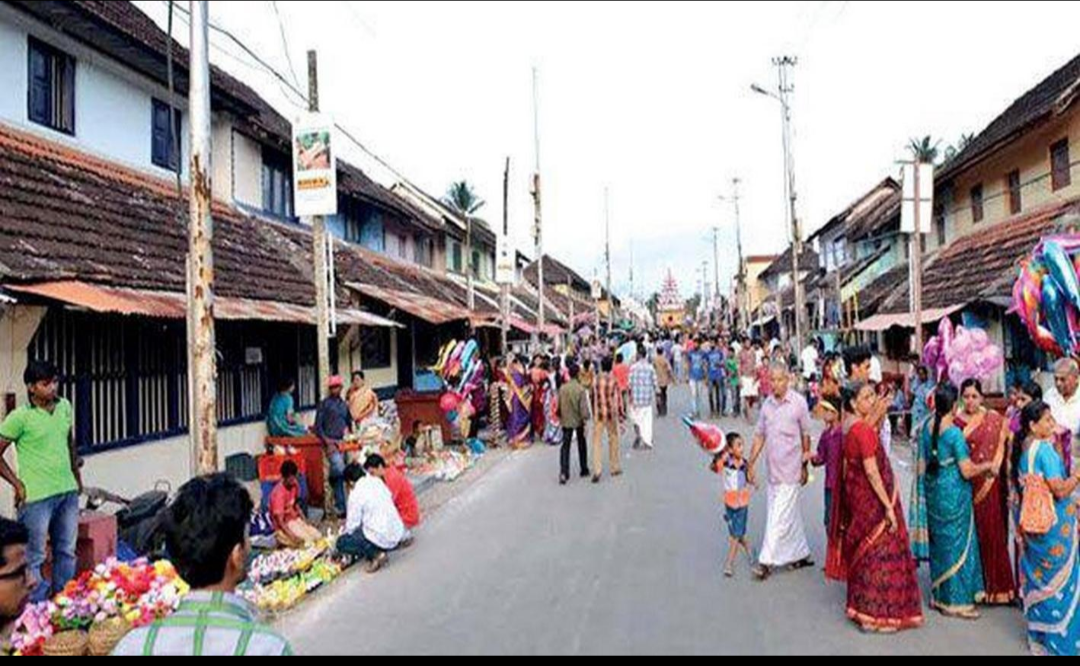
- Palakkad gramams. Palakkad Vadamas call their villages gramams, such as Kalpathy and Thirunellai, and come back each November for the Kalpathy car festival even from Mumbai or the Gulf.
- Kinship words. Paati and thatha for grandparents, mama and mami for the mother's brother and his wife, athimber for an elder sister's husband.
Notable people
The community, by the accounts listed below, includes:
- Appayya Dikshitar (1520 to 1593), Advaita philosopher and Shiva devotee from Adayapalam near Arani, whose family belonged to the Vadadesa Vadama group.
- Neelakanta Dikshitar (seventeenth century), poet and scholar, grand-nephew of Appayya Dikshitar and minister at the Madurai Nayak court.
- Syama Sastri (1762 to 1827), Carnatic composer from Tiruvarur and one of the musical trinity, from a Vadadesa Vadama family that left Kanchipuram.
Community members often name other public figures as Vadama. Readers can help by sharing family records or published sources so this list can be extended with confirmed names.
FAQs
What does "Vadama" mean?
It comes from the Tamil word vadakku, "north", and is read as "the northerners". It refers either to a later migration from the north or to strong adherence to Sanskrit and Vedic practice.
Are Vadamas Iyers or Iyengars?
Vadamas are Iyers. They are Smartas who follow Adi Shankara's Advaita. Iyengars are a separate Vaishnava community.
What is the difference between Vadadesa Vadama and Choladesa Vadama?
Vadadesa Vadamas trace themselves to the Deccan and northern Tamil Nadu. Choladesa Vadamas have lived in the Kaveri delta for many centuries. Both are Vadama.
Where did the Vadamas come from?
Family histories point to the Deccan, including Maharashtra and southern Andhra Pradesh, with migrations into the Tamil country over many centuries, some as late as the sixteenth century.
Do Vadamas marry other Iyers?
Traditionally marriage was within the sub-sect. Today, marriages between Vadamas and other Iyer sub-sects are common, especially in cities.
Which Veda do Vadamas follow?
Most follow the Krishna Yajurveda with the Apastamba sutra. Some families follow the Rigveda or Samaveda.
How many Vadamas are there?
There is no official count. No census has recorded them separately since caste counting stopped after 1931.
Do Vadamas have more Steppe ancestry than other Tamils?
Studies of South Indian Brahmins show higher average Steppe and Indus-farmer-related ancestry than most other Tamil groups. Vadama-specific figures have not been published; GenoConnect's community feature aims to produce them.
What is the most common Y-DNA haplogroup among Iyers?
Studies of Brahmins in India find R1a1 to be the most common, followed by lineages such as J2, L, H and R2. Individual families can carry any of these.
Can DNA tell me whether my family is Vadadesa or Choladesa?
Not on its own today. As more Vadama families test and share their regional background, it becomes possible to see whether the two groups differ genetically and where your results fall.
Can a DNA test confirm my gotra?
No. A gotra is a cultural lineage. Your Y-DNA haplogroup follows your father's line, as the gotra does, so comparing results among men of the same gotra can show whether they share a recent paternal ancestor.
How can I learn more about my own Vadama ancestry?
Test with GenoConnect and join the Vadama community. Your results show your AASI, Indus-farmer and Steppe proportions, your haplogroups, and how close you are to other communities.
References
- [1]Wikipedia. "Vadama." https://en.wikipedia.org/wiki/Vadama
- [2]Wikipedia. "Iyer." https://en.wikipedia.org/wiki/Iyer
- [3]Nilakanta Sastri, K. A. A History of South India from Prehistoric Times to the Fall of Vijayanagar. Oxford University Press.
- [4]Sharma, S. et al. (2009). "The Indian origin of paternal haplogroup R1a1* substantiates the autochthonous origin of Brahmins and the caste system." Journal of Human Genetics 54. https://www.nature.com/articles/jhg20082
- [5]Watkins, W. S. et al. (2008). "Genetic analysis of ancestry, admixture and selection in Tamil castes." BMC Genetics. https://pmc.ncbi.nlm.nih.gov/articles/PMC2621241
- [6]Arunkumar, G. et al. (2012). "Population differentiation of southern Indian male lineages correlates with agricultural expansions predating the caste system." PLoS ONE 7(11): e50269. https://pmc.ncbi.nlm.nih.gov/articles/3508930/
- [7]Balakrishnan, K. et al. (1996). "HLA affinities of Iyers, a Brahmin population of Tamil Nadu, South India." Human Biology 68(4): 523 to 537. https://repository.ias.ac.in/92134
- [8]Narasimhan, V. M. et al. (2019). "The formation of human populations in South and Central Asia." Science 365(6457).
- [9]Khan, R. (2021). "The scions of the priest kings." Brown Pundits. https://www.brownpundits.com/2021/01/17/the-scions-of-the-priest-kings/