

Munda Community
Discover your Munda ancestry. Explore the people, history, culture and Austroasiatic genetic heritage of the Munda country of the Chotanagpur Plateau, from Khunti and Ranchi to the tea gardens of Assam.
MUNDA
Geographic, Adivasi, Austroasiatic, Chotanagpur Plateau, Jharkhand, Odisha, West Bengal, India
1. Introduction: Who Are the Munda People?
The Munda are one of the oldest and largest Adivasi (indigenous) communities of eastern India, and the people who gave their name to an entire branch of languages, the Munda branch of the Austroasiatic family. This profile treats “Munda” in two overlapping senses. In the narrower sense it is a self-identifying people, who call themselves Horo-ko (“the people”) and speak Mundari. In the broader, geography-of-origin sense used here, it is the population of the Munda country (sometimes called the Mundari belt) of the Chotanagpur Plateau: the forested uplands of present-day Khunti, Ranchi, Gumla, Simdega and West Singhbhum in Jharkhand, together with the adjoining tracts of northern Odisha, western West Bengal and eastern Chhattisgarh, and the far-flung communities that migrated out of this homeland over the past two centuries.
In Mundari and neighbouring languages it originally meant the headman of a village, a title that still survives in the traditional village council. Over time, outsiders and later colonial ethnographers applied the headman’s title to the whole people, and the name stuck. Today the Munda are recognised as a Scheduled Tribe in Jharkhand, Odisha, West Bengal, Chhattisgarh, Bihar, Madhya Pradesh and Tripura, and their homeland is inseparable from the story of Jharkhand itself: the state was carved out of Bihar on 15 November 2000, the birth anniversary of the Munda hero Birsa Munda.
Discover Your Munda Roots!
The Munda country is made up of killis (clans), village confederations and migrant branches stretching from Khunti to Assam and the Caribbean. Find out how your family’s story connects to this ancient Austroasiatic heritage with a GenoConnect DNA kit.
2. Geography
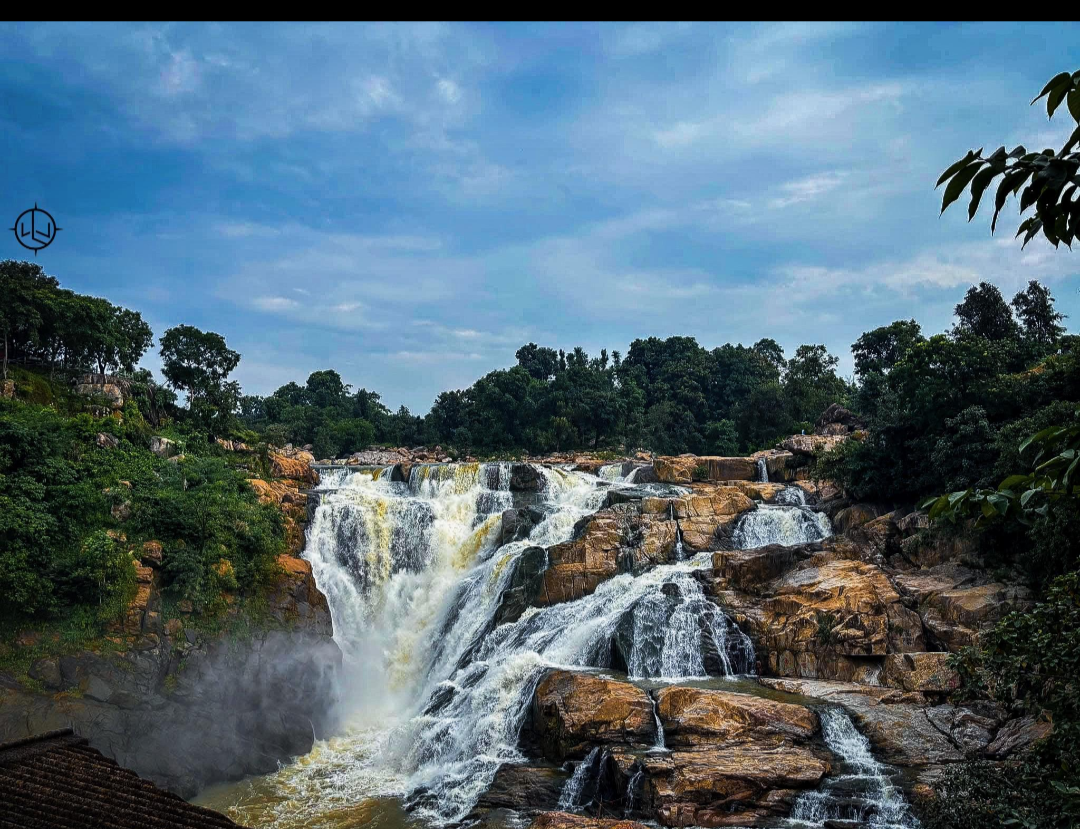
The Munda homeland lies on the Chotanagpur Plateau, an ancient block of Precambrian rock that forms the north-eastern edge of the Indian peninsula. The core Mundari-speaking country is the Ranchi plateau, which rises to roughly 600-700 metres above sea level and falls away in steps and escarpments towards the plains of Bengal and Bihar. The landscape alternates between rolling upland, terraced paddy valleys and hills clothed in sal (Shorea robusta) forest. Its rivers, including the Subarnarekha, South Koel, North Karo, Kanchi and Tajna, are seasonal and fast-flowing, cutting spectacular waterfalls such as Hundru, Dassam, Jonha and Panchghagh, several of which lie within or at the edge of traditional Munda villages.
Munda agriculture has always been shaped by this terrain. Farmers distinguish between don, the low-lying terraced fields that hold water and grow transplanted paddy, and tanr (or goda), the higher, lighter uplands used for short-season rice, millets such as madua (finger millet), gondli (little millet), pulses and oilseeds. The forest, meanwhile, has supplied fuel, fodder, fruit, fibre, medicine and, historically, trade goods such as lac, tasar silk cocoons, mahua flowers, sal seeds and tendu leaves. The region sits over some of India’s richest deposits of iron ore, coal, uranium and bauxite, a fact that has profoundly shaped its modern history.
Cultural-Geographic Sub-Regions of the Munda Country
Waterfalls such as Hundru and Dassam cut through the Ranchi plateau, the heart of the Munda country
The Munda population is not evenly spread. Several distinct zones can be recognised, each with its own history of settlement, dialect and social institutions:
| Region | Approximate Location | Notable Centres | Character |
|---|---|---|---|
| Khunti-Murhu-Tamar core | South-east Ranchi plateau, Jharkhand | Khunti, Murhu, Tamar, Bundu, Arki, Torpa | Densest Munda settlement; heartland of khuntkatti villages and the Birsa movement (Ulihatu, Dombari Buru) |
| Ranchi-Gumla-Simdega | Central and south-western Chotanagpur | Ranchi, Karra, Kamdara, Basia, Simdega | Munda villages interspersed with Oraon, Kharia and Nagpuri-speaking Sadan communities; strong Christian presence |
| Kolhan fringe | West Singhbhum, Saraikela-Kharsawan | Bandgaon, Sonua, Kharsawan | Border zone with the closely related Ho people; manki-munda village system |
| Northern Odisha | Sundargarh, Mayurbhanj, Keonjhar, Sambalpur | Rourkela, Bonai, Baripada | Large Munda population, many bilingual in Odia and Sadri |
| West Bengal and Chhattisgarh | Purulia, Jhargram, Jalpaiguri; Jashpur, Raigarh | Purulia, Jashpur | Plateau-edge settlements plus later tea-garden migrant communities in North Bengal |
| Tea-garden diaspora | Assam, Dooars, Tripura, Sylhet (Bangladesh) | Dibrugarh, Tinsukia, Jorhat, Jalpaiguri | Descendants of 19th-century plantation labour; part of the “tea tribes” or Adivasi of Assam |
3. Origins and Early History
3.1 The Creation Story and Oral Origins
Munda cosmology begins with Singbonga, the supreme deity identified with the sun, who is believed to have created the earth from the depths of a primordial ocean with the help of animals: in the best-known version, a tortoise, a crab and finally an earthworm bring up clay from the waters, which Singbonga shapes into land. Singbonga then creates the first human pair, whose descendants become the ancestors of the Horo-ko. The story of Lutkum Haram and Lutkum Buria, the primeval old man and woman, and the later episode of the Asur ironsmiths who angered Singbonga by polluting the world with the heat of their furnaces, are recited at festivals and sacred gatherings across the Munda country.
Munda oral tradition also preserves a migration story, recorded in detail by the Ranchi lawyer-ethnographer Sarat Chandra Roy in The Mundas and Their Country (1912). According to these accounts, the ancestors of the Munda wandered for generations through a series of “garhs” (forts or settlements) somewhere to the north and west, including places remembered as Azimgarh, Kalanjargarh, Garh Chitra, Garh Pali, Garh Pipra, Nandangarh and Ruidasgarh, before finally ascending the plateau through Omedanda and settling in what became the Munda country. Historians treat the specific place names with caution, but the narrative consistently remembers the Munda as a people who moved into Chotanagpur, cleared its forests and founded its first villages.
Your Ancestors, from the Garhs to the Plateau?
Munda tradition remembers a long journey through ancient settlements before the first clearing of the Chotanagpur forests. Trace your deep ancestral migrations and see where your lineage fits with GenoConnect.
3.2 The Austroasiatic Arrival and the First Villages
Linguistic and genetic evidence broadly supports the idea that the Munda are descendants of an ancient population that arrived in eastern India from the east. Mundari and its sister languages, including Santali, Ho, Kharia, Bhumij, Juang, Sora and Korku, belong to the Austroasiatic family, whose other major branches include Khmer, Vietnamese, Mon and the Khasi language of Meghalaya. Scholars have long debated where this family originated; most current work places its homeland in mainland South-East Asia or southern China, with Munda speakers reaching the Indian subcontinent perhaps four thousand years ago and mixing extensively with the populations already living there (see Section 5).
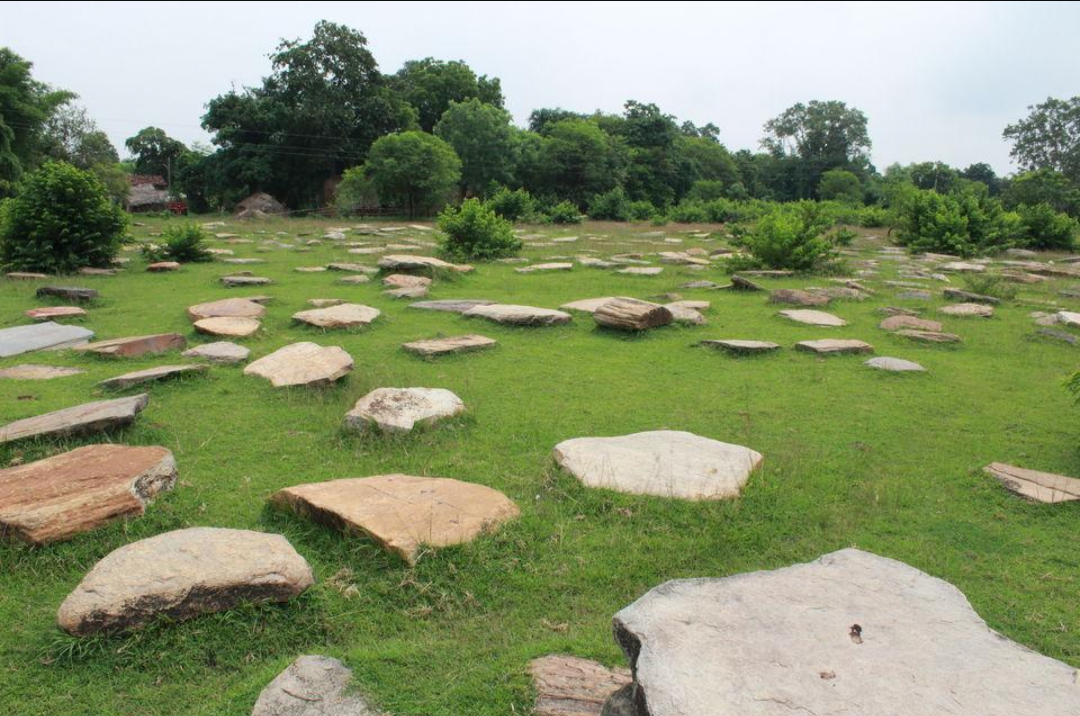
Within Chotanagpur, the Munda remember the founding of each village as a sacred act. The lineage that first cleared the forest and made the land cultivable became the khuntkattidar, the owners by right of original clearance, and its members were buried beneath great flat stones in the village burial ground (sasan). This principle of khuntkatti, collective ownership by the founding lineage, became the foundation of Munda land tenure and later a central issue in their conflicts with outsiders.
3.3 The Parha System and the Nagvanshi Raj
Munda villages were traditionally grouped into parhas, confederations of roughly a dozen or more villages under a parha chief (sometimes styled manki or parha raja), which settled disputes between villages and organised collective action. Local tradition holds that one of the early Munda leaders, Sutia Munda, organised the country into such divisions, giving his name to “Sutia-nagar” or Sutiambe, an early political centre near present-day Ranchi. Nagvanshi dynastic legend, in turn, records that the Munda chief Madra Munda adopted the infant Phani Mukut Rai, the founder of the Nagvanshi line, and that the parhas later chose him as their king. Whether or not the story is historical, it reflects a long-held Munda claim: that kingship in Chotanagpur was originally a gift of the Munda people rather than a conquest over them.
3.4 Mughal Tribute, Jagirdars and the Coming of the Diku
From the 16th century, Chotanagpur (known to the Mughals as Kokrah or Jharkhand, the “land of forests”) was drawn into Mughal tributary networks, partly through its diamond-bearing rivers. The Nagvanshi rulers increasingly granted villages as jagirs to Hindu and Muslim officials, priests and soldiers from the plains. These newcomers, whom the Munda called diku (outsiders, exploiters), gradually converted the khuntkatti villages into rent-paying estates, imposed bethbegari (forced labour) and new cesses, and pushed many original families into indebtedness or landlessness.
3.5 Colonial Rule and the Great Uprisings
The East India Company acquired the diwani of Bengal, Bihar and Orissa in 1765, and Chotanagpur came under British control soon afterwards. Company courts, police and revenue law strengthened the hand of landlords and moneylenders, and the Munda country became one of the most rebellious regions of colonial India. Key moments include:
- The Tamar Rebellion (1819-1820): an early uprising in the Tamar region against zamindari exactions.
- The Kol Uprising (1831-1832): a large armed revolt of Munda, Ho and Oraon villagers against jagirdars, moneylenders and Company authority, which led the British to create the South-West Frontier Agency (1834) with special administrative arrangements for the region.
- The Sardari Larai (c. 1858-1895): a long, largely legal and petition-based “war of the chiefs” (sardars) seeking restoration of khuntkatti rights, often with the support of Christian missionaries.
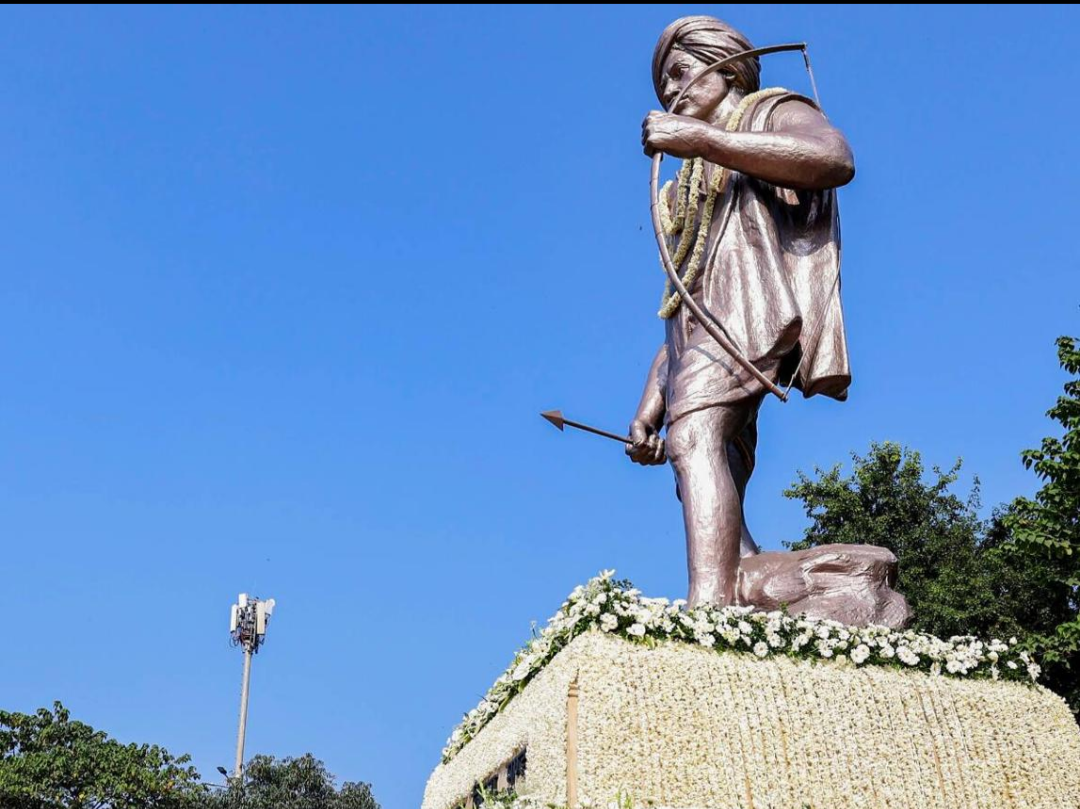
- The Ulgulan (1899-1900): the “great tumult” led by Birsa Munda (1875-1900), a young visionary from Ulihatu who combined a religious reform movement with a political demand for Munda self-rule (abua raj, “our rule”). Armed clashes culminated at Dombari Buru hill in January 1900. Birsa was captured and died in Ranchi jail on 9 June 1900, aged about 25.
The Ulgulan forced the colonial government to act. A survey and settlement operation recorded khuntkatti rights, and the Chotanagpur Tenancy Act of 1908 restricted the transfer of Adivasi land to outsiders. This Act remains one of the most important legal protections for the Munda and other communities of Jharkhand today.
A Lineage of Resistance?
From the Kol Uprising to Birsa Munda’s Ulgulan, the Munda country has a long memory of defending its land. Discover whether your family roots lie in Khunti, Tamar or the villages of the Ulgulan.
3.6 Missions, Education and the Jharkhand Movement
German Lutheran missionaries of the Gossner Mission arrived in Ranchi in 1845, followed by Anglican and, from the 1880s, Belgian Jesuit missionaries, most famously Father Constant Lievens, whose legal help to Munda and Oraon peasants led to mass conversions. Schools, hospitals and colleges followed. The Jesuit Father John-Baptist Hoffmann compiled the monumental Encyclopaedia Mundarica, one of the most detailed records of any Indian indigenous society. Educated Christian and non-Christian Adivasis alike founded associations such as the Chhotanagpur Unnati Samaj (1915) and the Adivasi Mahasabha (1938), which developed into the Jharkhand Party under the Munda Olympian and Constituent Assembly member Jaipal Singh Munda.
3.7 Post-Independence: Jharkhand and Beyond
After 1947, the Munda country remained part of Bihar, Orissa and West Bengal. Massive industrial and mining projects, including the Heavy Engineering Corporation in Ranchi, the Rourkela Steel Plant in Munda-inhabited Sundargarh, and numerous dams and mines, displaced many families. The long Jharkhand movement finally achieved statehood on 15 November 2000, and since 2021 the Government of India has marked Birsa Munda’s birth anniversary as Janjatiya Gaurav Divas (Tribal Pride Day). The Pathalgadi movement of 2017-2018, in which villages around Khunti erected stone slabs inscribed with constitutional provisions on Scheduled Areas, showed that the old Munda tradition of marking the land with stones continues to carry political meaning.
4. Demographic Profile
According to the 2011 Census of India, the Munda are among the largest Scheduled Tribes of eastern India, numbering roughly 2.2 million across the country. Jharkhand alone is home to about 1.23 million Munda, making them the third-largest tribe of the state after the Santal and Oraon, with Odisha (around 5.8 lakh) and West Bengal (over 3.5 lakh) holding the next-largest populations, followed by smaller numbers in Chhattisgarh, Bihar, Madhya Pradesh and Tripura. These figures exclude several hundred thousand people of Munda descent in Assam and other tea-growing areas, where they are not classified as a Scheduled Tribe and so are not counted separately.
The Munda remain predominantly rural. Religiously the community is divided between followers of the indigenous Sarna faith and Christians (Lutheran, Catholic and Anglican), with smaller numbers identifying as Hindu. The balance varies strongly by district: Christians are especially numerous in parts of Khunti, Gumla and Simdega, while Sarna practice is dominant elsewhere. Across all groups, the Munda have historically recorded a favourable sex ratio compared with many other Indian communities, reflecting the relatively high social position of women in Adivasi society, although literacy, particularly among women, still lags behind state averages.
| Indicator | Approximate figure | Note |
|---|---|---|
| Total Munda population (India) | c. 2.2 million | Census 2011, Scheduled Tribe category |
| Jharkhand | c. 1.23 million | Third-largest tribe of the state |
| Odisha | c. 5.8 lakh | Mainly Sundargarh, Mayurbhanj, Keonjhar |
| West Bengal | c. 3.5+ lakh | Purulia, Jhargram and North Bengal |
| Mundari speakers | c. 1.6 million | Many Munda now speak Sadri, Hindi or Odia at home |
| Assam tea-garden Munda | Not separately enumerated | Counted among “tea tribes”; not ST in Assam |
5. Genetics and DNA Ancestry
The Munda speak languages whose closest relatives are found in South-East Asia. Genetic studies have therefore asked whether their ancestors brought these languages from the east, and how much they mixed with people already living in India.
5.1 A Dual Heritage: Paternal East, Maternal South Asian
Studies show a clear contrast between the paternal and maternal lines. A large share of Munda men, often more than half in published samples, carry Y-chromosome haplogroup O2a (defined by the M95 mutation and now often labelled O1b1a1a), a lineage whose closest relatives are found among Austroasiatic-speaking populations of mainland South-East Asia. By contrast, the maternal (mitochondrial) lineages of the Munda are overwhelmingly South Asian-specific branches of haplogroups M and R, shared with their Dravidian- and Indo-Aryan-speaking neighbours. Researchers such as Chaubey and colleagues (2011) interpreted this pattern as evidence of a sex-biased dispersal: Austroasiatic-speaking men arriving from the east and marrying into local South Asian populations.
Uncover Your Austroasiatic Genetic Signature
The Munda carry a rare combination of ancient South Asian maternal lines and paternal lineages linked to South-East Asia. Discover your own genetic composition and the story it tells with GenoConnect.
5.2 Admixture and Timing
Genome-wide studies show that the Munda, like almost all Indian populations, carry ancestry related to the ancient indigenous hunter-gatherers of South Asia (the Ancestral South Indian component), but with an additional East and South-East Asian-related component that most Indian groups lack. A 2019 study by Tätte and colleagues, published in Scientific Reports, estimated that the admixture between incoming South-East Asian-related and local South Asian ancestry in Indian Austroasiatic speakers took place roughly 4,000 to 3,500 years ago, consistent with the linguistic picture of a Bronze Age arrival. Compared with Gangetic-plain populations, the Munda generally carry little of the Steppe- and Iranian-related ancestry associated with Indo-European-speaking migrations.
5.3 Relationships with Neighbouring Communities
Within India, the Munda cluster genetically with other Munda-speaking peoples such as the Ho, Santal, Bhumij and Kharia, while also showing substantial sharing with neighbouring Dravidian-speaking Adivasis such as the Oraon, a pattern that reflects centuries of coexistence on the same plateau. As with other endogamous communities, the Munda are internally structured along clan and regional lines, so a Munda family from Khunti, one from Sundargarh and one from an Assam tea estate may show measurable differences in their ancestry profiles.
See Live Genetics from Munda Genome Project Members
6. Language and Literature
Mundari (Horo jagar, “the people’s speech”) is the ancestral language of the Munda and belongs to the Kherwarian subgroup of North Munda languages, alongside Santali, Ho, Bhumij, Asuri and Birhor. It has several dialects, including Hasada’ (spoken around Khunti), Naguri, Tamaria and Kera’. Mundari is agglutinative: words are built by adding many suffixes and infixes to a root, and verbs can carry information about subject, object, tense and mood in a single word. Most Munda today are bilingual or trilingual, commonly speaking Sadri (Nagpuri), the lingua franca of Chotanagpur, as well as Hindi or Odia.
Mundari has traditionally been written in Devanagari and, in Christian circles, in Roman script. In the late 20th century the Mundari Bani script was devised by Rohidas Singh Nag. Mundari is recognised as a second official language in Jharkhand and is taught at Ranchi University’s Department of Tribal and Regional Languages. Its rich oral literature of songs, riddles and folktales has been documented by missionary scholars, Indian ethnographers and, above all, by Munda scholars themselves, such as the linguist and musician Dr Ram Dayal Munda.
7. Religion, Festivals and Sacred Places
The indigenous religion of the Munda, widely known today as Sarna or Sarnaism, centres on Singbonga, the supreme creator identified with the sun, together with a host of village, household and ancestral spirits (bongas). The central place of worship is the sarna or jaher, a sacred grove of sal trees preserved at the edge of each village, where the village priest, the pahan, performs sacrifices on behalf of the community. Ancestors are believed to remain part of the household, and a portion of food and rice beer is offered to them at meals and festivals. Many Munda are now Christian, and in several villages Sarna and Christian families live side by side, sharing kinship, language and many customs.
The Munda festival calendar follows the agricultural year:
- Sarhul (Ba Parab): the spring flower festival held when the sal trees blossom, marking the new year; the pahan worships at the sarna and predicts the coming rainfall.
- Karam: a monsoon-season festival in which a branch of the karam tree is planted in the akhra and worshipped for prosperity, fertility and sibling bonds, with night-long singing and dancing.
- Sohrai: a post-harvest festival honouring cattle, celebrated around the time of Diwali.
- Mage Parab: a mid-winter festival of feasting and thanksgiving at the end of the agricultural cycle.
- Jom Nawa and Batauli: rites connected to the first eating of new rice and the sowing season.
Important sacred and memorial sites include Ulihatu, the birthplace of Birsa Munda; Dombari Buru, the hill where the Ulgulan’s final battle was fought; and the countless village sasans, where generations of ancestors lie beneath flat stone slabs.
8. Culture, Customs and Social Organisation
The Munda are organised into many exogamous patrilineal clans called killi, each traditionally linked to a totem, usually an animal, plant or object that clan members must not harm or eat. Well-known killis include Purty, Topno, Horo (tortoise), Soy, Bodra, Hemrom, Kandir, Aind, Barla, Dhan, Kongari, Nag, Bhengra and Surin, many of which now serve as surnames. Marriage within one’s own killi is strictly forbidden.
The village (hatu) is governed by a traditional council led by the munda (secular headman) and the pahan (priest), with larger issues decided by the parha of confederated villages. Village land, forests and burial grounds are traditionally held in common. The akhra, an open dancing ground at the heart of the village, is the social centre where young and old gather to sing and dance on festival nights. Historically, many Munda villages also had a gitiora, a youth dormitory where unmarried boys learned songs, stories, crafts and social duties from their elders.
Small Cultural Things
- Stone memorials: besides the sasandiri (burial stones), Munda families erect upright stones called birdiri or bhodiri in memory of the dead, making the Munda country one of India’s great living megalithic landscapes.
- Hadgadi and Jangtopa: bone-burial rites in which the collected bones of the dead are ceremonially laid to rest in the ancestral sasan, bringing the soul home.
- Handia and hospitality: offering guests handia (rice beer) served in leaf cups is a basic sign of welcome.
- Sal leaves: plates (patri) and cups (dona) stitched from sal leaves are used at feasts and ritual meals.
- Johar: the common greeting across Jharkhand, often said with folded hands.
- Music: the mandar and dhol drums, nagara kettledrums, banam fiddle and bamboo flute accompany dances such as Jadur, Karam and Jhumar.
9. Marriage and Family
Munda marriage is governed by killi exogamy and has traditionally been arranged by the families of both partners through a go-between. Negotiations lead to the payment of gonong, a bride-price in cash, cattle or cloth given to the bride’s family, which symbolises respect rather than purchase. The wedding itself involves the sindradan, the application of vermilion by the groom, together with ritual anointing with turmeric, feasting, handia and dancing. Widow remarriage and divorce have long been socially accepted, and Munda women traditionally enjoy considerable freedom in choosing partners and in public life compared with many plains communities. Among Christian Munda, a church ceremony is often combined with customary rites.
10. Cuisine
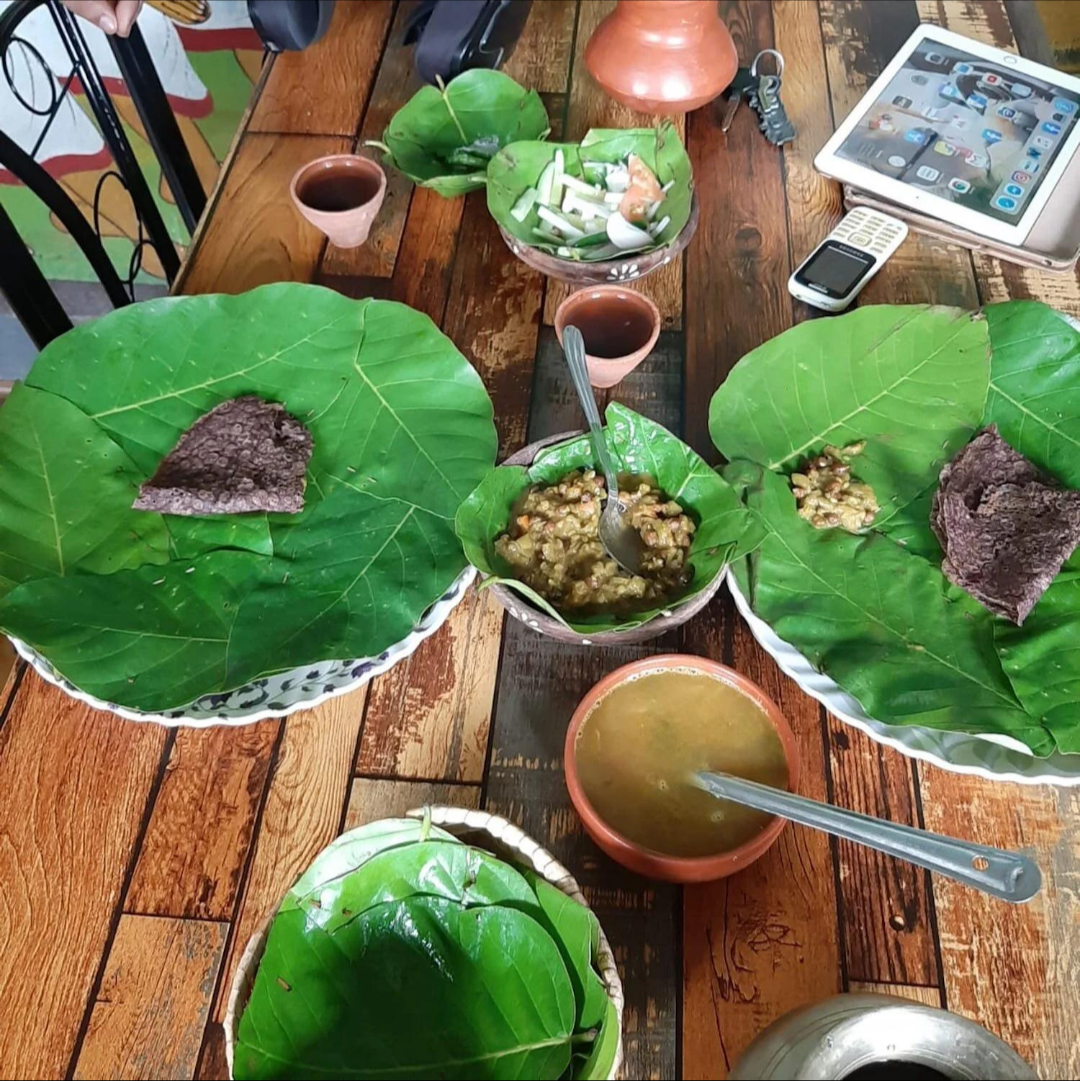
- Staples: boiled rice (mandi) with dal or leafy greens; madua (finger millet) and gondli (little millet) rotis and porridges, especially in the uplands.
- Forest greens and vegetables: a wide range of saags such as koinar, sarla, chakor and munga, as well as bamboo shoots (karil), wild tubers and the prized monsoon mushrooms known as rugra and khukhri.
- Rice cakes: steamed or roasted rice-flour preparations such as dumbu and pitha, made for festivals.
- Meat and fish: chicken, pork, goat, freshwater fish, crabs and snails, often cooked with minimal oil or roasted in leaves.
- Handia: a mildly fermented rice beer brewed at home with a herbal starter tablet called ranu; it is part of ritual offerings as well as daily hospitality.
- Mahua: the sweet flowers of the mahua tree are eaten dried, cooked or distilled into liquor.
Savour Your Chotanagpur Roots?
From rugra mushrooms to handia and madua roti, the food of the Munda country is a living link to its forests. Discover if your DNA connects you to this heritage of taste and tradition.
11. Traditional Dress and Ornaments
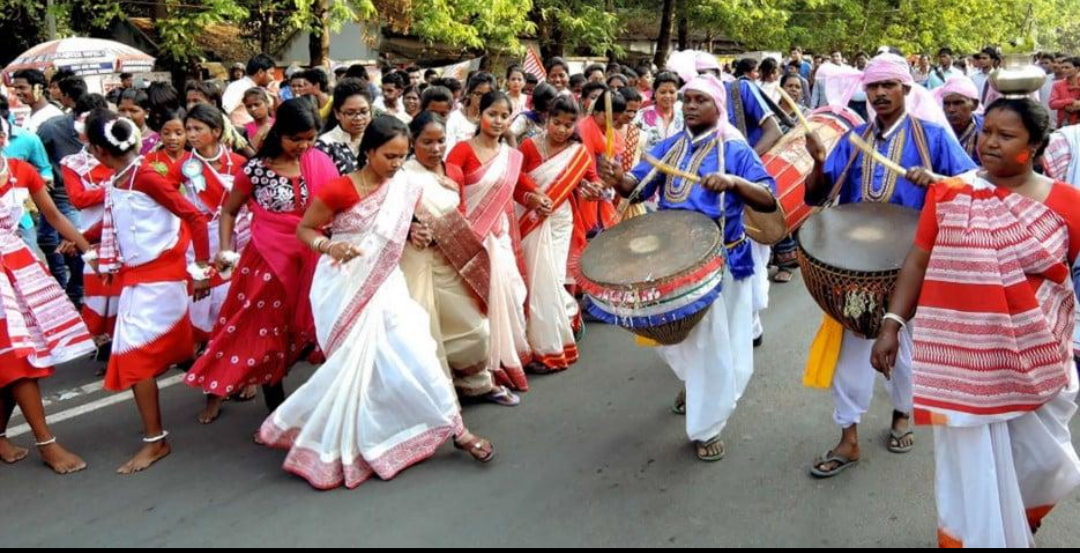
Traditional Munda dress is made from coarse handloom cotton, historically woven by local weaver communities. Men traditionally wore the botoi or karya, a loincloth, with a cotton wrap over the shoulders, and a turban on ceremonial occasions. Women wore the paria, a sari-like garment worn in two pieces, typically white or off-white with a red or coloured border. Today, the white saree with a red border (lal paar) remains the iconic festive dress for Munda women dancing at Sarhul and Karam, while men wear a dhoti or white clothes with a coloured gamchha.
Ornaments are an important part of festive dress. Women traditionally wear silver or brass necklaces (hansli), armlets, anklets and many bangles, and decorate their hair with flowers, especially sal blossoms during Sarhul. Tattooing (khoda) was once widespread among women, marking identity and believed to accompany the soul into the afterlife.
12. Traditional Housing and Settlement
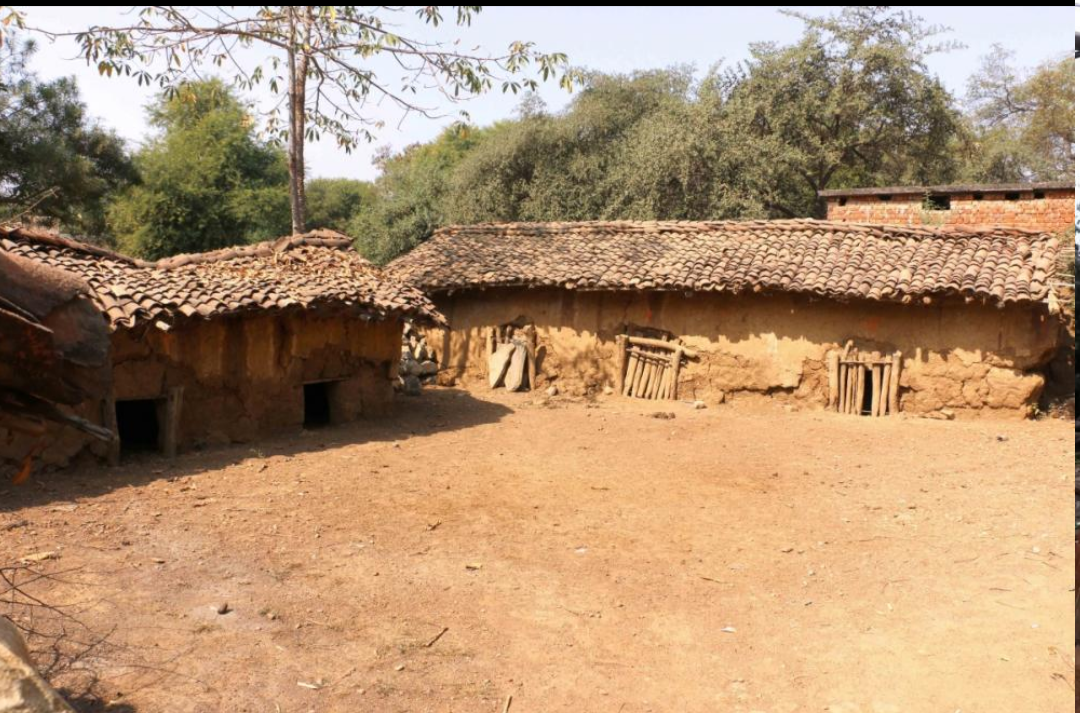
A typical Munda village consists of houses built of mud walls with sloping roofs of clay tiles (khapra) or thatch, arranged loosely along a lane or around small courtyards. Houses usually have a separate room or corner for cooking, a place for storing grain, and a sacred inner space (ading) where ancestral spirits are honoured and which outsiders may not enter. Walls are often plastered with coloured clay and sometimes painted. Each village has its akhra, its sarna grove and its sasan burial ground, and together these mark out the social, religious and ancestral life of the village.
13. Folklore and Oral Tradition
Munda oral tradition is closely tied to music. Songs (durang) are sung according to season, including jadur songs for spring, karam songs for the monsoon and jarga songs for winter, and many describe courtship, farm work, the forest and the journeys of the ancestors. The creation story of Singbonga and the tale of the Asur smiths are among the best-known narratives, while more recent songs commemorate Birsa Munda as Dharti Aaba, “Father of the Earth”. Much of this material was collected in the Encyclopaedia Mundarica and later revived by scholars and artists such as Ram Dayal Munda, who brought Munda music to national and international stages.
14. Livelihoods, Education and Jobs
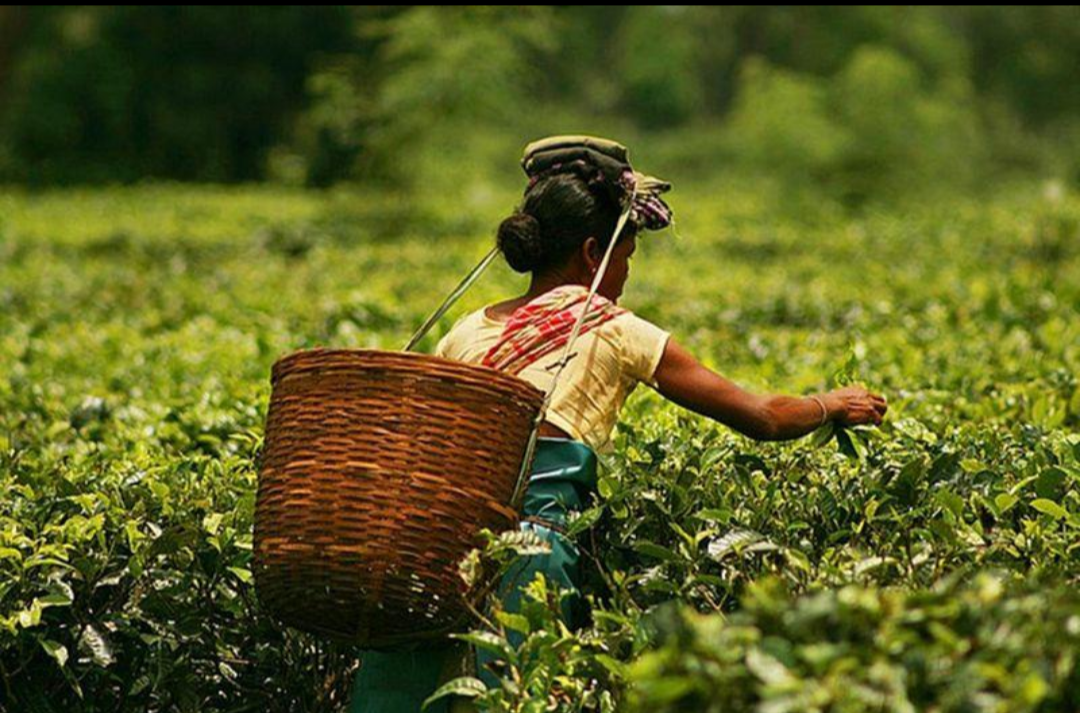
Agriculture remains the backbone of Munda life, with paddy grown on terraced don fields and millets, pulses and vegetables on the uplands. Forest produce has always supplemented farm incomes, including lac cultivation on kusum and palas trees, tasar silk rearing, sal seed and leaf collection, and mahua gathering. Landholdings are usually small and rainfed, and seasonal migration for work to brick kilns, construction sites and cities such as Delhi, Kolkata and Mumbai has become common, including among young women employed as domestic workers.
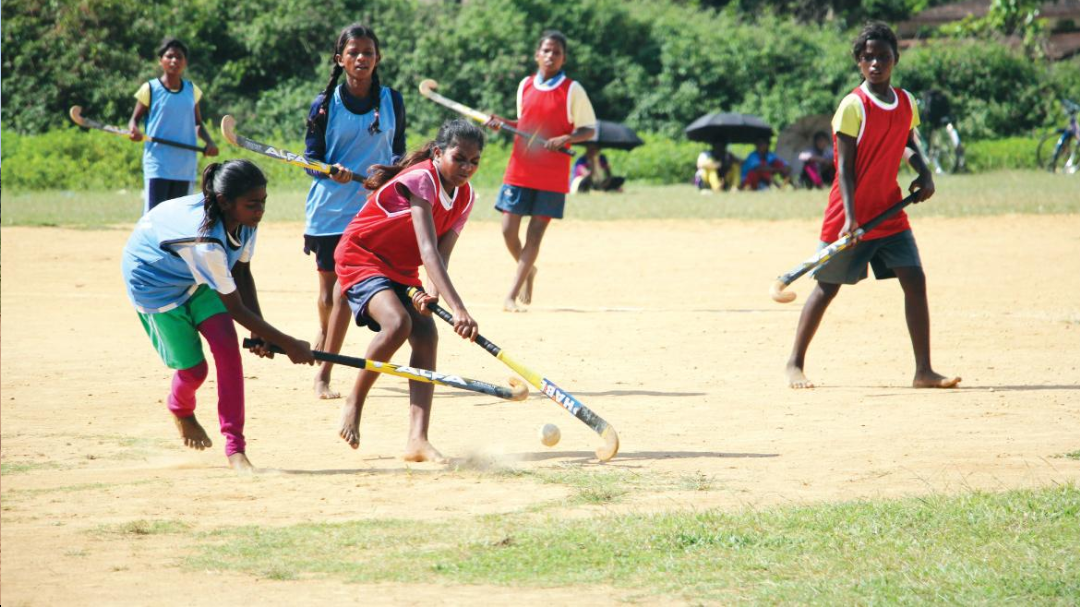
Mission schools and later government schools created a significant educated class. Reservation in education and government employment has brought Munda men and women into teaching, the police, the railways, government administration, nursing and the church. Jharkhand, and Khunti and Simdega in particular, is also famous for producing hockey players, a tradition that goes back to Jaipal Singh Munda’s captaincy of India’s 1928 Olympic team.
15. Diaspora
The Munda diaspora has two main strands. The first and largest is the plantation migration of the 19th and early 20th centuries. From the 1830s, labour recruiters drew heavily on Chotanagpur, where Adivasis were known in colonial records as “dhangars” or “hill coolies”. Chotanagpur men and women were among the earliest Indian indentured workers sent to Mauritius and to British Guiana (the so-called Gladstone Coolies of 1838). Far greater numbers were recruited for the tea gardens of Assam, the Dooars and Terai of North Bengal, Tripura and Sylhet. Their descendants, including many Munda, form a large part of the “tea tribes” or Adivasi community of Assam, where they speak Sadri and other languages and remain outside the Scheduled Tribe list. Smaller Munda communities also exist in Bangladesh, Nepal and the Andaman Islands, where Chotanagpur settlers (locally called the Ranchi community) arrived in the early 20th century.
The second strand is more recent: internal migration for education and work to Indian cities, and a small but growing professional and student diaspora abroad, often connected with church and educational networks. Many of these families keep strong links with their home villages, returning for Sarhul, Karam and family rites.
Do You Belong to the Plateau or the Tea Gardens?
Munda families today live from Khunti and Sundargarh to Assam, the Dooars and beyond. Explore the Munda Genome Project to see where your own family branch fits.
16. Prominent Figures
16.1 Freedom Struggle and Public Life
- Birsa Munda (1875-1900): leader of the Ulgulan, revered as Dharti Aaba (“Father of the Earth”) and one of India’s foremost Adivasi freedom fighters.
- Gaya Munda: one of Birsa Munda’s leading lieutenants, killed resisting the British during the Ulgulan.
- Jaipal Singh Munda (1903-1970): captain of India’s gold-winning hockey team at the 1928 Amsterdam Olympics, member of the Constituent Assembly and founder of the Jharkhand Party.
- Kariya Munda: veteran parliamentarian from Khunti and former Deputy Speaker of the Lok Sabha.
- Arjun Munda: former Chief Minister of Jharkhand and former Union Minister of Tribal Affairs.
- Dayamani Barla: journalist and activist known for her campaigns on land and forest rights in Jharkhand.
16.2 Scholarship, Arts and Culture
- Dr Ram Dayal Munda (1939-2011): linguist, musician and former Vice-Chancellor of Ranchi University, awarded the Padma Shri in 2010 for his work on Mundari language and performing arts.
- Rohidas Singh Nag: creator of the Mundari Bani script.
16.3 Sports
- Nikki Pradhan: hockey player from Khunti who became the first woman from Jharkhand to represent India in Olympic hockey (Rio 2016).
- Jharkhand hockey tradition: numerous Munda players from Khunti, Simdega and Gumla have represented India and the state in national and international competitions.
17. Conclusion
Language, oral tradition, landscape and genetics all point in the same direction for the Munda. They are an Austroasiatic-speaking people, whose paternal lineages point towards South-East Asia and whose maternal lines are deeply South Asian, who cleared the forests of the Chotanagpur Plateau, founded khuntkatti villages under their own headmen, and defended that relationship with the land through centuries of change. Their history runs from the sal groves and burial stones of Khunti to the tea gardens of Assam, and from Birsa Munda’s Ulgulan to India’s Olympic hockey teams. It is a history of land, faith, music and resistance, and its genetic record preserves one of the oldest meetings of peoples in the subcontinent.
References and Further Reading
- Roy, Sarat Chandra. The Mundas and Their Country. Ranchi, 1912.
- Hoffmann, John-Baptist, and Arthur van Emelen. Encyclopaedia Mundarica. Patna, 1930-1950.
- Singh, Kumar Suresh. Birsa Munda and His Movement, 1874-1901. Oxford University Press, 1983.
- Census of India 2011. Primary Census Abstract: Scheduled Tribes (Individual Tribe Data).
- Chaubey, G. et al. “Population genetic structure in Indian Austroasiatic speakers: the role of landscape barriers and sex-specific admixture.” Molecular Biology and Evolution, 2011.
- Tätte, K. et al. “The genetic legacy of continental scale admixture in Indian Austroasiatic speakers.” Scientific Reports, 2019.
- Munda, Ram Dayal, and S. Bosu Mullick (eds.). The Jharkhand Movement: Indigenous Peoples’ Struggle for Autonomy in India. IWGIA, 2003.
- Chotanagpur Tenancy Act, 1908.
Frequently Asked Questions
Who are the Munda people?
The Munda are an Adivasi (indigenous) people of eastern India, living mainly on the Chotanagpur Plateau in Jharkhand, Odisha, West Bengal and Chhattisgarh. They speak Mundari, an Austroasiatic language, and call themselves Horo-ko, meaning “the people”. They number roughly 2.2 million in India according to the 2011 Census.
Where is the Munda homeland?
The core Munda homeland is the south-eastern Ranchi plateau of Jharkhand, especially the Khunti, Murhu, Tamar and Bundu areas, extending into Ranchi, Gumla, Simdega and West Singhbhum districts and into Sundargarh and Mayurbhanj in Odisha.
What does the word “munda” mean?
In Mundari and related languages, munda originally meant the headman of a village. Outsiders later applied this title to the whole people, and it became the name of the community and of the Munda language family.
Are the Munda Aryan, Dravidian or something else?
Neither. The Munda speak an Austroasiatic language, related to Khmer, Vietnamese and Khasi, not to the Indo-Aryan or Dravidian families. Genetically they combine ancient South Asian ancestry, especially on the maternal side, with a distinctive East and South-East Asian-related component on the paternal side.
What DNA haplogroups are common among the Munda?
Many Munda men carry Y-chromosome haplogroup O2a (M95), a paternal lineage linked to Austroasiatic speakers of South-East Asia. Maternal lineages are mostly South Asian-specific branches of haplogroups M and R, shared with neighbouring Indian populations.
What is the religion of the Munda?
The traditional Munda religion, known as Sarna, worships Singbonga, the supreme deity associated with the sun, along with village and ancestral spirits, in sacred sal groves called sarna. A large section of the community is Christian, and some identify as Hindu.
What are the main festivals of the Munda?
The main festivals are Sarhul (the spring flower festival), Karam (a monsoon festival of the karam tree), Sohrai (the post-harvest cattle festival) and Mage Parab (a winter festival), along with rites for sowing and eating new rice.
What is the traditional food of the Munda?
Rice is the staple, eaten with dal and many forest greens. Madua (finger millet), bamboo shoots, rugra mushrooms, freshwater fish, pork and chicken are common, and handia (rice beer) is central to hospitality and ritual.
What is the traditional dress of the Munda?
Women traditionally wear the paria, a handloom cotton sari with a coloured border, and the white saree with a red border is iconic for festival dances. Men traditionally wore the botoi or karya loincloth and now commonly wear a dhoti with a gamchha.
What is khuntkatti?
Khuntkatti is the Munda system of land rights, under which the descendants of the lineage that first cleared the forest and founded a village hold its land collectively. It was recognised in law by the Chotanagpur Tenancy Act of 1908.
Who was Birsa Munda?
Birsa Munda (1875-1900) was a Munda religious reformer and freedom fighter who led the Ulgulan, a major uprising against British rule and landlord exploitation. He is revered as Dharti Aaba, and Jharkhand was created on his birth anniversary, 15 November, in 2000.
Why are there Munda people in Assam?
From the 19th century, large numbers of Munda and other Chotanagpur Adivasis were recruited to work on the tea plantations of Assam and North Bengal. Their descendants form part of Assam’s “tea tribes” or Adivasi community today.
What physical traits are typical of the Munda?
There is no single physical type. Munda people generally fall within the range typical of eastern Indian Adivasi populations, often of medium stature with skin tones mostly in the darker range, but there is wide individual and regional variation, and physical appearance is not a reliable marker of community identity.
Are the Munda and Ho the same people?
They are closely related. The Ho of Kolhan and the Munda speak mutually related Kherwarian languages, share many clans, customs and the headman institution, and cluster together genetically, but they regard themselves as distinct communities with separate histories.