

Nasrani Syro Malabar Community
Explore the Nasrani Syro-Malabar community of Kerala: Saint Thomas Christian origins, East Syriac heritage, Malayali culture, cuisine, diaspora, genetics, and prominent people.
THE NASRANI SYRO-MALABAR COMMUNITY
History, Culture, Ancestry and Legacy of the Saint Thomas Christians of Kerala
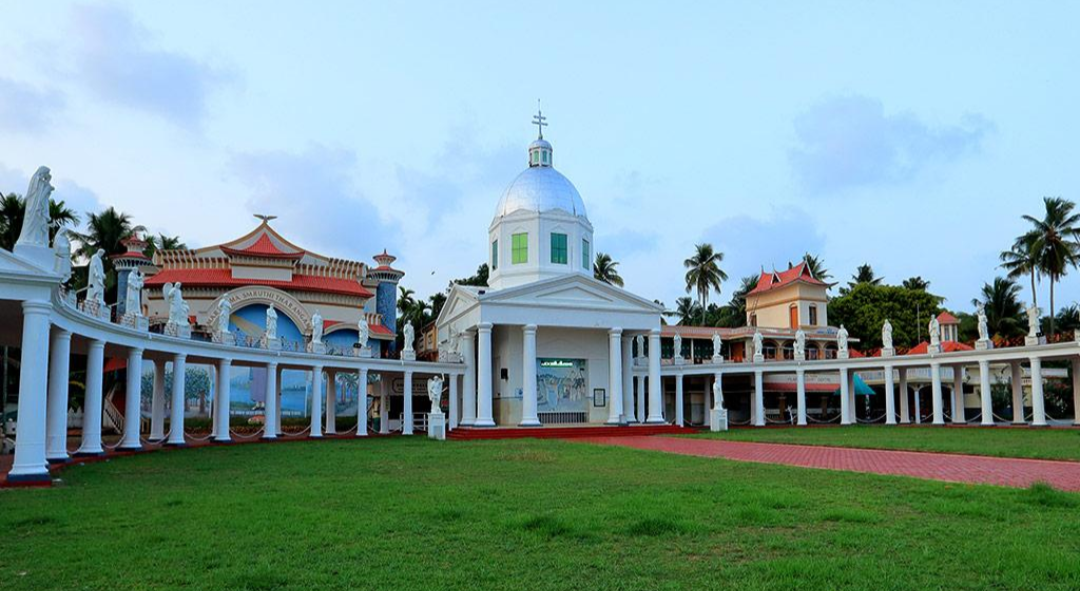
Table of Contents
Introduction: Who Are the Syro-Malabar Nasranis?
The Syro-Malabar Nasranis are the largest branch of the Saint Thomas Christians, an ancient Christian community of the Malabar Coast in present-day Kerala. They are Malayalam-speaking Catholics who follow the East Syriac (Chaldean or Syro-Oriental) liturgical tradition and form the Syro-Malabar Church, one of the twenty-three Eastern Catholic Churches in full communion with the Pope in Rome. Within India they are often simply called "Syrian Christians", "Syrian Catholics", "Nasranis", or "Mar Thoma Nasranis", names that point not to Syrian ethnicity but to the Syriac language of their liturgy and the West Asian church to which they were historically attached.
Although defined today by church membership, the Syro-Malabar Nasranis behave in many ways like a regional community in the Indian sense. They share a homeland (central Kerala), a family-house (tharavad) based kinship system, distinctive surnames and first names, a cuisine, a dress tradition, a marriage culture, and a strong collective memory of origin. They are also, historically, a community that grew out of the local population of the Malabar Coast, with smaller strands of West Asian settlement woven in. This profile brings together what is known about the community's geography, origins, history, social life, culture, diaspora, and ancestry, noting throughout where tradition and documented history diverge.
Etymology: "Nasrani", "Syrian" and "Syro-Malabar"
The word Nasrani comes from the Syriac and Arabic term for followers of Jesus of Nazareth ("the Nazarene"). It was the ordinary name used for Christians across the Syriac-speaking and Arabic-speaking world, and it travelled to the Malabar Coast through trade and church contacts. Local Malayalam usage also gave the community the name Mappila, a respectful title also used for Kerala Muslims and Jews; Christians were sometimes distinguished as Nasrani Mappilas.
"Syrian" refers to the Syriac liturgical language, a dialect of Aramaic, used in worship for well over a thousand years. "Syro-Malabar" was coined in the colonial and Catholic ecclesiastical period to distinguish Syriac-rite Catholics of Malabar from Latin-rite Catholics. The alternative honorific "Mar Thoma Christians" (Christians of Saint Thomas) reflects the community's foundational belief that it was established by the Apostle Thomas.
Geography and Homeland
The traditional heartland of the Syro-Malabar Nasranis is central Kerala, in the fertile lowlands and midlands between the Periyar and Pamba river systems. Old Christian settlements cluster around the historic port of Kodungallur (ancient Muziris), the backwaters of Kuttanad, and the pepper-growing interior. Today the densest concentrations are in:
- Thrissur and Irinjalakuda: among the oldest and largest Syro-Malabar populations, with a distinct Thrissur dialect and a strong business culture.
- Ernakulam and Angamaly: the seat of the Major Archbishop and historically important church centres such as Angamaly, Kuravilangad (nearby) and Edappally.
- Kottayam, Pala and Changanassery: the planter belt of the Meenachil taluk and Kuttanad fringe, famous for rubber cultivation and large tharavads.
- Idukki and the high ranges: settled heavily by Nasrani farming families from the 1930s onward.
- Malabar hill regions: Thalassery, Mananthavady (Wayanad), Thamarassery and the Kannur-Kasaragod hills, settled during the "Malabar migration" of the twentieth century.
Beyond Kerala, the Church has created dioceses (eparchies) across India, including Kalyan (Mumbai), Faridabad (Delhi), Shamshabad (Hyderabad), Hosur, Belthangady and Mandya in Karnataka, and a number of mission dioceses in central and north India, reflecting both internal migration and missionary work. The Church now counts more than thirty jurisdictions worldwide.
Origins: Tradition and History
The Saint Thomas Tradition
According to a deeply held community tradition, the Apostle Thomas landed at Kodungallur (Muziris) in AD 52, preached along the coast, and founded seven churches, remembered as the Ezharappallikal ("seven and a half churches"): Kodungallur, Palayur, Kottakkavu (Paravur), Kokkamangalam, Niranam, Nilakkal (Chayal) and Kollam, with Thiruvithamcode counted as the "half church". Thomas is believed to have been martyred at Mylapore, near Chennai, around AD 72. Oral songs such as the Thomma Parvam and the Rambaan Paattu preserve this memory.
A famous element of the tradition holds that Thomas converted several Brahmin families, most often named as Pakalomattam, Sankarapuri, Kalli, Kaliyankal and a few others, whose descendants became the priestly and leading families of the Nasranis. Many Syro-Malabar families trace their lineage to these houses. Historians generally treat this as a foundational tradition rather than documented fact: there is no independent evidence of Brahmin settlement in Kerala as early as the first century, and the story took its present form in later centuries, when claims of high-caste origin carried social weight. Genetic evidence, discussed below, also points to a broader local ancestry.
Knai Thoma and West Asian Settlers
A second tradition recalls the arrival of a Syrian merchant, Knai Thoma (Thomas of Cana), with a group of families from Mesopotamia, commonly dated to AD 345. Their descendants, the Knanaya or Southist (Thekkumbhagar) community, remain strictly endogamous and have their own archeparchy of Kottayam within the Syro-Malabar Church. The majority, called the Northists (Vadakkumbhagar), trace descent from local converts. Further Persian Christian settlers arrived in the ninth century; the Tharisapalli copper plates of about AD 849, issued under the Chera ruler Sthanu Ravi, record land and privileges granted to a church at Kollam founded by Maruvan Sapir Iso.
The Church of the East Period
For most of the first millennium and a half, the Nasranis belonged to the Church of the East, headquartered in Persia and later Baghdad. Bishops were sent from Mesopotamia, while local community leadership rested with an indigenous Archdeacon (Jathikku Karthavian) drawn from the Pakalomattam family. The community enjoyed a high social rank in the Hindu kingdoms of Kerala, was deeply involved in the pepper and spice trade, and was granted privileges such as riding elephants, using palanquins and carrying arms. Nasrani men were also trained in kalaripayattu and served in the militias of local rulers.
Colonial Encounters and the Great Divisions
The arrival of the Portuguese in 1498 transformed the community. The Portuguese recognised Nasranis as fellow Christians but regarded their Syriac liturgy and Persian bishops as heretical. At the Synod of Diamper (Udayamperoor) in 1599, Archbishop Aleixo de Menezes of Goa placed the community under Latin Catholic authority, ordered the burning of Syriac books, and introduced many Latin practices.
Resentment exploded in 1653 at the Coonan Cross Oath (Koonan Kurishu Sathyam) in Mattancherry, when thousands of Nasranis swore not to obey the Jesuit-led hierarchy. The community then split. Those who later returned to Catholic communion became the Pazhayakoor ("old allegiance"), the ancestors of today's Syro-Malabar Church. Those who continued independently became the Puthenkoor ("new allegiance"), who eventually entered communion with the Syriac Orthodox Church of Antioch and later divided further into the Malankara Orthodox, Jacobite, Mar Thoma, Syro-Malankara Catholic and other churches.
Under the Carmelite Vicariate of Varapuzha in the eighteenth and nineteenth centuries, Syro-Malabar Catholics campaigned for bishops of their own rite. Figures such as Mar Joseph Kariattil and Paremmakkal Thoma Kathanar, whose Varthamanappusthakam (1785) is regarded as the first travelogue in an Indian language, travelled to Lisbon and Rome to press the case. In 1887 Rome created separate vicariates of Trichur and Kottayam, in 1896 the first native bishops were appointed, in 1923 a formal hierarchy was established, and in 1992 the Church was raised to Major Archiepiscopal status. In recent decades, a dispute over the form of celebrating the Holy Qurbana (Mass), particularly in the Archeparchy of Ernakulam-Angamaly, has been a major internal issue.
Religion and Belief
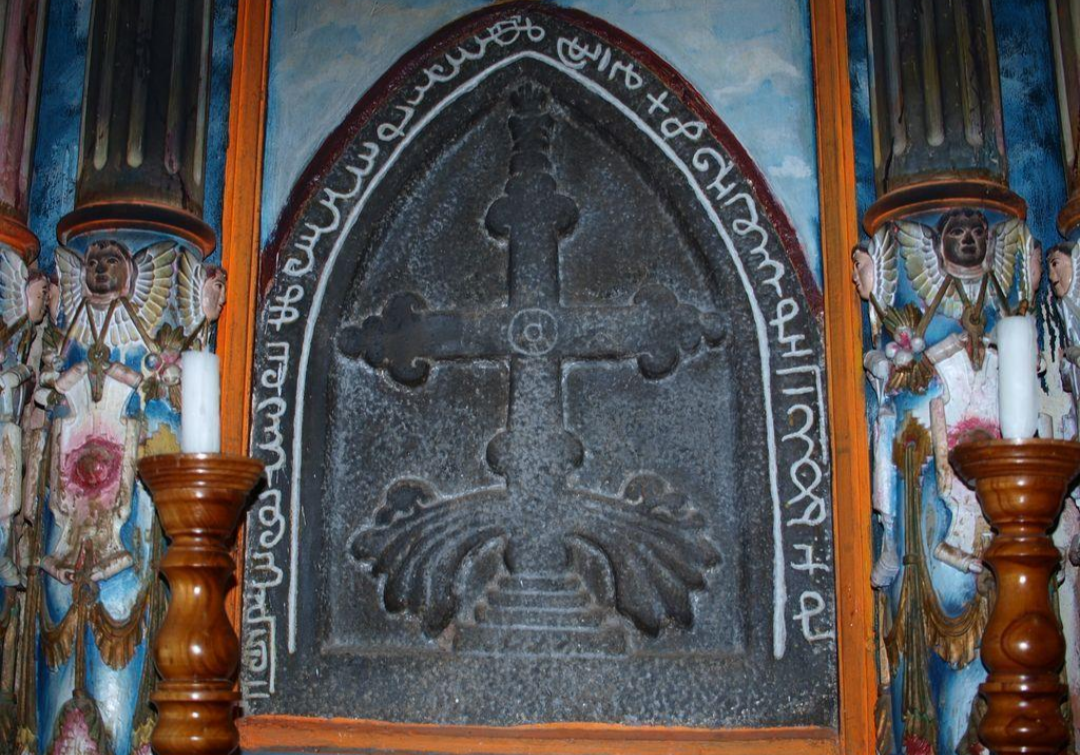
The Syro-Malabar Nasranis are Catholics of the East Syriac rite. Their principal liturgy is the Holy Qurbana, rooted in the ancient Anaphora of Addai and Mari, now celebrated mainly in Malayalam with Syriac hymns and phrases preserved. The characteristic symbol of the community is the Mar Thoma Sleeva (Saint Thomas Cross), a cross without a corpus rising from a lotus, often with a dove above, reflecting both East Syriac theology and Indian artistic forms.
Religious life revolves around the parish (edavaka), which historically functioned as a self-governing unit through the palliyogam, a parish assembly of householders. Fasts are strict and communal: the fifty-day Great Lent (Valiya Nombu), the twenty-five-day Advent fast, and the eight-day fast (Ettu Nombu) in September honouring the Virgin Mary are widely kept. Pesaha (Maundy Thursday) is celebrated at home with the breaking of the Pesaha appam and the drinking of coconut-milk paal. The community has produced four canonised saints: Saint Alphonsa, Saint Kuriakose Elias Chavara, Saint Euphrasia and Saint Mariam Thresia.
Language
The mother tongue of the Syro-Malabar Nasranis is Malayalam. Their traditional speech preserves a distinctive vocabulary drawn from Syriac, Portuguese and old church usage, including words such as Qurbana (Mass), Kathanar or Achan (priest), Kapyar (sacristan), Nombu (fast) and Perunnal (feast). Regional dialects, particularly the lively Thrissur Christian speech and the Kottayam-Pala variety, are recognisable to other Malayalis. Syriac survives in hymns, prayers and inscriptions, and a Malayalam written in Syriac script, called Suriyani Malayalam or Karshoni, was used by the community for centuries.
Social Structure, Family and Names
Syro-Malabar society is organised around the tharavad, the ancestral family house. Unlike the matrilineal Nairs, Nasranis have always been patrilineal: property and family name pass through sons, and the youngest son traditionally inherits the family home in return for caring for his parents. Large tharavads often maintain family histories, genealogies and associations, and annual family reunions (kudumbayogam) can draw hundreds of relatives.
Surnames are usually house names, such as Kallarakal, Pulikkottil, Chittilappilly, Kattakayam, Vadakkekara or Palathingal, and a person's given name is often followed by the father's name. Naming follows a strong grandparent convention: the first son is usually named after the paternal grandfather and the first daughter after the paternal grandmother. Classic Nasrani names show Syriac and biblical roots filtered through Malayalam, for example Chacko or Yakob (Jacob), Ittoop or Ouseph (Joseph), Varkey or Varghese (George), Mathai (Matthew), Kuriakose (Cyriacus), Thoma or Thommen (Thomas), Eali or Elikutty (Elizabeth) and Aley or Annakutty (Anna).
Historically the community held a high position in Kerala's caste-ordered society, broadly comparable to the Nairs, and observed many of the same purity rules. In modern India, Syro-Malabar Catholics are generally counted in the general category rather than among communities eligible for caste-based reservation. A small number of Dalit Christian communities within the Church, and the separately endogamous Knanaya, form distinct sub-groups.
Customs, Marriage and Life Cycle
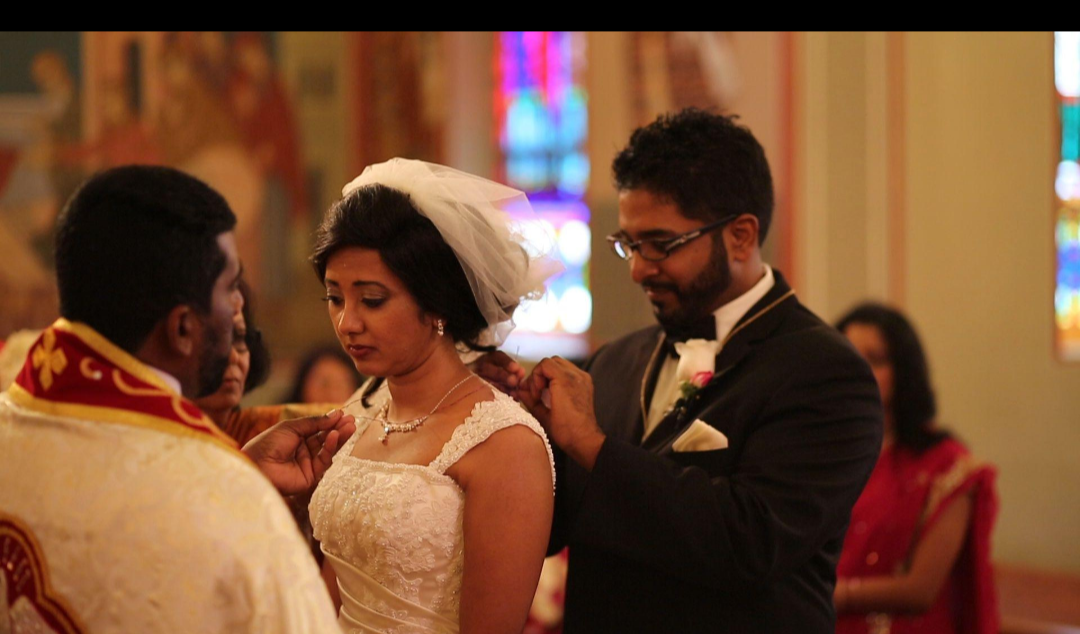
Marriage is a central institution. Weddings are solemnised in church through the Holy Qurbana, and the defining ritual is the tying of the minnu, a small gold pendant bearing a cross made of twenty-one tiny beads, by the groom on the bride's neck, using a thread drawn from the manthrakodi, the wedding sari given by the groom's family. This practice closely parallels the Hindu thali and illustrates how Nasrani life blended Christian faith with Kerala custom. Pre-wedding customs include the manasammatham (betrothal ceremony in church), the madhuramvaypu (sweet-feeding of the couple), and the traditional arrival of the bride at her new home.
Other life-cycle rituals include infant baptism (mammodisa) with a first-solid-food and naming celebration, first Holy Communion, and elaborate funeral customs including the forty-first day remembrance (nalpathu) with a family meal. The traditional dowry system (sthreedhanam) once played a major role, and Syro-Malabar families were historically among those who contested unequal inheritance rules for daughters; the famous 1986 Supreme Court case of Mary Roy concerned the related Syrian Christian inheritance law of Travancore.
Dress and Ornaments
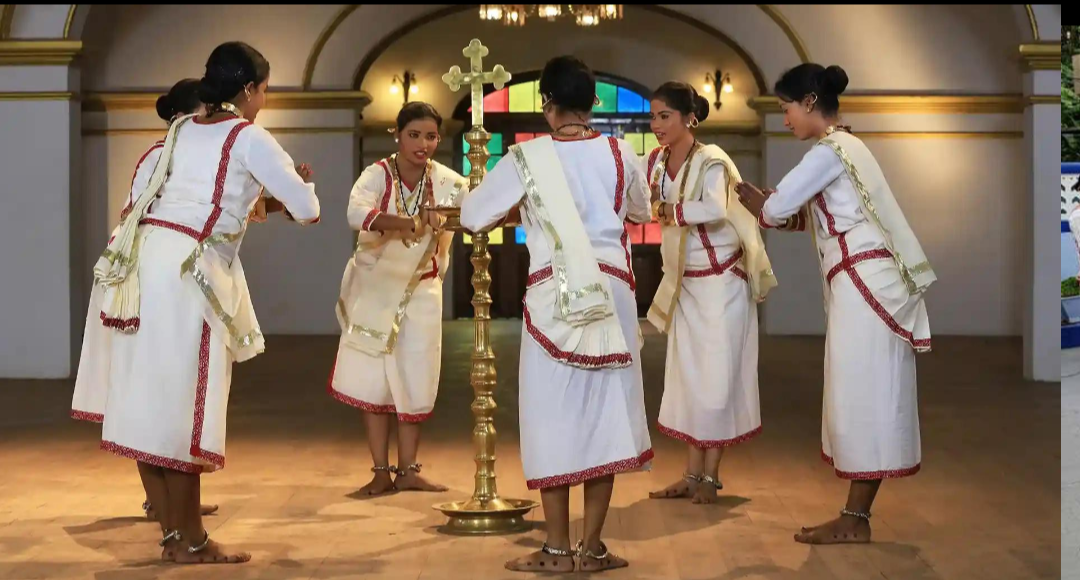
The traditional dress of Nasrani women was the chatta and mundu: a white, collarless, half-sleeved blouse (chatta) worn with a white mundu pleated into a distinctive fan (njori) at the back, with a kavani or neriyathu draped over the shoulder. Older women also wore large gold kunukku earrings on stretched upper ear lobes, a recognisable marker of the community into the twentieth century. Men wore the white mundu and shirt with a thorthu over the shoulder, and elders were once distinguished by a kudumi (tuft) and gold kadukkan earrings.
Today everyday dress is the same as for other Malayalis, but the chatta-mundu is revived with pride at church festivals, cultural programmes, and especially Margamkali performances. Brides wear the Kerala-style white or cream silk sari for the church ceremony, often changing into colourful silks for the reception.
Cuisine
Syro-Malabar cuisine is among the most celebrated food traditions of Kerala. Unlike the largely vegetarian food of Kerala's Brahmins, Nasrani kitchens have long embraced beef, pork, duck, chicken and fish, cooked with coconut, black pepper, shallots, curry leaves, coconut oil and the souring fruit kudampuli. Well-known dishes include:
- Appam and stew: lacy fermented rice pancakes served with a mild coconut-milk stew of chicken, mutton or vegetables, the classic Easter and Christmas breakfast.
- Beef ularthiyathu (beef fry): slow-roasted beef with coconut slivers, pepper and curry leaves, practically an emblem of Nasrani cooking.
- Meen vevichathu or meen mulakittathu: fiery red fish curry cooked with kudampuli in a clay pot, often tasting better the next day.
- Tharavu roast and duck curry: a Kuttanad and Kottayam speciality, especially at Christmas.
- Pidiyum kozhiyum: rice dumplings in chicken curry, a Thrissur and central Kerala favourite.
- Kappa and meen curry: boiled tapioca with fish curry, the everyday food of planter and farming families.
- Pork vindaloo-style and pork ularthiyathu: showing Portuguese influence on the community's cooking.
- Pesaha appam (Indri appam) and paal: unleavened rice bread and coconut-jaggery milk eaten at home on Maundy Thursday.
- Achappam, kuzhalappam and vattayappam: crisp rose cookies, rolled snacks and steamed rice cakes made for Christmas and weddings.
Toddy-shop food, plum cake at Christmas (a colonial legacy), and the kallappam of Thrissur households round out a cuisine that tells the community's layered story of local roots, spice trade, and European contact.
Arts, Festivals and Small Cultural Things
- Margamkali: a traditional group dance performed by women (originally men) around a nilavilakku lamp, narrating the story of Saint Thomas; recognised as a classic Nasrani art form.
- Parichamuttukali: a martial dance with swords and shields, recalling the community's kalaripayattu and militia past.
- Perunnal: parish feast days marked by processions with golden and silk umbrellas (muthukuda), fireworks, chenda drums and brass bands.
- The nilavilakku and home prayer: many homes light a traditional lamp at dusk for the evening family prayer (sandhya prarthana), showing Kerala continuity.
- Kurishu (crosses) at crossroads: small roadside cross shrines, often with an oil lamp, are a familiar sight in Nasrani villages.
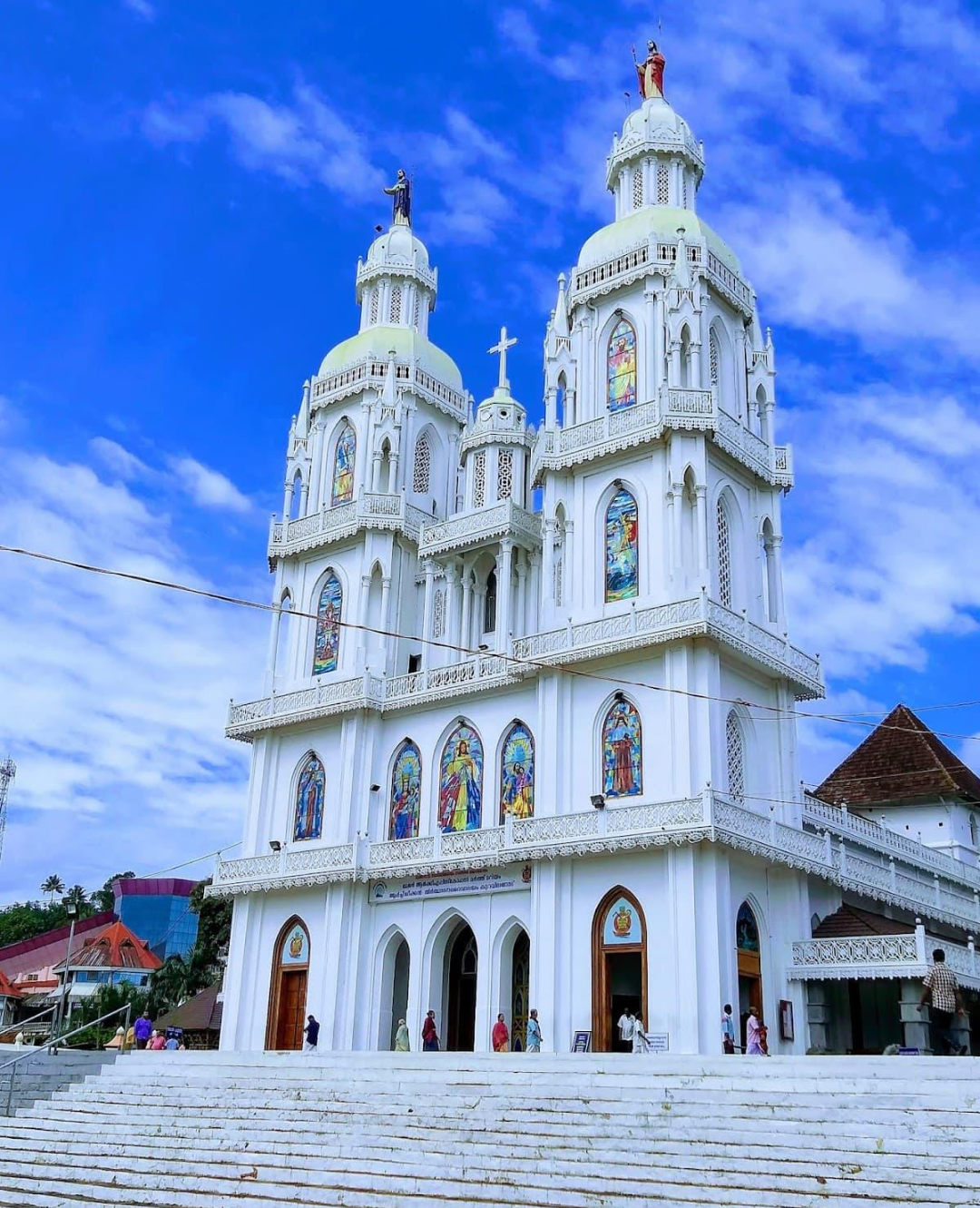
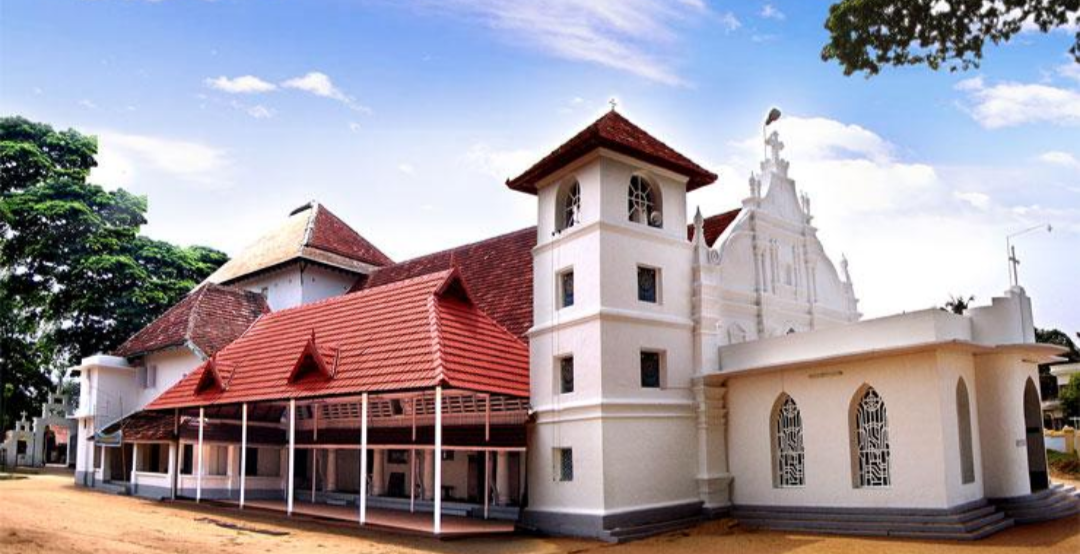
- Kallarakal and family chapels: ancient granite crosses and old churches such as Kuravilangad, Kaduthuruthy and Angamaly contain some of the oldest Christian inscriptions in India.
- House blessings and palm crosses: Palm Sunday palm fronds (kuruthola) are kept at home and later burnt for Ash Wednesday.
- Humour and dialect: the Thrissur Christian accent and Pala planter stereotypes are staples of Malayalam cinema.
Occupations and Economic Life
Historically the Nasranis were spice traders, agriculturalists and landholders, especially in pepper, coconut, paddy and later rubber, cardamom and coffee. The twentieth-century "migration" of Syro-Malabar farming families into the forested high ranges of Idukki and the Malabar hills turned them into pioneering cultivators on a large scale.
The community has also been at the forefront of banking and entrepreneurship in Kerala. The Catholic Syrian Bank (now CSB Bank) and the South Indian Bank, both founded in Thrissur in the 1920s, grew out of Nasrani initiative, and families from the community are prominent in gold and jewellery retail, plantations, hospitality, textiles, hardware and consumer goods. The Church itself runs thousands of schools, colleges and hospitals, making education, teaching and health care common careers. Most strikingly, Syro-Malabar women have become synonymous with nursing: from the 1960s onward, Nasrani nurses formed a large share of the Indian nursing workforce in north Indian cities, the Gulf, Europe and North America, and their migration shaped the modern diaspora. Other common occupations today include engineering, information technology, medicine, the armed forces, law, teaching, and public service.
Population Size
Estimates of Syro-Malabar membership vary by source and year. Older Catholic directories give a figure of around 3.9 million, while more recent Church and press sources speak of roughly 4.6 to over 5 million faithful worldwide. The large majority live in Kerala, where Christians of all denominations form roughly 18 per cent of the population and the Syro-Malabar Church is the single largest Christian body. Substantial populations also live in Mumbai, Delhi-NCR, Bengaluru, Chennai, Hyderabad and other Indian cities. Among Eastern Catholic Churches worldwide, the Syro-Malabar Church is generally ranked second in size after the Ukrainian Greek Catholic Church.
Migration and Diaspora
Syro-Malabar Nasranis are one of India's most mobile communities. Internal migration took three main forms: agricultural settlement of the Malabar hills and high ranges between the 1920s and 1970s; migration to Indian cities from the 1950s for jobs in industry, government, the railways and nursing; and extensive missionary work by priests and nuns across central and north India.
International migration began in earnest with the Gulf boom of the 1970s. Large Syro-Malabar populations now live in the United Arab Emirates, Kuwait, Saudi Arabia, Qatar, Oman and Bahrain, and later waves have built communities in the United States, the United Kingdom, Ireland, Canada, Australia, New Zealand, Germany, Italy and Austria. The Church has created dedicated eparchies for its diaspora, including the Eparchy of Saint Thomas of Chicago in the United States (2001), the Eparchy of Mississauga in Canada, Saint Thomas of Melbourne in Australia and New Zealand, and Great Britain, alongside apostolic visitations in Europe and the Gulf. Diaspora families maintain close ties to their home parishes, and summer visits, family weddings and ancestral tharavad reunions keep the link alive across generations.
Physical Appearance
Syro-Malabar Nasranis look like other Malayalis, and there is no single "Nasrani look". As in the rest of Kerala, skin tones range from light wheatish to dark brown, hair is typically black and wavy to curly, and eyes are dark brown. Families occasionally note lighter skin or lighter eyes among relatives, and folk tradition sometimes attributes this to West Asian or Portuguese ancestry, but such traits are found across many Kerala communities and cannot reliably indicate origin. Genetic testing is a far more dependable guide to ancestry than appearance.
Genetics and Ancestry
Genetic research on India has mostly worked with broad regional or caste groups, and no large peer-reviewed study has yet published a detailed ancestry profile of the Syro-Malabar community specifically. Most of what is known comes from small academic samples of "Kerala Christians" or "Syrian Christians", from comparisons with neighbouring Kerala communities, and from privately tested individuals and hobbyist projects. The figures below should therefore be read as indicative expectations to be tested, not settled results. This is exactly the gap GenoConnect's community feature aims to fill: as more Syro-Malabar members test, the community profile can move from informed estimates to measured data.
Deep Ancestry: AASI, Indus Periphery and Steppe
Like all mainland South Asians, Syro-Malabar Nasranis are expected to carry a mixture of three deep ancestral sources: Ancient Ancestral South Indian hunter-gatherers (AASI), an Iranian-farmer-related population associated with the Indus Valley Civilisation (often called Indus Periphery or IVC ancestry), and Steppe pastoralist ancestry that entered South Asia in the second millennium BC. Kerala as a whole shows relatively high AASI and low Steppe ancestry compared with north India. In the older ANI-ASI framework, published Kerala samples place Syrian Christians broadly within the range of mainstream Kerala caste communities, closer to Nairs than to Namboothiri Brahmins.
Paternal (Y-DNA) Haplogroups
Paternal lineages reported among Kerala Syrian Christians appear diverse. Haplogroups commonly seen across South India, such as L1a, H1, R2a, J2 and R1a-Z93, are expected to form the bulk of Syro-Malabar lines, alongside smaller frequencies of lineages such as F, C and G. Several privately tested Syrian Christian men have been placed in branches of haplogroup J (including J2 and a Levant-linked J-L283 cluster) and in J1 or T lineages that are rare elsewhere in Kerala; genealogists have suggested these could reflect West Asian settlers of the first millennium AD. Because these observations come from small and self-selected samples, they cannot yet show how common such lines are in the community as a whole.
Maternal (mtDNA) Haplogroups
Maternal lineages among Syro-Malabar Nasranis are expected to be overwhelmingly South Asian, dominated by the many branches of haplogroup M (such as M2, M3, M5, M30, M18 and M35) together with South Asian branches of R (R5, R30, R31), U2 (U2a, U2b, U2c) and W. This pattern is typical of Kerala communities and indicates that the community's maternal ancestry is largely local to the Malabar Coast. Any West Asian maternal lines are likely to be rare, but systematic testing would be needed to confirm this.
Closest Genetic Neighbours and the "Which Caste?" Question
A question many Nasranis ask is which community their ancestors came from. Tradition speaks of Brahmin converts, and many families take pride in this story. The limited data available, however, suggests that most Syro-Malabar individuals cluster genetically with Kerala caste communities such as the Nairs and with other Malayali Christians, rather than with Namboothiri Brahmins, whose Steppe and North Indian ancestry is noticeably higher. The most plausible picture is that the community grew over many centuries from a mix of local Malayali groups, with some families possibly of Brahmin or Nair origin, and a small but real contribution from West Asian Christian settlers. Genetically, the closest expected relatives are other Saint Thomas Christians (Malankara Orthodox, Jacobite, Mar Thoma and Syro-Malankara Christians), followed by Nairs and other central Kerala communities. The endogamous Knanaya are expected to form a slightly distinct cluster.
Relatedness is expected, not yet measured on a large community sample.
Prominent People
The Syro-Malabar community has produced many figures in religion, public life, business, sport and the arts. A selection includes:
- Saint Kuriakose Elias Chavara (1805–1871): priest, educator and social reformer, co-founder of the CMI congregation, credited with pioneering the "school with every church" movement in Kerala.
- Saint Alphonsa (1910–1946): Franciscan Clarist nun from Bharananganam, the first Indian woman canonised as a saint (2008).
- Saint Euphrasia and Saint Mariam Thresia: religious women of Thrissur district canonised in 2014 and 2019.
- Mar Joseph Kariattil and Paremmakkal Thoma Kathanar: eighteenth-century churchmen who travelled to Europe to seek native bishops; Paremmakkal wrote the Varthamanappusthakam.
- Cardinal Joseph Parecattil (1912–1987): Archbishop of Ernakulam and the first cardinal from the Syro-Malabar Church; later Cardinals include Varkey Vithayathil and George Alencherry; Mar Raphael Thattil is the current Major Archbishop.
- K. M. Mani (1933–2019): founder-leader of the Kerala Congress (M) and among the longest-serving legislators and finance ministers in Kerala's history.
- Kochouseph Chittilappilly: Thrissur industrialist, founder of V-Guard Industries and Wonderla amusement parks.
- Innocent (1948–2023): celebrated Malayalam film actor from Irinjalakuda and former Member of Parliament.
- Anju Bobby George: long jumper, bronze medallist at the 2003 World Athletics Championships, the first Indian to win a medal at that event.
Conclusion
The story of the Syro-Malabar Nasranis is one of deep roots and wide horizons. Rooted in the soil and speech of central Kerala, shaped by nearly two thousand years of Christian memory, by the Church of the East, by Portuguese and Carmelite rule, and by the long struggle for a Church of their own, the community has become both one of the most distinctively Keralan and one of the most global communities in India. From tharavads in Pala and Thrissur to parishes in Chicago, Dubai and Melbourne, Nasranis continue to carry the minnu, the appam, the Margamkali and the Mar Thoma Sleeva as signs of a shared identity. Genetics now offers a new way to explore an old question: where the community's ancestors came from. Much remains to be discovered, and every family that tests adds a piece to that picture.
Frequently Asked Questions (FAQs)
Q. Are Syro-Malabar Christians Syrian by ethnicity?
No. "Syrian" refers to the Syriac language of their liturgy and their historical links to the Church of the East. Ethnically and linguistically they are Malayalis, with a small West Asian contribution in some lineages.
Q. What is the difference between Syro-Malabar, Syro-Malankara, Jacobite, Orthodox and Mar Thoma Christians?
All descend from the single pre-1653 Saint Thomas Christian community. After the Coonan Cross Oath, the Syro-Malabar Church followed the Catholic path with the East Syriac rite; the others followed the West Syriac (Antiochian) tradition and later divided into Orthodox, Jacobite, Reformed (Mar Thoma) and Catholic (Syro-Malankara) churches.
Q. Did Saint Thomas really come to India?
There is no direct archaeological proof, but the tradition is ancient, widespread and supported by early references to Christians in India and by strong Roman-era trade links with Muziris. Historians treat it as a possible but unproven tradition.
Q. Were Nasranis originally Brahmins?
Some family traditions claim Brahmin conversion. Available genetic data suggests most Nasranis share ancestry closer to Nairs and other Kerala communities than to Namboothiri Brahmins, though individual families may have diverse origins. A DNA test can show where your own family fits.
Q. Who are the Knanaya?
The Knanaya are an endogamous Nasrani group that traces its origin to Knai Thoma's settlers of AD 345. Knanaya Catholics belong to the Syro-Malabar Church through the Archeparchy of Kottayam.
Q. How many Syro-Malabar Catholics are there?
Estimates range from about 4 to over 5 million worldwide, mostly in Kerala, with large communities in Indian cities, the Gulf, North America, Europe and Australia.
Q. What are common Syro-Malabar haplogroups?
Expected paternal lines include L1a, H1, R2a, J2 and R1a, with rarer J and T branches reported in some families. Maternal lines are mostly South Asian M, R5, U2 and W lineages. Community-wide frequencies have not yet been measured.
Q. What is a minnu?
A small gold pendant with a cross of twenty-one beads, tied around the bride's neck with threads from the manthrakodi during the wedding. It is the Nasrani equivalent of the thali.
Q. What language do Syro-Malabar Catholics speak?
Malayalam, with Syriac used in some prayers and hymns. Diaspora families also speak English, Hindi, Arabic and other local languages.
Q. Can DNA testing tell me my Nasrani family's origin?
A test can estimate your AASI, Indus Periphery and Steppe proportions, identify your Y-DNA and mtDNA haplogroups, and show which communities you are most closely related to. As more Syro-Malabar members test with GenoConnect, these comparisons become more precise for everyone.
References
- [1]7. GCatholic.org. "Syro-Malabar Church (Catholic)." https://gcatholic.org/dioceses/rite-Sb.htm
- [2]8. St. Thomas Syro-Malabar Catholic Eparchy of Chicago. https://stthomasdiocese.org/
- [3]9. Catholic World Report. "India's Syro-Malabar Church reshuffles leadership amid liturgical row" (January 2025).
- [4]10. Wikipedia. Pages on the Archeparchies of Trichur, Faridabad, Kalyan and Shamshabad and the Eparchy of Hosur.
- [5]11. Brown, L. W. The Indian Christians of St Thomas. Cambridge University Press, 1956.
- [6]12. Podipara, Placid J. The Thomas Christians. Darton, Longman & Todd, 1970.
- [7]13. Reich, D. et al. "Reconstructing Indian Population History." Nature 461 (2009).
- [8]14. Narasimhan, V. M. et al. "The Formation of Human Populations in South and Central Asia." Science 365 (2019).
- [9]16. Phylogeographer. "J-L283 Syrian Christians of India." https://phylogeographer.com/some-syrian-christians-of-india-descend-from-roman-era-levantine-fgc64029/
- [10]17. Kochi Post. "Where do Syrian Christians come from? DNA testing provides some interesting answers" (2013).